Seeing, as in looking at, stars

I saw a whole lot of stars last night. Good for the soul, that.

I’ve been taking this opportunity to be in the experience of life without having to explain it, or articulate reasons to anyone outside my own skin. I had almost forgotten what that’s like. With very bright and articulate people in my life, it’s hard to get that in my personal life. Their need to understand is borne of pure love — they worry, because they’ve seen me through some rough times, and in order not to worry too much, they need to understand in their own minds what’s going on in this mind over here, which is in a completely different person. (Mom, you’re in good company with my lot! <3)

I’m in a lot of “thin end of the bell curve” categories, so this can take some doing: INFP (about 2-4% of the population, last I heard), serendipitously rather than linearly accomplishing (about 20%), and ADHD female (goodness knows, but the proportion seems to be growing as the markers are better understood), in addition to the weird requirements of all these illnesses — pretty much guarantee that anything normal won’t work, no matter how carefully I plan and execute.

This is the second summer in a row where things have not gone according to plan, so much so that a new term somewhere between “not according to plan” and “WTF just happened” needs to be coined to express it. I’m beginning to think I should just take this as a new life pattern, since the switchbacks tend to heal the dribbling wounds of layers & layers of PTSD. (Well-managed PTSD is not the same as resolved PTSD, although the most dramatic difference is on the inside.)

My friend and honorary BIL Ron wound up with massively metastatic liver cancer because 2 years of pandemic disruption and lousy treatment from LA’s indigent support system (which is a criminally bad system, worse than war-escaping migrant camps and most internment camps, according to the UN) left his early, localized, treatable cancer as an undiagnosed blurch on a CT scan which he had a few months before the pandemic was identified.

His care was denied because there weren’t enough staff or open beds. He was killed because of, but not from, Covid. When you think about maskless people and Covid deniers, think about treatable, localized cancer turning into a deadly and agonizing bloodbath for people like Ronnie.

Yeah… I’m not bitter… much!

Folks, this is not a drill. It’s not imaginary. It’s a fast-evolving pandemic in its early days. Read up on the Black Death for a little perspective.

A couple months ago, as people told themselves the pandemic was “settling down” right before the peak of record-setting waves of contagion and death (check the data, not the ideology) Ronnie bent down to pick something up, passed out, and woke up in hospital getting the third of eight units of blood. Then he found out over half his liver was lost to cancer and that treatment would only buy him a matter of months.

He opted to skip treatment and make the best of his remaining time.

He wanted to go fishing, so he set his mind to get strong enough for one last boat trip. His family proposed bringing him home to Northern California, where there’s glorious fishing in all sorts of waters.

Long story short, the appalling facility he was in was so good at losing contact information, that his hospice social worker didn’t realize he even had family until I had the option of including a gift card with a care package I sent from Amazon, and I included four names and numbers. Then things started happening.

If you’ve got someone in a facility, send them a card! It’s documentation that people care, and nothing happens in health care without documentation!

I never thought of it as anything other than a nice gesture, but turns out it’s a whole lot more: It’s evidence that they’re worth saving. ÷O

Put your number on it if they’re in bad shape, so the facility has someone to call. Atrocious that this should be needful, but hey, welcome to modern America! o_O

OK… maybe a *little* bitter.

Since I was about ready to have him kidnapped to get out of that stupid facility, we had contingency plans up the wazoo to get him out of there and home.

Even longer story short, it turned out that the only feasible option was to drive him home, which was a 2 person job and only one person in that elderly and health-challenged family could do that, so I changed my own plans (plan is a 4-letter word anyway) and got the soonest ticket I could.

As he listened to this planning conversation, Ronnie smiled from ear to ear with tears streaming down his face. He could take in how much he was loved and wanted, and he was going home to a slice of paradise to be surrounded and supported by the care of those who loved him.

Important note here: he already had this information, but he also had his own layers of damage which made it hard to let the information in. That resistance was there for a reason. You can say something to someone all you want, but if they aren’t equipped to accept it, it won’t go much further. There has to be a big enough change in themselves and their circumstances for those scars to shift, so the info can flow.

Ron was able to put aside everything that kept him from being able to accept that information, and he had, as the wise social worker said, “a moment of pure happiness.”

The following day, his condition deteriorated. We updated our plans to go visit and hope for the best.

The morning I was supposed to fly out, he was gone.

I did my quiet-inner-voice thing, and it said “go anyway.” So I did.

Bodhisattva oath

I’ve been contemplating the distinction between working the Bodhisattva vow and being a doormat (or codependent, as we call it now), off and on, ever since I discovered the concept when I was 12 or 13. It’s been an important part of my work of dealing with the last couple decades of harrowing illness, poverty, and systematized abuse as a patient. It’s become a regular topic recently in my meditation class. This is a big deal and an important point to consider.

The difference, it seems, is about self-care and responsible boundaries. These are particularly key for people who are women, healers, and in a vulnerable situation; it may not have escaped your notice that the wording which defines these terms was developed by men who had quite a bit of support in their work, and such people need a lot less protecting.

It’s healthful for people in habitual authority/access/power over others to embrace a practice of profound and selfless compassion. It gives them more insight and calm.

Those of us whose ground state is based on acute awareness of others require a more nuanced approach.

There are techniques which allow a diligent practitioner to pursue the Bodhisattva vow over the rim of what appears as boundaried behavior without psychological damage, but they only come after many years of serious training and discipline with qualified supervision. So, people like me have to be pretty darned careful how we proceed.

In short, I was in two minds about my own reasons for coming, but I yielded to the quiet tidal bore of my inner voice and took that flight.

Serendipity

I’ve landed in a beautifully imperfect place among people who wear their glorious sweetness and relentless flaws in flowing symmetry. From Ronnie’s kin, I’d expect nothing less.

Above all, I realize it’s not my bathtub to soak in and not a set of problems for me to fix. I’m just here as a welcomed guest and loved part of this extended & protracted family system.

This is a big deal.

There’s a lot of work for me to do (administrative nonsense, since death and life are both business matters; my trip will be paid for) and that’s healthy, because it’s easy for me and a real boon to the family. Healthy boundary there.

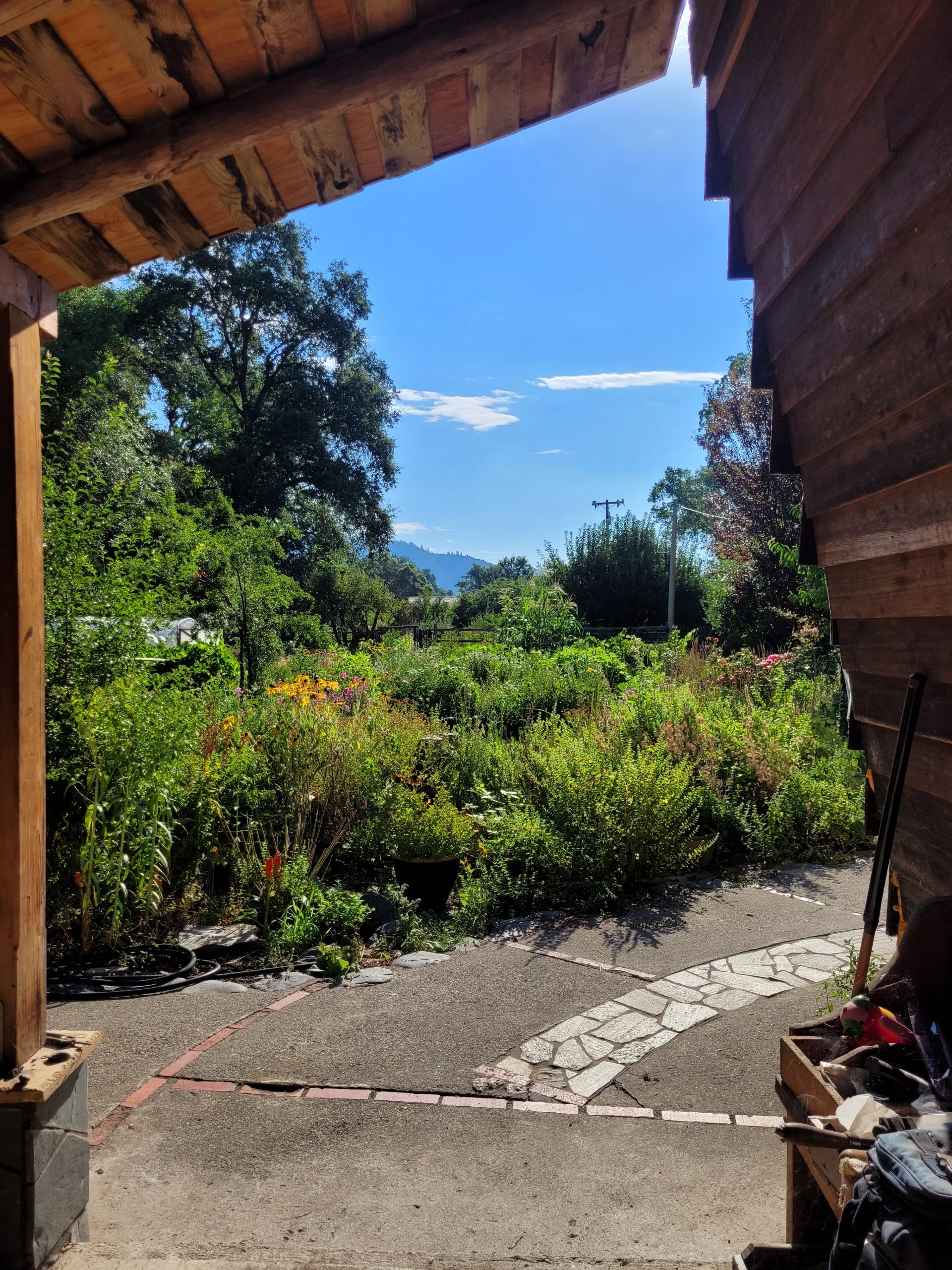
There is a lot of soft, verdant ground for me to walk on; a ton of stars spilling across the sky overhead; a cornucopia of Isy-friendly food pouring out of the greenery on this well-kept land; and my allergies have backed off considerably. My ex has put my health needs absolutely first in every consideration and the rest of the family is happy to support that. Definitely healthy.

And me? I’m not over-explaining! It’s amazing :D! I just quietly take care of my needs and appreciate everything that I *can* partake of. Good boundaries there, too.

I’m learning, carefully, again, how to be present. How to unlock from anxiety without letting go of my real needs. My phone is nearby and in signal, but usually off. That’s healthy too, right now. It’s a kind of technology break, which my battered and hyperactive brain is probably long overdue for.

I’m also bereaved in the presence of others who are also old hands at bereavement. It’s a peaceful thing. It feels curiously wholesome, even as grief and mortality are shredding sorts of events. Ronnie and all our late loved ones are very present in their very absence.

I could natter on about the wheel of life and possibly even spout some Buddhist wisdom about interconnectedness and emptiness, but to put it in words is to miss the point. It’s an experience. All you can really do with an experience is to be in it and allow it to be part of you.

So that’s what I’m doing. And there’s real healing in it.

For some things, no explanation is needed because, at root, none is… oh I don’t know… possible?

Anyway, I’m OK. I’m doing the things and being the me and accepting the limits (including transport) while appreciating the strengths (like interconnectedness) and feeling very secure and centered and remarkably peaceful withal. This is good. And if my phone is off, be assured it would be on if I needed it. Right now, the stars and the green and the peace are healing me, and I’m simply letting them. <3
Update: using adaptation tools

Yesterday, it came naturally to be warmly present for V during a big event where I stood in for her, even at a distance of 3,000 miles or so. Gotta love technology for that!

Today, I think of D and the anticipatory grief is like a warm finger of current, pulling at me without tearing at my core or dragging my mind away. He’s here now, and everyone who cares about him is working on a graceful last chapter to his intense, vivid, improbably well-groomed life. (Yes, he’s quite a character!)

This recovery is not all perfect: after yesterday’s 8-hour social endurance event (a physical and physiological experience piled on top of a very neurologically demanding week) I woke up this morning with a pure dys-autonomic experience I haven’t had in a very long time.

On the very cusp of waking, as I first became physically aware of the real world, my body’s temperature-regulation mechanism dropped off the rails.

I suddenly got intensely cold, that bone-deep cold that makes the smallest touch of air feel like knives. Imagine full-body Reynaud’s, with added concertina wire. It’s amazing how cold my skin suddenly gets to the touch when this happens, after feeling just right at the moment I started to wake.

So, I did what I learned to do 10 years ago, when the dysautonomia really kicked in with this: I pulled my down duvet completely over me and tucked in every gap, wrapping it right around my head, and constructed a little tunnel just big enough to breathe fresh air through. (Fresh air seems to speed up the recovery period.)

Nothing I can do after that but wait for it to pass, as my regulatory thingies come to terms with being awake instead of asleep (one autonomic function) and being able to be at the right temperature (another autonomic function.) I know that it will pass, while my system creeps toward wakefulness.

Big shrug. The Nasty Cold Snap hasn’t been part of my day in a very long time, which is good!

This just goes to show that the physical/physiological impact of these flows of stress and anguish isn’t negated. Expecting that would be unrealistic.

They are manageable. That’s the point.

Doing those “brain first aid” things makes handling the weighty, current reality bearable. That means I’m still capable of several important tasks:

  • I can bring my tips and tricks to bear against the physical effects of this illness.
  • I can think my way through ordinary (to me) problems.
  • I can remember that things pass: the Nasty Cold Snap will pass, as the mental shock passed, as even terror passes when it’s allowed to.
  • I return fairly quickly to my normal frame of mind — which beats trauma-brain all hollow!

There’s still a bit more physical recovery involved, mostly giving my systems a chance to finish returning to their normal function and easing up on the extra weakness, reactivity, and pain.

But, basically, I’m OK. I’m able to show up for myself and my friends. That’s what it’s all about.

My point (and I do have one) is…

The skills I learned in psychotherapy really work when I use them, and I’m so relieved.

I want to make the point that psychotherapy is not “just like talking to a friend”, because our friends don’t need a graduate degree to be our friends. Psychotherapy is a professional-level, highly customized form of care, even if it feels relaxed (creating an environment where you can relax is one of the skills of a good shrink.)

Nor is it a passive process; the skills and concepts only work if you work them. It’s good to be heard; that said, it’s also good to remember that real healing involves relevant changes. The fun (??) part is, in medicine, we may influence the changes but there’s a significant random element involved in them; in psychotherapy, the client steers the whole process. While being an active, involved patient can improve outcomes in medicine, being an active, involved client does improve outcomes in psychotherapy.

So, there’s the core message behind this 2-part series, part of the ongoing “what works” toolkit. Psychotherapy works, when done properly and used diligently. Just like any other kind of care. It’s not magic. It’s skills.

The freedom of masking

Two years ago, if I were walking down a sidewalk next to trucks belching diesel, I had to breathe shallowly and mentally plan on the nausea and neuro-huckery that was likely to follow.

When I went shopping at Big Y — well, I couldn’t, because the massive bakery displays at both ends of the store could wipe me out in a heartbeat. 

I was sadly giving up my Goodwill/Salvation Army pillaging habits because the unquenchable stench they saturate the stuff with made me so sick it was harder and harder just to walk in there, and my de-stinking magic stopped working on fabrics. Sad sniffle… I used to get half my furniture from there, and most of my better clothes.… 

I considered getting surgical masks, but I already knew how many leery looks & disparaging comments that public mask-wearing used to provoke. I try to avoid getting leery looks, because people are a lot less likely to be pleasant or helpful towards someone they’re leaning away from.

Then The Modern Pandemic hit, and everything changed.

Nearly two heartbreaking and traumatic years later, the message that this is the new reality is starting to take hold; testing and explanations of what makes a mask effective is available from legitimate labs and reputable sources; and I’ve made myself 2 custom-fitted, Isy-safe, well-made masks that are easy to clean and dry well overnight. 

Colorful though they are, they just don’t stand out any more! Masks are part of the New Normal, and generally provoke smiles and friendliness instead of the opposite.

So, on today’s walk, I wound up surrounded by fuming traffic — and put my mask on. No problem. Then I went shopping at Big Y and went from end to end of the store — with my mask on. No problem. I was too tired to go to Goodwill today, but when I do go there, I put my mask on — and I don’t smell a thing until I get everything well outside and take my mask off. (I can still get the smell off of hard-surfaced things.)

Mind you, it’s not like my own breath is a bucket of roses (!) — but it still smells way, way better than diesel, and it doesn’t make me sick! 

It took awhile to realize it, but masks really set me free and make my *whole* world (not just the pandemic aspect) much, much safer and more comfortable to be in.


Wholeness is order

Many people have figured out before me that approaching life coherently, as a complex creature with inward & outward lives, as physical and energetic beings at once, and so on, is probably a really good idea.

I’ve spent years describing myself as a “text-based life form”, and “better in print than in person.” That was useful for a time; most of us need something to cling to, to carry us through, when we feel terribly broken.

This summer was transformative. I started it wholly committed to making my legacy; I’ve come out of it realizing that I’m very much alive, and that, if I’m going to get anything done, it has to be as a whole person — minding my relationships with those who can relate to me, minding my physical care as a loving duty rather than an intransigent puzzle, tending my crafts as sweetly as I need to be tending my recuperation, and so on.

Somehow, I’m absolutely certain that only in this way — and not in the head-first, head-down policy of my old working self — only in this way can I make meaningful progress.

Of course, that means it’ll take longer up front. But, as an old mariner, I’m well aware that prep is between 80 and 90% of the final result — so you take the time and do the prep, if you want good results.

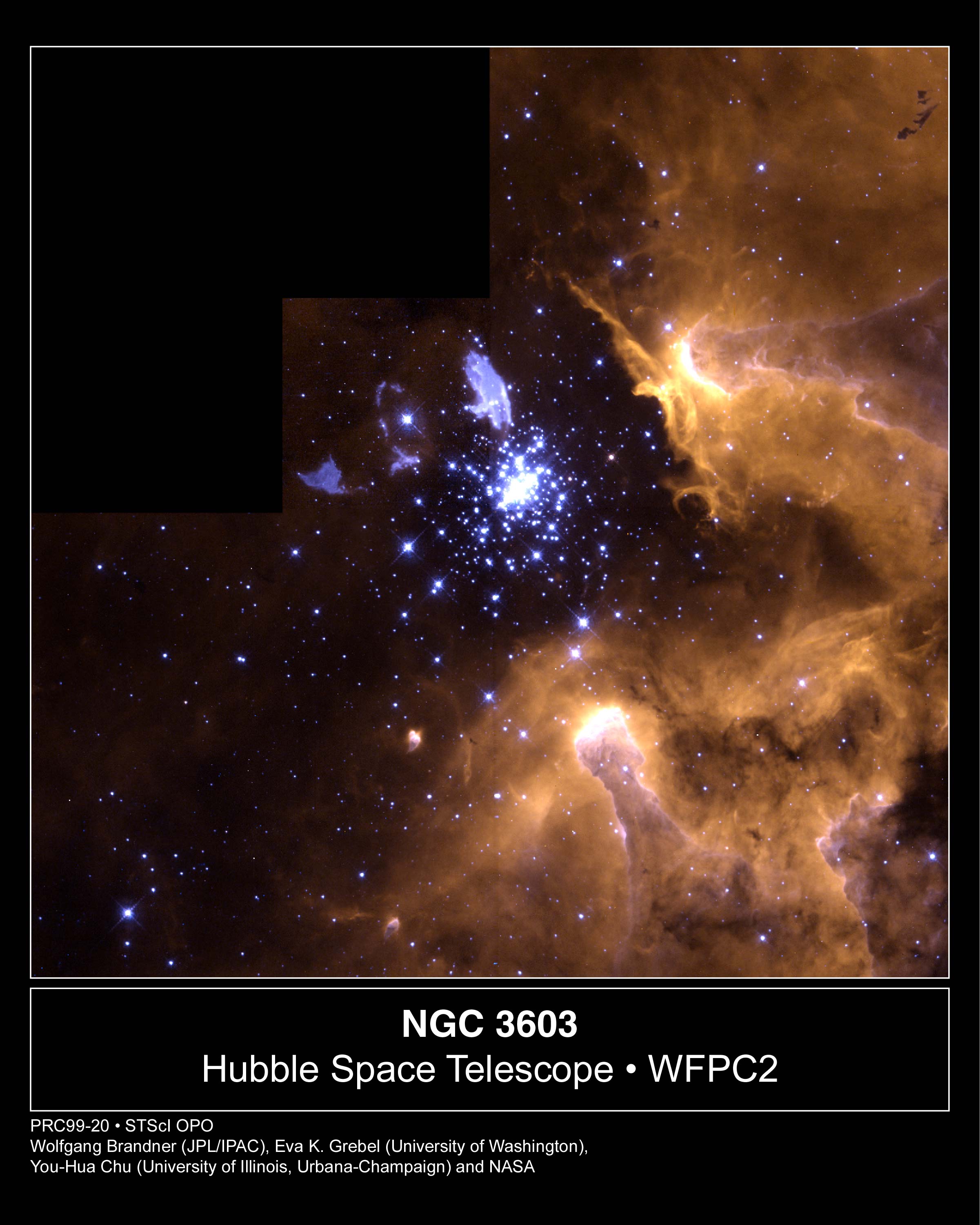
I happily think of star nurseries (thank you, NASA , for this image), which look like glorious messes — but, from these, galaxies are born.

Logical? Well, not in any linear sense. Organically it works, though.


Seat-shaped rock in a shallow stream.

The Place to Be

On a rock in a river

Clean quiet murbles and shushes

everything Not Me drawn gently off

So easy.


Skeeters drift on, slackjawed with peace.

Dogs huff and slosh in the shallows,

Just going by,

In furry certainty

That happy playtime is normal

And right.


White white aspen tickles

Blue blue sky

And the birds zip

& comment benignly

up there.


The wet scent

Of contentment

Soaks to my marrow

And I’m finally


Still.

Seat-shaped rock in a shallow stream.

When momentum uses inertia

Wizard, with hat and staff, standing next to text of Tolkien quote.That last post, about acknowledging the shimmering sense of mortality I’ve lived with for nearly a year? Well, I kept meaning to post an update, but I’ve been having too much fun making progress elsewhere, and simply dropped the ball. I often think, “oh, I should post that on my blog,” and then – pain diseases being what they are – when I shift context to hop online, I’ve forgotten what it was and quickly get sucked into something else.

At the risk of using terms improperly, I found myself explaining this normality of painee existence as a sort of “acquired ADD.” As it happens, our brains get changed in the same places and pathways that ADD brains live in, so that our scans look amazingly similar. Those ADD-like symptoms are definitely not imaginary. I have found myself using adaptations very much like those I’ve read about in some of the terrific books on ADD. I recommend reading up on it. There’s a ton of helpful material on how to manage with and work around these attention issues.

I miss blogging. So, I hope to automate (or at least simplify) moving information here from social media. There are still interesting questions to answer, and I think that useful info we generate in pain groups should find its way to a more stable, searchable medium.

I have been sinking into this life, having acknowledged that inward message about its likely brevity. I’ve been here a year, and love my little flat more and more each day. I’ve been rearranging, creating more usable space within the same square footage. It’s delightful!

I keep the picture that reminds me of those who made this happen over the decorative fireplace, where it looks wonderful, and send grateful thoughts to its source/s – even when reaching out in real life only creates confusion and misunderstanding. We humans generally, and painees particularly, sometimes realize we don’t control how others receive us, but we can steer our own thoughts. So, I maintain this practice of gratitude, because that’s who I am and always have been, and wait for better times.

More health problems? Certainly! I will write about the gastrointestinal circus another time. I’m currently working on digesting a drink of water, and I’d prefer not to think about it until that’s done. This is the big, hairy, stinking follow-up to the first sign of trouble nearly 2 decades ago, which I wrote about (with disgusting toilet humor, inevitably) over at the post Intestinal Fortitude.

Apart from one misunderstanding and that additional body system, this life is amazing. Bit by bit, I’ve been getting a broader pool of professional and personal help and support. Bit by bit, I’ve been coming up with adaptations that bring more art, craft, and productive time into my weeks, although I have to be careful (of course) about changing tasks and changing position and managing time better than I really want to. For instance: “No,” I had to myself yesterday evening; “you don’t get to finish that row of adaptive crochet! I don’t care how pretty this is, or how soft the yarn. These helpful tools only improve my function, they don’t correct the problem! Put. The yarn. Down. Thank you.  Now go do something else.”

So I did.

And then I treated my right forearm with everything in my toolkit. And then I made myself promise not to pick up those tools for at least two more days, because that’s what it takes to recover when I’m forgetful enough to do crochet on a couple of consecutive days. Change those tasks! Figuring out a crafty solution is not as important as protecting tomorrow’s ability. Or even tonight’s. I can use myself hard, but I’m not allowed to use myself up. I don’t count on a ton of recovery time.

I’m back to using dictation software, in order to make better use of my arm time. The stylistic difference is clear to me, but it probably doesn’t matter. This is a good compromise to make, although it’s not necessarily an easy one. Dictation is a strange, slow way of speaking, and it forces me to think in chunks rather than in thoughts and words. But hey, it works!

Times are changing. Whether or not the current American president behaves any better, whether or not the next American president has the moral courage for fundamental changes, whatever, times are changing. My own possibilities are opening up, and I’m not holding back. I didn’t even know I was, but boy, things have changed since I stopped trying to eke everything out! I’ve got things to do, and I’m not waiting any longer to do them.

If I were more self-conscious, I’d throw in a bumper sticker-appropriate remark here. I’m out of ideas. I’ve got other things to do now. Maybe next time. Maybe. 🙂

Take care of yourselves. When you can’t, take care of each other. When you can’t do that, take care of your world. It helps.

Active presence

I love the term “radical presence” because it feels radical to jump the barrier of overwhelming emotion to land face-to-face with the moment and be able to look straight at it regardless. However, in practical terms it’s the opposite of radical — it’s conservative in the classic sense, because it puts us back into the realm of what’s demonstrably real and solid.

Therefore, conservative presence is the same as radical presence.

What a wonderful object lesson in putting political branding aside.

However, for the sake of clarity, I think I’ll start calling it “active presence”, as it usually takes an act of will.

When I was working as a nurse, an important part of the job was teaching people what they needed to know in order to go on better: dress the wounds, improve activity, improve nutrition, manage impaired systems (immunity, pain, respiratory), take care of relevant organs (heart, liver, pancreas, kidneys, gut, brain) and so on.

I’m sorry to say I was too idealistic at first and found myself being scoldy. The word “should” showed up a lot; worse still, “shouldn’t.” Argh! Words I’d love to take back!

I finally learned the key principle of teaching & training around life skills, especially primal ones like eating/drinking/moving: people have to start from where they are, not from where anyone, including them, thinks they should (ugh) be. The ideal is not relevant, only the real.

The first step, therefore, is to find out what that reality is, no matter how egregious. Their best hope of improvement is almost always in small, manageable steps, starting right from their current reality.

This led me to my first understanding of active presence: change has to start from this eating habit, this activity level, this degree of self management. No others exist yet! Trying to pretend they do only builds castles in the air.

However, I’ve seen patients of mine go, for example, from couch potatoes with snack-stocked shops and triple-bypass heart attacks to organic-grocery-owning half-marathon runners in a couple of years, by starting with tiny stepwise improvements: cardiac rehab class, to slow walks, and on up from there.

woman walking up beach, looking totally at home in her skin.

There are no guarantees (it’s easy to joke about people with great life habits getting hit by a bus) but hydration, nutrition, fresh air, and exercise tend to pay off tremendously– usually after a clunky adjustment period, as body and mind lurch through the initial changes.

Of course, the time that new habits take is going to pass anyway. Would you rather be reaping rewards at the end of it, or find yourself back in the rut that put you into medical care?

I’ve said exactly that to many people, with honest attention. This isn’t a trick question, nor is it an occasion for smarm. It’s a key question we all have to ask ourselves periodically throughout our lives, in one way or another. Everyone has the right to contemplate and answer that question honestly, even if the real reaponse is, “I like my habits/my rut, I see the trajectory, I know where it will take me, and I accept that probable outcome with open eyes.” I’ve had people say that, in tones varying from sweet concern for my feelings to roaring defiance. It’s all okay; it’s their call. I’d ask if they’re interested in cushioning their fall or minimizing damage to others, tailor suggestions accordingly, and then call their physician to adjust expectations and ask about/offer any ideas for mitigation over improvement. (It was never a total surprise to their doctors.)

As a patient, I have made — and continue making — complex changes in order to stay as well and functional as possible. I’m persistent like that. To me, being incapacitated is intolerable. I’d rather have better options.

“When you’re alive, anything is possible. It’s being dead that seriously limits your options.”
– Jodi Taylor

Active presence puts me on ground firm enough to step off from, and actually get somewhere. I’ve been living with a strong inward nudge to simplify, focus, and hurry up, because I don’t have much time left. It may be fallacious (I hope so), my subconscious working to override my “completion anxiety” about larger works. Given the accuracy rate of these deep, strong inward messages up to now, I’d be a complete idiot to ignore it. So, I’m simplifying, focusing, putting my ego (which is where this anxiety resides) off to one side, and buckling down on building the structure of my legacy in my head. I’ll discuss that more when there’s some output.

Dying is horrible. I don’t want to do that, ever. I’ve started to, a couple of times, and I’ve seen far too many loved ones go, especially those with these diseases. No words, no words for it… That said: Being out of this relentless, grinding circus of delicately-balanced tolerability, with horrific and likely further life-limiting consequences for certain mistakes? Really looking forward to being done with it! There will come a time — at some point, for me as for anyone — which will suck, and shortly after that, I’m absolutely certain there’ll be an end to this (extremely well-managed) biological terror and the unimaginably cruel pain that drives it.

I have this stubborn inner nudge that it’s not far off for me personally. That’s definitely NOT my choice, it’s the circumstance I find myself in. Without having wanted or chosen it, I somehow find acknowledging it to be hugely freeing!

That is intensely weird, I know. Also uncomfortable and maybe bitter and sad.

But that’s what is true for me, right here and right now.

From here, and only from this point in my often tortuous reality, can I move on.

I accept that.

Here I am.

Time for the next little step. Who knows where it’ll take me in the long run?

Let’s find out.

Focus

There’s a lot going on.

My own health took a hard dive late last year and the damage continues to evolve…

…On top of an increasingly human-hostile political system and increasingly deadly climate.

Fun times.

So, yeah, sitting here on a big pile of crap. But that’s not the problem.

What really bugs me is this relentless, quiet, basso-profundo voice murmuring in the back of my brain, “Hurry up. You don’t have much time. You, personally, don’t have time to waste. Pick your focus. Nothing else matters. Get to work. You don’t have much time.”

I used to have a lot of projects running at once…

  • I didn’t tell anyone, but I secretly hoped I’d be able to run again. I used to run 4 miles up & down a canyon in the redwoods before work most days. It was glorious. Before that, on the other coast, I ran 5 to 10 miles along the banks of the river in Alexandria, Virginia, because it felt good and kept my head clear for work on the HIV ward. I ran from one place to another because it was faster than walking.
    Yeah. Well. Between dysautonomia screwing up my circulatory responses and adrenal glands, the tissue fragility of mast cell dysfunction vs. undiagnosed EDS offering to rip holes in my tissues again, and the recurring exercise intolerance, I can let that one go. I enjoyed it at the time, look back on it fondly, and intend to be grateful for that much.
  • I was going to start a business with a line of absolutely stellar pain creams I came up with. Seriously good stuff! It’s at least as good as the medical marijuana salve I used to make from top-shelf medical-grade bud — but totally legal everywhere! I was looking forward to getting that out to my fellow painees, doing some good and making some money. (Comment if you’re interested. I could be persuaded to sell my stock-on-hand.)
    Instead, I’m willing my recipes and equipment to a friend who knows people. She can get it out, and make more when that’s gone. Meanwhile, I’ve got a few hundred bucks locked up in the only exception to my “2 piles” rule for money: 1 pile (my paycheck) for monthly expenses, and 1 pile (an insurance account from the Worker’s Comp branch of the higgledy-piggledy US system) for treatment and survival. That 3rd pile, which belongs to the business and only to the business, is gathering dust. It might help her get started.
  • As regular readers know, I once hoped to make my own safe home to age, work, rest, and die in.
    The downside to owning a home is clearer than ever, and to a limited budget and limited body, it’s a disaster waiting to happen. That dream is dead, staked, burned, and the ashes are buried at the crossroads.
  • I love fixing sh-tuff. The dopamine wave is delicious. However… too many piles of sh-tuff waiting to be fixed, plus associated tools and supplies.
    I’ve donated, bartered, and tossed away more than I even knew I had to spare. So far, I don’t really miss it.

Months ago, I gave up all my arts & crafts except writing and drawing. (And making masks.) I came up with some chirpy sounding reason, but it was about clearing my agenda and narrowing my focus.

There’s something intense about that voice. I look back and realize I’ve been responding to it since before this GI crisis evolved. Thinning out my pursuits. Thinning out my belongings. Thinning out my life.

Narrowing my focus long before I could hear the words this clearly.

For awhile, I thought it was a symptom of wonky chemistry, as I’ve had to do that medication square-dance that people who need neurotransmitter stabilizers have to do now and then. Chemistry is pretty good in here now, and that voice is clearer than ever.

So, here’s what there is to work with:
* I’ve done a lot of writing and training.
* The biological-sciences part of my brain has kept its doors jammed open, despite all the other closures.
* I’m an honest enough historian to know how too many people have been shut out of the process of using their health care systems, due to gender, race, class, and lousy sociohistorical times.
* Me and my friends have developed some powerful tools for being seen and being believed.
* Also, we’re pretty delightful cartoonists. (Hey, it’s a great teaching tool!)

It might be time for all of this to come together. My mission, should I choose to accept it, is to “drive” turning all this into a body of work that can continue teaching, training, and translating between chronically & profoundly ill patients and the rest of the world, long after I’m gone.

I have only 2 jobs now: stay as well as possible for as long as possible, and craft that legacy.

It’s frightening to contemplate pushing everything else off my plate, but the experience of the past year has shown me, over and over, the peace and release that happens after.

I don’t have to find the perfect home, although I’d sure be grateful if it landed on me and sucked me right in. (I can’t pack myself up to move one more time.) I have to make this one work better, and get on with the rest of my life. I honestly don’t think I’ve got a lot of time.

But then, I’m not sure that’s the point. Maybe I just can’t focus on more than 2 jobs anymore.

Chaos theory

  1. As regular readers know, I’ve had an eventful life. The past 20 years, particularly, have been a circus of bizarre improbabilities, oxymoronic paradoxes, and irreconcilable conundrums. My life reads like a dystopian comedy, if your sense of humor is sufficiently twisted.

This is why I’ve got the category “imp-possible” going in this blog. It looks merely cute, but it has a lot of layers. Imps could be little devils, or little fairies, or little children. They emphasize the power of the small. It feels like the only power left. “Imp” also suggests the power of the unexpected.

As the current American president’s so-called “tax cut” comes home, the US Disability Income management agency, Social Security, has decided to trim costs in anticipation of their lost income: they’re cutting my pay, on the grounds that the Worker’s Compensation element of US health care paid me off for being hurt. Separately, they handed over a bunch of health insurance money so Medicare wouldn’t have to pay for my work-related treatment.

Social Security confused the two, and then added zeros to the left of the decimal, divided it by 12, multiplied that by the square root of Guatemala (I’m making this up, just like they did), slapped a bonus on it, and decided I make OVER $5,000 PER MONTH and they’re going to count 80% of that and dock my pay by ~$160 per month…

I’m allowed to make over $5,000/month? Where? How? Sign me up! But wait… huh?? You think I actually have $5,000/month???

Yeah, I’m confused too. (The payout was good, but not that good: I got a sturdy, 10-yr-old car and a year’s worth of rent in a clean, dry cottage out of it.)

That $160 is what allows me to keep my pain-cream-making gear & off-season clothes in storage *and* pay for my writing course at the 50% discount I negotiated with the teacher (I’m doing that course instead of buying books & music for a few months.) I’m not sure any of that counts as extra these days.

They said this would be (future conditional tense) reflected in my pay as of December 2019 (whaaaaat???)…

Either they’re as confused as the rest of us, they’re in even harder denial about which year this is, or they’re setting up to make the pay cut retroactive in case they decide that that’s in their best interests. Also, Social Security being who they are and the current US administration being who they are, this feels like the first move against our lifeline, not the only move.

… I’m sitting here speechless again. Happens every time I think about it.

This is on top of the brutal horrors of approaching winter (relentless agony, burning brain, incapacitating fog), no bathtub (CRPS’s disruptive surface effects creep up my legs and over my back and make my shoulders, hips, and right arm into bloated purple sausages wrapped in electrified barbed wire, with no way to push back), encroaching mold (which multiplies everything, including mast-cell hyperreactivity/disabling allergies, heart dysrhythmias, gut problems, and it adds respiratory diseases to the mix), and gastroparesis so bad that every other day I have to do a big ol’ — you don’t want to know. Trust me. Even I can’t make it funny.

My psychotherapist is savvy, sweet, and has that merciless faith in her client that the best of them wield like surgeon’s tools (yes, this is relevant, hang on through the curve)… I fell apart completely in our virtual visit and whispered in stricken tones, “I don’t know if I’ll make it this time.”

After acknowledging the depth and legitimacy of my feelings and recognizing my prior successes against staggering odds (she does know her job!) she encouraged me to see the breadth of creative possibility embedded behind, “I don’t know.”

I blinked, because that sounded pretty darned merciless, even for a top-flight psychotherapist. (Keep in mind that surgeon’s tools include, not just scalpels and silk, but electric saws and the sprung barbs known, deceptively, as towel clips.) She wouldn’t give up, though.

I agreed to accept that as a working hypothesis.

On reflection, that thought began to feel more like pre-2019 Isy, before my heart got ripped out and stomped on a little too hard by a few too many, and my system fell apart so badly in the storm of it. It began to feel more like the Isy who, 13 years ago at the start of the Hell Years, looked around at the absolute rubble & blasted mess of everything I thought defined my life, and realized someone was still there doing the looking, so there was still an “I” and I wasn’t done yet. It felt more like the Isy who made the term “imp-possible” a regular category. I didn’t know where that would lead me, but…

I didn’t know how to finish that sentence yet.

This morning, while listening to an audiobook that’s a romantic comedy about overthinky nerds (still relevant; hang on through one more curve), I used the toilet successfully for the first time in months, without having to resort to the apparatus hanging nearby for the thing I’ve had to do that I won’t tell you about. (It involves soap & warm water, nothing too ghastly.)

I use audiobooks to keep my brain from overheating. It gives me just enough to focus on that I don’t drive my thoughts off a cliff, and it’s not so intrusive or demanding that I can’t do ordinary tasks at the same time.

This one had gotten to a part where the author discusses basic chaos theory: chaotic systems (and I defy any biologist to come up with a more chaotic system than a dysautonomic human body with longstanding central pain syndromes) … where was I? Right. Chaotic systems tend to get more and more chaotic until a sort of tipping-point is reached and they reorganize at a higher level of criticality.

What the heck does that actually mean, anyway?? What do they mean by a higher level of criticality?

Partly, it means that a lower level of energy is required to maintain that state of chaos, even though it’s still a higher level of chaos.

And that (I thought, as I looked up at the equipment I was going without at last) meant that I could do more coping with less effort.

Once you’ve prioritized your needs hard enough and developed your adaptations effectively enough, it gets a whole lot harder to throw you off your game.

I can work with that.

The next level of chaos is here. I have no idea how it’ll unfold. That said, I’ve already reorganized at a higher level of criticality.

I’ll meet it somehow. I don’t know how. I’m still here doing the looking, so I’m not done yet.

In honor & memory of Ruth Bader Ginsberg.

Wizard, with hat and staff, standing next to text of Tolkien quote.

Sizing the Covid-19 problem, for real

Like many, I’ve been watching the extraordinary infinity-ring circus of Covid-19 with rising confusion.

Old amber-screen lettering showing *TILT* like on old pinball machines

I hate being that confused.

So, I thought about how to cut to the chase. I investigated mortality figures, looking for clarity on the competing narratives about the actual danger posed by Covid-19. (This is aside from the epidemiological information, which is hard work for me and possibly beyond a lot of people. Look into attack rate, latency, and lag if you want to know more about the reasons for its spreadability.)

This boils it down to one simple, definitive marker:

How many die? Because that’s the point.
Lead-grey statue of dark angels swooping down from the sky

Comparing mortality numbers

This is all out of a U.S. population (as of 2019) of 328,200,000.

Annual US death rates from various causes in 2019 (or 2018):

36,560 … Highway fatalities (2018.)
 5,250 … Fatal workplace injuries (2018.)
48,236 … Adverse medical events ending in death (including surgical problems, allergic responses, medical devices, prescription errors, and fatal drug overdoses.)☆
61,200 … Seasonal flu, 2018-2019 season.
15,820 … Those with HIV, of all known causes (2018.)
Fatalities due to Covid-19 in the US in 2020, only up to Sept 1:
About 180,000

Expected to exceed 200,000 in 2 more weeks.

???

Questioning the data

If this number were as low as 2X the nearest competitors, I’d have dug into the question of just how bad the Covid-19 reportage is.

(Hint: lots of problems, some pushing the numbers up, others pushing the numbers down.)

It’s nearly FOUR TIMES higher than the nearest causes of death. Even I can’t pick a big enough hole in that number to change the outlook!

Bottom line

This final figure is inescapably bigger — in only 8-9 months! — than any other major/relevant cause of mortality in an entire year in the U.S.

So… death by Covid-19 is a real problem. A huge problem.

It’s a real, huge, problem.

Please protect yourself & others: don’t share air or germs.

Self-protection skills

For my fellow chronics, don’t be too worried. Surviving this is a 3-part skill, and you’ve mastered much worse. You can do this.

1. Dilute your air. ?
2. Protect your airway. ?
3. Wash wash wash. ?

Here’s what that means:

1. ? Get as much air as possible around you. Avoid recirculated air. Open windows in closed buildings. Dilute, dilute, dilute your air. Even a little! (Work within your constraints.)

2. ? Cover all your breathing apparatus with something that meets these practical criteria for masks that protect *you* as well as others:
A. Seals: doesn’t gust air out the edges and passes the “doesn’t fog glasses” test.
B. Protects: has enough material/filtration that you can’t see any light specks peeking through, when you hold it up to the light.
C. Doesn’t vent. (Apart from exposing others, venting can also create weird ripples for super-small viruses to ride back in on. Look up “Venturi effect”.)

After reading mask tests until my eyes bubbled, I agree with these guidelines. Plus, no codes to remember!

3. ? Wash, wash, wash your paws & whatever you touch or touch with. Alcohol will do in between times.

Dealing with questionable cleaners

After two painful toxic exposures, I learned that 40 proof in a spritz bottle smells better, is easier & potentially cheaper than the gooey store stuff, and is far safer than methylated or isopropyl.

Alcohol-free folks: look into spritzing 3% hydrogen peroxide, which kills viruses faster than Clorox (watch your clothes, it can bleach too), proven essential oil blends, or even soapy wipes. Read labels for virus killing info.

Summary

THIS IS NOT IMAGINARY.

The death toll from Covid-19 is horrific — no matter how small the comparative R’s are.

It really IS a huge problem, still unfolding.

It’s appropriate to take it very seriously — and intelligently.

You’re not helpless. You really can protect yourself and your loved ones with that simple 3-part skill set:

1. ? Dilute your air.
2. ? Protect your airway.
3. ? Wash wash wash.

Follow these guidelines for the best chance of staying well.

Reflect: “adequate protection” means masks AND 6 feet (“safer six”.) Both masks and “safer six.” Look around and see where that does or doesn’t happen.

Tip: Most eateries do takeout now, and parks are open for meeting in ????.

We all have horrible choices ahead. Hope it helps to have a little coherent, practical, straightforward info. ?‍⚕️?‍??‍?

Note on, & list of, sources

Sources are all primary data collection organizations within the federal government, which has access to all the original info streams:

– U.S. Census Bureau
– U.S. Bureau of Labor Statistics
– Bureau of Transportation Statistics (a dept. of U.S. DOT)
– The Joint Commission (of AHQS)
– DHHS-NPDB (National Practitioner Data Bank)
– HIV.gov
– CDC.gov
– EPA.gov

☆A statement along the lines of “prescription drug mismanagement results in >2M injuries and 100,000 deaths annually” is cut & pasted into many articles, some going back to 2005, despite the advances in monitoring and treatment in the past 15 years. Therefore, those figures are meaningless.

I wish politicians realized that made-up figures never improve the debate. They’re only bad for everyone’s blood pressure, at the very least.