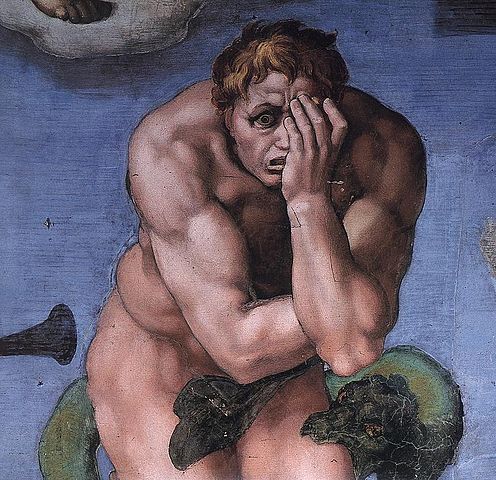
Playing with my food

For audio version, tap PlayingWithMyFood below:

It’s almost impossible not to start this article with, “I used to…” So I’ll skip that and jump right in.

The first time I had swordfish, we were on vacation and the little restaurant was a rickety shack with a cockeyed roof and rickety grape arbors failing to hold their load up. It was on top of a cliff overlooking a bay of beautiful blue. (This was in the late 1970s. Water really was bluer then.)

The air blew soft in my face, because I was facing the sea. I’d teased my Dad about keeping his back straight even when he was slouching over soup. Everyone was pleased and peaceful. And I took my first bite.

I could tell, just by tasting it, that that fish had been swimming around early that morning. It didn’t taste like anything I could remember having before.

It was an amazing multisensory experience. It made me a foodie forever.

However, 4 years in the more environmentally challenging processes of Egypt followed that. The food filled a wider scale: the packaged white bread tasted like the feet of the men who kneaded the huge vat of dough the old-fashioned way with their shoes off, and the roadside falafel sandwiches on chewy baladi bread fresh from the oven behind the sweet-faced woman selling it at the roadside tasted like joy and love and home. With yogurt and tahini, please, thank you. (Not tomatoes, because hepatitis was in the water.)

Then there was the trip down to Upper Egypt on the train, almost 4 years later. By then, I was used to checking my soda for bugs and broken glass, and never bought candy with a damaged wrapper. (Well… hardly ever.) A certain appropriate skepticism had crept into my gleeful charging-in to the task of eating. I thought things through reflexively. That’s not an oxymoron.

The train went overnight from Cairo to Luxor. We woke in the morning ready for a good breakfast.

Egyptian eggs were small with shells so hard you could break something by throwing them. They had very yellow yolks as a rule, and I remember them as being delicious. I asked for a 3-egg omelet (which we used to spell omelette) with grated cheese. (“What kind of cheese do you have?” Shrug, “Just cheese.”)

I got all that, and a little bit more: a little cockroach cooked right in, a browny-black plaque on the surface facing me. The waiter put the plate down with one quick glance and no actual hesitation.

What good would screaming do? Honestly. I had 2 brothers and I had learned to save screaming for genuine emergencies.

I poked around while I thought this over. The egg had clearly, by its texture and color, been subjected to a good amount of heat; that roach was fried to a crisp, and I know that because I used my otherwise useless knife to check.

I mulled the level of certainty I could possibly have that another plate of eggs wouldn’t have a roach in it, only next time, concealed and not as close to the heat. Nope, anything could be in the next one, at this rate: tails, fewmets, broken glass… I mean, that waiter showed no shame. Not a good sign.

I poked around the omelette to see if there were any other surprises, other than a few scallions. Nope.

Decision: made. Elapsed time: two breaths.

I cut around the cockroach, moved it to the edge of my plate, turned my plate so the other side faced me, and dug right in.

It was good and I was fine.

I think I won the family award for aplomb that year. That was cool.

2026, with the G.I. doctor

I had a nice, relaxing meltdown with my g.i. specialist 2 days ago. My weight is almost as high as it’s ever been — not that I mind attracting small objects into my orbit or knocking over unstable furniture; that’s kind of fun.

As I told her, it’s the side effects. My right knee has developed new spasms and my low back doesn’t bear thinking about. I told her, “With CRPS we get bone pain, and the bones in my legs I’m going to cry about if I talk about them.” The added bust size is a disaster, and my postural muscles are fighting it out between stabilizing my hips and holding up my trunk; there isn’t enough to do both.

Multiple food sensitivities (try crossing FODMAP foods with gastroparesis diet with cardiac diet with mast cell/low-histamine diet, and see what’s left), a few outright allergies including gluten (which is rare), and gastroparesis complicating things have given me lots to learn about. I ranted about it, but I was really doing a sanity-check:

  • People with CRPS and fibromyalgia don’t get much muscle-wasting when we’re bedbound, unlike healthy people who get bedbound. What we do get is very few red muscle cells (the oxygen-dependent endurance muscle cells), and lots & lots of white muscle cells, depending on anaerobic respiration. (This has to do with how our circulatory nerves mess up circulation and the oxygen-driven muscle cells just go away and get replaced by anaerobic muscle.) This explains why I have not been able to get anywhere with cardio exercise at this point. Beating my head against a brick wall.
  • GLP-1s: contraindicated in med-reactive gastroparesis. I need my guts to move.
  • Metformin: attractive for its mast-cell stabilizing effects, but then it would be “bye bye, remaining red muscle cells”, because Metformin blocks their benefit from exercise.
  • The surgeries available for dealing with any of this are contraindicated because of CRPS, with its vascular and neurological complications.

It was a relief just to be heard.

And another thing: The CRPS Primer

I stumbled on this 10 dayd ago and I want to buy the maker dinner. I wanted to do this for 20 years and just haven’t been able to. This person has a kind of neurotwitchy that makes it possible to complete such a complex and challenging task, despite having this wretched condition.

The CRPS Primer is available from crpscontender.com. Buy them a coffee if you can afford it.

I plonked the whole thing into Word so I could highlight and annotate it for my own purposes. Highly recommend this as a learning tool. It’s good to think and add and argue with the writer at times, even when they turn out to be right. The references are extensive, though the gutting of the US Federal science library has affected some of the links. Check the Internet Archive’s Wayback Machine if you need to.

I won’t share that, or any other derivations, without clearing it with CRPScontender first, and that’s likely to take time. Nevertheless, they are serious about keeping it freely available to everyone at all times, so go get your own copy and play with it. It’s brilliant.
Air Quality and validating info you rely on

Let’s leap right over the climate arguments and just say that wildfires and their fallout (literally, since the particles “fall out” of the clouds) are a big deal these days.

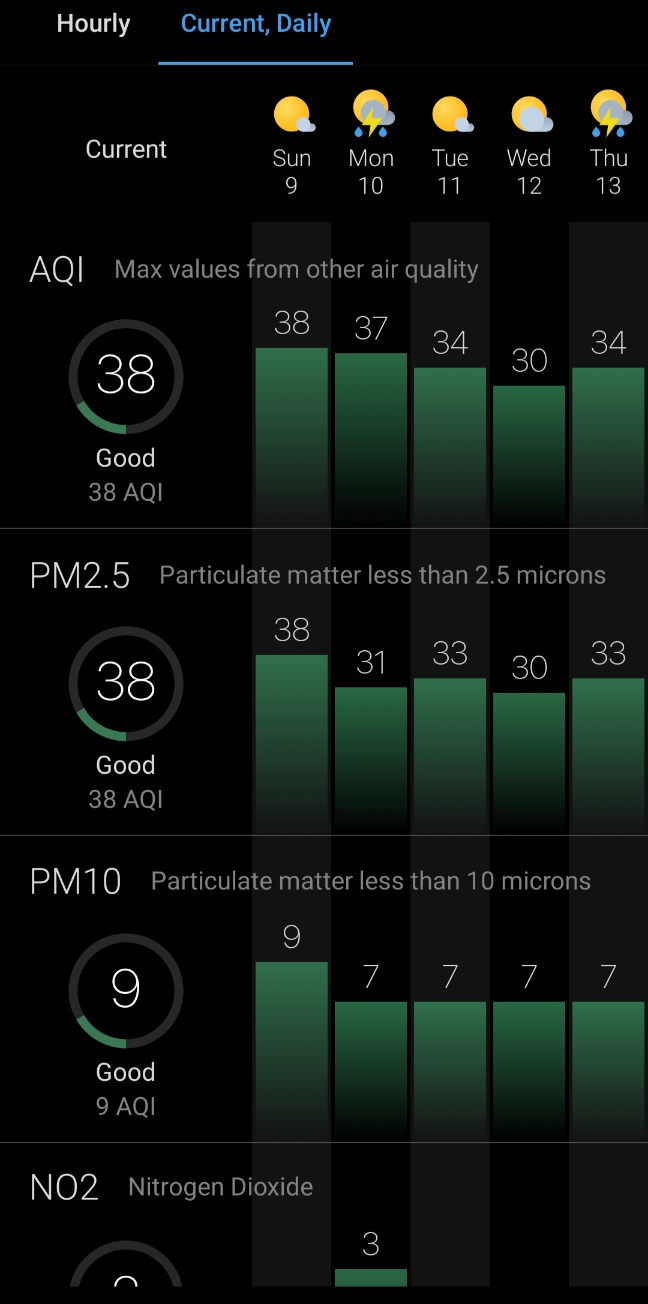
If, like me, you check your Air Quality Info (AQI) and it’s all green & good, but you look outside and the sky is all yellow and kinda gross, it’s time to delve a little deeper.

AQI indicator showing all green with low pollution numbers
That doesn’t look like what I’m seeing — or smelling — outside my window…

1. Consider the source

Keep in mind that — rightly or wrongly — the United States’ climate science programs have been gutted. We used to lead the world on this, so, it’s a really big loss of data and validity. (Validity is determined by how carefully the instruments are set and cared for, then how appropriately the numbers that come out of them are used, and then how well the results are put into the public realm. Validity requires staffing, training, and lots of equipment. …Oh well.)

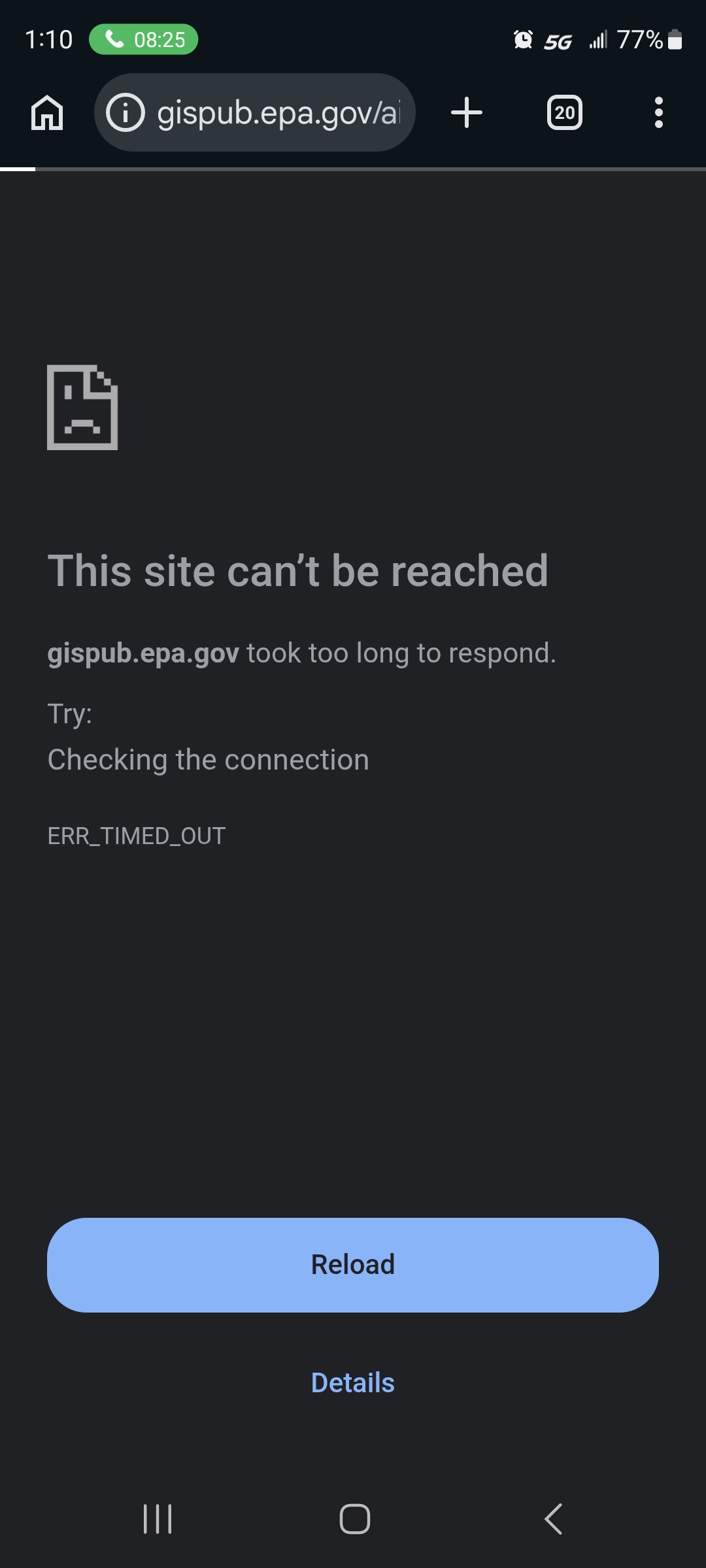
Since I’ve learned how badly climate science (which includes air science) has been de-funded, I’ve been waiting for the federal air quality data to get worse. Let’s see if this has begun.

Screenshot of the federal AQI page showing the message this site can't be reached
Funny… it was working yesterday…

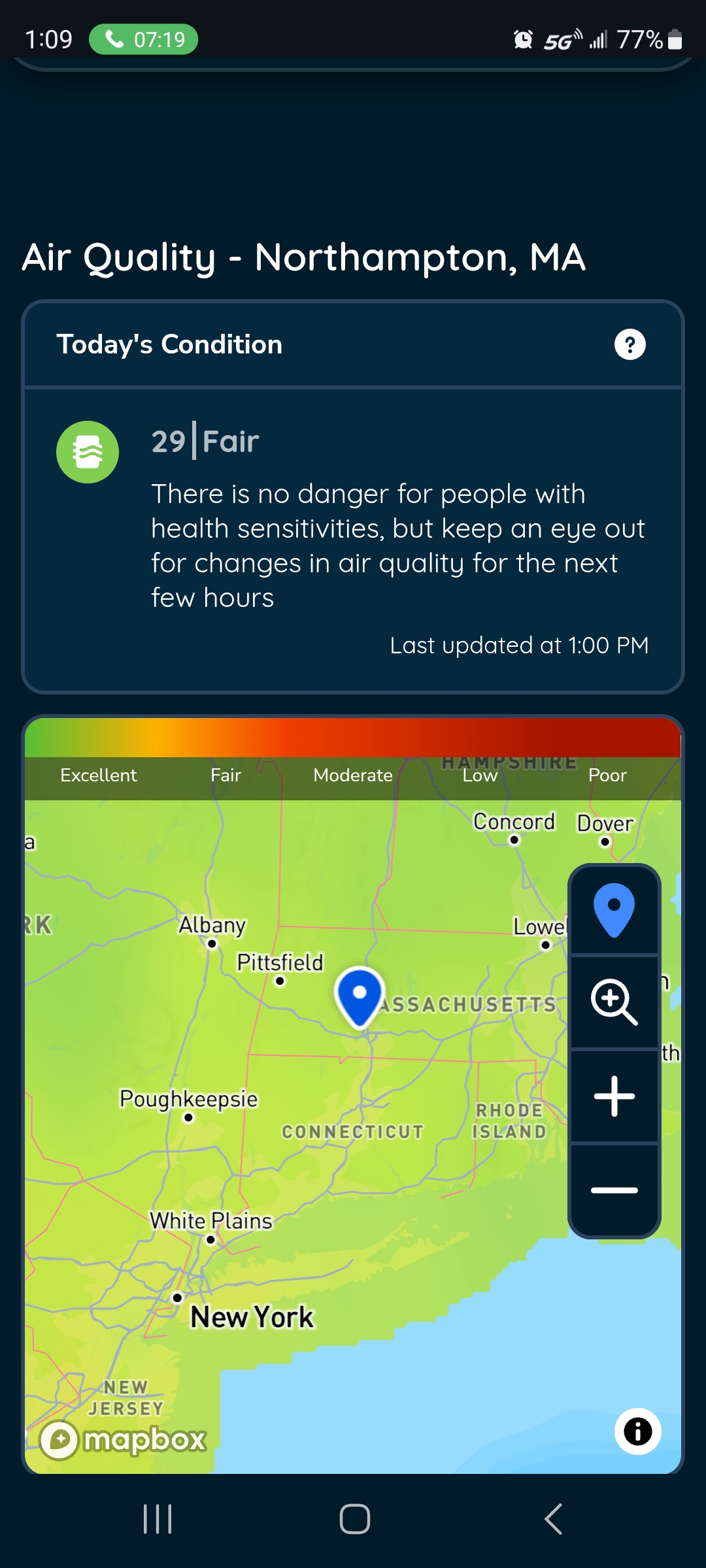
This is not the only source of info, though. My state uses the national data and packages it for the state. Same issue as the first picture, though:

A map showing green over Massachusetts and stating that the AQI is 29 and safe for sensitive persons
Safe for sensitive persons? My stinging eyes beg to differ!

That said, let’s look at non-governmental programs that collect air data from volunteers. Usually, volunteers buy their air-quality analyzing equipment out of their own pocket, set it up, and attach it to the larger network of that brand or program.

What could possibly go wrong?

Unlabeled data, for a start.

Some people need to track their indoor air quality with these well-made air aanalysis instruments…  but can’t tag it in the system accordingly. This messes with the average air quality results, which are all pooled together, indoor air and outdoor air alike.

How do we know that?

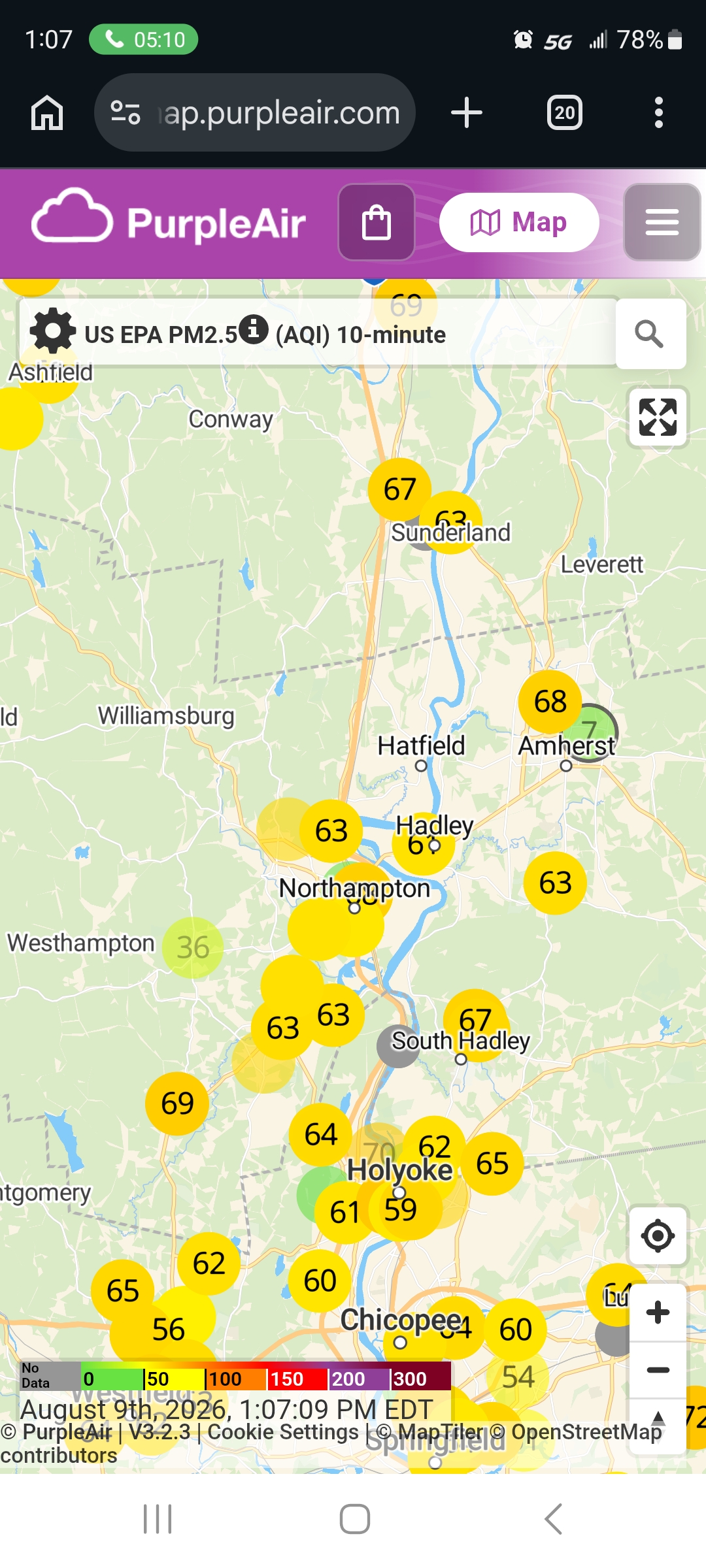
Well, for instance, if you’ve got one Excellent reading of 6 next to another reading of 68 and Unhealthy, that’s a very good clue that one of those is reading indoor air:

Screenshot of air quality readings. Many are yellow with readings over 50 and 2 are green with readings under 10.
Two of these things are not like the others!

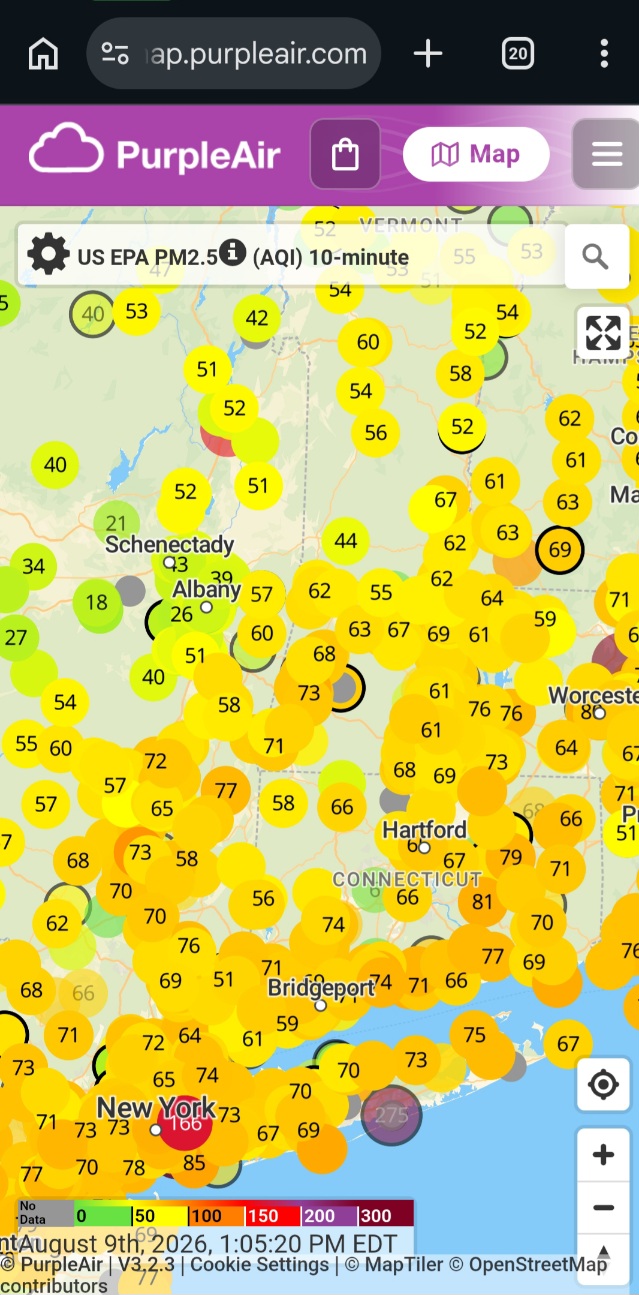
Also, people with sensitive/reactive systems may need to monitor indoor air pretty aggressively in high-pollution areas, where monitoring outdoor air is considered absurd:

Green AQI symbols with low numbers in a high-pollution zone
Ever been to Schenectady?

One resource I rely on for a sanity check is earth.nullschool.net, a gorgeous free online tool that shows the air, the oceans, and what they’re pushing around.

It’s such a great tool, we’ll look closer at it.

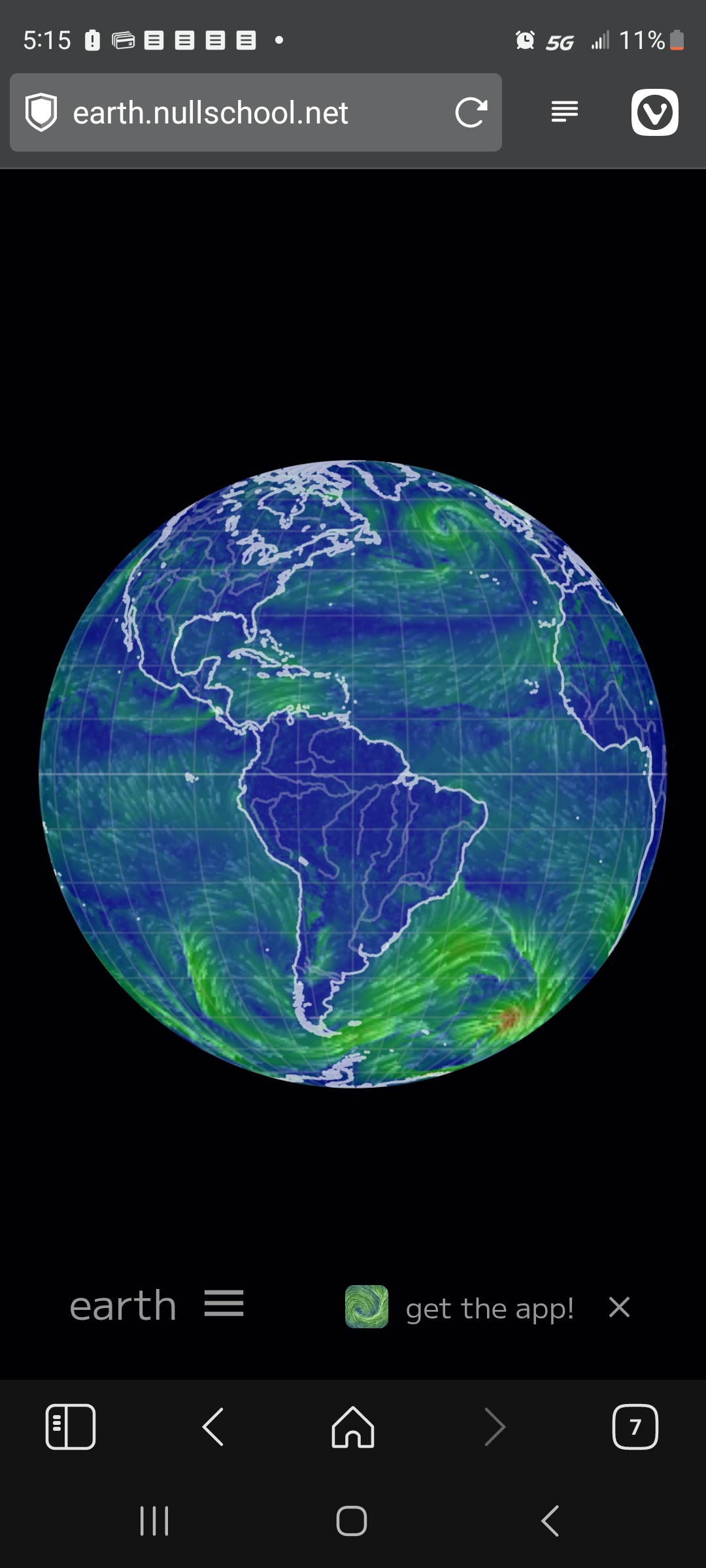
Earth

Here’s what it looks like, as of today:

Orthography image of Earth looking at the Americas, image centered on Brazil. It shows air currents and wind speed.
Pretty!

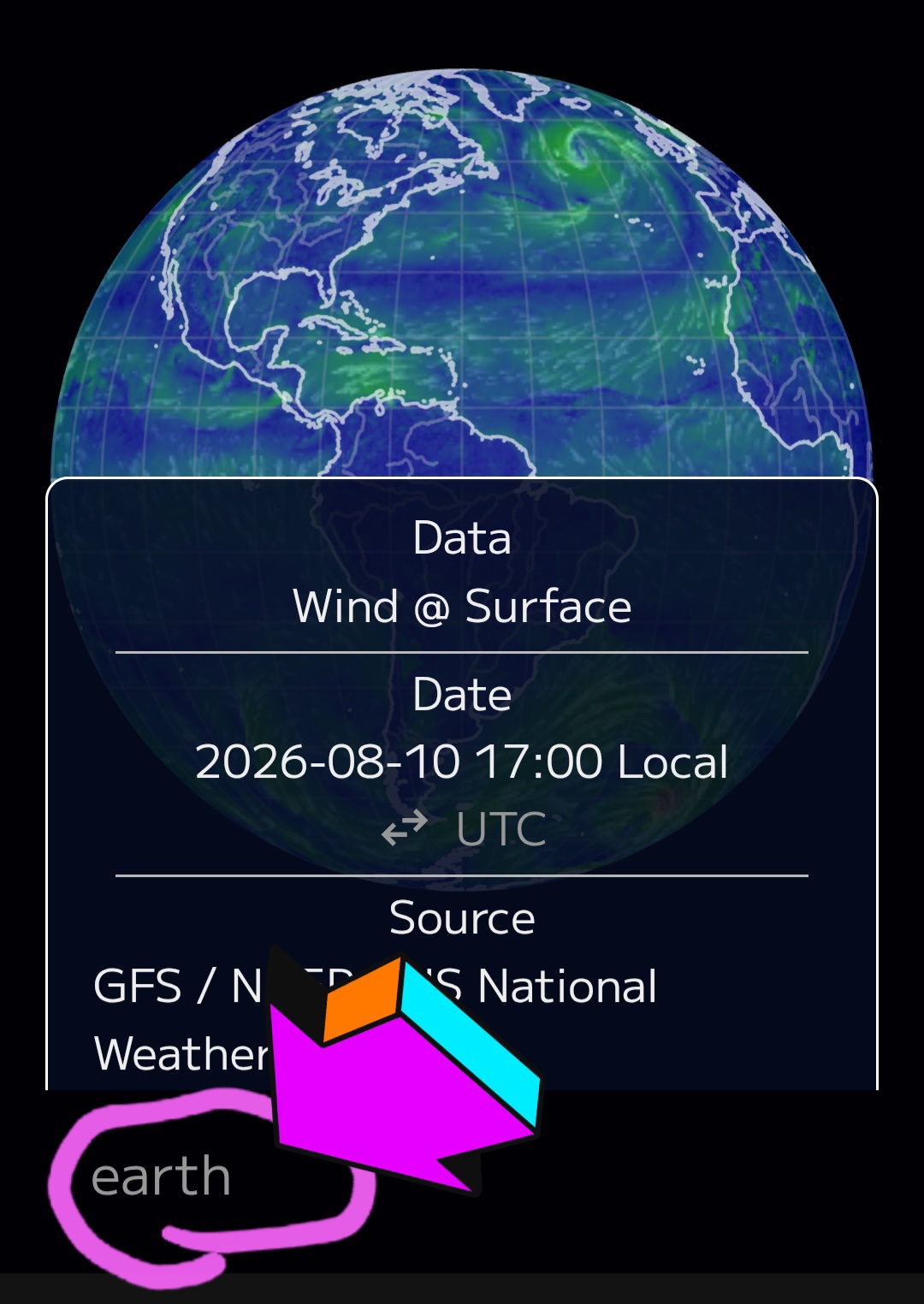
Touch the word “earth” to open or close the menu:

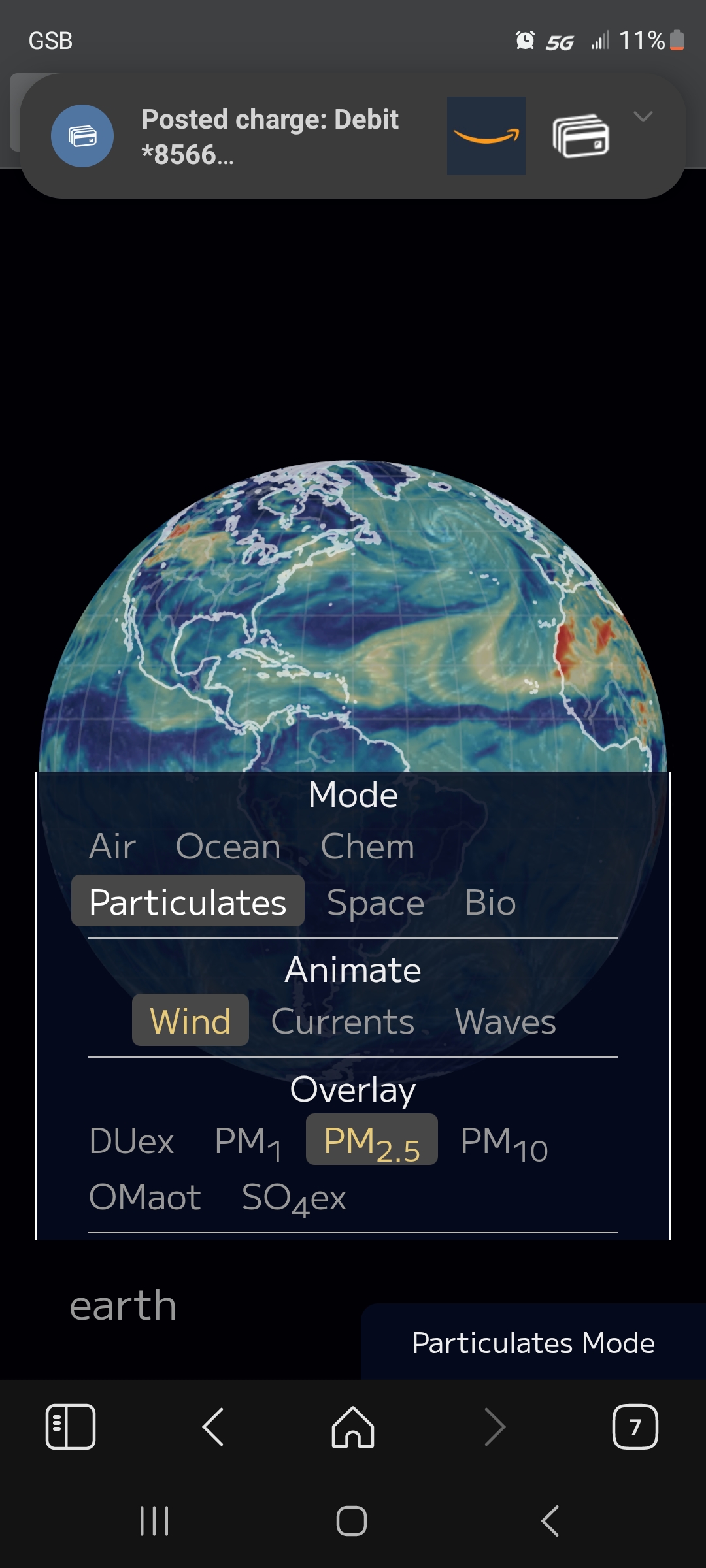
For our purposes, scroll down and adjust your settings to this:

Settings are Mode Particulates, Animate Wind, and Overlay PM two point five

PM stands for Particulate Matter and 2.5 is widely considered the riskiest particle size. It’s generated by wildfires, building fires, and volcanic eruptions. That particle size, in excess, is a real problem for anything with heart or lungs.

You can look at where they get their readings: usually 3 or more sources.

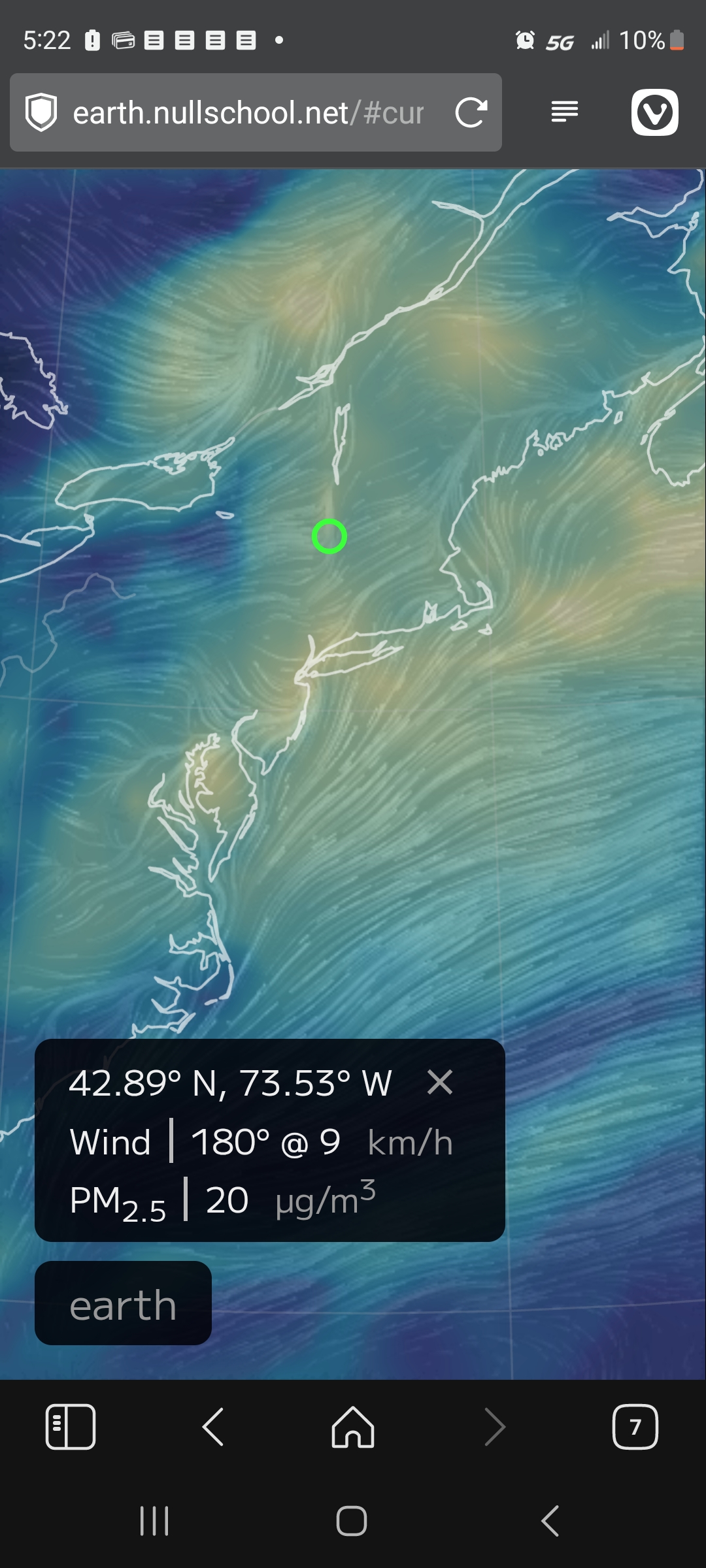
Let’s take a look at Schenectady on this setting:

It’s the lowest end of that yellow smear, in the green  circle.

That shade of yellow doesn’t correlate to an AQI under 30. If you go back and look at the Purple Air monitors for Schenectady, you’ll see what I mean about “the data don’t match the reality”.

Data don’t care if you like them. Facts don’t care if the data matches them. They are what they are.

If your health and function depend on knowing the reality, then it’s good to develop good tools to figure out what the reality is. I hope this helps.

In the end, my policy is simple: if the air looks wrong or smells bad, I want to mask up before going outside — and I bring my personal filter in case it gets worse!

And now… a little perspective

Skip this if you’re not up to it. It’s rough.

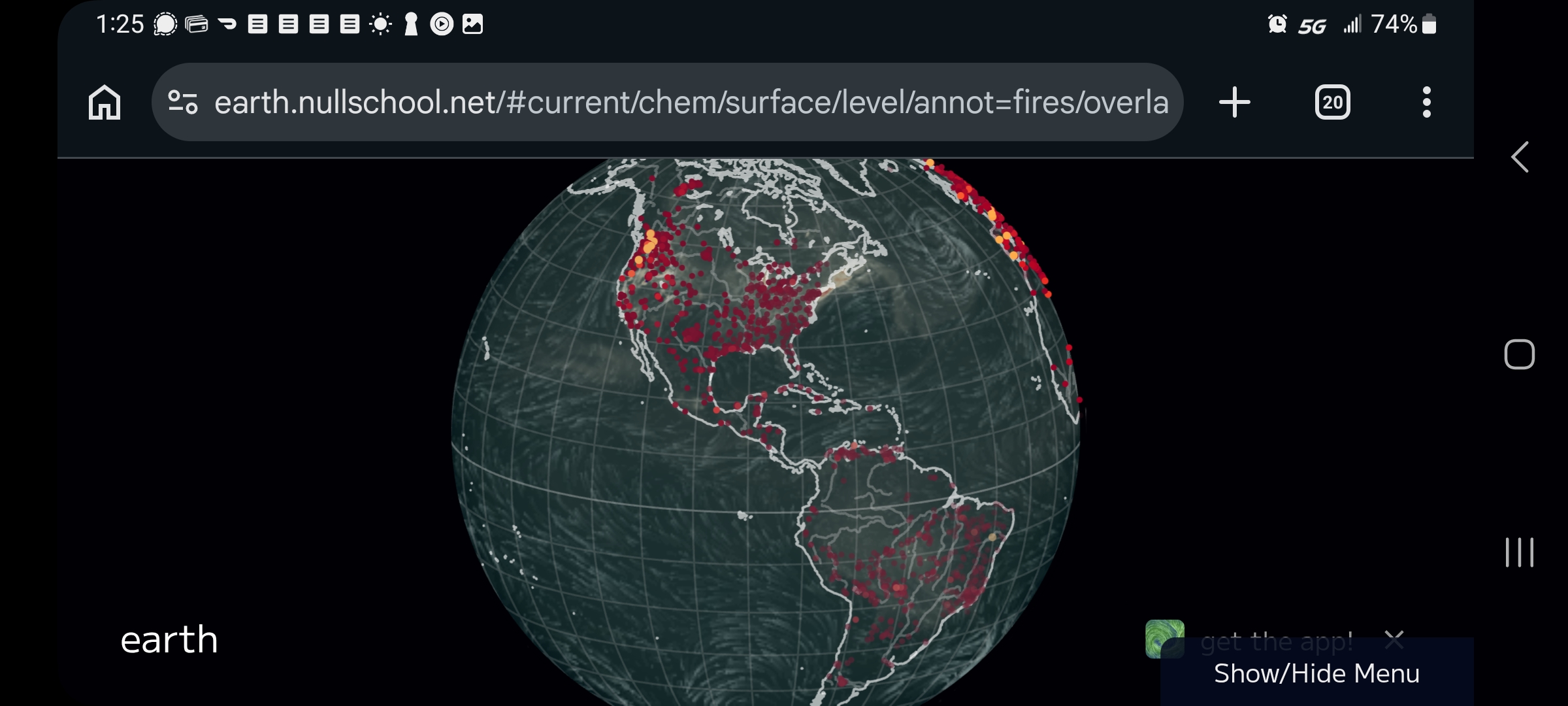
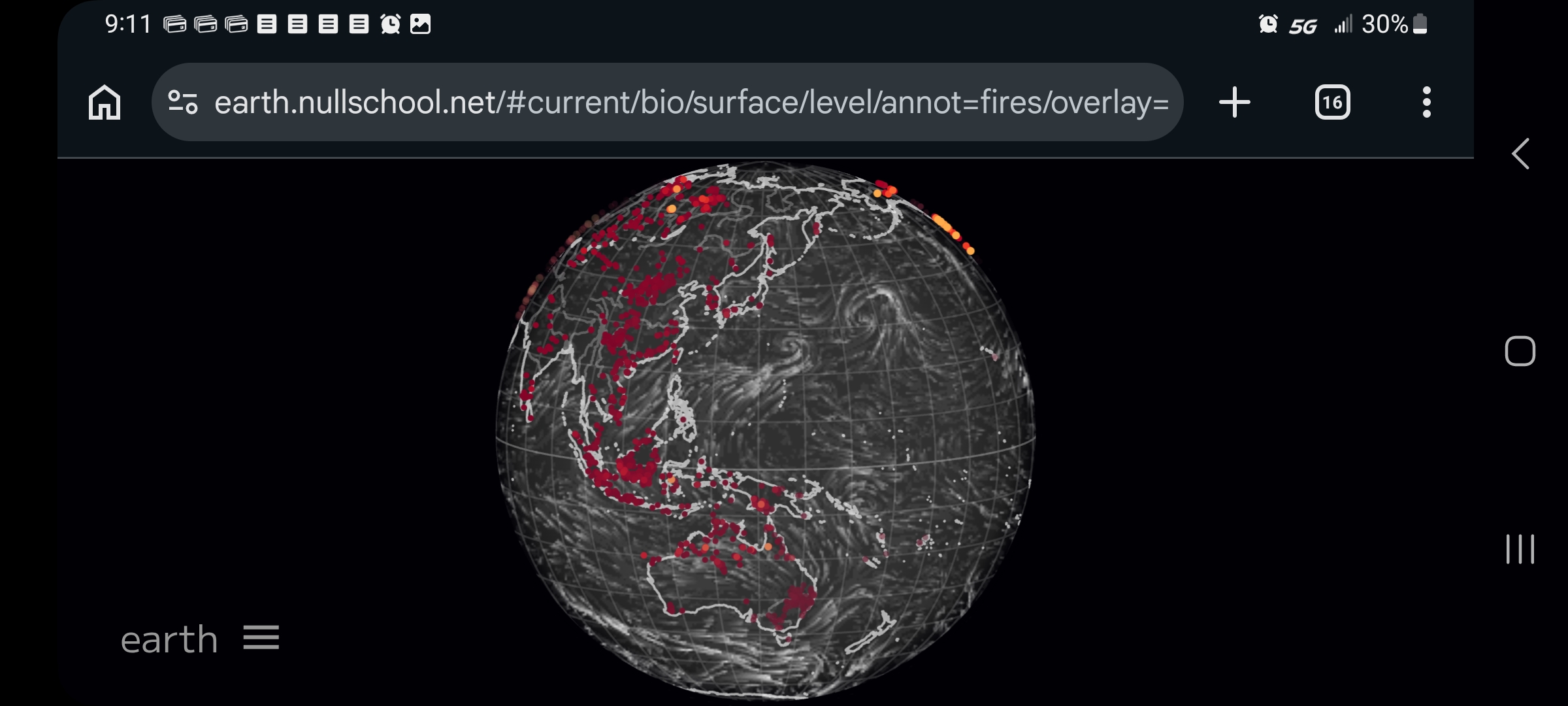
The American continents and their wildfires. South fewer wildfires than North — it’s winter down there.

Most of Asia, Australia, and the western Pacific Rim


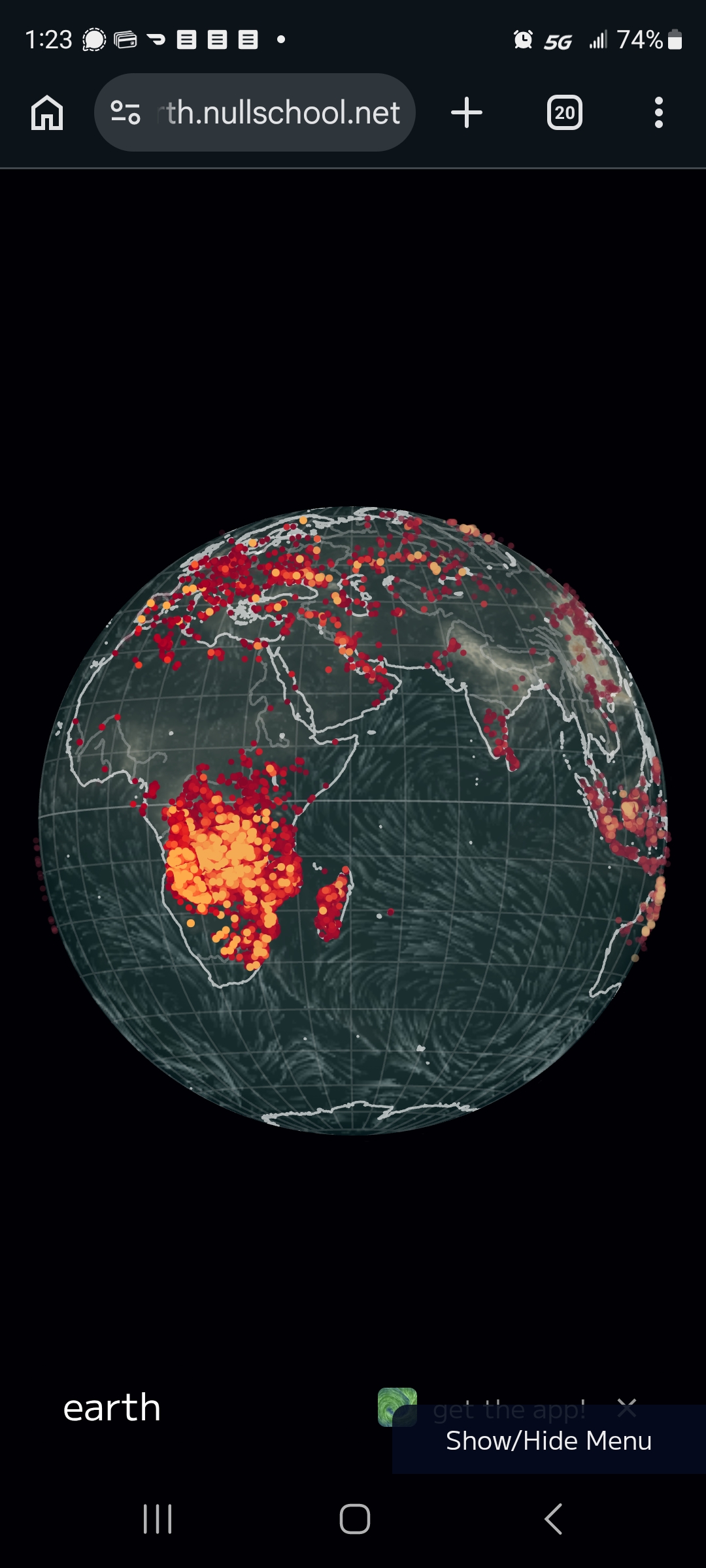
Europe is bad, as are the horrific war zones in Ukraine and the Middle East… but sub-Equatorial Africa is absolutely aflame, the worst of all.

And it’s winter down there. WTAH:


Tracker and Brain Support

You know when you need your basic tools or self-care tips and you just. Can’t. Remember?

Me too. Far too often.

Let me introduce my latest creation:

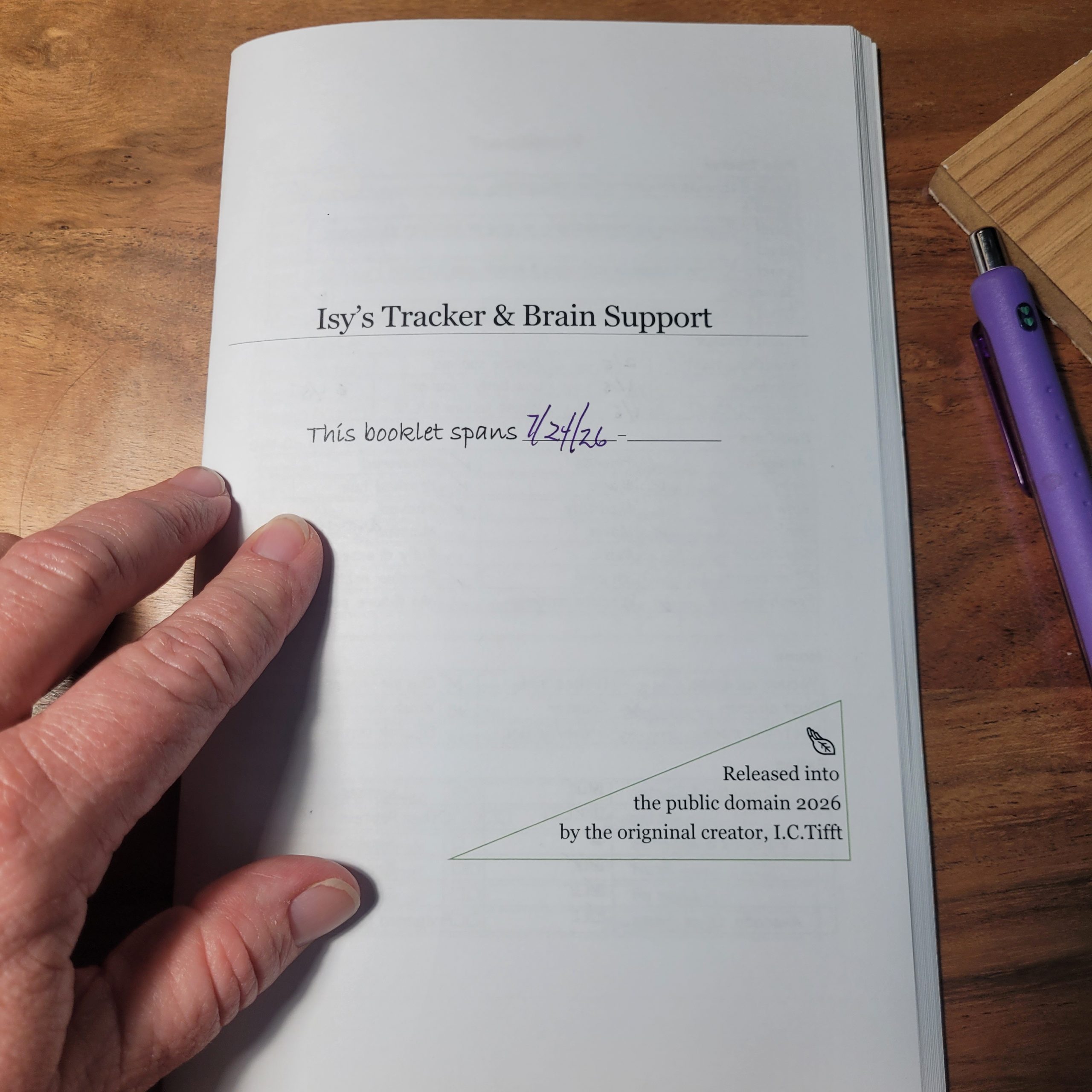
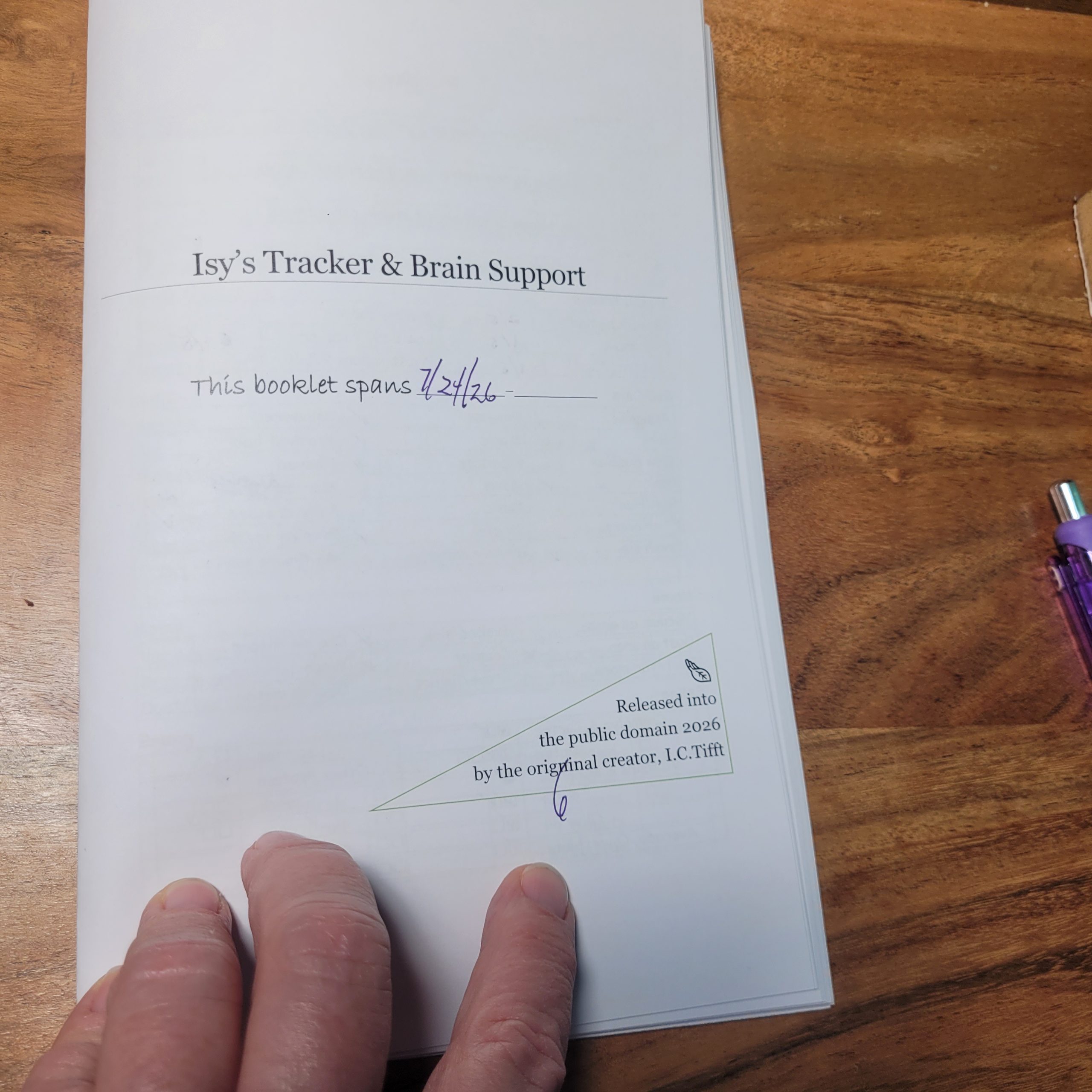
Half-fold booklet, titled Isy's Tracker and Brain Support. There is a note on the cover stating that the author placed this in the public domain in 2026. There is a typo.

Oops, I mean…

Same cover, with spelling edited

I’ve been thinking about this object for far too long, with lots of complications.

One day, some of those complications may make sense, but, right now, I needed to start with foundations: simple, legible, achievable tasks, with little boxes and numbers to check them off easily.

There are some things paper is better at. I’ve tried sooooooo many tracking apps that I’ve developed a riff about using them.

Apps for tracking allergies,

Apps for hacking maladies —

Working only 1 by 1.

Complex care is just no fun!

Apps for what you need to to buy

Or what to think of when you cry.

Apps for how your bowels go;

Apps for what your numbers show.

Some send info to your doctor!

Others keep it in a locker.

Turn-key claims are such canards

I have to customize them hard…

And therein lies a shocker.

Some apps let you set your own parameters. Great!! Can you write one in, drop it in the right spot, attach its rating box, and carry on?

Nope. Of course not. You have to walk through every blessed step of the engineer’s own logic, digging down to where you even have the option to create a custom line-item, apply its various associated characteristics either before or after you declare it custom (because each app is different), then figure out what system it should be rated under, and at this point were still a long way from done and we’re only 1 line-item in… so I exhale very hard as I vow not to throw my phone into the document shredder because it hasn’t done anything wrong.

I then delete the app and run cool (not cold) water over my wrists and pat it onto my forehead until the flames stop bursting from my nostrils. And then I try to forget the whole experience as completely as possible…

Until the next time, in the desperate hope that this time there might be an app worth one tenth of its set-up time.

With pain brain. And roaring ADHD. And allergies turning my mucous membranes inside out, which, as we know, is a great help (not!), all while my stomach is contemplating rebellion.

So…

I dug out and updated some old tracking sheets, which I once had printed up and glued into a tablet. (That was fun, and another effective format.)

I added a weekly tracker I developed later, and re-formatted it as a brag-sheet to feed the sense of accomplishment. (We’ve got to celebrate our accomplishments! Any reasonable opportunity for joy is key!)

7 days plus a weekly summary makes 8 pages.

This fits very neatly into printable formats.

So… I turned it into a booklet.

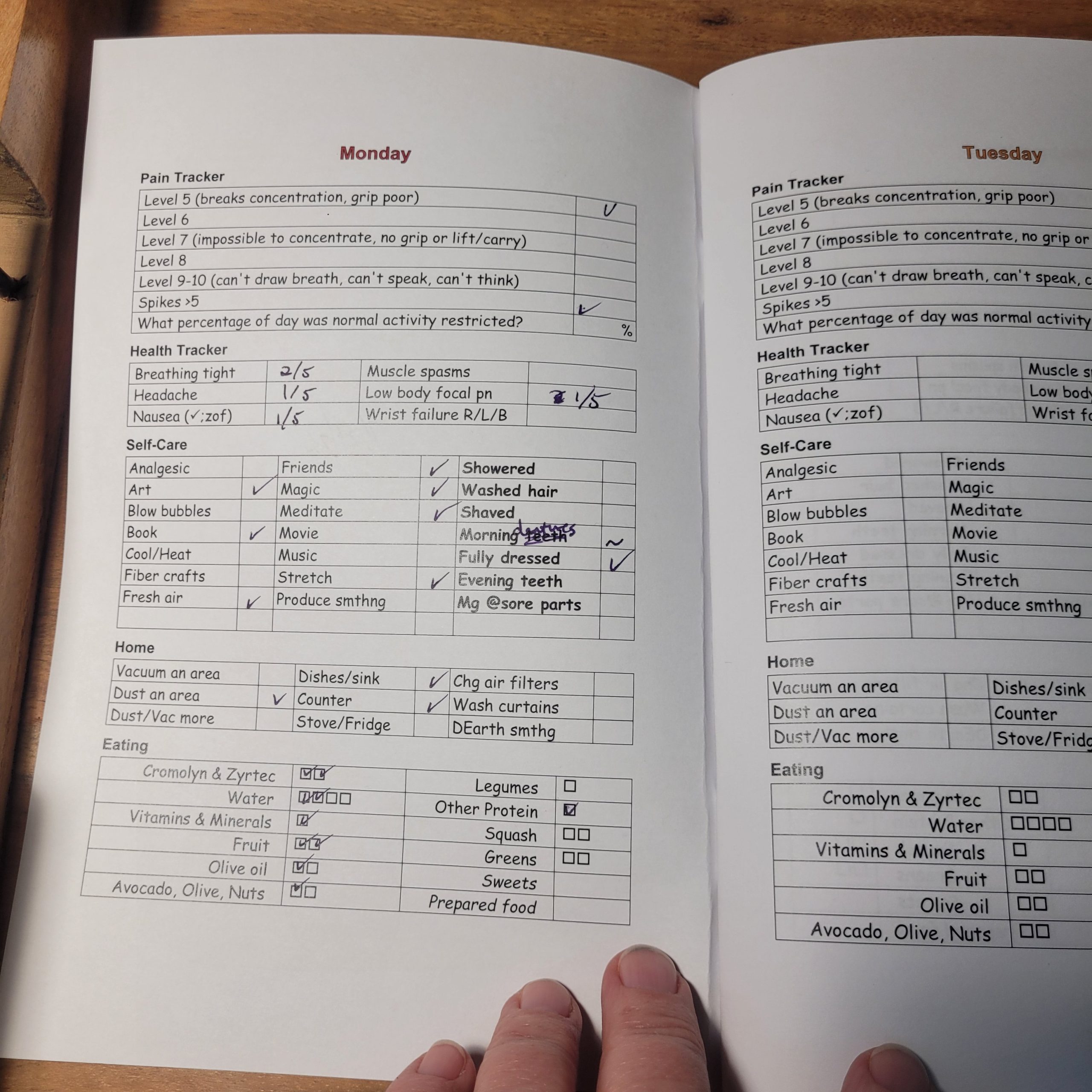
Photo of a half-fold booklet, day-tracking checkboxes for tracking pain, hygeine, eating, and self-care. The first page, Monday, is filled in with tick marks in many of the boxes.

And, on every 8th page, I get to pause and take credit for the week.

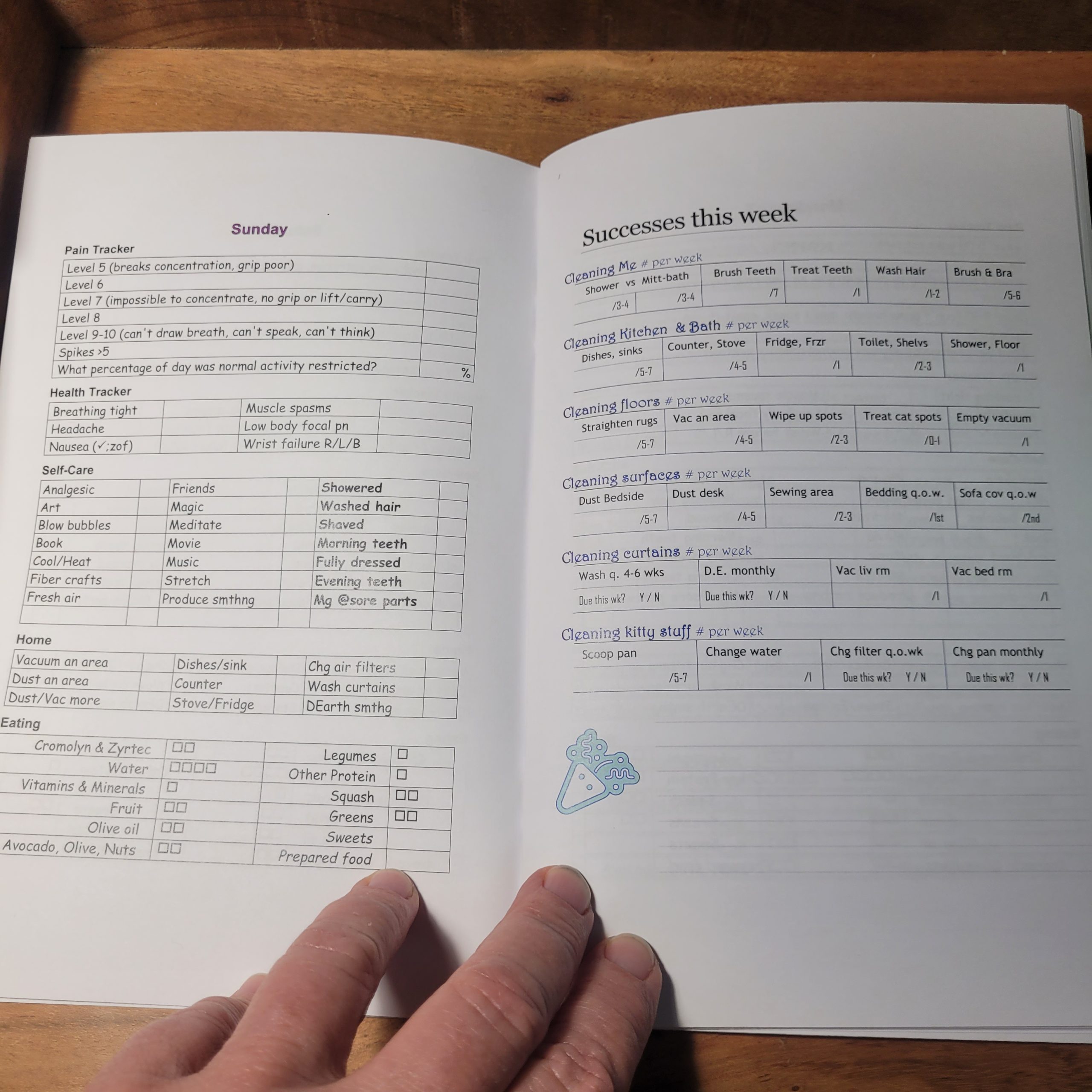
The booklet open to the 7th and 8th page. The 8th page has a weekly accounting of the hygeine, housework, and self-care of the week, with pretty fonts and a touch of color.

Fundamentals.

It is never too late, or too boring, or too anything, to work on fundamentals.

Here I go: back to fundamentals.

Isn’t that a sign of strength? 🤣

Blessing by the seat of her pantaloons

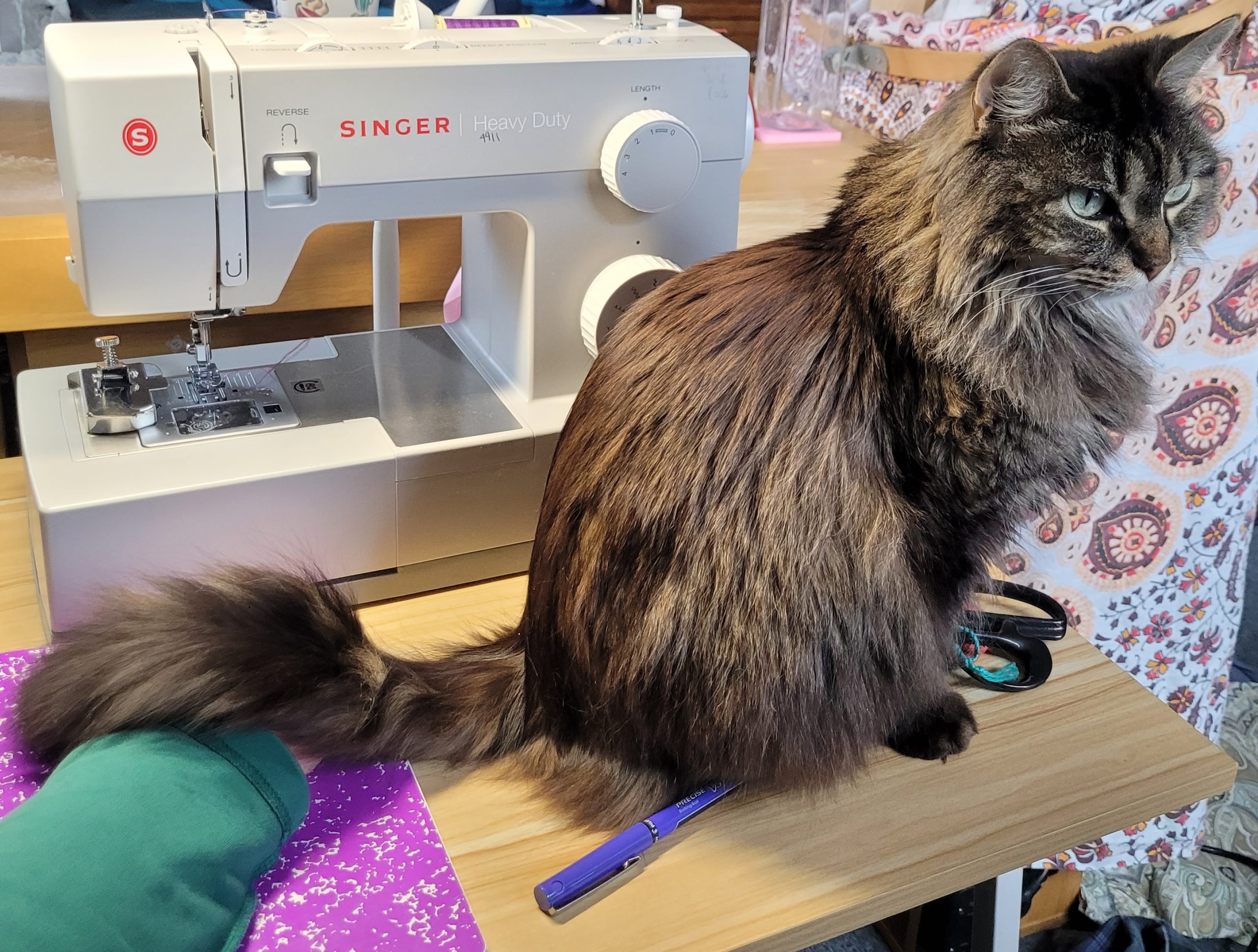
My cat blesses things by sitting on them. She thinks that’s perfectly appropriate, and doesn’t seem to care if there are other feelings on the subject.

She generates a fair bit of brain juice for me. That said, normally, having my center of attention occluded by a messy floof with gemlike eyes has not been high on my list of useful experiences.

Today, for a change, I worked around it. As soon as I really needed her out of the way, she moved off my notes and let me turn the page.

She must be feeling merciful.

Now she’s draping her tail over my notebook. I think this is the equivalent of a benediction.

I think cats are here to teach us to communicate. She has been communicating blessings & benedictions all this time, and I thought she was just getting in the way.

Like a missionistic preacher, she doesn’t always realize that her blessings and benedictions might be poorly timed, or even unwelcome.

She’s working on her timing. There is no power in heaven or earth that can persuade her she’s ever unwelcome.

I’m OK with that.

Quickie: Snorgie sick

OMG I have a head cold. WTH???

My last few illnesses have been of the “when do I go to the ER” sort.

This is just… snorgies. Not fun, but so trivial in the scheme of things.

So far. No promises, ofc.

I’m teaching my lovely housemate how to make my snorgie tea, which will have to do until I can stand up safely long enough to breathe steam — the sure-fire way to wipe out a snorge (sinus issue) in my family.

Snorgie tea, for me at least, is roughly this:

  • 1/3 cup/80 ml dried nettle herb (fabulous antihistamine & source of useful minerals)
  • 1/8 teaspoon/~.6 ml powdered ginger (clears things)
  • 1/8 teaspoon/~.6 ml ground clove (intense antioxidant)
  • 1/4 teaspoon/~1.2 ml cinnamon (sweetener)
  • 1/4 teaspoon/~1.2 ml ground pink peppercorns (supports everything else & I like the Asian zing of it; substitute black pepper if you want to & can)

I put it in my reusable linen teabag (you can use whatever you want, or use nothing & let it steep until everything settles). Pour freshly-boiled water over it, letting the bulk of the nettle & seed/bark-ness of everything else handle the heat.

That makes ~24 oz/700 ml, more or less, depending on how you like your herbal brews.

I add local honey because passive immunity works for me, and our local honey is delicious.

There are many lovely anti-snorge teas around. Many come pre-made! Whatever you use, may it be pleasant and helpful.

Quickies, x5: How the doctor-patient situation is supposed to work

Chronic specialist care

Once upon a time, I asked my hot-shot pain specialist (I’ve had some real rock-stars) for something heavy-duty and intense (I forget what).

He told me that he wanted to stick with using current meds a little differently and upgrading my self-management skills, because I had a lot of years left and he wanted to keep something in reserve for when things got worse.

This doctor really understood long-term palliative care — palliative care meaning, you’re not expected to recover, so treatment means managing symptoms for as long as possible.

That’s not about dying comfortably, most of the time. It’s about living anyway. Being sick is not the end of life. It’s just a heck of a detour.

He was apologetic and sympathetic, hoping I wasn’t too dismayed and disappointed. I was delighted to realize this physician firmly intended for me to have a long and active life, and was asking me to step up to the plate to help to make it so. I don’t think he realized that, in that moment.

I said to my specialist, “My job is to figure out how to get through my days as gracefully as possible. Your job is to hold the long view for me, and figure out how to manage my care over time so I can get through the years as gracefully as possible.”

He looked at me in perfect stillness for a long moment. For someone who likes talking as much as he does (for good reason; interesting talker), that was weighty.

He asked, “Would you please come to my severe-pain support group and say that?”

Sadly, I really couldn’t drive safely that late and knew I couldn’t get a ride for it. (This was pre-pandemic, so, no remote possibilities.)

It’s possible that he was as frustrated and disappointed that I couldn’t come and say this to his patients as he had expected me to be about the medication. So, Dr. Saberski, this one’s for you!

Emergency visits

The purpose of the Emergency Department (or A&E/Casualty, for the other English-speaking countries) is to figure out if anything is going to kill or disable you in the next 24-48 hours. It’s a very specific remit.

Flare-ups of chronic conditions can creep into that remit, severe pain being very disabling in itself.

However, another condition of mine, gastroparesis, is not a great candidate. The heavy-duty pain meds in the ER are mostly narcotics, which rarely work for intestinal pain and, more importantly, make the intestinal paralysis worse. The anti-vomiting meds may not be better than what your doctor prescribes, although they may be different and worth trying for that reason alone.

ER nurses used to have an effective line in moving stubborn bowels. It seems this is no longer the case. It’s often considered a specialist task, not that specialists do it either. If in doubt, look up “soap-suds enema” and follow the instructions carefully. Stay near a toilet for the next 6 hours as your guts remember their job.

It’s vital to know that dehydration can be deadly or disabling, and the ER is exactly the place to go for treating that. So, if you can’t keep even sips of water down for a day or two, for any reason, and you’ve got the sunken eyes and play-dough skin (pull up a little fold on the back of your hand, and it stays there), the ER is the place to go.

Bodies can’t recover without water. Water really is life.

If your condition requires specialist knowledge to treat, but probably won’t kill you or further disable you in the next 24-48 hours, the ER can be bitterly frustrating, because thats not their brief and it feels unfair to ask them for it when they don’t have the training or funding.

However, it’s perfectly okay to phone them up and ask the triage nurse what to do. I’m an old triage nurse and I loved it when people were “on it” enough to call and ask. If they didn’t need to come in, I could tell them what to do and what to report if things changed. If they needed to come in, I knew they would do as well as possible and I could get them sorted and into appropriate care faster and with a rare smile on my face.

Being deliberately involved in your care is that powerful a message to send to your system. We can’t consciously control our systems, except in nudging things here & there, after specific training. We can deliver primal shoves with our basic approach, with how deliberate and mindful we are about our care.

Urgent care

Urgent Care is where you go if you’re pretty sure you aren’t going to die or be (further) disabled, but you do need same-day care.

Keep in mind that these providers do not have specialist training, but might be able to make a call to your specialist or be willing to discuss what you want from them. I said “might” — it depends on factors beyond your, or even their, control.

In the US, they usually can’t make referrals — except to the ER, if they find that you need further scans or a higher level of care.

It’s not fair to them to expect specialist care. That said, it’s not fair to you to have an inaccessible specialist. Lousy situation.

Primary (general) care

This person is supposed to be the ring-master who holds the ends of all the threads of your care. They’re supposed to take over your prescriptions (unless they’re actively in the “figuring out what works” stage) or you’ve got a specialist who wants to stay absolutely on top of things.

This is the person you usually call for coughs and colds, annual checkups, questions about whether you might need another specialist or different care, and when you want to talk over health care concerns, including confusion with how the system works.

They’ve still only got 5-10 minutes with you, but it’s time well spent if you’re confused or overwhelmed. As ever, note your issues and questions before going in, to make the best use of your time together.

One of the uses of those “talking” visits is for a medication review, one of the best uses of time there can be for us. See the Pharmacist section for more.

Pharmacist

These are the medication bosses. Their depth of knowledge of medications, interactions, side-effects, and alternatives is absolutely daunting. They’re the wizards of meds.

If you’re having symptoms that might be side-effects, this is who you ask about it. If you’re unsure about a new med or dont know what to expect, this is who you ask about it. If you’ve got genetic variants that might affect medication metabolism, this is who you ask about it.

Medication review

If you’re concerned at how many meds you take, talk to your pharmacist first. Then, with the notes from that conversation in hand, talk to your doctors.

This is called a “medication review” and everyone can do it annually, or more often if things are changing for you.

Pharmacists can’t prescribe, because the depth of knowledge about various bodies in sickness and health is the reason why physicians spend even longer in training than anyone else. Most of medical care is beyond medication. It’s why nutrition and self-care matter so much.

The body is its own unique thing and needs its inhabitant to be involved for best results.

In short

Medicine is really, seriously deep and complex. Each of these segments of the health care system is necessary, and none can substitute for the others.

It’s an imperfect system. It should be much better, but, heaven forfend, that might cut into enormous corporate profit margins. Patients, doctors, pharmacists, and every actual helping human has to work within the restraints of enormous corporate profit margins.

Hope this helps clear a few things up!

Quickies: The deliverance of deliberate delight

We grew up thinking happiness, joy, delight, etc., was spontaneous. It arose naturally from circumstances. If you had to go looking for it, or even put in the effort to crack open a door for it, it lost legitimacy. It wasn’t real.

Thank goodness that’s incorrect.

We know now that seeking the little joys has a cumulative effect that makes us stronger and more resilient. I’ve written about this before here 1 and here 2 (plus, it’s mentioned pretty often in passing), but it feels like time to mention it again.

There’s a social push, in some areas, to do like they do in zombie shows and batten down with All The Weapons and prepare to destroy all comers, because they will surely want to destroy you.

If that’s your jam, go ahead.

Social data and history shows that kindly communities generally weather hard times better. Everyone has different skills, and that only works well when skills are pooled in a varied group.

It’s like making sandwiches…

If everyone has peanut butter, you don’t have sandwiches, you have an impending plumbing problem once everyone has eaten it. That’s like everyone having the same set of skills or preferences — it’s just not going to work out well under stress.

If someone has peanut butter, someone else has white bread, another has whole wheat bread, another has slices of chicken, somebody shows up with pickles and mayo, another has lettuce and tuna, and an absolute star shows up with jelly and gluten-free options, then everyone gets a delicious sandwich.

Pooling resources is fun! And that’s how you get through hard times. Use your strengths and work with those who can do what you can’t. *

Scared of the zombies? One skill-set an amazing number of people around you have relates to tactics, strategy, combat, and martial arts. The US has been actively involved, as a major force, in wars around the world at least since the late 1980s, with only brief breaks before then. We’ve got lots of veterans, and they can build things, wire things, program things, bandage things, and cook, too. You’d be surprised.

Wait… How did we get here? I meant to write about how finding little beauties, stopping to soak up little joys, noticing and remembering what you like so you can go back to it — these all trigger “brain juice” in the form of neurotransmitters that help us regulate our minds and get closer to peace, poise, and sanity.

All of which is super handy when you’re picking teams to survive the zombie apocalypse. 🤣✨️

* Hot tip:

Disabled people tend to be overlooked. That’s absurd. Nobody is better at thinking around problems than disabled people, and we tend to have incredibly useful skills… because “disabled” is a misnomer. Most of us are highly able — we just have specific barriers, which we know all about. We can seek complementary skills and specify our necessary adaptations.

Come get us. You’ll be glad you did. A tiny bit of upfront effort, and then your whole project grows wings.

Disability & commensurate effort

“Why do you do that to yourself?”

Why would I not? That’s the more pointed question.

I remember being lazy. I was fit, well, and always a little dissatisfied. …This might be the human condition.

I loved to work (still do) but I also valued my downtime, time in the wild, beach time, workout time, hang time with friends. Something like work-life balance, I guess. In retrospect it seems lazy, but my perspective is a little distorted. It’s been decades since I had a real vacation from my current work.

Current work situation

My current work is living anyway, in spite of this suite of deficits and dysfunctions. It doesn’t give me time off. It’s frankly a bit tiresome.

Why, yes, that was a supremely wry understatement. Cackle freely!

If I stuck to doing only the things that hurt the least, stress my system the least, and otherwise rock this boat as little as possible, what would happen?

Would I be more comfortable? Actually… no, not beyond the time that rest is necessary and productive.

Would I get any better? Decidedly not. “Use it or lose it” beats in my mind like a metronome when I’m down too long. If I don’t stay active, right up to current limits, my exertional malaise gets worse. (It’s a real thing: exercise tears the body down, where it would build a normal person’s up.)

Survival of the fittest

“Then, let’s be honest here, do you deserve to survive?”

Most (not all) people ask that more subtly, but it’s a question I’ve faced often. Brutal it may be, but it’s natural.

First, let’s check the wording. The phrase “survival of the fittest” was coined by the economic theorist & philospher Herbert Spencer (who clearly didn’t let clarity stand in the way of a good bumper-sticker slogan.)

Darwin later adopted it, possibly assuming that his accompanying thoughts would be kept in mind. Now we have to specify them: strength, speed, intelligence, etc., are all subordinate to being able and willing to adapt to change.

The point he was making all along is that they key to survival is adapting to change. Not being in shape.

Finches aren’t humans

Darwin famously studied tiny birds on tiny islands to arrive at his insights. They had tiny life spans and tiny jobs. For them, fitness was biological: who got to breed and have their offspring get to breed, and so on ad infinitum? Breeding and brooding are simple markers.

Humans have big, tangled societies with big, tangled networks and big, tangled obligations. It’s not just breeding and brooding, although that can be part of it. It’s work, school, friends, parents, neighbors, politics & policy, insurance premiums, mutual aid, prepping for a blizzard or another record-breaking hurricane. This time of epochal shifts in weather, science, and economics creates a relentless roar of things we need to cope with and adapt to, and a life where breeding & brooding cannot ensure survival, because, for many, the money and assurance of a tolerable future just aren’t there any more. Only appropriate adaptation to change can aid survival.

We’re (almost) all forced to manage so much more than the finches ever could conceive of.

Stating the obvious

What group of people is the best at adapting?

Take a minute. I’m not going anywhere.

Who else but your people with handicaps and disabilities.

Watch what they do, how they manage in the face of an intransigent world and variable limits, how they keep going. It looks like an art form, if life itself were art.

Just the cost of doing business

I’m still absorbing an incident ~12 years ago when a chair-riding friend with paraplegia was driving us in his van, and we had to stop and get gas. I unbuckled my seatbelt and was going to go pump. He waved me down. “Nah, I got it.”

He opened the sliding door behind him, flicked his wheelchair out of the minivan and half-open in one complicated motion, levered himself and the chair into conjunction, and went on about the business of pumping gas from his chair. Then he reversed the process (more or less) to get back in.

I told him that was impressive. Didn’t he mind the effort?

He shrugged. “It’s just the cost of doing business.”

I let that sink in.

Everybody has to do tedious things to get to the next thing they want. It’s the cost of doing business, of getting through life.

Everybody’s cost is a bit different.

Everybody should have the right to choose what’s worth the cost.

“Life, liberty, and the pursuit of happiness” was originally written in bloody-handed hypocrisy, but it’s right and wise to make it true.

Challenging yourself can be fun

With all that said, my insistence on pushing my limits — as long as I can generally expect safe air, food, water, shelter, and adequate rest — might make more sense. Or maybe it doesn’t. It’s not likely to change, especially since I decided last year that life was too short to settle for survival — I was going to chase fun, and see where I found it!

Documentation: logs and tracking

Cards on the table: I like to write. Maybe a little too much.

It’s inconvenient to have crapped-out wrists that limit typing severely and a voice just weird enough in accent & vocal fry to make dictation software stare back at me, blinking blankly, instead of capturing the marvelous flow of inspiration…

Yeah. To heck with that. I have to make it simpler.

I have a bunch of self-documentation templates and techniques which I’ve been meaning to write about, because we know how important providing evidence of your own experience can be and because… I like to write.

Sigh.

I’m not trying to make them pretty and I’m certainly not taking the time to make them generic or pare out the details of what I’ve tried and used over the years. I like doing that, but wanting to do that is what has kept from getting this stuff up… for years.

I’m just going to throw them at you instead. You’re all smart enough to take what you like and leave the rest. Have fun!

Note: All of my Self-Documentation by LivingAnyway.com is marked CC0 1.0. To view a copy of this mark, visit https://creativecommons.org/publicdomain/zero/1.0/

TL;DR – it’s a formal way of making this work Public Domain. Go wild. It’s yours now.

Pro Tip: There are good health tracker apps now, and one or two are very good. If they work for you, that’s good enough!

If, like me, screens hurt your eyes and tapping hurts your hands, you might want to consider the ol’ pen-and-paper method here.

We’ve got logs in color. We’ve got ’em in black and white. We’ve got half sheets, whole sheets. We’ve got tables, checkboxes, body maps… anything I could think of to make using these a low-cognition task:

You can see how my tracking changed depending on just how sick I was vs. how much activity I could (or, more often, wanted to) expect from myself. They show how my priorities and needs shifted, what worked for me well enough to track, and so on. Don’t worry that it seems rather personal – it’s all information; information is a good thing; good things should be shared. You might find a relevant format to start your own tracker from.

They’re in PDF format, for technical reasons. Conversion tools and PDF editing tools are available, some of them for free. Have fun, and come back here to re-download if you mess something up. This is a no-shame zone.


Halcyon insomnia

I’m having an episode of rock-hard insomnia. I’ve been having unpleasant dreams about an obnoxious person I used to know. I wondered if there was some concealed message in these recurring distasteful dreams, but, on reflection, I’ve concluded that my brain is just being an asshat. Sometimes it just is.

Having unpleasant dreams does cause insomnia for me; it seems I don’t want to go to dreamland when dreamland sucks. That seems fair!

So, I’ve dabbed lavender oil on my pillow, which calms my central nervous system and wards off nightmares. I’ve taken hydroxyzine, but didn’t even notice the window of opportunity, so that’s no good. I have one of my favorite books read by one of my favorite readers playing, but it’s just noise tonight.

Nope. Nothing.

I’m more relaxed, sure. Just nowhere near sleepy-bye.

What occupies my mind most of all, though, is how this period in my life, personally, is a halcyon time. Hard as it is in the shared realities of politics and funding, my personal life is filled with kindness, care, and love, more than it’s been in… oh lordy, let’s not go there. Years.

I adopted a young friend and they have brought their partner and siblings and pets into my life. Every time a new member of this clan meets me, my soon-to-be kid-in-law watches the exchange, nods, and says, “Everyone in this family falls in love with Isy,” as if it were the most natural thing and completely to be expected.

It’s an odd way to double your family size. I realize that. It won’t always feel so easy, because that’s life and being human. It’s simply that, after decades of grinding through this really bloody hard work of being alive with CRPS and all its atrocious friends & companions (dysautonomia and disability to start with and spiraling down from there), working through every challenge essentially alone for most of that time… this? This is different.

One of the kids is staying over to do my housework and help with shopping and cooking. They commented, insightfully, how glad they were that I experimented more with food when they were around.

I said that it’s easier because if I choose wrong and my fingers turn into sausages, I can still eat safely and recover without losing ground, because they’re there to take care of things. Also, my allergies are much better because of their work.

I said, “It’s safer when you’re here.”

I had one of those echoey moments when a bone-shaking realization hits you and you can either weep for the dreadful risks and hardships of the past or take a breath and be grateful for the present.

I took a breath.

So, although I need to sleep and I don’t want any more nightmares, I’m enjoying being awake because I can just wallow in this feeling that — after so long and so much — I find myself recognizing, with a rare purity, that these are halcyon days for me. Right now. I didn’t know I’d get such a wonderful time again, but I hoped for it, for many, many years.

I’ve had good times, don’t get me wrong! I’m good at finding joy and making the most of moments of connection and delight. I have friends and relatives I adore and can rely on. My life has loads of good.

It’s not the same as this feeling of bedrock beauty undergirding my daily experience. Does that make sense? It’s not just beautiful moments with loved ones making gorgeous spots among the daily crap. It’s a wholeness of greater safety and loving peace. The lovely moments string together until the brightness takes over.

As my adoptive grandchild sleeps in the next room, I find that I don’t have nearly enough fingers and toes to count all my blessings. I don’t mind being awake tonight. It’s a halcyon insomnia!

SMIB!