Seeking Diagnosis if you don’t fit the Standard Medical Model

Today’s post is a copy/paste from an answer I wrote in my socials. This is real life, not polemic.

“I’m a woman trying to get a diagnosis for my pain. I can’t understand the doctors, or they don’t understand me. Do I need to take someone in with me? I need the dr to take me seriously.”

Hoo boy, is this in my wheelhouse. Longtime (>25 yrs) pain patient, retired RN, ongoing patient advocate & educator.

You’re right: the pain of women (cis & trans) and people of color is dismissed, misunderstood, and under-treated horrifically. Know that this is unconscious reflex. It can’t be corrected by us, but it usually can be hacked.

How?

By presenting it as non-personally as possible. In other words, use:

A. Data & images to describe your pain & its effects,

B. Journalistic documentation for your experience with it, and

C. Others’ voices to support your words as you communicate it.

First, though, two key points:

Pro tip 1: Keep in mind “an averagely bad day”. We cannot plan for anything better.

When we’re describing how our pain affects us, we have to stick, not to our best or worst day (because they’re irrelevant; they’re exceptions) nor to an average day (because that’s out of reach without effective diagnosis, treatment, support, accommodation, nourishment, and rest), but to an averagely bad day.

This is our reality, and it’s what they need to know in order to plan appropriately and understand our needs.

If you describe any worse, you’re assumed to be faking it. The lack of conviction will show.

Any better, you’re actually faking it, but in the other direction.

“Averagely bad day” is the functional standard.

Pro tip 2: Recuperation and recovery is not calculated into pain description, unless you put it there. For instance, an activity that wipes you out for 3 days is different from an activity that knocks you back for a couple of hours, even if the reported level of pain is similar. Eff that tish!!

Calculate & document recuperation time.

For each thing that makes it worse, or each flare, document how long it takes to get back to your baseline. This is key to getting remission or even disease recovery.

A. Pictures & numbers

There are not enough words for pain in the English language. Also, as we know, they’re somehow just noise when coming from a woman, a “weirdo” (fill in any pejorative term), or a person of color. It’s wild, but there it is. We have to work around that.

Most of my tools are about getting their attention off of me and onto the pure information about my condition.

Which is interesting to them.

I’m not, and I handle things accordingly.

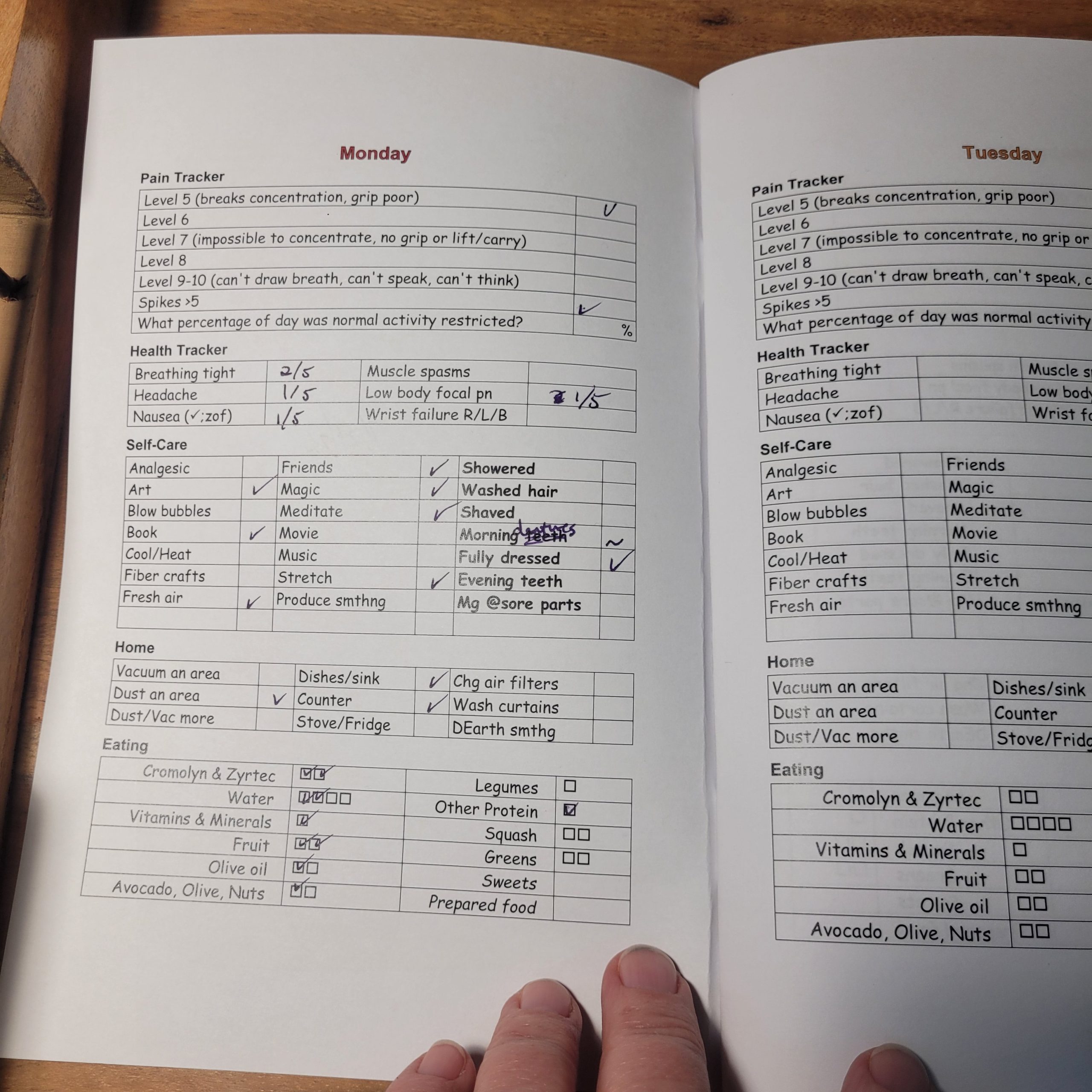
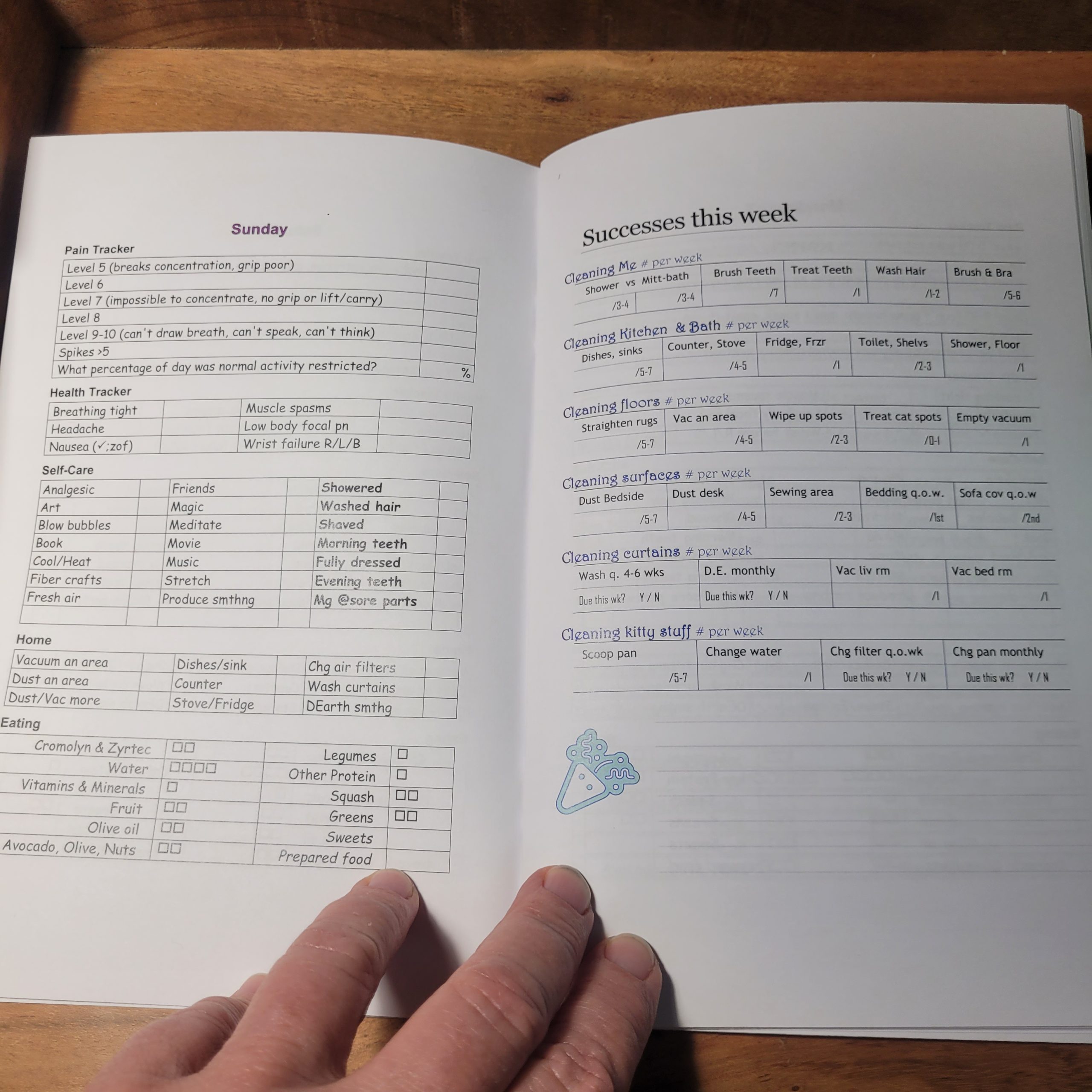
There are many ways to document the location, character, and intensity of your pain:

– Take pictures and mark them up in your photo editor.

– Fill out those “standard body” outlines.

– Draw your own outline of body or body parts and use that.

– Whatever works for you — just visualize it.

Make them look at the image, not you. Then they’re processing info, rather than being triggered by “woman reporting pain — must pretend it isn’t happening”.

We were all brought into the world by a way that typically causes a heck of a lot of pain to those giving birth, and sometimes I wonder if that primal event is what the denial relates to.

Functionality is the bottom line for any chronic condition.

The more you can put numbers to your levels of capacity at different times, the better. “Can carry 2 grocery bags 30 ft to the door today after meds, but yesterday I could only carry 1 without meds.” That’s an incredibly boring task, but it’s also an incredibly important indicator of function. It’s pure gold for the doctor’s notes.

I’ve got posts about doctor visit updates and timelines that demonstrate these tools in real life. For more info, go to the search bar or word cloud and search “documentation”. The site is a bit chaotic, but it’s all there.

B. Journalistic notes

Journalism answers “who, what, when, where, how, why”.

Who:

You’re the “who” who’s in pain.

Who sees, or is impacted by the effects of, your pain? Kids, colleagues, etc.

Who gave you a diagnosis, if any? Mention doctors by name and specialty.

What:

What hurts?

What makes it worse?

What makes it better, and is it significant or not?

What have you tried but had no benefit?

What’s affected? (Work, walking/standing, using the bathroom, carrying things like equipment or groceries, sleep, food prep & eating are the usual biggies.)

When:

When & where did it start?

When does it get worse? Better?

Does it have a diurnal pattern, meaning a consistent rise or fall through the day & night?

Where:

– Where, and how, does it hurt? Pictures are your friend. See A.

– Where do you go that makes it worse or better? Parks, forests, or print shops & other VOC sources can have an impact.

How:

– Describe the character of the pain: piercing, squeezing, burning, tingling, nauseating, etc etc.

– How does it limit you? Be specific. It helps to know that a gallon of water weighs 8 pounds, a bag of groceries about 10-12, a can of beans about a pound.

Whether you can lift without symptoms, how far you can carry, and whether you can manage stairs with those loads, are all good data!

How much you can do *safely and without needing recovery* is key.

– How long does it take to get back to your baseline after something happens? Calculate & document recuperation time. More on this later.

Why:

– If you have any thoughts about why it happened, mention them.

– If you have health-related gene scans or DNA analysis, it can strengthen the case for paying attention to you.

DNA rarely provides diagnoses, but clarifies ways you’re susceptible to types of illnesses, including pain diseases.

– If you have found any scientific articles, bring copies or send links.

C. Others’ voices

Others’ voices (especially deep voices from tall men) are more credible, somehow, and that’s messed up. Our lone voices should be heard! We are the experts in our own experience! But, well, here we are.

– If you don’t have a male friend or relation who is willing to be your “stunt man” and sit there exuding man-itude and occasionally repeating what you say, then there are other hacks.

A 3rd person in the room is key.

– A woman is excellent! She can sit there and quietly back you up, which is the baseline. She can ask if you feel like your questions were fully answered. She can ask if you understood what the doc just said, if it sounded like blah blah blah. She can ask her own questions, if you’re both OK with that. It’s your appointment after all; you can bring your own help.

You might (!!) see the doctor jump when she speaks, if they’ve forgotten she’s in the room. (It’s good for them.)

Pro tip: You’re a patient. Pride is irrelevant. It’s OK to seem goofy (though neat & well dressed,  if possible), as long as your needs are met and your care is appropriate and effective.

– It’s the law that you’re allowed to have a chaperone (yes, they use that word!) from the office in the appointment with you. Insist sweetly that you know it’s your right to have a chaperone with you, you want one, and you’re here a little early (be 15 min early) to allow them to find one for you.

You don’t owe any further explanation, though you can assure them the dr is fine, you want a chaperone anyway. (They’ll just have to work short-staffed until you’re done.)

Corner case: There’s an outside chance they’ll send in a security guard, which is inappropriate (they don’t have medical training and aren’t as trained in HIPAA) but it can work in your favor because, hey, usually someone tall & deeper-voiced. Greet them sweetly and thank them for being your chaperone — they need to know you’re to be protected, in their mental framework.

– You can ask about recording the visit, but be prepared for shock & horror. Being recorded is poison in some facilities because of legalities and liability concerns — and the way words can get twisted in court. If your doctor is fine with it, great! You can review it with your notebook and Merck Manual Consumer Edition.

There you have it.

Quickie: Managing expectations?

Today, I learned (or re-learned) how much louder clothing speaks than my expression or manner.

I went out in my “hippie” disguise — a change from my usual “preppie on her way to a parent-teacher conference” disguise.

I like turtlenecks in winter. Anyway.

Today, in my shaggy green sweater with the red-and-purple geometric designs, people are *smiling back* and giving me extra time when my fingers don’t work.

I love my neat, clean, long-lasting basic wardrobe. (A bit boring, but well-kempt, smart, and will stick around forever. Kind of like my ideal partner.) However, I feel Indian cotton and flowy accessories in my future. I need to be responded to, more than I need to be respected — and possibly slightly annoying…

Quickies: The deliverance of deliberate delight

We grew up thinking happiness, joy, delight, etc., was spontaneous. It arose naturally from circumstances. If you had to go looking for it, or even put in the effort to crack open a door for it, it lost legitimacy. It wasn’t real.

Thank goodness that’s incorrect.

We know now that seeking the little joys has a cumulative effect that makes us stronger and more resilient. I’ve written about this before here 1 and here 2 (plus, it’s mentioned pretty often in passing), but it feels like time to mention it again.

There’s a social push, in some areas, to do like they do in zombie shows and batten down with All The Weapons and prepare to destroy all comers, because they will surely want to destroy you.

If that’s your jam, go ahead.

Social data and history shows that kindly communities generally weather hard times better. Everyone has different skills, and that only works well when skills are pooled in a varied group.

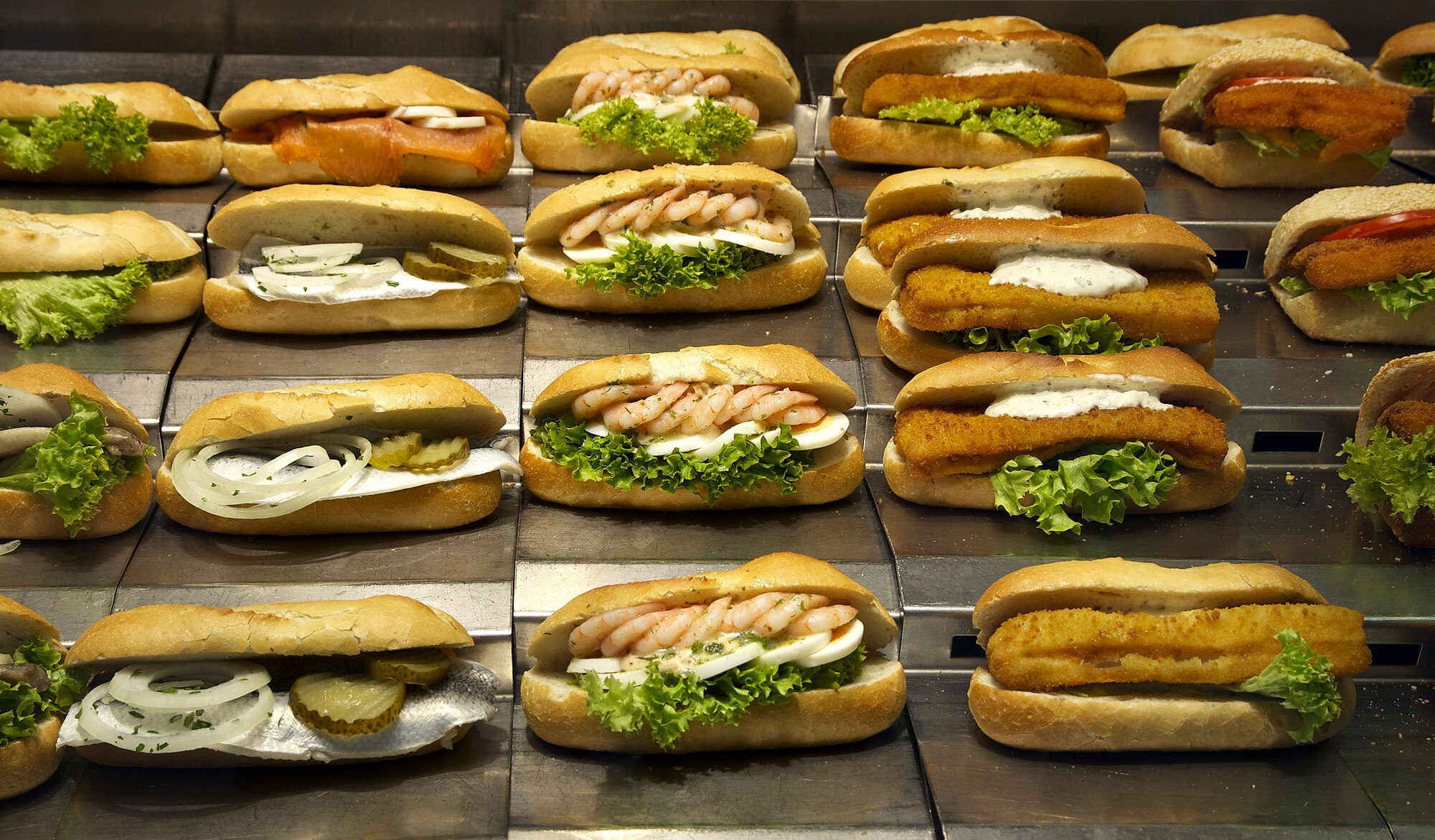
It’s like making sandwiches…

If everyone has peanut butter, you don’t have sandwiches, you have an impending plumbing problem once everyone has eaten it. That’s like everyone having the same set of skills or preferences — it’s just not going to work out well under stress.

If someone has peanut butter, someone else has white bread, another has whole wheat bread, another has slices of chicken, somebody shows up with pickles and mayo, another has lettuce and tuna, and an absolute star shows up with jelly and gluten-free options, then everyone gets a delicious sandwich.

Pooling resources is fun! And that’s how you get through hard times. Use your strengths and work with those who can do what you can’t. *

Scared of the zombies? One skill-set an amazing number of people around you have relates to tactics, strategy, combat, and martial arts. The US has been actively involved, as a major force, in wars around the world at least since the late 1980s, with only brief breaks before then. We’ve got lots of veterans, and they can build things, wire things, program things, bandage things, and cook, too. You’d be surprised.

Wait… How did we get here? I meant to write about how finding little beauties, stopping to soak up little joys, noticing and remembering what you like so you can go back to it — these all trigger “brain juice” in the form of neurotransmitters that help us regulate our minds and get closer to peace, poise, and sanity.

All of which is super handy when you’re picking teams to survive the zombie apocalypse. 🤣✨️

* Hot tip:

Disabled people tend to be overlooked. That’s absurd. Nobody is better at thinking around problems than disabled people, and we tend to have incredibly useful skills… because “disabled” is a misnomer. Most of us are highly able — we just have specific barriers, which we know all about. We can seek complementary skills and specify our necessary adaptations.

Come get us. You’ll be glad you did. A tiny bit of upfront effort, and then your whole project grows wings.

Quickies: Stubborn CRPS sores? TCM burn cream

New series: Quickies. Short, practical notes, mostly about things to try for problems with CRPS, dysautonomia, mast cell & histamine disorders, etc.

Problem

I get what my grandmother would have called chilblains: cracks in the calluses around my feet and sometimes on my fingers. Nasty, uncomfortable, and — because they’re surrounded with thick walls — hard to heal.

Option

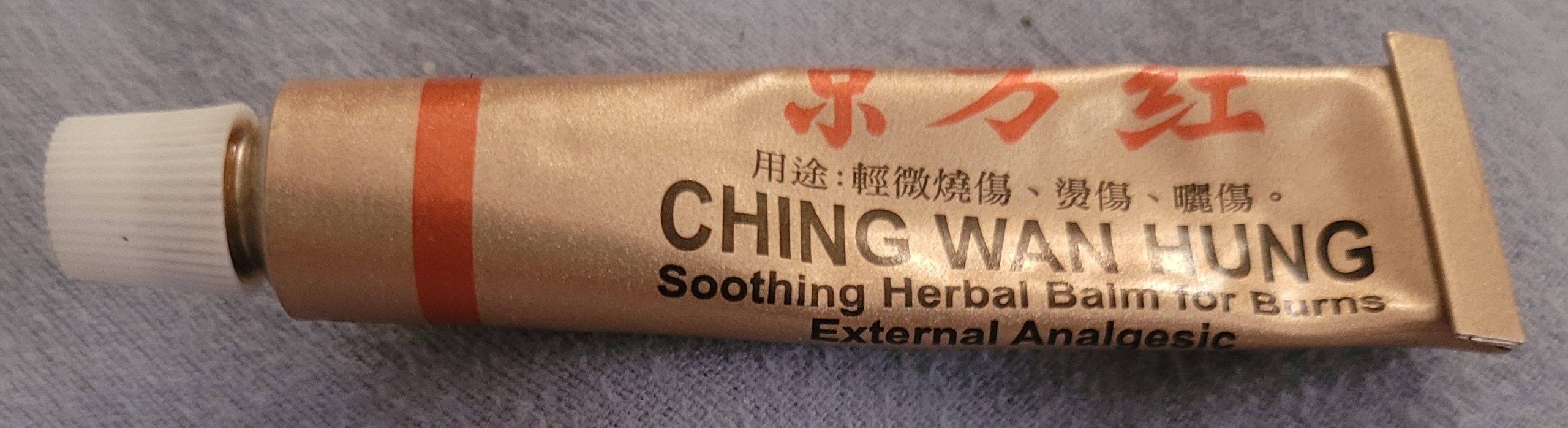
I’m an old nurse. I know a lot about healing wounds of all kinds. Nothing worked, at all …until I tried Ching Wan Hung, in the copper-colored packaging.

Ching Wan Hung:
Different manufacturers but similar copper packaging

It’s a traditional herbal product with Chinese cinnamon, which smells a whole lot different from the tropical stuff we eat. It also has menthol, which I can’t tolerate normally, but is no problem for me here. I can scarcely smell it, so maybe it’s a dosing or production issue. Most herbal salves bring on menthol like a battering ram.

Usage

I squish it right into the cracks and holes of the sores, rub it in well, then put a dark sock over it for an hour. (It stains light colors.) Then I get on with my nap, or my task, or whatever. I put it on twice a day, before getting out of bed and at bedtime. I should probably use it more often for faster results, but I’m not very good at that.

It doesn’t work for everyone, just as everything else I tried, that did work for other CRPSers, didn’t work for me. It’s another option.

Sourcing

I’ve found it online at the usual places and at my local Asian/ international market, usually in little copper-colored tubes, which is more hygeinic than the larger tub you have to stick fingers into. It’s cheap for what it is, too.

You can ask for “Chinese burn cream” if you can’t remember the name.


Caveats

Use common sense (all my readers are extremely sensible, so of course you will).

If it brings up a rash or makes you wheeze, wash it off well and never use it again. Not for wounds that bleed readily or might be infected. Never use on bites, because mouths are utterly filthy and bite wounds need different care. If you can’t feel the tissues where your chilblains or non-healing sores are, see a doctor about them and follow their advice over mine. And so on.

Where to start? Head to toe

I’m going to give organizing my mental database a try here. The aim is to pick one broad topic each month and cycle through them in a year. I’m doing it the way nurses and doctors are taught to do it: head to toe.

Physical assessments have to go from head to toe, every time, without exception. This makes use of the brain’s basic tendency to work in patterns. If you assess every patient from head to toe, every time, then the variances are easier to find (because your brain is so dialed into what to expect at that point in the pattern) and it’s a lot easier to get to a sound differential diagnosis.

If I go to the doctor with a sore knee, the doctor is still going to notice my level of consciousness, attachment to or detachment from my environment, track my gaze and whether the sides of my face are more or less equal, differentiate how much of my limp is because my knee hurts and whether any of it is because my balance is off (all of that is about the brain), notice my breathing pattern (lungs), become aware of blood- flow problems (heart) showing up in my skin, and checking to see if I’m “splinting” or bracing against pain or weakness in my abdomen (g.i/g.u. systems) and hips (ortho, right above the knee).

An experienced doctor does most of this in 1 to 3 seconds, because it’s a head- to- toe assessment every single time and they can just let their pattern-matching brain (which is powerful and primal) take care of it and send up a flag to their conscious mind if anything is abnormal.

The medical term for “head to toe” is “cephalocaudal”, which literally means “head to tail”… but humans don’t have much in the way of tails, and our bodies keep going for quite a ways after them. I’d love to hear from my Latin-knowledgeable readers what the term should be!

I’m recovering from a migraine, which is very on-topic, but I’m not yet up to writing much. I thought I’d introduce this new structure, which I hope will be a bit simpler and less overwhelming than “what am I wrestling with right now that I could usefully write about?” There’s so much to write about, it magnifies the intransigence of the empty page. (Writers know what that’s like.)

A head.