Windup, not in the athletic way

I forgot that I posted an earlier version of this piece. At the time, I didn’t know how long it would take to recover.

It’s ok, though; nobody has read the earlier version yet. 🤣

My life is Tetris. Logistically, medically, attentionally, and furniturely — it’s all Tetris.

Keep an eye on the last word in that series.

There’s a tall metal piece of furniture that’s supremely helpful for drying sheets on, and if you lower it to earth it becomes a water-resist Sunny Obsidian Surge rowing machine.
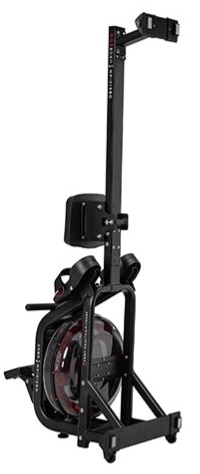
Excellent piece.

I recently put colorful tape on the bottom end because it had to be moved 2 inches out from its old position and I knew the color would register out of the corner of my eye (my brain responds well to color).

Tetris.

While speaking over my shoulder — which made my peripheral vision irrelevant — I slammed my foot into it.

Despite having 2 people to mask for, I didn’t mask so much as lean over so they couldn’t see my face. I pounded the doorframe a bit (this rower is right by a door).

So much for the immediate reaction. I hobbled to my bedside where all my gear is. I slathered it with magnesium oil (magnesium blocks a chunk of pain transmission) and then, when I could touch it, emu oil (which is a pain-reducing carrier oil that pushes stuff into the tissues).

This was great because, bit by bit, it went from near-blackout pain to simply, y’know, a throbbing nightmare that slowly began to take shape and allow me to work out what to do.*

I put sturdy shoes on, not because it felt great but because my feet needed to feel protected.

I swung my foot up onto a couple of pillows on the couch. Felt the shimmering windup go up my leg and through my hips, lighting up my piriformis, which has always been a bit of a diva. The active CRPS patches in my hands, wrists, and shins all pitched in, singing the song of their people.

I think of pains as having voices, and sometimes their singing drowns out other sounds. Sometimes it’s just a descant to whatever is going on. Sometimes it’s a baseline running below everything else.

Occasionally, the pain just screams.

And now the muscle failure is creeping in, so I have to put down my phone and just listen to something loud enough to drown out this chorus.

All things pass, and, eventually, so did this.

The magic trick

I’ve been practicing resting when I’m tired. I’m 60 now and it has taken up to this year for me to have any real peace with it. Good thing, too, because it allowed me to spend enough time in bed, diligently and gently, for my nervous and endocrine systems to stand down again.

It only took a couple of weeks.


* “What to do” differs for each of us. I can’t take pain meds except Tylenol, which typically gives me about 5-10% relief and sometimes that’s enough to let me cope. NSAIDS trigger a body-wide mast cell reaction which makes everything hurt in a whole new key. Demerol makes me violently psychotic. Other narcotics paralyze my gut and, annoyingly, don’t help my pain. Same goes for weed. Ice makes everything worse with my pain, for tiresome CRPS-malfunction reasons.

So, most of my pain management is what one friend describes as “off-road”, because the health care system doesn’t provide it and hasn’t studied it much. It’s all from my understanding of the physiochemistry of pain transmission, studying the ways CRPS changes that game and working out how to push back, decades of networking and sharing tips with fellow painees, and believing my repeated, reliable, consistent results over my own assumptions.

I hope that this blog provides useful tips to others stuck in similar situations. A lot of us bloggers think about how we can be the resource that we needed when we were newer to this.
Not recommended – a poem

Tap here for the audio version.

This one is probably just for fellow painees. Others are welcome, but be aware it might be hard going.

How I got to now

Sunday: 2 hours of unexpected VOC exposure.

Monday: massive (for me) radiation exposure, over 1 h.

Tuesday (today): trigger point injections, 3rd or 4th I’ve had. Each is more painful than the last. This one was epic, and there’s nothing I can do about it cuz mast cell dysfunction and cytochrome (genetic) variants mean that pain meds give me all of the side effects and none of the benefits.

This isn’t about whining. It’s about naming a very bad day. Then, one breath or minute or hour at a time, moving on.

This poem fell out of my keyboard today in a comment on socials:

High on pain. Not recommended. 

Of all the highs that touch the skies,
Most humans choose from chemical vibes:
From mickey to fin, from plants to sin,
Delight is the evanescing disguise

That covers the deep unknowable scars
We tend to bear, when off to the stars
We go, and throw our pain in the bin
For respite or maybe transcendence– too wise
To hope for remission, that damnable prize
Of luckier chemistry, luckier lives;

Decades in,
Pain is untreatable, sometimes unbeatable,
And all I can do is rise… and rise…
And not give in.


Copyright me, 2026, the year Hell opened its maw for us all.

P. S. ~25 years in, I’ve tried everything and some days are like that. Heigh ho. Moving along…

Where to start? Head to toe

I’m going to give organizing my mental database a try here. The aim is to pick one broad topic each month and cycle through them in a year. I’m doing it the way nurses and doctors are taught to do it: head to toe.

Physical assessments have to go from head to toe, every time, without exception. This makes use of the brain’s basic tendency to work in patterns. If you assess every patient from head to toe, every time, then the variances are easier to find (because your brain is so dialed into what to expect at that point in the pattern) and it’s a lot easier to get to a sound differential diagnosis.

If I go to the doctor with a sore knee, the doctor is still going to notice my level of consciousness, attachment to or detachment from my environment, track my gaze and whether the sides of my face are more or less equal, differentiate how much of my limp is because my knee hurts and whether any of it is because my balance is off (all of that is about the brain), notice my breathing pattern (lungs), become aware of blood- flow problems (heart) showing up in my skin, and checking to see if I’m “splinting” or bracing against pain or weakness in my abdomen (g.i/g.u. systems) and hips (ortho, right above the knee).

An experienced doctor does most of this in 1 to 3 seconds, because it’s a head- to- toe assessment every single time and they can just let their pattern-matching brain (which is powerful and primal) take care of it and send up a flag to their conscious mind if anything is abnormal.

The medical term for “head to toe” is “cephalocaudal”, which literally means “head to tail”… but humans don’t have much in the way of tails, and our bodies keep going for quite a ways after them. I’d love to hear from my Latin-knowledgeable readers what the term should be!

I’m recovering from a migraine, which is very on-topic, but I’m not yet up to writing much. I thought I’d introduce this new structure, which I hope will be a bit simpler and less overwhelming than “what am I wrestling with right now that I could usefully write about?” There’s so much to write about, it magnifies the intransigence of the empty page. (Writers know what that’s like.)

A head.