Losing Our Angels to Suicide

A friend I’ll call A died of suicide last night. It’s easy to say of people that they are rare and radiant souls once they’re gone, but A is the sort of person who was generally agreed to be a rare and radiant soul even when she was alive. Pretty angelic, really.

Suicide is a tough gig for all concerned, but being suicidal is living hell. I’m going to try to present some information in an accessible way, but this is an emotional time (it’s also deathiversary season for some of the biggest losses in my life, and there have been more deaths than usual this winter) … I’m very upset and very angry. It’s liable to show. Anyway, here goes…

Most of the time (not all the time), the deed that causes self-death is impulsive, which is the point of the 3-day hold in psychiatric hospitals: get them over that bump, then their coping skills come back, and then they find a way forward.

In cases like A’s, some survivors want to know why our loved one didn’t reach out, didn’t let us know ahead of time. Some want to know why this person “didn’t love us enough to stay.”
That’s a common feeling after suicide. These are all very common responses. Thing is, they miss the causative point.

Reality check

Here’s the thing:

Stop being so selfish!

It’s NOT ABOUT YOU. This is a tough one to swallow because you’re the one left alive and hurting, but it’s something to be faced in order to understand how this could happen.

It’s about being in so much pain that continuing is intolerable and there is no way this person can find to make it stop. Can you even imagine that? If not, then who are you to judge? If you can, then why are you blaming the victim?

Do you think she didn’t try hard enough, or know enough to battle this more effectively?

Actually, that’s a fair question. Some people don’t know enough, and need the chance to breathe, reboot, and find another way forward. (Most people who attempt suicide fall into this category.) It’s not an unreasonable thing to ask, so let’s look into that.

Some things can’t be fixed

My lovely friend A was a sophisticated, educated, well-informed consumer of, and professional in, the health care industry and effective alternative therapies. She really knew her way around.

I have a pain disease that, if I have to be truthful, hurts more every year. I’ve had over 15 years to ramp up to my present level of unthinkable, brain-blistering agony — and to find ways to manage it along the way. I can kid my mind most of the time that the pain is hardly there. I’m not likely to kill myself any time this year, though I might get flattened by a bus in a fit of absent-mindedness due to masking too much pain… you never know. (I’ll keep wearing bright colors and getting assistance around town, so don’t worry unduly, Mom!)

My friend A had a painful condition evolve recently that wouldn’t budge despite much work, and a surgery with… interesting characteristics. I sure don’t need to spell that out for those of you who’ve had, cared for, or performed surgeries. One of her main nerve branches was involved, which tells you the rest. It was risky, tough, and fraught. She knew that. Surgery was the only way to avoid the dreadful situation she faced if she didn’t have it.

By the time she made her last tragic decision, A could easily have been in a level of pain comparable to what I live with, but she did not have 15 years to ramp up. Most of that mountain of agony landed on her inside of a few weeks.

She knew what was going on in her body and worked for years to correct it without surgery.

She knew what the surgery might result in and she tried it anyway.

She knew her options.

She knew what to do to mitigate risk and optimize healing.

It’s likely that she did everything that could possibly be done.

It’s likely that there was too much pain and no way to escape it.

Sometimes, some things can’t be fixed.

I respect her choice. I hate it, it makes me miserable, but given the circumstances, I respect her choice as I respect her right to make it.

I don’t blame A. I wish that things had been different for her.

Please remember the compassion that was at the core of her spiritual and professional life, and return it to her as well as you can. She may need your compassion more than ever, because the end of her life was so awful, and she worked and fought so hard to make it.

She loved you. She loved us all, in her endless outpouring of loving-kindness and intelligence and determination. Please, try to give some of that back to her, now when it’s no longer easy.

Step Up

Of course you’re angry to lose wonderful people to suicide. Want to do something about that?

  • Vote for universal health care, so people like A can get timely care and prevent minor issues from becoming major ones and then becoming deadly nightmares. Because this should not have happened in the first place.
  • Lobby for universal housing and emergency accommodations in every state, so people like my brilliant friend Cross don’t have to choose between being murdered by a caregiver or taking their own lives, because NO OTHER OPTIONS EXIST.
  • Get your elected representatives to re-fund, and stop de-funding, mental health services and social safety nets, so my gifted friend Ethan didn’t have to shoot himself in the head to make the PTSD nightmares stop. Every dollar spent on these programs saves between 10 and 800 dollars in the costs of cleaning up the failures resulting from their absence. Our economy cannot afford that kind of constant, suppurating loss.

YOUR VOTING RECORD AFFECTS THE SURVIVAL OF THOSE YOU LOVE.

Don’t step into the voting box in the hope of choosing your next drinking buddy; the POTUS will never drop in at your neighborhood dive. Try to remember you’re voting for your next Chief Executive. This needs to be someone who’s smart enough and wise enough to do the job of leading a huge country that’s in serious trouble.

If you feel that, against reason and compassion, against economics and decency, you really have to vote against these policies or vote in those who oppose them, then don’t EVER complain to me about losing people you love to suicide, or maltreated illness, or poverty, or homelessness. These deaths are optional 99.9% of the time, and I have absolutely had enough of them!

This worm has turned

I used to be vigorously opposed to suicide. I spent too many hours coding people who had no choice about whether they lived or died, so that the occasional attempted suicides I treated in the ER just made the bile rise in my throat. Those idiots were bloody well going to live whether they liked it or not, and if they reached consciousness, they were getting a short and fiery talking-to from a short and fiery RN.

One day, I confided my thoughts to a longtime trauma counselor. She stopped me dead when she said, with great pain and exquisite kindness, “They do that because they can’t think of any other way to stop the pain.”

I tried to imagine so much pain and so much trapped-ness… and I couldn’t hate them any more.

And then, years later, I developed CRPS… then fibromyalgia… then dysautonomia… and, this week, I’m getting screened for a couple of cancers.

Those of you who follow this blog know that I spent a few years clinging to life by a thread. The pain, disability, and relentless, pounding losses and brutality of the world on the suddenly-disabled, on top of an ongoing roster of bereavements around me, very nearly finished me.

I was suicidal for some of that, only I was not going to screw it up; if I did it, I was going to do it properly. So there were no attempts, there was a thorough exploration of the idea. (At the very bottom of my personal root under the final level of Hell, I found … curiosity. I could not rest until I found out how this story went. Not only would I miss my funeral by several days, I’d never find out if we got a cure in my natural lifetime, if I ever figured out how to blog, what exactly CRPS is, who I had yet to meet, or anything. That was more unbearable than pain for me: unsatisfied narrative curiosity. I can’t explain it, I can only report it. I’m still working out how to crash my funeral.)

The point is, I’m pretty familiar with the landscape of endless pain.

I understand, with diamond-sharp clarity, that there is a point where a person simply shouldn’t have to put up with any more.

I know, as I never did in the innocence of my ER days, that there is such a thing as No More Options.

The word “unbearable” is no longer just an adjective; it has real meaning. Some things should not be borne, and that’s bad enough, but some things really cannot be borne. What then? Do we turn our backs and shrug, feeling we’ve done our jobs?

Those who’ve survived the suicide of someone you loved, you have my absolutely heartfelt sympathy. It’s awful, peculiarly and specially awful. There’s nothing like it.

If you’re really outraged, turn your anger onto a suitable target: the systemic failure that made that cherished person’s life unlivable.

That would honor them, in a remarkably constructive way.

I’m off to make sure I’m registered to vote tomorrow. I don’t want to sit this one out. I’m torn up and miserable, and I want to honor the memory of A and all my dear departed angels.

How

I

miss

you.
Handling anxiety and its obnoxious little friends

In CRPS and dysautonomia, several parts of the brain get under- or over-enthusiastic (or both, unpredictably.) It’s easy to oversimplify, but even more confusing; each part of the brain has many jobs, so I can’t say that the anterolateral cortex does one thing and the cingulate cortex another.

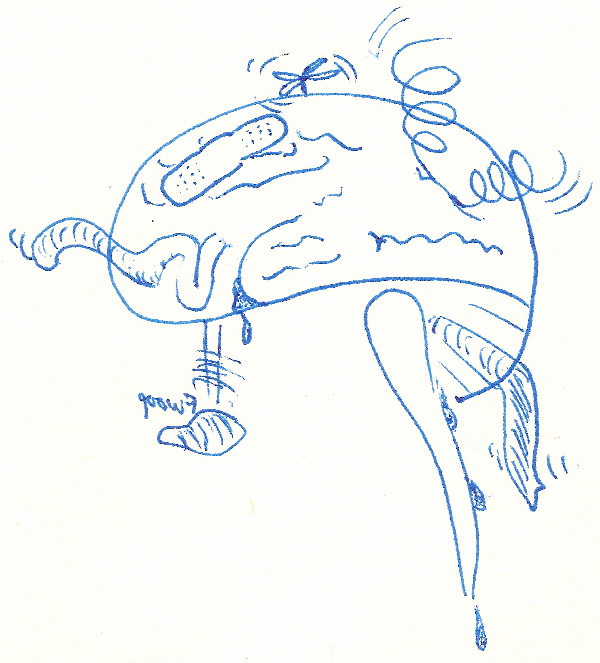
Sketch of brain, with bits falling off and popping out, and a bandaid over the worst

I can boil it down by the effects that these remappings have, though. That’s relatively simple!

So, in me, this is what happens as a result of these scrambled brain bits.

1. Obviously, pain signals don’t know when to pack it in. That’s obvious. They just keep going and going and going and going and…

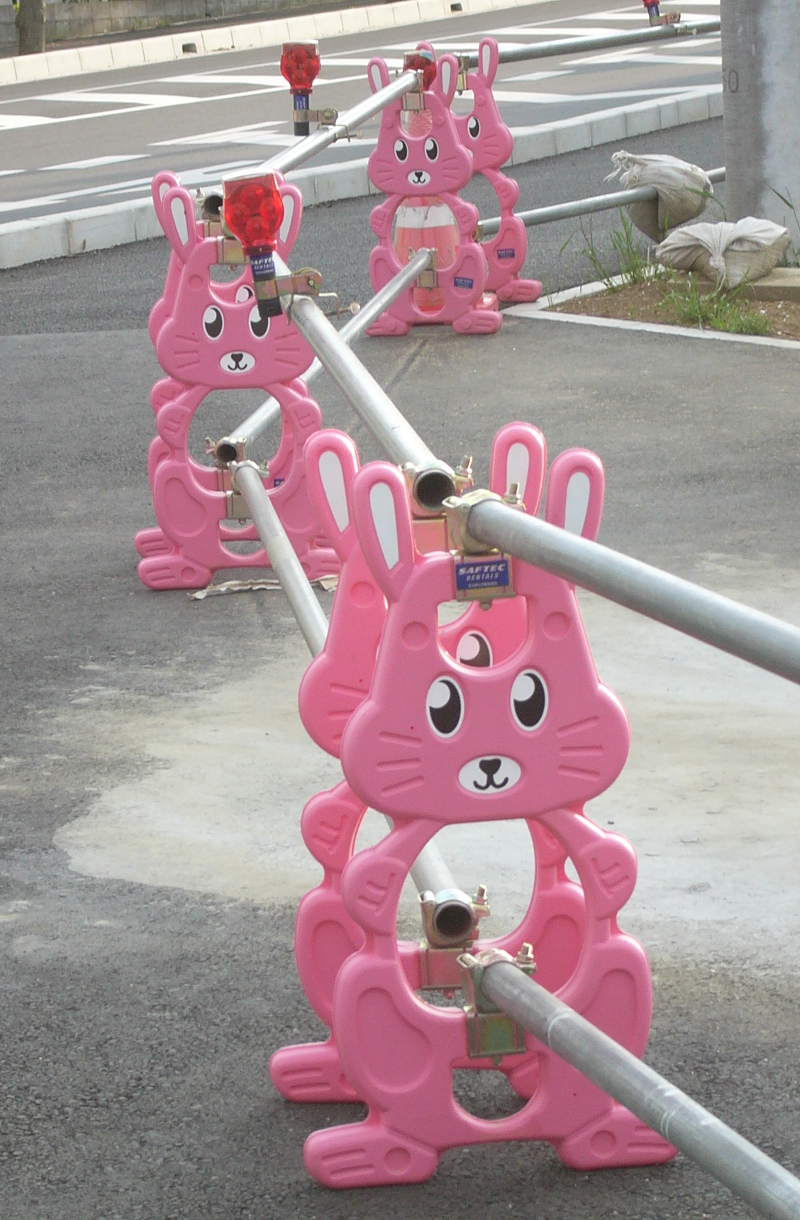
roadblocks using supports shaped like pink bunnies,  in pairs, leading around the corner

2. Coordination gets impaired. I used to be freakishly well coordinated, so I don’t normally get much sympathy, but this is a bit unfair.

I had 38 years of knowing exactly where my body was in space, of being able to move without triple-checking myself, from the time I first learned to walk. Or, rather, the time I first learned to climb out of my crib. … Several months before I was steady enough on my feet to toddle, I’d do a layback (a climbing maneuver where you grab one edge of a gap with your hands and then walk your feet up the opposing surface) to get up the side of my crib…

woman climbing up a crack in a steep rockface, hands pulling one way and feet pushing the other
Feet push, hands pull, and you go upwards. Photo JMiall on Wikimedia Commons.


…then rappel down the rails and crawl down the hall to my parent’s room to let them know that it was almost dawn and I was ready to play.

I also learned to jimmy the rails so they came down altogether, but that took a little longer. More engineering and upper-body strength involved, you know. (I got a bed well before I was two. They figured it was safer.)

I’m not used to living in a world where my body isn’t exactly where I think it is. I probably take more damage than someone who’s been this poorly coordinated all their lives, because there’s this huge layer of bewilderment and surprise. Not to mention lack of preparedness.

I don’t compensate for it unconsciously — I have to be very conscious about being careful bending over, walking not running down stairs, always wearing de-skids when I go outside in the snow. This requires a bit more bandwidth than just doing things as you normally would.

3. The third and most annoying thing is, my brain just LOVES to go to anxiety.

brain_limbicsystem-inflated

Anxiety is a bit of a circus. It pushes up my blood pressure and makes my heart beat fast, which is worrisome in itself. It makes my vision go whitish, like everything is covered in fog. All this makes it rather hard to think, to reason out whether I really have cause to be anxious.

Then my stomach starts nudging the back of my throat, which is never pleasant. I keep ginger near all the time, because Tums just make it worse and I can’t stand Rolaids or any of the others.

Then my waste systems get into a tizzy and I feel like I have to go wether I do or not. If I don’t need to go now, then I will in half an hour, because (as I’m sure you remember from anatomy class!) the adrenals sit right on the kidneys and when your adrenaline goes up, so does your kidney activity.

medical artist drawing of kidneys with adrenal glands sitting on top of them

So, on an eventually related subject, I recently got worked up for endocrine and allergy issues. The tests are still rolling in. A couple of blood tests were funky, so I need to get screened for gynecological cancer, and I need to get checked for pancreatitis — which, with my squeaky-clean life, would be decidely, wildly, completely idiopathic — if it isn’t cancer.

Naturally, part of my brain is throwing up images of a midsection riddled with malignancies. I’ve seen a few of those, so it’s not a big stretch.

That’s it, I’m doomed.

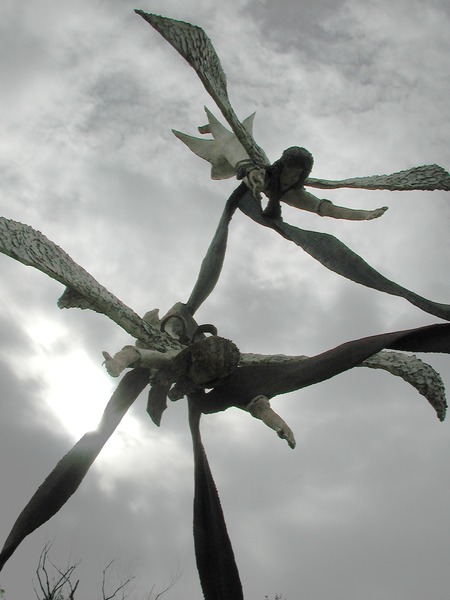
Lead-grey statue of dark angels swooping down from the sky

Blood pressure.

Heart rate.

White fog.

Stomach… wait, the stomach goes with the pancreatitis.

What notion of reality am I in now? The cancer one or the anxiety one? Because I can ignore the anxiety one — OMG I might have metastatic cancer! Everything’s turning white! My heart’s going too fast! AAAUUUGHHHH —

And this is where my head starts spinning around and the pea soup comes out at projectile velocity.

Not really. It just feels like being in a horror movie sometimes.

gaudy logo of the horror film, "House of Wax" it comes off the screen right at you!

I’m lucky. I have a sense of humor. I just think about horror tropes when this circus starts, and I snort and calm down a little bit.

I have to jump on that first lowering of tension or it spins right back up. This is the dysautonomic brain at work — getting right back to panic is the easiest thing for it to do.

If mentally reaching out for my anxiety dials and trying to turn them down doesn’t help, then the very next thing to do is yawn.

yawning_Macaca_fuscata_juvenile

It’s an incredible tool — no bad side effects, many uses. Plus, you can do it in company.

yawning_Rudolph_Valentino_and_Carmel_Myers_in_All_Night

Let me explain.

Yawning starts with pulling air into the deepest part of my lungs. I can imagine it going all the way down my spine and filling the bowl of my pelvis. My ribs reach out and stretch nicely. This deep breathing is the first key.

The second key is that my jaws open up wide, releasing that clenched set of muscles there. It’s impossible to grit teeth while yawning.

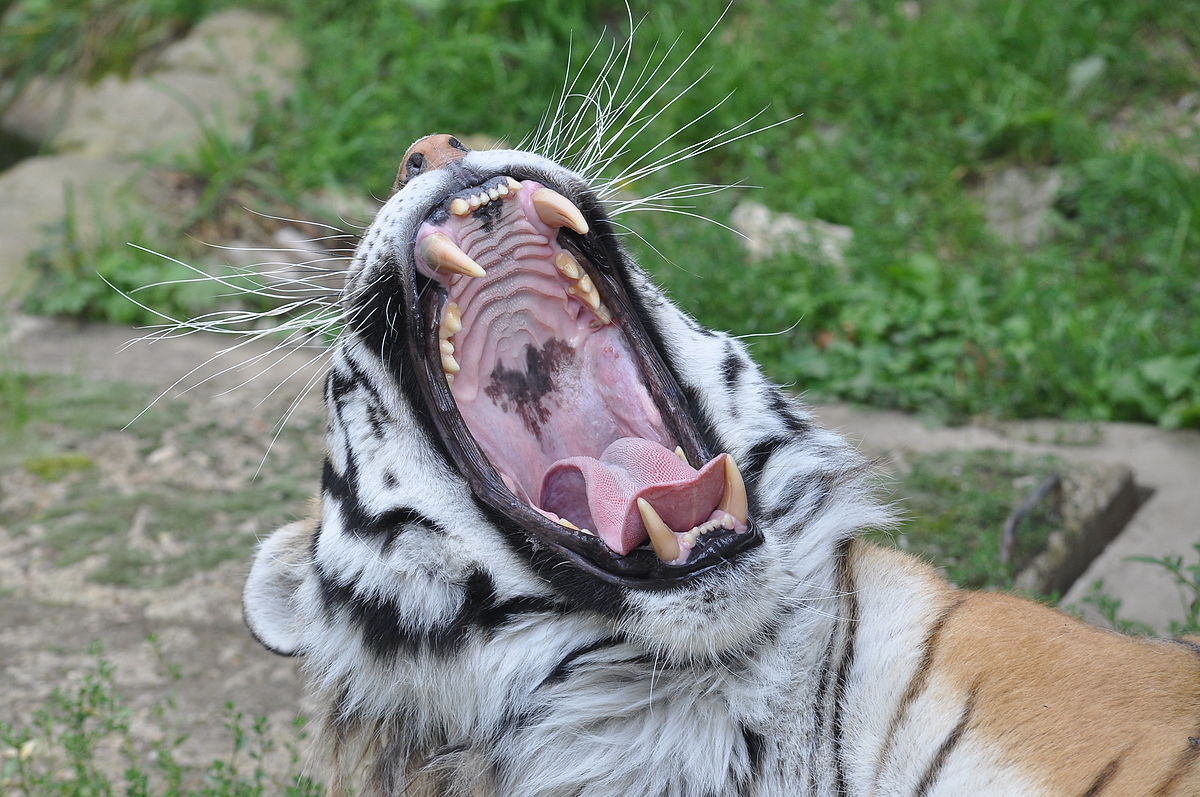
Tiger yawning hugely

I may find myself in a yawning cycle — yawn after yawn, for a good five minutes. I figure I need it. All that oxygen, all that jaw-releasing… hard to beat.

Now that my torso, shoulders, neck, and jaws are unclenched, now that I have enough oxygen circulating to let color come back into the world … now I can begin to cope.

The first thing I do, before getting up, is check my breathing. I’ve gone back to breathing from my belly, drawing air down to where it needs to go. Good.

The next thing I check is my head and neck. My jaw muscles feel softer and my neck is flexible; I give it a stretch or two each way to check. This is good.

This is a functional situation now.

Okay, I’ve done all I can. I’ve pulled myself out of the anxiety tailspin. I’ve made the next round of appointments.

As I keep telling others, don’t borrow trouble; all I can do is get on with my life while I wait for those appointments and their results. I’ll take it from there.

It doesn’t help matters that I’m worried about friends and acquaintances who are facing verified life-threatening situations. The background anxiety makes my own triggers harder to handle. But I’ve done all I can there, too. I have to accept my limits and hope for the best for them.

Editorial note…

It’s hard to see good people being treated like disposable objects. There’s something very wrong with that.

As a historian, I know that human societies go through these cycles where the empires get bigger, the oligarchs get out of hand, and then a lot of people die as the system falls over and much is lost, and then eventually a set of new systems arise from the rubble. Eventually some of them flourish, a few emerge as empires, and the whole cycle goes around again.

I hate being in a falling-over period of history. There is so much we could be doing that does not involve ripping people and nations apart to see how much money can be made from the minions before everyone dies.

Sadly, I don’t get to make that decision. I’m not an oligarch.

When the electricity goes out.. I purr

The power went out last night.

I’m used to it. I grew up in places where electric outages were common. We’d just get on with our homework or reading or tending rescued kittens’ eyes or arranging little army men or what-have-you.

kitten in lap, seen from above. red eyes are clearly recovering from infection.
Creative Commons License

If it was after dark, a parent would call out calmly, “Everyone ok?” and we’d bring our projects to the living room, saving candles by having one well-illuminated space instead of five poorly-lit ones. It was cozy. Quieter than usual. Arguments rarely started when the electricity was out. It was too pleasant to spoil.

My housemates have different experiences entirely.

I live with two adults with wicked ADD. They NEED the TV. The tech-savvy one NEEDS internet. Sleep is out of reach if they can’t numb out their brains first.

I was soaking up the peace, purring inwardly with the candle glow and the outstanding peace.

kitten-sleeping-Ari
Creative Commons Attribution License

No hums, no clicks, no TV, no wifi, no human-made radiation bouncing off my spinal cord and twizzling my brain with little egg-whisks.

I loved it.

Meanwhile, my two darling family members were going quietly insane.

They tried going to sleep to take refuge in unconsciousness until their lives became bearable again.

I could hear the ends of their nerves curling and uncurling, even through the closed doors.

Mouse brain neurons, two pairs, stained flame yellow against red background
Image by neurollero on flickr, CC share-alike attribution license.

They’d bounce up again in ten or fifteen minutes, one upstairs and one downstairs, and I’d hear them dashing quietly around in their unnaturally quiet spaces.

I sat in the squishiest chair in the living room, curled up like a clean kitten, soaking up the peace.

kitten-sleeping-Ari-downcomforter
Creative Commons Attribution License

I’m usually more empathetic. If I could have thought of something to help, I’d have been glad to do it. Perhaps we’ll think of something next time.

At the heartless core of my practical brain, though, I found the thought that they get the evenings that make them comfortable almost all the time — only two evenings out of the past five months haven’t been fully electrified.

I only had one evening so far this winter that was great for me. I was going to make the most of it.

I stretched out in my super comfy spot and purred.

kitten-sleeping-Ari-Monroe
Creative Commons Attribution License plus loads of snuggles

The weather is flailing, and so am I

On average, it takes 2-5 days to adjust to a change in the weather. This is part of the fun and excitement of CRPS, dysautonomia, fibromyalgia, and all those lovely dysregulating diseases of pain and neurological shenanigans.

New Englanders like to say, “If you don’t like the weather, just wait a minute.” Clouds and sunshine chase each other swirlingly across the sky like teenagers at a party. Precipitation, in one form or another, is bound to happen at least twice a week.

However, up until recently, there was a pattern in the seeming chaos. October hosted the last of the 50-degree weather, December saw the first few inches of snow that really stuck, January and part of February were bloody cold, March was named Mud Month for good reason.

Bar the occasional storm front, when the barometer plunges like necklines at a Red Carpet party, I could live with that. Once it’s fall, it’s fall; once it’s winter, it stays winter, until it gets muddy, and eventually the glorious summer blesses us all and reminds us why we put up with the rest.

Not now.

Over the winter holiday season, the naked (???) earth finally got dusted with snow. That quickly turned to sleet and then it froze (!!!). There were a couple of warm spells which didn’t melt the packed ice, just packed it further… we spent alternate days staggering over frozen rucks and through soggy mud, to try to maintain the dirt driveway.

Sunday, it was pushing 50 (like me), and raining cats and dogs; the ice finally melted — except for a few sneaky patches that merely absorbed the color of the sand so they could lurk, invisible, and slap down the unwary walker. Then it went down to well below freezing, and I got slapped down on a sneaky patch of ice because I forgot to wear friction doohickies on my boots. Last night, guess what? It snowed! We got almost 2 inches and we might get more.

I’m begging the weather gods to let it stay.

In the last few weeks, temperatures have seesawed between 20 degrees Fahrenheit above normal to 10 degrees below normal for this time of year (when it’s supposed to be simply bloody cold and frequently snowy.) Sometimes, we see that difference happen in one day.

So, if it takes 2-5 days to adjust to a weather change, and the weather is changing every day or three, what is a poor body supposed to do? Mine is whining. It’s just curling up in the chair and whimpering gently and steadily. It’s working so hard at handling the weather changes that showers and shampoos are something that happen to other people; there is no way this blood pressure and neurological system can take that much direct stimulus. A few swipes with a washcloth, a scarf or hat over the unwashed hair — it will have to do.

I still have to snap the leash on and drag this body outside at least once a day, but it’s duty, not fun. I’m sure I’m better for it afterwards — but I still climb straight back into the squishy chair, and let my body whimper for a bit.

The meteorologists on TV refer often to “the El Niño” effect, which makes me laugh. I’m pushing 50, remember? I’ve been through a lot of El Niño years, on both coasts. This isn’t El Niño. This is a huge bloody shift in the climate, and I don’t know how long it’ll last or where it will leave us.

I just hope it finds some consistency from day to day. As long as I have a few days to adjust, I’ll be fine. All I want is time to do something besides listen to my cells whimper!

Living anyway

I was holding off on blogging consistently until my brain was more consistently reliable — until I had enough improvement in my mental faculties. Reason intervened, and it got through the concrete that, longstanding CRPS being what it is, that could be a very long wait. Those of you looking for solid whacks of brilliance or coherence or good judgment, consider yourselves warned. This is real life, and, whatever is left of it, it’s time to live it anyway.
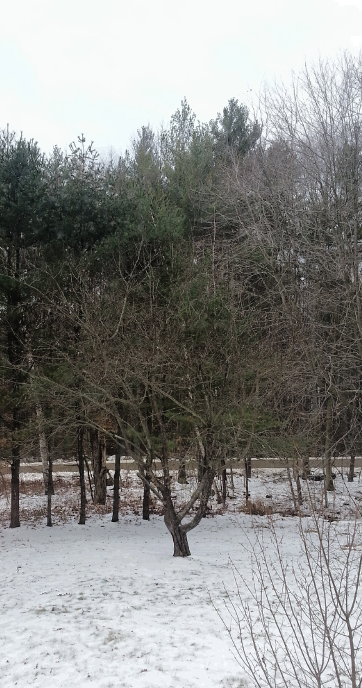
Snowy lawn, apple tree, row of pines behind apple tree, snowy road visible between trees, silvery cloudy sky above trees.
And, with that said, 2015 is left in the dust.

Waiting for perfection is obviously absurd. Anything with a pulse is still imperfect. Waiting for “enough improvement” is the mental sucker-punch that hides in perfection’s shadow. It cajoles me by not being perfect, but … define “enough improvement.” — See what I mean? Mental sucker-punch!

My tea, like me, is a work in progress at the moment. I sit here letting it steep, with my patches of exposed skin singing “zippity do dah!” every time something touches them, the silver and white day rising gently through my window, my insides solidly blocking the thought of food or pills for the foreseeable future (we’ll have to negotiate that later), J coming over to hug me against his side and give a pleased giggle that we’re reallly here and really together and we made it this far, and I find a perfect moment in it.

Living anyway. That’s the point. Well done, Isy.

Happy New Year.
May your hardships be balanced by your blessings.
May your love drown your pain.
For the many of us who live unbearable lives, may you have all the courage and wit and calm to bear it and find your moments of freedom.
Whatever you’ve got to live with, live anyway, and find the peace and joy there is even in the event horizon.
My heart is with you.

To fail myself is to fail others, and doesn’t that suck!

My desk setup is nonexistent and much of it still buried in unpacking. I wish I’d been writing some of the wonderful blog ideas that have passed through, but I didn’t. Rather than trying to reconstruct them from addled hindsight, I’ll just go on as if I had a whole nest of posts to plop this one into, and go on from here.

As my desk situation indicates, I still feel perched, rather than settled. I’m going to have to find a rental in the spring and then start looking for a miraculously good deal on a house to buy after that, so it’s hard to unpack all the way.

Moreover, California is still extending opportunistic tendrils into our wallets, task lists, and attention.

And then there are the periodic health crises: a bit of allergy exposure here, a bit of partner’s chest pain there, a sprained wrist from me overdoing, a sprained back from him overdoing… you know. Stuff.

Oh, and the holidays, with a trip and gifties to prepare, mostly for people I haven’t seen for over a decade… no pressure.

These aren’t excuses, they’re reasons. I don’t really believe in excuses; it’s largely an irrelevant concept. It’s for an injured party to decide if I’m excused, not me, so “offering an excuse” just doesn’t make sense. I have reasons, but so does everyone.

Here’s the thing I feel a need to mention my reasons for:

I’ve let my self-disciplines go. T’ai chi, qigong, meditation, reiki, relaxation exercises, stretching, even listening to chamber music — I think about them, but I don’t do them. I still have my morning routine, or at least half of it… if that… OK, yeah, my self-disciplines are pretty much out the window.

Like medication, meditation only works if you use it.

After weeks, actually months, of coping and managing with (and concealing, because that’s what chronically ill people do) my rising instability and neural chaos, I’ve finally started skidding off the cliff.

As for the effect… I’m trying to come up with a good image.

Imagine a patch of sea. I’m in a well-rigged little sailboat, noodling along in a fair wind.
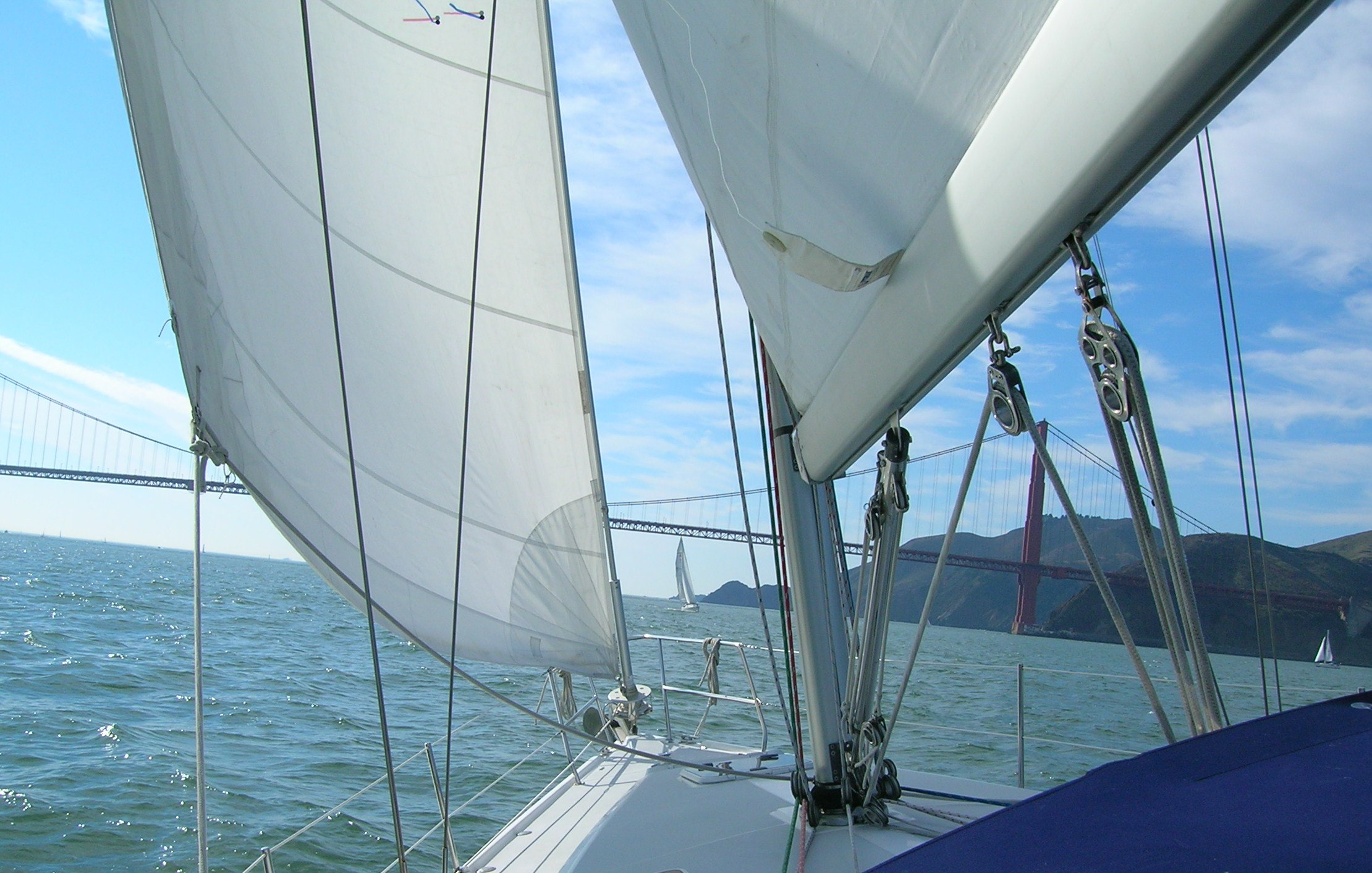
view forward from deck of sailboat. Mainsail on right, jib on left, Marin headlands and Golden Gate visible between.
The oil of willpower is constantly sprinkled on the water’s surface, keeping it smooth and flat, easy to sail along on.

Underneath, the weedy patches pluck at the propeller and keel, the barnacles grow restive and start plucking back, the creatures swimming underneath get bigger and more voracious, and then they get big enough to break the surface now and then.

More oil! Keep sailing!

Those surface-breaking tiddlers get chased off by the real mondo beasts. The boat is getting sprayed by the monsters breeching.

Everything’s fine, I’m too busy to pay attention, la la la la la I’m not listening!

Also, the wind is acting up. The boom is starting to swing across at head-height.

Just a little farther now! More oil! /BOOM/ It’s OK, I’m fine, just a flesh wound!

Unbeknownst to me (since I’ve got the radio turned off, because I’m not listening), there was a string of earthquakes.

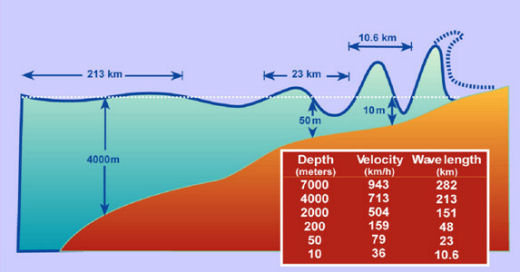
Since Banda Aceh and the meltdown at Fukijima, we’ve all learned about how earhquakes make waves. The shock of the quake trundles happily along the ocean floor until the ocean floor rises towards the shore. Then it sucks the landward water into itself and brings it all back as a tsunami.
water_tsunamiformation
If you’re afloat and listening, you move out to deep water, sail over the bump without losing stability, and you’re fine. If not… cue exciting sound track and hire George Clooney for the (possibly race- and gender-inappropriate) lead in another disaster movie.

There was a wave and I wasn’t in deep water. I didn’t handle it well; I was dysregulated and chaotic for days. Days. I was so dysregulated and chaotic I didn’t even see that that’s what I was, until it was pointed out to me — by the person who’d just gotten butt-kicked by an earthquake. That is not a fair burden to put on someone who’s already having trouble.

I have a personal meme about being good to friends. This is important for us spoonies (as chronically ill people sometimes call themselves.) My disease treats me like crap, but that isn’t a license for me to treat others like crap.

People who are protected from the true impact of this illness need to not get it at close range, or they run away (understandably) feeling as if they just got burned.

People who have this illness can understand a lot more, but are able to do much less.

I have to communicate appropriately. That’s my job in each relationship.

Basically, humans are emotionally fragile creatures and — whether I want to be judgmental about it or not — I can either respect that, keep the worst of my crap to myself, and have good relationships; or I can expect them to be as tough as me and to do so on my schedule, neglecting that they have to be as tough as themselves on their own schedule, and wind up isolated. Because I’m human too, I’m emotionally fragile enough that being isolated sucks.

I absolutely dropped my backlog of frustration and pain and rage on someone who was about the last to ever deserve it. That’s quite a breach of trust.

I stopped taking care of myself. As a result, I fkdup and hurt someone else. Now I have to own up (did that), figure it out (working on it), and do what needs to be done (re-integrate my practices) to prevent it ever happening again (and find a way to cue myself before I get bad: the missing piece.)

At that point, I’m allowed to make amends. It’s another tweak of my logic that I can’t make amends until I’m sure I won’t make the same mistake.

Being a spoonie is hard work. Part of that work is these time-intensive disciplines that seem like “oh how nice, you’re so cool, I wish I could do that” — but, as it turns out, are really not optional if I want to function.
Allie Brosch cartoon,
Why I need to do my disciplines: to stay out of this pit with Allie.

BTW, do you notice how people excuse themselves by saying, “I wish I could do that”? I listen for these words coming out of my own mouth. It’s a sure flag that I’m throwing the baby out with the bathwater. Oh, a little extra effort up front to save a whole lot of trouble later on? H’mmm…

We all screw up at times. The consequences for spoonies can be life-threatening, if the wrong relationship gets ruined. Handling these issues is part of “living anyway” in the face of profound disease. It’s harder to figure out and harder to repair the damage, because of the nature of central nervous system diseases. So, dear reader, I’ll try to stay on the right side of the line between washing dirty laundry and discussing a common issue here.

We often tell each other, “You can’t take care of others if you don’t take care of yourself.” That’s a tough one for caregiver personalities; we’d much rather take care of others than ourselves. However, it was through failing to take care of myself that I actively hurt another. That is a whole different octave of problem. I guess I’d better learn this lesson.

This is a lot of thinking for a breached boat. I can do it, though. I must. I’m still a long way from harbor.
boatsSBMarina_night

A simple 3-step program for bearing the unbearable

It’s been an interesting summer. It’s good to be safe and well. And that’s all I want to say about it right now. On to more interesting things.

Those of us who have to bear the unbearable eventually learn that there’s no trick to it, no shortcuts, no secret wisdom. I’m sorry to say it, but there isn’t. It’s very simple — not easy, but simple.

There are just three things we have to do:

1. Keep breathing.
2. Put one foot in front of the other.
3. Keep going through the motions until we adapt to the New Normal.

That seems a bit telegraphic. Let me expand on these a little:

  1. Keep breathing.

    If we don’t do that, we’ve got nothing. Literally. Keep breathing. In fact, the better we breathe, the better we cope. (There’s a ton of science on this, if you care about that.) For those who need reminding how, try this:

    1. Ease your lower back, if you can. Gently drop your shoulders, which are probably up near your ears.
       
    2. Breathe in through your nose, if you can; if you can’t, stick your tongue out loosely between your open jaws and breathe through your mouth. (This opens the back of your throat — and releases clenched teeth.) Imagine the breath going down in front of your spine and into the bowl of your pelvis. This helps draw it in deeper, which is key to calming and strengthening your system.
       
    3. Breathe out naturally, or by gently exhaling through pursed lips — like blowing out a little candle. The pursed-lips one is great for tense moments and higher pain.

    Breathing well disrupts the “anxious/fight/flight” loop in the nervous system. It’s amazing. So simple, can’t beat the price, and no bad side-effects!

  2. Put one foot in front of the other.
     
    This means doing the work of survival:

    1. Do what it takes to get fresh air, water, food, clothing, and shelter, plus a phone and internet access. (In this isolated and far-flung age, phone and internet are essential elements of survival.) The safer and more effective, the better, but we can’t always be choosy.
       
    2. Keep our bills paid, if we can. If we can’t, find out how to get assistance with them. (This is one task where we need the phone and internet.)
       
    3. Put the minimum effective effort into maintaining our relationships. (More phone and internet.) We need to know who won’t fade away at the first real sign of trouble. We can’t expect much, though — a sad fact of life. Just stay in touch and see what happens.

      One way or another, we do find out who our real friends are.

  3. Keep going through the motions until we adapt to the New Normal.

    What that involves varies for each of us; you’ll know it when you see it starting to happen. Things you’ll probably notice include:

    • The work of survival shifts from “minimum survival” to meeting slightly higher expectations.
       
    • New relationships have begun to form, and old bonds to re-form, around the new realities.
       
    • The inevitable grief over what we’ve lost (abilities, opportunities, friends, and so on) begins to separate from the general mash of misery.

That’s actually a good sign.

When grief becomes distinct, it makes room for other things — relief, moments of joy, feelings of love, appreciation for what we now have.

If we keep breathing well, we can notice those other things better, and get closer to that quality of “radical acceptance” (which can work with or without hope) that makes even hellacious lives so much richer.

When in doubt, breathe. Then just go through the steps.

Story: Shasta suggests a dog

This is another story improvised on the fly. One solution to boredom, when my studying-brain won’t work: I send it wandering, and it brings back souvenirs. I find that these mental excursions strengthen my mind and my focus when my studying-brain does work. (Jung might have been onto something, there.) It’s also very satisfying to feel capable of nothing, yet still produce something. I mean, wow, how cool is that?

Enjoy.

Shasta suggests a dog

Dark wings overhead. Are they angled up in a V, or flat across? Flat. Oh. Time to get the kids in.

She ran back towards the house, waving and barking. “Eagle! Eagle!” she snarled, when she was close enough to be understood.

Denny reacted quickly. He extended one gangly arm and snapped open two gates so that the pasture led straight into the barn. Then he followed Shasta, who had raced back up the pasture and was getting around behind the herd, shepherding them in. Danny called out the goats’ supper-call, but the goats didn’t take that well. They knew it wasn’t anywhere near suppertime!

Shasta‘s more direct approach got them going. She hustled and hassled the goats, coaxing here and pushing there, taking attitude from the harder-headed nannies and dishing it out in return. Fortunately, the billy was a lamb. Figuratively speaking.

Making soothing noises, Denny stood near the gate and persuaded the disgruntled herbivores, despite their complaining and nagging, to shuffle along and take a break in the barn.

Shasta sneezed after the last little goat, making it skip, jump up, and bounce off its mother’s side. Or, at least, giving it an excuse to.

Denny swung the barn door shut and sighed. The goats farted and burped, some of them eating their breakfast for lunch, settling in to hurry up and wait.

“So now we’ve got eagles,” Denny said. “I thought the hawks had that niche filled.”

“That pair of red-tails didn’t come back last year, and I saw a peregrine in the road yesterday,” Shasta muttered. “And now there’s baby goat,” she sighed.

Denny shrugged and walked back to the cabin. Shasta shuffled after, looking back moodily now and then.

“C’mon, old girl, let’s go in and have a cup of coffee.”

Coffee made and distributed, Denny sat down hard with a woof. Shasta flopped on the rug.

“I don’t know what to do about eagles,” Denny fretted.

Shasta blinked agreement.

There was a long silence.

“I know what,” said Shasta, pushing up on her hands. “Let’s get a dog.”

Denny looked at her with light slowly dawning. “You’ve got that friend,” he started.

“Who breeds kuvasch,” Shasta finished.

Denny sank down, cross-quartering the idea for feasibility.

“Let’s call,” she said. “It can’t hurt to ask about it.”

Denny’s face didn’t change, but something in the air smelled of masculine resistance to asking.

“I’ll call,” Shasta rephrased. “Time I caught up with him anyway.”

She came back with a bag of peanuts and a grin. “He’s moving and has one pup left from the last litter,” she said, “so we get a deal, if it works out. We need the right kind of dog, because most of them don’t look up. Not normally. Not unless they’ve got a really tall owner, I guess. Kuvasch are enormous, and they’ll take on anything that attacks their flock, up, down, or sideways. They’re left in charge of herds for months at a time, they’re that good. We get to meet the puppy and try each other on, but in two weeks he’ll be gone, so he’s kind of on the fence about it.”

That was a long speech from Shasta.

Once Denny recovered from the verbosity, he gave his head a little shake and said, “He’s on the fence about it? What does that mean? Doesn’t he want to get rid of the dog?”

Shasta offered him the peanuts. “He’s a breeder. A real one. It’s not about unloading the dogs for a profit, it’s about spreading the kuvasch love and covering his expenses.” She chewed thoughtfully. “These are good peanuts,” she remarked. “Fresh.”

She examined the label while Denny absorbed that.

“Okay, so what’s so special about kuvasches?” he asked, making it an honest question, not snarking.

Shasta passed him her smart phone, with a search on “kuvasch” already done. “In rural Turkey, my parents had trouble finding childcare for me and my little brother. They were going to get a kuvasch, but then the neighbor’s sister came home from a bad marriage, and she became our nanny instead.” She shrugged. “Worked out for everyone. The dog was considered a reasonable solution, though.”

They went to meet the puppy three days later. He would scarcely even acknowledge Shasta‘s presence.

Half an hour later, after Denny had escorted a shell-shocked Shasta to the car and helped her to sit, he just sat and looked at her for a long moment.

Finally, she said, “He wouldn’t even look at me.” She turned to Denny. “How could he not even look at me? Dogs love me.” She turned away, sinking her chin. “I love dogs. Even that one, the rotten ratfink little bastidge.” She shook her head, tears trickling beside her nose. “I love dogs. I never met a dog who didn’t like me. I don’t understand.”

Worse still, in Denny’s mind, was the increasingly suspicious looks cast at Shasta by the breeder. Some friend. Even now, he was peering through the blinds, as Shasta wept over his churlish pup. (The sire and dam had been delighted with her, within the cat-like restraint typical of the breed. Only the pup had snubbed her.)

Denny gave up the pat-pat-there-there routine, cast a look of good riddance at the tacky suburban front of the breeder’s house, and drove off.

He was keeping his thoughts to himself, but they weren’t nice ones. He didn’t realize he was muttering nasty things under his breath, imagining the conversation he would have *liked* to have with the supercilious breeder.

Shasta noticed. She poked him.

He turned to her. “What is it?”

“You’re mutt–“

Denny checked the road just in time, swerved, ran the car off the road and stopped after several vaulting leaps over curbs, hummocks and undergrowth.

The car went pink-pink-pink. Denny and Shasta looked at each other with big eyes. Then they unbelted, cursed a bit as they got their feet under them, and tottered shakily back up to the road.

Yup. There was a green gym bag in the middle of the lane. And it was wiggling and whining.

Later, back at the cabin, Shasta, who was having the most talkative day of her adult life, puzzled some more. “Who would abandon such a beautiful pup?” She was on the rug with their new find, or new friend, stroking the drizzle of white that ran from nose to tummy through the short black fur. “She can’t be more than a few months old.”

The youngster looked at her worshippingly, as Shasta‘s hand traced the white drizzle again.

The next day, at the vet, Denny asked if the vet could identify the dog.

“Well, pit bull of some kind, I’d guess a thinking breed rather than a musclehead like most of them are.” The vet looked at the dog with her head cocked on one side, her fabulously chic lopsided fade blending up into a gorgeous cap of kinky curls. She was the sharpest vet for hundreds of miles, and even though she looked out of place in the country, there was something in her air — like the way she cocked her head — that made it impossible not to feel you’d found a good ally in troubled times.

“Hang on,” she said. “I’ll see if there’s a chip.”

There was.

“I have to look it up,” she said, clearly rather sorry.

Denny nodded.

She rattled at the keyboard for several minutes, shifting screens several times. Then she picked up the phone. “Mr. Mess? Hi, I’m the veterinarian at –“

She looked at the phone, surprised. She hit Redial, and began again. “Hi, Mr. Mess, I believe we were just disconnected. … Uh huh. Yes. … I’m sure you do, but I can hear you perfectly, so …. Why yes, it is about a dog with your chip in it. … Uh huh. … Uh huh. … Oh dear. … I didn’t hear about that. Oh, you did, did you? Well, I go home every night to the county sherif, and he never mentioned that call to me. … Oh, I see.”

Denny saw a vein start to throb in the side of her forehead.

“No, he would not have forgotten, because I’m the only forensic vet in the county. He would certainly have let me know. … Uh huh. … I see. … I think that would be best. … No, we are not a shelter, we’re a vet hospital. Howev-” she had clearly been interrupted, but was listening .. for another moment, anyway. “Let me say that there’s someone who might be interest –” Interrupted again.

The vet made eye contact with him, made a gesture to be quiet, and put the call on speakerphone. A grating male voice came out.

“– and then there’s the vet bills, vaccinations and so forth, plus five weeks of dog food,” the guy said, clearly compiling a bill to see how much he could get for the dog he’d abandoned for free. “And wear and tear on the furniture. And the makeup. That stupid bitch got into my wife’s Lancôme! Do you have any idea how much that crap costs? I’m seriously out of pocket here, and if someone wants that dog –“

She tried to intervene. “Mr. Mess, you misunder–“

He rode right over her. “And then there was the gas to take the dog out to where she could be found. That was not a short trip, you know.”

Denny had had enough. Shasta had long ago told him that she didn’t say much because she hated being interrupted or ignored, and men always interrupt women and most of them never listen.

He stepped up to the phone and, in his most alpha tones, rumbled, “Mr. Mess. This is Mr. Grill. If you’re interested in an accounting, then you should know that this dog has required treatment for damage due to her injuries on the road. As Dr. Smart stated, this is not a charity, it’s a veterinary hospital. If you are saying that, despite endangering and abandoning your pet, you still claim legal ownership, then we will be happy to send you a bill payable on receipt. It’s only fair to say that, even if your lawyer can persuade a judge to grant you everything you’ve listed, you’ll still owe us –” he stretched the word out — “thooooouuusands.”

He took a breath, then pulled on the velvet glove. “If, on the other hand, you relinquish all claim to the dog, then of course what happens after you abandoned it, illegally and in a manner which endangered both the animal and all traffic on that road, then of course this bill is not your problem. And, naturally, your expenses up to that point are yours and yours alone.”

There was a stage wait. Dr. Smart used the time to pick her jaw up off the floor and try to compose herself for speech.

There was a shaky little mumble, in which the word “relinquish” was barely distinguishable.

Denny needed to make this vaguely legal, so he added, “Would you like to conclude your business with Dr. Smart?”

Obliging gurgling sounds. Denny backed off the phone.

Dr. Smart said, very precisely, “Do I understand you to say that you relinquish all claim to this dog?”

Obliging hiss, probably a yes.

“And I can reassign ownership however I want?” She added briskly, “And speak up, I can barely hear you.”

“Sorry. Yes. Do whatever you want. She’s not mine anyway.” He muttered nastily, “Stupid black bitch.”

Dr. Smart reared back, took one look at Denny’s expression, and hung up.

She said to Denny, crossing her arms and leaning back slightly, “You do know she’s all right, don’t you? And this visit is not much more than a well-puppy checkup? And, although I appreciate the good intentions that made you run interference, I can’t support lying, and I and only I am in charge of what happens in my practice?”

Denny thought fast. He reached carefully over to point at one paw. “Um, I think she stubbed a toe. That was related to her being abandoned on the road. Right?” He spoke humbly. It was b.s., but it was obvious b.s., and he radiated apology.

She smiled, unbending just this once. “She certainly could have gotten much worse. Now take her home and teach her to watch the skies for eagles. Something tells me she’ll be good at that, in spite of the odds. I’ll update the microchip database for you.”

Denny reached into his pocket. “What do I owe?”

She smiled wryly at him. “Thooooouuusands. Now get home before Shasta starts worrying.”

Denny said, offhandedly, “Shasta never worries. She’s too sensible.”

The vet gave him a look, a very womanly and very smart Look. “She just doesn’t tell you about it. Good afternoon, Mr. Grill. And good driving.”

Uncle Peter passes

There are no shortcuts with grief. There’s no trick to it. It just is. It’s just one part of life, different from joy or ecstasy or delight, but still one part of life, and as such, its real purpose is to be experienced.

I thought there was something more, and that I must be doing something wrong in the way I dealt with it. I don’t think so, though. I think it just is.

I was in deep meditation when an image came to me. A dear and excellent friend I meet in my dream-times was standing by me while I burned. He is a profoundly spiritual person, wise beyond reckoning, and always calm.

He was not calm this time. He looked at me in agony as I went up like a torch. There was nothing he could do. I burned away until my flesh was gone, then my skeleton tumbled, still burning, and soon there was nothing but ash.

He fell to his knees among my cooling remains, frantically sifting through the ashes for anything left of me, sobbing great wracking sobs that tore through him like bombs.

He found a strand of pearls, and from them made me a backbone. He and a great bird worked together to build me anew.

I asked him why he had cried. He said, “I didn’t know if we were going to get you back. I knew I might lose you.”

This most enlightened being, according to my subconscious, was torn up and bereft by his young friend’s death. The fact that he subsequently brought me back was not the point. At that time, he was bereaved, and it hurt like hell.

On reflection, I find that freeing. I thought there was something I should be doing differently about bereavement, but it turns out, what I have to do is simply feel it, and then get on with the work.

My beloved Uncle Peter died last weekend. He died painlessly, a stroke knocking him down and out between one breath and the next. Naturally, I keep wanting to call him, and running headlong into his absence. He had a terrible illness all his life, and to combat it, he created a personal life-structure of great simplicity, absolute rigidity, and total decency. He was the most forgiving, truly charitable person I ever met.

He lived in a poky little flat on the cheap side of town, lived on emergency rations and diner food, slept in a sleeping bag on an unwrapped mattress, and gave half of his respectable middle-class income, before taxes, to charities. His correspondence was filled with replies from his letters to legislators and the White House, doubtless written on half-sheets in his very shaky old-man’s cursive, since he was consistent in his habits, and that was how he wrote to me. He would probably see no appreciable difference between the importance of writing heartfelt encouragement to his niece or well-informed thoughts to the White House. To him, we are all under Heaven.

Uncle Peter was an exceptionally good and self-disciplined character, notwithstanding his twinkling share of the family sass. His humility and sincerity always were there, but I never really knew how humble and sincere he really was until after he died and the proof turned up. I can’t emulate him, but I can aim to be better in my own way because I know now how extraordinarily good it really is possible to be, and still live and breathe in this world.

He’ll always outshine me, morally, but I think of him as a Klieg light, illuminating the extent of what is possible. It’s much further than I thought.

I could talk to him about anything, the most humiliating and terrible events of this… interesting life, and his reaction was always the same, utterly sincere every time: “You deserve a lot of credit, you really do. You deserve a lot of credit for dealing with all this and still plugging along.”

I can hear his soft, husky baritone humming the words to me again, as I sit here with a break in my foot and a break in my heart.

And yet, I’m not frozen.

Bereavement is agony. I am in agony (and not just because of the broken foot.) But it’s okay. It’s right and natural. There’s no trick to it, and I’m not handling it wrong. I love Uncle Peter and I can weep for my selfish loss, and when each storm of tears passes, I can get on with the work.

I know he’d approve. He’d say, with perfect sincerity, “You deserve a lot of credit for dealing with all this and still just plugging along.” And he’d go on plugging along himself … shrugging off the most astonishing insults from life with steady calm, advising the silliest and the wisest with equal sincerity, supporting himself in hermetic simplicity, and going on giving.

My uncle. My beacon. How he shines.

Autobiographita

I heard from a lovely friend of my youth, who wanted to know what I’ve been doing since Egypt. I tried to tell her. I realized that, embedded in my nutshell autobiography, were a lot of clues about why I blog and why I approach CRPS and its ghastly little friends with this sort of incisive determination seasoned with a laugh, a sort of functional contempt — an attitude of, “not going to let such a nasty little mindless rat-fink take any more of my life than required.” It goes way back. So here’s a little background…

I was born in Ankara, Turkey, though I nearly wasn’t born at all. My mother started bleeding well into her pregnancy. The protocol at the time was to get care from the Army base near Ankara. The Army doctor told her, “The baby’s dead. Come back on Monday and we’ll have it out.” Which, if it were true, would have killed my mother… but she didn’t think the baby was dead.

She asked around and found a Turkish doctor (her Turkish was pretty good) and he said, “The baby’s not dead, but you’re going to bed and will stay there until it’s born.” (She spent her time reading, smoking, and knitting, so I have something to blame for the asthma. I think it was all that knitting. The sweater made its way all the way down three children intact, so it was some very good knitting, but still… )

block image of a toddler's read sweater
A few months later, the wonderful Turkish doctor strolled into my mother’s hospital room, threw open the blinds, and said in Turkish, “A new day, a new baby!”
children-Versailles_petit_appartement_de_la_reine_web
As we left Turkey 3 years later, me toddling along with my little stuffie in one hand and my mother’s hand in the other, my older brother charging ahead of my Dad who was carrying the bags, and my younger brother a babe in arms, my mom was stopped on our way to the gate. It was the nurse from the Army hospital. She said, ever so kindly, “Oh Mrs. Aweigh, I remembered that you’d lost a baby. I’ve thought of you often, and I just wanted to know that you’re all right, now.”

My mother was very touched, but she had a plane to catch. She looked at me, looked at the nurse, looked at me, looked at the nurse, and said, as nicely as she could manage, “I’m fine, thank you,” then caught up with the rest of her family.

We survived 7 years Stateside, and left for Egypt in January of 1976. I consider that to be my humanization, as I never felt at home in New Jersey. That could come off as a cheap shot, but it’s the simple truth. I was all wrong there.

Cairo was a dream come true, only I never could have imagined being somewhere so rich — rich in history, rich in culture, rich in the textures of language, rich in feeling. I had finally come home.

I also discovered healing, taking in whatever sick or injured animals came my way and figuring out how to help them — kittens, pups, birds both wild and tame… I’d have gotten a donkey, if the neighbors would have let me.

Very young white donkey grazing cutely under palm trees.
This little colt is nearly as cute as the one I had my heart set on.

I was a dependent, however, and we weren’t allowed to stay in one place for more than two “tours”, totaling four and a half years. My folks went to Bangladesh, and my older brother and I went to high school in Massachusetts.

I was in rural Western Massachusetts, a slice of heaven on earth, especially if you grew up in a desert.

I wound up starting at a Seven Sisters college there. Left the ivory tower when school was interfering with my education (thus neatly acquiring the black sheepskin from my disreputable older brother, who had meanwhile cleaned up his act and gone to law school.)

I became a registered nurse after surviving a sailing trip from Cape Cod to the US Virgin Islands, taking the deep-water route outside Bermuda. The captain was a drug-addicted control freak and sexually inappropriate — none of which became apparent until we were signed on and nearly underweigh. (Now, I’d run anyway, and let her lawyers try and find me. I was younger then.)

She had been an ivory tower classmate of mine, an older student who had been locked up for most of her youth for being gay. She probably was perfectly sane to start with, but after being thrown off by parents and socialized in a nut house, nobody stands a chance. However, she was in her 30’s and living as an adult, so it was not ok.

Side note: queer people are somehow expected to be better than straight people, but that’s just unfair. People are people. Some straight people are really decent. Some queer people are really awful. And vice versa! Just let everyone be human, okay? Rant over.

Due to the intolerable hostility and tension aboard the boat, the nicest member of the crew developed a stomach ulcer, which hemmorhaged… so I started my first IV on the high seas and we had a day-long wait for the helicopter to air lift her. Why? Because the drug-addicted captain had plotted us as being about 80 miles landward of our actual position.

That bleeding ulcer saved us all!

We got safely to anchor in Tortola a few days later.
Panoramic view of Road Town harbor in the tropics
After a screaming row with the captain at 1 am over something irrelevant and stupid (not danger, not losing the dinghy, not being hit on, not being verbally abused day in and day out, but something totally stupid and irrelevant), I was kicked off the boat in a foreign country, with $5 and a tube of toothpaste in my pocket — which exploded as I lay sleeping on a picnic table at Pusser’s Landing, halving my resources and adding a mess.

My dad was posted to Jamaica at the time. I was allowed back on the boat to get my things and call him and arrange for my extrication. Nothing happened on weekends on the Islands in the late 1980’s, so I wound up being the house-guest of a truly kind and decent Island couple, who took in penniless waifs and strays simply in order to make the world a better place. I’m everlastingly grateful to Marina and Samuel. May all good things come to them.

After that, nursing school was a stroll.

I supported myself by tutoring in the school and splitting and hauling cordwood in the forest. However, between the time I started and the time I graduated, the economy in Massachusetts crashed, so I headed to Washington DC, where my State Department-associated family members and friends roosted.

My first nursing job was on an HIV unit, until it closed when visitors realized that most people there had, my goodness, HIV. (Sigh…) My second job was at DC General Emergency Dept, the only public hospital in one of the roughest cities in the country at the time. I learned a LOT.

I found my way back to rural Massachusetts, once I had the resume to get a good job in a lean market. I had first learned about herbs and energy healing there, and treated my illnesses and injuries with no health insurance from the time I left college through nearly all of my nursing career. (How ironic is it that it was so hard to get health insurance when I was a nurse?) I also took care of a couple of “incurable” things that patients of mine had, and cured them. I became a good empiricist. Home care nurses HAVE to get results, because there’s no backup.

Scientific-method science is very sound when it’s properly applied, but money and access distorts it too easily. Empirical-method science is the only kind that can actually tell you what works in the case of the individual.
While I prefer to understand how things work, I really only care WHETHER they work in a given case. I’m also well aware that, in medicine, at every point in history, we always think we know a lot — but, 10 or 20 or 100 years later, we look like idiots.

My favorite Star Trek clip of all time sums it up well:

A few years later, as the economy softened again and all but the worst jobs dried up, I allowed myself to be drawn to California by a nice face — which ditched me once we arrived. Not so nice.

I worked as a nurse and made my home in Central California until my immune system gave out, for no discernible reason. Shortly after the immune system pooped, my dad died, preventably (CPR would have clearly saved him, but he was in Egypt and swimming alone) and that was the final straw. Well, the penultimate straw…. Afterwards, my lungs shut down and my doctor was out of ideas. I’m pretty sure that acupuncture saved my life, because nothing else worked.
Acupuncture_chart_300px
Once I was well enough to do some career research and put together a portfolio, I was hired to document programming software, starting with an internship on the basis of the raw talent my supervisor saw in my work. I was quickly hired out of the internship. They had an onsite gym, and one of the loveliest running trails through the redwoods was right on my way to work, so I got into outstanding shape …

…And then the repetitive stress injuries hit.

A couple of surgeries later, with odd complications, I developed a horrific central AND peripheral nervous system disorder called Complex Regional Pain Syndrome, or CRPS. It took from 2001 to 2005 to get diagnosed, then fighting until 2012 to get disability dole (SSDI) and get worker’s compensation insurance off my back. (Call it another 3 near-death experiences. They so badly wanted me to just die, it was stunning to see what they’d do to try to effect that, short of hiring a hit man.) This gave me a lot of insight into the approaching-3rd-world status of US health care and its social administration.

The U.S. spends twice as much on care as other "civilized" countries, and turns out the worst outcomes of all. Tell me how an insurance-driven, corporate-owned system is efficient and economical, again? Because that's not what the data show.
The U.S. spends twice as much on care as other “civilized” countries, and turns out the worst outcomes of all. Tell me how an insurance-driven, corporate-owned system is efficient and economical, again? Because that’s not what the data show. This link takes you to the full story.

The nursing background and the information-architecture and explanatory experience have formed my current career, the (currently unpaid, but highly useful) job of explicating CRPS, its mechanisms and management, and how I adapt my world to function, in spite one of the most invisibly crippling diseases known to science.

I’ve been trying to think how to turn the plot arc of this life into a nice, suitable-for-polite-company little anecdote, but I broke my foot in my one non-affected limb last Friday (I am laughing with heartfelt irony as I write this) and am hugely motivated to simplify. For me, simplicity is most congruent with honesty and straightforwardness — less to remember. So I just spat it out.

This might explain a few things, among them my fascination with health and medical science, my very wide view of healing (belief is irrelevant; what matters is if it works for you), and why I have zero to negative patience for the arrogantly overeducated — they’ve nearly killed me a few too many times. Right from the start!

"Visis mu! Visis mu! This is a truly excellent mouse which I am shoving smugly up your spine!"