More on environmental insults on a hyper-reactive system

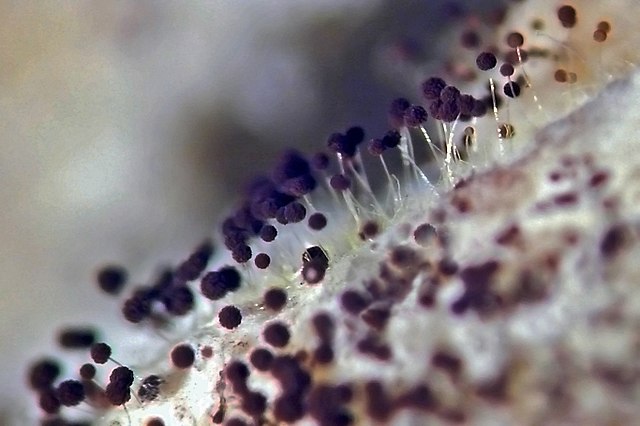
I’m dealing with a mold-spore exposure in my home that’s only somewhat mitigated, and can’t reach a better state until the weather allows me to throw open all the windows for a week or so, to allow the super–low-tox coatings to dry and cure.

Honorary sibling & excellent friend Cougar came over to help with a related errand. I was singing my way through my tasks, which I don’t normally do, but apparently it’s sufficiently “on brand” that it fit right in with his expectations. I told him that I was going through a phase of illness where eating anything is treated by my body like a personal insult, and, in addition, the all-body pain and inflammation were through the roof. He said, “I never would have guessed. Your behavior doesn’t show it at all.”

Woo hoo! Yay me. We humans can have real personality distortion due to horrible pain, and when I can manage myself that well in the teeth of a flare, I take an inward bow and award myself a shiny gold star.

I got the Big Craptasms one by one: Ehlers-Danlos Syndrome (type not yet known), CRPS/RSD, dysautonomia, fibromyalgia, Hashimoto’s thyroiditis, mast cell/histamine activation problems, gastroparesis & sluggish gut. All of these require major lifestyle changes.

I could handle the rest, even the CRPS (given all the good neurotransmitter stabilizers we have these days.) It’s the worsening histamine stuff that’s really driving me crazy right now. I’m reacting to everything.

Reactions don’t stop with itching skin, itching eyes, pouring sinuses, and wheezing. Oh no. That would be too easy.

Reactions set off aaaaaall the other clowns in the circus.

Nasty bunch of customers!

So, here’s what that looks like in my case:

  • My tissues are more brittle and unstable, so I have to be extra careful doing things (and I’m always doing things. Did I mention being mildly hyperactive?) That’s the EDS.
  • The body pain of the CRPS I don’t want to focus on long enough to describe, but getting my skin sensitivity under control before bed is kind of a big deal.
  • The fibromyalgia is like a big spiculated cloud of aggravation that my body wandered into and can’t find its way out of.
  • The thyroiditis means I have to stay off cruciferous foods (the best winter veg, sob sob) or get back on the thyroid supplement/pituitary see-saw that I’ve struggled with before; meanwhile, the thyroid-driven struggle of having one day and one night in every 24 hours is taking up a lot of planning and will-power, especially at 4 or 5 am when I haven’t been able to go to sleep yet, but still have to get up in a few hours in the hope that my body will get the clue. With most sleep disruption issues, it’s important to fake it ’til you make it.
  • Gastroparesis is tightly tied to mast cell reactivity for me. That’s also so loaded right now it’s best for me not to think about it, especially since it’s almost dinner time and I have to give my gut some work.
  • It ties in with the fact that, if I don’t eat enough, my body creates more fat “to get me through the famine”, in that lumpy, painful, inflammatory pattern that just makes everything harder.
  • Also, the mold fragments themselves create a reaction in my body that’s a whole bucket of nasty by itself: more brain fog, more indigestion, more inflammatory-patterned everything.

And I’m one of the lucky ones. This could be so much worse!

As I think about life generally and my life particularly, I think about travel — as essential to me as breathing is to many people. I don’t need as much of it (obviously) but now and then, it’s essential. I have loved ones, few of whom are near; I can no longer go visit them. There are beautiful sights I’d love to revisit, and more I’d love see for the first time. There are fascinating people I’ve not met yet — some of whom I’ve loved dearly for years. 

Yeah… but no.

I can’t stay anywhere, because everyone everywhere uses things that either smell or out-gas or both; moreover, at this end of the reactivity bell-curve, what sets me off might be fine for another who’s similarly sensitive. It’s a total crap-shoot. 

Plus, mold. Largely invisible, uniquely ubiquitous above the 37th parallel, usually harmless — but astonishingly bad for me!

If I’m going to go anywhere, I’ve got to customize and control the environment I sleep in, at the very least. Sleep is when the body does its housekeeping and cleanup; it’s as if all the doors and windows are thrown open and the sensitivity gets turned up to 11 — any bad stuff that goes in then, goes in much more and makes things worse. The regular cleanup gets interrupted. It all becomes more crisis-manage-y than housekeeping-y. As you can imagine, in hyper-reactive systems like the one I have, that’s a real mess.

This has been creeping up on me for awhile, and I’ve blithely ignored it because gee freaking whizz, isn’t there enough going on??

I just need a moment to process this.I had to give up a visit to friends this week, because my immune system crawled into the blender and hit “frapee”. (I’m nursing a charming case of stomatitis with both canker and cold sores; my lymph nodes are creating topography a bit like the bumpier parts of Death Valley; and I’m having all visitors stay fully masked with windows wide open, because I’ve got nothing to fight off further pathogens with.)

Because I gave up that trip, I get to sit here and think about what a non-delightful level of fragility I have to plan for as I go forward in my life.

So, on the one hand, this is great information and I clearly need to know it, in order to avoid making myself sicker.
On the other hand… Oh FFS, life! Really? — I mean, really?!?

When I’ve gotten the particle-board in the kitchen coated, I hope that will buy me a couple of years of being able to stay in my adorable little flat without further toxic exposures. I’m benefiting hugely from this stability, and the location can’t be beat. I love it and I’m grateful. With the semi-permanent fix in place, I can probably recover quite a lot of the ground I’ve lost — although of course there’s no guarantee, and the best-case scenario involves many months of recovery and being very careful about avoiding other toxic triggers for a couple of years, until the mast cell “bucket” can drain.

Thanks to the diligence and care of my 2 new helpers, this is an attainable goal. Pheee-yew!

Beyond that, I’ve got some thinking and learning to do. I may revisit this subject of controlling my environment while on the go, when I have anything useful to say. 

When momentum uses inertia

Wizard, with hat and staff, standing next to text of Tolkien quote.That last post, about acknowledging the shimmering sense of mortality I’ve lived with for nearly a year? Well, I kept meaning to post an update, but I’ve been having too much fun making progress elsewhere, and simply dropped the ball. I often think, “oh, I should post that on my blog,” and then – pain diseases being what they are – when I shift context to hop online, I’ve forgotten what it was and quickly get sucked into something else.

At the risk of using terms improperly, I found myself explaining this normality of painee existence as a sort of “acquired ADD.” As it happens, our brains get changed in the same places and pathways that ADD brains live in, so that our scans look amazingly similar. Those ADD-like symptoms are definitely not imaginary. I have found myself using adaptations very much like those I’ve read about in some of the terrific books on ADD. I recommend reading up on it. There’s a ton of helpful material on how to manage with and work around these attention issues.

I miss blogging. So, I hope to automate (or at least simplify) moving information here from social media. There are still interesting questions to answer, and I think that useful info we generate in pain groups should find its way to a more stable, searchable medium.

I have been sinking into this life, having acknowledged that inward message about its likely brevity. I’ve been here a year, and love my little flat more and more each day. I’ve been rearranging, creating more usable space within the same square footage. It’s delightful!

I keep the picture that reminds me of those who made this happen over the decorative fireplace, where it looks wonderful, and send grateful thoughts to its source/s – even when reaching out in real life only creates confusion and misunderstanding. We humans generally, and painees particularly, sometimes realize we don’t control how others receive us, but we can steer our own thoughts. So, I maintain this practice of gratitude, because that’s who I am and always have been, and wait for better times.

More health problems? Certainly! I will write about the gastrointestinal circus another time. I’m currently working on digesting a drink of water, and I’d prefer not to think about it until that’s done. This is the big, hairy, stinking follow-up to the first sign of trouble nearly 2 decades ago, which I wrote about (with disgusting toilet humor, inevitably) over at the post Intestinal Fortitude.

Apart from one misunderstanding and that additional body system, this life is amazing. Bit by bit, I’ve been getting a broader pool of professional and personal help and support. Bit by bit, I’ve been coming up with adaptations that bring more art, craft, and productive time into my weeks, although I have to be careful (of course) about changing tasks and changing position and managing time better than I really want to. For instance: “No,” I had to myself yesterday evening; “you don’t get to finish that row of adaptive crochet! I don’t care how pretty this is, or how soft the yarn. These helpful tools only improve my function, they don’t correct the problem! Put. The yarn. Down. Thank you.  Now go do something else.”

So I did.

And then I treated my right forearm with everything in my toolkit. And then I made myself promise not to pick up those tools for at least two more days, because that’s what it takes to recover when I’m forgetful enough to do crochet on a couple of consecutive days. Change those tasks! Figuring out a crafty solution is not as important as protecting tomorrow’s ability. Or even tonight’s. I can use myself hard, but I’m not allowed to use myself up. I don’t count on a ton of recovery time.

I’m back to using dictation software, in order to make better use of my arm time. The stylistic difference is clear to me, but it probably doesn’t matter. This is a good compromise to make, although it’s not necessarily an easy one. Dictation is a strange, slow way of speaking, and it forces me to think in chunks rather than in thoughts and words. But hey, it works!

Times are changing. Whether or not the current American president behaves any better, whether or not the next American president has the moral courage for fundamental changes, whatever, times are changing. My own possibilities are opening up, and I’m not holding back. I didn’t even know I was, but boy, things have changed since I stopped trying to eke everything out! I’ve got things to do, and I’m not waiting any longer to do them.

If I were more self-conscious, I’d throw in a bumper sticker-appropriate remark here. I’m out of ideas. I’ve got other things to do now. Maybe next time. Maybe. 🙂

Take care of yourselves. When you can’t, take care of each other. When you can’t do that, take care of your world. It helps.

Focus

There’s a lot going on.

My own health took a hard dive late last year and the damage continues to evolve…

…On top of an increasingly human-hostile political system and increasingly deadly climate.

Fun times.

So, yeah, sitting here on a big pile of crap. But that’s not the problem.

What really bugs me is this relentless, quiet, basso-profundo voice murmuring in the back of my brain, “Hurry up. You don’t have much time. You, personally, don’t have time to waste. Pick your focus. Nothing else matters. Get to work. You don’t have much time.”

I used to have a lot of projects running at once…

  • I didn’t tell anyone, but I secretly hoped I’d be able to run again. I used to run 4 miles up & down a canyon in the redwoods before work most days. It was glorious. Before that, on the other coast, I ran 5 to 10 miles along the banks of the river in Alexandria, Virginia, because it felt good and kept my head clear for work on the HIV ward. I ran from one place to another because it was faster than walking.
    Yeah. Well. Between dysautonomia screwing up my circulatory responses and adrenal glands, the tissue fragility of mast cell dysfunction vs. undiagnosed EDS offering to rip holes in my tissues again, and the recurring exercise intolerance, I can let that one go. I enjoyed it at the time, look back on it fondly, and intend to be grateful for that much.
  • I was going to start a business with a line of absolutely stellar pain creams I came up with. Seriously good stuff! It’s at least as good as the medical marijuana salve I used to make from top-shelf medical-grade bud — but totally legal everywhere! I was looking forward to getting that out to my fellow painees, doing some good and making some money. (Comment if you’re interested. I could be persuaded to sell my stock-on-hand.)
    Instead, I’m willing my recipes and equipment to a friend who knows people. She can get it out, and make more when that’s gone. Meanwhile, I’ve got a few hundred bucks locked up in the only exception to my “2 piles” rule for money: 1 pile (my paycheck) for monthly expenses, and 1 pile (an insurance account from the Worker’s Comp branch of the higgledy-piggledy US system) for treatment and survival. That 3rd pile, which belongs to the business and only to the business, is gathering dust. It might help her get started.
  • As regular readers know, I once hoped to make my own safe home to age, work, rest, and die in.
    The downside to owning a home is clearer than ever, and to a limited budget and limited body, it’s a disaster waiting to happen. That dream is dead, staked, burned, and the ashes are buried at the crossroads.
  • I love fixing sh-tuff. The dopamine wave is delicious. However… too many piles of sh-tuff waiting to be fixed, plus associated tools and supplies.
    I’ve donated, bartered, and tossed away more than I even knew I had to spare. So far, I don’t really miss it.

Months ago, I gave up all my arts & crafts except writing and drawing. (And making masks.) I came up with some chirpy sounding reason, but it was about clearing my agenda and narrowing my focus.

There’s something intense about that voice. I look back and realize I’ve been responding to it since before this GI crisis evolved. Thinning out my pursuits. Thinning out my belongings. Thinning out my life.

Narrowing my focus long before I could hear the words this clearly.

For awhile, I thought it was a symptom of wonky chemistry, as I’ve had to do that medication square-dance that people who need neurotransmitter stabilizers have to do now and then. Chemistry is pretty good in here now, and that voice is clearer than ever.

So, here’s what there is to work with:
* I’ve done a lot of writing and training.
* The biological-sciences part of my brain has kept its doors jammed open, despite all the other closures.
* I’m an honest enough historian to know how too many people have been shut out of the process of using their health care systems, due to gender, race, class, and lousy sociohistorical times.
* Me and my friends have developed some powerful tools for being seen and being believed.
* Also, we’re pretty delightful cartoonists. (Hey, it’s a great teaching tool!)

It might be time for all of this to come together. My mission, should I choose to accept it, is to “drive” turning all this into a body of work that can continue teaching, training, and translating between chronically & profoundly ill patients and the rest of the world, long after I’m gone.

I have only 2 jobs now: stay as well as possible for as long as possible, and craft that legacy.

It’s frightening to contemplate pushing everything else off my plate, but the experience of the past year has shown me, over and over, the peace and release that happens after.

I don’t have to find the perfect home, although I’d sure be grateful if it landed on me and sucked me right in. (I can’t pack myself up to move one more time.) I have to make this one work better, and get on with the rest of my life. I honestly don’t think I’ve got a lot of time.

But then, I’m not sure that’s the point. Maybe I just can’t focus on more than 2 jobs anymore.

No wonder I can’t get up! Rad realities

After the ghastly fiascos of last year, imagine my overwhelming relief to finally — FINALLY! — find a clean, safe place to live, in one of my favorite towns in the world.

The past weeks of unbudging exhaustion — starting from roughly the time everyone in the building got back from their holiday vacations — I put down to my body going into a “deep recovery” mode after the astonishing stresses it survived. I knew neighbors had wifi, as most adults do in this country, and noticed I felt better in the sunny side of my bedroom — behind an enormous brick wall, as the bedroom is an addition built onto a century-old, balloon-built brick building — so I’ve been spending a lot of time sitting there, letting all that earthing happen between me and the wifi signals.

Today, more or less out of the blue, two or three neurons fizzed together and I realized there was something differently-familiar to this feeling of having had all the air let out of my tires and my batteries totally drained. There was a knot of yuk behind my xyphoid — right about where the vagal nerve comes through the diaphragm and shakes hands with the stomach on its way past — which has rarely gone away.

Following these clues — my neighbors getting back, the bitter exhaustion, the yuk behind my xyphoid — I pulled out my elderly-but-spry laptop and asked it about the wifi signals it can see.

Here is what it sees in the living room:
List of available wifi networks, several with 4 bars

Here is what it sees in the bedroom, behind the double layer of brick wall with a door in the middle:
List of available wifi connections, mostly 3 bars

That one bar of difference is definitely palpable, to me. Also, I know that one of my near neighbors has turned off their wifi right now (bless them!) because there’s sometimes another network on this list which has all 5 bars when it shows at all; it chases me right out of the living room because I can feel it like an incoming missile to my gut.

This exercise simply goes to prove my longtime suspicion that, indeed, wifi is the Un-Healer for me. I can’t get off the couch for long, simply because I’m being soaked in it all the time.

Give me a moment to get myself together, please. This is tough.

Detail of a Bosch painting. Whiskery demon holding and reaching for a misereable man.
Bosch knew.

It could be worse. I could be unsafe, breathing mold, AND being soaked in wifi.

Solutions

First, a key term:

Faraday cages are structures that use particle absorption, grounding, or deflection to create a radiation-free space inside. I’d expect to incorporate all three elements, for a more durable and predictable kind of protection.

Grounding

There are some low-tech, lower-cost things to try that can have the effect of minimizing my exposure to wifi signals:
– Grounded skin, that is, a grounding mat I keep my skin connected to, to carry away the signal before my body takes it up much. I haven’t had terrific results from these yet, but I may have gotten a bogus mat before. I’ll experiment with wire and foil before investing in anything better.

– Rad sinks (already in place), a mass of metal dense enough to act as its own ground — in my case, big heavy old-fashioned steel filing cabinets. I should really paint them thickly in matte black to get the best results (preventing signal-bounce), but it’s hard to think of a less useful work-setting for a colorist like me. I’ll keep thinking about it, though, because I’m pretty sure it could help.

After that, it gets a bit more iffy vs. more expensive.

Shielding

Make a Faraday-shielded pod I can pick up and move around, and sit in when I’m doing anything for long. Given the inexpensiveness and availability of pop-up structures, black felt yardage, and that shiny mylar stuff, I could cobble that together, probably with a zipped door and a couple of battery-powered computer fans. But dayum, would that be claustrophobic, gloomy, noisy, and a space-hogging eyesore! Also, it would render most furniture effectively unavailable for shielding time.

I’ve tried rad-blocking clothing. This poor challenged body needs a good few feet between my skin and shielding, or the feedback gets incredibly painful. Can you imagine that thing that microphones do with feedback, happening to your spine & everything connected to it? Yeah, that’d be cute by comparison to the experience of me wearing rad-blocking clothing for 5 minutes. So, rad-blocking clothing is not an option for me.

– Creating a shielded-fabric blockade around my bed, looking rather like a mosquito net but costing the equivalent in silver netting, which it often is. Silver is an excellent conductor. If properly grounded (always a consideration for a Faraday cage you want to use for more than an hour!) this can, at least, create a low-rad place to sleep that still has air flow — and room for the cat. It’s not the total radiation seal that a proper Faraday cage should be, but it’s a compromise that works well for many people. I can certainly tell if it needs to be better sealed for my purposes; boy howdy, is that clear to me now!

Shielding & grounding my whole space

Then there’s the costly, smelly-toxic, protracted option of having a minimum of 2 good coats of rad-blocking paint (at ~$200/quart, I’m guessing a total of 5 or 6 gallons for these high ceilings, plus the ghastly oil-based primer required), securely wired into the building ground at appropriate points by an electrician ($1k), with adequate layers of 3M UV-filter film ($?) cut to fit every single window ($hundreds for labor, because I can’t do that), the sashes of which will also have to be painted or filmed over… And do something to cover the gorgeous old maplewood floors to block rad bounce from the basement. That, given my abiding love and admiration of maple in every form, would be absolutely criminal.

So, that’s not going to happen.

Or, of course, there’s the prospect of moving again, to which my internal response is way out of the decibel range that blogs can carry. I have JUST gotten my hotwired system to stop leaping awake every hour or two, convinced I have to pack and move again. I really need not to move for a good while.

This is a great place in so many ways, and I really like being here right now. I aim to make it work.

I project that my solution, whatever it is, will be a compromise, like this home — so much going for it, but still missing crucial elements. I’ll have to come up with something that will protect me enough to heal while I’m here, since that’s the point.

First steps

I think the first thing to do is shield the bed. Like I said, not perfect, but it should improve my overnight recovery-time. The means to do that is readily available and I already know the better makers and materials-technology. I could probably get that up in a week.

After that, I’m thinking portable pod, big enough for a chair inside with a little writing desk. Might rig up a window or viewing port, using something reflective but not too dark.

Any engineers want to come play with these ideas and problem-solve here? 🙂

Freaky Fibro and the elegance of precision

As the title hints, it’s been another fascinating visit with my pain diagnostician.

His current working diagnosis is fibromyalgia, which he characterizes as being capable of throwing some hairy curve balls (my terminology, not his) including the growing litany of food sensitivities, which solves a major problem in my mind.

Thyroid disease can also trigger the symptom complex that otherwise gets tagged “fibromyalgia” (more on symptom complexes in a minute.) I mentioned that I’ve had my thyroid checked several times and last year came up with Hashimoto’s (meaning my immune system is attacking on my thyroid.) Since I developed the first symptoms of this central sensitization around 16 years ago, it seems not like a precipitating event; since “normal” thyroid activity is not the most meaningful term, I’m not sure it’s irrelevant. I guess I’ll learn more as we go on.

He’s also checking my hemoglobin A1c to check for underlying blood sugar instability. I’m always happy to check that. Also B12 (pernicious anemia etc.) and D3.

Now we come to the fascinating (and crucial) distinction between a symptom complex and a disease. Both are used as diagnoses, but they mean different things. (Yes, I’ve used the word “disease” indescriminately here, for simplicity.) Medically speaking, a disease has a cause that can be targeted, what you might call a diagnostic end-point. A symptom complex doesn’t have that level of targeted responsibility for the illness; it’s a consistent set of symptoms that cluster together often enough to get a diagnostic label, which takes some doing.

Here are the two scenarios.

On the one hand, you’ve got someone with a lot of pain, funky guts, sensory reactivity, and normal labs. The doctor (we hope) rules out any other possible cause, and decides the diagnosis is, say, Fibromyalgia. This is a symptom complex, because it’s described in terms of what it does to the person, not in terms of specific pathogens or organs as the causative thingy. (I’m tired; thingy will do.)

On the other, you’ve got someone with a lot of pain, funky guts, sensory reactivity, and thyroid labs that are out of whack. Further examination of the thyroid discovers specific thyroid abnormalities which can be treated. With treatment, the symptoms subside or even disappear. The diagnosis is the disease of hypothyroidism, with a diagnostic end-point in an organ (as in this case) or pathogen.

CRPS/RSD, Fibromyalgia, and some other hideous conditions are symptom complexes. This is used by some as a reason not to “believe in” those conditions, because they aren’t “real.” This is intellectually dishonest, but it does no good to tell them that; assuming that a lack of diagnostic end-point equals lack of ill-health is blatantly absurd, but this is a reality we must contend with. It’s a drawback of having such a flexible language as English, where the same word can mean different things from one context to the next: in Plain English, disease and illness are interchangeable, but in Medical Jargon, they’re definitely different: disease means specific diagnostic end-point, illness tends to suggest a pathogen, and condition is the catch-all term — but is used more for things that really aren’t diseases or illnesses. Another example on a hot issue: in medicine, narcotic refers specifically to opioid analgesics; in law enforcement, it’s a MUCH wider term, encompassing any substance that legislators have decided is not legal. In courts, the meaning of the term has to change depending on who’s involved, which has to be weird.

No wonder there’s confusion around anything medical. What a setup, eh?

This brings us to the physician ethical structure this doc works with, and where it fits into this patient’s worldview. You can almost hear me purring comfortably from here.

He speaks of himself as a Palliative Care specialist. Most people think of Hospice when they hear palliative care, but it’s wider and simpler than that. It means this physician has chosen a field defined by the fact that his patients will probably never recover. That’s what palliative care means: keeping the patient as comfortable and functional as possible, for the rest of their (probably, but not necessarily, truncated) lives.

Yeah, pretty darn special. How many of you who see pain docs hear them use the term “palliative care” naturally and fluidly, without wincing and scuttling on? It’s a little thing that means a lot. It makes me realize I’m seeing a doctor who CAN be there for the long haul, if need be. Someone who would NOT throw me off with the very natural cringe of frustration and failure most docs feel when they can’t save you, or when you’re in the final downhill slide and they can’t face you dying. He can take that strain without failing me. That’s rare indeed.

Palliative care is the very heart of chronic pain care, and I couldn’t face that myself until today.

So now I just have to die before he retires…

Kidding, Mom!

I’d like to go over his approach more, but the fog is descending; it was an early morning and I’m paying for it as usual. I’ve got lots of notes, though. It’s great food for thought, so, with luck, I’ll come back to it.

Aw, nuts!

While I was mulling the constancy of nausea and yuckiness, looking for a reason more useful than “it’s winter”, I realized I had relentless cascades of post-nasal drip.

The stomach isn’t too fond of relentless cascades of post-nasal drip, because the glucoprotein complex generically called “mucus”, which we usually call “snot”, is not that easy to digest. It’s not really meant to be digested; it’s meant to do its job (picking up and trapping obnoxious particles or germs or what-have-you) and then get blown out. It’s not supposed to roll into the tummy in a never-ending stream.

me-tongue-out

I was reading up on GI issues (as one does) and stumbled across a piece which said something like, “Stay away from nuts and seeds entirely. The oil is rancid by the time it gets to you and that rancidity is poison to the systems of people who have leaky guts and sensitized systems. You can usually tell because the immune reaction affects your sinuses and causes lots of extra mucus.” If you’re curious, this article was about the GAPS diet and explained the whats and whys.

I threw my hands up in exasperation and disgust. I relied on nut and seed butters to start my day, because they cut the morning pain down to a quite bearable level and gave me a bit of protein that didn’t bring my stomach up in revolt. My mornings are tough enough and this info just pissed me off.

The next morning, I woke up noticing that I didn’t have post-nasal drip. Nice. Then I started on my morning breakfast of apple (malic acid helps the pain ease off too) and sunflower or almond butter (I forget which.)

Two bites…. then a relentless cascade of post-nasal drip.

My first thoughts were mostly expletives. Totally unprintable in a family-friendly blog.

I went off the rails a bit. I’ve been dealing with this disease complex for nigh on 15 years now and I have evolved a pretty limited (and not cheap) diet to manage it. Rather than thinking, “Oh great, a good clue as to what I can do to improve things!” I mentally roared, “WHAT THE BLEEDING HECK CAN I EAT ANYWAY????”

Tiger yawning hugely. Looks like roaring.

Let’s review.

– Genetically-determined mild allergy to white beans. That means soy, chick peas (which wipes out hummus and much Indian food), most multi-bean soups and salads.

– Roaring neurologic gluten response, which in my case spills over into related molecules. This means: no wheat, barley, triticale, rye, oats — in fact, most grains; nor fresh milk, soft cheese, dairy ice cream; and eggs only in strict moderation.

– Hashimoto’s disease means my body is chewing up my thyroid. This means definitely no soy, but also, no broccoli, chard, kale, bok choy, cauliflower — no cabbage/brassicas of any kind — and that’s an awful lot of vegetables not to have as an option, including most winter veg. And yet, I need lots of vegetables and happen to like all of those. Even in small amounts, brassicas can squash thyroid response. It’s very sad.

– Candida/c.diff overgrowth, which means no sugars (not even unrefined honey or maple syrup, not even low-glycemic stuff like agave [which makes me cramp] or maltose), no rice, minimal fruit, no juice, no root starch (too high in sugars) or white starch of any kind (if I’m doing this diligently) which wipes out the potato family and remaining grains except amaranth (I can’t digest quinoa at all, so it’s not even an option.) Then there are the limitations that are less obvious, which means, no tea or coffee, no vinegar or cultured food (if I followed that parameter, I’d be unable to digest anything and my guts would be even worse), no artificial anything because they tend to be grown on yeast or malt slurries (which is fine because packaged foods tend to happen to other people, not me.)

– The constant immune-y fuss means I should probably be more diligent about the inflammatory culprits: tomatos, eggplant, potatos, peppers, the whole belladonna group. I LOVE those things. Also, no canned foods, because the trace amounts of preservative stuff are so neurotoxic that molecules matter to my body, and homemade canned stuff can still grow trace amounts of the fungusy-yeasty stuff that boots me back into candida territory.

– Now, no nuts or seeds. At all. Possibly no cooking oil. I was diligent about getting the freshest and checking best-by dates and inspecting the packaging, for the candida reason. Not enough any more. No nuts or seeds at all.

OW OW OW OW OW OW OW OW OW OW OW OW OW OW OW OW OW OW OW OW OW OW OW OW OW OW OW OW OW OW

I think i’m down to squashes, lettuce, and incredibly expensive pastured/wild flesh foods. Oh, and grassfed (Kerrygold) butter. I can put that on the squash, I guess.

To be frank, I haven’t been very diligent about eliminating the root veg and I’ve had some broccoli and cauli lately, because it’s freaking winter and I’ve needed to eat something that’s available.

Since reading about the nuts/seeds thing, I totally fell off the rails. No gluten, because I’d rather die than go through all that again, but I’ve gone to town on sweets, rice, vinegar, ice cream, root veg, brassicas, belladonnas — everything but nuts and seeds.

Wide-eyed kitten staring at a roast chicken on table in front of its face

Paying the price for it, too… as one does.

Two nights ago, I made myself a new bedtime meditation recording, designed to rebuild my own mental core. I’ve just about had it with trying to cope with the world (if you have one eye on US politics, you’ll understand that well enough, especially if you have friends and family who are losing care due to political brangling, losing property due to corporate gamesmanship, or losing their liberty due to being not-White); add to that some family crises of illness and a bereavement in the extended family, and… yeah.) I’ve reached March feeling absolutely shredded inside.

And then…. NUTS!

Old amber-screen lettering showing *TILT* like on old pinball machines

Lately and increasingly, my brain was really resisting the relaxation response training — which is very odd for me — and I was having nightmares and waking up 5 times a night. I thought that, if I backed off the calming exercises and instead re-integrated my core self, that would make more sense than trying to pretend everything’s all right for half an hour. I have no idea what that looks like for other people, but I have a pretty good idea what it looks like for me. So, I made a recording with a series of mental/imaginative exercises that boil down to my individualized psychological structural support.

The chaos and rage are abating, which is just as well, because I have a follow-up appointment with my pain specialist tomorrow. I’m calming myself down with this article before turning my fragile attention to encapsulating the physical fallout and revelations of this winter in a coherent patient update.

I get to tell him that I’m seeing the GI specialist later this week, and that I have tested marginally positive in a screening test for mold toxicity, so more blood tests are coming from my allergist. That would actually explain a lot, but I’m not sure where he stands on the subject. Mold toxicity, as a driver of illness, is one of those things where the physician’s belief-state has more bearing on care than the coherent, consistent, verifiable facts of the patient’s disease-state — in that respect, it’s like chronic fatigue, neurogenic pain, and most immune disorders. Familiar territory to many of us.

A few days ago, I apologized to J for being such a piece of work lately. I told him I’ve been ill and in more pain than usual. He said, with the kindest intentions, “Well, it’s hard to act right when you’re sick. You have to feel good.”

I said, “I never get to feel good. It’s just different levels of –” (waved my arm expressively.) “I usually do a pretty good job of managing myself anyway.” He agreed, bless him.

That first phrase, “I never get to feel good,” has been preying on my mind. But then, it’s winter. This will pass, and I’ll find it easier to put my focus where it belongs — on what I CAN do, CAN eat, CAN feel, that’s not so — (wave my arm expressively.)

Until then, I’ll keep breathing, keep making my appointments, keep tending my relationships as well as possible, keep up on my documentation, keep on keeping on. As one does.

My gut has a mind of its own

I take good care of my brain. I work hard at learning more all the time about how to support and foster it in spite of this tedious collage of illnesses. Neurology interests me — always has. Now that it’s so personal an issue, it’s positively compelling. Neurology’s very complex, and hooks into everything — fascinatingly fractal, in the way it repeats the same physiological “phrases” to very different effect in different parts of the body in response to different changes.

I’ve been wrestling with my gut this past year or so. Lately, it looks and feels like someone’s taking a bicycle pump to it and bringing it up a little more every day. When it interferes with your breathing, that’s a lot of bloat!

I’ve found the gastrointestinal (GI) system to be a bit of a trial. It’s very complex, and hooks into everything. There’s no getting away from the endless iterations of its main roles of sensing, transforming, processing, and discarding: at the intracellular level, intercellular level, endocrine level, organ level, and so on.

Some observant part of my brain notes that the same characteristics I find appealing in neurology, are the same ones I find appalling in gastroenterology.

And the gut has so much STUFF in it…

  • The liver parked under the ribs at one side, the spleen at the other, holding half your blood at any one time, right across the top of your abdomen;
  • The endless loops of squirming intestine, stretching and shifting within their blobby webs of mesentery, shoving along several pounds of food residue at any one time along its length;
  • Lymphatic nodes linked in constellations in the shining webs of mesentery and glistening loops of intestine, ready to respond instantly to allergens or pathogens or anything else in your GI tract that could make your body revolt;
  • Major vessels, the abdominal aorta and the vena cava, coursing alongside the spine, apparently apart from the mess, but branching out so thoroughly and so minutely into the organs and the mesentery that the smartest rats in science couldn’t make it through that maze;
  • The tenth cranial nerve, forming an intimate and instant link between your brain and your gut, linking your brain directly to the largest grouping of nerves outside your brain, the nerves that surround and penetrate your organs and your gut, embedded in and supported by that amazing net of connective and fatty tissue, the mesentery;
  • And let’s not even go into the endocrine system, responding minutely — at the level of individual molecules at times — to the constituents in your food, the way you feel about them, what you need them for right then, what else you’re sensing at the time, and even what time of day or year or month it is… then hooking the info back out through the nervous system, cardiovascular system, lymphatic system, and of course the gastrointestinal system.

I was sitting in my Epsom bath today, mulling this over after the battery in my e-book died. I had done the squishing of my legs and arms with the washcloth, and ran it over my neck and back and sides too, but had a terrible time making myself touch my abdomen. It felt just awful. It also felt like it was somewhat detached from me, like it was floating a couple of inches off my back and spine, simply hovering, slightly displaced, in front of the rest of my physical self. Touching it was deeply upsetting in some way, triggering a wordless revulsion.

This is not an unusual experience for CRPSers. We often feel as if the affected parts of our bodies are almost separate from us, or like they belong to someone else, and touching them is — even apart from the allodynia — a crankiness-inducing, unpleasant experience. It’s a perceptual trick the brain plays, probably part of its general effort to manage more ghastliness than it’s really set up to deal with.

One reason I do the Epsom baths (and the stretching, and the activity, and the relaxation meditations, and the aikido/tai chi/qigong, etc.) is to stay on good terms with my body. That whole self-alienation thing is just too wrong, to me — my life is always best when I’m in my skin, so to speak, whether or not my circumstances suck.

Also, to be fair, my body has done nothing wrong; it just got some of the shortest darn straws out there, and it’s doing its mighty best to manage that. It doesn’t deserve my loathing at all. So, I work to keep on good terms with it.

This is probably one reason why I’m still often functional, frequently productive, and can still walk a mile without sitting down to rest on a good day — even after 15 years with this disease on little or no medication (here’s why no CNS depressants like narcotics, here’s why minimal other meds.)

Anyway, there I was in the bath, watching my belly inflate and almost float away, even though I was Epsom bathing (which usually calms my systems down), and realizing I was finding it unbearable to touch the darn thing, even though it was practically in front of me.

I thought, “Neurology is not that hard for me. Why is gastroenterology so impenetrable? Why am I making so little headway on figuring out this stomach stuff, and dealing with so many setbacks? Why do I get these little tailspins of terror about it? What’s going on in… the second largest collection of nerves outside my brain?” I said, as the lightbulb over my head turned on.

I thought, “I’ve been having a lot of trouble with gastroenterology. But I can usually do neurology.”

And the word for the neurology of the gut, ladies and gentlemen, is neurogastroenterology. (Break it down: neuro meaning nerves, gastro meaning stomach, entero meaning inestines, ology meaning study of. Now you have it.)

I’m pretty sure I can do that. I can sure take a stab at it.

First lesson: review the vagus, a.k.a. Cranial Nerve X. It’s a doozy.

Intestinal Fortitude: a dirty story

Back by popular demand … My crappiest Christmas ever — a comedy.

This was written in 2002…

Caveat emptor: This is not something to read before dinner, unless you’re as strange as me.

Chapter 1: Welcome to my wonderful world

I have developed such a number of work-related hand injuries that there’s nothing like it in the medical literature. Leave it to me to make history in such a feeble way.

I had a ganglion removed from the inside of my right wrist, just over a year ago. Subsequently, I developed a neuroma which was related to the surgery, carpal tunnel which was related to the ganglion, and radial tendonitis apparently out of pure cussedness. The tendonitis got so bad the radial nerve itself got involved.

Cue to second surgery — December 23rd, 2001, I got a new wrist for Christmas: my carpal tunnel was released, the neuroma on the back of my hand was removed, and a nick was taken out of my radial muscle to give my irritated radial nerve some much-needed room. The only thing to be worried about, the surgeon said, was if the nerve got trapped in the scar tissue. (You can see it coming, can’t you?)

First, I had trouble getting the post-op pain managed. Since a large part of my forearm and hand had just been flayed, pain was a real issue. The Vicodin made me dopy (which wasn’t too bad), and horribly nauseous (which was.) So my surgeon prescribed Phenergan for the nausea, which made me even sleepier than the Vicodin alone; but, without the nausea to consume my attention, it was clear that Vicodin wasn’t cutting the pain. So he gave me Percocet instead of Vicodin, which made me wackier still AND made me more nauseous than ever. Back on the Phenergan and bye bye brain!

I had a trip planned to see my folks and show off my cast. Linda took me to the airport and had the bright idea of taking Dramamine instead of Phenergan, so I could take my pain meds without alarming the neighbors with wanton drooling and wordless babble. It worked so well that the flight was, in fact, better than the previous two days at home on my couch had been.

Chapter 2: Gumming up the works

Turns out I flew into a horrendous tummy virus the entire DC-area family had, but thanks to my relentless handwashing and disinfecting the doorknobs, I avoided it. That was a miracle, but it may have been my first mistake . . .

Within a couple of days, my insides came to a grinding halt. Stopped up like epoxy.

It was awful. Couldn’t get anything in, couldn’t get anything out.

I stopped taking the Percocet, which had undoubtedly caused it, and tried to hustle things along. Water, fiber, laxatives, Colace, you name it. I used to be a Registered Nurse — ER, ICU, HIV, Home Care; a varied career, but interesting, and it left me with a comprehensive knowledge of how to cope with intransigent innards.

The growing pain, I knew, was partly due to the growing pile of garbage in my gut, so moving things along would solve several problems.

After chugging a few oz.s of a particularly effective cathartic, instead of going Number Two, I wound up FACING the loo and heaving everything I’d eaten for the past 18 hours. Once I could breathe again, in a burst of uncharacteristic sanity, I told Mom (in a bored voice) to grab a book and take me to the ER.

Younger brother Huck, bless his heart, drove over from his in-laws and arrived shortly after I had gotten a gurney and laid my sorry ass down. The three of us kept each other in stitches, and got at least a giggle out of everyone who came into the room. This was a great relief because all I could do in the waiting room was weep with the sheer, all-consuming misery. Once on my home turf, with no tedious shift duties to manage, and with two of my family to entertain and amuse, things improved.

For me, anyway.

Mom was frankly astonished at the way I spoke to the nurses. She was discomposed by what she saw as my dictatorial manner. Coming from her, of course, I thought “dictatorial manner” was priceless, but, more to the point, I was perfectly in my element — I loved working in the ER, and here I was in an ER where I knew exactly what needed to happen but somebody else had to do the messy part. Woo hoo!

My first nurse was new to the profession — perfectly happy for help and advice, especially when it came to starting IV’s. I told her I was a hard stick, and why: tough skin, leathery and highly-innervated (very sensitive) vessels, lots of valves in my veins, and — since I was both out of shape and dehydrated — my veins were tiny.

After one disastrous attempt, she dashed off and got somebody else.

That somebody else listened to my description, took one look, literally blanched, and ran off to get a third person. (I could tell by that that she was a more experienced nurse: never blow a vein needlessly.)

Bless her heart, person No. 3 got it in, first try. She turned out to be an ER technician who’s graduating nursing school this year. That young woman’s got a bright future.

Even the ones who got scared off were entertained. Two or more Aweighs in one spot always seems to turn into a movable feast of unabashed commentary and shameless wordplay. Mom and Huck entertained each other endlessly over my steel-plated veins… Bullet-proof skin… Vacuum-sealed gut… Armor-piercing eyelashes…

Chapter 3: Moving mountains

In the ER, a pleasant, sprightly doctor of sensible years did an unpleasantly thorough exam, with the best manners possible under the circumstances. He said I was not actually impacted, it’s just that things weren’t moving.

So, he ordered some blood work, medication for pain and nausea (YESSS!), some exciting radiological studies, and, once I could bear to move, the most astonishing plethora of enemas. In fact, pretty much every type of enema I had ever used on others, over 8 years of nursing and 4 as a nurse’s aide. We went through the entire list. I counted.

I can’t help thinking I’ve paid off some serious karma.

Once my stomach stopped arguing with me and my arm stopped screaming, I could prepare for the CT scan. I swallowed the contrast dye like a trooper, thinking that this was another thing I’d had to bully people into, so I was going to knock it back and say, “That’s not so bad.” My stomach even held it down, thanks to those marvelous drugs. I also had intravenous dye, just to make sure we got pictures of everything.

It was intriguing to be the subject of all these tests I’d administered to others. I wouldn’t recommend it for casual entertainment, mind you. I’d rather rearrange my entertainment system or clean the kitchen or sit the neighbor’s kid — any neighbor, any kid, doesn’t matter, it would still be more fun. But from the standpoint of pure empathy, really seeing the other side of an experience, this was hard to beat.

The IV dye was kind of fun — I was all tingly-warm, and just high enough to enjoy it. I giggled and tried not to wiggle on the table as the tech snapped away. He broke his grumbly facade to ask rather wistfully if the dye was really that fun? He had “never gotten to try it.”

I said I didn’t recommend needing it, but since I had to have it, it beat a sharp stick in the eye. Or the elbow, which is where my IV had eventually gone in. I added that the dye didn’t make up for the previous three days, a remark that made him nod knowingly and then retreat to his rad-shielding and goodly gruffness.

Then, back to the ER and more enemas, since we hadn’t worked our way AAAALL the way down the list yet. Up went a suppository.

I wondered when I’d start developing hemorrohoids. Or a lean-to.

I have never shoved so much stuff up a single butt in my entire life. Ever.

Nothing, nothing, NOTHING happened. It was awful.

With all that garbage going in at both ends, and nothing coming out, I was beginning to feel a little bit ragged.

As I lay there, sweaty and despairing, the dynamic little doctor swung his fist determinedly and said, “Don’t give up. I’m not giving up. We can move mountains — we can move your bowels!”

I hadn’t thought of it that way.

“Next,” the doctor continued, then took a breath to brace himself to deliver the news. “Next,” he started again, “we’re going to try a soap-suds enema.”

Why the pause? Because … well, you have to really understand what he planned to do to me. A soap-suds enema works like this: You pour a couple quarts of warm water into a bag, add a little packet of castile soap, mix it up, and instill it (nice word, eh?) into the colon in a process that means every leg of your colon gets at least half a quart of warm, sudsy water in it.

Have you ever knocked back 2 pitchers of beer in a span of 5 minutes, and then not been able to get to the toilet for half an hour? It feels a bit like that, I suppose, only without the alcohol or winning a bet.

The rationale behind the soap-suds enema is that the soap acts on the intestinal lining to make it want to contract, and the sheer volume of water reminds the muscles of the lower intestine that they have a job to do. It’s an excellent remedy, normally very mild, and is generally well-tolerated. However, it is definitely NOT something you’d think of when your patient is packed out to the point where it’s standing-room only in there!

I looked at him dumbly, jaw fallen open to rest gently on my chest. Finally, I got my voice box back in gear: “You’re kidding,” I husked.

He shook his head. “I think volume is the trick.”

I didn’t know what to say to that.

If he thought that 5 days’ food and water (and tea and Colace and fiber and drain cleaner — just kidding — and I don’t know what) and then the past 4 hours’ concerted efforts in a well-stocked hospital, didn’t add up to enough volume for any 3 colons, there was simply no reasoning with him.

I stared.

He stood his ground.

Finally, I fell back into the sweaty sheets and said weakly, “Okay. Bring it on.”

The nurse did all the things I remembered doing so often, instructing me in the process I once knew so well but had conveniently completely forgotten the moment I realized I was getting it. When the stuff started rolling in, I did like every patient I’ve ever had who had this procedure, and wailed and bitched and moaned that I couldn’t possibly hold it, she was going to have to stop, wait wait wait it’s coming out!

And she, like the ER nurse that I used to be, was reasonably kind but absolutely relentless, and told me first that there was hardly anything in there (liar!), then that I was doing fine, then that we were nearly done, and finally not to fuss because I could hold it a lot better than I thought I could.

Bitch!

She was done, and all that remained was for me to hang onto that ghastly load for 5-10 minutes by the clock, and hope I could make it to the portable potty that stood by the bed when the moment of truth arrived.

I lay there, breathing carefully in order not to disturb things, trying not to think about exploding.

Five minutes slowly passed.

Five and a half.

Five and three quarters.

And then … it worked.

Boy, did it ever work!

It worked really amazingly well. And I’m happy to say that I made it to the bedside commode, where I hung on for dear life.

I can’t say that I didn’t know intestines could hold all that, because I know they can — I’ve seen quite a lot of intestinal contents in my professional life, and I’d seen more at once than this. Not a lot more, but still, more.

I’ve smelled a lot, too, and it was on that scale that this stuff was impressive. The stink would have knocked over a horse with hay-fever. It cleared every sinus in a 30-meter radius, and may have triggered a couple of asthma attacks. I could hear Mom exclaiming from the hallway, on a rising scale that cracked glass on the final word, “Isy, is that YOU??”

Even as a nurse, you don’t often get to take a whiff of bowel matter that has had the best part of a week to fester and mature before reaching the open air. It’s just not a common occurence.

It really reminded me that the colon is simply alive with bacteria whose sole job is to rot your body’s effluent.

What rot!

What effluent!

It was stunning.

One of my nurses came in as I was recovering from my frankly astonishing performance. I felt fantastic, although I could barely hold myself up and was dangling from the arm-rails.

I said, beaming, “Aaaah, the sweet smell of success!”

Here’s how you could tell she had been an ER nurse for too long, but not quite long enough: she sniffed. Then she gagged, riposting, “Well, I wouldn’t go that far!”

Chapter 4: “Oh, by the way …”

Turns out that, among the other blood tests, the doctor ordered a pregnancy test. Naturally, I tried to suppress a giggle. Mom asked, in amazement, “Why didn’t he just ask you?”

I replied, “Well, he has good manners. It’s not something you want to ask a young lady when you’ve just had your hand up her butt.”

The timing was perfect. She choked on her water. Huck patted her back, once he could hold himself upright.

I got admitted to the hospital, which meant they had to make sure they had dotted all their i’s and crossed all their t’s. Somebody at the nurse’s desk smacked their forehead and realized that they hadn’t checked ALL possible sources of internal distress…

The nurse and doctor trooped in with rather grim expressions, and said we had to do a pelvic exam.

ER docs hate doing pelvic exams. They really think it offends their sensibilities as much as the patients’ own. (Most of these doctors are men, so we really don’t need to comment further.)

They didn’t spend ten years in school in order to stick their hands up strangers’ skirts. It’s gross. Give ’em a messy trauma any day. Blood, guts, bits of bone sticking out, messy burns, plastic tubing everywhere, monitors beeping in every key — they love that.

Pubic hair? EEEEEW!

Consequently, they tend to be pretty clumsy with the GYN stuff. It hurt like hell. And they expected me to be sympathetic.

Chapter 5: Life on the inside

There was a delay in getting me admitted. The only spare bed in the hospital that night was on the cardiac step-down unit (my second-favorite type of nursing work), and they finally put me there for the hell of it. It was like old home week for me, except their beds and machines were much nicer than the ones I ever got to use.

They gave me IV pain medication, but of course they used another narcotic, Dilaudid. (Honestly, my admitting doctor was a turkey.) I could only have it every 4 hours, but unfortunately it only lasted about an hour and a half, and I spent all that time sleeping because the pain kept me awake the rest of the time.

It was another flashback for me to see the expression on the nurse’s face when I called for pain medication with tears streaming helplessly down my face, and she had to say she couldn’t give me any for another 2 hours. I’m sorry to say, though, that I had no sympathy to spare for her. It was all I could do not to plead or snarl. I suspect she cheated as much as she could without fudging the law, in order to get me my next dose sooner. I wasn’t coherent enough to say so, but I know I’ve done the same, and all the thanks I needed was to see those eyes close peacefully that much sooner. Mind you, I think I’d have called the doctor the second time.

Of course, they gave me Colace twice a day. They also gave me Phenergan intravenously, so I got plenty of sleep. But, every time I opened my eyes, I saw Mom sitting and reading in the chair nearby, or I saw her coat draped over the back of it and knew she’d return soon. She’s no mush, which is just fine, but knowing she was there made my dazed and painful world immeasurably better.

I spent 3 1/2 days in the hospital, getting rehydrated (16, count ’em, 16 hours before I even whizzed!) and trying to figure out what was going on. Most of it is a blur.

To start with, I had x-rays of my abdomen on Sunday, which required having a clean colon. I was utterly aghast when the saccharine young nurse brought me a bottle of magnesium citrate. I said, “You realize, the only time in my life I had that, last week, I threw up all over the place.”

She shrugged. “That’s what they want you to take. Your insides have to be clean.”

This, after 3 days of nothing to eat, and the most spectacular bowel cleansing I’ve ever seen not 2 days before. There wasn’t anything left to clean.

I opened my mouth to argue, but then realized that things could be worse. There’s always the electrolyte-based cathartics, like Colyte and Go-Lytely, which taste like a mixture of sweat and window cleaner and come in, I’m not kidding, gallon jugs.

I pinched my nose and chugged the dose. Two hours later, my intestinal tract was cleaner than it’s been since I first saw the light of day.

The nurse twitched an eyebrow, “That was quick.”

I disliked her enough to say, “I told you so.”

Chapter 6: X-ray vision

I was still bloated, but my insides felt as light as air. Sitting in the radiology hallway, with a serious case of bed head and draped in ghostly hospital wear, I felt like a giant marshmallow with a bad hairdresser.

I was fifth in line, but the radiologist, a hunky Italian with a sense of humor, stepped into the hallway to amuse me periodically. At one point, he asked if I was “Mrs. Aweigh.”

I blinked and said, “Something like that.”

One of the things I really like about Black English is the title “Miz,” which is perfectly respectful yet maritally vague. He wasn’t Black and didn’t quite know how to recover from the faux pas, so I said what was on my mind, in order to salvage the conversation.

He wrinkled his eyebrows in a hunky Italian way and replied, “Your arm hurts? I thought you were here for abdominal X-rays.”

I said, “I am. It’s been a helluva week.”

“What happened?” he asked.

I told him, “I had surgery in three places on my arm on Monday. The first pain medication didn’t work and it made me nauseous. The second pain medication stopped me up. I spent ten hours in ER getting cleaned out, and it’s taken two days to get me rehydrated. I also had an abnormal pelvic exam. So we’re trying to figure out what the hell’s going on.”

He blinked, looking stunned. “Well, you sound like just the kind of girl anyone would want to marry.”

“Yeah,” I said, in my bloated gown and bloated face and bloated hair. “I’m a ball of fire.”

Chapter 7: Radical tonsillectomy

On Monday, I got to see two competent doctors: the partner of the idiot who admitted me, and the gastro-intestinal (GI) specialist he referred me to.

The GI guy was clearly one of Nature’s perfect gentlemen. He made a special effort to see me that day, and came in at 4:50 pm looking like someone at the end of a very long day with no rest in sight. I thanked him for the effort, and he waved off my thanks gracefully, saying that tomorrow was going to be a nightmare and he wanted to speed things up for me. It was December 30th.

I told him my adventures of the past week, describing my surgery, my pain, and my adventures with my gut. I added, “My pelvic exam was problematic, too. But it was done by an ER doc — bless his heart, I think he was reaching for my tonsils.”

The doctor’s reaction was one for the record books. His face flickered slightly, like old film footage. He held absolutely still for a very large fraction of a second, refusing to lose his composure. Im certain, from a little flicker of light in his left eye, that this was going on the short-list of things to tell his wife tonight, and to say to his best friend when he had a mouthful of beer.

Then, after a short, controlled breath, he snapped right back into the patient interview with a straight face.

I think I saw him patting a few hairs back into place as he walked out, but that was it.

You’ve got to watch the quiet ones.

Chapter 8: Potty training

The GI doctor ordered an ultrasound. The nurse came in with a quart of fluids for me to drink, and I, remembering all the times I had had to send patients back because they hadn’t drunk enough, asked for seconds.

Well, I still had a nurse’s bladder, which means I could increase a full dress size before I become all that uncomfortable. They forget that nurses are weird that way, and think that it’s not worth examining you until you’re really uncomfortable.

And then there was a delay.

By the time I got to ultrasound, I was in agony, and the ultrasound technician took one look at my abdomen and expressed serious concern that I might pop. She scolded me, in her best maternal manner, and said that I should trust her to know exactly how big she needed my bladder. She sent me to the bathroom with a cup, telling me exactly how many times to fill it, and exactly to where, to bring my bladder to her preferred volume.

The bathroom. Some idiot had pissed all over the floor. Not just the cute little territorial dribbles most men leave. This guy must’ve been blind, drunk or both. It was appalling.

Incidentally, I’ve got a little rant to insert here. EVERY guy dribbles. I love my men friends, I really do, but I have to mop after every visit. And, just to cap it off, they don’t drip dead center — they ALWAYS put it just where you want to put your feet. Now, I hate vacuuming, so I never wear shoes in the house. I hope I don’t have to spell this out for you.

I mean, really, would it kill them to use a little toilet paper? When the door’s shut, who the hell is going to see? I’ve told them: despite what they’ve heard, there is NOTHING in t.p. that will make It shrink.

And don’t let’s start with the toilet seat thing. The entire lid is always closed except when the toilet’s actively in use, so EVERYONE in my house has to pay attention to the seat — so all of y’all can stop your whinin’!

Boy, I feel better after getting all that off my chest. Back to the bowels of this story.

I was too wonky to really deal with the flood, and too wonky to think much at all. I unfolded paper towels, one by one, maneuvering around my IV tubing, clonking my cast, wielding my other hand scarcely better with its sausage-thick fingers, and piled the towels high, until finally no more leaks got through.

And then I had to wipe off and cover the seat, while not disturbing my carefully-constructed polder underfoot. Pulling the towels, stacking them deep enough to keep my fingers dry, keeping the IV tubing out of the toilet, wobbling cast, one hand of sausage fingers. Then I had to figure out how to wee into a cup while keeping my eye on the measuring marks … and simultaneously keeping the paper cover of the toilet seat in place … while craning over a huuuuugely-bloated belly … trying to keep my IV not only inserted in my arm, but out of the toilet … with my one arm with the hand of sausage fingers.

I still have no idea how it happened, but apparently it did: I emerged with a properly filled cup, dry butt and clean feet.

It was the most athletic activity I had had all week.

It turned out that the ultrasound technician had been waiting for me the whole time, and she was rather afraid I had gotten flushed. It turned out there was a larger toilet down the hall, but she hadn’t wanted to make me walk all that way. Had I thought to complain, it would have saved a lot of time. And trouble. And paper.

I’ll try to remember that next time.

Chapter 9: The sweetest sound I never heard

The tech thoughtfully warmed the jelly before spreading it on my belly, so it was merely cold rather than icy.

I love radiology to start with, but seeing my own inner workings (working innards?) was fascinating, completely fascinating. Once I figured out how the transducer worked, I could tell what she was aiming at, and could interpret the shadows on the screen. It was the most amazing, warm and fuzzy feeling to see my own organs bubbling and sloshing away, going about their work as we peeked in at them. All the anatomy books, all the photographs, all the trauma surgery had not prepared me for how beautiful the organs are when they’re just pottering away.

I’ve seen a beating heart in an open chest before, and I thought that was the most beautiful thing in the world. I’ve felt the warm rush of gratitude to my own busy heart as I feel it going thub-bub, thub-bub (I have a tiny murmur), day after day, never asking for sick leave or overtime. I’ve listened to my lungs — a lot; I’m asthmatic — and am probably more familiar with those sounds than a normal person ought to be, but on the days when the air moves in me as sweetly as the breeze through new leaves, it’s a joy to hear.

But this was the first time I got to see my own parts in action. Each one is extraordinarily appealing, in its own distinctive way.

My liver is a modernist work of art. Jackson Pollock on his best day, working with Miró, after a really good liquid lunch with Stella, might come close. It’s an arrangement of seriously artistic disorder, with a sense of gorgeously strange method to its apparent madness.

My kidneys are so adorable you just want to cuddle them. Honestly, they are darling! If they were people, I’d want to ask them out, because anything that looks so sweet has got to be worth some time. I never thought of kidneys as being cute before. Who knew?

The weird thing in my pelvic exam turned out to be picture-perfect ovulation (and a classic example of how poorly-understood “normal” is in women, thanks to the centuries-old bias in medicine.) The ovarian follicle swells up as it ripens, forming a cyst; this pops to release the egg inside the cyst. A follicular cyst was in full bloom, opening like a chrysanthemum, the egg possibly visible as it started off, tumbling downhill toward the fallopian tube. It was a garden in bloom.

The tech enjoyed having an interested and educated audience. She gave me a complete guided tour, and, as a sidebar note, I noticed how she used acronyms where most nurses use the whole terms. I guess, if you look at that many things 6 times a day for 15 years, acronyms are a lot easier to deal with.

Chapter 10: Free at last!

The GI doctor with the beautiful manners discharged me just in time for a New Year’s I was in no condition to enjoy, with strict instructions to follow up with my gynecologist and a GI doctor at home. Once things were moving, there wasn’t anything visibly wrong with me, but everyone was a little worried. So I have the rather unpleasant prospect of comprehensive GI and GYN workups ahead of me.

I hear the horrified screams: “That wasn’t thorough??”

On the up-side, my arm pain is finally managed, without drugs. I’m using this wonderful thing called a TENS unit. It sends a mild electrical current through the relevant part of your body, interrupting pain signals sent by your skin and subcutaneous tissues. Love it. There are a couple of downsides: the cords are affectionate, and want to hug everything in reach; and if one pad gets slightly pulled off, the same current gets concentrated over a smaller area, and that HURTS. So I can’t use it every time I need it, but it is there for when I can.

I have one on loan right now, but when I get one of my own, I think I’ll name it Panacea. Or possibly Heroine, since it does save me, and it takes the pain away. Nice little double entendre.

While I was still in DC, though, I couldn’t get a TENS unit. I made the doctor’s day when I said emphatically, “I don’t want narcotics. Give me Toradol.” (Toradol is like Motrin on steroids. The one downside is that the healthiest person has no business taking it for more than 10 days, because it will rip a hole in your stomach.)

He blinked and said, “I don’t hear that very often.”

I’m susceptible to stomach ulcers. I still got Toradol for 10 days.

I was so relieved not to be suffering that that alone must have reduced the level of stomach acid, as the drug did no apparent harm.

Next, I had a couple of days of lying around the house and recovering, drinking up the ginger ale mom hadn’t finished when she was sick with her tummy bug. It was absolutely delightful to be warm indoors, have the run of the best private book collection I know of, and have Mom being as sweet and attentive as she could be.

On the downside, I wound up overhearing far too many of her conversations with our nearest and dearest about my recent situation. I had to spend my limited social time trying to explain events tastefully (because of course they all asked me to tell them about it anyway), after knowing for a fact that my mom had been very free in using words like “bowels”, “enemas”, “pelvic exam”, and other ghastly, pitilessly explicit terms to everyone she spoke to. For goodness’ sake, you’d think someone with a vocabulary like hers could come up with something better.

But then I knew I would not be misunderstood, using terms like “insides”, “cleaned me out”, “female exam”, and the like, because those I spoke to had gotten the inside dope — sorry, the poop — that is, the facts of the matter, from her in such unmistakable language beforehand. Besides, it made me look all kinds of classy by comparison.

Chapter 11: Need a hand?

Yes, the nerve did get trapped in two of these scars. However, after weeks of hard work, I’ve made a lot of progress in busting it loose. With any luck, all should be well in a few months.

Since then … well, you know it didn’t end there.