Autobiographita

I heard from a lovely friend of my youth, who wanted to know what I’ve been doing since Egypt. I tried to tell her. I realized that, embedded in my nutshell autobiography, were a lot of clues about why I blog and why I approach CRPS and its ghastly little friends with this sort of incisive determination seasoned with a laugh, a sort of functional contempt — an attitude of, “not going to let such a nasty little mindless rat-fink take any more of my life than required.” It goes way back. So here’s a little background…

I was born in Ankara, Turkey, though I nearly wasn’t born at all. My mother started bleeding well into her pregnancy. The protocol at the time was to get care from the Army base near Ankara. The Army doctor told her, “The baby’s dead. Come back on Monday and we’ll have it out.” Which, if it were true, would have killed my mother… but she didn’t think the baby was dead.

She asked around and found a Turkish doctor (her Turkish was pretty good) and he said, “The baby’s not dead, but you’re going to bed and will stay there until it’s born.” (She spent her time reading, smoking, and knitting, so I have something to blame for the asthma. I think it was all that knitting. The sweater made its way all the way down three children intact, so it was some very good knitting, but still… )

block image of a toddler's read sweater
A few months later, the wonderful Turkish doctor strolled into my mother’s hospital room, threw open the blinds, and said in Turkish, “A new day, a new baby!”
children-Versailles_petit_appartement_de_la_reine_web
As we left Turkey 3 years later, me toddling along with my little stuffie in one hand and my mother’s hand in the other, my older brother charging ahead of my Dad who was carrying the bags, and my younger brother a babe in arms, my mom was stopped on our way to the gate. It was the nurse from the Army hospital. She said, ever so kindly, “Oh Mrs. Aweigh, I remembered that you’d lost a baby. I’ve thought of you often, and I just wanted to know that you’re all right, now.”

My mother was very touched, but she had a plane to catch. She looked at me, looked at the nurse, looked at me, looked at the nurse, and said, as nicely as she could manage, “I’m fine, thank you,” then caught up with the rest of her family.

We survived 7 years Stateside, and left for Egypt in January of 1976. I consider that to be my humanization, as I never felt at home in New Jersey. That could come off as a cheap shot, but it’s the simple truth. I was all wrong there.

Cairo was a dream come true, only I never could have imagined being somewhere so rich — rich in history, rich in culture, rich in the textures of language, rich in feeling. I had finally come home.

I also discovered healing, taking in whatever sick or injured animals came my way and figuring out how to help them — kittens, pups, birds both wild and tame… I’d have gotten a donkey, if the neighbors would have let me.

Very young white donkey grazing cutely under palm trees.
This little colt is nearly as cute as the one I had my heart set on.

I was a dependent, however, and we weren’t allowed to stay in one place for more than two “tours”, totaling four and a half years. My folks went to Bangladesh, and my older brother and I went to high school in Massachusetts.

I was in rural Western Massachusetts, a slice of heaven on earth, especially if you grew up in a desert.

I wound up starting at a Seven Sisters college there. Left the ivory tower when school was interfering with my education (thus neatly acquiring the black sheepskin from my disreputable older brother, who had meanwhile cleaned up his act and gone to law school.)

I became a registered nurse after surviving a sailing trip from Cape Cod to the US Virgin Islands, taking the deep-water route outside Bermuda. The captain was a drug-addicted control freak and sexually inappropriate — none of which became apparent until we were signed on and nearly underweigh. (Now, I’d run anyway, and let her lawyers try and find me. I was younger then.)

She had been an ivory tower classmate of mine, an older student who had been locked up for most of her youth for being gay. She probably was perfectly sane to start with, but after being thrown off by parents and socialized in a nut house, nobody stands a chance. However, she was in her 30’s and living as an adult, so it was not ok.

Side note: queer people are somehow expected to be better than straight people, but that’s just unfair. People are people. Some straight people are really decent. Some queer people are really awful. And vice versa! Just let everyone be human, okay? Rant over.

Due to the intolerable hostility and tension aboard the boat, the nicest member of the crew developed a stomach ulcer, which hemmorhaged… so I started my first IV on the high seas and we had a day-long wait for the helicopter to air lift her. Why? Because the drug-addicted captain had plotted us as being about 80 miles landward of our actual position.

That bleeding ulcer saved us all!

We got safely to anchor in Tortola a few days later.
Panoramic view of Road Town harbor in the tropics
After a screaming row with the captain at 1 am over something irrelevant and stupid (not danger, not losing the dinghy, not being hit on, not being verbally abused day in and day out, but something totally stupid and irrelevant), I was kicked off the boat in a foreign country, with $5 and a tube of toothpaste in my pocket — which exploded as I lay sleeping on a picnic table at Pusser’s Landing, halving my resources and adding a mess.

My dad was posted to Jamaica at the time. I was allowed back on the boat to get my things and call him and arrange for my extrication. Nothing happened on weekends on the Islands in the late 1980’s, so I wound up being the house-guest of a truly kind and decent Island couple, who took in penniless waifs and strays simply in order to make the world a better place. I’m everlastingly grateful to Marina and Samuel. May all good things come to them.
After that, nursing school was a stroll.

I supported myself by tutoring in the school and splitting and hauling cordwood in the forest. However, between the time I started and the time I graduated, the economy in Massachusetts crashed, so I headed to Washington DC, where my State Department-associated family members and friends roosted.

My first nursing job was on an HIV unit, until it closed when visitors realized that most people there had, my goodness, HIV. (Sigh…) My second job was at DC General Emergency Dept, the only public hospital in one of the roughest cities in the country at the time. I learned a LOT.

I found my way back to rural Massachusetts, once I had the resume to get a good job in a lean market. I had first learned about herbs and energy healing there, and treated my illnesses and injuries with no health insurance from the time I left college through nearly all of my nursing career. (How ironic is it that it was so hard to get health insurance when I was a nurse?) I also took care of a couple of “incurable” things that patients of mine had, and cured them. I became a good empiricist. Home care nurses HAVE to get results, because there’s no backup.

Scientific-method science is very sound when it’s properly applied, but money and access distorts it too easily. Empirical-method science is the only kind that can actually tell you what works in the case of the individual.
While I prefer to understand how things work, I really only care WHETHER they work in a given case. I’m also well aware that, in medicine, at every point in history, we always think we know a lot — but, 10 or 20 or 100 years later, we look like idiots.

My favorite Star Trek clip of all time sums it up well:

A few years later, as the economy softened again and all but the worst jobs dried up, I allowed myself to be drawn to California by a nice face — which ditched me once we arrived. Not so nice.

I worked as a nurse and made my home in Central California until my immune system gave out, for no discernible reason. Shortly after the immune system pooped, my dad died, preventably (CPR would have clearly saved him, but he was in Egypt and swimming alone) and that was the final straw. Well, the penultimate straw…. Afterwards, my lungs shut down and my doctor was out of ideas. I’m pretty sure that acupuncture saved my life, because nothing else worked.
Acupuncture_chart_300px
Once I was well enough to do some career research and put together a portfolio, I was hired to document programming software, starting with an internship on the basis of the raw talent my supervisor saw in my work. I was quickly hired out of the internship. They had an onsite gym, and one of the loveliest running trails through the redwoods was right on my way to work, so I got into outstanding shape …

…And then the repetitive stress injuries hit.

A couple of surgeries later, with odd complications, I developed a horrific central AND peripheral nervous system disorder called Complex Regional Pain Syndrome, or CRPS. It took from 2001 to 2005 to get diagnosed, then fighting until 2012 to get disability dole (SSDI) and get worker’s compensation insurance off my back. (Call it another 3 near-death experiences. They so badly wanted me to just die, it was stunning to see what they’d do to try to effect that, short of hiring a hit man.) This gave me a lot of insight into the approaching-3rd-world status of US health care and its social administration.

The U.S. spends twice as much on care as other "civilized" countries, and turns out the worst outcomes of all. Tell me how an insurance-driven, corporate-owned system is efficient and economical, again? Because that's not what the data show.
The U.S. spends twice as much on care as other “civilized” countries, and turns out the worst outcomes of all. Tell me how an insurance-driven, corporate-owned system is efficient and economical, again? Because that’s not what the data show. This link takes you to the full story.

The nursing background and the information-architecture and explanatory experience have formed my current career, the (currently unpaid, but highly useful) job of explicating CRPS, its mechanisms and management, and how I adapt my world to function, in spite one of the most invisibly crippling diseases known to science.

I’ve been trying to think how to turn the plot arc of this life into a nice, suitable-for-polite-company little anecdote, but I broke my foot in my one non-affected limb last Friday (I am laughing with heartfelt irony as I write this) and am hugely motivated to simplify. For me, simplicity is most congruent with honesty and straightforwardness — less to remember. So I just spat it out.

This might explain a few things, among them my fascination with health and medical science, my very wide view of healing (belief is irrelevant; what matters is if it works for you), and why I have zero to negative patience for the arrogantly overeducated — they’ve nearly killed me a few too many times. Right from the start!

"Visis mu! Visis mu! This is a truly excellent mouse which I am shoving smugly up your spine!"

The Bean Dip Response, companion to the Spoon Theory

Those of us with crazy-bad illnesses appreciate the stroke of genius from Christine Miserandino, who originated the Spoon Theory to explain what it takes to get through the day.

For the most part, though, we shouldn’t have to explain much. Wouldn’t it be nice if everyone could get that memo?

To that end, here is a great article by family therapist and parent counselor Joanne Ketch on parenting boundaries, using the Bean Dip Response: http://www.joanneketch.com/ParentingChoiceBoundaries.en.html

With her permission and kind support, I’ve revised her article to reflect the realities of the chronically or severely ill. Please feel free to print out/pass on, with credit to her embedded as it is in this text.

Here’s my version…

Health Management Choices – Boundaries

A long time ago, as a developing patient educator, I found many chronic patients uncomfortable and frustrated with unsolicited advice – or inadvertently soliciting advice and then feeling uncomfortable with the discussion that followed.

Eventually, I read this great article on boundaries that eventually become known as “The Bean Dip Response”, “Pass the Bean Dip”, or even used as a verb: “bean dip” someone.

I rewrote the article from the perspective of a chronically ill, alternative-using or drug-disabled patient (one who can’t use common meds for the condition because of uselessness or devastating side-effects) – but the principles are transferrable to any constellation of health management choices.

The Bean Dip Response is best used when you don’t need to defend or don’t wish to engage with a person over a health management choice. If you are discussing issues with a person and you welcome their feedback, the Bean Dip Response is not needed.

I’ve found that chronic patients may confuse boundaries while trying to convince someone of the rightness of their choices. The best thing is to assert your boundary, rather than defend your choice. Your choice needs no defense.

Health management choices should be on a “need to know” basis. Most people don’t “need to know”. Since medical information is highly confidential, it’s NOT incumbent on you to explain yourself to those who don’t need to know. Those who need to know are essentially you, your doctors/providers, and your designated decision-maker for when you can’t make your own decisions.

If anyone else asks, "How are you sleeping?"
Answer: Great! Thanks for asking! Want some bean dip?

"Are you sure you should get picked up every time your legs flare?"
Answer: “Yes! Thank you! Want some bean dip?"

"When do you plan to wean off those meds?"
Answer: "When it's time. Thanks! Want some bean dip?"

"You should use my aunt's hairdresser's physiotherapist's product. It cleared up her [symptom du jour] in two weeks."
Answer: "That's great! I'm happy for her. Want some bean dip?"

Now, with some people you will need to set firm boundaries. The offer of bean dip won’t be sufficient to redirect them [I can’t imagine why not. -ed.] They either don’t respond to gentle redirection or they have emotion tied to the issue and a desire to “go there” more deeply. You may be able to anticipate this – if it’s a pattern of intrusion, for example, which you’ve seen in other circumstances.

In such a case, a stronger “Bean Dip” response may be needed. In these cases, the redirect will need to be backed up with action (like hanging up, leaving the room, or even unfriending them).

Remember, boundaries are not about forcing another person to comply. You cannot “do” that. Boundaries are about what YOU will do or not do. You are the person you own. You don’t own them and they don’t own you.

Practice kind but firm responses: "I know you love me and want to help. I am so glad. My health choices have been researched and made. I won't discuss it again.”

Don’t confuse setting boundaries with trying to convince someone of the rightness of your choices. It’s a common (and understandable) desire to present the same information that led you to your choices. The problem with that in dealing with a person who has boundary issues is that engaging with content invites discussion. (Also, different people’s minds work in different ways, so your train of thought may make no sense at all to them. Wasted effort all around.)

Chronic patients often struggle with this.

The boundary is that no one else has an inherent right to tell you how to take care of yourself.

You set boundaries by doing the above: acknowledging what they said and redirecting.

Where the chronically ill may invite problems is by citing authors, studies and sites to “defend” themselves. Each time you do so, you create more time for discussion and rebuttal and send the message that your decisions are up for debate.

Don’t defend your choices beyond generalities, and then only once or twice. “My doctor is in support of my choices. Want some bean dip?” Or maybe, “Well, this is my decision. Want some bean dip?”

If necessary, look them in the eye and say simply, “I want us to have a good relationship. I want to enjoy my time with you. I’ll take care of me, so that we both can make the most of our time together. Let’s not discuss this anymore. If you bring it up again, I will have to ask you to leave.”

Finally, an important corollary to the “Bean Dip Response” is reciprocity. Once again, the content of your choices should not dictate the interaction.

You may be totally, and correctly, convinced that you should be able to determine your own activity, medication, and supplementation regime; never be left to “cry it out”; and should be allowed to follow your own weaning path, if any.

But, if you post those opinions on Facebook (or communicate them in other ways), you invite (and therefore solicit) feedback and advice. Post accordingly and respond to comments with that in mind. You need to give the “other side” the same respect that you expect to receive.

Credit for original: Joanne Ketch, MA, LPC, LMFTa, LCDC
http://www.joanneketch.com/ParentingChoiceBoundaries.en.html

For those of us who are chronically ill, there are people we DO need to explain ourselves to. However, these are mostly highly educated people with specialist training, and that makes it a short list indeed.

Our loved ones may believe they want to understand, but, as my mother finally admitted, “I don’t think I really do want to understand what you’re going through. I couldn’t stand to know how much pain you’re in and how rotten you feel all the time. It would drive me crazy, knowing that.”

But, hoo boy, does she ever respect my boundaries! That’s worth the world. It makes everything open and clear between us, and our current relationship reflects that.

When someone confesses their limits to me, I take it as a gift. They have told me how to protect our relationship and how to move forward with it. I appreciate that. With that subject opened, we can move on to discuss how, or if, they can connect with me in a way that works for us both. This is priceless information. I’m glad my mother had the courage to open that can of worms, because then it got very manageable very quickly.

For an ever-changing kaleidescope of visual delight, check out my Mom’s photography from all around the world at http://jldtifft.com/

Living without hope – tasks and aftereffects

I lived without hope for years. Years. It was weird to look around one day and realize I had no hope, and that I hadn’t had any for awhile. I didn’t think I was going to see another Christmas… for at least 5 Christmases.
ChristmasTree_NOT
When the few friends who were willing to be honest asked me what I hoped for or what I had ambitions for, I had to tell them that I had no hope and I had no dreams of the future.

They really had trouble with that.

Some just did that weird, head-shaking, “I didn’t just hear that” thing and changed the subject. A few asked if I was suicidal. I had been, and I drifted in and out of degrees of thinking about how to make it painless and permanent if I did kill myself, but I was… surviving.

Actually, I was working really hard on surviving. Hope had been sucking me dry, making me see things that weren’t there, putting my energy into some future I could only imagine, but couldn’t see a way to reach.

If I hadn’t been willing to drop everything, including hope, in order to just focus on the business of living with this horrific reality, I think I wouldn’t have survived. I had no extra energy, and hope was too demanding.

Line drawing of woman flat on floor, with woozles coming out of her head
Image mine. Creative Commons share-alike attribution license 🙂

When I came out of that time, very very slowly, it dawned on me that I had been fighting for so long for my own life that, for the first time in my entire conscious existence, I felt no need to apologize for the space I took up, the effort and attention I required from the world, or, in fact, for anything.

As I told my Mom at the time, “I’ve fought for others’ lives pretty often, and when you’re coding someone, they’re your whole world for the time that you’re coding them.
CPR
“If you fight for someone’s life over any length of time, you come to care about them as well as for them, even if you have nothing else in common. Well, I’ve spent years fighting for my own life, and it’s impossible to fight that long for someone without really coming to care about them. I really love myself, in a solid way, with no caveats, and nobody and nothing can shake that.”

So, I don’t associate hopelessness with futurelessness or lifelessness, as most people seem to do. I have every faith in our ability to face life without hope, because sometimes it’s just dead weight. Sometimes, it distracts us from what’s real.

I have faith in us, hope or no hope. I have absolute faith in our ability to move through the stages of this unbelievable circus we call life, and make them work for OURSELVES in the end.

Faith isn’t the same as hope, because it relies on something that’s present now, not on something that might be possible in the future. I have faith in our doughtiness, an old-fashioned word combining the meanings of nerve, grit, and determination. Boy, do CRPSers have all of that!

In the end, hope is a luxury we can’t always afford. Hoping and dreaming — putting our energy into things that don’t exist — can be a real sink. That is, maintaining hope and dreams can, themselves, take more energy than we can afford.

It sounds counterintuitive to someone who’s never been there, because most people think of hopes and dreams as what pulls us forward.

If hopes or dreams pull you forward, that’s good; if they don’t, reconsider, and maybe refocus.

Refocusing on the sheer present business of finding a way to survive with things as they are right now is not wasted time, it’s not suicidality, and it’s not even an act of despair. It’s profoundly rational, profoundly functional, and even when it’s profoundly difficult, it’s still profoundly worthwhile.

From my own experience, I have to say it’s a strange state of mind to live in, but it’s surprisingly worry-free. False worries fall away as fast as false comforts do. Once I accepted the state of life with no hope, there was no room for b.s., either in my world or in my relationships.

Life simplified itself; all I had to do was keep up — or rather, pare down. That was weird too, because I used to find stuff comforting.

In that utterly simple state, though, it wasn’t comforting. It was just stuff.

Having emotional energy invested in something so … stufflike … was absurd. Talk about false comfort!

So, before long, all I had was what I needed; nothing more, and not much less.
teapot-eaglehaslanded
In time, everything changes, even the amount of energy we can spare. I can tell you exactly when I rediscovered the luxury of hope, because I blogged about it here. It was nothing more than the first whisper, because that was all I could support, but it was unmistakeable.

Since then, I’ve also rediscovered flippancy, ambition, and even toilet humor. (My sense of irony never left, which makes me think it’s essential. H’mm…)

But a few things still remain, deep currents in the otherwise twinkly surface of my character:

  • stuff is good only if it’s useful and there’s room for it;
  • nobody, but nobody, decides when I die but me; and
  • I love myself. I may be grubby, nerdy, daffy, clever, ill-yet-unconquered — but I love myself absolutely, without vanity, and without caveats.

If it took living without hope, then I’m better for having done it.

Aphorism for the day: Don’t be afraid of what life brings you. You never know what’s on the other side. It’s just a matter of getting there.

me-fingers-peace

Un Crossed

Note – For legal reasons, this article is explicitly labeled an opinion piece. Quotes are used with prior permission of the author.

I’ve written of bereavement, suicide, the fact that CRPS is not imaginary (the whole point of this blog), and the true mortality rate of CRPS.

Now it has all come together.

Cross Y. was a friend of mine. He wore his heart on his sleeve — there was no deception about him, no malingering, no lying, no selfishness. Selfishness was something he needed more of, and tried to aspire to, because he forgot his own needs in the face of others’. His kind and loving heart poured forth upon his CRPS kindred and those he loved, often in scintillatingly original and muscular words.

He was injured at work. You’ve seen the news about corruption in New Jersey. Add to that the corruption of the Worker’s Comp system, and try to imagine for one minute what that might be like.

July 8, 2013
The truth will set me free,
Kill your dreams,
have nightmares for the rest of your days,
Welcome to New Jersey,
we stand our ground,
unite and become one sound,

The truth will set me free,
technology,
paper trial was the beginning,
soon the end,
your dark tunnel will remain,
Yes this once holy man,
once believed,
now a fucked up memory,
many joined,
happily crucified,
only one will remain,
your future is in vain,
your lies you cannot hide,
you may run,
change your name,
DNA will remain.

The truth will set me free,
Kill your dreams,
have nightmares for the rest of your days,
Welcome to New Jersey,
we stand our ground,
unite and become one sound.

Cross Y 7/6/13 1.21pm

He was a good-looking young Middle Eastern man, so of course, the New Jersey cops figured he was dirty from the get-go.
Cross solo
Then his brother, who didn’t believe he had this disease, became a cop, and things got worse still.

I watched his family dynamics transform as his marriage with a green-card seeker fell apart, then his beloved family started to fail him, and then he spent the best part of a year fighting to survive in an increasingly hostile and impossible hail of abuse, predation, invasion, and brutality.

The system failed him. His lawyer failed him. His family failed him. The original newspaper articles, based on interviews with his family, trivialize and brutalize still further the brightest mystic-poet I’ve ever known.

I’m grieved. More than that, I’m furious.

I had to watch as his extraordinary resilience was pushed and pushed and pushed until every strand of rubber broke.

I had to watch as his stumbling command of English prose was used to throw away the meaning behind his words. Judges and doctors alike could hardly be bothered to listen, and certainly couldn’t be bothered to believe him. Those of us who knew him had to watch as his posts wove between intelligent determination and raging despair, as time after time after time he was thrown back from what properly belonged to him.

His wife stole $30,000 of disability checks. His wife dumped him as soon as her immigration status was assured. His wife pushed him down off his weak leg.

Guess who went to jail? It wasn’t his wife. Try to imagine cold, sharp steel cuffs snapping tightly on CRPS wrists. You can’t. The world isn’t supposed to be large enough to hold that much pain.

August 6, 2013
The color of my eyes have become

the mountain I cannot climb,
the west brings the rainy days,
the east brings the heat,
So I wait,
I’ll give you my night,
I’ll give you my site,
I’ll give you my last breath,

The color of my eyes have become

the mountain I cannot climb,
Realities exist,
Unwinding occurs,
Petals unfolding,
Protecting what’s remaining,
Adapting each day,
Earth is distributing,
New sign,
New rhythm for humanity,
Being Bold,
Voice your feelings,

Full moon of greatness,
Hidden lights reflecting,
Fire resurrecting,
Slumbering beliefs,
Illusions of the underground,
Transformation of natural field,

The color of my eyes have become

the mountain I cannot climb.

9.42am 8/6/13 Lost soul

His brother’s police pals broke into his room (or were let in by his parents), stole his thumb drive, plowed through his poetry and his belongings, took his personal belongings, hacked his hard drive and his accounts. When he said he was going to install a spycam for evidence, his parents got him involuntarily committed to a public psychiatric hospital in New Jersey. They did not treat his CRPS, which was, after all, all in his head. They treated delusions that didn’t exist and a paranoia that was a perfectly rational response to his ghastly situation.

He got in line for emergency housing, but the wait list was at least 6 months long — for emergency housing. A combination of Governor Christie and Hurricane Sandy saw to that. The emergency housing and homeless shelters in New Jersey have been utterly gutted.

Three weeks ago, his father attacked and strangled him at a barbecue, in front of others. He posted a picture of himself afterward, with a bleeding bruise under one eye and big red welts around his neck, with the distinctive engorged look around the eye-bones (remember this is a former Emergency nurse writing this.)

His mother stood by and watched.

Someone called the police.

The partygoers disappeared.

His mother told the police that her husband had not attacked Cross, but that Cross had attacked her — with a knife.

Guess who got the handcuffs…

In private, she later apologized, and said she’d write a statement retracting the police report and her statements behind the psychiatric report.

She reneged.

He was living with people who were actively trying to destroy him. His work was being invaded and stolen. His life was in danger. Not even his dog’s life was safe.
Cross and his dog Leo
He had a sign posted in the rear window of his car: “We burn until there is a cure for RSD/CRPS.”

With perfect logic, he burned his car, before jumping to his death in the most beautiful part of the state. Of such indelibly poetic actions are myths made.

For him, there was no cure.

July 7, 2013
They Murdered me, I never

committed Suicide….

This disease is not imaginary. He was not crazy. He was perilously sane. He was a warm and loving soul with a shining gift of a mind, trapped in a fatally tightening spiral.

All he is now is a tragically truncated memory. What’s left is what we can scrape together of his work from our online conversations.

They keep saying he died of suicide. That’s not true. He died of torture: CRPS, institutional murder, and child abuse.

I. Am. Furious.

Cross, however, is finally at peace.

Reaching the Universe

Silence the past,
Silence the worries,
Silence the outside,
Silence the future,
Silence the self,
Silence the noise,
Silence the people,
Silence the voices,
Everything has left,
Faith in the now moment,
Faith that I am present to myself,
You are stripped,
You are Free,
You are Pure.
You are reaching the universe.

– Cross Y

Rest in peace, my darling, shining brother.

Define “invasive”

I was a Registered Nurse for 8 years — in one of the first HIV specialist units in the country, in the only public ER of one of the murder capitals of the US, in cardiac telemetry, in home care. It was a good, demanding, well-rounded career, if a bit short for my taste.

I’ve often wanted to re-educate my nursing self in light of my experience as a patient.
me-tongue-out
Here’s one of the most outstanding, outrageous lies we tell ourselves as clinicians: medications are not invasive.

That statement bears no resemblance to the reality of those being treated. It relates entirely and exclusively to the clinician’s experience. The clinician’s unstated assumption is, “I’m not hanging onto the thing that’s getting under your skin; therefore, what I’m doing is not invasive.”

News flash: Treatment is not about the clinician. It’s about the person being treated.
me_wrysmile
Medications get taken into the whole body, not just the ill part. Injections go right past the first barrier against infection and assault, the skin. Oral medications go through the mouth, descend into the stomach, and there meet the second barrier to infection and assault, the GI system… which they either aren’t bothered by, or can resist.

They’re then taken up by the blood, which goes everywhere.
circulation-allbody-Anna_Fischer-Dückelmann_1856–1917
They are all processed in the liver (it’s called “phosphorylation” and, privately, I suspect that’s why we tend to have trouble with phosphorus issues when we’re on lots of meds.) This is why too many meds for too long can lead, or contribute, to liver failure.

What goes through the liver goes through the spleen and kidneys, because that’s how it works. This is why some drugs can cause kidney damage.

What hangs out in the blood can, all too often, hang out in the brain. This is why some medications for organ issues or even a simple infection can cause deafness.

Blood circulation exchanges fluids with lymphatic circulation. Blood and lymph communicate with the central nervous system via the blood/brain barrier and the sheath around the spinal cord. The blood/brain barrier provides partial, rather temperamental protection, but it can be suborned by anything that makes the tissues fragile — fever, illness, injury… and some kinds of medication.

What is in the blood goes everywhere.
circulation-allbody-Anna_Fischer-Dückelmann_1856–1917
How is that not invasive?

I’m watching my partner fading with weakness after only a week on a couple of cardiac meds. I’m certain his heart has not gotten worse in a measly 7 days. The only thing that has changed is that he is seeing doctors and taking medication — for nearly the first time in his life. (“No side effects,” my left foot.)

How much of that weariness is stress, how much of it is the past couple of years catching up with him, how much of it is heart disease (actually, that part is pretty clear) and how much of it is medications? Each of these things has some part in it, there’s no question, but drawing the line between them is more than I can really do. I know the meds are part of it, but how much?

Medications are intimately, unavoidably invasive. There is no completely safe dose, and there is nothing that helps you for free.

Everything — meds, interventions, surgeries — EVERYTHING has side effects. There is no single thing you can do to your body, or allow others to do, that doesn’t affect every part of you in some way.

My years as a CRPSer, where the consequences of every change are so exaggerated, makes this pitilessly clear to me.

Given that there is no free ride, we have to look at the tradeoffs. Knowing that there are issues with absolutely everything, however “natural” or “close to our bodies’ own chemicals” it may be, we have to balance that against whatever benefits it may have.

Herbs are included, by the way. My increased sun sensitivity (which my disease causes a bit of anyway) and impairment of birth control (which I don’t take — what, mess with these chaotic hormones?) are side effects I shoulder with my eyes open, so that I can have the neurotransmitter support of the St. John’s wort herb I take twice a day.
St._Johns-wort_(Hypericum_tetrapetalum)_(6316227601)
I review all my medications twice a year at least, to see how I can tread the narrow path between optimum benefit and minimal confusion. Doing this from a chronically slightly confused state is, naturally, a whole different kind of fun. Working out which part of the daffiness is disease and which part is meds and supplements is really my most important task.

My partner has to choose between cautiously building back up some heart strength and circulation — and meanwhile have a life that is a small fraction of what he used to have for energy and activity, unless and until the medications and rehab really work; or risking the total loss of death by having a surgery which would leave him in pain and in rehab for awhile — but, afterwards, bring him back a lot closer to his normal, with many good years ahead.

Wait and see and work and hope, or take a leap and — if you live — work and probably win?

In a way, I envy him. If there were a procedure to do a bypass graft to eliminate CRPS, I’d be in the OR already. I’ve had enough of a twilit life, of exhaustion and fog. I want to get back into the full sun.

I miss running, too.

But it’s his heart, not mine. I do my best to explain things, listen carefully so as not to run over his real thoughts, and grab hold of my anxiety with both hands, so that any decision made is truly his. As it has to be.

Until then, he has to peer through the fog and work through the weariness of these “non-invasive” medications, to make his choices and his appointments. I’m just there to help — and to make sure he’s taken seriously, which is a real drawback to looking as fit as he does.
J-playing-on-treadmill
But that issue is another post…

Documentation — Long time? Timeline!

I collected health info on others for years. I’m what clinicians call “a good historian” — and in the health context, it means someone who can tell you exactly what happened to them and when it happened, and they turn out to be right.

This is fine… as long as I can keep track, and as long as the story is short enough for someone else to remember after a single telling.

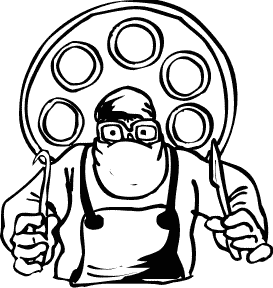
cartoon of surgeon hiding a saw behind his back.
They aren’t always paying attention.

This isn’t going to remain true for any case over a couple of years in the making, and certainly not for a case that even started out with multiple diagnoses: volar ganglion, tendonitis, and repetitive strain.

When I noticed that a doctor’s eyes were glazing 5 minutes into my recital of events, I knew I had to do this differently.

I started keeping a timeline. It was a nuisance to set up, because I got injured at work, and U.S. law doesn’t necessarily allow me to get copies of my records under those circumstances.

So I drafted my first timeline from memory, journal entries, and my datebook, and asked my doctor’s staff, as sweetly as possible, to please check the dates for me. They loved the timeline and were happy to do so.

As you can see, this is before I had a lawyer, and reflected my personal tendency towards information overload:

First 2 pages of first timeline
Click to link to the 3-page PDF.

As you can see, I decided to keep my timeline in a table. I found that to be the most natural way for me to organize the layers of information in a readable way. But then, I had just finished hand-coding and debugging about 21 pages of HTML tables in raw markup. Tables were easy for me!

To some people, a table of text just looks like word salad.


I can understand that.


There are other ways to organize information: brain maps, fishbone diagrams, bullet lists with nested lists, even labeled images linked together. Search any of those terms, or even terms like “information architecture” or “flow charts”, to look for ideas.

I took a later version of this to my first QME (QME=Qualified Medical Examiner, a consultant called upon when a U.S. insurance company disputes care in an injured-worker case.) Bless his stern and rock-bound heart, he gave me excellent advice. Here it is, as close to his wording as I remember:

  • “Leave out the insurance stuff. It’s not my department. It’s distracting, annoying, and clutters up the timeline for me.”
    (I was not offended, because I’ve worked with a lot of hotshot doctors. I fully expected the brusqueness and just listened to the words for information. That information was pure gold.)
  • “In fact, thin this out a lot. I want facts, data, not suppositions or what you read. I want to know exactly what happened to you and what your doctors said or did. Everything else is filler. I’m a doctor, so doctors’ ideas are what I care about.”
    (That was frank! And an excellent statement of inherent bias, which I really appreciated knowing up-front.)
  • “Take out the personal impact? No! No. I want that in there. It tells me how this really affects your life, and I should know that.”
    (He was almost human when he looked at me then. It was a cool moment.)
  • “But I DO want the personal impact to be visually distinctive, so I can screen it out when I’m looking for the medical part alone.”
    (That’s fair.)
  • “I’d also like to be able to find your work status more easily. This is a worker’s compensation case, after all.”
    (Good point.)

That man should advise more designers. He’s retired from his medical career now, and I hope he’s enjoying himself immensely.

My next timeline, for my next QME, was much leaner and it distinguished between three key types of info: straight medical information, work status, and personal impact.

timeline-beta
Click for the full PDF.

Did you notice how the hand images I wrote about before are referenced right in the timeline? This is a great way to build your case. The pictures kick the message of your disease progress and your needs right through concrete.

Incidentally, this uses mutually-reinforcing teaching principles: multiple sensory inputs, plus multiple paths to the same info, equals excellent retention. Your doctors will really be able to remember what your case looked like and what happened along the way, what worked and what didn’t.

Dr. F was pleased to see the table and thought it was basically a good idea, but looking at it through 78-year-old eyes was a different experience. He gave me his own feedback, speaking as someone who had gone through more medical records and had more problematic vision than anyone who’d looked at it yet:

  • “Yes, it’s nice that you picked out the work status, but I want to be able to see surgeries, x-rays, the really important stuff, just as easily. No, even more easily.”

I picked those out in bold and flagged them in the left column:

timeline-gamma
Click for a closer look at the PDF.

Before long, I learned to condense multiple entries so I could use one row for several visits that were about one issue, or where there wasn’t much change:
timeline-condensed
Then I saw a doctor who had more human sensibilities. He said,

  • “Why not use colors? I want to see surgeries and tests in different colors.”

I asked, “Do you want the different kinds of tests in different colors, so you can distinguish Xrays from MRIs from nerve studies at a glance?”

  • “No, no, that’s too much. I can read EMG versus MRI; I don’t want too many colors. I want the surgeries to really stand out, though. Put them in red.
  • “And I want to see the legal pivot-points, too, because that affects your case.”

Easy enough.

timeline-colors
Click for pretty colors. subtly used, in the PDF.

Then the first page grew legs. Someone along the line said,

  • “One more thing. I’d really like to see your allergies and medical-surgical history immediately. If you could put that up front on this, that would give me the most critical medical information right off.”

That was a real forehead-smacker for me…

I used to be a triage nurse. I used to collect certain information on every patient I saw, regardless of age, sex, race, or what they came in with.

TRIAGE INFORMATION:
– Name, date of birth.
– Any medical diagnoses.
– Any surgery, with dates.
– Current medications and doses (if they recall), and what they take it for. (This fills in a lot of holes on the medical and surgical stuff — you’d be surprised what people forget. “Oh yeah, my heart stopped last month.” Good to know!)
– Allergies — and what the reaction is (because there’s a world of difference between something that gives you a stomachache and one that stops your breathing, and we need to know this if it winds up in the air or, heaven forbid, the IV line.)

This is basic. This is absolutely basic. It’s essential information that should be immediately surfaced on every patient’s chart. How could I take for granted that it would be easy to find in my medical record? The whole point of needing the timeline is that, after a couple of years, my medical record was a mess!

Also, after years of popping from one specialist/QME/consultant to another, I got tired of having to dig out the same demographic and billing information every time they had to generate a new chart.

I had a brainstorm: make the first page into a billing/demographic sheet, add the triage information, and start the table on its own page after that.

It all goes together on the medical chart anyway, and one of the unsung truths of medical care is this: make life easier for the desk staff, and they will make life easier for you.

timeline-coverpage
Click to see how I organized this info. PDF format.

After all this time, I can put my whole history with this disease into one single document that totals 10 pages.

  1. The first sheet has my contact, billing, and demographic info.
  2. The second has my more-extensive medical/surgical history, medications and yet more allergies, and priority notes, highlighting my CNS sensitivity and emphasizing that cognition matters most.
  3. The rest tells all the key points of 14, yes, 14 YEARS of injury and disease, in only seven and a half pages.

Here is the final result:
timeline-current
Every doctor, with one exception, who has seen this, has cooed — literally, cooed — with delight. They ask if they can keep it (I tell them to put it in my chart, so they can always find it. “Ooo, great!” they say.)

This one doctor looked at it, laughed rather sardonically, and said, “You spend way too much time on this.”

Clinical note: For the record, that is not an acceptable response. What clinician makes progress by dissing patients on the first visit? Right. None. The thing to do here is ASK; in this case, ASK how much time this patient put into creating the documentation. The answer certainly surprised this one.

I set him straight, in my sweetest tone of voice. I said, “After the initial setup, it requires only a couple of minutes of maintenance every few months. That’s it. Moreover, you’re forgetting that I used to be an RN and a software documentation writer; this information is easy for me to understand and easy for me to organize. If I CAN’T do this [gesturing to the document in his hand], you need to check for a pulse.”

He never sassed me again.

However, most of what I told him is true for all of us.

We are the subject-matter experts on our own bodies. Never forget this and never let anyone tell you otherwise, because they are wrong. You ARE the subject matter expert on your own life. Nobody else really knows how you feel or what you’ve been through.


It’s in your power to communicate that clearly enough to work with. It’s just a matter of figuring out how.

Once you get a timeline set up and put in the key events so far, it takes very little to maintain. I update mine before every key doctor visit — when I see a new one or when I need to see a QME or, of course, when I think a doc is losing the plot.

It takes me less than half an hour to update contact info, meds, and current entries, and I do that once or twice a year now. That’s a great effort/benefit trade-off!

Moreover, keeping a timeline has life-changing benefits besides simplifying explanations to my doctors. Every long-term patient can see how utterly transformative these changes can be:

  • The doctors take me and my case absolutely seriously from the get-go (or else it’s obvious right off that this person is never going to, and I need to move on. That saves time!) It stops arguments and attitudes before they even start. It makes me almost human in any good physician’s eyes, and that’s nearly a miracle, because, generally, they can’t emotionally afford to think of their pain patients as human. (This explains a lot.)
  • My medical records are a lot more accurate, because the providers writing them have this great cheat-sheet right there to help them stay on track and keep their facts straight. This has saved me more grief, bad treatments, misapplied care, getting meds I’m allergic to, and chasing red-herring issues with the insurance company, than I could ever count.
  • I can keep my limited brain-space free for handling the appointment and looking ahead, instead of trying to wrestle my complex history into shape. This makes my visits a lot more valuable to all concerned.

I consider my timelines to be worth roughly 1,000 times their weight in plutonium. A little bit of effort has paid off thousands of times over, and made it immeasurably easier to keep this messy, protracted, brutally complex case on track for nearly one and a half decades.

Now that’s a good trick!

clip-art-dancing-755667

Timeline Tips:

  • Put your name and the date on every page.
  • Put triage information (in second blockquote above) at the top.
  • Highlight surgeries and invasive procedures in bold and red.
  • Highlight tests and noninvasive procedures in a different color or style.
  • Highlight life impact, but keep it separate from medical info.
  • Attach the relevant doctor’s name to each procedure, diagnosis, or consultation.
  • Track adverse events.

Remember, this and all my blog work is under a Creative Commons Share-Alike Attribution license: do anything you want with it, as long as you don’t keep others from using it. I’d love it if you’d credit me with my work, but don’t let that slow you down.

Use it. Share it. Spread it around.

Bien approveche — may it do you good 🙂

Rock stars

As many physicians have noted, treating chronic pain is peculiarly frustrating. Therefore, treating a pain condition as subtle, complex and intransigent as CRPS must be heartbreaking — though it’s never as bad as having it.

Don’t get me wrong
If you say hello and I take a ride
Upon a sea where the mystic moon
Is playing havoc with the tide

Most of us live in countries where there are practical limits on who we can see for care. Since there are few CRPS experts to start with, this tends to put us in tight spots.

So, meeting a new doctor, as many of us have said privately, is a bit like being a bride in an arranged marriage in a backward society*: you have no idea how you’ll get along, but this person is not only going to have a significant role in defining your life for the foreseeable future, but can torture and even kill you without any fear of the law.

14 year old bride with lowered head and sad, helpless expression, standing next to an elderly man who peers at her as if she were a new car he was looking over.

It sounds dramatic, but that’s the bottom line. Think about it for a minute…

For one thing, nobody likes being in so vulnerable a position. For another, we’ve all paid the price for some practitioner’s ignorance or intransigence, somewhere along the way. The fears are not theoretical; they’re real and appropriate.

Suddenly the thunder showers everywhere
Who can explain the thunder and rain
But there’s something in the air

Add to that the fact that chronic CRPS tends to hot-wire the fight-or-flight mechanism, and you have to realize that the doctor is facing a situation that requires about a million times more tact and respect than they ever learned in medical school.

Don’t get me wrong
If I’m acting so distracted

And then there’s me.

I used to be an RN, so I can use med-speak fluently and, more to the point, I’ve got the background to understand the scientific material I read when it’s time to explore a new facet of this condition.

I was dealing with a full-bore case of ADD due to the mechanical and chemical damage of chronic CRPS. At the time, I wasn’t sure what to make of my psychiatrist, Dr. Todd Hutton. He’s so quiet that I simply couldn’t get a bead on how much attention he was really paying to what I was saying.

I was beginning to suspect that he was at least awake, which is a huge bonus in my book… But I had to have my duckies in a row, just in case.

Don’t get me wrong
If I split like light refracted
I’m only off to wander
Across a moonlit mile

Everything about CRPS goes off in different directions, so studying it is like working with refractions.

I studied up on the nature of the brain oddities that characterize ADD.
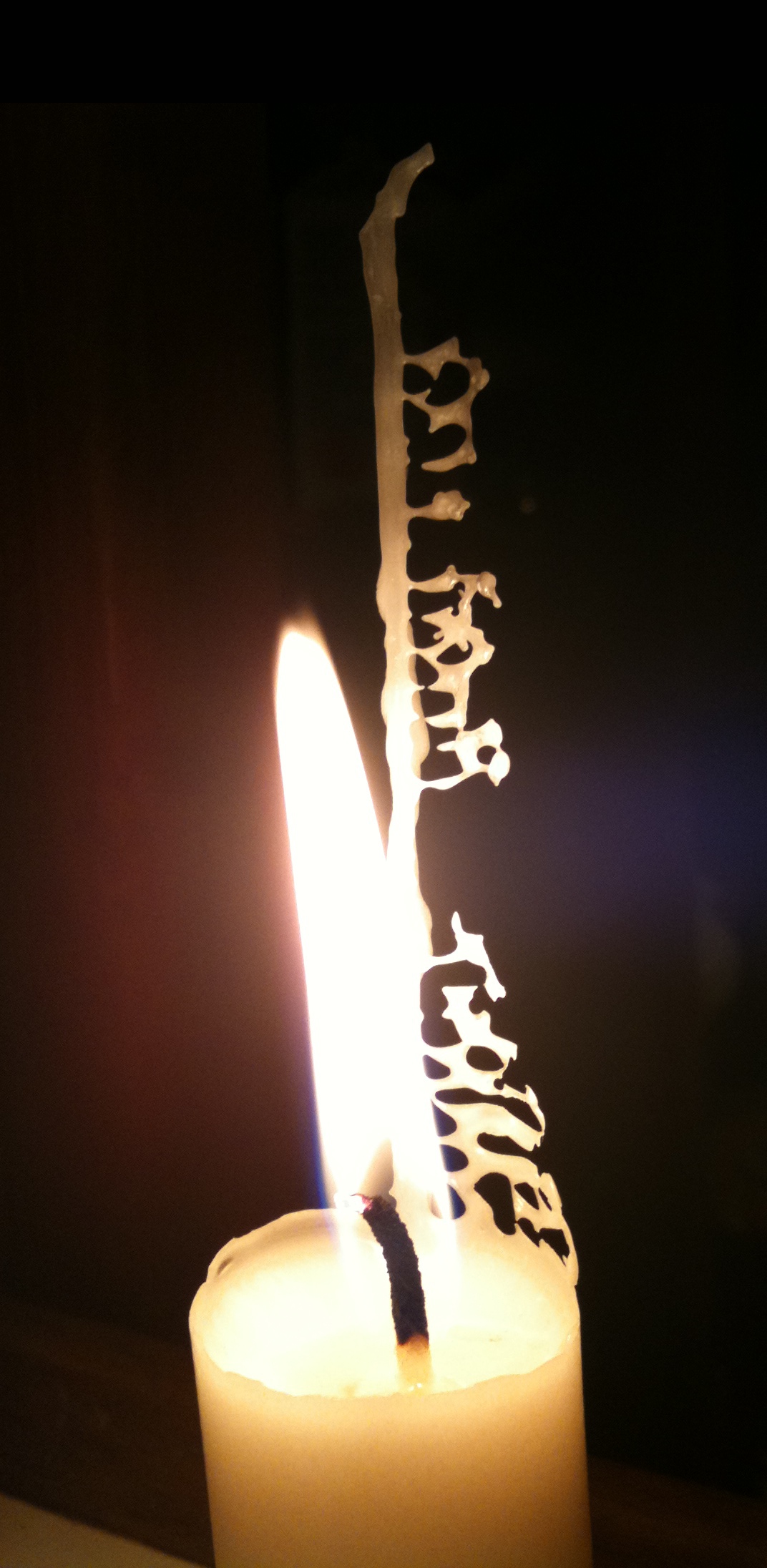
candleburn-1
Figured out where they overlap with the brain damage caused by chronic CRPS.
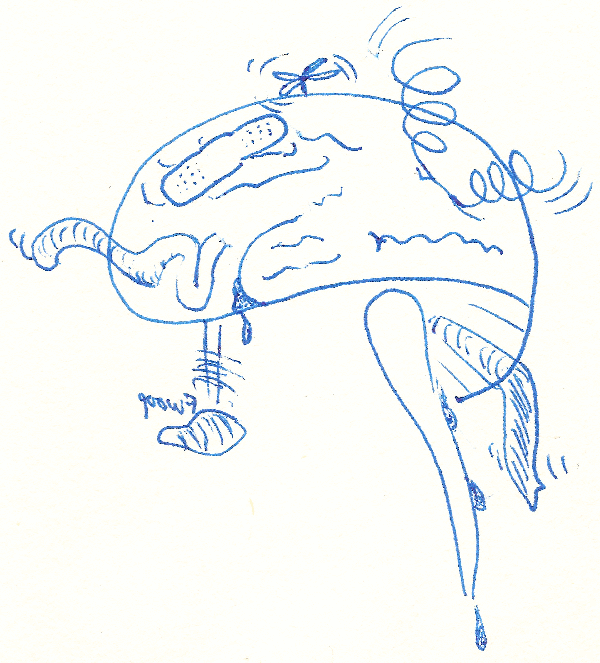
Sketch of brain, with bits falling off and popping out, and a bandaid over the worst
Then it was the neurochemistry.

candleburn-2

I have the neurochemistry of CRPS pretty well nailed, and found that, again, the overlaps with ADD were astounding.

How much of that awful, crippling fog we call “pain brain” is a treatable form of acquired ADD?

Do we really have to live like that?

I might be great tomorrow
But hopeless yesterday

I’m not so sure any more.

Then I looked at treatment modalities for ADD.

candleburn-3

The cognitive-behavioral stuff — like structuring your day, having contingency plans, staying in charge of your emotions, and creating ways to check yourself and to take care of yourself when things go wahooni-shaped — are pretty much identical, though CRPS adds a lot of material about pacing, communicating about functional and pain levels, and managing physical limits.

The pharmaceutical stuff has some interesting overlaps, too.

candleburn-4

Aside from narcotic pain control (which isn’t much good to many of us), treatment for CRPS neurochemistry tends to focus on serotonin, norepinephrine (noradrenaline), and dopamine; treatment for ADD neurochemistry tends to focus on epinephrine (adrenaline) and dopamine.

More overlap, or is that just a coincidence? Hah! No such thing, when we’re treating the brain.

So, after traversing my “moonlit (or candlelit) mile” of research, I showed up at the psychiatrist’s office with the following info:

  •  It’s probably related to the CRPS. (Nod.)
  •  It’s probably treatable. (Slightly qualified nod.)
  •  I can’t have Adderall, et alia, because my heart is dicky enough as it is. (Firm nod.)
  •  I could face Ritalin, et alia, but I’m already on Savella, which also boosts dopamine. (He shrugged and said, “Same molecule, different location.”)

After a bit more backing and forthing, he said, “How about Provigil?”

I’d seen a friend get hooked on it, so I didn’t leap out of my seat, but we talked it over. His reasoning was faultless. (Something I almost never say.)

More than awake, he was really engaged with my case. So I took the leap of faith and said I’d try it.

Trapeze_artists_trimmed

He said he’d supply me with samples of Nuvigil (a longer-acting form) since the maker no longer supplies samples of Provigil. (Pharma companies only provide samples of what they still have under patent. They’re in it for the money, remember…)

Don’t get me wrong

If I come and go like fashion

I had the singular pleasure of going in for my follow-up, dressed professionally for a change, and reporting that:

+ I had enough energy to get outside and move around nearly every day. This means laundry gets done, there’s proper food in the house, and I can get some of that so-necessary exercise.

+ I had enough focus to put together a settlement offer, which the insurance company accepted. (WOOT!)

+ I could change focus at need.

+ I was driving better, thinking strategically and more able to pay attention to what was going on around me at high speed.

+ I could sleep better, because I’d been properly awake and engaged during the day. (OMG!)

– My anxiety was no worse, but when it did kick in, it was harder to get it to chill. That was one drawback, but not a major one.

– Nuvigil tends to build up in my system, until suddenly I can’t sleep at all. It took about 5 days to clear it after that. So now I take half a tablet (that is, about 75 mg) every other day. That works quite well.

+ It’s not perfect — it’s not like being well — but I’m so much closer to being myself that I can actually think about what to wear again. (I used to be kind of a fashion plate, in the intersection of classic, practical, and colorful, with a dash of steampunk.)


I told him, “Love and the relationships I have make life bearable. But being able to think, and be productive, and learn things, and get some work done, THAT’s what makes my life worth living. This is giving me my life back. I’m really grateful.”

If I hadn’t grown up in New England (land of the unspoken), I might have missed the slight lengthening of his spine, the slight lifting of his head, the slight brightening of his face, the tiniest lift of a smile.

For once in my life, a doctor of mine got to feel like a rock star.

It might be unbelievable
But let’s not say so long
It might just be fantastic

I got into the car and drove away on a shiny September afternoon in Pasadena.

On the radio, Chrissie Hynde was belting out,

Don’t get me wrong
If I’m looking kind of dazzled

And it put the seal on everything.

For a moment, I tried to stifle the beaming joy that shot through me. Then sanity intervened.

What I wanted to do was pull over, slap on a headset, and dance on the glittering lawn in front of City Hall, arms wide and the sun sparkling through my starry lashes.

I wasn’t sure the police would understand, though.

Instead, I danced in my car, grinning fit to split my head, bouncing my red SUV to the Pretenders.

Drawing smiles even in LA traffic.

Sometimes, the only right thing to do is dance.

Big grinning woman in spectacular Hawaiian ceremonial dress dancing with her arms
Photo: Joanna Poe in Honolulu

Here’s the whole song. At first, I thought the visual story, with its false leads, dead ends, and triumphant ending, was distracting — then I thought about it for a second… 🙂

* Common sense note: obviously, not all societies that practice arranged marriage are backward. I know too many couples who have an excellent partnership and tons of love between them, who were picked out for each other by their nearest and dearest. It’s not arranged marriage that’s the problem, but those situations where there’s a lack of choice and utter helplessness on one side. That’s what’s backward!

The Red Pen Technique (dramatic music, please)

This is probably the simplest, most powerful tool for getting your complex care back into the realm of sanity.

It’s easier said than done, but it’s worth it. More valuable than words can say.

It’s a fairly simple 3-step process:

  1.  Get copies of your medical records.
  2.  Prepare: understand the records, get a colored pen, and stock up on post-its.
  3.  Mark it like you own it.

Here’s the step-by-step rundown of this process, with insider insights, tips and suggestions. (I apologize in advance for the clunky formatting. I’ll work on it.)

1. Get copies of your medical records

[Updated 3/2018 to reflect current trend towards soft copy documentation.]

In the US, you are LEGALLY ENTITLED to all the information in your medical chart. (Worker’s Compensation is a special case; you can still get copies through your lawyer or sometimes directly from the doctor, but don’t talk to the insurer about any of that.)

To get copies,

A. Call the hospital, clinic, or office and ask for the Medical Records department.

B. Ask what their process is for obtaining copies of your medical records. Most MR departments are honest, understaffed, and extremely literal-minded. Be clear, frank, and polite-but-not-wimpy; that seems to work well with the MR mindset.

i. Some will let you come into the office and make your own photocopies. They may charge you for the copies. Some may have soft copy they can send you on a CD or provide a secure way to download.

ii. Some don’t allow non-staff into the department and will make the copies for you (and it’s best to provide them with a list of what you want, so they don’t provide you with the usual thin, doctor-oriented version. More on that later.) They will probably charge you for pulling the record, making the copies, reassembling the chart, and packaging your copies up for you. They might fax them to you, but, if they don’t require you to come in personally and show ID, then the chart copy is usually mailed or FedExed. Soft copy may be free or cheap. Ask about the cost for each method, and if they don’t offer the method you want, ask if they can provide it anyway.

iii. Some will give you the runaround. In that case, be polite but firm, and let them know that you have a legal right to the information in your chart, so let’s figure out how to get it to you. (Never buy into a power struggle with petty power weilders. Just refocus on the goal — like with toddlers.)

iv. If you had films of any kind (X-ray, MRI, CT scan, ultrasound), ask how to get those films. You usually get them directly from the Radiology or Sonography department rather than Medical Records. They’re most likely to drop a CD in the mail for you. You’ll need software that can view DICOM images — do an internet search to find the best current free application for reading DICOM files.

The radiology departments no longer use film. They used to recycle it every 2 years, so the only way to keep those records was to get the physical films and hang onto them despite promises they’d demand to return them. That didn’t mean you were any better or that the film was irrelevant in two years!

C. Follow the instructions they give you for getting those copies. Be sure to request copies of the following:

i. Doctor’s notes, both narrative notes and forms.

ia. Consults’/Specialists’ notes. (Yes, they need to be specifically requested in some facilities.)

ii. Medication orders. This is what was supposed to be given.

iii. Medication Administration Record (MAR.) This is what was actually given.

iv. Nurse’s notes, both narrative notes and forms. (These days, some places only have forms.) These should include Nursing Diagnoses (which gives a good idea of just how worried or confused they were about you) and daily tracking of what care was needed and provided.

v. Vital signs and intake/output sheets. (Includes fingerstick blood sugars when used.) This is usually background information, but every now and then there’s a nasty surprise. There is no substitute for the clarity and simplicity of this info.

vi. Results of tests. These include labs taken from your blood, urine, stool, saliva, tissue samples, or whatever else they examined. It can include psych tests, behavioral tests, and any other test.

vii. Readings. This refers to what a trained specialist concluded from looking at your films, ultrasound, EEGs, EMGs, EKGs, and so on. It’s usually a couple of paragraphs.

viii. Rehab notes: narrative notes, test results, and forms. This is what your PT, OT, and other rehab specialists saw.

ix. Discharge planning notes. Discharge planning is supposed to start as soon as you’re admitted. These notes will tell you what they knew or assumed about your context and abilities. Very useful info between the lines.

x. List of charges. This is what they’re telling the insurance company they did for you and how much it cost. This should include pharmacy charges as well as “floor” charges. Another place to find both corroborations and surprises.

xi. If they say, “Would you also like [something else in the chart]?” The right answer is usually, “Why yes, thank you, that would be helpful.” Sometimes they offer it because they’re so detail-oriented, but sometimes they offer it because it fits into the pattern of the care you received. Feel free to ask why they suggested it or what it relates to.

D. When you get your chart copy, either scan it into your hard drive before you do anything else, or make 2 more copies and put the original (clearly labeled) somewhere safe.

Some people consider this step optional. I won’t argue with someone else’s working style or legal situation; you’re the one best-qualified to decide how protective to be of your chart copy.

I have everything on my hard drive. I have dealt with a hospital, a federal agency and an insurance company that forgot, mislaid, misread, or destroyed part or all of my chart. I don’t trust any institution to get it right any more.

2. Prepare

When your original copy of your chart is as safe as you want it to be, take a copy to mark up. This is where the real fun begins.

A. Read the whole thing over once. Try not to get bogged down — this quick run-through will help you familiarize yourself with the lingo and the special way of thinking that’s used in the health care field. It will also give you an overall idea of what you’re working with and will shine a light on the most obvious gaps — in your knowledge or vocabulary, or in theirs. Put flags in the strangest, most egregious or excitiing parts, so you can refer to them quickly. Use post-its to comment on the page.

B. Whether or not your first read-through is quick, your second read-through will be a LOT more informative. Pick out and investigate the obvious holes in your own knowledge, looking up words and concepts that aren’t clear, or checking your assumptions about what they meant.

C. (You can start doing this in 2.B., but you’ll be better-equipped if you wait until you’ve got your vocabulary and assumptions squared away.)

GRAB A COLORED PEN. Mwahahahahahahaaaa!

Red, green, dark  pink, and medium purple are all great, because they stand out so well from the black and grey of the copy. Use a color you enjoy commenting with, in a pen that feels good to write with.

No black. No grey. Blue if you must, but it’s a very “normal” color and easy to overlook.

3. Mark it like you own it

Now that you’re prepared, are familiar with the chart, have the hot spots flagged, and know the vocabulary, you’re ready to TAKE BACK YOUR CARE.

A. Go through the chart with your colored pen.

B. Mark everything that is wrong, misleading, or unclear. (Feel free to color-code, if that works for you.)

C. Comment on:

i.  what the real deal was,

ii. what was wrong with what they wrote,

iii. your own observations,

iv. any evidence or witnesses,

v. and — this is usually relevant! — where else in the chart this error, confusion or lie is brought into question. (This is why you get the nurse’s notes. They tend to be accurate, front-line reportage of what happened at the bedside.)

Generally, you can keep emotions out of it. The facts WILL tell the story, and the reader’s own emotions will fill in the blanks.  If you can do this, then you will wind up with a much more powerful piece of documentation than if you’d given into the natural urge to editorialize. Sometimes, if I’m just too mad, I editorialize (and use expletives and call names) on separate paper, then, when I’m calmer and my thoughts are clearer, I go back and write in a calmer note.

D. Write (or tabulate, or draw; whatever works for you to nail your understanding) a summary of issues with the chart.

i. Pick out major issues, overarching issues, and the points where things really should have gone differently. (If you’re writing, use headings — that impresses the heck out of people.)

ii. Summarize the whole thing in a paragraph or two at the end.

4. Now what?

It’s up to  you. You have documentation that is worth presenting in court. (Yes, believe it or not, you can talk until you’re blue in the face and be only tolerated, but if you really want to persuade highly-educated people, then put it in print — with annotations. They will believe exactly the same thing in print, that they’ll be incredulous of when you speak.)

Regardless of what happens next, you will have a whole new approach to medical care. Your perspective on the whole business will change as a result of doing this exercise. You will be much more collegial with your doctors — much less the supplicant praying for something beyond your control. You will speak about your care with more clarity and authority, and your care providers will respond to that, usually with more forthcoming-ness and respect.

Depending on the issues involved (and whether your case is already part of a legal process, such as Worker’s Comp), you can:

  •  Send a (color?) copy to  your attorney. You can always do this. It’s guaranteed to get some attention, and your attorney is liable to  respond well to the nonverbal message that this is important enough to you to go to all this effort. That’s a big deal. Most clients of attorneys are kind of helpless. You set yourself apart with this.
  •  Take it with you to your next visit with a key physician — the worst offender, or his boss, or the one who’s on your side and can help you figure out how to proceed most effectively. Be prepared to let the “good guy” take a copy, and consider bringing a copy for the “bad guy” since you don’t want to let your copy out of your hands there.
  •  Arrange a meeting with the facility’s adminstrators to address the hot issues. Take it with you (or scan copies and show it from your laptop — lots of tech assumptions there) and let them know, kindly and clearly, what you want them to do about it. Administrators tend to be goal-oriented, so give them a goal. Tip: If they have legal counsel present, it’s good if you do, too. In any case, it’s not a bad idea to bring a couple of respectable-looking friends (“my assistants/associates/posse”) who have faith in you, for moral support — and so you’re not all alone on your side of the table.
  •  Send a color copy to your local paper, your congresscritter, the medical board for your state, or the Department of Health, with a cover letter explaining your concerns and what you would like to see change. This could raise some attention, all right. (If your case is currently in a legal process, it may be illegal to do this. Ask your lawyer.)

If you’ve never done this before, you’re in for a transformative experience. Even if you do nothing further with it, your situation will feel very different, and you’ll find yourself facing future care with a stronger, clearer, more in-charge attitude.

Is losing our minds to “pain brain” optional?

64% of CRPSers experience significant cognitive decline. Speaking as a member of that majority, I think that sucks. Most people with chronic pain find that they experience the following:

– Confusion: it’s harder to keep track of things like we used to.

– Forgetfulness: forget the car keys? We’re capable of forgetting the car. It’s more than a touch of early onset Oldtimer’s.

– Distractability: I got up in the middle of a sentence when my meditation exercise was playing. I forgot what I was doing netween one syllable and the next and I could NOT make myself lie down again.

– Locked focus: once I do get into something, it can be impossible to tear myself away, even if I need to move or stretch or calm a racing heart. It’s *weird.*

– Memory: Forgetting the car? Sometimes I forget my birthplace. There are random, shifting holes in my long-term memory that I can’t do anything about, except waffle and flannel until the subject changes. Learning anything new that isn’t related to CRPS or writing (which my brain seems to have anchored with industrial grade mooring chains, so far) is pretty much doomed.

– Intense, driving feelings: catch me on a bad pain day and discover a new word for female dog, and it’s not because I want to be like that, but my internal brakes are off and everything feels like the emotional equivalent of flashing neon.

– Oversimplifying/black-and-white thinking: this was one of the first issues we addressed in my functional restoration class all those years ago. Without constant checking, chronic pain makes everything MUCH more intense, and maintaining middle gears is a constant job.

– Poor sleep. Trouble waking up. No duh.


Now, just for grins, let’s look at the list of symptoms for AD/HD:

– Difficulty tracking complex ideas/confusion

– Forgetfulness.

– Distractability.

– Locked focus.

– Memory issues.

– Intense, driving feelings.

– Oversimplifying/black-and-white thinking.

– Poor sleep. Trouble waking up. Hel-lo!


Is it just me, or is there a wee bit of overlap here?


Classically, ADD (or ADHD, or AD(optionalH)D) is not considered an aquired disease. However, I noticed that the parts of the brain that ARE distorted in ADD are some of the same parts of the brain that GET distorted in CRPS — and perhaps in other types of chronic pain.


We aren’t making these symptons up. We struggle mightily to keep our symptoms under some kind of control, but the worse this particular family of symptoms gets, the closer it gets to impossible to keep it under control.


Fortunately, ADD (et alia) has been treated successfully for years. The meds used overlap with meds used for neuropathic pain, depression and dysautonomia (because it’s all about regulated nerve signaling); the techniques overlap with the techniques for handling CRPS, dysautonomia and chronic pain (see my last two posts); and the therapy follow-up ties into the fact that ongoing counselling is part of the gold standard of treatment for CRPS, and darn well should be for chronic pain.


This is solvable. Let’s get our brains back, because life is too short for this to be allowed to continue.


When I get my scientific studies lined up, I’ll rewrite this for my bioscience blog. Feel free to take it to your doctor.


We can do this.


Meanwhile, borrow a couple of books like “you mean I’m not lazy, stupid or crazy?” and “delivered from distraction”, and see if it doesn’t take a load off your mind to recognize that there IS a way forward.

It’s a different world in here

TRIGGER WARNING: Body image. With a twist.

I feel like I’ve been inflated. If I get any larger, I may collapse in on myself and form a neutron star — possibly even a black hole.

"Portrait of the Quasar as a Young Black Hole" from NASA's Hubble telescope
Charming, eh? And round.

My pain psychologist isn’t worried. She thinks there’s nothing wrong with “a little comfort weight”, especially as I’ve been making such progress in her area.  Of course, she has a slender elfin figure herself.

This isn’t the usual rant about weight and health, or the girly American whining about fat. This is about living from the inside out, and what happens when my physical vehicle takes up a whole lane.

Nursing has a diagnosis called, “Body Image Disturbance.” Take a look at that phrase for a minute. It’s very telling.

Body
Our physical interface with the world; the medium we use to communicate with others; the first sensory impression we get of our surroundings; the complex organism that gets us from one place to another; the thing that gives others their first sense of who or what we are.

Image
Our mental framework, or paradigm; the belief or understanding we have about our presence or effect in the world; the way others tend to think of us; the way we think they think of us.

Disturbance
Something awry — probably disturbingly so. Not good.

Do we need to address the usual social issues? Yes, skinny people get treated better, all across the board; fat people are far more likely to get abused and overlooked, and not just for sex — for everything. Lots of people have made lots of money writing lots of books about that, so read them if you’re confused.

Let’s move on.

I’m in a different sensory and physical world from what I’m used to, and it’s a really strange one. The experience of physical life from this different shape is, yes, disturbing.

My feet are pressing so hard against the ground that my shoes fit differently.  When I carry something, it pushes my weight over the tolerable limit and threatens to bring the CRPS in my feet back to life — and I had just about gotten rid of the pain symptoms there. The circulatory symptoms are another matter — zombie-foot is a regular event.

My cat floats above me by quite a few inches, when he should be lying more or less on my abdominal muscles plus a blanket of padding.  It’s weird to have to reach so far up from my spine to pet him — my shoulder rotates much further in my cuff than I’d expect. I’m getting better at feeling my joints, and this is not exactly a positive feedback loop.

My upper arms keep catching against my sides. This is rather disorienting, since I’m improving my sense of my body in space and usually, when my arm catches on something, it means I need to increase the space between me and foreign object. There’s no foreign object. It’s just more of me. Weird.

I had a sway in my lower  back which I managed to straighten out awhile ago. Better spinal posture means less pain overall. So now I have a substantial, unstable weight hanging in front of my spine, which means I have to work my abdominal muscles really hard to pull it closer to my center of gravity so I can just stay in balance.

My abs are killing me. If I don’t use them, my lower back hurts me worse, so those abs are constantly on duty.

I give them a break and relax them when I sit down — and it’s like being on top of a balloon that inflates, as my stomach takes over the lower horizon.

balloons-innflating

I poke it curiously, wondering how far down I have to go to find the original outline. I give up at the second knuckle. Too discouraging.

When I sit in my car, my right hip brushes against the driver’s armrest.  First thought: I’m over too far to the right; my hip shouldn’t be near that. Wrong. I’m dead center. It’s my hip that has travelled far.

But there is an up-side. When I fold my hands together, I have a perfect armrest. Soooo comfortable. It’s like it was made for me!

And the stares I used to get — or rather, that my endocrine-disrupted DDD cups used to get? Gone. No wolf-whistles or dribble on the sidewalk from creepy slimebuckets who seem to think I should be delighted at their lack of self-command. Nobody’s goosed me or grabbed a feel in ages!

It’s very peaceful. Makes it a lot easier to feel at home in my own skin, not to be bracing for the next random invasion of privacy.

I’m no longer constantly holding a sharp elbow at the ready, to fend off some suddenly-clumsy dude who goggles briefly, with a word-balloon appearing above his head that says “are those real?”, then says “oops” and bumps into my pneumatic (and sensitive) form as if by mistake. I got so freakin’ tired of that!

Perhaps a leather vest with spikes all around…

myvest_front_med

This, incidentally, is why so many women feel  comforted wearing a burka. It makes the wearer more sexually invisible and insulates her from much of this random predatory crap.

My fleshly burka. Take that, right-wing-nuts — of any religion. You don’t even WANT to control this.

And, in a huge relief to my CRPS-riddled body, nobody wants to slam into it now, either. Yesssss!

I’ve got to get that vest. I can’t, and don’t want to, keep the fleshly burka, but I have to find a way to manage the body-slams. Never again.

As for food… Here’s what I’ve learned for the current incarnation of CRPS endocrine/digestive ballyhoo:

– No grains of any kind. No lentils or beans.
– No dairy, except small amounts of hard cheese — the protein sufficiently altered that I can handle it in small doses.
– No sugar at all, but more unrefined stevia.
– I’ll have to get kefir “grains” and make my own water-kefir. I have some ideas for that.

I still have most of the world of nontoxic produce, nuts, and meat from healthy animals to sit down to. There are worse things… It isn’t cheap, but I’m learning where to shop. And it sure tastes good.

P.S. You want what?? Measurements, weight, photographs? They miss the point. I’m not looking at me, I’m looking from me.

I’m not comparing myself to anyone or anything. This is simply the view from inside. Hope it’s worth a laugh or two 🙂