Is losing our minds to “pain brain” optional?

64% of CRPSers experience significant cognitive decline. Speaking as a member of that majority, I think that sucks. Most people with chronic pain find that they experience the following:

– Confusion: it’s harder to keep track of things like we used to.

– Forgetfulness: forget the car keys? We’re capable of forgetting the car. It’s more than a touch of early onset Oldtimer’s.

– Distractability: I got up in the middle of a sentence when my meditation exercise was playing. I forgot what I was doing netween one syllable and the next and I could NOT make myself lie down again.

– Locked focus: once I do get into something, it can be impossible to tear myself away, even if I need to move or stretch or calm a racing heart. It’s *weird.*

– Memory: Forgetting the car? Sometimes I forget my birthplace. There are random, shifting holes in my long-term memory that I can’t do anything about, except waffle and flannel until the subject changes. Learning anything new that isn’t related to CRPS or writing (which my brain seems to have anchored with industrial grade mooring chains, so far) is pretty much doomed.

– Intense, driving feelings: catch me on a bad pain day and discover a new word for female dog, and it’s not because I want to be like that, but my internal brakes are off and everything feels like the emotional equivalent of flashing neon.

– Oversimplifying/black-and-white thinking: this was one of the first issues we addressed in my functional restoration class all those years ago. Without constant checking, chronic pain makes everything MUCH more intense, and maintaining middle gears is a constant job.

– Poor sleep. Trouble waking up. No duh.


Now, just for grins, let’s look at the list of symptoms for AD/HD:

– Difficulty tracking complex ideas/confusion

– Forgetfulness.

– Distractability.

– Locked focus.

– Memory issues.

– Intense, driving feelings.

– Oversimplifying/black-and-white thinking.

– Poor sleep. Trouble waking up. Hel-lo!


Is it just me, or is there a wee bit of overlap here?


Classically, ADD (or ADHD, or AD(optionalH)D) is not considered an aquired disease. However, I noticed that the parts of the brain that ARE distorted in ADD are some of the same parts of the brain that GET distorted in CRPS — and perhaps in other types of chronic pain.


We aren’t making these symptons up. We struggle mightily to keep our symptoms under some kind of control, but the worse this particular family of symptoms gets, the closer it gets to impossible to keep it under control.


Fortunately, ADD (et alia) has been treated successfully for years. The meds used overlap with meds used for neuropathic pain, depression and dysautonomia (because it’s all about regulated nerve signaling); the techniques overlap with the techniques for handling CRPS, dysautonomia and chronic pain (see my last two posts); and the therapy follow-up ties into the fact that ongoing counselling is part of the gold standard of treatment for CRPS, and darn well should be for chronic pain.


This is solvable. Let’s get our brains back, because life is too short for this to be allowed to continue.


When I get my scientific studies lined up, I’ll rewrite this for my bioscience blog. Feel free to take it to your doctor.


We can do this.


Meanwhile, borrow a couple of books like “you mean I’m not lazy, stupid or crazy?” and “delivered from distraction”, and see if it doesn’t take a load off your mind to recognize that there IS a way forward.

Anagrams and T-shirt designs for the irreverent

This started when someone posted a t-shirt design that said, “RSD: Really Sucky Disease.” (RSD is the old name for CRPS.) I thought that was a wonderful way to recast it, and a good conversation starter. So that got me going on CRPS.

Enjoy — and please, feel free to add more…

Complex,
Ridiculously
Pathological
Situation

Complete
Range of
Painful
Sh!t

Craving
Really
Priceless
Science
(that’s a thinly-disguised commentary on how profitable it is to treat CRPS)

Curative
Routines
Pressingly
Sought

I could go on, but I won’t… I’m looking forward to seeing what others come up with.

What would you wear? And what style of shirt would you like to wear it in?

Here’s another idea I had:

Pale blue women's T-shirt with "C.R.P.S.: like craps without the A", and the A is painted on half a pair of dice.
Text: C.R.P.S. like CRAPS without the A.

In one version, the back says, “Complex Regional Pain Syndrome: It’s weird. It’s random. It’s harsh. IT’S REAL.”

But that’s a little discouraging.

I’ll work on it.

Imaginative experience and rebuilding the brain

In 1986, the course of neurologic treatment changed forever when Mark Block, one severely spine-injured young man, chose “imp-possible” over “impossible” and, every day, spent hours imagining how it would be to walk again, imagining his “wires” getting hooked back up again, riding a wave of inner certainty that can only be called a gift.


He mentally rehearsed endlessly. Day after day after week after month.


And then, months into his care, he told the nurse, “Watch this,” and made his foot twitch. The first nurse dismissed it as a spasm. The second or third nurse got the doctor.


The doctor stood over the foot — really close — and said, “Do it again.” Twitch.


“Again.” Twitch.


“Again.” Kick.


One of the great moments in medicine.


Upon discharge, he walked out of the hospital.

Some of the meditations from my pain psychologist are visualizations. They’re made for a mass audience, not for people with chronic illness generally or CRPS specifically, so a certain amount of tolerance with the language is required. (At one point, the narrator says, after a pregnant pause, “Looking good.” Oh for heaven’s sake.)

Fortunately, she’s dropped pearls of wisdom about what’s important in these exercises, so I’m (naturally) mulling over a new set of scripts which attain those ends a wee bit more gracefully. (Of course, the files will be freely available to download.)

The key point is, it’s important to imagine what it feels/looks/smells/sounds like to be really well, really functional, really active, really smart again. Here’s the lowdown:

  • It’s not just a set of images, it’s a multisensory experience that I imagine as clearly as a good memory.
  • It’s important to do so vividly and frequently.
  • It’s important to think of imaginative experience as a good working hypothesis, rather than a hopeless quest or pointless daydreaming.

That’s key. Making it seem real, and not dismissing it afterwards. Over and over again.

That’s how the brain is persuaded — molecule by molecule, link by link, cell by cell — to give up its current structure, which pins so much of the neuro-anatomical, neuro-chemical and neuro-endocrine dysfunction in place.

Then, in many cases — and with suitable support from nutrition, psychological care and physical activity — it’s possible to reverse-engineer a healthier, more functional neuro-setup.

It takes time. It takes dogged persistence. It takes a vivid imagination — which can be developed, if it’s not already there. (Like getting to Carnegie Hall: practice, practice, practice.) Last but not least, it takes a smidgen of luck.

The imaginative experiences, if all goes well, help your neurological structure leap the chasm between what it is and what it should be. It’s an enormous leap of faith to get started, let alone keep going for as long as it takes to rewire such an astoundingly complex structure.

Of course, inner resistance and outer events are liable to leap out and knock us off track, because that’s what they do… and we have to find ways to pick ourselves up and dust ourselves off and get back on track as soon as possible.

It’s a huge job, inside and out — all that leaping.

Trapeze_artists_1890

But it’s not impossible.

I’ve been mulling experiences that I can imagine failing to do with my current body, but remember doing with my healthy one.  I think I’ll write them out (word-painting at its most precise) and build really great imaginative experiences to come back to, again and again.

Running; sailing; riding; studying; traveling; writing complex books; lecturing on neurology, pain, and healing — you know that’s what I’m thinking about.

What would your imaginative experiences be? What would you leap the chasm for? What could you immerse yourself in, week after week, month after month, maybe year after year, for the chance of pulling yourself up to it?

It’s an interesting question, isn’t it? I have a feeling my list will change with time. As I sit with these imaginative experiences, I’ll see which ones really keep on giving, and which ones were better in theory than practice — and, of course, I’ll find the one I haven’t thought of yet, which will turn out to be key.

At the moment, the hard part is coming back to reality afterwards. That can really suck. But there are ways to deal with that — instant distraction, for instance — and the more I think it over, the more I think it’s worth it.

Relentless

My pain psychologist is very insistent that 90% of my day has to be predictable. This allows my nervous system to heal and re-stabilize to the extent that it can.

I cannot even fathom that. 90% of my day? Do any of you have those kind of days, ever?

matchgrins-horsenwoman_decamps-pauline_4blog
Pauline Decamps? I’d love to credit this fantastic shot. Correction invited.

She’s been right about everything else so far, so I’m working on it.

Trying to bring stability to any single part of my life brings the inherent instability of life into high relief.

  • Every commute to the doctor’s office is a crapshoot. There’s no knowing just how long it will take, if there’s parking on the other end, whether anything unpleasantly LA will happen along the freeways on the way.
    .
  • Every trip out of the house, with all the neighborhood dogs and the roads being under construction here, puts the rest of the day on hold until further notice. Especially when my judgment is in the hopper because of pain, dysautonomia, or not being able to eat enough to prevent hypoglycemia.
    .
  • Every day is a mine field of discovering things I’ve forgotten and have to find a way to deal with, trying to clean up the past while coping with the present and preparing for the future.

poison_skull

It’s heartbreaking trying to keep up with this, but I can’t stop. This disease never quits. It never gives a break. I must try to keep up.

I thought I was stubborn. I thought I was adaptable. I thought I could be relentless. I have to say, this condition puts me in the shade.

This is one of those articles I wrote to help myself find the nugget of gold. I’m still looking…

George_Goodwin_Kilburne_Writing_a_letter_home_1875

I’m in a very small glass today, but that doesn’t change the scope of work — just what I admit I can do.

This relentlessness, this bitter intransigence, is part of any chronic disease. We find ways to cope, or we don’t make it.

  • I deal with the dietary restrictions by focusing on the wonderful things I can eat;
    antioxidant_foods
  • I deal with weakness by learning to ask for help;
    .
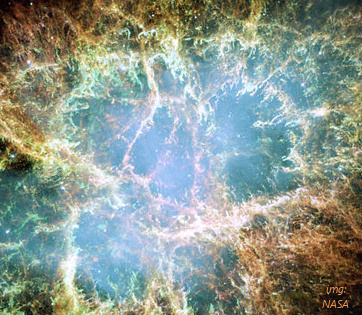
  • I deal with the pain by focusing on what gives me joy;
    Crab_Nebula-crop
  • I deal with bouts of forgetfulness and confusion by automating as much as possible and using external aids like a whiteboard, checklists, post-its and the apps in my smartphone;
    200px-Check_mark.svg
  • I deal with the heart, lung, and endocrine issues by finding new ways to do things, and rehearsing constant self-control in every single freaking aspect of life.

It just wears on me sometimes. It’s a lot to expect of myself day after day after day after DAY.

Perhaps the nugget of gold is simply taking credit for my imperfect, ongoing attempts to manage an impossible body of work: staying alive and on the right side of the ledger, and trying to make it bearable. It takes some doing, and yet I’m here now. The future terrifies me, but so it goes.

Marathon update:

A bloody pair of athlete’s feet, with ringworm that’s trying to consume my right foot, both fungi profoundly resistant to treatment… Have been joined by an ingrown toenail which looks like a grandchild of The Blob… Which itself is hosting cellulitis.

So I’m off my feet for the most part, wearing slippers when I must walk. I have to knock the cellulitis back by Friday, so the ingrown (which is an outgrowth) toenail (though it’s really the flesh) can be cut away, and part of my nailbed stripped. All those loverly nerve endings…

old_school_surgeon

It’s going to be a rough weekend. Perhaps I should just have it all cut off, ha very ha. Too bad that makes things worse in CRPS.

It’s a different world in here

TRIGGER WARNING: Body image. With a twist.

I feel like I’ve been inflated. If I get any larger, I may collapse in on myself and form a neutron star — possibly even a black hole.

"Portrait of the Quasar as a Young Black Hole" from NASA's Hubble telescope
Charming, eh? And round.

My pain psychologist isn’t worried. She thinks there’s nothing wrong with “a little comfort weight”, especially as I’ve been making such progress in her area.  Of course, she has a slender elfin figure herself.

This isn’t the usual rant about weight and health, or the girly American whining about fat. This is about living from the inside out, and what happens when my physical vehicle takes up a whole lane.

Nursing has a diagnosis called, “Body Image Disturbance.” Take a look at that phrase for a minute. It’s very telling.

Body
Our physical interface with the world; the medium we use to communicate with others; the first sensory impression we get of our surroundings; the complex organism that gets us from one place to another; the thing that gives others their first sense of who or what we are.

Image
Our mental framework, or paradigm; the belief or understanding we have about our presence or effect in the world; the way others tend to think of us; the way we think they think of us.

Disturbance
Something awry — probably disturbingly so. Not good.

Do we need to address the usual social issues? Yes, skinny people get treated better, all across the board; fat people are far more likely to get abused and overlooked, and not just for sex — for everything. Lots of people have made lots of money writing lots of books about that, so read them if you’re confused.

Let’s move on.

I’m in a different sensory and physical world from what I’m used to, and it’s a really strange one. The experience of physical life from this different shape is, yes, disturbing.

My feet are pressing so hard against the ground that my shoes fit differently.  When I carry something, it pushes my weight over the tolerable limit and threatens to bring the CRPS in my feet back to life — and I had just about gotten rid of the pain symptoms there. The circulatory symptoms are another matter — zombie-foot is a regular event.

My cat floats above me by quite a few inches, when he should be lying more or less on my abdominal muscles plus a blanket of padding.  It’s weird to have to reach so far up from my spine to pet him — my shoulder rotates much further in my cuff than I’d expect. I’m getting better at feeling my joints, and this is not exactly a positive feedback loop.

My upper arms keep catching against my sides. This is rather disorienting, since I’m improving my sense of my body in space and usually, when my arm catches on something, it means I need to increase the space between me and foreign object. There’s no foreign object. It’s just more of me. Weird.

I had a sway in my lower  back which I managed to straighten out awhile ago. Better spinal posture means less pain overall. So now I have a substantial, unstable weight hanging in front of my spine, which means I have to work my abdominal muscles really hard to pull it closer to my center of gravity so I can just stay in balance.

My abs are killing me. If I don’t use them, my lower back hurts me worse, so those abs are constantly on duty.

I give them a break and relax them when I sit down — and it’s like being on top of a balloon that inflates, as my stomach takes over the lower horizon.

balloons-innflating

I poke it curiously, wondering how far down I have to go to find the original outline. I give up at the second knuckle. Too discouraging.

When I sit in my car, my right hip brushes against the driver’s armrest.  First thought: I’m over too far to the right; my hip shouldn’t be near that. Wrong. I’m dead center. It’s my hip that has travelled far.

But there is an up-side. When I fold my hands together, I have a perfect armrest. Soooo comfortable. It’s like it was made for me!

And the stares I used to get — or rather, that my endocrine-disrupted DDD cups used to get? Gone. No wolf-whistles or dribble on the sidewalk from creepy slimebuckets who seem to think I should be delighted at their lack of self-command. Nobody’s goosed me or grabbed a feel in ages!

It’s very peaceful. Makes it a lot easier to feel at home in my own skin, not to be bracing for the next random invasion of privacy.

I’m no longer constantly holding a sharp elbow at the ready, to fend off some suddenly-clumsy dude who goggles briefly, with a word-balloon appearing above his head that says “are those real?”, then says “oops” and bumps into my pneumatic (and sensitive) form as if by mistake. I got so freakin’ tired of that!

Perhaps a leather vest with spikes all around…

myvest_front_med

This, incidentally, is why so many women feel  comforted wearing a burka. It makes the wearer more sexually invisible and insulates her from much of this random predatory crap.

My fleshly burka. Take that, right-wing-nuts — of any religion. You don’t even WANT to control this.

And, in a huge relief to my CRPS-riddled body, nobody wants to slam into it now, either. Yesssss!

I’ve got to get that vest. I can’t, and don’t want to, keep the fleshly burka, but I have to find a way to manage the body-slams. Never again.

As for food… Here’s what I’ve learned for the current incarnation of CRPS endocrine/digestive ballyhoo:

– No grains of any kind. No lentils or beans.
– No dairy, except small amounts of hard cheese — the protein sufficiently altered that I can handle it in small doses.
– No sugar at all, but more unrefined stevia.
– I’ll have to get kefir “grains” and make my own water-kefir. I have some ideas for that.

I still have most of the world of nontoxic produce, nuts, and meat from healthy animals to sit down to. There are worse things… It isn’t cheap, but I’m learning where to shop. And it sure tastes good.

P.S. You want what?? Measurements, weight, photographs? They miss the point. I’m not looking at me, I’m looking from me.

I’m not comparing myself to anyone or anything. This is simply the view from inside. Hope it’s worth a laugh or two 🙂

Marathon update

For weeks, I could hardly move outside without injury. It was maddening. I completely ran out of arnica pills, my best tool for keeping soft-tissue injuries from turning into flares or spreads of CRPS.

At the same time, I couldn’t make myself do the meditation exercises I’d been assigned, where I’m supposed to let some strange man tell me what to relax. Getting anything but my appointments done has been nearly impossible.

Today, I walked half a mile, half of it uphill, and most of that at around 15 degrees’ slope — really. And so far, I’m just fine. It seems  a bit miraculous, after the past few weeks.

For the past few days, I’ve also been wrestling with my dead… and at the risk of appearing to complain, I’d probably better explain that.

I’ve been interested in re-remapping my brain to a more useful cartography (so to speak) for years; that’s what holds the most promise of moving CRPS aside and leaving more room for life.

Sheer gall, determination and bloody-mindedness can only get me so far. Pretty damn far, but I think I’ve hit the limit. I need to move beyond, because frankly, life is barely worth it and I won’t stand for that.

To gain enough mastery over my brain that I can really push it into a different shape means getting my conscious mind and subconscious mind to play well together. Sooner or later, THAT means coming to terms with a few things I’ve shoved under the floorboards. Then I can put them in their proper place, and make a reliable path around them. It’s no good trying to build new paths in a brain that’s booby-trapped.

It’s impossible to discuss these losses and bereavements and horrors without sounding pathetic or whiny, so I won’t. Tell you what, though, I’ve stopped editing them out, when they’re relevant.

Something’s come loose. It’s true. It does seem to be working.

I’ve finally gotten myself scheduled into my meditation exercises, PT, and cleaning up… and I’ve walked half a mile today, much of it really steep… and I seem to be fine.

Every marathoner knows… you really run it from the inside.

Recipe: Even Brain Food Shakes evolve

As my digestion has gotten more frail, I’ve had more and more trouble with my Brain Food shake.
 
I went to a powder, because organic kale was hard to find and unwieldy,  and the nonorganic kind smells like a chemist’s armpit. And was still unwieldy.
 
But those shakes still hit my stomach like a cannonball.
 
J listened to me complain for the second day in a row and said, “Don’t eat fruits and vegetables together. Of course it’s impossible to digest.”
 
I stared at him a moment. “I used to know that,” I said with chagrin.
 
That was over a month ago and I think I’ve finally figured out how to make the greens taste like something other than pond.
 
So here are the current incarnations of my Brain Food Shakes, the simplest way to get maximum nutrition with minimal effort:
 
Morning Shake:
 
– 1/4 pound Trader Joe’s frozen Wild Boreal Blueberries (high anthocyanins, low toxins)
– heaping soupspoon almond butter (good oil, protein, minerals) (TJ’s is cheapest)
– Cal-mag supplement (for nerve transmission, teeth and bones; 1 tablespn Lifetime brand, blueberry flavor)
– 1/8 tsp clove powder (massive antioxidants, calms nerve pain, and I love clove)
– ~3 oz apple juice concentrate (malic acid helps clear cellular detritus)
– stevia (stabilizes blood sugar, cuts any lingering bitterness)
 
Whizz it until the flakes of blueberry skin are more or less uniform and quite small.
 
I’ve recently added:
 
– fat pinch of schizandra berries (massive antioxidants, seems to stabilize neurotransmitter behavior; whole berries take extra time in the blender)
– lecithin (improves digestibility and oil uptake)
 
Once everything’s whizzed down smooth, I add at the last minute:
 
– 1/2-3/4 cup blueberry kefir (I really like Lifeway brand, blueberry or plain)
 
The point of blenderizing is to chop open those cells so the nutrition is easy to get to, but with kefir or yogurt, the cells only work if they’re intact. So I whizz in kefir just until blended, maybe 2 seconds.
 
I mix in blackberries and fresh local berries when I can. On the road, I use dried currants, which are an overlooked “antioxidant powerhouse”, in modern marketing lingo. They can make the sweetness overwhelming, though.
 
This afternoon (fruit is more appropriate in the morning, veg in the afternoon) I tried something like this:
 
Afternoon Shake:
 
– Vegetable juice (TJ’s Garden Patch, but I’m open to suggestions)
– Scoop of green powder (I get distinct results from Garden of Life brand Perfect Food Raw; brain really perks up)
– 1/4-1/2 an avocado (cleans up blood vessels, great oil)
– 2 handfuls chopped kale (most nutritious veg per calorie; thanks to TJ’s for taking the work out of prepping organic kale)
– 1 handful sliced cabbage (sulfur for brain, glutathione precursor; also, does something magical to the kale so it tastes smooth and mild)
– salt (reduces ANS/POTS symptoms of dizziness and wonky bp)
– lecithin
– 1-2 individual grains of Epsom salt, a.k.a. magnesium sulfate (sulfur for the brain, magnesium for nerve transmission and electrolyte balance)
– water enough to make it go
 
Has a wonderfully fresh, pleasingly grownup flavor. A bit of cilantro, onion and lemon, and you could call it gazpacho.
 
I’m considering a pinch of curry powder, for the antiinflammatory circumin and that wonderful taste. It doesn’t need it, but it could add a bit of variety. 
 
I’ve often said that it HAS to taste good, or I won’t be able to keep doing it. And, since I test regularly (that is, try to do without), I know I have to keep doing it.
 
And as long as it tastes this good, I’m happy to do so.

Your normal is my catatonic

On top of my careful eating and constant self-policing… I’ve cut my online time to the bone, to conserve neurotransmitters and wear and tear on my telomeres.
 
I’m moving to a sunnier flat, to improve vitamin D uptake and exposure to beneficial UV bands.
 
I’ve gotten a cat, to lower my bp and help stabilize my diurnal cycle. (They get stirred up and worried when you stay up past your bedtime. It’s the cutest form of nagging ever.)
 
I’m doing my autogenic exercises as often as I can bear to, to bring my baseline level of overdrive down and begin to approach “normal”.
 
For better or worse, I’m getting more closely in touch with what a “normal” state of relaxation really feels like — and realizing how far from “normal” it is for me.
 
If I am as close to “normally” relaxed (or “normally” tense — its the same thing) as I can get, I’m nonfunctional.
 
All I can do is lie there, bathed in the peaceful antitoxins of adequate tissue perfusion and a still mind. Getting up requires dropping that calm, because there just isn’t enough energy there.
 
I’m far, far too tired to function as a normal person. My very cells are tired — I can feel it when I let down this chemical structure of overdrive and tension. Their very organelles are tired. The vacuoles, I bet, are tired.
 
Why? I mean, weariness is all very well,  but isn’t this a little ridiculous?
 
Ridiculous it may be, but not irrational or inappropriate. Here’s why, as far as I’ve thought it through.
 
– For one thing, pain is exhausting. An hour of pain is as wearying as an hour of running, but without the cardiovascular benefit or endorphins. Quite the opposite. And it never really stops.
 
– Moving the body with degraded muscles is hard work.
 
– Making decisions and doing the business of life (rent, bills, laundry, shopping) with a brain that flickers on and off… requires a lot of repeated trips and extra effort — also tiring.
 
– Remember that list of JCAHO-rated crises I mentioned on my last post? That was a sample from the latest in a series of years, each of which was about as harrowingly difficult, in different ways. Truly, I had no idea that so many ghastly things, most far too protracted for Hollywood to use in even their most grueling work, could grind through one measly life.
 
So maybe I should give my weariness some credit. Maybe I should stop bitching about how I just can’t get things done. Now that I’m trying to ratchet my ANS responses down from the stratosphere, maybe I shouldn’t wonder that it’s becoming hellishly difficult to get off the couch most of the time.
Maybe I should stop obsessing on my characteristic need to be productive.
 
Maybe it’s finally time to stop ignoring the fact that I’m really damn TIRED, and put my attention on getting more rest.
 
That might be the most productive thing I could do.

Changing the glass, resetting limits

I have to resurrect a set of rules I thought I’d gotten past:
 
– No internet before noon.
– No more than 2 hours daily for all internet activity: email, FaceBook, Twitter, research, posting and illustrating blogs.
– This includes surfing on the phone.
 
I will be moving upstairs to a brighter apartment that’s arranged better for two. J still plans to move in come September, so I’m grabbing the opportunity while it’s there.
 
For the past several months I’ve been learning to notice and deal constructively with signals from body and brain. Part of the reality of this is, there’s a ton of backlog to sort out.
 
This is significant, partly due to CRPS and partly to the nature of last year, which was an ongoing festival of upheaval:
 
– Got SSDI.
– Had to save life of same friend twice in three months.
– Sold my boat/home.
– Moved 3 times.
– Travelled for 6 months at a stretch.
– Started an important romantic relationship.
– Had 2 serious threats hanging over my own life.
 
It’s not good for the ANS, all this excitement.  I’m not personally opposed to eventfulness, it’s just really hard on my regulatory systems. Given similar situations, I’d probably have to do similar things, but it’s time to chill the h#11 out now.
 
I’m moving and it makes my lizard brain howl — if lizards can howl.
 
I’m moving upstairs,  not far at all. And it’ll be safer — you can’t even find it from the road. It’ll be brighter and quieter. The paint scheme is far more cheery and pleasant.
 
But I’m moving, and at some level, that’s an absolute… That is, an absolute brain-fogging mess of suppressed fight-or-flight response and irrational despair. It’s seriously altering how well and how long I can think… changing the water level in my current glass, so to speak.
 
Packing my few things is not a physically imposing task,  but moving at all is a brain-crippling one, apparently.
 
I still have to maintain my care schedule, keep appointments and stay caught up (-ish) on laundry and groceries, none of which is optional.
 
When my adrenals are under stress, my brain gets quickly exhausted, especially in the morning. According to my old acupuncturist, that’s a classic diagnostic indicator. Cognition is linked to adrenal function, he says.
 
The thing to do is go with it, and not make decisions or try to parse communications until the whole system has had a chance to wake up and get moving. Thoroughly.
 
So, out of respect for my brain’s needs, I’ll be spending my mornings playing with the kitten and catching up on my bookshelves, instead of being online.
 
Oh gee, isn’t that tough 🙂
 
And when I’ve moved in and gotten the new place under control, with no intention of moving again until I’ve got a “forever home” to go to, I’ll find out just how resilient this brain really is and see what parameters make sense then.
 
Until then, the online world will go on with, at most, 2 hours a day of attention from me — for research, social networking, web page managing,  and posting & illustrating blogs.
 
We’ll manage just fine.

Half-glassed — a metaphor for flexibility

We all know the old trope: half full, or half empty?

I worked at Borland, which means, I worked with highly capable engineers who were accustomed to doing things right. I once got a very friendly, but very earnest, lecture about the half-glass phenomenon: the point is not whether the glass is half-full or half-empty.

The problem is, the glass was not designed for that amount of water. You either have to fill the glass,

… or use a vessel that’s designed to hold that quantity.

The whole half-glass thing drives them crazy. It’s not a matter of attitude, it’s just bad design!

I love engineers. There’s something adorable about the way they storm the gates of Accuracy, convinced it’s the same as Truth.

At first glance, that attitude looks silly at times. On deeper thought, they’re usually right.

I was thinking about the engineering approach to the half-glass issue, while my subconscious was still bathed in reflections on Rosalie.

I realized that the engineering approach is exactly what those of us with crippling disease have to do: our glasses, our outward lives, were designed to hold a lot more than we’ve got right now.

We either have to build up what we have to put into it, or we need to use a smaller glass. A significant disparity between what our lives can hold, and what they do hold, is depressing. They need to match up better.

Rosalie alternated, and I think all of us with chronic disease (and determination) do that as well. Sometimes we can build ourselves up, and expand what we can put into that glass; sometimes we adjust our expectations and commitments, making the glass smaller so that the contents fit.

I like this image, because it reminds me that I can do either thing. When pushing against my limits doesn’t work, when I really can’t get another drop of water into that glass, I can pull back my expectations and switch to a smaller glass.

By now, I have mental cupboards full of wildly mismatched drinkware – a glass for every occasion, for every level of function so far.

The one on the right is for when my hands don’t work.

“My cup runneth over” takes on a new meaning now, doesn’t it? When it does, I’ll reach for a bigger glass.