It’s a different world in here

TRIGGER WARNING: Body image. With a twist.

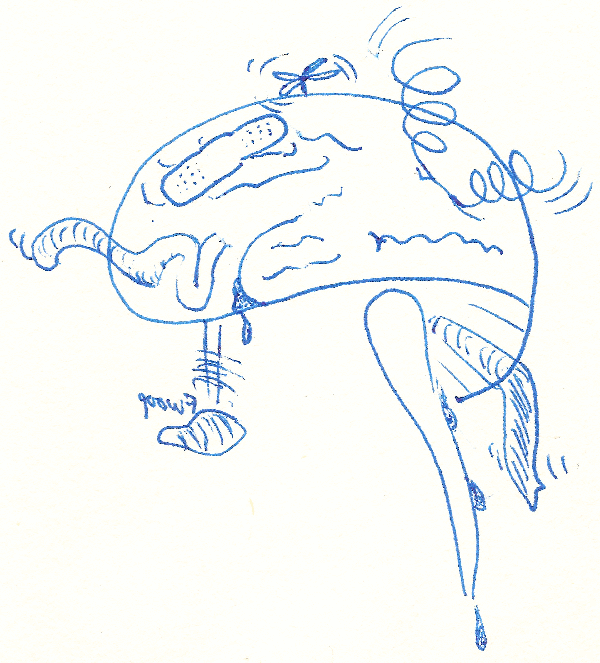
I feel like I’ve been inflated. If I get any larger, I may collapse in on myself and form a neutron star — possibly even a black hole.

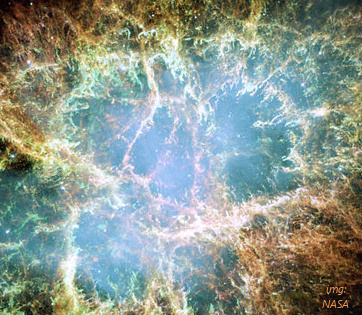
"Portrait of the Quasar as a Young Black Hole" from NASA's Hubble telescope
Charming, eh? And round.

My pain psychologist isn’t worried. She thinks there’s nothing wrong with “a little comfort weight”, especially as I’ve been making such progress in her area.  Of course, she has a slender elfin figure herself.

This isn’t the usual rant about weight and health, or the girly American whining about fat. This is about living from the inside out, and what happens when my physical vehicle takes up a whole lane.

Nursing has a diagnosis called, “Body Image Disturbance.” Take a look at that phrase for a minute. It’s very telling.

Body
Our physical interface with the world; the medium we use to communicate with others; the first sensory impression we get of our surroundings; the complex organism that gets us from one place to another; the thing that gives others their first sense of who or what we are.

Image
Our mental framework, or paradigm; the belief or understanding we have about our presence or effect in the world; the way others tend to think of us; the way we think they think of us.

Disturbance
Something awry — probably disturbingly so. Not good.

Do we need to address the usual social issues? Yes, skinny people get treated better, all across the board; fat people are far more likely to get abused and overlooked, and not just for sex — for everything. Lots of people have made lots of money writing lots of books about that, so read them if you’re confused.

Let’s move on.

I’m in a different sensory and physical world from what I’m used to, and it’s a really strange one. The experience of physical life from this different shape is, yes, disturbing.

My feet are pressing so hard against the ground that my shoes fit differently.  When I carry something, it pushes my weight over the tolerable limit and threatens to bring the CRPS in my feet back to life — and I had just about gotten rid of the pain symptoms there. The circulatory symptoms are another matter — zombie-foot is a regular event.

My cat floats above me by quite a few inches, when he should be lying more or less on my abdominal muscles plus a blanket of padding.  It’s weird to have to reach so far up from my spine to pet him — my shoulder rotates much further in my cuff than I’d expect. I’m getting better at feeling my joints, and this is not exactly a positive feedback loop.

My upper arms keep catching against my sides. This is rather disorienting, since I’m improving my sense of my body in space and usually, when my arm catches on something, it means I need to increase the space between me and foreign object. There’s no foreign object. It’s just more of me. Weird.

I had a sway in my lower  back which I managed to straighten out awhile ago. Better spinal posture means less pain overall. So now I have a substantial, unstable weight hanging in front of my spine, which means I have to work my abdominal muscles really hard to pull it closer to my center of gravity so I can just stay in balance.

My abs are killing me. If I don’t use them, my lower back hurts me worse, so those abs are constantly on duty.

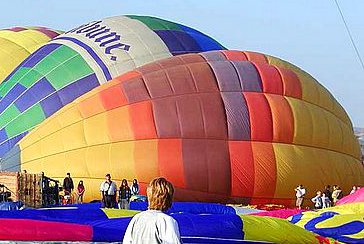
I give them a break and relax them when I sit down — and it’s like being on top of a balloon that inflates, as my stomach takes over the lower horizon.

balloons-innflating

I poke it curiously, wondering how far down I have to go to find the original outline. I give up at the second knuckle. Too discouraging.

When I sit in my car, my right hip brushes against the driver’s armrest.  First thought: I’m over too far to the right; my hip shouldn’t be near that. Wrong. I’m dead center. It’s my hip that has travelled far.

But there is an up-side. When I fold my hands together, I have a perfect armrest. Soooo comfortable. It’s like it was made for me!

And the stares I used to get — or rather, that my endocrine-disrupted DDD cups used to get? Gone. No wolf-whistles or dribble on the sidewalk from creepy slimebuckets who seem to think I should be delighted at their lack of self-command. Nobody’s goosed me or grabbed a feel in ages!

It’s very peaceful. Makes it a lot easier to feel at home in my own skin, not to be bracing for the next random invasion of privacy.

I’m no longer constantly holding a sharp elbow at the ready, to fend off some suddenly-clumsy dude who goggles briefly, with a word-balloon appearing above his head that says “are those real?”, then says “oops” and bumps into my pneumatic (and sensitive) form as if by mistake. I got so freakin’ tired of that!

Perhaps a leather vest with spikes all around…

myvest_front_med

This, incidentally, is why so many women feel  comforted wearing a burka. It makes the wearer more sexually invisible and insulates her from much of this random predatory crap.

My fleshly burka. Take that, right-wing-nuts — of any religion. You don’t even WANT to control this.

And, in a huge relief to my CRPS-riddled body, nobody wants to slam into it now, either. Yesssss!

I’ve got to get that vest. I can’t, and don’t want to, keep the fleshly burka, but I have to find a way to manage the body-slams. Never again.

As for food… Here’s what I’ve learned for the current incarnation of CRPS endocrine/digestive ballyhoo:

– No grains of any kind. No lentils or beans.
– No dairy, except small amounts of hard cheese — the protein sufficiently altered that I can handle it in small doses.
– No sugar at all, but more unrefined stevia.
– I’ll have to get kefir “grains” and make my own water-kefir. I have some ideas for that.

I still have most of the world of nontoxic produce, nuts, and meat from healthy animals to sit down to. There are worse things… It isn’t cheap, but I’m learning where to shop. And it sure tastes good.

P.S. You want what?? Measurements, weight, photographs? They miss the point. I’m not looking at me, I’m looking from me.

I’m not comparing myself to anyone or anything. This is simply the view from inside. Hope it’s worth a laugh or two 🙂

Marathon update

For weeks, I could hardly move outside without injury. It was maddening. I completely ran out of arnica pills, my best tool for keeping soft-tissue injuries from turning into flares or spreads of CRPS.

At the same time, I couldn’t make myself do the meditation exercises I’d been assigned, where I’m supposed to let some strange man tell me what to relax. Getting anything but my appointments done has been nearly impossible.

Today, I walked half a mile, half of it uphill, and most of that at around 15 degrees’ slope — really. And so far, I’m just fine. It seems  a bit miraculous, after the past few weeks.

For the past few days, I’ve also been wrestling with my dead… and at the risk of appearing to complain, I’d probably better explain that.

I’ve been interested in re-remapping my brain to a more useful cartography (so to speak) for years; that’s what holds the most promise of moving CRPS aside and leaving more room for life.

Sheer gall, determination and bloody-mindedness can only get me so far. Pretty damn far, but I think I’ve hit the limit. I need to move beyond, because frankly, life is barely worth it and I won’t stand for that.

To gain enough mastery over my brain that I can really push it into a different shape means getting my conscious mind and subconscious mind to play well together. Sooner or later, THAT means coming to terms with a few things I’ve shoved under the floorboards. Then I can put them in their proper place, and make a reliable path around them. It’s no good trying to build new paths in a brain that’s booby-trapped.

It’s impossible to discuss these losses and bereavements and horrors without sounding pathetic or whiny, so I won’t. Tell you what, though, I’ve stopped editing them out, when they’re relevant.

Something’s come loose. It’s true. It does seem to be working.

I’ve finally gotten myself scheduled into my meditation exercises, PT, and cleaning up… and I’ve walked half a mile today, much of it really steep… and I seem to be fine.

Every marathoner knows… you really run it from the inside.

Recipe: Even Brain Food Shakes evolve

As my digestion has gotten more frail, I’ve had more and more trouble with my Brain Food shake.
 
I went to a powder, because organic kale was hard to find and unwieldy,  and the nonorganic kind smells like a chemist’s armpit. And was still unwieldy.
 
But those shakes still hit my stomach like a cannonball.
 
J listened to me complain for the second day in a row and said, “Don’t eat fruits and vegetables together. Of course it’s impossible to digest.”
 
I stared at him a moment. “I used to know that,” I said with chagrin.
 
That was over a month ago and I think I’ve finally figured out how to make the greens taste like something other than pond.
 
So here are the current incarnations of my Brain Food Shakes, the simplest way to get maximum nutrition with minimal effort:
 
Morning Shake:
 
– 1/4 pound Trader Joe’s frozen Wild Boreal Blueberries (high anthocyanins, low toxins)
– heaping soupspoon almond butter (good oil, protein, minerals) (TJ’s is cheapest)
– Cal-mag supplement (for nerve transmission, teeth and bones; 1 tablespn Lifetime brand, blueberry flavor)
– 1/8 tsp clove powder (massive antioxidants, calms nerve pain, and I love clove)
– ~3 oz apple juice concentrate (malic acid helps clear cellular detritus)
– stevia (stabilizes blood sugar, cuts any lingering bitterness)
 
Whizz it until the flakes of blueberry skin are more or less uniform and quite small.
 
I’ve recently added:
 
– fat pinch of schizandra berries (massive antioxidants, seems to stabilize neurotransmitter behavior; whole berries take extra time in the blender)
– lecithin (improves digestibility and oil uptake)
 
Once everything’s whizzed down smooth, I add at the last minute:
 
– 1/2-3/4 cup blueberry kefir (I really like Lifeway brand, blueberry or plain)
 
The point of blenderizing is to chop open those cells so the nutrition is easy to get to, but with kefir or yogurt, the cells only work if they’re intact. So I whizz in kefir just until blended, maybe 2 seconds.
 
I mix in blackberries and fresh local berries when I can. On the road, I use dried currants, which are an overlooked “antioxidant powerhouse”, in modern marketing lingo. They can make the sweetness overwhelming, though.
 
This afternoon (fruit is more appropriate in the morning, veg in the afternoon) I tried something like this:
 
Afternoon Shake:
 
– Vegetable juice (TJ’s Garden Patch, but I’m open to suggestions)
– Scoop of green powder (I get distinct results from Garden of Life brand Perfect Food Raw; brain really perks up)
– 1/4-1/2 an avocado (cleans up blood vessels, great oil)
– 2 handfuls chopped kale (most nutritious veg per calorie; thanks to TJ’s for taking the work out of prepping organic kale)
– 1 handful sliced cabbage (sulfur for brain, glutathione precursor; also, does something magical to the kale so it tastes smooth and mild)
– salt (reduces ANS/POTS symptoms of dizziness and wonky bp)
– lecithin
– 1-2 individual grains of Epsom salt, a.k.a. magnesium sulfate (sulfur for the brain, magnesium for nerve transmission and electrolyte balance)
– water enough to make it go
 
Has a wonderfully fresh, pleasingly grownup flavor. A bit of cilantro, onion and lemon, and you could call it gazpacho.
 
I’m considering a pinch of curry powder, for the antiinflammatory circumin and that wonderful taste. It doesn’t need it, but it could add a bit of variety. 
 
I’ve often said that it HAS to taste good, or I won’t be able to keep doing it. And, since I test regularly (that is, try to do without), I know I have to keep doing it.
 
And as long as it tastes this good, I’m happy to do so.

Your normal is my catatonic

On top of my careful eating and constant self-policing… I’ve cut my online time to the bone, to conserve neurotransmitters and wear and tear on my telomeres.
 
I’m moving to a sunnier flat, to improve vitamin D uptake and exposure to beneficial UV bands.
 
I’ve gotten a cat, to lower my bp and help stabilize my diurnal cycle. (They get stirred up and worried when you stay up past your bedtime. It’s the cutest form of nagging ever.)
 
I’m doing my autogenic exercises as often as I can bear to, to bring my baseline level of overdrive down and begin to approach “normal”.
 
For better or worse, I’m getting more closely in touch with what a “normal” state of relaxation really feels like — and realizing how far from “normal” it is for me.
 
If I am as close to “normally” relaxed (or “normally” tense — its the same thing) as I can get, I’m nonfunctional.
 
All I can do is lie there, bathed in the peaceful antitoxins of adequate tissue perfusion and a still mind. Getting up requires dropping that calm, because there just isn’t enough energy there.
 
I’m far, far too tired to function as a normal person. My very cells are tired — I can feel it when I let down this chemical structure of overdrive and tension. Their very organelles are tired. The vacuoles, I bet, are tired.
 
Why? I mean, weariness is all very well,  but isn’t this a little ridiculous?
 
Ridiculous it may be, but not irrational or inappropriate. Here’s why, as far as I’ve thought it through.
 
– For one thing, pain is exhausting. An hour of pain is as wearying as an hour of running, but without the cardiovascular benefit or endorphins. Quite the opposite. And it never really stops.
 
– Moving the body with degraded muscles is hard work.
 
– Making decisions and doing the business of life (rent, bills, laundry, shopping) with a brain that flickers on and off… requires a lot of repeated trips and extra effort — also tiring.
 
– Remember that list of JCAHO-rated crises I mentioned on my last post? That was a sample from the latest in a series of years, each of which was about as harrowingly difficult, in different ways. Truly, I had no idea that so many ghastly things, most far too protracted for Hollywood to use in even their most grueling work, could grind through one measly life.
 
So maybe I should give my weariness some credit. Maybe I should stop bitching about how I just can’t get things done. Now that I’m trying to ratchet my ANS responses down from the stratosphere, maybe I shouldn’t wonder that it’s becoming hellishly difficult to get off the couch most of the time.
Maybe I should stop obsessing on my characteristic need to be productive.
 
Maybe it’s finally time to stop ignoring the fact that I’m really damn TIRED, and put my attention on getting more rest.
 
That might be the most productive thing I could do.

Changing the glass, resetting limits

I have to resurrect a set of rules I thought I’d gotten past:
 
– No internet before noon.
– No more than 2 hours daily for all internet activity: email, FaceBook, Twitter, research, posting and illustrating blogs.
– This includes surfing on the phone.
 
I will be moving upstairs to a brighter apartment that’s arranged better for two. J still plans to move in come September, so I’m grabbing the opportunity while it’s there.
 
For the past several months I’ve been learning to notice and deal constructively with signals from body and brain. Part of the reality of this is, there’s a ton of backlog to sort out.
 
This is significant, partly due to CRPS and partly to the nature of last year, which was an ongoing festival of upheaval:
 
– Got SSDI.
– Had to save life of same friend twice in three months.
– Sold my boat/home.
– Moved 3 times.
– Travelled for 6 months at a stretch.
– Started an important romantic relationship.
– Had 2 serious threats hanging over my own life.
 
It’s not good for the ANS, all this excitement.  I’m not personally opposed to eventfulness, it’s just really hard on my regulatory systems. Given similar situations, I’d probably have to do similar things, but it’s time to chill the h#11 out now.
 
I’m moving and it makes my lizard brain howl — if lizards can howl.
 
I’m moving upstairs,  not far at all. And it’ll be safer — you can’t even find it from the road. It’ll be brighter and quieter. The paint scheme is far more cheery and pleasant.
 
But I’m moving, and at some level, that’s an absolute… That is, an absolute brain-fogging mess of suppressed fight-or-flight response and irrational despair. It’s seriously altering how well and how long I can think… changing the water level in my current glass, so to speak.
 
Packing my few things is not a physically imposing task,  but moving at all is a brain-crippling one, apparently.
 
I still have to maintain my care schedule, keep appointments and stay caught up (-ish) on laundry and groceries, none of which is optional.
 
When my adrenals are under stress, my brain gets quickly exhausted, especially in the morning. According to my old acupuncturist, that’s a classic diagnostic indicator. Cognition is linked to adrenal function, he says.
 
The thing to do is go with it, and not make decisions or try to parse communications until the whole system has had a chance to wake up and get moving. Thoroughly.
 
So, out of respect for my brain’s needs, I’ll be spending my mornings playing with the kitten and catching up on my bookshelves, instead of being online.
 
Oh gee, isn’t that tough 🙂
 
And when I’ve moved in and gotten the new place under control, with no intention of moving again until I’ve got a “forever home” to go to, I’ll find out just how resilient this brain really is and see what parameters make sense then.
 
Until then, the online world will go on with, at most, 2 hours a day of attention from me — for research, social networking, web page managing,  and posting & illustrating blogs.
 
We’ll manage just fine.

Half-glassed — a metaphor for flexibility

We all know the old trope: half full, or half empty?

I worked at Borland, which means, I worked with highly capable engineers who were accustomed to doing things right. I once got a very friendly, but very earnest, lecture about the half-glass phenomenon: the point is not whether the glass is half-full or half-empty.

The problem is, the glass was not designed for that amount of water. You either have to fill the glass,

… or use a vessel that’s designed to hold that quantity.

The whole half-glass thing drives them crazy. It’s not a matter of attitude, it’s just bad design!

I love engineers. There’s something adorable about the way they storm the gates of Accuracy, convinced it’s the same as Truth.

At first glance, that attitude looks silly at times. On deeper thought, they’re usually right.

I was thinking about the engineering approach to the half-glass issue, while my subconscious was still bathed in reflections on Rosalie.

I realized that the engineering approach is exactly what those of us with crippling disease have to do: our glasses, our outward lives, were designed to hold a lot more than we’ve got right now.

We either have to build up what we have to put into it, or we need to use a smaller glass. A significant disparity between what our lives can hold, and what they do hold, is depressing. They need to match up better.

Rosalie alternated, and I think all of us with chronic disease (and determination) do that as well. Sometimes we can build ourselves up, and expand what we can put into that glass; sometimes we adjust our expectations and commitments, making the glass smaller so that the contents fit.

I like this image, because it reminds me that I can do either thing. When pushing against my limits doesn’t work, when I really can’t get another drop of water into that glass, I can pull back my expectations and switch to a smaller glass.

By now, I have mental cupboards full of wildly mismatched drinkware – a glass for every occasion, for every level of function so far.

The one on the right is for when my hands don’t work.

“My cup runneth over” takes on a new meaning now, doesn’t it? When it does, I’ll reach for a bigger glass.

Rosalie’s gold

I met Rosalie about 15 years ago, when she put me up for my dad’s second wedding. I fell in love with her on sight, when she threw open the door and bathed me and my brothers in such warmth and delight that even awkward, dorky I felt completely welcome in her life.

I stayed in the little den next to her bedroom, overlooking the pool. Her house was built in the 50s, when her neighborhood was inexpensive and remote. It has an endless view across the whole valley of Los Angeles.

She was a spring chicken, only 83 years old. She had already had two back surgeries to fuse vertebrae, and scooted around – with characteristic energy – in the distinctive crow-backed shuffle of post-fixation chronic back pain.

About five years later, my CRPS journey started. Rosalie was my first model of how to handle increasing pain and disability with a degree of grace and poise. Whenever I came to visit my stepmom or her mother, I’d see if Rosalie’s and my schedules would allow a visit. In all those years, I don’t think she failed to raise a smile more than once or twice, despite some brutal trials.

She had several more surgeries, implanted devices, physical therapy, and she swam laps in her pool whenever she could possibly manage it, inviting whoever came over to swim with her to have a glass of wine and tonic water (or gin instead of wine, for my stepmom) afterwards.

She kept love in focus: for her offspring and her dear friends, she had a seemingly bottomless well of love and regard, regardless of the vicissitudes of life and relationships.

She was always herself: whatever her opinion, and whether or not you agreed with it, she would let you know. No energy and no words were wasted on making things seem nicer than they were. You never had to wonder what her agenda was. And she managed that without ever being pissy or the least bit mean. Conservation of energy, including emotional energy, is a big issue for pain conditions, because pain is so exhausting; she didn’t waste a drop.

Yet she was famous for the radiancy of her outlook, not to mention of her smile. As soon as she had answered the question, “How are you?” with customary honesty, she visibly put that aside, turned her bright eyes on her visitors, and got them talking about more interesting things. She kept her focus where it belonged: on the rest of life.

As I said at her memorial service yesterday, she always looked for the nuggets of gold, whatever else was going on. She always looked for a way forward, whatever held her back.

If you’ve read this blog for any length of time, you know that I hardly ever write about anything until I’ve found the nugget of gold. You know that I always look for a way forward, whatever holds me back.

I can find this in myself, in large part because Rosalie gave me a living, breathing, occasionally querulous but never unfair, always loving, always real example of how to do it. I need those living models. I can learn only so much in theory.

This is real life. And sooner or later, it ends. I’m slightly bowled over by this intensely personal realization that the true radiance of a life can outlast the grave. Rosalie’s radiance is with me still, reflected off these nuggets of gold.

Moving is hard anyway

Intermittently, this page is getting redirected (the Back button usually takes you back to this blog) and Google is becoming more and more problematic. It’s like their old adage of “Don’t be evil” is fading into the mists of time, along with Borland C++ and proper punctuation.

I’ll be switching my active blogs to new URLs, but don’t worry, I intend to redirect this link myself (take that, hackers!) to the new link.

It’ll be good.

In the meantime, I’m in geek hell. If I could remember more from my software-career days, I’d be in much better shape, but I have to relearn a bunch of basic stuff with a CRPS-riddled brain.

Yeah. It’s a ball.

So there’s some blood, sweat, tears, and probably no further posts until this is sorted out, but then (I hope) things will be even better and easier and cleaner than before. 

Those of you much-cherished people who’ve subscribed via email, I’d love to be able to port your subscriptions myself, but we might have to do that the old-fashioned way. There will definitely be a way to sign up again on the new page.

Wish me luck, patience, insight, and adequate brains…

Breathing

Sooner or later, it all comes back to breathing.

Without adequate breath, obviously, nothing else matters. As a sometime ER nurse and continuing asthmatic, I’m more than usually aware of that fact.

I mean something beyond that, though. Something more pervasive.

Breathing, like walking, is one of those things that I keep coming back to as an interesting study — one that’s so fundamental that I forget, in between times, exactly how deeply it changes everything else in life.

I first began meditating in my very early teens, after basic instruction from my mother:

1. Think of a simple, unemotional mental image, like a burning candle flame, and breathe.
2. As thoughts come and go, let them go (sometimes, especially at first, I had to chase them off) then…
3. Bring your attention back to the image and the breath.

The image didn’t do me much good – I think fire is a little too emotional for me – but simply being at home to my breath, and letting the haywire-ness of the day drift off into the mist… with my odd and beguiling little cat softly nestled against my leg under the covers… did me all the good in the world. Especially at 13.

The language of breath is interesting. Breath, spirit, life, and insight often share the same word or sounds in languages around the world. For instance, in English, “inspiration” means both a breath, and a sudden idea; the root word means spirit. There is no divide between these ideas.


(Life, breath, spirit, ideas… how can these be separated? How can a life worth living, let alone a bearable life, let alone a pulse, exist without all of them?)

As I said, I’ve been breathing intentionally for decades. In my 20’s, I taught my ER and ICU patients a particular form of breathing which, I’d noticed, cut their pain response, lowered their blood pressure, and improved the level of oxygen in their blood — no matter what they came in with.

In 3 breaths the difference was noticeable, and if I could persuade them to take 10, we were halfway home.

It goes like this:

1. Breathe in through your nose.

2. Draw the breath all the way down into your lower abdomen.

3. Let it out through gently pursed lips, like softly blowing out a birthday candle.

4. Repeat.

The abdominal breathing improves lung expansion. The slight backpressure on the exhalation nudges extra oxygen into the system (the importance of oxygen can’t be overstated, especially in emergencies) and sends a gentle message to the blood-pressure sensors in the neck, telling them to lower pressure.

This kind of breathing activates the “calm down” part of the central nervous system, that is, the parasympathetic branch of the autonomic nervous system.

The extra oxygen helps clear some of the oxidative damage away.

It feels wonderful.

And it always works.

(Clinical note: for people with COPD, I did 2-3 breaths, and checked in. As with most adults with a chronic disease, they could generally be trusted to sense their limits and stop. Youngsters soon learn, though very few youngsters have COPD.)

Recently, I’ve learned a slightly different technique from the same psychologist I mentioned in my last post…

1. Notice my breathing. That’s all. Let everything calm down for a bit.

2. Draw the breath into my abdomen.

3. Gradually increase the size of those abdominal breaths.

4. Let the midchest join in, getting still more air in. Exhale from the top down.

5. Eventually, let air into my abdomen, then midchest, then upper chest — inhaling from the bottom up. My lungs are pretty fully expanded in the inhale now, and I still exhale from the top down.

6. I tell myself: My arms are heavy and warm. Soon, they are.

7. I tell myself: My legs are heavy and warm. Soon, they are.

8. I tell myself: My lower abdomen is warm and relaxed. The whole bowl of my pelvis becomes a sea of lovely calm. (I had no idea how much standing tension was stored there, at the bottom of the spine and where all the exits are — though it makes sense, when I think about it…)

9. Then I stop contriving my breathing, and let it just flow.

After about 15 minutes, well, life is good. Really good. Talk about activating the parasympathetic nervous system.

I’ve forgotten what else I was going to say. I want to be that peaceful and warm right now.

Oh yeah. The point is this:

Breathing well makes everything better.

It shouldn’t be that simple, but it is.

Excuse me. My limbs need to be heavy and warm… In a good way.

The wall, redux — with demons on the side

Sooner or later, deep and chronic illness (like, oh, let’s take an example at random, CRPS) will bring you face-to-face with your worst demons. It’s only a question of when, and precisely how.

When I came to adulthood, I realized that I felt a powerful need to earn my right to take up space and breathe the air. You’d think I’d be a cringing slave with that underlying attitude, but I wasn’t. I felt I deserved good pay, reasonable work/life conditions, and common courtesy, because that was fair; I just didn’t deserve to live.

Once I could no longer work, but had to fight like mad to live, this was a bit stressful. Like many, I almost didn’t make it. But then, as the very deepest trough began fading into memory, I noticed that something remarkable had happened.

Rewind about 10 years… I was a nurse for eight years, which put me in a critical relationship to others at critical points in their lives. I might have dealt with 10 patients in an hour, but, in the moment that I was dealing with each person, that was the most important person in my life. I may have coded hundreds of people, but every life I fought for, I fought for with all I had.

There were no caveats or conditions: if you were my patient, you had my absolute attention every moment I was with you.

I think this healer outranks me, but you can see
how focused he is on his patient. It’s like that.

I found that it’s impossible for me to work hard for someone’s survival, and not come to care about them – no matter who or what they are.

Fast forward to where we started, after the deepest trough, around early 2010… I had spent several years increasingly incapacitated, used up all my money, all my favors, all my savings, and lost a lot of friends – some of them to the Grim Reaper.

I won’t go into the brutal and abusive bureaucracy of California EDD or Oakland Social Security offices, because if you haven’t been through it, you wouldn’t believe me. That bad. Worse, even.

I woke up one spring day, with a strange sense of dawning inside. It took an hour or two to wake up, and to realize that I’d been fighting so hard, for so long, for my own survival, that I had become important to myself.

I no longer felt I needed to earn the right to live.

Ever since that time, I’ve never had a serious case of any kind of block – writer’s block, self-care block, learning block, anything – that lasted more than a couple days, unless it was explicitly disease-related.

Then, with this move to a strange area, with no connections, near a city I almost loathe… To get real care, for the first time in years, from seven highly skilled and capable professionals…

I hit a wall. Not just a block, but a huge, massive, precision-crafted, towering, deeply bedded, gateless wall.

Since writing “Frustration at the wall“, I’ve been faking it in the hope of making it. That’s a lot of weeks to keep running up against the same damn wall!

I finally started talking about it – I’m a writer; I’m a woman; I process by words; let’s move on – and began to get unscrambled. Then I had the deeply disconcerting pleasure of having my brain picked apart, cleaned with a dental pick, and neatly reassembled by the deliciously incisive Dr. Faye Weinstein. 

I can’t help thinking that the following is going to strike a few chords with some of my lovely readers…

I am, as she said with characteristic precision, “a helpful, compulsively self-reliant minimizer.” Really, why should I trust these people, who wield the power of Gods over what happens to me?

There’s a deep part of me that says “blow that, let’s go hide instead” and off I go, hiding behind advising on Facebook and diving into books and catching up on others’ crises; my condition is not that bad, so my care is not really that important, and it’s not like these people care more for me than their own crap anyway, so I’m on my own really.

My distraction activity is all very worthy, so I needn’t justify it. But, well, so much for the many new things I need to do to put together my own health…

Unconscious reactivity could be the death of me yet.

I said this illness would raise all your demons, even the ones you’ve hammered a stake through the hearts of. It turns out that the squat and fetid cranks who propped up my old conviction that I “don’t deserve to live” are still there, farting wetly and hawking loogies.

With apologies to Heironymous Bosch.

The demons of our earliest perils can shape our responses to major change forever. The trick is to see them for what they are, face them honestly, and put them back where they belong: in the past.

(Easier said… I think a booger just landed in my hair. At least, I hope it was a booger.)

To add to that, with years of excruciating work behind me and more ahead, my old motto of “change or die” doesn’t carry the same weight: Yes, part of me wants to lie down and die. The frantic, aching, endless weariness is beyond description.

But change is more interesting. A lot more interesting. And I only get to do this life once.

Conscious curiosity could be the birth of me yet. With luck.

With a better sense of what I’m doing, I’m preparing to turn and, with tactful and gentle persistence, come to terms with those monsters.

I might as well. I’m going to be here awhile.

Speaking of which…

Marathon training update

After one day to recover from the trip south, I was able to pull off my .8 mile route up and down this hill, and recover enough a few hours later to unpack the car (that’s a lot of steps!) and get some things done. Today was a lot of appointments, which involved walking at least a mile on city surfaces.

On Thursday or Friday, I hope to increase my hill walking to 1.1 or 1.2 miles. We shall see. No more overdoing.