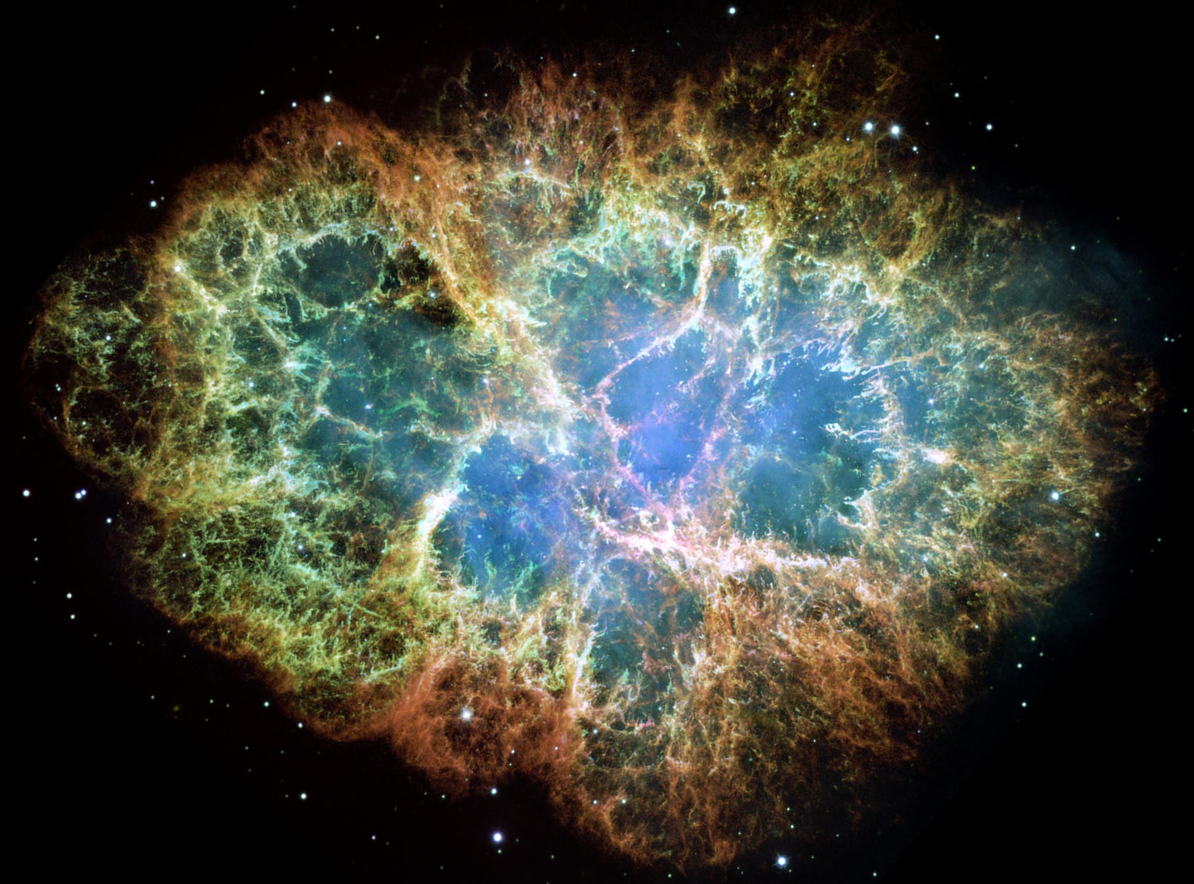
crab nebula, tuned to look like brain activity

May 2023 on the Back 40

In the spirit of this blog’s brief as a “user manual for complex chronic spoonies”, here’s a health update after another interesting year (my personal year starts in May!) with notes on medical support & the relevant self-care for each problem area.

Cultural note:

In American slang, “the Back 40” was (is) probably the least obvious & accessible parcel of a farmer’s land. Either a lot of work or no work happened there, it was hard to find the person doing it, and the effort didn’t show until afterwards.

Good metaphor!

Areas of life…

Mom (& TL;DR): 2+/3, it kinda sucks but I’m getting doctors involved and they’re good. Adjust expectations downward a bit, because this could take awhile to resolve.

Endocrinology

I got a med with a toxic-to-me ingredient (maltodextrin; it’s specifically inappropriate for people with low thyroid!) and that set me back in inflammation, pain, mood, and thyroid function. That’ll take some time to recover from, but…

=> I’m doing All The Things, mostly hydrating & waiting & antioxidants.

Plus a thyroid med I tolerate well.

Not having thyroid supplementation at all for 4 days (after 2.5 weeks of thyroid with toxic crap in it) set my thyroid recovery back further, but let my mood come back closer to baseline and gave me more access to memory & coping skills.

=>More waiting, plus vitamin A, licorice root, and Maine seaweed for the iodine.

And lots of sleeping.

Dr:

I have an appointment with a good endocrinologist in June, which gives me time to look up his articles & see how he thinks, while brushing up on my endocrinology. (Being a passive patient doesn’t work well for me. Too much complexity & too little margin for error. I hope he can cope with a collegially-minded patient.)

G.I.

I tried heirloom corn flour, because I love masa and grits, and the industrial kinds of corn are too hard on me. (Pain, mood disruption, bit more brain fog.)

Well, it took longer than regular commercial corn, and it took making it a staple & eating it a couple times a day, but it turns out that organic heirloom corn can still do that to me. So, more waiting & more hydration, but after Day 2 of No Corn I’m already a little better. Yay!

Good news is, I’ve consistently been able to eat *enough* overall that my body’s starvation response is calming down! I’m no longer gaining weight daily (which is what my body does when it’s starving). I’m able to fit into my biggest clothes that *aren’t* stretchy, another yay.

=> I find that 1200 kcals/day is the functional minimum on any given day. Getting up to 1600 is good, much more stabilizing.

Organic, free-range everything with plenty of olive oil. I have had skillful & compassionate help with cooking since November, and it’s been absolutely life-altering — for the better, which makes a nice change!

Dr:

I’m seeing my GI doc this week. I sure hope he doesn’t retire soon.

Brain & pain

Not so good. It’ll change, but there’s no knowing just when. I’ve got a UI design & documentation project which I badly *want* to do, but I think the better part of wisdom is to write up what my training & experience leads me to envision, and find others to help do the work. Trouble is, when I get to the computer, I don’t want to write it up, I want to just do it… ADHD fail, so far!

CRPS-specific

The bone pain is having a party in my feet, legs, & pelvic girdle. Skin in my arms & legs is more burny, and it’s getting annoying. That feeling of my brain envelope being hot (not something that happens in a normal body) is a frequent occurrence.

=> Eliminating the corn (which spikes up my neuro signalling) and stabilizing my thyroid should help that a lot.

I hope.

Fibro pain

Yeah… May didn’t used to hurt like this. My joints feel like the surfaces do a quick “squish” and ooze steam at every impact.

=>Antioxidants, hydration, pacing, thyroid… and time.

Dr:

I’m seeing my primary on Monday and will ask for a referral to Brigham & Women’s pain clinic to see if we can get a better handle on this.

Ehlers-Danlos Syndrome

Ironically, the more I read about EDS, the more it explains a lot. I haven’t got enough understanding to opine further, but feel free to look it up and put your favorite links in the Comments.

Everything is in a “chase the symptoms” mode until then, and chasing the symptoms means that I don’t get things I otherwise need to manage pain and inflammation, because they trigger spasms and cause tissue tearing, both of which sound like EDS issues.

Welcome to complex chronic illness, where “competing needs” is more than a metaphor — it’s a way of life!

Dr:

I have 2 appointments, one to prep before genetic testing of a more arcane kind than I can get myself, and one to discuss results. The first of these is in November. We made that appointment last fall, so that’s really the best we can do.

Life

Best time of year is here. I hope I can get some recovery & remission, as I usually do in the summer.

The pain & brain fog keep me indoors more than I’d like, especially with the high pollen count making the histamine & inflammation situations worse. (Competing needs again: I love being outside.) It’s just too much to try to mask over all this, and I’d rather not stand out for the wrong reasons. Again.

I’ve been using my rower for exercise, when I can. That’s better for the bone pain than walking on pavement is, and I’m surrounded by pavement.

Major events

Sadly, I just lost an old sailing buddy to his illness.

Worse, I may soon lose a dear & longtime friend to hers, one of my sisterhood which formed around 2010, forged in the fires of the improbable Hell of having CRPS while being intelligent (ding!) female (ding!!) health-industry professionals (ding!!!) seeking effective care for this insane disease (DONNNNNG).

Some things you just get through and hope for the best.

Love makes everything else bearable — and that makes bereavement a stone b*tch.

On the other end of the spectrum of life… my honorary nephew announced I can expect to be a great-aunt this summer, and the first bundle of crocheted baby-gear is in the mail.

His papa, my widowed honorary BIL, is traveling the world with his skills, hard-won insight, and upright down-home charm to spread the word about what *really* constitutes good patient care. The world is becoming better for his work and I couldn’t be happier for him or prouder of his trajectory!

*Huge* yays!

=> I’ve discovered that the way to avoid emotional whiplash is to think about just one thing at a time.

Some of us are *always* living in interesting times.

Conclusion

I’m going to crawl back under my rock & lurk until all this hydration & waiting does some good. Time doesn’t do everything, but it does give other things a chance to work.

Take care of yourselves, and when you can’t do that, take care of each other. (((Hugs))) to those loved ones & spoonie-compatriots who want them.

The limits of mitigation: dishwashing

This article is utilitarian. It provides descriptive terms for people with similar experiences to use in communicating with their doctors, payors, and loved ones.

It discusses the impact of an ordinary household task, and explains why doing such an ordinary thing could, in fact, be unthinkably difficult for people with certain neurological issues, even though their arms appear to function reasonably well.

It aims to mitigate some of the effects of the invisibleness of pain- and sensory-related disability.

Washing dishes is a problem. It’s never been fun, but it has been satisfying, because, talk about instant gratification: you do something and things are immediately better! I liked that!

Hoping for more autonomy, I recently got a great pair of washing-up gloves. Here’s what I’ve learned.

The problems with washing dishes are:

– The way water over the hands, which are rich in nerves, intensifies sensation and creates constant tactile input that multiplies every other sensation. I think it also has an effect on electrical conductivity in my hands and, as we know, the electrical conductivity in my hands is a complete mess anyway. This is where my CRPS started.

– Hot and cold temperature variation. This activates the C-fibres in my hands and forearms, the nerves that transmit hot and cold and itch and pain. My body has trouble distinguishing between those sensations. So as the water changes temperature – down to fractions of a degree, which most people would not even be aware of – my nerves and the blood vessel activity that the nerves can command are all just having a little meltdown.

– Because of histamine issues and allergies , most of my dishes are glass or metal. Both of those substances have a strong impact on my tactile sensation. (They’re hard to touch and uncomfortable to use, but I have to use them.) I think this has something to do with how extravagantly they conduct temp and, in the case of metal, electricity. Both of which translate to discomfort and pain and impair my ability to control the motion of my hands. This muscular impairment is a characteristic of long-standing CRPS.

So, between having to juggle all that sensation, all that pain, all that vascular/tactile disruption, and the loss of muscle control that comes with it, washing dishes is a real problem for me (cf. taking a shower. Another post for another day.)

Think about dropping glass and fumbling knives, and you’ll see what this means in practical terms.

My cat has learned how to respond when I break glass. She comes to the edge of the splatter zone and meeps to check in on me, then sits out of the way but in sight, supervising the entire process from picking up big pieces to sweeping the rest and finally getting up the tiny shards with large damp rags. Only then does she enter the zone and check my work! She doesn’t let me forget how important it is to clean it up properly, and comforts me considerably during the subsequent recovery time.

I got some dishwashing gloves, hoping they would help. What I’ve found is:

– They eliminate the water contact – until my hands start to sweat. Since they are necessarily an artificial substance, this happens pretty quickly because that’s how my skin responds to manufactured surfaces. The term for this is “sudomotor reflex.”

– They reduce the temperature variations, but not as much as you’d think. I’m astonished, myself, to find just how sensitive these hands are to tiny temperature changes. This relates to “thermoregulation” and “thermosensation” problems in CRPS.

– They do help somewhat with dexterity because they’re nice and grippy. However, they don’t fit well because they’re a generic size. With the quick sweating and the temperature changes, the dexterity problem really isn’t resolved.

– I don’t have to come into direct contact with the glass or metal, and that does mitigate some of these issues. It’s just that they’re not the only issues.

The peculiar nature of peripheral neuropathy with CRPS makes this pretty much unwinnable.

So I guess I still need someone else to do my dishes.

If anyone can think of a way to rinse and load a dishwasher and then remove the dishes when they’re clean and dry but still solves the problems of water, dexterity, glass and metal … I would be happy to hear it.

I’m posting this not to whine, but because it can be so very hard to articulate these profoundly abnormal sensory experiences, and I know I’m not the only one to have them. As always, please feel free to link and copy, and I’d prefer it if you point to this webpage if you put this in print or online. Thank you so much! In the end, if you need to use it, then just use it. Spoonies unite.

Speaking of spoonies uniting…

The fact that this post got written without me going into a complete fugue state and wandering into traffic, or somewhere equally unlikely, is thanks to Elle and the Auto Gnome, who kindly took dictation — and kept me from wandering off in an effort to avoid thinking about this any longer than necessary! It’s a ghastly situation and my usual coping method is to articulate a ghastly situation once, and then focus on workarounds, spending as little further attention as possible on the ghastly thing itself.

Elle and the Auto Gnome blogs here.

She pointed out that being able to articulate these problems is darned rare, so I took the hint and we did this together.

May it be helpful to others in similar straits!

More on environmental insults on a hyper-reactive system

I’m dealing with a mold-spore exposure in my home that’s only somewhat mitigated, and can’t reach a better state until the weather allows me to throw open all the windows for a week or so, to allow the super–low-tox coatings to dry and cure.

Honorary sibling & excellent friend Cougar came over to help with a related errand. I was singing my way through my tasks, which I don’t normally do, but apparently it’s sufficiently “on brand” that it fit right in with his expectations. I told him that I was going through a phase of illness where eating anything is treated by my body like a personal insult, and, in addition, the all-body pain and inflammation were through the roof. He said, “I never would have guessed. Your behavior doesn’t show it at all.”

Woo hoo! Yay me. We humans can have real personality distortion due to horrible pain, and when I can manage myself that well in the teeth of a flare, I take an inward bow and award myself a shiny gold star.

I got the Big Craptasms one by one: Ehlers-Danlos Syndrome (type not yet known), CRPS/RSD, dysautonomia, fibromyalgia, Hashimoto’s thyroiditis, mast cell/histamine activation problems, gastroparesis & sluggish gut. All of these require major lifestyle changes.

I could handle the rest, even the CRPS (given all the good neurotransmitter stabilizers we have these days.) It’s the worsening histamine stuff that’s really driving me crazy right now. I’m reacting to everything.

Reactions don’t stop with itching skin, itching eyes, pouring sinuses, and wheezing. Oh no. That would be too easy.

Reactions set off aaaaaall the other clowns in the circus.

Nasty bunch of customers!

So, here’s what that looks like in my case:

  • My tissues are more brittle and unstable, so I have to be extra careful doing things (and I’m always doing things. Did I mention being mildly hyperactive?) That’s the EDS.
  • The body pain of the CRPS I don’t want to focus on long enough to describe, but getting my skin sensitivity under control before bed is kind of a big deal.
  • The fibromyalgia is like a big spiculated cloud of aggravation that my body wandered into and can’t find its way out of.
  • The thyroiditis means I have to stay off cruciferous foods (the best winter veg, sob sob) or get back on the thyroid supplement/pituitary see-saw that I’ve struggled with before; meanwhile, the thyroid-driven struggle of having one day and one night in every 24 hours is taking up a lot of planning and will-power, especially at 4 or 5 am when I haven’t been able to go to sleep yet, but still have to get up in a few hours in the hope that my body will get the clue. With most sleep disruption issues, it’s important to fake it ’til you make it.
  • Gastroparesis is tightly tied to mast cell reactivity for me. That’s also so loaded right now it’s best for me not to think about it, especially since it’s almost dinner time and I have to give my gut some work.
  • It ties in with the fact that, if I don’t eat enough, my body creates more fat “to get me through the famine”, in that lumpy, painful, inflammatory pattern that just makes everything harder.
  • Also, the mold fragments themselves create a reaction in my body that’s a whole bucket of nasty by itself: more brain fog, more indigestion, more inflammatory-patterned everything.

And I’m one of the lucky ones. This could be so much worse!

As I think about life generally and my life particularly, I think about travel — as essential to me as breathing is to many people. I don’t need as much of it (obviously) but now and then, it’s essential. I have loved ones, few of whom are near; I can no longer go visit them. There are beautiful sights I’d love to revisit, and more I’d love see for the first time. There are fascinating people I’ve not met yet — some of whom I’ve loved dearly for years. 

Yeah… but no.

I can’t stay anywhere, because everyone everywhere uses things that either smell or out-gas or both; moreover, at this end of the reactivity bell-curve, what sets me off might be fine for another who’s similarly sensitive. It’s a total crap-shoot. 

Plus, mold. Largely invisible, uniquely ubiquitous above the 37th parallel, usually harmless — but astonishingly bad for me!

If I’m going to go anywhere, I’ve got to customize and control the environment I sleep in, at the very least. Sleep is when the body does its housekeeping and cleanup; it’s as if all the doors and windows are thrown open and the sensitivity gets turned up to 11 — any bad stuff that goes in then, goes in much more and makes things worse. The regular cleanup gets interrupted. It all becomes more crisis-manage-y than housekeeping-y. As you can imagine, in hyper-reactive systems like the one I have, that’s a real mess.

This has been creeping up on me for awhile, and I’ve blithely ignored it because gee freaking whizz, isn’t there enough going on??

I just need a moment to process this.I had to give up a visit to friends this week, because my immune system crawled into the blender and hit “frapee”. (I’m nursing a charming case of stomatitis with both canker and cold sores; my lymph nodes are creating topography a bit like the bumpier parts of Death Valley; and I’m having all visitors stay fully masked with windows wide open, because I’ve got nothing to fight off further pathogens with.)

Because I gave up that trip, I get to sit here and think about what a non-delightful level of fragility I have to plan for as I go forward in my life.

So, on the one hand, this is great information and I clearly need to know it, in order to avoid making myself sicker.
On the other hand… Oh FFS, life! Really? — I mean, really?!?

When I’ve gotten the particle-board in the kitchen coated, I hope that will buy me a couple of years of being able to stay in my adorable little flat without further toxic exposures. I’m benefiting hugely from this stability, and the location can’t be beat. I love it and I’m grateful. With the semi-permanent fix in place, I can probably recover quite a lot of the ground I’ve lost — although of course there’s no guarantee, and the best-case scenario involves many months of recovery and being very careful about avoiding other toxic triggers for a couple of years, until the mast cell “bucket” can drain.

Thanks to the diligence and care of my 2 new helpers, this is an attainable goal. Pheee-yew!

Beyond that, I’ve got some thinking and learning to do. I may revisit this subject of controlling my environment while on the go, when I have anything useful to say. 

Competing needs vs. Layered needs

CW: food & size & related topics.

Many things are coming together and my soul is taking warmth and strength from the concatenation of care. I’m incredibly lucky — even blessed — and I feel my good fortune with all my heart. It’s a great, and unforeseen (by me), turn of events, after decades of raw struggle.

One of these blessings takes the form of a gifted young man who takes my complex & often conflicting dietary needs as a delightful challenge, rather than a terrible curse. His work with me is a hugely encouraging capstone to,

  1. A lifetime of food-nerdery,
  2. A career of nutrition-nerdery (not the same thing),
  3. Decades of increasing dietary stringency,
  4. Years of gastrointestinal fuss.

It turns out that addressing underlying nutritional needs can re-shuffle metabolic activity so that former limits are a lot less limiting.

I know, right? Who knew???

Horse & woman laughing hysterically

I’ve been dealing firmly with mast cell activation & histamine reactivity, by keeping everything I eat super fresh, freezing it in portions immediately, reheating in the microwave (which tastes a lot better than cooking it in the microwave in the first place), and keeping the dishes & utensils squeaky clean.

After doing this for awhile, it turns out I can eat brassicas again (cauliflower and broccoli, 2 of my favorite veg) without my thyroid flipping me the bird as it passes out.

I feel profoundly rewarded.

Competing needs: no brassicas; lots of winter veg.

Layered needs: calm down the mast cell activity & histamine responses, and my immune system is perfectly happy to take brassicas on board without trashing my thyroid in response!

Also, I was gaining weight rapidly around the time this kitchen-magician showed up; since my diet was so limited at the time (homemade parsley buns, homemade blueberry buns, farm-frozen chicken, and sprouted lentils, with only olive oil & salt for flavoring) it was very easy to do a calorie accounting.

It turned out I was in hardcore starvation mode, getting only 700-1000 kcals/day. That’s not enough. It kicked my cortisol into high gear, which is overdriven anyway due to pain & dysautonomia, and manufactured excess adipose tissue from (apparently) thin air & bad grace.

I’ve roughly doubled that calorie intake; with my kitchen-wizard’s help, I’m getting loads more veg, too, which for me are a sort of cure-all — whatever is wrong with me, it eases up if I get more veg.

Keep in mind that *any* consequence of starvation is unhealthy. Losing 80 pounds to starvation is even more horrifying than gaining them. It hurts less, but it’s more dangerous to kidneys and system function.

It’s a peculiarity of our modern sensibilities that gaining weight due to starvation is absolutely invisible, because being fat is considered so repellent (the word “gross” translates as “fat” — that’s a strong linguistic clue), that shaming & blaming is the default response, even — especially — by physicians who should know better than to disbelieve, shut down, and further humiliate their starving patients.

This obviously needs to change.

My clothes fit more naturally and my feet & legs hurt noticeably less 3 weeks on. So, that’s much better!

Competing needs: more nourishment; fewer calories & more activity, I’m told.

Layered needs: adequate calories, so my cortisol can stop screaming about starvation and let my body work better!

There will probably be a lot more about the details — why are all my veg heavily processed or overcooked? What’s the recipe for those buns? How many diagnoses am I working around, anyway? How do you get onions in when you can’t go near them raw? — but that is, as it were, food for future posts. There’s a lot more info in this topic. It’s possible there are a few books in it.


Putting words to the problems

Thanks to wonderful people, I’m getting help in my home. Holy hosannahs, people, it. Is. Amazing.

Stone angel with hands clasped in prayer, standing on a pillar, sun like a glorious halo

My part of the bargain is to get the state to step up to the extent I can persuade it to, hoping it covers the cost.

Ever since governments realized that keeping people safely at home is much cheaper and more productive than warehousing them, sensible states work to make that possible.

Naturally, they have checklists and formulae to determine what they’ll provide, based on neat cookie-cutter notions of disability, developed in tidy rooms by people with steady pay, good benefits, and a remarkable degree of job security.

I mean… I… ay, ay, ay.

TW: Describing the usually silent reality

Fellow spoonies can guess at the blind horror it was to climb right down into the mess of this life — where getting through the day requires me to gently ignore as much as possible — and blurch it all up, but thanks to an excellent psychotherapist who knows how to pull me off the ceiling, it happened today.

Mom, it’s okay if you skip this! It’s clever & apt, but grim in parts. Keep in mind that it’s not the whole story, just the relevant hard parts, because it’s written to the task of getting money out of the system.

I separated the “Why it is like this” from the “What it is I need” and I thought this might be helpful to share with others, since I’m far from the only one who has to do this. Hope it helps.

Letter stating what my helpers do

Dear Gate Keeper,

Here is a discussion of my needs and the help provided. Thank you for taking the time to look into this.

Cooking:

Diagnoses affecting my intake are numerous and often mutually contradictory (e.g., insulin resistance & gastroparesis.) Inadequate nutrition makes everything worse, as you know. Multivitamins can only do so much.

I mentioned “no shortcuts”: this means sauces, dressings, snacks, everything, has to be made from scratch, thoroughly cooked, and frozen fresh in order to be safe. This is largely due to mast cell activation syndrome (everything super fresh & clean) compounded by the inflammatory reactivity of fibromyalgia, CRPS, dysautonomia, and multiple food allergies and sensitivities which already existed (making the cost of failure high), plus gastroparesis (so everything has to be processed and cooked.)

Everything has to be frozen in serving sizes, because the mast cell reactivity and the downstream consequences of failing to account for that are so devastating. Then those many containers have to be washed and put away. Please see housekeeping about why this is such a big deal.

Shopping: pushing a cart is like holding onto a rail wrapped in barbed wire while every bump is like a blow to the frame driving the barbed wire deeper. Not having to go through that is important for being able to do anything else in the day.

Here’s what Person A does for me:

  • Shopping: drives me there, handles cart, keeps us on task, remembers what I forget.
  • Keeps kitchen clean, functional, organized.
  • Keeps fridge and freezer ditto, which I couldn’t do for years (temperature, metal & glass contact; see below.)
  • Works closely with me to understand dietary limits and possibilities. Much learning, checking, & creative thought involved.
  • Preps, portions, and stores fresh food.
  • Makes sauces, dressings, and desserts; stores them in usable portions for me to dress my meals with.
  • Cooks main meals and snacks meeting my stringent needs.
  • Serves me a fresh, hot meal every time he’s here. Everything else I defrost in the microwave.
  • Portions and stores everything.
  • Cleans the endless parade of dishes.
  • Provides apt advice on how I can make my nutrition easier to access and more satisfying.
  • Every bite has to be cooked (gastroparesis & g.i. disorders) so this means considerably more work and more dishes.


Housekeeping:

Anything involving contact with things that affect transmission of temperature and electricity is agonizing. CRPS and its peripheral nerve activity are essentially a matter of disrupted signaling, and these are hugely exacerbated by contact with metal, glass, running water, any water at anything other than body temperature, vibration (which is brutal – imagine a full-thickness burn happening inside your tissues down through the bones) and other sensations which would ordinarily not even warrant notice, but to systems like mine are limned, imbued, and soaked in pain. Not just ouch or even agony, but a pain that causes the motor nerves themselves to fail without warning of any kind. It’s very distracting and worrisome, as well as uncomfortable and risky. It can be dangerous, as the many glass objects I’ve broken in the past year attest. Dish gloves don’t work for me due to tendon problems and what the gloves are made of.

I’m a fall risk, due to the dystonia and the repurposing of motor nerves to carry more pain. (I can supply excellent peer-reviewed articles to support all of this. If I forget to provide them and you want to see, please let me know.) And, because of the many sensitivities and reactivities I live with, packaging and serving my food in glass dishes is essential. Cleaning them is mandatory. There are no better options.

Due to the combined effects of hyperflexibility, hyperreflexia, complex regional pain syndrome and the nerve damage and “windup” that goes with it, histamine intolerance and the tissue effects of inflammation, and other factors… movements beyond very moderate range have to be deliberate and controlled, or I risk injuring myself again.

This means that things like folding sheets, reaching, or making ordinarily repetitive motions put me at risk of injury, with disproportionately bad results and disproportionately long recovery time. Amidst all this, sensory sensitivity has developed across the board. (I was an emergency nurse, mid-distance runner, hiker, rock climber, and I liked the meditative nature of housework. This current reality is hard to live with, but it is what it is.)

Here is the list of tasks Person B does for me:

  • Recurring serious attacks on dust and mold in the home. I havent’ been able to get treatment for these allergies to a successful degree, and they impair me badly. Dealing assertively with these environmental insults is key.
  • Change bed. [I’ve deleted the bit about the worst incontinence. You’re welcome!]
  • Vacuum floors (vibration, auditory, grip)
  • Vacuum baseboards, corners, overheads vs dust.
  • Move furniture to vacuum underneath.
  • Damp soapy wipe down of baseboards, shelving, & all the surfaces vs dust.
  • Wash curtains vs dust
  • Mop floors vs dust in cracks
  • Clean bedroom carpet and rugs in house vs mold and dust
  • Deep clean bathroom, bedroom, and kitchen, to keep mold levels below functional threshold.
  • Spot clean (I drop things often)
  • Fold laundry
  • Dishes all the time. They have to be washed really well, because of the mast cell issue.
  • Errands: trips to P.O., pick up meds, get cleaning products, stock up on masks, and hopefully outings when it’s warmer.
  • Reminders: get meds, fill med organizer, change towels, etc.
  • Laundry: bedding, towels, clothes, rags. I have a small apartment washer that we have to use exclusively, due to horrible reactions to commercial cleaning products.
  • Clean asthma gear & vital-sign gear.
  • Equipment maintenance for air filters: changing filters, wiping down, checking seals, etc.

It’s hard to realize, until you‘ve been through it, how very helpful it is not to be tortured by ordinary tasks of daily life.  I appreciate your willingness to look into this.

Please let me know if you need any supporting documents.


Thank you so very much for your time…

Seeing, as in looking at, stars

I saw a whole lot of stars last night. Good for the soul, that.

I’ve been taking this opportunity to be in the experience of life without having to explain it, or articulate reasons to anyone outside my own skin. I had almost forgotten what that’s like. With very bright and articulate people in my life, it’s hard to get that in my personal life. Their need to understand is borne of pure love — they worry, because they’ve seen me through some rough times, and in order not to worry too much, they need to understand in their own minds what’s going on in this mind over here, which is in a completely different person. (Mom, you’re in good company with my lot! <3)

I’m in a lot of “thin end of the bell curve” categories, so this can take some doing: INFP (about 2-4% of the population, last I heard), serendipitously rather than linearly accomplishing (about 20%), and ADHD female (goodness knows, but the proportion seems to be growing as the markers are better understood), in addition to the weird requirements of all these illnesses — pretty much guarantee that anything normal won’t work, no matter how carefully I plan and execute.

This is the second summer in a row where things have not gone according to plan, so much so that a new term somewhere between “not according to plan” and “WTF just happened” needs to be coined to express it. I’m beginning to think I should just take this as a new life pattern, since the switchbacks tend to heal the dribbling wounds of layers & layers of PTSD. (Well-managed PTSD is not the same as resolved PTSD, although the most dramatic difference is on the inside.)

My friend and honorary BIL Ron wound up with massively metastatic liver cancer because 2 years of pandemic disruption and lousy treatment from LA’s indigent support system (which is a criminally bad system, worse than war-escaping migrant camps and most internment camps, according to the UN) left his early, localized, treatable cancer as an undiagnosed blurch on a CT scan which he had a few months before the pandemic was identified.

His care was denied because there weren’t enough staff or open beds. He was killed because of, but not from, Covid. When you think about maskless people and Covid deniers, think about treatable, localized cancer turning into a deadly and agonizing bloodbath for people like Ronnie.

Yeah… I’m not bitter… much!

Folks, this is not a drill. It’s not imaginary. It’s a fast-evolving pandemic in its early days. Read up on the Black Death for a little perspective.

A couple months ago, as people told themselves the pandemic was “settling down” right before the peak of record-setting waves of contagion and death (check the data, not the ideology) Ronnie bent down to pick something up, passed out, and woke up in hospital getting the third of eight units of blood. Then he found out over half his liver was lost to cancer and that treatment would only buy him a matter of months.

He opted to skip treatment and make the best of his remaining time.

He wanted to go fishing, so he set his mind to get strong enough for one last boat trip. His family proposed bringing him home to Northern California, where there’s glorious fishing in all sorts of waters.

Long story short, the appalling facility he was in was so good at losing contact information, that his hospice social worker didn’t realize he even had family until I had the option of including a gift card with a care package I sent from Amazon, and I included four names and numbers. Then things started happening.

If you’ve got someone in a facility, send them a card! It’s documentation that people care, and nothing happens in health care without documentation!

I never thought of it as anything other than a nice gesture, but turns out it’s a whole lot more: It’s evidence that they’re worth saving. ÷O

Put your number on it if they’re in bad shape, so the facility has someone to call. Atrocious that this should be needful, but hey, welcome to modern America! o_O

OK… maybe a *little* bitter.

Since I was about ready to have him kidnapped to get out of that stupid facility, we had contingency plans up the wazoo to get him out of there and home.

Even longer story short, it turned out that the only feasible option was to drive him home, which was a 2 person job and only one person in that elderly and health-challenged family could do that, so I changed my own plans (plan is a 4-letter word anyway) and got the soonest ticket I could.

As he listened to this planning conversation, Ronnie smiled from ear to ear with tears streaming down his face. He could take in how much he was loved and wanted, and he was going home to a slice of paradise to be surrounded and supported by the care of those who loved him.

Important note here: he already had this information, but he also had his own layers of damage which made it hard to let the information in. That resistance was there for a reason. You can say something to someone all you want, but if they aren’t equipped to accept it, it won’t go much further. There has to be a big enough change in themselves and their circumstances for those scars to shift, so the info can flow.

Ron was able to put aside everything that kept him from being able to accept that information, and he had, as the wise social worker said, “a moment of pure happiness.”

The following day, his condition deteriorated. We updated our plans to go visit and hope for the best.

The morning I was supposed to fly out, he was gone.

I did my quiet-inner-voice thing, and it said “go anyway.” So I did.

Bodhisattva oath

I’ve been contemplating the distinction between working the Bodhisattva vow and being a doormat (or codependent, as we call it now), off and on, ever since I discovered the concept when I was 12 or 13. It’s been an important part of my work of dealing with the last couple decades of harrowing illness, poverty, and systematized abuse as a patient. It’s become a regular topic recently in my meditation class. This is a big deal and an important point to consider.

The difference, it seems, is about self-care and responsible boundaries. These are particularly key for people who are women, healers, and in a vulnerable situation; it may not have escaped your notice that the wording which defines these terms was developed by men who had quite a bit of support in their work, and such people need a lot less protecting.

It’s healthful for people in habitual authority/access/power over others to embrace a practice of profound and selfless compassion. It gives them more insight and calm.

Those of us whose ground state is based on acute awareness of others require a more nuanced approach.

There are techniques which allow a diligent practitioner to pursue the Bodhisattva vow over the rim of what appears as boundaried behavior without psychological damage, but they only come after many years of serious training and discipline with qualified supervision. So, people like me have to be pretty darned careful how we proceed.

In short, I was in two minds about my own reasons for coming, but I yielded to the quiet tidal bore of my inner voice and took that flight.

Serendipity

I’ve landed in a beautifully imperfect place among people who wear their glorious sweetness and relentless flaws in flowing symmetry. From Ronnie’s kin, I’d expect nothing less.

Above all, I realize it’s not my bathtub to soak in and not a set of problems for me to fix. I’m just here as a welcomed guest and loved part of this extended & protracted family system.

This is a big deal.

There’s a lot of work for me to do (administrative nonsense, since death and life are both business matters; my trip will be paid for) and that’s healthy, because it’s easy for me and a real boon to the family. Healthy boundary there.

There is a lot of soft, verdant ground for me to walk on; a ton of stars spilling across the sky overhead; a cornucopia of Isy-friendly food pouring out of the greenery on this well-kept land; and my allergies have backed off considerably. My ex has put my health needs absolutely first in every consideration and the rest of the family is happy to support that. Definitely healthy.

And me? I’m not over-explaining! It’s amazing :D! I just quietly take care of my needs and appreciate everything that I *can* partake of. Good boundaries there, too.

I’m learning, carefully, again, how to be present. How to unlock from anxiety without letting go of my real needs. My phone is nearby and in signal, but usually off. That’s healthy too, right now. It’s a kind of technology break, which my battered and hyperactive brain is probably long overdue for.

I’m also bereaved in the presence of others who are also old hands at bereavement. It’s a peaceful thing. It feels curiously wholesome, even as grief and mortality are shredding sorts of events. Ronnie and all our late loved ones are very present in their very absence.

I could natter on about the wheel of life and possibly even spout some Buddhist wisdom about interconnectedness and emptiness, but to put it in words is to miss the point. It’s an experience. All you can really do with an experience is to be in it and allow it to be part of you.

So that’s what I’m doing. And there’s real healing in it.

For some things, no explanation is needed because, at root, none is… oh I don’t know… possible?

Anyway, I’m OK. I’m doing the things and being the me and accepting the limits (including transport) while appreciating the strengths (like interconnectedness) and feeling very secure and centered and remarkably peaceful withal. This is good. And if my phone is off, be assured it would be on if I needed it. Right now, the stars and the green and the peace are healing me, and I’m simply letting them. <3

Update: using adaptation tools

Yesterday, it came naturally to be warmly present for V during a big event where I stood in for her, even at a distance of 3,000 miles or so. Gotta love technology for that!

Today, I think of D and the anticipatory grief is like a warm finger of current, pulling at me without tearing at my core or dragging my mind away. He’s here now, and everyone who cares about him is working on a graceful last chapter to his intense, vivid, improbably well-groomed life. (Yes, he’s quite a character!)

This recovery is not all perfect: after yesterday’s 8-hour social endurance event (a physical and physiological experience piled on top of a very neurologically demanding week) I woke up this morning with a pure dys-autonomic experience I haven’t had in a very long time.

On the very cusp of waking, as I first became physically aware of the real world, my body’s temperature-regulation mechanism dropped off the rails.

I suddenly got intensely cold, that bone-deep cold that makes the smallest touch of air feel like knives. Imagine full-body Reynaud’s, with added concertina wire. It’s amazing how cold my skin suddenly gets to the touch when this happens, after feeling just right at the moment I started to wake.

So, I did what I learned to do 10 years ago, when the dysautonomia really kicked in with this: I pulled my down duvet completely over me and tucked in every gap, wrapping it right around my head, and constructed a little tunnel just big enough to breathe fresh air through. (Fresh air seems to speed up the recovery period.)

Nothing I can do after that but wait for it to pass, as my regulatory thingies come to terms with being awake instead of asleep (one autonomic function) and being able to be at the right temperature (another autonomic function.) I know that it will pass, while my system creeps toward wakefulness.

Big shrug. The Nasty Cold Snap hasn’t been part of my day in a very long time, which is good!

This just goes to show that the physical/physiological impact of these flows of stress and anguish isn’t negated. Expecting that would be unrealistic.

They are manageable. That’s the point.

Doing those “brain first aid” things makes handling the weighty, current reality bearable. That means I’m still capable of several important tasks:

  • I can bring my tips and tricks to bear against the physical effects of this illness.
  • I can think my way through ordinary (to me) problems.
  • I can remember that things pass: the Nasty Cold Snap will pass, as the mental shock passed, as even terror passes when it’s allowed to.
  • I return fairly quickly to my normal frame of mind — which beats trauma-brain all hollow!

There’s still a bit more physical recovery involved, mostly giving my systems a chance to finish returning to their normal function and easing up on the extra weakness, reactivity, and pain.

But, basically, I’m OK. I’m able to show up for myself and my friends. That’s what it’s all about.

My point (and I do have one) is…

The skills I learned in psychotherapy really work when I use them, and I’m so relieved.

I want to make the point that psychotherapy is not “just like talking to a friend”, because our friends don’t need a graduate degree to be our friends. Psychotherapy is a professional-level, highly customized form of care, even if it feels relaxed (creating an environment where you can relax is one of the skills of a good shrink.)

Nor is it a passive process; the skills and concepts only work if you work them. It’s good to be heard; that said, it’s also good to remember that real healing involves relevant changes. The fun (??) part is, in medicine, we may influence the changes but there’s a significant random element involved in them; in psychotherapy, the client steers the whole process. While being an active, involved patient can improve outcomes in medicine, being an active, involved client does improve outcomes in psychotherapy.

So, there’s the core message behind this 2-part series, part of the ongoing “what works” toolkit. Psychotherapy works, when done properly and used diligently. Just like any other kind of care. It’s not magic. It’s skills.

Adaptation tools in use

As some of you know, CRPS & dysautonomia involve constant re-traumatizing of the brain & nervous system. Our brains have flows that can resemble that of people living with domestic violence, because the CRPS itself keeps waling on us physiologically, in the same way people who get abused are waled on physically and emotionally.
Old amber-screen lettering showing *TILT* like on old pinball machines
This is why psychotherapy is part of the gold standard of treatment for intense chronic pain generally, and CRPS particularly: it takes good, highly specialized training — and ongoing coaching — to keep re-claiming and re-training the brain, so it can climb out of the being-beat-up mode and stay in the this-is-what’s-going-on-right-now mode.

Since I take the view that “whatever it takes, I’ll do it” is the way to work with such an intransigent, mean-spirited illness… I’ve naturally been persistent about holding to the gold standard of treatment, and working hard to implement everything that works for me. (Let it be clear that, just because that’s such a nice pat sentence, it is a hard road and a lot of work. Sisyphus thought pushing the same rock up the same hill was a lot of work? He should try claiming & holding ground against pain-brain.)

I’ve had tremendously capable psychotherapeutic teachers & coaches, and my present providers are over the moon for me. I tell them, “Gee, it’s like this stuff works!”

***

It’s graduation season in this college-rich area, and there are a lot of transitions taking place. I had a glorious week of family visiting and more social time than I’ve had all year. It was lovely and absolutely wonderful… yet, for a dys-y system, it’s still a lot of work. Big emotions, even good ones, trigger big neurotransmitter flows and that takes managing.

Yesterday, I got set straight by a friend I’ll call V, which was terrifying (really don’t want to lose that one) but the relationship will be better for it.

Big emotions kick out dysautonomic systems, so I started up the brain-stabilizing routines. Cool.

Then, I found out that a friend I’ll call D had nearly bled out last week and was currently in the hospital with massively metastatic cancer. He was diagnosed with limited cancer right before the first Covid-19 lock down. You know what happened with hospitals after that.

So, because he couldn’t get any treatment when it was treatable, he’s now faced with pretty horrific options and chose to go for comfort care for a very short life rather than horrendous chemo with a poor outlook anyway. He was an extreme athlete and had a rough life as a wee wiry guy in the city, so pain is no stranger, but at his age, it starts looking stupid to chase more discomfort.

Because of wacky human stuff, we hadn’t spoken in quite awhile. I’m glad we couldn’t see each other during the call because I know I was crying from the first sentence he spoke, and I suspect he was too. He’s a live wire & a cheery sprite by nature, and he made me laugh before I made him laugh, so I’m happy to say he won that round. We sorted out some heavy material and he said very nice things that were good to hear.

After that conversation, my usual brain-care toolkit was useless.

The first thing I do is, “don’t rehearse, replay, or dwell on it.” This is because that’s how trauma-tracks get laid in.

The more it replays in the mind, the deeper the distress gets planted. So, whatever it takes to prevent another topic of PTSD from getting laid in, is what I do.

I do come back and evaluate the experience for lessons a little later, but first… got to let the flaring, blaring intensity wash off before it stains, so to speak!

When the anguish of 2 perilous-feeling conversations, atop a beleaguered and recently worn brain, keeps roaring back, my usual low-key books/ shows/ audio/ doodling distractions aren’t enough.

I sat back and reached for a thought I’d had recently. There’s nothing more stabilizing for those who can do it than… what was it again?

Activity. Bilateral activity.

In my case, taking a walk.
Walking cat,distorted with closeness while coming at the viewer
So, with my phone reading me an audio book at the same time (clever, right?), I pulled on appropriate garments and got my wobbling butt out the door, one foot after another.

Blaring replays started up often, but I’ve had practice with this technique, and I reminded myself that *now* I walk, breathe, and follow along with a silly story; processing events comes later, *not now.*

The blaring replays got quieter by the end of the walk, and by the time I was 2 blocks from home, I could just about bear to be in my skin again.

The combination of bilateral activity (walking, wheeling, and most forms of warming activity qualify) and the distraction of a plot to follow combined to get me through the first stage of harrowing. Yay!

I followed up on a task I’d committed to for V and meditated briefly on how to follow through on family notification for D, a task that couldn’t go further last night.

The first task wasn’t executed perfectly, but I saw the error almost immediately and rectified it.

The second task, the one for D, has yet to be tried: there’s no good way to tell someone their estranged, love-hate sibling is dying, but of course it must be done and it’s not my job to try to be perfect in an impossible situation, it’s my job to be an honest, kind, and diligent friend to both of them.

So, today, once my pills are down (i.e. in a couple of hours) I’m going to the Y for non-weight-bearing exercise (because there’s only so much walking my hips and legs will tolerate) and then do something involving lots of colors (either drawing or crochet) afterwards, while listening to another story… and waiting for D’s sibling to call, so I can relay the dreadful info.

Update:
D’s sibling called, took the news with love and tears, and we conferenced in D for an agonizingly beautiful conversation. Older Sibling being lovingly overbearing and Younger Sibling trying to keep one foot in what’s really do-able, with me occasionally calling time or translating across the gaps, felt very normal to me, even though it’s not my family.

Some things are just human.

So I’ll keep breathing. And drinking lots of water. And taking extra vitamins, because this kind of stuff sucks them right outta me. (Truth to tell, you’ve only heard half of it. It’s been quite a heckin’ week.)

I can see the point of fiddling as your own city burns. Wait, I mean, Nero was a hot mess and a dreadful person to have in charge, if the legends are true.

The point I’m striving (awkwardly) to make is that arty activity calms and settles the mind, so that even devastation is less all-consuming.

I think today is a colored pencils day, or possibly even crayons. Crochet takes more thought, and I don’t want to hold myself responsible for that yet. Besides, my arm tendons are acting up, so crochet isn’t wise.

Update, Part 2:
I think I’ll take some crayons to the gym. Is that allowed? XD

Feelings pass. It’s what they do.

New normals emerge, and we learn to live with what was once unthinkable.

Adaptation is a big job sometimes, but, well, here we go again.

First aid kit – homeopathic side

I’d like to eschew certain arguments altogether. This is not about dissing or justifying one approach over others. Every one of us has to figure out what works for our own individual selves. Anybody who feels they have the right or duty to argue otherwise, please read the last 3 paragraphs first. Thank you!

My homeopathic first aid kit

I used to keep just Arnica montana and Symphytum officinale around. As an old trauma nurse & athletic over-doer, dealing with sprains, bruises, and occasional bone bruises & minor fractures was the main point, and these two remedies are outstanding.

Then Zicam became over-the-counter shortly after Oscillococcinum hit the market during flu season, followed a year or two later by the blend Cold Calm, and winters got a lot less snurgee. So that was another win. It was interesting to finally care whether a virus came on fast or slow, because until then, it didn’t matter, because I was in for 10 to 14 days of aching yukiness either way. (Generally speaking, if it hits fast, it’s flu; if it comes on over a day or three, it’s a cold.)

It was good to be young! And healthier! XD

The current cabinet

Now I’ve got a lot more to deal with, including lower and fewer possibilities for meds, herbs, and food. Homeopathics are taking up more of my “treatment options” space as other things fall away and conventional therapeutics have less to do for me.

Here’s my current lineup:

Pain

Body pain: Arnica, 6c or 30c, or both starting with 30c and going down.

Bone pain*: still evolving this solution. Currently isolating effects of Symphytum o.(absolutely brilliant for previous fractures and bone aches in early CRPS) vs. Bryonia (commonly used for my type of bone pain) vs. Calcarea flourica (helped with aching bones 15 years ago, on occasions when Symphytum wasn’t helpful.)

Muscle cramps and spasms: Magnesium phosphorica, known as Mag phos by its many fans, 6c for pre-spasm tension or sudden onset, 30c for deeper or more persistent cramping.

Labeled as a remedy for menstrual cramps, I have found it to be outstanding for my skeletal muscles and intestinal muscles as well — as long as:

  • My serum magnesium is ok (I supplement with chelated magnesium twice a week, since my body plows through this electrolyte at a consistent rate);
  • My other electrolytes are ok, including calcium, and my vitamin D is high enough to regulate the calcium properly;
  • My hydration is adequate. If I can’t experience thirst normally, I blink and feel for discomfort in my eyelids, or pinch up the skin on the back of my hand and give it 1/10 of a second to return to flat. (I need to stay in the upper level of hydration for the sale of my brain & spine — as well as my kidneys, which work hard to deal with my meds.)

Note of caution: Muscle spasms are not necessarily a simple fix. Start with the simple thing and work out what your underlying tendencies are: dehydration is usually easy to sort out, and you’ll know if it helps within a day; magnesium/calcium/electrolyte levels need a simple blood test to discover; once you’ve got good info to work from, you’ll know if your next step is supplementation, medication, homeopathy, or a call to your doctor.

So, please, start with getting good objective info so you know what your particular system is likely to need when your muscles cramp. There is definitely such a thing as too much dietary magnesium, so throwing magnesium chelates at spasms can make things considerably worse if that’s not the underlying problem!

G.I.

Colic & abdominal cramps: Mag phos for the win! See above.

Constipation: As I’ve recently been reminded… first, call your pharmacist, and ask about your med side effects. Sigh, so easy to do, so hard to remember to do.

Homeopathically, Sepia and Alumina took turns being helpful, but didn’t complete the turnaround I needed.

In the end, getting off a key med, while also minimizing histamine release in my gut, while also supporting digestion with a prescribed suite of digestive enzymes and some Chinese herbs, while also eating tapioca with nothing in it but a bit of coconut sugar nearly every darned day for 6 weeks… turned that intransigent problem right around. Plus, Mag phos for the abdominal cramps.

This is a 5-star example of a multi-front approach: med revision, diet revision, toxicity reduction, and a combination of supportive measures: prescription, dietary, herbal, and homeopathic.

Life, at this end, isn’t simple. Simple solutions often aren’t enough. That’s why I value the “multi-factor” approach: nothing works that well in isolation, so I often wind up getting everything possible to head in the desired direction.

Brain

“Heated” brain feeling & stormy sensory sensitivity: still best with herbal concentrated lemon balm, which is effective & reasonable. Good homeopathic fallbacks (for me) are Silicea or Kali phosphorica, depending on accompanying feeling of irritability (Silicea) or dullness (Kali phos.).

*Bone pain treatment note: The bone pain started up as Savella cleared my system. My bowels got back into gear over the same span of time. This week, I trialled a small dose (12.5 mg twice daily) of Savella to see what it did; in 2 days, the bone pain decreased by ~80% — and my bowels shut down at the same time, leaving me with the poor sleep, delayed recovery, body pain, and joint pain that comes with the inflammatory bloom that produces.

I might give it one more shot, but honestly, there was no other change involved and I hate torturing myself.

I’ve learned what it’s like to survive without a working gut,  and it’s too hard. The knock-on effects of pain, fog, and allergic activity is brutal.

So, my current personal project is to figure out another way to manage bone pain. It’s just awful, but a stalled gut is still worse.

Diet and nutrition has brought me a very long way forward, but at the moment, there’s not much more it can do. I’ve had a squeaky clean diet for years, but now it’s so carefully tuned it could probably hit high C. This may change, and if I have to do something else, I’ll figure it out when the time comes.

Pharmaceuticals have come a long, long way, especially these amazing mixed-SNRI neurotransmitter supporters. However, between my genetic tweaks affecting med assimilation and the natural effects of biochemistry, there isn’t an obvious way forward here, now that Savella has washed out for me.

Herbs are so built into my life that it’s a specific mental effort to think what else I could try here. Given that herbs A. Require frequent dosing and B. Do have side effects and I’m exhausted with side effects right now, that currently there’s nothing herbal I know of that I’m willing to try.

Homeopathics have a history of being more predictable, consistent, reliable, and safer for me than herbs and pharmaceuticals (though I owe my life to pharmaceuticals and am not dissing them, just facing another tough reality). There are several possibilities to explore, so that’s where the next step leads me.

Onward!

Felix the Cat with bag of tricks and scientist

Last 3 paragraphs

My own approach is absolutely comprehensive — pharmaceutical, nutritional, dietetic, physical, psychological, mental, herbal, artistic, behavioral, and energetic techniques all play a part, and there’s peer-reviewed science behind over 90% of what I do. Every single intervention gets tested on me — and assessed for benefit and drawbacks — before being incorporated, and gets retested at least yearly.

I’m a diligent empiricist; as I’m responsible for exactly 1 clinical case, that is the most rational approach. Empirical science is the only method of scientific inquiry which consistently considers the individual case.

Sarcastic Sister adds:

Anyone who sincerely & totally refutes the value of homeopathic remedies is welcome to borrow my body for a week or two & see what works for themselves; I’d be happy to borrow theirs while they figure it out.

New set of wheels

I walk everywhere I need to go. I finally tried the bus, and honestly, it could have been worse — but the base of my spine is still not prepared to put up with more than about a mile of that banging.

The problem with walking is that my legs are getting really good at “Burning Bones” — one of those trippy CRPS nerve games where it feels like the bones themselves are covered in & consisting of fire.

I used to wonder what burning bones were like and felt lucky for not having experienced it — and highly inclined to keep hammering massive doses of D3 to keep my blood levels in normal range. (D3 helps keep calcium in the bones & teeth, where it belongs, and prevents excess calcium from causing nerves to misbehave, among other things.)

Well, this clears *that* up! I know exactly what burning bone pain feels like now. But still, I’m well aware it could be so much worse: I just get little yellow flames, not big blue-based barn-burning flames. Those are definitely worse. I don’t know if I could keep walking through big blue flames.

Do I walk through the little yellow ones?

Go on, guess.

Shows woman flat on floor, with woozles coming out of her head
Creative Commons share-alike attribution license, credit livinganyway.com.

Carrying the bag I use as a purse adds a few pounds to the load on my legs, hips, and knees, and a bag or two of groceries adds about another 10-12, however carefully chosen they are for weight.

Plus, I’ve been slinging those from my shoulders — better than a backpack, which puts the stress right across the anterior nerve plexus for the shoulders, but — as we say about little yellow flames for bones — is, um, less than ideal.

I have tried every grocery cart conceived of in the last decade. The vibration on my hotwired palms is like hanging onto a working jackhammer covered in razorwire. (I don’t recommend doing that, however much you want to see what this is really like.)

I stared longingly at jogging strollers all year.

I designed my own grocery conveyance, priced the parts, and realized I had just designed a jogging stroller and it would cost about as much.

I haunted Craigslist and Freecycle for weeks, until an add for a Schwinn jogging stroller popped up.

Shows cupholder bracket affixed to handle of stroller

Is that a cushy push or what? ?

And, guess what, it has pockets! — I mean, cupholders! (Cupholders are definitely the pockets of non-clothing items, say I.)

For once, I kept myself from saying *just how much* this means to me and why, because who wants to hear sob stories, right? I handed over the very reasonable sum, thanked him 4 times but not nearly enough, and sailed away.

Even though my legs are starting up the burning bones awfully quick today, in every other respect I feel like I’m walking on air.

I can pick my own *groceries*! OMG!!! And *get them home* with minimal further damage! WOOHOOO!!

Life is good.

Thank goodness for that sweet family who let this go ❤, and for craigslist.org for linking our complementary needs.