More on environmental insults on a hyper-reactive system

I’m dealing with a mold-spore exposure in my home that’s only somewhat mitigated, and can’t reach a better state until the weather allows me to throw open all the windows for a week or so, to allow the super–low-tox coatings to dry and cure.

Honorary sibling & excellent friend Cougar came over to help with a related errand. I was singing my way through my tasks, which I don’t normally do, but apparently it’s sufficiently “on brand” that it fit right in with his expectations. I told him that I was going through a phase of illness where eating anything is treated by my body like a personal insult, and, in addition, the all-body pain and inflammation were through the roof. He said, “I never would have guessed. Your behavior doesn’t show it at all.”

Woo hoo! Yay me. We humans can have real personality distortion due to horrible pain, and when I can manage myself that well in the teeth of a flare, I take an inward bow and award myself a shiny gold star.

I got the Big Craptasms one by one: Ehlers-Danlos Syndrome (type not yet known), CRPS/RSD, dysautonomia, fibromyalgia, Hashimoto’s thyroiditis, mast cell/histamine activation problems, gastroparesis & sluggish gut. All of these require major lifestyle changes.

I could handle the rest, even the CRPS (given all the good neurotransmitter stabilizers we have these days.) It’s the worsening histamine stuff that’s really driving me crazy right now. I’m reacting to everything.

Reactions don’t stop with itching skin, itching eyes, pouring sinuses, and wheezing. Oh no. That would be too easy.

Reactions set off aaaaaall the other clowns in the circus.

Nasty bunch of customers!

So, here’s what that looks like in my case:

  • My tissues are more brittle and unstable, so I have to be extra careful doing things (and I’m always doing things. Did I mention being mildly hyperactive?) That’s the EDS.
  • The body pain of the CRPS I don’t want to focus on long enough to describe, but getting my skin sensitivity under control before bed is kind of a big deal.
  • The fibromyalgia is like a big spiculated cloud of aggravation that my body wandered into and can’t find its way out of.
  • The thyroiditis means I have to stay off cruciferous foods (the best winter veg, sob sob) or get back on the thyroid supplement/pituitary see-saw that I’ve struggled with before; meanwhile, the thyroid-driven struggle of having one day and one night in every 24 hours is taking up a lot of planning and will-power, especially at 4 or 5 am when I haven’t been able to go to sleep yet, but still have to get up in a few hours in the hope that my body will get the clue. With most sleep disruption issues, it’s important to fake it ’til you make it.
  • Gastroparesis is tightly tied to mast cell reactivity for me. That’s also so loaded right now it’s best for me not to think about it, especially since it’s almost dinner time and I have to give my gut some work.
  • It ties in with the fact that, if I don’t eat enough, my body creates more fat “to get me through the famine”, in that lumpy, painful, inflammatory pattern that just makes everything harder.
  • Also, the mold fragments themselves create a reaction in my body that’s a whole bucket of nasty by itself: more brain fog, more indigestion, more inflammatory-patterned everything.

And I’m one of the lucky ones. This could be so much worse!

As I think about life generally and my life particularly, I think about travel — as essential to me as breathing is to many people. I don’t need as much of it (obviously) but now and then, it’s essential. I have loved ones, few of whom are near; I can no longer go visit them. There are beautiful sights I’d love to revisit, and more I’d love see for the first time. There are fascinating people I’ve not met yet — some of whom I’ve loved dearly for years. 

Yeah… but no.

I can’t stay anywhere, because everyone everywhere uses things that either smell or out-gas or both; moreover, at this end of the reactivity bell-curve, what sets me off might be fine for another who’s similarly sensitive. It’s a total crap-shoot. 

Plus, mold. Largely invisible, uniquely ubiquitous above the 37th parallel, usually harmless — but astonishingly bad for me!
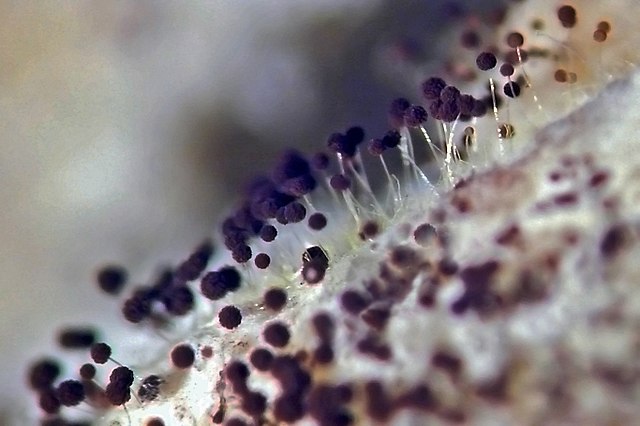
If I’m going to go anywhere, I’ve got to customize and control the environment I sleep in, at the very least. Sleep is when the body does its housekeeping and cleanup; it’s as if all the doors and windows are thrown open and the sensitivity gets turned up to 11 — any bad stuff that goes in then, goes in much more and makes things worse. The regular cleanup gets interrupted. It all becomes more crisis-manage-y than housekeeping-y. As you can imagine, in hyper-reactive systems like the one I have, that’s a real mess.

This has been creeping up on me for awhile, and I’ve blithely ignored it because gee freaking whizz, isn’t there enough going on??

I just need a moment to process this.I had to give up a visit to friends this week, because my immune system crawled into the blender and hit “frapee”. (I’m nursing a charming case of stomatitis with both canker and cold sores; my lymph nodes are creating topography a bit like the bumpier parts of Death Valley; and I’m having all visitors stay fully masked with windows wide open, because I’ve got nothing to fight off further pathogens with.)

Because I gave up that trip, I get to sit here and think about what a non-delightful level of fragility I have to plan for as I go forward in my life.

So, on the one hand, this is great information and I clearly need to know it, in order to avoid making myself sicker.
On the other hand… Oh FFS, life! Really? — I mean, really?!?

When I’ve gotten the particle-board in the kitchen coated, I hope that will buy me a couple of years of being able to stay in my adorable little flat without further toxic exposures. I’m benefiting hugely from this stability, and the location can’t be beat. I love it and I’m grateful. With the semi-permanent fix in place, I can probably recover quite a lot of the ground I’ve lost — although of course there’s no guarantee, and the best-case scenario involves many months of recovery and being very careful about avoiding other toxic triggers for a couple of years, until the mast cell “bucket” can drain.

Thanks to the diligence and care of my 2 new helpers, this is an attainable goal. Pheee-yew!

Beyond that, I’ve got some thinking and learning to do. I may revisit this subject of controlling my environment while on the go, when I have anything useful to say. 

Update: using adaptation tools

Yesterday, it came naturally to be warmly present for V during a big event where I stood in for her, even at a distance of 3,000 miles or so. Gotta love technology for that!

Today, I think of D and the anticipatory grief is like a warm finger of current, pulling at me without tearing at my core or dragging my mind away. He’s here now, and everyone who cares about him is working on a graceful last chapter to his intense, vivid, improbably well-groomed life. (Yes, he’s quite a character!)

This recovery is not all perfect: after yesterday’s 8-hour social endurance event (a physical and physiological experience piled on top of a very neurologically demanding week) I woke up this morning with a pure dys-autonomic experience I haven’t had in a very long time.

On the very cusp of waking, as I first became physically aware of the real world, my body’s temperature-regulation mechanism dropped off the rails.

I suddenly got intensely cold, that bone-deep cold that makes the smallest touch of air feel like knives. Imagine full-body Reynaud’s, with added concertina wire. It’s amazing how cold my skin suddenly gets to the touch when this happens, after feeling just right at the moment I started to wake.

So, I did what I learned to do 10 years ago, when the dysautonomia really kicked in with this: I pulled my down duvet completely over me and tucked in every gap, wrapping it right around my head, and constructed a little tunnel just big enough to breathe fresh air through. (Fresh air seems to speed up the recovery period.)

Nothing I can do after that but wait for it to pass, as my regulatory thingies come to terms with being awake instead of asleep (one autonomic function) and being able to be at the right temperature (another autonomic function.) I know that it will pass, while my system creeps toward wakefulness.

Big shrug. The Nasty Cold Snap hasn’t been part of my day in a very long time, which is good!

This just goes to show that the physical/physiological impact of these flows of stress and anguish isn’t negated. Expecting that would be unrealistic.

They are manageable. That’s the point.

Doing those “brain first aid” things makes handling the weighty, current reality bearable. That means I’m still capable of several important tasks:

  • I can bring my tips and tricks to bear against the physical effects of this illness.
  • I can think my way through ordinary (to me) problems.
  • I can remember that things pass: the Nasty Cold Snap will pass, as the mental shock passed, as even terror passes when it’s allowed to.
  • I return fairly quickly to my normal frame of mind — which beats trauma-brain all hollow!

There’s still a bit more physical recovery involved, mostly giving my systems a chance to finish returning to their normal function and easing up on the extra weakness, reactivity, and pain.

But, basically, I’m OK. I’m able to show up for myself and my friends. That’s what it’s all about.

My point (and I do have one) is…

The skills I learned in psychotherapy really work when I use them, and I’m so relieved.

I want to make the point that psychotherapy is not “just like talking to a friend”, because our friends don’t need a graduate degree to be our friends. Psychotherapy is a professional-level, highly customized form of care, even if it feels relaxed (creating an environment where you can relax is one of the skills of a good shrink.)

Nor is it a passive process; the skills and concepts only work if you work them. It’s good to be heard; that said, it’s also good to remember that real healing involves relevant changes. The fun (??) part is, in medicine, we may influence the changes but there’s a significant random element involved in them; in psychotherapy, the client steers the whole process. While being an active, involved patient can improve outcomes in medicine, being an active, involved client does improve outcomes in psychotherapy.

So, there’s the core message behind this 2-part series, part of the ongoing “what works” toolkit. Psychotherapy works, when done properly and used diligently. Just like any other kind of care. It’s not magic. It’s skills.

Adaptation tools in use

As some of you know, CRPS & dysautonomia involve constant re-traumatizing of the brain & nervous system. Our brains have flows that can resemble that of people living with domestic violence, because the CRPS itself keeps waling on us physiologically, in the same way people who get abused are waled on physically and emotionally.
Old amber-screen lettering showing *TILT* like on old pinball machines
This is why psychotherapy is part of the gold standard of treatment for intense chronic pain generally, and CRPS particularly: it takes good, highly specialized training — and ongoing coaching — to keep re-claiming and re-training the brain, so it can climb out of the being-beat-up mode and stay in the this-is-what’s-going-on-right-now mode.

Since I take the view that “whatever it takes, I’ll do it” is the way to work with such an intransigent, mean-spirited illness… I’ve naturally been persistent about holding to the gold standard of treatment, and working hard to implement everything that works for me. (Let it be clear that, just because that’s such a nice pat sentence, it is a hard road and a lot of work. Sisyphus thought pushing the same rock up the same hill was a lot of work? He should try claiming & holding ground against pain-brain.)

I’ve had tremendously capable psychotherapeutic teachers & coaches, and my present providers are over the moon for me. I tell them, “Gee, it’s like this stuff works!”

***

It’s graduation season in this college-rich area, and there are a lot of transitions taking place. I had a glorious week of family visiting and more social time than I’ve had all year. It was lovely and absolutely wonderful… yet, for a dys-y system, it’s still a lot of work. Big emotions, even good ones, trigger big neurotransmitter flows and that takes managing.

Yesterday, I got set straight by a friend I’ll call V, which was terrifying (really don’t want to lose that one) but the relationship will be better for it.

Big emotions kick out dysautonomic systems, so I started up the brain-stabilizing routines. Cool.

Then, I found out that a friend I’ll call D had nearly bled out last week and was currently in the hospital with massively metastatic cancer. He was diagnosed with limited cancer right before the first Covid-19 lock down. You know what happened with hospitals after that.

So, because he couldn’t get any treatment when it was treatable, he’s now faced with pretty horrific options and chose to go for comfort care for a very short life rather than horrendous chemo with a poor outlook anyway. He was an extreme athlete and had a rough life as a wee wiry guy in the city, so pain is no stranger, but at his age, it starts looking stupid to chase more discomfort.

Because of wacky human stuff, we hadn’t spoken in quite awhile. I’m glad we couldn’t see each other during the call because I know I was crying from the first sentence he spoke, and I suspect he was too. He’s a live wire & a cheery sprite by nature, and he made me laugh before I made him laugh, so I’m happy to say he won that round. We sorted out some heavy material and he said very nice things that were good to hear.

After that conversation, my usual brain-care toolkit was useless.

The first thing I do is, “don’t rehearse, replay, or dwell on it.” This is because that’s how trauma-tracks get laid in.

The more it replays in the mind, the deeper the distress gets planted. So, whatever it takes to prevent another topic of PTSD from getting laid in, is what I do.

I do come back and evaluate the experience for lessons a little later, but first… got to let the flaring, blaring intensity wash off before it stains, so to speak!

When the anguish of 2 perilous-feeling conversations, atop a beleaguered and recently worn brain, keeps roaring back, my usual low-key books/ shows/ audio/ doodling distractions aren’t enough.

I sat back and reached for a thought I’d had recently. There’s nothing more stabilizing for those who can do it than… what was it again?

Activity. Bilateral activity.

In my case, taking a walk.
Walking cat,distorted with closeness while coming at the viewer
So, with my phone reading me an audio book at the same time (clever, right?), I pulled on appropriate garments and got my wobbling butt out the door, one foot after another.

Blaring replays started up often, but I’ve had practice with this technique, and I reminded myself that *now* I walk, breathe, and follow along with a silly story; processing events comes later, *not now.*

The blaring replays got quieter by the end of the walk, and by the time I was 2 blocks from home, I could just about bear to be in my skin again.

The combination of bilateral activity (walking, wheeling, and most forms of warming activity qualify) and the distraction of a plot to follow combined to get me through the first stage of harrowing. Yay!

I followed up on a task I’d committed to for V and meditated briefly on how to follow through on family notification for D, a task that couldn’t go further last night.

The first task wasn’t executed perfectly, but I saw the error almost immediately and rectified it.

The second task, the one for D, has yet to be tried: there’s no good way to tell someone their estranged, love-hate sibling is dying, but of course it must be done and it’s not my job to try to be perfect in an impossible situation, it’s my job to be an honest, kind, and diligent friend to both of them.

So, today, once my pills are down (i.e. in a couple of hours) I’m going to the Y for non-weight-bearing exercise (because there’s only so much walking my hips and legs will tolerate) and then do something involving lots of colors (either drawing or crochet) afterwards, while listening to another story… and waiting for D’s sibling to call, so I can relay the dreadful info.

Update:
D’s sibling called, took the news with love and tears, and we conferenced in D for an agonizingly beautiful conversation. Older Sibling being lovingly overbearing and Younger Sibling trying to keep one foot in what’s really do-able, with me occasionally calling time or translating across the gaps, felt very normal to me, even though it’s not my family.

Some things are just human.

So I’ll keep breathing. And drinking lots of water. And taking extra vitamins, because this kind of stuff sucks them right outta me. (Truth to tell, you’ve only heard half of it. It’s been quite a heckin’ week.)

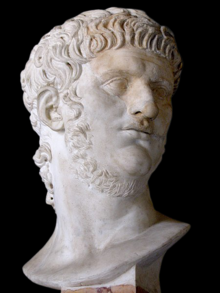
I can see the point of fiddling as your own city burns. Wait, I mean, Nero was a hot mess and a dreadful person to have in charge, if the legends are true.

The point I’m striving (awkwardly) to make is that arty activity calms and settles the mind, so that even devastation is less all-consuming.

I think today is a colored pencils day, or possibly even crayons. Crochet takes more thought, and I don’t want to hold myself responsible for that yet. Besides, my arm tendons are acting up, so crochet isn’t wise.

Update, Part 2:
I think I’ll take some crayons to the gym. Is that allowed? XD

Feelings pass. It’s what they do.

New normals emerge, and we learn to live with what was once unthinkable.

Adaptation is a big job sometimes, but, well, here we go again.

Low-histamine shopping list and recipes

Ladies and gentlebeings, here’s what I’ve come to after a 6 month period of, firstly, a strict diet of tapioca, carrots, butternut, apples, and chicken; then, careful reading about *tested* foods on *living* humans, plus extensive empirical testing on my own particular system. The fruits (, veg, herbs, and meats) of this work lies below. Foods that I currently remember as improving the histamine picture have a +.

Note: I’m focusing on what I *can* eat as part of a low-histamine diet. Where my diet is restricted for other reasons, I say so, in order to point out where there’s obviously something for others to explore.

I don’t mention higher-histamine foods nor do I go into the details of what makes a food low-histamine (which can involve mast cell triggering, histamine levels within the food, salicylates, non-food triggers that raise the background level of reactivity, whether fermentation or aging is inevitably part of the process – as with beef – and so on) because that’s a whole ‘n’other article, and a bit beyond my bludgeoned brain at the mo’.

Caveat emptor: we’re all a bit different. This is why empirical testing, tracking results for yourself, and being able to notice when things change, is so important. My list is basically ok in principle, but it won’t be right for everybody, and may not even be right for me in a couple of years.

Besides “everything organic” and “everything fresh”, the third leg of this mow-histamine diet is “everything freezable frozen”, because leftovers and meats start making histamines real quick. So, freezing and then defrosring in the microwave is the only safe way to go with yhese things.

I let stuff that’s fresh off the stove or out of the oven freeze up on the top shelf (usually atop the “buns” box) and then move it to its rightful place:

The magic lists

Everything, absolutely everything, is super fresh and organic. This is part of the deal with low-histamine foods, and I’m ever so grateful that it’s possible right now. (Thank you to the federal SNAP/Food Stamps system and to HIP, the produce-enhancing state funding system for low-income people, plus an outstanding local farmer’s market that works with these programs!)

Produce:

    • +Apples, fresh local low-spray or organic (by low-spray, I mean they get sprayed twice, once when the buds set and once when the fruit sets. I find I tolerate this just fine, as long as the apples aren’t sprayed for storage)
    • Fresh cider, UV treated to impede fermentation (when I’m not frail)
    • Blueberries, wild
    • Cranberries
    • Peaches, when not frail
    • Plums, most kinds, when not frail
    • Cherries, when not frail
    • Mangos (not bruised)
    • Spring onions (some people are good with sweet white onions but not spring onions, and some can’t tolerate any onions, so YMMV)
    • Garlic heads (as above)
    • Sweet peppers (I find red bells and bullhorn peppers easiest to digest)
    • +Asparagus
    • Cauliflower, if good (no black or yellowed spots)
    • Soft/summer squash: marrows, zucchini, yellow crookneck (scoop out seeds if currently fragile)
    • Different squash: delicata, pattypan (seeded as above)
    • Beet greens
    • Radishes (which I like to steam)
    • Celery


    I can’t eat leafy cabbages because my fragile thyroid poops out if I do: mustard greens, collards, chard, bok choy, napa, savoy, radicchio, kale, green and purple cabbages, and other winter-harvest yumminess! Check them out for yourself, as long as your thyroid and gut is up to the job.

    Protein:

    • Chicken, turkey, pork, lamb (frozen straight off the block; another farmer’s market item here) (NOT ground: that generates histamine, possibly from the extensive cell damage)
    • Eggs (from scratching, soy-free hens)

    I can’t eat lentils, beans, or peas due to gastroparesis, but you lucky so-and-sos who can might want to read up & experiment to see which ones are ok for you.

    Lipids:

    These have to be fresh and not have any whiff of rancidity. Since all my food is fresh now, these and my protein sources are my only source of lipids for my brain and spine:

    • Olive oil
    • Grassfed (or Kerrygold) fresh butter, not raw
    • Avocado oil
    • Drippings from cooking meats, frozen right out of the pan. These are *wonderful* for cooking veggies with!
    • Coconut oil (when not frail)

    Carbohydrate rich:

    • Rice (plain whites, basmati, or jasmine are all ok for me; brown and sweet rice are not for frail times, but ok in small doses at other times)
    • Sweet potatoes, any kind but Japanese (which I think I did to myself by eating them too often at one time! Darn it)
    • Tapioca/yucca/manioc, same vegetable; fantastic for a sluggish gut & delicious made with apple cider
    • Farmer’s market honey
    • Sugars: panela, jaggury, coconut (all of them unrefined & mineral-rich, so YMMV)
    • Beets – with greens (I use the stems to flavor soups and I steam the greens or drop them on top of a batch of stir fry; delicious!)
    • Carrots, lots, as they go with everything
    • Broccoli
    • Parsnips, if I’m not currently frail (they’ve got such good nutrition I keep them on my shopping list, but they’re the first to go if I’m not up to the mast impact)
    • Celeriac
    • Hard/winter squash: butternut, acorn, kabocha (NOT pumpkin or spaghetti squash)

    Rice is my only grain. Some do ok with sorghum or buckwheat or some other things, but it’s hard on me in anything but small doses & when I’m not reactive.

    Flavorings and spices

    I can do, almost all fresh:

    • Parsley
    • Basil
    • Dandelion greens
    • Cilantro
    • Sumac (this is dried)
    • Bay leaf (dried)
    • Rosemary
    • Sea salt
    • Mined salts: Kosher, pink salts
    • Garlic
    • Ginger
    • Turmeric
    • Cedar sprig (fantastic when cooking chicken or buttered black beans, not that I can eat the beans any more)
    • Cumin (when not fragile)

    Here’s the fun part…

    Recipes

    The web is international, and I try to work with that 🙂 Please be aware that, as my cooking was learned in US-origin households and restaurants, I cook by volume rather than weight. Measurements are noted accordingly. (I’m aware of the flaws in this system, so I use recipes that can accommodate the “fudge factor.”)

    These are much-loved ingredients I make ahead:

    “Ginger Fabulous”

    I almost took a picture of this, but it just looked brown on camera. It’s lovely earthy honey-colors IRL.

    • Peels from 4-6 apples (may freeze ahead)
    • Ginger x6-8 thumbs (a bit bigger than my smallish thumb, anyway)
    • Farmer’s market local honey, ~1/2 cup [120 ml]
    • Sugar (panela or jaggury for me; light brown or raw is probably good), same volume as honey
    • 1 pint [500 ml] cider
    • Optional: Dash of clove, if you’re ok with it

    Slice ginger to 1/8″ or less.
    Chop apple peels to about 3/4″ segments.
    Put everything in a good pot.
    Simmer until all the ginger is translucent, usually ~ 1/2 hour.
    Let cool.
    Try to keep enough for later; I find it hard to stop taste-testing.
    Uses:
    Use as is for preserves, or process/blenderise to rough texture for marinade, jam, or even hot drink if you don’t mind a bit of dessert in the bottom.

    “Super Greens”

    Here they are mixed into buns:

    • Parsley x6-8 bunches
    • Basil x3 bunches
    • Dandelion, Italian/less bitter (has spikier leaves), x1

    Chop parsley and the leafier part of dandelion greens to 1/2″ lengths.
    Pick basil leaves off stems and chop a bit smaller than that.
    (Wrap the stems in foil and keep in freezer for flavoring soups, as their flavors cook down delightfully.)
    Throw it all in a processor and chop very fine. (I have to go 1 head of parsley & equivalent of others at a time, because my processor is not that big.)
    Package up into ice trays, or in foil or paper by ~dessert spoon or ~50 ml sizes and freeze.
    Uses:
    1 of these dresses 2 to 4 scrambled eggs or omelettes, depending on taste.
    I take a batch and mix it with softened Kerrygold/grassfed (not cultured!) butter, to a ratio of 1 butter : 1 pressed-down greens by volume, and beat well into a super healthy spread. I refrigerate enough for a few days and freeze the rest. Way more yummy than something this healthy should be!

    “Isy’s elf-rising flour”

    This recipe is taken from alittleinsanity.com, but I removed the xanthan gum, use non-fungal risers, and make with organic flour ingredients. Its ingredients are friendly to systems dealing with inflammation and histamine problems. It makes buns, quickbreads, and muffins very quick & easy to put together. (I haven’t tried it with pancakes because I can’t limit my intake of pancakes sufficiently & don’t like to feel that sick, so doing without is my best bet rn.)

    This recipe uses weights because, for the most part, the ingredients are often packaged in these sizes so you just dump out a bag of each. Easy!

    • 24 oz [0.7 kg] brown rice flour, fine
    • 24 oz [0.7 kg] white rice flour, fine
    • 24 oz [0.7 kg] sweet white rice flour
    • 20 oz [0.6 kg] tapioca flour/starch (same thing)
    • 2+1/2 [37.5 ml] Tablespoons baking soda
    • 1 Tablespoon [15 ml] baking powder (I push this through a tea strainer to get all the clumps worked out. I abhor the taste of baking powder clumps)
    • 2 Tablespoons [30 ml] salt

    Blend carefully in a huge pot. I use both a paddle and a whisk, gently.
    Take the time to get everything *very thoroughly blended*.
    This makes a gallon plus 1.5 cups, or about 4 liters.

    Uses:
    This makes a forgiving dough, and will generally work out fine.

    2.5 cups [or about 750 ml] of flour will take:

    • 5 to 7 tablespoons[75-100 ml] of butter (maybe more; tell us if you try it?)
    • 1/3 cup [80 ml] liquid
    • 1/4 cup [60 ml] to 1/2 cup [120 ml] of sugar
    • Eggs, 1 to 4…

    If you use 1 egg per 2.5 cups of flour mix, it gives a texture suitable for scones or gf (American) biscuits.
    If you use 3-4 eggs per 2.5 cups of flour mix, it results in a soft, puffier texture with more volume, as for quickbreads [teacakes] or (American) muffins.
    Additions
    It adapts well: you can use water, broth, milk, or cider as the liquid, and can add as little as 1/2 cup [120 ml] or as much as 1+1/4 cups [300 ml] of diced chicken or Super Greens or wild blueberries – with or without some Ginger Fabulous – and still get a wonderful result.

    It bakes in 12-15 muffin tins (depending on the extras) at 350*F [175*C] for 16 to 20 minutes in my oven, or until there’s no steam in the scent from the oven / toothpick comes out dry.

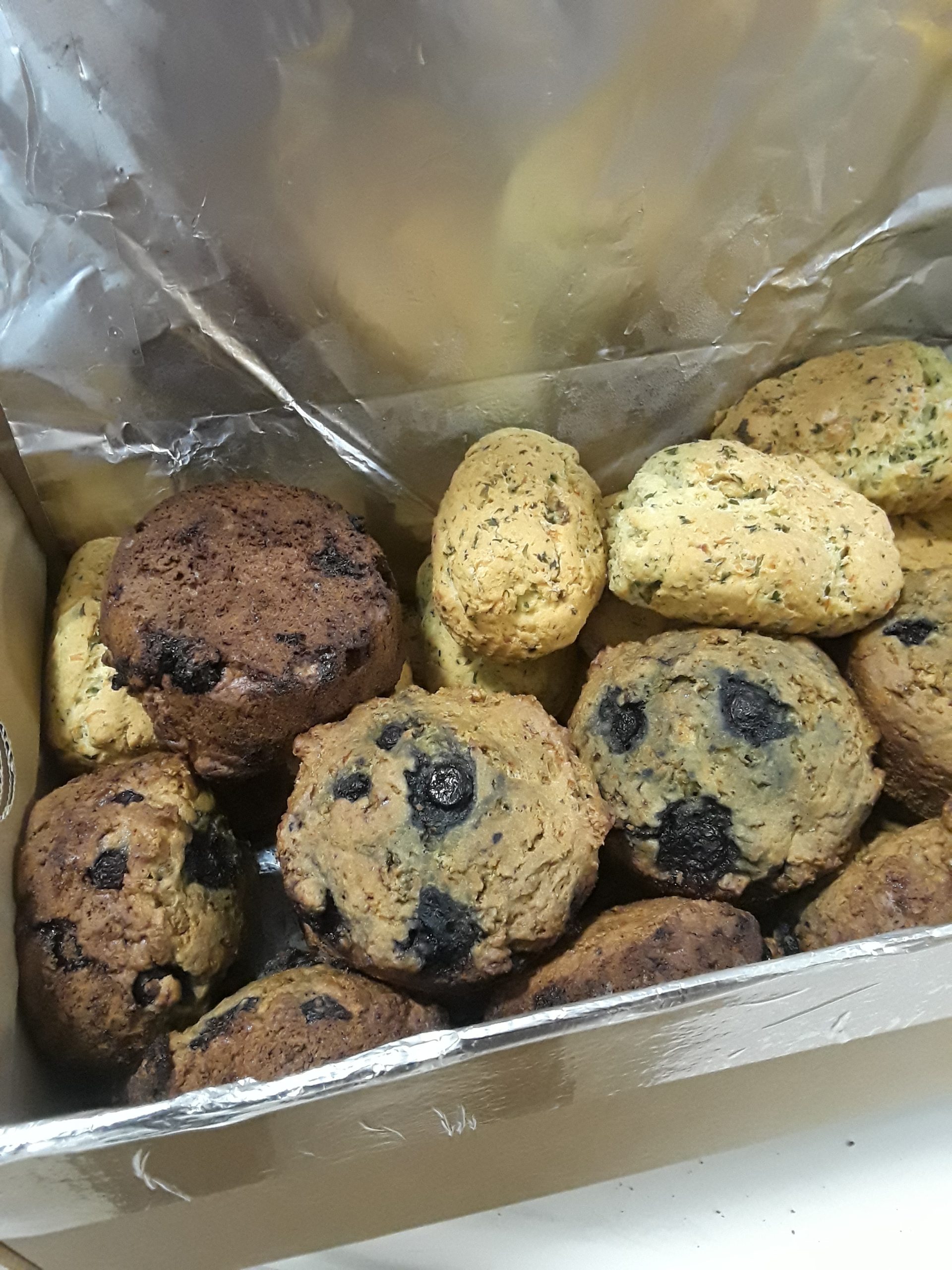
    Here are chicken buns & blueberry teacakes in their freezer box. Defrost & warm by microwave on low for 30 seconds on top and 30 seconds on bottom.

    I’m still working out a recipe for lembas, but it’s only a matter of time. Buns made from this are light & crumbly all right, and certainly very filling!

Excercise intolerance, the invisible vampire

I’ve been walking for 2 1/4 miles 6 out of 7 days per week for a few weeks, and it stopped kicking my butt, woohoo! I could come home and go straight into another task. This took awhile; at first, I had to lie down with my calves & feet up on a suitcase for a couple hours & stay down for hours except for bathroom breaks, then I just had to lie down for hours, then it went down to half an hour of horizontal time, and finally it was fine.

So I bumped it up — like a fairly well-informed patient– by no more than 10%, or a whisker under 2.5 miles. Today was the first day. I had to lie down for a couple hours, and moving at all is brutal. I move like a centenarian who’s been sucked dry.

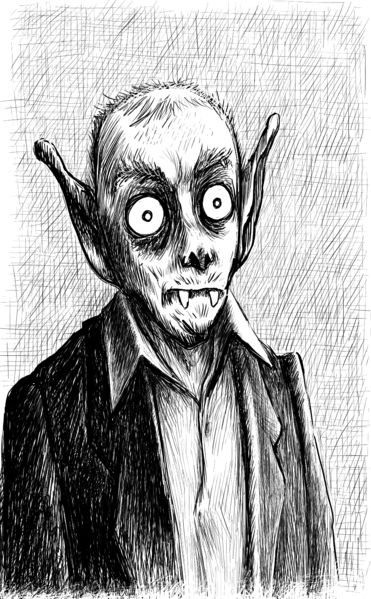
Dazed looking fellow with fangs
This outstanding cartoon is by JNL and is freely available under a Copyleft free art license

So, after realizing that yes, even though I can walk more than 2 miles, I *still* have excercise intolerance… I decided to look it up and learn more about it.

Further inquiry

You know me: I like primary sources. Doesn’t mean I always understand them, but I can usually glean the right vocabulary from primary science and improve my searches from there.

What a 1 hour scroll through the National Library of Medicine turned up today is that excercise intolerance is usually related to specific kinds of heart failure (already ruled out), certain profound lung diseases (definitely not), certain complications of diabetes (nope, thank goodness), and mitochondrial illnesses usually due to genetic variations that leave them struggling (definitely something I’ll check again, in light of this new info. I’ve got those geneticgenie.org results somewhere…) It can also go with POTS, postural orthostatic tachycardia, which I have a variable case of.

So what is excercise intolerance?

As I understand it currently, excercise intolerance means that, instead of excercise building muscle and oxygen-carrying capacity, exercise chews up tissues and reduces oxygen-carrying capacity.

Much like what happens when the vampires have been at ya.

Edvard Munch’s colorful take on vampiric prey, massively stylish as ever.

It’s very uncommon in the general population, and many people think they know better than to “believe in” it.

No wonder. It’s completely counterintuitive! How can excercise possibly make you weaker, sicker, and more broken-down?

Because some of us are just that lucky. Or something.

That which doesn’t kill me…

Makes me seem weirder and even harder to relate to.

It also generates inflammatory crap much faster than the impaired body can clean it out, which means more pain, more limited range of motion, and longer recovery time.

Yep, it’s fun to have! XD

It used to be that, once I broke the 2-mile mark, the only symptom I’d get after too much excercise was simply feeling like I’d had too much excercise, and a couple of Advil and a couple of good night’s sleep would take care of it. There *was* such a thing as “no more excercise intolerance”, and it was lovely.

I didn’t realize there were also such wide degrees of excercise intolerance. *This* doesn’t feel like I just did too much exercise and all I need is a little time. This feels like I’ve had an inflammatory surge, a mast cell activation episode, like my bones are charring gently, and like everything is about 10 times harder.

Now I know: Excercise intolerance can keep up! (Foul expletives mumbled under the breath.)

In the interests of data collection (and getting physician attention), I’ve pulled out my pulse oximeter and will check my oxygenation and pulse rate before, during, and after my walks.

Data! Yummy data! Nom nom nom nom. It’s not a cure, but it might help in the longer run. — Walk. The longer walk, haha.


New set of wheels

I walk everywhere I need to go. I finally tried the bus, and honestly, it could have been worse — but the base of my spine is still not prepared to put up with more than about a mile of that banging.

The problem with walking is that my legs are getting really good at “Burning Bones” — one of those trippy CRPS nerve games where it feels like the bones themselves are covered in & consisting of fire.

I used to wonder what burning bones were like and felt lucky for not having experienced it — and highly inclined to keep hammering massive doses of D3 to keep my blood levels in normal range. (D3 helps keep calcium in the bones & teeth, where it belongs, and prevents excess calcium from causing nerves to misbehave, among other things.)

Well, this clears *that* up! I know exactly what burning bone pain feels like now. But still, I’m well aware it could be so much worse: I just get little yellow flames, not big blue-based barn-burning flames. Those are definitely worse. I don’t know if I could keep walking through big blue flames.

Do I walk through the little yellow ones?

Go on, guess.

Shows woman flat on floor, with woozles coming out of her head
Creative Commons share-alike attribution license, credit livinganyway.com.

Carrying the bag I use as a purse adds a few pounds to the load on my legs, hips, and knees, and a bag or two of groceries adds about another 10-12, however carefully chosen they are for weight.

Plus, I’ve been slinging those from my shoulders — better than a backpack, which puts the stress right across the anterior nerve plexus for the shoulders, but — as we say about little yellow flames for bones — is, um, less than ideal.

I have tried every grocery cart conceived of in the last decade. The vibration on my hotwired palms is like hanging onto a working jackhammer covered in razorwire. (I don’t recommend doing that, however much you want to see what this is really like.)

I stared longingly at jogging strollers all year.

I designed my own grocery conveyance, priced the parts, and realized I had just designed a jogging stroller and it would cost about as much.

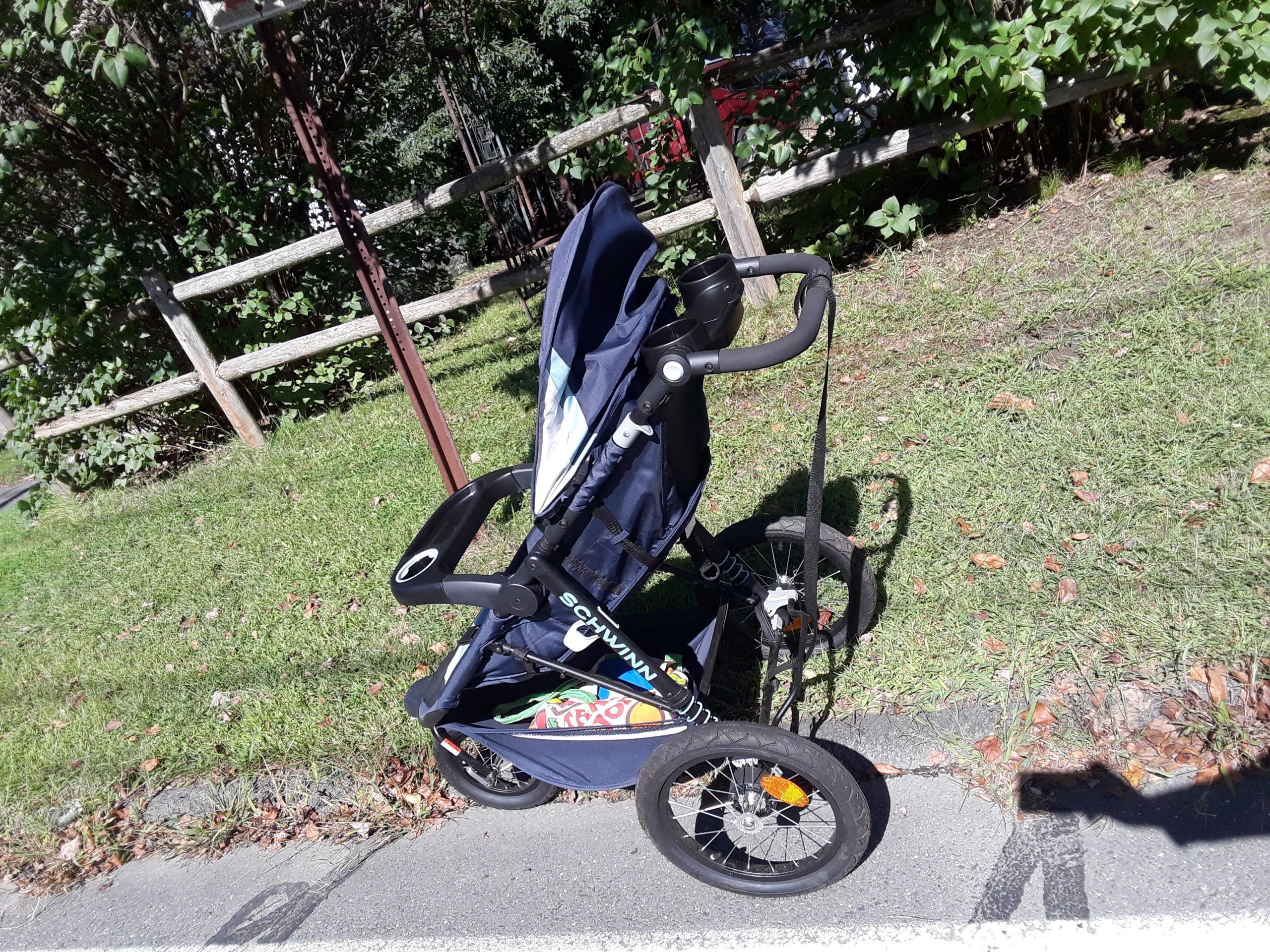
I haunted Craigslist and Freecycle for weeks, until an add for a Schwinn jogging stroller popped up.

Shows cupholder bracket affixed to handle of stroller

Is that a cushy push or what? ?

And, guess what, it has pockets! — I mean, cupholders! (Cupholders are definitely the pockets of non-clothing items, say I.)

For once, I kept myself from saying *just how much* this means to me and why, because who wants to hear sob stories, right? I handed over the very reasonable sum, thanked him 4 times but not nearly enough, and sailed away.

Even though my legs are starting up the burning bones awfully quick today, in every other respect I feel like I’m walking on air.

I can pick my own *groceries*! OMG!!! And *get them home* with minimal further damage! WOOHOOO!!

Life is good.

Thank goodness for that sweet family who let this go ❤, and for craigslist.org for linking our complementary needs.

Planning ahead

I’m getting an allergy panel in a month or so. This means I have to be off my antihistamine for 5 days before.

THAT means I have to start tapering off ~2 weeks ahead of time; 3 weeks would be safer, but I don’t see how to endure over 3.5 weeks total with that level of obnoxious symptomatology and brittle physical fragility. 

That said, I *really* want the data.

You might ask, “Why?” (Or possibly, depending on how familiar you are with the twisted satire that is my health record, “WhyTF?? Are you *crazy*??” As if you didn’t already have a definite opinion about *that*! ?) 

Well, here goes…

Flash back to 2013

Years ago, under the tutelage of a late & very lamented friend who Knew Mast Cell Stuff like I know the back of my hands, I finally (in 2013) did my empirical testing around whether mast cell & histamine activation-like signs & symptoms I was struggling with, would respond to treatment. 

Step 1: reducing & eliminating competing problems

I had already gotten excellent neurological & biofeedback training, which worked well for many things (Go, Pain Psychologist Dr Faye Weinstein! I got tremendous and lasting benefits from my work with her. Highly recommended. “Stabilize, stabilize, stabilize.”) While I had excellent results from the neuro stabilization, it didn’t make much difference to the allergies, a particular “flavor” of brain fog, food & digestion issues, or the usual allergy circus of itching facial orifices & random urticaria.

The histological issues persisted most obnoxiously. This was 9 years ago when the mast cell activation diagnoses were not as well developed, and at a time that, though I had access to an enormous pool of well trained doctors, I was already up to my hip-waders in the maximum number of appointments I was able to keep. 

What do you think? Pursuing testing and inquiry into a set of issues that were still widely considered to be a matter of hysteria? — For a middle-aged woman with pain diseases and 60 extra pounds of weight, do you think *that* would have been a good use of my limited time? 

Smh!

So, I went empirical on it.

Two methods of science: “empirical” and “scientific” method

Both methods are scientific, in that they require diligent examination & limiting of variables as well as testing, retesting, and recording results accurately. 

(But hey, that nomenclature isn’t confusing, right? <eyeroll>)

It boils down to this: 

Empirical method: what works in this case in particular? 

Scientific method: what’s generally likely to work in many cases?

The empirical method of science is brilliant on a case-by-case basis, there’s nothing better; but avoid making assumptions beyond that case. The scientific method of science depends on hundreds, ultimately thousands, of cases, and from all those together, it generates statistical probabilities about what’s *likely* to work under certain circumstances as a general rule. It’s much more widely applied, but explicitly *not*  individualized.

This is why, as someone dealing with multiple rare issues, I test everything ~3 times on myself before deciding if it’s a good idea for my particular situation.

Now the next section will make more sense.

Right med, right dose, right time

I tried several antihistamines to see which one helped me the most. 

Then I experimented with dosing to see how much it took to get me functional most of the time. 

Then I experimented further with once-daily dosing, or dividing the dose in two and taking it twice daily. It had better results (and no “oog” feeling) if I took it twice a day.

In the end, I wound up on one of the top 3 meds for mast cell/histamine issues. I also wound up at the common dose for those with a solid case of Mast Cell Activation Disorder. (The twice-daily dosing was my own special twist, but I’ve since learned it’s not that uncommon among “masties”, as people with mast cell dysfunctions refer to themselves.)

Without any further ado, my doctors added MCAD to my list of diagnoses.

(As with every med and supplement, I continued testing it every 6 months or so, backing off the dose and looking for the minimum effective dose, but stopped doing this because of … we’ll get to that.)

But, frankly, a differential diagnosis doesn’t yield enough info to change anything causative. If I can nail specific allergens — or culprits — and receive treatments that can actually reverse this ghastly crap, that would be *great*!

So, I really want the data.

Histamines & tendon problems

I stopped trying to cut down on the antihistamines a couple of years ago, because I couldn’t bear any more injuries that threatened my mobility.

“Mobility? Huh??” I hear you ask.

One of the things the antihistamine helped with was tissue-tearing. I didn’t expect that, but was delighted not to be twisting my ankles on uneven ground or sudden jumps away from traffic, then having to crawl or scoot home because hopping on 1 foot when your tendons don’t work is a terrible idea.

As I thought about it, it made sense though…

Histology review:

Q: What happens when your histamines are active?

A: Among other things, inflammation in and around your cells.

Q: What happens when cells get inflamed?

A: Among other things, cell walls get weak and leaky.

Q: What happens when connective tissue cells get weak?

A: They tear more easily. 

Ah hah!

So, yeah, maybe MCAD could weaken my connective tissue after all — especially because, for one thing, I started out hyperflexible, which is a setup for these kinds of problems; and for another thing, the fibrosity of fibromyalgia has made my connective tissue more brittle & easier to tear.

Ducky! Another hat-trick! ??

Back to the testing

This is the test where they put a grid on your back and scratch or inject tiny amounts of different stuff into your skin. In about 20 minutes, whatever you’re going to react to should be a nice hot ruddy lump, technically a “wheal”. 

For this to happen, your body has to have nothing interfering with histamine reactions — in other words, no anti-histamines.

Since the antihistamine I wound up on has a long half-life, I have to be off it for 5 full days before testing.

Prepping for the test

Because going from full dose to no dose means I can barely get out of bed safely (see “Histamines & tendon problems” above), I have to taper down. I’ve done this before, usually to eke out my meds when my supply is running late. It’s familiar territory. 

Experience tells me that:

  • I have to taper at a rate of no more than 12.5% of my daily dose at a time.
  • I’m best off (in this terrible sitiation) stopping for 3 days at each new dose before the next step down.

This means that it would take 20 days to taper off to 0 (shorting the last step to 2 days instead of 3) *and then* 5 more days at 0.

Doing this with tissues crying, “Go on — tear me!” And every bite of food, breath of air, bit of furniture, bump in the sidewalk, or tussock of grass all giggling in evil tones (so to speak), eager to hear my muffled yells.

Yeah. Tasteless spoofing aside, that’s not a great situation to spend 3.5 weeks in.

Then, of course, as soon as I can horse down my meds again, it’ll be several days before I qualify as human.

Then, about another 1 to 3 weeks before I get back up to baseline function.

My Halloween costume will require very little makeup for me to pass as a zombie, so that’s one bonus.

What a month-and-a-half to look forward to!

Is all this really necessary?

Well… I really, *really* want the data. If this is at all reversible, wouldn’t that be worth a few weeks of howl-worthy endurance?

Obviously, yes… but I don’t think I could keep at it for over a month. I’m good at enduring, but I’ve got hard limits.

I really, *really* want the data.

Managing towards the best possible outcome 

My doc prescribed me some prednisone to take in order to avoid winding up in the hospital over this. I look at the results of my last round of prednisone — the change in my face and the truly shocking stretch marks (which made my dermatologists blanch and leap back, no kidding) — and I consider this truly last-ditch stuff. Beats nothing, I guess. It might keep me out of our ER.

There are dietary issues to consider. (What follows is a brain-dump from my years of querying doctors and reading, as well as my empirical food testing.)

Food matters: boost the signal

I know that the system being tested (mine) can respond more truthfully if it’s familiar with the molecule being tested. For instance, I haven’t eaten gluten in years, so this test might possibly come up negative to that. 

Doesn’t mean that, the next time I walk past a bakery without my mask on, I won’t get an itchy swollen throat and everything won’t turn white for a bit, it just means my body had enough of a break to stand down, and will need to re-arm.

With that in mind, I might grab a couple of saltines before I go in. If I could calm the gluten circus enough to just be safer walking around, that would be awesome.

Food matters: reduce the noise

I’m getting off the aged and fermented food, because that makes such a dramatic difference in my pain and swelling. This includes seafood and beef and anything packaged (look up what creates histamine in food).

Despite that, I’m making exceptions for things which I want to make sure my body has experienced in the month before testing — nuts, bananas, stone fruit, fish, grains in addition to glutinous ones, even beans — although that’ll be a period of gastroparesis hell, but this system must not be “bean-naïve” for the test.

Because I really, *really*, REALLY want the data. This is the kind of info that could change the course of my life for the better. 

For that, I can get through some serious struggle. 

Ramping down steeper

I’m going to go down 12.5% of my dose every 2 days, instead of 3. This will shorten the ramp-time to 2 weeks. Recovery might be a little longer, but I can maintain attention on what I’m doing this for, for that length of time. 

Until then, I’ve got a lot of cooking to do and a freezer to stuff with things that 

  1. Won’t hurt me more than absolutely necessary, and
  2. Will include exactly what I think I need to be exposed to, to maximize the value of the test. 

If you’re in a similar situation, remember that your mileage may vary. Ask your own docs, and then ask their nurses the same questions.

The differences in the answers tend to reflect the wholism that nurses work with, a nitty-gritty pragmatism that rounds out the more optimistic notional-ness that doctors can succumb to. Both views matter.

For only the second time in my life, I might do actual menu planning. I’m usually more of a “what’s fresh? What’s cheap? What’s safe? What’s appealing? Throw it in the pan” kind of cook, but that takes brain. I’d like to insulate myself from a potentially very brain-free near future and reduce my frustration over the coming month. Having easy-to-grab, safely frozen meals sounds fabulous.

Here’s my plan…

The grocery order just arrived, so if you’ll excuse me…

When momentum uses inertia

Wizard, with hat and staff, standing next to text of Tolkien quote.That last post, about acknowledging the shimmering sense of mortality I’ve lived with for nearly a year? Well, I kept meaning to post an update, but I’ve been having too much fun making progress elsewhere, and simply dropped the ball. I often think, “oh, I should post that on my blog,” and then – pain diseases being what they are – when I shift context to hop online, I’ve forgotten what it was and quickly get sucked into something else.

At the risk of using terms improperly, I found myself explaining this normality of painee existence as a sort of “acquired ADD.” As it happens, our brains get changed in the same places and pathways that ADD brains live in, so that our scans look amazingly similar. Those ADD-like symptoms are definitely not imaginary. I have found myself using adaptations very much like those I’ve read about in some of the terrific books on ADD. I recommend reading up on it. There’s a ton of helpful material on how to manage with and work around these attention issues.

I miss blogging. So, I hope to automate (or at least simplify) moving information here from social media. There are still interesting questions to answer, and I think that useful info we generate in pain groups should find its way to a more stable, searchable medium.

I have been sinking into this life, having acknowledged that inward message about its likely brevity. I’ve been here a year, and love my little flat more and more each day. I’ve been rearranging, creating more usable space within the same square footage. It’s delightful!

I keep the picture that reminds me of those who made this happen over the decorative fireplace, where it looks wonderful, and send grateful thoughts to its source/s – even when reaching out in real life only creates confusion and misunderstanding. We humans generally, and painees particularly, sometimes realize we don’t control how others receive us, but we can steer our own thoughts. So, I maintain this practice of gratitude, because that’s who I am and always have been, and wait for better times.

More health problems? Certainly! I will write about the gastrointestinal circus another time. I’m currently working on digesting a drink of water, and I’d prefer not to think about it until that’s done. This is the big, hairy, stinking follow-up to the first sign of trouble nearly 2 decades ago, which I wrote about (with disgusting toilet humor, inevitably) over at the post Intestinal Fortitude.

Apart from one misunderstanding and that additional body system, this life is amazing. Bit by bit, I’ve been getting a broader pool of professional and personal help and support. Bit by bit, I’ve been coming up with adaptations that bring more art, craft, and productive time into my weeks, although I have to be careful (of course) about changing tasks and changing position and managing time better than I really want to. For instance: “No,” I had to myself yesterday evening; “you don’t get to finish that row of adaptive crochet! I don’t care how pretty this is, or how soft the yarn. These helpful tools only improve my function, they don’t correct the problem! Put. The yarn. Down. Thank you.  Now go do something else.”

So I did.

And then I treated my right forearm with everything in my toolkit. And then I made myself promise not to pick up those tools for at least two more days, because that’s what it takes to recover when I’m forgetful enough to do crochet on a couple of consecutive days. Change those tasks! Figuring out a crafty solution is not as important as protecting tomorrow’s ability. Or even tonight’s. I can use myself hard, but I’m not allowed to use myself up. I don’t count on a ton of recovery time.

I’m back to using dictation software, in order to make better use of my arm time. The stylistic difference is clear to me, but it probably doesn’t matter. This is a good compromise to make, although it’s not necessarily an easy one. Dictation is a strange, slow way of speaking, and it forces me to think in chunks rather than in thoughts and words. But hey, it works!

Times are changing. Whether or not the current American president behaves any better, whether or not the next American president has the moral courage for fundamental changes, whatever, times are changing. My own possibilities are opening up, and I’m not holding back. I didn’t even know I was, but boy, things have changed since I stopped trying to eke everything out! I’ve got things to do, and I’m not waiting any longer to do them.

If I were more self-conscious, I’d throw in a bumper sticker-appropriate remark here. I’m out of ideas. I’ve got other things to do now. Maybe next time. Maybe. 🙂

Take care of yourselves. When you can’t, take care of each other. When you can’t do that, take care of your world. It helps.

Focus

There’s a lot going on.

My own health took a hard dive late last year and the damage continues to evolve…

…On top of an increasingly human-hostile political system and increasingly deadly climate.

Fun times.

So, yeah, sitting here on a big pile of crap. But that’s not the problem.

What really bugs me is this relentless, quiet, basso-profundo voice murmuring in the back of my brain, “Hurry up. You don’t have much time. You, personally, don’t have time to waste. Pick your focus. Nothing else matters. Get to work. You don’t have much time.”

I used to have a lot of projects running at once…

  • I didn’t tell anyone, but I secretly hoped I’d be able to run again. I used to run 4 miles up & down a canyon in the redwoods before work most days. It was glorious. Before that, on the other coast, I ran 5 to 10 miles along the banks of the river in Alexandria, Virginia, because it felt good and kept my head clear for work on the HIV ward. I ran from one place to another because it was faster than walking.
    Yeah. Well. Between dysautonomia screwing up my circulatory responses and adrenal glands, the tissue fragility of mast cell dysfunction vs. undiagnosed EDS offering to rip holes in my tissues again, and the recurring exercise intolerance, I can let that one go. I enjoyed it at the time, look back on it fondly, and intend to be grateful for that much.
  • I was going to start a business with a line of absolutely stellar pain creams I came up with. Seriously good stuff! It’s at least as good as the medical marijuana salve I used to make from top-shelf medical-grade bud — but totally legal everywhere! I was looking forward to getting that out to my fellow painees, doing some good and making some money. (Comment if you’re interested. I could be persuaded to sell my stock-on-hand.)
    Instead, I’m willing my recipes and equipment to a friend who knows people. She can get it out, and make more when that’s gone. Meanwhile, I’ve got a few hundred bucks locked up in the only exception to my “2 piles” rule for money: 1 pile (my paycheck) for monthly expenses, and 1 pile (an insurance account from the Worker’s Comp branch of the higgledy-piggledy US system) for treatment and survival. That 3rd pile, which belongs to the business and only to the business, is gathering dust. It might help her get started.
  • As regular readers know, I once hoped to make my own safe home to age, work, rest, and die in.
    The downside to owning a home is clearer than ever, and to a limited budget and limited body, it’s a disaster waiting to happen. That dream is dead, staked, burned, and the ashes are buried at the crossroads.
  • I love fixing sh-tuff. The dopamine wave is delicious. However… too many piles of sh-tuff waiting to be fixed, plus associated tools and supplies.
    I’ve donated, bartered, and tossed away more than I even knew I had to spare. So far, I don’t really miss it.

Months ago, I gave up all my arts & crafts except writing and drawing. (And making masks.) I came up with some chirpy sounding reason, but it was about clearing my agenda and narrowing my focus.

There’s something intense about that voice. I look back and realize I’ve been responding to it since before this GI crisis evolved. Thinning out my pursuits. Thinning out my belongings. Thinning out my life.

Narrowing my focus long before I could hear the words this clearly.

For awhile, I thought it was a symptom of wonky chemistry, as I’ve had to do that medication square-dance that people who need neurotransmitter stabilizers have to do now and then. Chemistry is pretty good in here now, and that voice is clearer than ever.

So, here’s what there is to work with:
* I’ve done a lot of writing and training.
* The biological-sciences part of my brain has kept its doors jammed open, despite all the other closures.
* I’m an honest enough historian to know how too many people have been shut out of the process of using their health care systems, due to gender, race, class, and lousy sociohistorical times.
* Me and my friends have developed some powerful tools for being seen and being believed.
* Also, we’re pretty delightful cartoonists. (Hey, it’s a great teaching tool!)

It might be time for all of this to come together. My mission, should I choose to accept it, is to “drive” turning all this into a body of work that can continue teaching, training, and translating between chronically & profoundly ill patients and the rest of the world, long after I’m gone.

I have only 2 jobs now: stay as well as possible for as long as possible, and craft that legacy.

It’s frightening to contemplate pushing everything else off my plate, but the experience of the past year has shown me, over and over, the peace and release that happens after.

I don’t have to find the perfect home, although I’d sure be grateful if it landed on me and sucked me right in. (I can’t pack myself up to move one more time.) I have to make this one work better, and get on with the rest of my life. I honestly don’t think I’ve got a lot of time.

But then, I’m not sure that’s the point. Maybe I just can’t focus on more than 2 jobs anymore.

Chaos theory

  1. As regular readers know, I’ve had an eventful life. The past 20 years, particularly, have been a circus of bizarre improbabilities, oxymoronic paradoxes, and irreconcilable conundrums. My life reads like a dystopian comedy, if your sense of humor is sufficiently twisted.

This is why I’ve got the category “imp-possible” going in this blog. It looks merely cute, but it has a lot of layers. Imps could be little devils, or little fairies, or little children. They emphasize the power of the small. It feels like the only power left. “Imp” also suggests the power of the unexpected.

As the current American president’s so-called “tax cut” comes home, the US Disability Income management agency, Social Security, has decided to trim costs in anticipation of their lost income: they’re cutting my pay, on the grounds that the Worker’s Compensation element of US health care paid me off for being hurt. Separately, they handed over a bunch of health insurance money so Medicare wouldn’t have to pay for my work-related treatment.

Social Security confused the two, and then added zeros to the left of the decimal, divided it by 12, multiplied that by the square root of Guatemala (I’m making this up, just like they did), slapped a bonus on it, and decided I make OVER $5,000 PER MONTH and they’re going to count 80% of that and dock my pay by ~$160 per month…

I’m allowed to make over $5,000/month? Where? How? Sign me up! But wait… huh?? You think I actually have $5,000/month???

Yeah, I’m confused too. (The payout was good, but not that good: I got a sturdy, 10-yr-old car and a year’s worth of rent in a clean, dry cottage out of it.)

That $160 is what allows me to keep my pain-cream-making gear & off-season clothes in storage *and* pay for my writing course at the 50% discount I negotiated with the teacher (I’m doing that course instead of buying books & music for a few months.) I’m not sure any of that counts as extra these days.

They said this would be (future conditional tense) reflected in my pay as of December 2019 (whaaaaat???)…

Either they’re as confused as the rest of us, they’re in even harder denial about which year this is, or they’re setting up to make the pay cut retroactive in case they decide that that’s in their best interests. Also, Social Security being who they are and the current US administration being who they are, this feels like the first move against our lifeline, not the only move.

… I’m sitting here speechless again. Happens every time I think about it.

This is on top of the brutal horrors of approaching winter (relentless agony, burning brain, incapacitating fog), no bathtub (CRPS’s disruptive surface effects creep up my legs and over my back and make my shoulders, hips, and right arm into bloated purple sausages wrapped in electrified barbed wire, with no way to push back), encroaching mold (which multiplies everything, including mast-cell hyperreactivity/disabling allergies, heart dysrhythmias, gut problems, and it adds respiratory diseases to the mix), and gastroparesis so bad that every other day I have to do a big ol’ — you don’t want to know. Trust me. Even I can’t make it funny.

My psychotherapist is savvy, sweet, and has that merciless faith in her client that the best of them wield like surgeon’s tools (yes, this is relevant, hang on through the curve)… I fell apart completely in our virtual visit and whispered in stricken tones, “I don’t know if I’ll make it this time.”

After acknowledging the depth and legitimacy of my feelings and recognizing my prior successes against staggering odds (she does know her job!) she encouraged me to see the breadth of creative possibility embedded behind, “I don’t know.”

I blinked, because that sounded pretty darned merciless, even for a top-flight psychotherapist. (Keep in mind that surgeon’s tools include, not just scalpels and silk, but electric saws and the sprung barbs known, deceptively, as towel clips.) She wouldn’t give up, though.

I agreed to accept that as a working hypothesis.

On reflection, that thought began to feel more like pre-2019 Isy, before my heart got ripped out and stomped on a little too hard by a few too many, and my system fell apart so badly in the storm of it. It began to feel more like the Isy who, 13 years ago at the start of the Hell Years, looked around at the absolute rubble & blasted mess of everything I thought defined my life, and realized someone was still there doing the looking, so there was still an “I” and I wasn’t done yet. It felt more like the Isy who made the term “imp-possible” a regular category. I didn’t know where that would lead me, but…

I didn’t know how to finish that sentence yet.

This morning, while listening to an audiobook that’s a romantic comedy about overthinky nerds (still relevant; hang on through one more curve), I used the toilet successfully for the first time in months, without having to resort to the apparatus hanging nearby for the thing I’ve had to do that I won’t tell you about. (It involves soap & warm water, nothing too ghastly.)

I use audiobooks to keep my brain from overheating. It gives me just enough to focus on that I don’t drive my thoughts off a cliff, and it’s not so intrusive or demanding that I can’t do ordinary tasks at the same time.

This one had gotten to a part where the author discusses basic chaos theory: chaotic systems (and I defy any biologist to come up with a more chaotic system than a dysautonomic human body with longstanding central pain syndromes) … where was I? Right. Chaotic systems tend to get more and more chaotic until a sort of tipping-point is reached and they reorganize at a higher level of criticality.

What the heck does that actually mean, anyway?? What do they mean by a higher level of criticality?

Partly, it means that a lower level of energy is required to maintain that state of chaos, even though it’s still a higher level of chaos.

And that (I thought, as I looked up at the equipment I was going without at last) meant that I could do more coping with less effort.

Once you’ve prioritized your needs hard enough and developed your adaptations effectively enough, it gets a whole lot harder to throw you off your game.

I can work with that.

The next level of chaos is here. I have no idea how it’ll unfold. That said, I’ve already reorganized at a higher level of criticality.

I’ll meet it somehow. I don’t know how. I’m still here doing the looking, so I’m not done yet.

In honor & memory of Ruth Bader Ginsberg.