With the kind consent of the friend mentioned, I post the following exercise in “radical presence”, or staying sane in spite of the craziness…
Bubbles of thoughts are rising through the viscidity of my mind, drifting from side to side, now tending one way, now tending another.
Feels like a relapse of that FUO (Fever of Unkown Origin, although there’re more vulgar interpretations of that acronym too) that looked and acted like viral meningitis. This time, I have a thermometer so there’s something I can document. It’s less than a few weeks after the first case, so this is not good.
So far, though, no vomiting!
Awesome! I prefer not vomiting!
While recovering (barely) from the first bout of this, I met with one of my excellent friends, the one who’s going to make decisions for me if I can’t make them myself. We first met during one of the most effective times in my life.
She spent much of the recent visit picking up after me, getting the tea I forgot, making sure everyone got fed — the ideal hostess, really. Too bad that was my job. I was a good small-party hostess at one time.
For obvious reasons, given her impending status as my health care proxy, I need her to be able to tell me how I’m really doing. There was a time when full anesthesia and industrial forceps were required to make anything that wasn’t kindly and flattering come out of her. She’d almost rather lose a limb than lose her manners.
So, testing the waters, I asked if she found me a bit daffier and more disorganized than I used to be.
I’m so proud of her. She gave me a somewhat verbose “kind of” … then gave me an eyeball-to-eyeball gaze of love and torture, which I’m pretty sure meant, “It shreds my being to see you like this, but somehow I have to breathe and keep going, and I promise you I will, no matter how hard.”
Such a friend can’t be described, only experienced if you’re insanely lucky.
I rarely look back. There’s no future in it. However, the memories I usually keep firmly in the rear-view mirror haunted me for days, as bright as if they were klieg-lit.
Teaching her to run effectively under the redwoods. She was a quick study, all right. I was getting sick, so the fact that she could lap me in less than a year is probably not something I should feel too bad about.
Trying very hard to talk her out of medical school, which I was pretty sure would embitter her extraordinary sweetness and distort her self-effacing diligence. In the end, it gave her mind and heart a stronger shape.
Researching and working together on user interface guidelines, which made most senior engineers effectively beg our blessing on their designs — as they should!
What it was like to ask my quiet, courteous friend a music question, and have her snap upright, point snappily to a chair, and snap, “Sit.” Then give lively, passionate, 20- to 40-minute illustrated lectures on music theory that enrich my life even now. (I did much the same thing for her health questions.)
On a related but more self-oriented tangent, remembering what it was like to keep over 230 threads of information going simultaneously in my head, switching threads from meeting to meeting and file to file. I tracked the early course of this disease by when the number of thought-threads went down. I was “laid off” when I could only maintain about 90 different threads in active memory. I was crushed by that figure.
Remembering what it was like to run through the redwood glen at dawn, the scenery and birds staging a daily spectacular just for me.
The last walk I took on the mountain tops, when every bit of exercise just made things worse, but I had to say goodbye to the wild open spaces.
This takes me back to my favorite motorcycle riding route. Bikes were the first great joy this disease took from me. Image by BoltSnypr from Wikimedia Commons.
The curling breezes change direction again.
The wasps are too quiet. I turn my head to follow them and warn them away, and the world seems to slip off its stand then right itself again, and the quiet singing in my ears rises to a sharp chord then slithers down again.
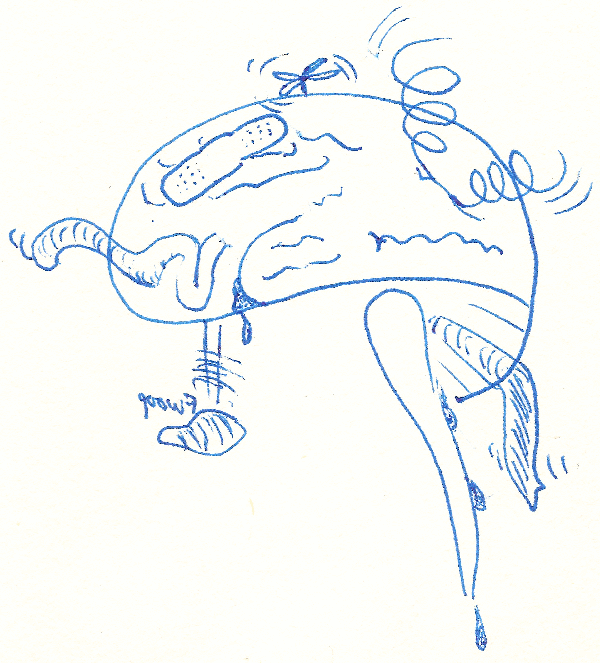
Having a frying brain is like living in a hallucination at times.
It felt like this looks.
This post is a little diaristic, but it serves a purpose beyond easing the pressure in my head. You’ll see.
The hundreds of little mercies that keep me going cluster around. The air here is delicious. The trees are fluffing their leaves in the curling breezes. J is quietly rattling around inside, scared in his ignorance of my illness and memories of losses, but keeping a good face on and making sure that I hydrate. The birds are mulling the possibility of rain, but it will hold off a few hours. The sun strokes my head with a long hand.
I breathe, and the world settles down.
A few days ago, I had a wonderful insight about the way that many bits of my past are getting referenced in the present somehow, and how, rather than highlighting my staggering losses, they fit together in a way that draws me onward.
That’s all I can remember, though. I think most of the ideas poured out of me last night as I sweated with the fever I forgot to document.
Even my brain is seeing double after all this fever time. Image by neurollero on flickr from Wikimedia.
Drifting first one way, then another.
Must remember to inhale when getting up. It’s the only way to keep my head from wanting to explode, and clutching it doesn’t really help.
Normally, a good idea like the past-reaching-forward-and-propelling-the-present would come back to me with sufficient prompts. Not the way things work anymore. Once it’s gone, that’s it, it’s gone. I’ve learned that the hard way, over years and years.
However, do I need to remember the examples and details? Or do I just need to remember that feeling of a rising tide lifting my weary, worried ass?
Just because I don’t understand how it all fits together, does it stop being real?
Medicine is real, neurology is real, and I defy absolutely anyone to say, hand over heart, that they really, REALLY understand those. Yet, they are real just the same.
I’ll allow myself to be carried onward by the memory of the idea, even if I can’t remember why it made sense.
For now, it’s time for more lie-down and seltzer.
Small moves. Just like steering a sailboat. Small moves get you where you need to go, without steering wrong. Now, seltzer. Later, rest. Then, we shall see.
Guess what? Everything’s up in the air, except me. But don’t worry, it’ll work out.
And that, folks, is how you know I’m back in the saddle. I’m not naturally a nervous person, but the years of system and systematic abuse on top of the fried central nervous system left me very nervous indeed. Every uncertainty was like a set of razor-wire boleadoras, ready to spin out and knock me over and tear me up.
Ghastly image, but very apt, as some of you know from your own experiences!
Of course, this slice of recovery is just well begun, not done. I’m simply able to reflect on possible futures without melting down reflexively. I’ll still have bad moments, bad days… and they will pass.
After all, there’s always an afterwards.
So, I’m 51 today, and I can honestly say I didn’t expect to see this day. You’d think my 50th would have been more reflective, but no, this one is.
I realized I’ve been blogging for 8 years, maybe 9. The first year and a half were justly lost in a Google flail, in the early part of the Pit Years. They were online journals, not blogs; the point of blogging is not to rip my skin off for reader amusement or “inspiration porn”, but to trace one path through the thickets we all have to travel, and trade ideas that help others find their own paths, or at least make them more bearable. (Tip of the hat to the friend of my youth who had the integrity to tell me she didn’t want to read my diary.) I’m more grateful for my readers, in all your kindness and struggles and brilliance and care, than words can ever say.
51 is starting with a bang, or rather continuing the same bangishness that has characterized this year so far.
I’ve found out I don’t currently have gall bladder disease, detectable spleen or pancreatic disease, or any form of cancer growing in my gut, just some “mild” gastritis. This leaves the question of what’s causing the rather extensive GI issues open for further inquiry. I’m going to see if I have mycotoxicity, which is looking very probable indeed, going on reactions and the fact that even the weirdest symptoms on that list are mine; going to find out if my body is able to respond well to a massage intensive (twice weekly for some months) or not; going to finish the final house repairs (as soon as the weather warms up long enough to let us not only recover from the cold but then get past the setting-up); and going to find out where we’ll go next, when the lovely house we’re living in sells. (My credit will age out of the worst black mark next year, so getting a house loan is simply a matter of time, with ongoing diligence. Not to mention knowing where to land.)
I’ve been reflecting on J’s unique mix of gentleness, brusqueness, flexibility, and intransigence, and realized how much he helps me in nearly every phase of his personality. (To misquote a capable yenta I knew, the holes in his head fit the bumps in mine, and vice versa.) I wondered how much further I could have come if he’d been there when I first got sick, or before I got sick. What great work I could have done.
Then I remembered, oh yeah, my ego was very much in the way — as that egotistical sentence pretty well indicates (what about your partner’s work, eh, Isy?) We would have loathed each other on sight, as both of us were cocky little jerks back then. It took losing everything that I thought defined “me” and “my life” to realize what really matters in a person — and in life.
I learned that love isn’t my driving force, it’s the anodyne that makes living bearable; curiosity is the characteristic that drove me out of the grave. I never would have guessed at the pure slingshot force of it.
So, though I don’t think I’ll see another 51 years, I can see that I might be wrong about that too. I’ll start heading that way now. I’ve got good company, outstanding friends (some of whom I’m related to), and interesting things to do. Onward.
May the future be worth the trouble of getting to it!
I have written about dealing with careless, ignorant, detached, and outright bad doctors, which is needful and — given the many problematic layers of living with chronic, intransigent pain — appropriate. However, I’m also a nurse, and I really do see things from both sides.
You’re both right.
Having said that, I normally have to pull for the patients, because only one person in that exam room is definitely NOT paid to be there and is NOT on duty, and it’s the one seeking care.
Patients
Patients need more advocacy, partly because few of us have the vocabulary to make our real needs and issues understood, and partly because the mere label “patient” instantly drops a person out of the realm of “real human being” in the minds of providers. If you’ve ever seen, or been, a doctor or nurse who needs medical or surgical care, you know darn well how your erstwhile colleagues speak to you differently from how they did before — but still more humanely than they do to most other “patients.”
Being labeled a “patient” is damning. You become a thing, a self-steering talking object, with only a surface resemblance to “real” people. Your main appearance in the eyes of the system, and, at some level, of those who work in it, is as a collection of problems. Your main purpose is to respond to treatment and go away cured.
Chronic intractable pain syndromes become zero-sum games from this standpoint, because pain is inherently demanding — even thinking about pain is painful!*1 — and managing these disease states rarely involves being able to “go away cured.” So, from this institutionalized standpoint, chronic pain patients are set up as failures from the start, because we can’t do our job — go away cured.
Explains a lot, doesn’t it! This unfortunate fact is simply one more thing to work around.
Those of us with intransigent pain syndromes are lucky in one respect — we have interesting sets of problems, and intelligent doctors find that intriguing! Appealing to their curiosity is often more effective than appealing to their humanity, because it gets them where they work best.
A nurse who’s a patient
It has taken many years of painfully humiliating introspection for me to come to terms with this basic dehumanization of patienthood. I was a good, solid, compassionate nurse, but I did not treat people who came under my care the way I would have treated my friends or relatives if they were in my care.
Many reasons for that. For one thing, the profit-driven scheduling doesn’t allow time for anything more than slinging meds and essential care; spending too much time with one patient means putting other patients at risk.
Beyond that, there’s a primal survival reflex involved, because there are things nurses have to do for patients that would be unbearable to do to a friend or relative.
We have to do all of them, thoroughly and without flinching, because they need doing in order for that patient to heal; and we still must be able to come back to work the next day. So, we create a little distance that we can do the work from.
They’re all looking at you pretty much the same way. Lovely, isn’t it?
Patients are Other. When they become too human, they can quickly become embarrassing, and every human on earth cringes away from what’s embarrassing. (Just as every human on earth cringes away from what’s painful, and this explains why we tend to get abandoned by our friends and by the system when our pain becomes too obvious for them to bear. That, in turn, is why we get so crazy-good at minimizing the appearance of being in pain; we don’t like the abandonment, and we don’t want to hurt those around us anyway.)
Speaking as a patient and long-term survivor, starting from the underdog position is a terrible position to negotiate your ongoing survival from.
So, I spend most of my time advocating for and educating my fellow patients. They’re the ones who need it most.
However, once in awhile, something hits me, and I feel a point needs to be made.
Doctors (and other care providers)
This article is a good little anecdote from the ER, my old base:
And that, right there, is the juggling-act providers have to do. The decent ones, which is most of them (really), put their hearts on the line every day, knowing they’re imperfect and doing their best anyway.
When I was doing something intense, like dressing a complex wound or teaching someone about their disease or (obviously) coding someone, that patient was the most important person in my life. I threw everything I had, with all the control and skill I had, into the moment-by-moment demands of their care, the whole time that they needed me.
That patient was my life.
Then, whether they lived or died, I had to arrange what happened next, clean up the mess, and leave the bedside, only to go to the bedside of someone who needed me perhaps just as badly in a wholly different way.
No matter what had just happened, after all that effort and dedication, I had to leave it behind and be ready and focused to correctly identify and move forward with the next patient’s tasks.
So, yes, I rarely came off as a fluffy cuddle-bear (which I tend to do at home), and a lot of my responses could be pretty formulaic, but when the chips were down, “he [still] wasn’t my child.” He, or she, or they, was my whole world.
Being able to turn away from that intensity is what makes it possible to turn back to it at need. That’s a tough thing to deal with when you’re on the wrong end of it, when you’re not the one dying on the table or getting your insides pulled about. You know you matter, and want to be treated as if you do. That’s right and proper. It might be too much to ask of a full-time RN. (There is definitely something weird about that.)
Nurses are the bedside providers. Physicians are the directors of care, deciding who goes where and why. They’re accustomed to deciding what happens, and expecting others to make it so, so that the patient can get better and go home.
Chronic care is always a long game, sometimes a waiting game, and doctors are dealing with people who simply can’t do what the doctor’s expensive education said was the doctor’s job: “send them away cured.” This means that the chronic care provider is also set up as a failure from the start, as some have found the grace and integrity to express. *2
This must be a special kind of tricky to learn to deal with, so it doesn’t surprise me that not many otherwise good-hearted people, who go into medicine for laudable reasons, don’t always manage it with the tact and decency that chronic patients (rightly) expect.
In that case, it’s not a bad idea to find a way to waft this article their way… It’s not judgmental, and it provides much food for thought, for physicians and patients alike:
As a side-note, one strategy I find useful for getting through the thing-ness of being a collection of probl– er, a patient, is being as pleasant and amusing as possible. This creates a safe-zone of humor while drawing the provider in past the boundary of “thing-ness” I’m reflexively put in. The wry, black-nailed, hangman’s humor of living with something so vile and refusing to let it win, coming out in my burbling and whimsical-sounding tones, is probably sufficiently unexpected to blow categories out for the moment anyway.
If I can make them laugh with me (while checking me out with a puzzled “are you serious?” kind of glance) I’m halfway to being human in their eyes, and still being treatable. Then, I just keep up with my due diligence (timelines of care, understanding my treatment options, studying up on things we’ve discussed, etc.) and — with the exception of one doctor out of two dozen, who I thought was a buffoon in any case — my relationships with my doctors have been remarkably good.
*2: A particularly dazzling piece from a UK doctor on coming to terms with treating (and living with) chronic pain patients: https://abetternhs.net/2013/09/07/pain/
“Never give up. Never surrender.”
-attributable to:
Leonidas of Sparta, Jael the wife of Heber, Alexander the Great, Queen Boudicca, Mary Magdalen, the Prophet Mohammed, Hildegaard of Bingen, Vlad the Impaler, Queen Isabel of Spain, Geronimo, Copernicus, Marie Curie, Winston Churchill, Aung Suun Kyi, Terry Pratchett, the 14th and Final Dalai Lama…
Rest and retreat, yes.
Pause for thought, please (unlike some of those listed above.)
Knowing when to acquire a sense of proportion, ideally (again, unlike some of those listed above.)
But… don’t give up. Don’t give your rightful self away.
It’s always been easy for me to be determined, but not easy to pick the right things to be determined about.
In my 20’s, I wanted to save the world.
In my 30’s, I was willing to work only on that part of it that wanted my saving.
In most of my 40’s, I was dying — sometimes by inches, sometimes by yards — and couldn’t quite save myself.
I’m 50; what a relief!
Given that trajectory, it’s no wonder that my priorities have shifted a little.
I figure that, as long as I have working pulse and respirations, I’ve got a job to do. (I suspect everyone does, but I could be wrong.) My particular job is to re-possess my physical self, and, given enough slack, help others to re-possess theirs.
Our bodies are not just machines, despite the inherent dis-inheritance proposed by Descartes (considering the body a separate entity from awareness), and the even more extreme model funded and fomented by a slightly misguided Hearst (who fell in love with interventionism, and drove the mechanical-problem-to-be-fixed model of medicine over the shifting-dysfunction-to-right-function model of medicine.)
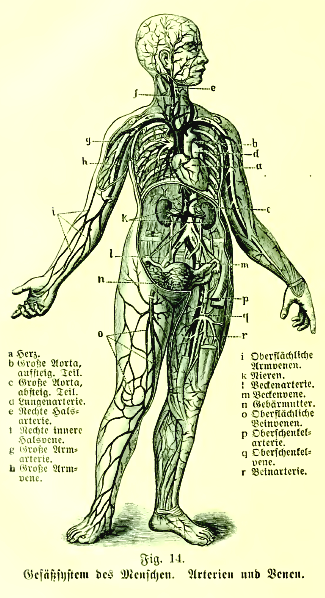
Bodies are the media we experience life through, the means we have to respond with. Despite the relentlessly shallow concerns over appearance the media saturates our lives with, our fundamental experiences of life are not just seen. Life is an all-body experience.
Still looking for attribution info for this glorious image.
Bodies are marvelously self-aware organisms on an enduring quest to care for and maintain themselves by communicating as effectively as possible within themselves, and responding as usefully as possible at every level — within the cells, between the cells, from cells to organs and back again — with the marvelously alert circuitry of the nervous system and the dazzlingly subtle chemical dance of the endocrine system drawing the whole show together.
That’s a bit more complex than just meat-sacks wrapped in hide.
I’ve been mulling the twined facts that my body is an amazingly tough, brilliantly adaptable organism, and at the same time, is an organism constantly under sieges both subtle and overwhelming. Yet it never stops trying to find a useful set of responses, it never stops signaling and listening.
It never gives up. It has never surrendered.
I admire that.
More mantras
Just for grits and shins, here are a few other things that I mutter to myself over and over.
C’mon, you can do it.
Motion is lotion.
Use it or lose it.
Change or die.
That’s quite a set, when I look at it laid out like that.
Not all of them are cheerful. Sorry.
They’re all thoroughly grounded in my reality, though, and they all have had something to do with my getting this far. They are hammers and screwdrivers in my mental toolkit of radical presence, pushing back on neuroplasticity, and not settling for what this disease would leave me.
Naturally, I say these things to myself in tones of firm, loving parental authority, since it’s all about re-re-plasticizing my brain, and those are the tones it responds to.
FTR, I’m sincerely glad it responds at all. When I was in nursing school, they told us adult brains were fixed for life. I doubted that from the start, and events eventually caught up with my skepticism. Brain plasticity FTW!
It’s been a crazy winter, even for New England. Those of you with pain syndromes know what that means: changeful weather means unstable pain neurology which means more pain and less brain.
I’m so much more stable here in other ways that I found it frustrating to be soooooo daffy. I wanted to tuck that daffiness back behind the dam I can usually hide it behind, and use the creative and practical components of my mind to drive what I show in public.
I revised my supplements a few times, and finally found a routine that does seem to stabilize things a bit better, although it’s kind of hard to tell (it’s like inspecting a crystal with the lens inside, or possibly the other way around.) I’ve stopped fiddling, and will let the test of time tell me how this regime really does.
Also, we’ve had 2 or 3 strains of flu (so far) dancing through the household. The second one was nice, because the really awful part lasted about 5 days and it had an incubation period of about 6-7, and we got it one by one; as soon as 1 person got really sick there were 2 people to take care of him or her. In one case, this meant miso and ginger soup; in another, raw garlic in mashed potatoes; in a third, goldenseal and vitamin C; in all cases, loads of homemade chicken soup and buckets of fluids.
I’m not sick of homemade chicken soup, as every pot is different, but I am *so over* herbal tea, broth, diluted juice… everything. I had a big mug of plain hot water yesterday because at least I’m not sick of it.
I find that viruses affect my brain. They have for as long as I can remember. One of the first signs of viral illness, for me, is getting cranky and forgetful all of a sudden. With all these brain issues I have now, it just turns the volume of pain, reactivity, and goofiness up to 11.
Into this brew of brainlessness, add one more element of confusion: my most expensive brain prescription, Savella, looks exactly like my cheap antihistamine, generic Zyrtec; I take them both twice daily.
You can see this coming, can’t you…
I found out a week ago that I’ve been double-dosing on Savella and underdosing on Zyrtec. (No wonder my asthma has been acting up.) That, more than the virus and sinus activity, would explain the intense dizzy spells, disembodied feelings, uncharacteristic irritability, and eerie emotional detachment from my nearest and dearest. (No medication is harmless. Now you know what an overdose of SNRI does to me.) It was a relief to know what really caused all that, but it still sucked to go through it.
So, thanks to the daffy-dam getting burst by those bugs, I blew my brain out of the water (and also blew about $150!) AND set myself and my housemates up for a few weeks of needless unpleasantness. I’m still recovering, but well enough to think coherently about it, so that’s a huge improvement.
To my morning pre-pill routine of apple (malic acid) and sunflower butter (digestible folate, minerals and anti-inflammatory oil), I now have ~1/2 cup of defrosted Boreal blueberries (intense brain food with anthocyanins and antioxidants for recovery) topped with grated aged cheddar (intense brain food with dopamine precursors and saturated fats for those nerves) during and after pills. My pills go down better, and bit by bit the fog seems to be clearing.
Now that I might be able to think my way past a soggy Kleenex, it’s time to get that “activity” thing going again… if I can remember how. There is absolutely no substitute for activity, because it balances the autonomic system, improves neurochemical stores and their behavior, and can even reduce pain, with *no negative side effects* — as long as you don’t get hurt or over-do.
I had a dream last night of dealing with broken gym equipment, and of absolutely longing for good t’ai chi instruction. Until I find it, I’ll work with what I’ve got: my class notes and a couple DVDs from my old Academy. It’ll get me started, and then we shall see.
This disease, like time and life, dips and dances but tends to go in one direction. As long as it doesn’t outrun my ability to adapt and amuse, I can put up with that. After all, we’re all born with a one-way ticket, and sooner or later we have to get off the ride. Not all of us get a chance to prepare for our exit, or even get much warning as to what it will be like.
In my first nursing job, on an HIV unit in the very early 90’s, I had a Mexican soap opera star as a patient. He was lovely, in every way.
If you can, picture a cross between these two. That was this guy. And really sweet, too.
This was his first hospitalization with the disease and he hadn’t found his particular polestar, the thought/idea/perspective that would keep him determined and alive for however long he had. He was a lot of work emotionally, needing much encouragement to keep trying new treatments (and they were very new back then) and to keep eating even when he didn’t feel like it and so forth. He had been in for a long time — over a week.
One day, while I was setting out some medications for a complex patient who needed his meds punctually, and didn’t have time or attention to spare, the soap star came mooching up to my med cart in his hospital gowns (one in front, one in back) and huge, lustrous eyes.
With what attention I had to spare, I thought, “go away, come back later” as hard as I could. Didn’t work that time.
He said, as he’d said before, in the same miserable tone as always, “I’m going to die.”
“It’s a big weight.”
Up until this occasion, I’d stop what I was doing and gave him a full minute of attention and cheer him up a bit.
I didn’t have a minute right then. I had maybe two seconds. “Everyone’s going to die,” I said, barely pausing in my dosing and calculations.
“Maybe it’s only this big.”
Long silence next to me. I kept doing my job. (Keep in mind that nurses are paid to dish meds, not counsel and encourage struggling patients. That’s all that the staffing patterns allow.)
Then, in that delicious accent, a voice like the rising sun announced, “You’re right! Everyone’s going to die!”
I heard him drift back to his room, muttering in wonderment, “Everyone’s going to die… it’s not just me,” and I smiled to myself. I wasn’t usually rude to patients, but it sounded like it was exactly what he needed.
My other patient got his meds on time. So did the rest. At dinner that evening, my soap star sat up and devoured every bite, beaming and bouyant as we had never seen him. I began to see what all of Mexico had fallen in love with. He was discharged next day, full of fight and life again.
Somehow, that brutal realization — that everyone dies, that being doomed to death isn’t special — was what he needed to break the spell of misery that his diagnosis had put him under. He had staggered in a broken boy, and he walked out a free man.
I don’t understand it either, but it sure worked for him.
Perhaps I do understand, at least a little. My experience with that revelation goes a bit further back, though.
I had a book of rhymes when I was little. Most were delightful, but there was an old one about a sick little girl that contained the lines,
“Doctor, doctor, must I die?”
“Yes you must, and so must I.”
Makes you feel all warm and fuzzy, eh?
I went through a jagged 6 months when I got to grips with the meaning of that (plus, I thought it was a rotten thing to say to a sick little girl.) My mother got tired of assuring me I had never been nearly sick enough to worry about it and, on further questioning, assuring me that she and Dad wouldn’t pop off for a long time yet, and I’d be an adult and able to handle it.
Later, I vaguely remember looking around at a sunlit day, seeing my brothers and friends playing in the sun, the leaves of my favorite tree fluttering in the breeze, and knowing everyone would die one day…
…but not yet.
Now, we were all alive and together.
Better grab it! Yes!
A smile pushed up through my whole body, and I went out to play.
I think that’s when I first began to understand the difference between being a spectator of life and being a part of it. That realization was rooted in knowing that it’ll end one day, and I didn’t want to miss out on whatever it had to offer in the meantime.
Perhaps that’s what my remark to my patient did for him; but, being older, he could process it in 6 seconds, rather than 6 months. Everyone dies; but right now, I’m alive!
for lifelong celebrations!
I could be wrong, but I think my insistence on being a part of life is a big piece of my adaptability, not only to this wretched bouquet of stinker diseases, but to everything.
What do you think? I’m curious if there’s a link between knowing death and survival, between a lust for life and adaptability. I’m not talking about Norman Cousins’s ideas of exceptionalism, but of an ordinary, grubby-handed greed to be in this thing called life, warts and all. What does it take to reach that?
This might be the question that shapes our future ideas about adaptation and resiliency.
A dear friend is embroiled in one of those ghastly legal tangles where the vultures are rigged to win. I’m the key defense witness. This comes up later.
This whole winter, I’ve been basking — simply basking! — in the sheer delight of being safe, sheltered, warm, loved, and with as little chaos as anyone with a recent move, a complex illness, and widely scattered relationships can get. Occasionally, I’ve wondered if I’m allowed to be in such a situation, and strained my ears for the sound of the other shoe dropping… Then I do a reality check, tune in with my lovely partner and my lovely housemate/hostess, and it appears that no, it’s okay, things are right, and this is what’s right now.
My nod to the fairly relentless self-management that got me through the past decade has been an occasional effort at meditiation, a minute or three of qi gong, a few moves of t’ai chi now and then, or the occasional mood-check.
In short, diddly-squat.
In December, I lost it with a dear friend.[LINK] I did more mood-checks for awhile, a bit more meditation, maybe ten whole minutes of t’ai chi every other day for a couple weeks.
Diddly-squat doubleplusgood.
I was heartbroken at the mess I’d contributed to, but couldn’t dig up the motivation to really “do the Do”, to restart my hard-won disciplines.
Dear heavens, it was soooooo good to rest, just relax for a change, enjoy the sensation of not looking over my shoulder and not being constantly *forced* to calm sometimes-legitimate terror or possibly-reasonable panic.
It was winter. I was safe. I let my disciplines sleep.
Meanwhile, the brakes on my car[LINK] were acting up, or rather, occasionally failing to. $2,000 later, that was supposed to be fixed.
Gradually, I noticed that J was telling me, more and more often, to lower my voice: “I’m right here!” Huh. I didn’t think I was talking that loudly…
As I relaxed, other humans became more interesting and I started striking up conversations with strangers, as I used to do. They didn’t respond as well as they used to. Odd…
On social media, I found myself being snippy where I used to be sweetly witty or wryly amusing to make the same point. I backed off of my online time, because if I can’t manage myself well, I’d better not interact with anybody else who might be feeling frail. “Do no further harm” has been wired into me from way back. It’s the most basic courtesy.
I took the car back for a second brake job a few weeks ago, only $150 this time, and that seems to have taken care of the problem. So my cynicism about car dealerships remains unimpaired, thank you.
Meanwhile, there were some tellingly unpleasant procedures[LINK] which illuminated a fact I’m still failing to accept: CRPS has moved into my viscera — it has leaped out of the musculoskeletal bounds and gotten right into my core. I used to say my case was “all-body”, but that was because of the gastroparesis and subtle endocrine weirdness, which I figured was simply faulty autonomic signaling. It has definitely become much more.
I could feel every line of my intestines and the springy squashiness of my organs as the ultrasound tech noodled around on my abdomen, and the less said about the gynecological exam the better. It’s real. It’s a bed of coals in there. This finally sank right through my skull over the past few days.
Damn damn damn damn damn damn damn damn damn damn damn damn damn damn damn. With extra damn.
So, now we’re up to this week.
I spoke with the lawyer involved with the vulture case mentioned above. I went off on a tear about the duplicity and injustice involved. He finally broke through by howling my name in exactly the tone my mother used when I was getting out of hand. Once I was quiet (and abashed), he said very sweetly, “If you’re going to go on like that, you might as well hit your friend over the head with a two by four.”
Two things happened. I realized that my self-regulation was much worse than I had ever imagined; and I spent the day in a state of total exhaustion and emotional fragility, the classic signs of a massive adrenal-dump.
SIMPLY GETTING WOUND UP IS BAD FOR ME. The mere state of emotional excitement is poison to my system.
I used to know that.
I used to know when the emotional excitement was coming, and could head it off.
Nope. Caught me completely by surprise.
So, I’ve been processing all this for a few days to a few weeks now. I’m coming to some conclusions, and have a few remaining questions.
I’m pretty sure the spread into my viscera had a lot to do with the merry-go-round of the past few years.
The spread in my brain may be related, in fact it must be; however, I’m pretty sure that re-incorporating my habits of self-care and diligence can get back quite a lot of the gentle precision, sweet tact, and pleasant diplomacy I was once capable of.
So, in keeping with this revelation, I’m going to acknowledge that I’ve completed my alotted time for being on the computer and get up to go do some morning activity. Then I’ll put my feet up for a bit and lunch on brain-supporting food. After a digestion break of an hour or two, I’ll do something physical in the afternoon, including 20 minutes of t’ai chi or qi gong. After that, an hour of work, which today will consist of loading my classical collection onto my tablet. This evening, I’ll spend an hour listening to classical music, then meditate, then apply my lotions for pain and muscle spasms before bed.
There are no bloody shortcuts. None. It’s just work, and it doesn’t stop.
I’m still supremely glad to be safe and warm and loved. I just have to wrap my thick head around the fact that it doesn’t mean I’m off the hook for taking care of myself.
Updated to reflect much experimentation and the final recipe, Dec 16, 2016
We forget that tooth pain is nerve pain. There are big fat nerves going right up into every one of those 30-odd things in your head.
I have sensitive teeth, related to the fact that I have CRPS, which does its very best to thin the bony tissue out until it’s like a lacework pattern crocheted by the famous one-armed wallpaper-hanger.
So, basically, my head is set up for lots and lots of nerve pain.
Have you noticed that there are no brands of toothpaste for sensitive teeth that are anything other than mint-flavored? Moreover, the toothpaste focus groups apparently like a strong minty taste, because that makes them feel like it’s working. Heaven forbid they just lick their teeth to find out, I guess.
The vocal but persistent minority that does NOT like a strong minty taste apparently just isn’t profitable enough to serve.
Those of us who find it obnoxious or uncomfortable, or who are sufficiently chemically sensitive that the mint actually causes a chemical burn? Tom’s of Maine provides a couple of marginally less-caustic alternatives, but none for sensitive teeth.
That’s right, folks. Chemical burns to go with your sensitive teeth. Isn’t that clever?
So, my dental routine has sucked for years. First, brushing requires tension in my wrist tendons for a couple of minutes. Second, it jars my joints every time I switch direction, which happens a lot. Thirdly, I’M GIVING MYSELF CHEMICAL BURNS THROUGHOUT MY MOUTH. There’s something very wrong with that. Fourthly, in the nature of a cherry on the sundae, toothpaste doesn’t actually seem to get my teeth clean. It scores lines in the muck, but it doesn’t actually clear it away.
The routine I developed, which I could only do every few days, was this:
1. Damp washcloth to wipe off the muck, front and back, top and bottom. Only way to clear it off.
2. Floss with a flossing sword, hoicking more muck out from between the choppers.
3. Brush with the least-burning sensitive-teeth toothpaste I could find, the Walgreens brand.
That’s going to happen twice a week at most, not twice a day. It’s a lot of fine-motor maneuvering and, of course, the CHEMICAL BURNS THROUGHOUT MY MOUTH make it hard to look forward to. I can’t eat or drink anything for at least an hour, not without slamming the cup down as I’m sharply reminded why that was a bad idea.
This is a stupid problem to have. It should not be hard to have a non-burning toothpaste which will get the muck off my teeth and protect them afterwards!
Then a friend of mine (a fellow spoonie with a different set of spectacular health challenges) mentioned that she had been using calcium carbonate to brush her teeth, and they were suddenly whiter and stronger and better.
Then the pieces started coming together in my head. I put the calcium carbonate (yes, it’s chalk, in case you were going to look it up) together with some other things I knew about handling oral hygiene in the non-conventional, post-industrial world, and made my own toothpaste.
With one brushing, half as long as my old brushings, my teeth got COMPLETELY CLEAN. I might be hallucinating, but they seem a half a shade lighter after 1 day and 3 (that’s right, 3) brushings.
I’m keeping the potassium-nitrate toothpaste nearby in case this doesn’t work out within a week for sensitivity, but this is a real pleasure to use! It’s tasty, it doesn’t hurt, the jarring isn’t as bad on my wrists and I don’t have to do it as long, so I can actually brush my teeth a couple of times a day and it hardly takes any spoons at all!
This was so worth it 🙂
ADDENDUM/CORRECTION: So, the original recipe for toothpaste was outstanding for a few more days (when my teeth got visibly whiter and felt fabulous!) but the pain came back, absolutely unbearable. I couldn’t eat solids at all. I suspected that the calcium carbonate, which is extremely absorbent, basically sucked the potassium nitrate out of my teeth and may even have trapped the clove oil so it couldn’t do its job. I used commercial sensitive-teeth toothpaste for a few days until it stopped, went back to the homemade toothpaste to build up my teeth, and went back to the commercial stuff every so often as needed, until my home-made tooth PASTE turned into tooth SOLID. The calcium simply did what calcium carbonate does: it absorbed all the water and solidified. It is spectacularly good at absorbing liquid.
After lots of, um, learning experiences, I came to terms with the fact that the only tooth care I can manage to make for myself is not going to be a paste.
I’m not interested in adding glycerine and strange oozy substances to my dentifrice. It’s tedious, mucky, and provides no benefit I care about.
I grew up watching my dad clean his teeth with tooth powder, and he had the best teeth in the house, so it doesn’t seem odd to me at all.
I shake about a half teaspoon into my palm, dab it up with a wet toothbrush that’s as soft as I can find, and my teeth are cleaner and whiter, with less effort, than ever before.
I’m pleased.
Here is my..
Toothpowder recipe for sensitive tissues:
~1/3 powdered xylitol, a specific non-caloric sweetener.
~2/3 powdered calcium carbonate.
If you like, add to each cup of powder mix:
20 drops essential oil of sweet orange (to boost the cleaning and de-mucking)
20 drops essential oil of clove (to ease nerve pain)
+Why xylitol? Because it loosens the muck. It disrupts the biofilm made by all the different bacteria getting together on your teeth, by dissolving the glue that holds them together. (This is why your dentist likes you to have xylitol candy if you must have candy.) I recommend the xylitol made from hardwood, because the corn-derivation has gotten so that almost anything derived from corn makes my pain spike. Sad but true. I get mine from http://store.xylitolusa.com/xylitol/.
Forward-looking statement (e.g., dream castle)
In the fullness of time, I hope to have a little cottage industry making this stuff up and selling it on to those who need it but can’t put it together or can’t get the stuff in bulk. Fingers crossed..
Chronic pain patients are often called Difficult Patients, when the casual cruelty and reflexive contempt of medicine and the ignorance of other people grates too hard against our increasingly impaired ability to compensate and deal with it as calmly and “rationally” as we used to.
I’m less and less certain that casual cruelty and reflexive contempt are rational to deal with. Really, the *rational* thing to do is draw the line when professionals behave badly, no matter what the profession.
I’m increasingly certain that those who provide care, and have gone to all that effort to be trained and licensed to do so, should probably take on the burden of acting with more kindness and courtesy than those who pursue less intensive interactions with the wounded, disabled, and ill. Not less courtesy. More.
The rational thing for the professional to do then is to reckon that requirement into the cost — because respectful and courteous patient interaction saves money and improves outcomes, but more/higher administrator salaries do not. The data on that are very clear… though strangely hard to dig out on the second point.
I sometimes mull the mindframe I had when I was working as a nurse, which was deeply compassionate without being cuddly or fluffy. I was well aware that only one person was paid to be in that room and adjusted my expectations accordingly. But still, I think of the casual disregard of others’ humanity that defines so much of health-professional behavior, and wonder at the culture that reflects. It’s not that we have to do degrading things like shove needles and hoses into people, it’s that we won’t let them wear real clothes or secure their electronics or even eat real food, when they’re in our hands. We no longer even warm the gel.
Anyway.
CRPS patients are a special category of chronic pain patients: we may be dealing with a level of pain consistently rated as higher and more intense, not to mention more constant, than anything else — including childbirth, most cancer, having fingers ripped off — with the sole exception of terminal cancer pain, which is at the top of the McGill Pain Index. It’s horrible but true that terminal cancer pain doesn’t last as long.
So, we are a distinct, and distinctive, subgroup of the Chronic Pain Patient set.
On top of that, of course, the brain remapping and the neurochemical disruption of longstanding CRPS means that our central nervous systems are absolutely hair-triggered for terror reactions, which transmute into all sorts of other things when our intellect has to wrestle with the terror… because screaming and fleeing blindly into traffic shedding broken bits of furniture and wallboard is, somehow, neither socially acceptable nor particularly useful.
My old pain doc, Dr. Richeimer at USC Keck Pain Center, has a wonderful term for those whom lesser physicians call Difficult Patients:
Fragile Eggs.
Isn’t that perfect? Easily broken, and when broken, extremely messy and hard to clean up after. Treat gently. Treat extremely gently. Understand that you may have a mess on your hands anyway. Keep your cool, adapt on the fly as the egg rolls around, and stay gentle. There’s really no other way to handle it.
(Like many others, I love that man.)
So here’s the thing.
At the end of a crappy week (thick with grief), I had a Pap test (painful, intrusive procedure which is easy to do badly) scheduled to check for cancer (which is frightening) because I had a blood test come up funny that can be a sign of gynecological cancer (so there’s grounding for the fear.) I know as well as anyone that these things mustn’t be delayed, but I waited an extra week in order to schedule a long appointment so that the test could be done in a rational, CRPS-friendly manner.
Silly me. Turns out a “long appointment” is 15 minutes. That’s not a typo. FIFTEEN MINUTES is a “long” appointment.
I really haven’t been keeping up with the downward slide of the health care field below the level of the best-of-the-best I’ve had out West. I’m speechless.
Did you know it takes 5-7 minutes just to say hello and catch up on the case with a complex patient? Do you know what it’s like to have a speculum inserted into a body that is one long scream of pain already, and the tiny, cheap, but essential steps it takes to make that a wise thing to do? Did you know that good practice for intrusive procedures, especially for those with PTSD around their bodies (which includes most women, frankly) is to meet the patient while they’re still clothed and have them undress for the invasion-fandango after they’ve had a chance to be human, and not just one long scream?
I know, it’s crazy to think that patients are human. Forget I said that. I don’t know what I was thinking! Pfft…
I told the office twit who roomed me and informed me that it was a 15-minute vist that a Pap smear on a CRPS body was not going to happen in 15 minutes. Twice. She set up the torture implements, which did not include Lidocaine gel or a warmer, in the cool office, and told me to get completely undressed and climb into the gown she laid on the exam table.
She didn’t mention that my provider, the one decent and rational entity in that department, was running very late. I had to find that out for myself.
Sitting in the cold room, staring at the torture tray laid out directly in front of me, still fully dressed because I could not succumb to being led like a lamb to slaughter, I tried to calm myself, to get my brain out of the state of being hijacked by terror at the casual cruelty of being tortured into spreading this hideous disease into my viscera, and helpless rage at this high-handed and disrespectful way of being treated.
I tried to reflect that, clearly, a lot of women who came to this office for care put up with it and, knowing New Englanders, never even thought of complaining because that would be a sign of weakness.
I tried to tell myself that my provider would surely rinse the speculum in hot water before using it, but that thought was booted immediately. I know from prior experience as a healthy person that a plastic speculum does not hold the warmth, but it does hold drops of water as they cool off quickly, and the temperature of that object does not affect the temperature of the 60-degree gel they put on it.
So, viciously cold thing going into my CRPS-y body’s core. Then that pinching, twisting jolt as it snaps open in mucous membranes which are wired straight into my central nervous system as well as my visceral cavity. During a weather- and trauma-induced flare.
There’s just no way that can go well.
I sat there for half an hour, trying not to stare at the torture implements although they were unavoidable in that tiny space, feeling my brain run circles around itself, trying not to scream, feeling my capacity for verbalization and rationality bleed away in the chill.
I realized that, although I wanted to connect with my provider and use the time profitably at least in discussing these problems and finding out my ultrasound results, I couldn’t sit there any longer. I needed forward momentum if I was going to come out of this intact.
So I spent the next 8 minutes writing my provider a letter, left it on top of the Patient Update document I had brought in (which mentioned my prior interactions with the staff, ALL of which had been record-setting-ly stupid and unproductive), and I left.
I did NOT run screaming into traffic. I didn’t break anything on my way out. I politely commanded the twit to copy my letter “now please”, stood over her while she did it, laid the paperwork I’d created for my provider in a neat pile on her table, and kept my copy for my records.
Then I quietly walked out, smiling politely at my provider as I passed her in the hallway heading towards the nurse’s desk.
I made very little mess, for a fragile egg.
I got my documentation, but forgot my purse. There’s something very Isy about that. (I’ll go collect it next business day, and hopefully that will be the last time I have to see them.)
So, this weekend, I have to do 2 things: find a gynecologist equipped to handle complex patients, and put together my own gyn exam kit — with a suitable implement, lidocaine gel, and heating pads.
Sometimes, BYO* is the only way to go.
I may be a fragile egg at times, but I don’t like it and I don’t intend to live there. I can’t control the industry, but I can control what I walk into the room with.
♦♦♦♦♦♦♦♦♦♦♦♦♦♦♦♦♦♦♦♦♦♦♦♦♦♦♦♦♦♦♦♦♦♦♦♦♦♦
*Note for non-native English readers: BYO is for Bring Your Own. BYO is derived from BYOB, which means Bring Your Own Beer/Booze, normally used in regard to parties (obviously!) BYO moved into common usage on its own as a handy verbal shortcut; it’s still informal, but not nearly as informal as BYOB 🙂
♦♦♦♦♦♦♦♦♦♦♦♦♦♦♦♦♦♦♦♦♦♦♦♦♦♦♦♦♦♦♦♦♦♦♦♦♦♦
UPDATE from early March
I got my own speculum, the Pederson type (which is a bit narrower); found food-grade silicon sealant (which smells strongly of vinegar, but nothing more toxic) and applied it over all the contact surfaces and where the edges meet; and prepared a bottle of pain-reducing Emu oil with a bit of nerve-pain-reducing Clove essential oil added.
I called the largest and oldest gynecological practice in the area, and asked for the doctor with the lightest touch. I was a bit disturbed when a large, fit, square-jawed, brush-cut fellow walked in, but he turned out to be an angel. He was happy to use my speculum, poured quantities of my pain-reducing oil over that and his hands, and gave me a break halfway through the procedure to sit up, get my pain/panic response under control, and pull myself into reality and out of the shocky place.
I’m sorry to say that the Pap test itself was a lot like having burning coals shoveled into me and pushed around, so yeah, there is definitely some nervous system remapping that has already happened to my insides. (It used to be an unpleasant little scratching sensation, and no more.)
This doctor wisely asked for a copy of the funky test, which was my serum DHEAS level. I went to my other doctor’s and got copies and ran them over myself. I took a look…
The doctor who’s substituting for my allergy/immunity doctor who ordered this test dropped a very serious brick. THE TEST HE REFERRED TO WAS JUST FINE. I do NOT have an abnormal DHEAS value. It’s a whole lot more normal than the rest of me!
I wrote the gynecologist a note on the back to that effect, and let him know that he did the lightest, best possible job under the circumstances and that I’m grateful. He looked absolutely white and shocky by the time he left the room, so I think it was a pretty horrible experience for him too, and I don’t want to scare him off of treating other pain patients.
I got a Pap test out of the way and learned something important about the state of my disease. I’m being more diligent about my multivitamins and SAMe, the methionine-based antioxidant I use as my main antioxidant supplementation besides vitamins. I’m researching the least nutty, most promising pain centers near me, at Yale and Brown Universities (Dr. Pradeep Chopra is at Brown, so that’s probably first on the list) and this week I’ll be making appointments.
I guess every setback is really a redirection or a kick in the pants for me. I may have CRPS in my viscera (which would explain a few things) but I needed to get my act together about getting a pain doc anyway. My DHEA test was normal, phew, but I’ve been harshly reminded to double-check everything the doctor says. I’m seeing my usual doc at that practice soon, and I’m going to ask him to double-check DHEAS results to see if any patient has been left uninformed and unfollowed-up.
I took a few days after the Pap test to simply refuse to think about it, because I did NOT want THOSE pathways to go any deeper into my impressionable brain! Took it easy, watched and read silly things, ran errands with J, took loads of vitamins and drank plenty of water… then started researching the pain doctors.
This is my policy… strategic withdrawal if necessary, yes; pause, rest, reboot, definitely; but in the end, “Never give up! Never surrender!”
On average, it takes 2-5 days to adjust to a change in the weather. This is part of the fun and excitement of CRPS, dysautonomia, fibromyalgia, and all those lovely dysregulating diseases of pain and neurological shenanigans.
New Englanders like to say, “If you don’t like the weather, just wait a minute.” Clouds and sunshine chase each other swirlingly across the sky like teenagers at a party. Precipitation, in one form or another, is bound to happen at least twice a week.
However, up until recently, there was a pattern in the seeming chaos. October hosted the last of the 50-degree weather, December saw the first few inches of snow that really stuck, January and part of February were bloody cold, March was named Mud Month for good reason.
Bar the occasional storm front, when the barometer plunges like necklines at a Red Carpet party, I could live with that. Once it’s fall, it’s fall; once it’s winter, it stays winter, until it gets muddy, and eventually the glorious summer blesses us all and reminds us why we put up with the rest.
Not now.
Over the winter holiday season, the naked (???) earth finally got dusted with snow. That quickly turned to sleet and then it froze (!!!). There were a couple of warm spells which didn’t melt the packed ice, just packed it further… we spent alternate days staggering over frozen rucks and through soggy mud, to try to maintain the dirt driveway.
Sunday, it was pushing 50 (like me), and raining cats and dogs; the ice finally melted — except for a few sneaky patches that merely absorbed the color of the sand so they could lurk, invisible, and slap down the unwary walker. Then it went down to well below freezing, and I got slapped down on a sneaky patch of ice because I forgot to wear friction doohickies on my boots. Last night, guess what? It snowed! We got almost 2 inches and we might get more.
I’m begging the weather gods to let it stay.
In the last few weeks, temperatures have seesawed between 20 degrees Fahrenheit above normal to 10 degrees below normal for this time of year (when it’s supposed to be simply bloody cold and frequently snowy.) Sometimes, we see that difference happen in one day.
So, if it takes 2-5 days to adjust to a weather change, and the weather is changing every day or three, what is a poor body supposed to do? Mine is whining. It’s just curling up in the chair and whimpering gently and steadily. It’s working so hard at handling the weather changes that showers and shampoos are something that happen to other people; there is no way this blood pressure and neurological system can take that much direct stimulus. A few swipes with a washcloth, a scarf or hat over the unwashed hair — it will have to do.
I still have to snap the leash on and drag this body outside at least once a day, but it’s duty, not fun. I’m sure I’m better for it afterwards — but I still climb straight back into the squishy chair, and let my body whimper for a bit.
The meteorologists on TV refer often to “the El Niño” effect, which makes me laugh. I’m pushing 50, remember? I’ve been through a lot of El Niño years, on both coasts. This isn’t El Niño. This is a huge bloody shift in the climate, and I don’t know how long it’ll last or where it will leave us.
I just hope it finds some consistency from day to day. As long as I have a few days to adjust, I’ll be fine. All I want is time to do something besides listen to my cells whimper!