Learning to stand: t’ai chi, qi gong, and unscrambling the CNS

About 15 years ago, I studied shaolin kung fu with Ted Mancuso at the Academy of Martial Arts in Santa Cruz. I was outrageously lucky to wind up there. I had too much spiritual feeling to tolerate the gym-type martial arts classes normally found in the US, but not nearly enough discipline to make the most of my time at the Academy.

However, I did learn a few things, including how to block a punch in such a way that my opponent’s spinal reflexes were disabled for my return punch. That was cool.
circulation-allbody-Anna_Fischer-Dückelmann_1856–1917
Being short, blonde, female, well-traveled, and — above all — a sometime Emergency nurse, all my illusions about bad things only happening to bad people were long since destroyed. It’s a great big world out there, and anything can happen to anybody.

So there I was, in my self-satisfied early 30’s, at a top-flight martial arts training school. The fact that the teacher (or “sifu”) had started in qi gong somehow totally eluded me. I was infatuated with the grandmother of martial arts, shaolin kung fu, and really had eyes for nothing else.

Smiling sparrers from Shaolinsuomi at Wikimedia.

I briefly flirted with t’ai chi, but decided it would be too hard on my knees… Knees are important, but shoddily made. I had cruddy cartilage (what was left of it) under my kneecaps. I thought that was painful (how cute!) and was afraid of making it worse before my time (another joke, in retrospect.) I got physical therapy for that problem, and learned that my legs had been aligning poorly at least since I was 11.

Retraining my legs to activate different muscles, ones I could hardly feel (and no wonder), was daunting at first.

I remarked to Sifu Ted, in tones of reflective melancholy overlaying a certain smugness, “I’m re-learning how to walk.”

That was supposed to be the opening line of a short discourse on rebuilding something so fundamental, literally repatterning one of the most reflexive early lessons in life, going right back to the beginning and restructuring an utterly basic activity … yeah. Cute.
children-Versailles_petit_appartement_de_la_reine_web
But, before I could get started, he said, in a tone of unrehearsed frankness overlaying a certain frustration, “I’m always relearning how to walk.”

My verbal hot-air balloon deflated on a laugh, before it ever left the ground.

He said, “It’s true.”

I nodded, and went away to think that over for a decade or so.

I thought of Ted when I realized that combining energy discipline and body work was the best rubric for managing my CRPS. I’m back at his school now, studying — you guessed it — qi gong and t’ai chi.

Um… No, it’s not too hard on my knees.

T’ai chi is second to nothing I’ve tried for correcting posture, the way Ted’s Academy teaches it. While each body is unique, there are certain things that have to happen in order for the movement to work. To do good t’ai chi is to line your body up properly. My low back is slowly opening and lengthening again, and my feet are remembering how to find the ground.

Qi gong is another dimension beyond that. I’m sweating over re-learning how to stand. When I find the words, which may take awhile, I’ll write about it more. To start with, I’ll just say that I had no idea how much I get in my own way — and I’m not that bad, for a Westerner. I started qi gong 20 years ago, but now I’m starting all over again.

I thought it was trippy to go back to when I was 11, and un-learn from there. Now I’m realizing I have to go back to when I was 1.
Faience_beer_stein_with_ball_scene_on_brown_background_web
But I’m looking forward to knowing how to walk.

Move slowly, stay happy… except when pushing one and a half to two inches straight down on the lower half of the sternum

We went to a great farmer’s market, where J got me a ceviche tostada that had to be tasted to be believed. I got a flat of outstanding organic peaches to dry for the winter. All this is much easier said than done, because today, for some reason, is pretty harsh as pain days go.

J wanted to know, in his brusque-backwards way, what I intend to do about it.

I replied that I’d probably trim his hair, then lie down for a bit, then watch a silly show, then come help with the wood — which means, bringing cold drinks and looking on admiringly.

I said, “Managing pain days is basically a matter of, move slowly and stay happy — to the extent that that’s possible.”

He liked that. He added jovially, “Used to be more like, move quick so I can get away from people — then I could stay happy,” he said, veteran of a socially hideous region.

We both laughed.

matchgrins-horsenwoman_decamps-pauline_4blog

Moments later, we saw people beside the road, one lying down. I saw CPR.

CPR

I barked, “Pull over NOW!” J knows my voice, and he’d never heard that tone before. He did. Instantly.

A first responder was doing chest compressions, and getting tired. CPR is incredibly hard work; if Mr. Universe did CPR, he’d tire even quicker.

I got down and planted my less-injured hand on the responder’s stacked palms and between us, we made a strong enough compression to create a pulse in the patient’s leg. This is what you want to do: create an artificial pulse, to sustain the vital organs until the heart itself can be restarted.

The runner had felt chest pains 5 minutes before, according to his workout partner. Then he went over. Just like that.

I won’t go into messy details, but by the time the helicopter was landing and I’d brushed myself off to come home again, I was aware of how strange it was to do this outside the ER, to snap into lifesaving mode from a standing start, and to find myself — without the mental shield of my work-badge and trusty stethoscope — turning away from a still-blue figure and not knowing if he’d make it.

J said of the man behind us, in his elliptical way, “He didn’t look like a jerk.”

I said quietly, “No. He had a really nice face.”

I’m sure he had good medical care. He worked out to keep fit, and had the muscle tone to show for it. He had a bit of chest pain 5 minutes before, then keeled over.

It’s not fair.

I took my clothes off carefully, keeping the dirt off me and turning them inside-out before dropping them in the laundry. I washed my hands and arms to above the elbows. I used to do that on coming home from work, every time. But I’m not able to work, and those weren’t scrubs.

I have some additional prayers to make now, and a body of my own to manage.

I have to move slowly, and stay happy, to the extent that that’s possible. There’s nothing else that could possibly help, because I’m no longer in the ER. I’m a 13-year veteran of the worst pain disease known to medicine, and I helped do CPR today.

I wrote this in the hope of coming to some conclusion that would make it easier to move on from this shell-shocked state of mental mumbling. I haven’t, yet… but let me add one thing.

This man had every chance, once he went down. CPR was started within a minute. The ambulance arrived within 5. He should be getting definitive care within 15 or 20 minutes of hitting the dirt. This is how it’s supposed to go.

In honor of this man who was given every chance, and in honor of my father who never had any, please learn CPR.

Even if your bones are too frail, as mine are, you can still provide the extra push that’s needed.

Even if you can’t risk infection from someone else’s fluids, you can still check for a pulse while others do the dirty work.

Even if all you can do is puff your chair a little closer, you can still direct the able-bodied, because it really helps to have a cool head looking over the whole scene.

Please learn CPR. You’d be amazed at what you can do with it. Those of us with disabilities get too much of the message that boils down to “can’t”, but when it comes to working to save a life, if you know the protocol and what to look for well enough, then there’s usually a “can” that you can go for.

I gave the police my name and number, and I hope to find out if our guy made it. (NB: Details were changed to protect his privacy… but I’m sure prayers and meditations and good thoughts will get through just the same.) I’ll post a comment to let you know.

In the meantime, here are a few links.

My ANS is going to be vibrating for awhile. I’ll start with lemon balm and see what else I can remember to do.

T’ai chi and emotional pain

When I’m out in the world, my reflex is to shove grief into a bundle and push it aside, and try to act as if I don’t feel it.

It’s always surprising how much energy that actually takes. When I’m doing anything else that takes much effort, it’s nearly impossible. It makes me forgetful and clumsy, just like a pain flare.

When I was at t’ai chi class yesterday, shoving and pushing one way with my mind while I was shoving and pushing another way with my body was so exhausting that I was wringing wet with sweat. Then I remembered something I’d tried briefly before, and decided to try it for the rest of the class.

I mentally drew the grief into my whole body. The grief turned to sadness and stretched out into every muscle fiber, every moving part. And I did t’ai chi with a body that was swarming with sadness.

It was, above all, peaceful.

I certainly wasn’t as tired. The sweat vanished as if by magic. I don’t even remember it drying on me.

The important thing is, I wasn’t expressing sadness in any deliberate way. I didn’t move more slowly, or try for any effect. I moved more deliberately and with better focus, because I was integrated. My body was filled with sadness, and I moved that body through the t’ai chi form.

The point of t’ai chi is to clear things up, straighten out what needs straightening, and separate muddled body parts and muddled energies into their proper alignments. Therefore, the sadness got a heck of a massage, and by the end of class, it was like it had been processed into something more wholesome. There wasn’t nearly as much sadness, as such. There was a lot more peace. There was a sense of strength I can’t put a name to.

I must add, as a footnote, that it’s been a long time since my feelings were capable of unshadowed joy. I have learned to cultivate a certain shallowness of mind at times, so I can be insulated from the deeps and be simply happy in the moment.

Therefore, when I say that I was happy as I left class, understand that it was a deep happiness. The shadows were very much a part of it, but that was fine. They were in the right place.

Define “invasive”

I was a Registered Nurse for 8 years — in one of the first HIV specialist units in the country, in the only public ER of one of the murder capitals of the US, in cardiac telemetry, in home care. It was a good, demanding, well-rounded career, if a bit short for my taste.

I’ve often wanted to re-educate my nursing self in light of my experience as a patient.
me-tongue-out
Here’s one of the most outstanding, outrageous lies we tell ourselves as clinicians: medications are not invasive.

That statement bears no resemblance to the reality of those being treated. It relates entirely and exclusively to the clinician’s experience. The clinician’s unstated assumption is, “I’m not hanging onto the thing that’s getting under your skin; therefore, what I’m doing is not invasive.”

News flash: Treatment is not about the clinician. It’s about the person being treated.
me_wrysmile
Medications get taken into the whole body, not just the ill part. Injections go right past the first barrier against infection and assault, the skin. Oral medications go through the mouth, descend into the stomach, and there meet the second barrier to infection and assault, the GI system… which they either aren’t bothered by, or can resist.

They’re then taken up by the blood, which goes everywhere.
circulation-allbody-Anna_Fischer-Dückelmann_1856–1917
They are all processed in the liver (it’s called “phosphorylation” and, privately, I suspect that’s why we tend to have trouble with phosphorus issues when we’re on lots of meds.) This is why too many meds for too long can lead, or contribute, to liver failure.

What goes through the liver goes through the spleen and kidneys, because that’s how it works. This is why some drugs can cause kidney damage.

What hangs out in the blood can, all too often, hang out in the brain. This is why some medications for organ issues or even a simple infection can cause deafness.

Blood circulation exchanges fluids with lymphatic circulation. Blood and lymph communicate with the central nervous system via the blood/brain barrier and the sheath around the spinal cord. The blood/brain barrier provides partial, rather temperamental protection, but it can be suborned by anything that makes the tissues fragile — fever, illness, injury… and some kinds of medication.

What is in the blood goes everywhere.
circulation-allbody-Anna_Fischer-Dückelmann_1856–1917
How is that not invasive?

I’m watching my partner fading with weakness after only a week on a couple of cardiac meds. I’m certain his heart has not gotten worse in a measly 7 days. The only thing that has changed is that he is seeing doctors and taking medication — for nearly the first time in his life. (“No side effects,” my left foot.)

How much of that weariness is stress, how much of it is the past couple of years catching up with him, how much of it is heart disease (actually, that part is pretty clear) and how much of it is medications? Each of these things has some part in it, there’s no question, but drawing the line between them is more than I can really do. I know the meds are part of it, but how much?

Medications are intimately, unavoidably invasive. There is no completely safe dose, and there is nothing that helps you for free.

Everything — meds, interventions, surgeries — EVERYTHING has side effects. There is no single thing you can do to your body, or allow others to do, that doesn’t affect every part of you in some way.

My years as a CRPSer, where the consequences of every change are so exaggerated, makes this pitilessly clear to me.

Given that there is no free ride, we have to look at the tradeoffs. Knowing that there are issues with absolutely everything, however “natural” or “close to our bodies’ own chemicals” it may be, we have to balance that against whatever benefits it may have.

Herbs are included, by the way. My increased sun sensitivity (which my disease causes a bit of anyway) and impairment of birth control (which I don’t take — what, mess with these chaotic hormones?) are side effects I shoulder with my eyes open, so that I can have the neurotransmitter support of the St. John’s wort herb I take twice a day.
St._Johns-wort_(Hypericum_tetrapetalum)_(6316227601)
I review all my medications twice a year at least, to see how I can tread the narrow path between optimum benefit and minimal confusion. Doing this from a chronically slightly confused state is, naturally, a whole different kind of fun. Working out which part of the daffiness is disease and which part is meds and supplements is really my most important task.

My partner has to choose between cautiously building back up some heart strength and circulation — and meanwhile have a life that is a small fraction of what he used to have for energy and activity, unless and until the medications and rehab really work; or risking the total loss of death by having a surgery which would leave him in pain and in rehab for awhile — but, afterwards, bring him back a lot closer to his normal, with many good years ahead.

Wait and see and work and hope, or take a leap and — if you live — work and probably win?

In a way, I envy him. If there were a procedure to do a bypass graft to eliminate CRPS, I’d be in the OR already. I’ve had enough of a twilit life, of exhaustion and fog. I want to get back into the full sun.

I miss running, too.

But it’s his heart, not mine. I do my best to explain things, listen carefully so as not to run over his real thoughts, and grab hold of my anxiety with both hands, so that any decision made is truly his. As it has to be.

Until then, he has to peer through the fog and work through the weariness of these “non-invasive” medications, to make his choices and his appointments. I’m just there to help — and to make sure he’s taken seriously, which is a real drawback to looking as fit as he does.
J-playing-on-treadmill
But that issue is another post…

Acute pain, chronic brain, and naming this ratfink disease

Complex Regional Pain Syndrome is the latest in a long line of names for this disease. Some of the older names have been recast to cover aspects of it, or versions of it, or special cases, and of course there are overpaid people who argue about it intensely. I’m going to go out on a limb and list a few sometime-names, sorta-names, and related-names to go on with:

  • Complex Regional Pain Syndrome
    Until recently, there were two subtypes: Type 1 had no visible nerve damage, Type 2 did. However, with chronic CRPS, there is extensive and pervasive nerve damage, and it makes no difference in treatment after the acute stage, so this subtyping is widely considered irrelevant.
  • Sudeck’s atrophy
    No longer used; atrophy of bone and muscle is really symptomatic, and not always present.
  • Causalgia
    No longer used, except as an old name for CRPS type 2.
  • Reflex Sympathetic Dystrophy
    Used by old-timers and sometimes for CRPS type 1, although CRPS-1 is not necessarily maintained by the sympathetic nervous system.
  • Algodystrophy
    More often used in Europe; also, neuroalgodystrophy. Problematic because it implies that this is the result of autosuggestion. I know I could not have made this up in a million years; moreover, extensive analyses of the literature show that there is simply no truth to that.
  • Neurodystrophy
    More often used in Europe. It’s a perfectly good name, but not the one that the IISP paid a bunch of specialists to come up with)
  • Reflex neurovascular dystrophy
    RND; no longer used, because it only addresses vascular changes, not neurology or systemic issues.
  • Shoulder-hand syndrome
    No longer used, except to refer to upper-body chronic neuropathic pain while dodging a CRPS diagnosis.
  • Peripheral trophoneurosis
    Good one, eh? No longer used, both because it may spread out of the periphery, and it’s not about neurosis. See “algodystrophy” above.

For more on comparative naming and different nations’ approaches over the years, check out the RSD Canada site.

A certain amount of acute CRPS does clear up (or go into remission) before it’s even diagnosed. Since it can take years to get diagnosed, there’s not a good way of figuring out what those numbers might be. Even after diagnosis, acute CRPS can go into full remission and never show up again, before it becomes the ground-in form of trouble I call chronic CRPS.

In its chronic form, CRPS is a disease of dysregulation — of everything being thrown off balance. Our efforts to push back against any given part of that are quite likely to throw our systems off balance in some other way.

The body doesn’t balance simply, like a seesaw; it dances in 4-D homeostasis, which I’ve explained here. It’s a bit more like this:
Trapeze_artists_trimmed
Now imagine pushing one of those trapeze bars the wrong way.

Adjustments need to be carefully incremental in order not to distort the system further, but often need to be done quickly because the situation is so horrible to be in.

It’s a conundrum.
Sketch of brain, with bits falling off and popping out, and a bandaid over the worst
Personally, I’d like to have different names for acute and chronic CRPS. Here’s why:

Acute CRPS is all about the pain, with swelling and dystonia and circulatory high-jinks playing second fiddle. With acute CRPS, good results are consistently found with vitamin C (500 mg twice or three times daily is the usual dose range) and also with activity plus pain control, both quite aggressive.

Apart from that, therapies vary widely as to what will work with whom, but chances of remission in the first few months are very good, and in the first few years are still comparatively good.

After that, the whole situation changes.

With chronic CRPS, you realize that you have to find a way to live around the pain because so many other things are going wrong, life itself has to take center stage at some point, and pain has to take its turn in the wings.

Once the brain plasticity has gotten going, it’s no longer just a pain disease, but a disease of dysregulation, as the signals change and the body’s responses to the signals change and the brain’s ability to even recognize appropriate responses to temperature, circulation demands, sensation, perception, and so forth, all slide downhill.
Bosch_painting_of_Hell_(582x800)
In acute CRPS, having the word “pain” in the name is absolutely appropriate, because that must be addressed to let the brain reboot and get back to normal.

In chronic CRPS, pain often remains a huge part of it, but the central brain-changes are what creates and sustains the disease state. Pain is, clinically speaking, a ghastly distraction.

It’s a key symptom, a good guide (since muscle weakness, sweat and circulatory changes all tend to track to it at least some of the time), but it is not the driving force of the disease. The brain changes are.
poison_skull
Pain is terribly seductive to researchers, because people who don’t have chronic CRPS think they “get it” about pain (hah!) and, since that’s easier to relate to than the word “complex,” let alone the hopelessly misunderstood terms “regional” and “syndrome”, what they focus on is the pain.

The real problem is the brain, not the pain.

In my private internal world of reason and order, chronic CRPS is actually known as Complex Neuro-plastic Dysregulation, CND.

My eyes make words out of letter groups, usually just by adding a vowel. What comes to mind for me is, if you don’t win at CR[a]PS, you get C[a]ND.
craps-tshirt-front
Makes all kinds of sense to me 🙂

Being clear about being grateful

We visited our favorite hot springs last week. There’s a hot pool that’s very hot indeed. When I alternate between that and the cold pool, preferably dipping several times, it becomes quite a fabulous experience.

Stone angel with hands clasped in prayer, standing on a pillar, sun like a glorious halo
Halleluiah!

Whether it’s the lymph getting going properly for a change, or toxins (the few that are left) getting sucked out of my system, or my autonomic system finally getting a clue and just taking a break, or possibly all that and something more, I have no idea. But it can be really good.

gleeful woman grinning, sitting in a sailboat cockpit, sunny water behind her
REALLY good!

I did my dips and bounced gently on the balls of my feet in the hot pool, overflowing with something like gratitude. I’m no fool (I just take an off-road approach to life) … offering gratitude works, even with a conception of spirituality based more on quantum physics than religious dogma.

Things go better when I’m classy enough to express whatever gratitude I feel.

However, it has to be “true enough to write,” my ultimate litmus test of sincerity. (That really is my key phrase when I’m thinking about truth, writing, or both.)

George_Goodwin_Kilburne_Writing_a_letter_home_1875There’s no fooling the All, because I’m part of it and I know the truth, even when I don’t want to.

Letting my head fall back into the welcoming warmth, I thought a moment, letting the feeling swirl through me like water.

Grateful for my life?
I have to be honest (though it may mean I have an inferior soul or something) … I’d love to be. I think that somehow I ought to be. But really, when you get right down to it… too many caveats.

Grateful for this day?
Well, y’know, there was too much of the day left that could go wrong. Experience has been too strong a teacher to make me grateful for something before it’s in the bag.

Grateful for this moment?
Ah yes, there we go.

I felt my spine let go of the last knot.

I could say, without hesitation and with perfect integrity, that I was definitely grateful for this moment. Completely, unwaveringly glad to have it. I was truly thankful for that heavenly bit of space-time I’d found myself in.

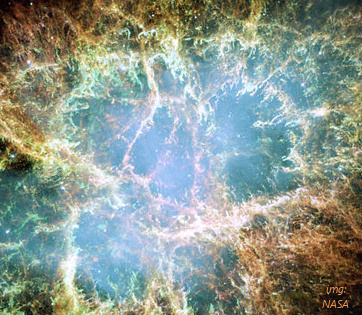
Crab_Nebula-crop
Heavenly, beautiful… grateful for it

The moment stretched and smiled and wrapped me in blissful arms. It made me stronger and more content, and I faced the bumps and mild insults of the rest of the day with fairly unruffled peace.

It turned out to be a good day. A day to be grateful for.

Getting the important things settled

It took roughly three weeks to recover from the move. For much of that time, everything was bathed in a whitish sheen, and getting more than one coherent sentence out at a time was a crap shoot. I’m learning to relax through these times, knowing they’ll pass, especially since I had someone to keep the place cleanish and make sure food landed on the table once in awhile. You’d be amazed how much energy it frees up, having help with the demands of daily living.

It took about three and a half weeks to get internet going at all, and even then, it’s slow. My original workstation was so astoundingly awkward I had to sit sideways on the settee in order to type while hooked up to the modem. Short surf sessions, needless to say, with frequent breaks. Awful.

Yesterday, I pulled apart all of the — wow — truly excessively complicated hookups laid in by the prior owner. I reran wires, relocated cord-keepers, moved the faceplate from its hidden location in the cupboard to the wall where it can conceal horribly ratty holes including the one that the cable goes through, moved the huge coil of excess cable (15 feet, at a guess, of which 3 were being used) off the TV and strung it along the wall… to where I can now sit up comfortably in my bed, power and modem hooked up to my laptop, and noodle away in perfect peace. I put the remaining cabling — 2 pieces of extra CAT5 cable, triple-wire connector cable, ethernet cable, and a random small piece of 2-wire connector cable — zipped up in a plastic bag and shoved out of sight.

I’d take a picture, but there’s nothing to see. Just a cupboard, with a splitter at one end and a single white cable secured to the underside of the shelf, until it plunges out of sight to head off to its final destination.

There’s a bit of extra cable looped and secured neatly against the back wall. In electronics and electrics alike, if the wire is just the right length, then it’s too short. Give it a foot (not twelve feet) of slack, neatly stowed.

The key to routing wiring of any kind is: it should be as simple as it can be, and no simpler. I kept chanting that in my mind as I pulled things apart.

With that thought, I didn’t have to keep the whole puzzle in my head. There was an intake end and two output ends, and the shape of everything in the middle would be derived from necessary functions and the available space. Not, for crying out loud, from the needlessly complicated cat’s cradle I’d inherited.

When I got started, J stood by quizzically as I pulled out the hefty coil of cable, pointed out the rat’s nest around the splitter, and displayed other bits of insulated-wire macrame, each time snorting in gleeful derision and saying, “Amateurs!”

Finally, after he dodged the shrapnel from my 3rd dive into the tool drawer, he got that look that says, “time to get out of the danger zone,” and took off to run errands.

I’m not as fast as I used to be, so it took from noon until sunset to get it all done and neatly stowed. J wandered back as I was finishing up, and was more flatteringly impressed than I’d dared to hope — really wowed. He wasn’t sure why I’d gone to all that trouble to clear cupboard space (which was one nice side-effect, in this limited space), but when he saw the cable over by my new workstation, which is about the most comfortable place there is to sit, it made more sense.

He should be able to watch TV at the same time that I’m working online. To us, this is sybaritic paradise. Bring it on.

Tech note: My internet has to be hardwired, because the radiation from being near wifi consistently makes me sick. The nausea, weakness and racing heartbeat are unmistakeable.

I keep the wires off my arms with pillows, so that, even though the wires originate behind me, they don’t come within a foot of me until they’re almost at the laptop. This is about as good as it can be here. After sitting here for most of an hour, I’m fine. Just fine.

Imaginative experience and rebuilding the brain

In 1986, the course of neurologic treatment changed forever when Mark Block, one severely spine-injured young man, chose “imp-possible” over “impossible” and, every day, spent hours imagining how it would be to walk again, imagining his “wires” getting hooked back up again, riding a wave of inner certainty that can only be called a gift.


He mentally rehearsed endlessly. Day after day after week after month.


And then, months into his care, he told the nurse, “Watch this,” and made his foot twitch. The first nurse dismissed it as a spasm. The second or third nurse got the doctor.


The doctor stood over the foot — really close — and said, “Do it again.” Twitch.


“Again.” Twitch.


“Again.” Kick.


One of the great moments in medicine.


Upon discharge, he walked out of the hospital.

Some of the meditations from my pain psychologist are visualizations. They’re made for a mass audience, not for people with chronic illness generally or CRPS specifically, so a certain amount of tolerance with the language is required. (At one point, the narrator says, after a pregnant pause, “Looking good.” Oh for heaven’s sake.)

Fortunately, she’s dropped pearls of wisdom about what’s important in these exercises, so I’m (naturally) mulling over a new set of scripts which attain those ends a wee bit more gracefully. (Of course, the files will be freely available to download.)

The key point is, it’s important to imagine what it feels/looks/smells/sounds like to be really well, really functional, really active, really smart again. Here’s the lowdown:

  • It’s not just a set of images, it’s a multisensory experience that I imagine as clearly as a good memory.
  • It’s important to do so vividly and frequently.
  • It’s important to think of imaginative experience as a good working hypothesis, rather than a hopeless quest or pointless daydreaming.

That’s key. Making it seem real, and not dismissing it afterwards. Over and over again.

That’s how the brain is persuaded — molecule by molecule, link by link, cell by cell — to give up its current structure, which pins so much of the neuro-anatomical, neuro-chemical and neuro-endocrine dysfunction in place.

Then, in many cases — and with suitable support from nutrition, psychological care and physical activity — it’s possible to reverse-engineer a healthier, more functional neuro-setup.

It takes time. It takes dogged persistence. It takes a vivid imagination — which can be developed, if it’s not already there. (Like getting to Carnegie Hall: practice, practice, practice.) Last but not least, it takes a smidgen of luck.

The imaginative experiences, if all goes well, help your neurological structure leap the chasm between what it is and what it should be. It’s an enormous leap of faith to get started, let alone keep going for as long as it takes to rewire such an astoundingly complex structure.

Of course, inner resistance and outer events are liable to leap out and knock us off track, because that’s what they do… and we have to find ways to pick ourselves up and dust ourselves off and get back on track as soon as possible.

It’s a huge job, inside and out — all that leaping.

Trapeze_artists_1890

But it’s not impossible.

I’ve been mulling experiences that I can imagine failing to do with my current body, but remember doing with my healthy one.  I think I’ll write them out (word-painting at its most precise) and build really great imaginative experiences to come back to, again and again.

Running; sailing; riding; studying; traveling; writing complex books; lecturing on neurology, pain, and healing — you know that’s what I’m thinking about.

What would your imaginative experiences be? What would you leap the chasm for? What could you immerse yourself in, week after week, month after month, maybe year after year, for the chance of pulling yourself up to it?

It’s an interesting question, isn’t it? I have a feeling my list will change with time. As I sit with these imaginative experiences, I’ll see which ones really keep on giving, and which ones were better in theory than practice — and, of course, I’ll find the one I haven’t thought of yet, which will turn out to be key.

At the moment, the hard part is coming back to reality afterwards. That can really suck. But there are ways to deal with that — instant distraction, for instance — and the more I think it over, the more I think it’s worth it.

Relentless

My pain psychologist is very insistent that 90% of my day has to be predictable. This allows my nervous system to heal and re-stabilize to the extent that it can.

I cannot even fathom that. 90% of my day? Do any of you have those kind of days, ever?

matchgrins-horsenwoman_decamps-pauline_4blog
Pauline Decamps? I’d love to credit this fantastic shot. Correction invited.

She’s been right about everything else so far, so I’m working on it.

Trying to bring stability to any single part of my life brings the inherent instability of life into high relief.

  • Every commute to the doctor’s office is a crapshoot. There’s no knowing just how long it will take, if there’s parking on the other end, whether anything unpleasantly LA will happen along the freeways on the way.
    .
  • Every trip out of the house, with all the neighborhood dogs and the roads being under construction here, puts the rest of the day on hold until further notice. Especially when my judgment is in the hopper because of pain, dysautonomia, or not being able to eat enough to prevent hypoglycemia.
    .
  • Every day is a mine field of discovering things I’ve forgotten and have to find a way to deal with, trying to clean up the past while coping with the present and preparing for the future.

poison_skull

It’s heartbreaking trying to keep up with this, but I can’t stop. This disease never quits. It never gives a break. I must try to keep up.

I thought I was stubborn. I thought I was adaptable. I thought I could be relentless. I have to say, this condition puts me in the shade.

This is one of those articles I wrote to help myself find the nugget of gold. I’m still looking…

George_Goodwin_Kilburne_Writing_a_letter_home_1875

I’m in a very small glass today, but that doesn’t change the scope of work — just what I admit I can do.

This relentlessness, this bitter intransigence, is part of any chronic disease. We find ways to cope, or we don’t make it.

  • I deal with the dietary restrictions by focusing on the wonderful things I can eat;
    antioxidant_foods
  • I deal with weakness by learning to ask for help;
    .
  • I deal with the pain by focusing on what gives me joy;
    Crab_Nebula-crop
  • I deal with bouts of forgetfulness and confusion by automating as much as possible and using external aids like a whiteboard, checklists, post-its and the apps in my smartphone;
    200px-Check_mark.svg
  • I deal with the heart, lung, and endocrine issues by finding new ways to do things, and rehearsing constant self-control in every single freaking aspect of life.

It just wears on me sometimes. It’s a lot to expect of myself day after day after day after DAY.

Perhaps the nugget of gold is simply taking credit for my imperfect, ongoing attempts to manage an impossible body of work: staying alive and on the right side of the ledger, and trying to make it bearable. It takes some doing, and yet I’m here now. The future terrifies me, but so it goes.

Marathon update:

A bloody pair of athlete’s feet, with ringworm that’s trying to consume my right foot, both fungi profoundly resistant to treatment… Have been joined by an ingrown toenail which looks like a grandchild of The Blob… Which itself is hosting cellulitis.

So I’m off my feet for the most part, wearing slippers when I must walk. I have to knock the cellulitis back by Friday, so the ingrown (which is an outgrowth) toenail (though it’s really the flesh) can be cut away, and part of my nailbed stripped. All those loverly nerve endings…

old_school_surgeon

It’s going to be a rough weekend. Perhaps I should just have it all cut off, ha very ha. Too bad that makes things worse in CRPS.

Marathon update

For weeks, I could hardly move outside without injury. It was maddening. I completely ran out of arnica pills, my best tool for keeping soft-tissue injuries from turning into flares or spreads of CRPS.

At the same time, I couldn’t make myself do the meditation exercises I’d been assigned, where I’m supposed to let some strange man tell me what to relax. Getting anything but my appointments done has been nearly impossible.

Today, I walked half a mile, half of it uphill, and most of that at around 15 degrees’ slope — really. And so far, I’m just fine. It seems  a bit miraculous, after the past few weeks.

For the past few days, I’ve also been wrestling with my dead… and at the risk of appearing to complain, I’d probably better explain that.

I’ve been interested in re-remapping my brain to a more useful cartography (so to speak) for years; that’s what holds the most promise of moving CRPS aside and leaving more room for life.

Sheer gall, determination and bloody-mindedness can only get me so far. Pretty damn far, but I think I’ve hit the limit. I need to move beyond, because frankly, life is barely worth it and I won’t stand for that.

To gain enough mastery over my brain that I can really push it into a different shape means getting my conscious mind and subconscious mind to play well together. Sooner or later, THAT means coming to terms with a few things I’ve shoved under the floorboards. Then I can put them in their proper place, and make a reliable path around them. It’s no good trying to build new paths in a brain that’s booby-trapped.

It’s impossible to discuss these losses and bereavements and horrors without sounding pathetic or whiny, so I won’t. Tell you what, though, I’ve stopped editing them out, when they’re relevant.

Something’s come loose. It’s true. It does seem to be working.

I’ve finally gotten myself scheduled into my meditation exercises, PT, and cleaning up… and I’ve walked half a mile today, much of it really steep… and I seem to be fine.

Every marathoner knows… you really run it from the inside.