One for the money, two for the show…

I suddenly got tired of waiting.

I do this: churn up a great idea, spin possibilities, lay in lots of groundwork, get cold feet, get reinspired, hammer down some details, fall apart completely, then say “oh the heck with it, who needs drama, let’s stop dithering and get this done” — and off we go. (Editorial “we” there.)

I’ve gotten nearly all the stuff that I need — vehicle, bedding, cooler, and a power inverter to charge the laptop with.

I’m making a custom map on Google Maps with airports from the halfway point on (in case I need to fly out to make my next doctor’s appointment), campgrounds and national parks along the way, and increments of no more than four hours of driving per day — aiming for one hour at a time, with lots of long breaks.

There is flex built into this that lets me stop for a couple of days when necessary, to rest and reboot. Some days I might drive only two hours, or one. I got my ticket on Southwest so I can change it for free. It’s all progress.

I’m driving across the temperate zone during harvest season, so getting my produce is less of an issue than it would be at any other time.

I’m fed up with the mess in my car so that’s great motivation to thin out and repack.

I found a wonderful site called http://www.reserveamerica.com/ which includes national parks, state parks, and KOA, among others. And there’s always Motel 6 for backup, if I really need walls and a door.

And I’m wondering why I’d delay getting better. I’m off to combine the healing factors I’ve looked into and spend enough time on them to make a lasting difference.

Or not.

In any case, it’s time to try. At least it will leave me in better shape for the winter — always the worst, hardest, bleakest time. Maybe this one will be better..

Let’s find out.

Remembering and re-membering

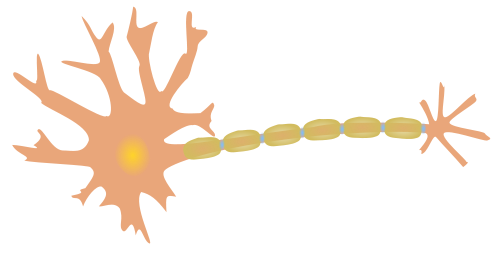
I’ve been doing intensive massage and craniosacral therapy for the past few weeks. I’m reminded, of course, that the neurological system extends throughout: bodies have memories. (There is some confusion about how those memories are stored. We’ll figure it out eventually.)

This, in turn, reminds me that the brain is malleable. CRPS changed it,

and if I’m thorough enough, persistent enough, and clever enough, I might be able to change it again.

Persuading the brain to remap itself is a remarkable process, because the brain uses the language of vision and metaphor and it responds most strongly to longing and fear. (This is one reason why mythology is so helpful, given the right story: myths tend to have powerful visual metaphors and visceral emotional force.)

The brain is also a monument to inertia: once it has started going down a certain path, it’s very hard indeed to persuade it to change course. I find I have to be firm, focused, and relentless, and since I also have CRPS-related ADD and periods of unbelievable vacuousness, that’s tricky… (I’m working on how to construct a webpage that has all my tricks and routines easily accessible, so I don’t have to remember what to do when my memory is at its worst. It’s a heck of a design problem.)

One good way to access the central nervous system (CNS) in a way that specifically rebalances some of the most critical areas of the autonomic nervous system (ANS) is through bodywork, like therapeutic massage and craniosacral therapy (these link to my providers — both warmly recommended.) Here are a few of the reasons why.

  • Humans, and other mammals, are hardwired to respond deeply to touch. The “safe touch” of good bodywork is profoundly soothing to the ANS, and since the ANS drives the multi-system dysregulation of chronic CRPS, this is a powerful thing.
  • The rocking motions of massage stimulate the parasympathetic nervous system, which has a lasting calming effect.
  • It releases endorphins, which reduces pain and brightens mood.
  • The tissue stimulation improves and stabilizes blood pressure and circulation, major factors with CRPS and dysautonomia.
  • Swelling goes down, as circulation is mobilized.
  • Hyperesthesia (pain to light touch) and allodynia (blunted sense of touch) improve because of something that clinicians call “desensitization”, a hostile sounding word which really means, “developing appropriate sensation.”
  • Hormones stabilize, perhaps due to the improved circulation and more stable ANS.
  • More stable hormones improve mood, reduce pain, and stabilize immune and inflammatory responses.

Therapeutic bodywork does all that. There is no pill or surgery in the world that can come close. Once I get my links sorted out, I’ll rewrite that for the medical blog. The value of good bodywork simply can’t be overstated.

A couple of weeks ago, during several treatments in a row, I had the curious sensation that my right arm and shoulder were being knitted back into my body. I hadn’t realized until then just how completely I had succeeded in shutting them out.

The still, quiet voice inside me indicated that dissociation should be intentional, purposeful, and temporary; if I wanted to be well, it could not be habitual. My inward guidance wasn’t telling me to stop dissociating (that is, mentally and emotionally separating myself from that part of my body), but to do so only when I needed to, to separate from too much pain.

Remaining dissociated is like disowning that part of my body, and I can’t persuade it to do anything when I’ve essentially cut it off. I need to persuade it to heal, and that’s a tall order.

During today’s craniosacral treatment (from the delightful and competent Sonja Sweeney), I remembered standing on the wall of my French-bed corner garden a few years ago, right before I fell off it and smashed my tailbone on the edge of a ramp. Pathetic lavender and dying weeds filled most of the bed, since I hadn’t gotten far with digging it up. Behind the glorious, fragrant, massive rosemary against the back edge, a 20-year-old growth of climbing roses spilled green and pink everywhere.

I had just completed a course of treatment that put my insides in the best shape they’d been in years. My stomach no longer bothered me, I was healthier and stronger, my stamina was better, and I was still inside the five-year mark with RSD.

What’s interesting is that, during this treatment, I was remembering the moment right before I got injured, not right after. My eyes were filled with roses and my nose with rosemary, and I was sketching out great plans for my bit of garden.

As I walked away after my treatment, that quiet inward voice said, “Remember pre-injury, not post injury. Remember that.”

It had to start with the rosy garden, because before the CRPS injury, I was working at Borland and was so involved with my work (which I loved) that I really had no idea how magnificently fit my body was, by the time I got injured. I simply didn’t notice it.

I enjoyed the activities of riding to work and running miles through the redwoods, but when I thought of my body, it was to criticize function, appearance, or both. (Except occasionally when I noticed those legs… :-))

In the rosy garden, I was aware of being better. And that was the point.

My brain needs something to reach for that has inward meaning and emotional oomph, so vague dissatisfaction is not a helpful point of reference. A sturdy inward “YES” is the goal: re-remembering this body, with all attached limbs fully integrated, blood coursing warmly throughout, everything moving and working, and that radiant feeling of blooming health and returning vigor.

I’m 46. I don’t expect feel the way I did when I was 34. But I know 60-year-olds who could kick the ass of me at 34. Being well is not an unreasonable idea, keeping in mind that I’m going forward, not back.

I’m inventing a frame of mind that doesn’t exist yet. Both remembering and re-membering give me important clues as to what it should be. I’m delighted to have figured that out.

Trapeze act

I’m preparing to start off on a cross-country odyssey to interview certain people who have CRPS and manage it particularly well, and incidentally hit some hot springs and massage methods along the way, since that (besides nutrition) seems to have the biggest effect on me.

Let me restate that. I’m about to move my simple little life (the whole suitcase) and complex little body (11 bottles of twice-daily pills &  supplements, dietary requirements that would make an allergist blench, and let’s not think about the wildly variable pain, confusion or autonomia) into a rather pretty vehicle and make my way across the entire continent (probably in increments of one hour at a time), to meet a bunch of strangers (my inner introvert is screaming), some of whom I’ll try to draw out about some very personal issues (my inner Miss Manners has the fantods), all by myself (at a time of epic mysogyny and rising crime.)

And I still intend to have my Brain Food Shakes and a cup of hot tea, first thing, every morning.

After I had a meltdown on the table today, my craniosacral therapist remarked that it’s like I’m reaching for a trapeze: I’m leaping off of the highest platform and, if I get the trajectory just right, I’ll be fine… but there’s an awful lot of the world that isn’t the trapeze bar, and it’s hard not to be hypnotized by the massive potential for disaster.

But how can I not go?

I won’t get many side trips, but I get to wrap my arms around people I’ve known online for years. We get to talk about what matters most in life: living off the steel core of the spirit, finding integrity in Hell, what it means to love and be loved.

The staggering physical beauty of Turtle Island is mine to explore, only this time on a reasonable schedule and without any cranky, arrogant pyschopaths (other than myself, of course) for company.

If I’m very lucky and very very good, I might stumble into the shape of a cure for this awful disease.

How can I not go? Whatever the outcome — really, whatever the outcome, even if it lands me in a nailed box — there is no way I can hold myself back with so much hope and love on the horizon. I’m a sucker for a challenge anyway, but this… turning my back on it would be unbearable.

Of course it’ll be unimaginably hard. Guess what, I have CRPS and I get up every morning. Everything else is decoration. This can be done.

My toes are leaving the platform and I’m reaching as hard as I can. Somehow, I don’t know how, I will make that bar — and swing it like hell. Because there’s something beyond that, too, and I aim to get there.

It’s impossible to be like this and not realize that I may die falling. But what a way to go, eh? I have every intention of surviving (Mom, take note) but the thing to do with what scares me most is to stare it down.

Keep your eyes on this space… The packing is almost done.

Dietary limitations? Where? I’m too busy feasting, thank you

Dietary limitations are a recurring theme in my life — and that of many who read this.  There’s little self-pity left in me for it, because my world of food has opened up in magnificent new ways. I hardly miss wheat, for instance, because I have so many other wonderful things to wrap my teeth around.

This attitude is essential to a bearable life.  Admittedly, it’s an adjustment to learn not to think in terms of “not“… Wait, let me rephrase that…

Since it’s hard to get started with food changes, and my energy and attention are limited, it helps to have people show me alternatives.The past decade or so has been filled with people who do things — like eating — differently from how I did, and that has been a huge help. I’ve mentioned the Brain Food shakes (once or twice) but the blender is only one of the arrows I have in my dietary quiver.

I’ve also had the advantage of living in “foodie” areas where it’s not that hard to find alternative sources of nutrition:

– heritage and heirloom strains of vegetables abound (a good way to reduce exposure to problematic proteins is to eat unmodified strains),

– gluten-free mixes of several different brands let me figure out what works for me (I do best with sorghum/tapioca based blends), and

– it’s easy to find foreign foods like quinoa (a quick-cooking grain which is extremely high in protein and tastes fantastic with a little butter) and English cucumbers (which are more digestible than the US kind).

It also helps to experiment with different forms of cookery. For instance, I loved discovering sprouting, because it creates lots of food from very little outlay, it’s mechanically easy, and it takes only a few seconds of effort at a time — perfect for CRPS-induced ADD!

There’s a lot of, well, let’s call it culture, around sprouting. Don’t be fooled by the complex gear and the long lists of instructions. Those complications are for those who find it satisfying to work out the details.

That’s fine. It’s also optional.

Sprouting

It’s really very simple. There are only 3 things you need to have and 3 things you need to do.

Have

1. Clean jar,
2. organic (or close) sproutees,
3. safe water.

That’s all you need. A mesh top for the jar is handy, but you can make one with cotton gauze and a canning band, or by drilling the original lid. Toss the used gauze in the washer and reuse, or just toss it and cut off more.

Do

1. Water them.
  a. Soak sproutees overnight, covered +2″ with water, in the fridge. Pour out water in the morning.
  b. Then rinse 2-3 times a day, more if it starts smelling anything other than fresh and bright. Just stagger to sink, pour water in over gauze/mesh, give it a gentle slosh around, and pour it out. Repeat.
  c. Park aslant, head down, in a clean drainer or in a lip of the sink. Drains excess moisture.
No fussing.

2. Grow them until the tails are at least 1/4″ or 60mm long, for best nutrition; up to 2″, if you like greenery. Takes 1-3 days to get to 1/4″.

3. Eat them fresh; keep a couple jars going so you always have something coming up. It’s very encouraging. As soon as I empty a jar, I set it back up.

Whatever I sprout, I buy it fresh enough to have its proper color and scent, and that yields 80% or more of sprouted germs. Less yield with older product.

I’ve discovered that tiny red lentils sprout quickly and have a subtle sweetness that’s wonderfully satisfying and goes with soup, salad, on sandwiches, in rollups, and (usually) straight out of the jar.

Sprout amaranth to just over 1/4″, add half and half or cream, sweeten with a touch of brown sugar … it’s halfway between Cream of Wheat and Malt-O-Meal. I was stunned. Had to try it a couple more times just to be sure.

If you’re inspired, please let me know if you discover any real gems, like amaranth cream of wheat 🙂

Moderation, part 2 (with footnotes)

Last week’s experimental overdose was not without consequences. There were a couple of days of the most astounding vacuousness, combined with a lethargy and inertia so profound that I find it hard even to remember… Also, record-setting levels of forgetfulness.

So that was the “overdoing on bad stuff” side of the question.

Because I don’t know when to quit, apparently, I did another experiment yesterday: allowed myself to run out of greens, and had a whole day without my Brain Food shakes. That was the “neglecting the good stuff” part, because of course //wide eyes// one must have both the yin and the yang.

Here’s how that went:

I was scheduled for a massage at one, but my massage therapist had (for once) forgotten to change it in his schedule, so he thought it was at noon. As I was leaving the house, I walked through a cell signal (few and far between here) and got the happy blurt that tells me I have a message. It was Ed, my massage therapist, calling to see if I was all right because it was 30 minutes into my session and I wasn’t there. (It’s not like me to be late.)

Here’s the fun part: I stood there, phone in hand, mentally cursing because now I had to go back in the house and look up his number.

While holding the cellphone he’d called me on.

I went back inside to where I keep my cell phone plugged in, looked at the empty space, realized my mistake, cursed inwardly, went back outside to make the call. Before I started dialing, I realized my vision was too bad to drive without my glasses. (It varies with my brain state.) Slightly panicked, I went back inside for my glasses. I didn’t want to forget and drive off without them, which I feared I might be capable of.

By the time I got there, I’d forgotten why I had gone inside, and was very annoyed with myself for wasting time. I stood there, staring into the blurry living room which I could not see across accurately, wondering what the hell I had come inside for and why it was important enough to keep me from driving off.

I went back outside, and was almost at the car…

when I realized, again, that I couldn’t possibly drive like that. Muttering, “Glasses, glasses, glasses,” so I wouldn’t forget again (which I was fully capable of), I went back inside and retrieved them.

I came back out, found my way to the phone zone, and made a slightly hysterical call to my massage therapist. I was now 15 min. late by my time, and an hour and a quarter by his. Bless his golden heart, he calmed me right down, and my day was considerably better soon after.

I’m preparing for a cross-country meander, meant to be conducted within my limits of capacity – mental, physical, and financial – which may be yet another fantasy, but at least it will be an interesting one.

I’ve taught myself 2 important lessons this week, though, and it’s good to be absolutely clear about them before I have so much else to think about:

1. Sugar in strictest moderation. It used to be a matter of avoiding pain, but this was a neurologic meltdown of a depth and duration best avoided in future.

2. Eat my damn Brain Food shake. I didn’t spend all these years figuring it out, just to dis my own discovery. Figuring out how to get them on the road just became the most important job of my life!

Is it just me? I sometimes wonder how many of us, who turn to sweets for comfort and let our distaste for kale exceed our longing to function (as I certainly did until very recently), could be doing so much better.

My pain levels rest very low, as long as I eat right and drink enough water. And my mental function — as, wow, I have reeeeeally demonstrated this week — is hugely affected by what I do, and don’t, get into my system.

  • If I still ate wheat, I’d be so thoroughly impaired I’d be in need of daily care to make sure I showered and ate and — literally — didn’t wander into traffic. 
  • If I still ate corn regularly, I’d be so sore, cranky and ill-behaved that it would be impossible to find an aide to help me. 
  • If I still ate rice I’d regularly be in so much pain I couldn’t think of anything else.
  • If I still ate grains in any amount (even of good quality, as I used to), I’d be nearly immobilized by the extra weight I’d be carrying, making that care even more necessary but even harder to get. 
  • If I ate sweets for comfort, I’d never really find it. But I’d keep trying, probably by eating more sweets! With insulin resistance, it’s a vicious cycle of longing with temporary and partial satisfaction overlaying a bottomless need.

How many undiagnosed food sensitivities and metabolic dysregulations are deepening the levels of Hell in which CRPSers live? Especially given that it’s a disease of the central nervous system, which most certainly does include the gut? It really makes me wonder.

The largest concentration of nerves outside the brain is in the gut, and there’s a breathtaking new field of science about that, called gastroneurology or neurogasteroenterology (it’s only been around for 20 years, so the name is not yet fixed).

Metabolically, I’m just not that weird,  that so many core, neuro-immunologic issues that show up in me could be all that unusual. It makes me wonder if my brain is really all that broken, or if it’s just signalling really hard…

I know how desperately hard it is to change the way you eat, because it means changing the way you have to respond to your most primitive longings at your most vulnerable and achingly needy times. (I have an extremely high tolerance for uncertainty and an extremely low one for needless stupidity, especially in myself, and that has been a great help in working this out.)

It helps to have a structure worked out and some sort of support: hence the success of Weight Watchers and clinician-approved eating patterns like the Stone Age diet or the South Beach Diet.

These dramatically different strategies coexist because … drumroll please … we aren’t all the same! Some will work on some, others will work for others.

Personally, I’m intrigued by the immunological component of digestion and assimilation (another key characteristic of gastroneurology), best addressed by the Blood Type bouquet of diets. The Type O eating pattern (with added wheat) was what I did naturally when I was fit and well, and guess what, I’m type O.

mmmmm, lunch!

But things have gotten weirder since then…

Now that I’ve finished my tea, it’s time for breakfast. Guess what that’ll be? 🙂

Links:

Moderation… in moderation

I’m usually vigilant about what goes into me because it makes such a difference in what I can put out.

Today, I went up to Heath Fair, the kind of country fair that has pulling contests for everything from bullocks to tractors, first through third prizes for identical piles of potatoes, rare critters no factory farm would make room for (like this 4-horned goat),

… and also henna tattoos, a massage booth, Chinese food options, and extraordinary handicrafts with century-old handtools being used by gnarly-handed, smiling neighbors.

I started the day with a good solid Brain-Food shake, but once we hit the Fair, that was it.

French fries made from fresh local potatoes, fudge made from fresh local milk, coffee with maple syrup from fresh local farmers.

Then we got home and had ice cream and cheese.

I haven’t touched a single bit of produce (that didn’t have a ribbon on it) since breakfast.

I’m doing okay. Daffy, but okay. A little sore through the elbows, but okay. Not able to soak up any science, but okay. Very glad I didn’t have to drive home, but that’s okay, too.

We stopped on the way home to catch the closing of the Pow-Wow on the Mohawk Trail, a lovely arty cozy time with friends and their friends. And that was more than okay.

Whipped cream on top: learning that moose have moved down to this area…

As long as I do this wild irrational feasting on weird stuff about once or twice a year (no more), I should be … okay.

For one thing, it’s good to keep your body guessing. (That’s why dieters need to have one good belly-filling meal every 2-3 days, so the body doesn’t go into famine mode.)

For another, I suspect it does me good to remind myself why I don’t eat this stuff normally. Even though my body is handling it like a champion, that’s because my usual diligence has created a certain amount of metabolic slack; I can absorb a bit of crap without disaster.

Still no wheat, though. I’m adventurous, but not self-destructive. My lovely hostess, Laurie, indulged me by getting some of the homemade wild blueberry pie and assuring me it was every bit as good as it should be.

While tomorrow brings another day of quantities of greens that could make even Dr. Terry Wahls raise an eyebrow, I’m kind of digging the memory of one day with so much creamy, mouth-melting sweetness. I’m smart enough (finally) to know what’ll happen if I keep it up any longer, but I’m old enough to really, truly enjoy my memories just as they are — without regret, without longing, just with simple pleasure. This is a nice one.

Mmmm…

And tomorrow’s shake will be just as good as ever. Possibly even better.

What comes first, comes first

Hard lesson I keep re-learning: My very first priority is taking care of this bodymind complex. My very second priority is taking care of my relationships. Studying and writing about this disease and everything that relates to it … no better than third.

No matter how fascinating a line of inquiry is… no matter how badly I want to make that conference call… no matter how scintillatingly brilliant that blog post that’s unrolling in my head will be…

Something else has to come first.

If I haven’t had my brain-food shake, or it’s time for a massage, or the phone is ringing and it’s someone I haven’t connected with in awhile, then shake or massage or phone comes first, in that order.

And then, CRPS doing what it does to attention and memory, whatever I had on my mind beforehand is gone. Taking notes, unfortunately, doesn’t work — I’ve tried it. Notes work for those whose brains maintain networks of ideas, who can trigger a cascade of memories from the brief mnemonics. I’m working to get it back… which brings us back to the first priority.

And, I’ve found over the years, the second priority is inextricably linked to the first — directly and indirectly. But I think that’s a whole ‘nother post, all by itself.

I’ve been a Type A worker for about 24 years. Relaxing does not come naturally, but I’ve learned to manage it in reasonable doses. Losing work is bad enough, but losing it before I’ve even had a crack at doing it is, well, what those with pithier vocabularies call a mindf!ck.

Knowing that I’ll probably lose the work, and making the choice to go ahead anyway, takes more discipline than I always have. But — despite the learning difficulties — I’m getting better. Even I can learn to keep my priorities in order.

Recipe: Kale Shake & the Sunshine Band

Being able to manage means having enough brain and energy to work with. In recovery from a major setback, that means getting down enough kale and berries to choke a couple of horses.

The most manageable way for me to get them in is via my handy little one-person blender. It keeps them raw (maximum nutritional value) and prechews the kale, which can really be troublesome after the 3,000th bite.

Here’s my basic recipe. Options and rationales are below.

– handful of berries (I prefer blueberries and cane berries), or 1/3-1/2 a half-pint container.
– about 1/2 cup water (helps soften berries)
– 3-4 medium to large stalks of the fluffy kind of kale, called “lacinato kale.” 7 or 8 stalks of the smooth variety. Chop in strips ~1″ wide, depending on blender strength.
– about 1/2-3/4 cup apple juice or cider.
– 1/8-1/4 teaspoon cinnamon.

– Options:
   = Dessertspoon of nut butter or a slosh of yogurt, for protein and a bit of oil/fat to help me absorb all the nutrients.
   = Pinch of stevia powder: adds sweetness, further aids with blood sugar stabilization.

Kale: given the quantities I eat this in, it has to be organic or I’m in strife.

Berries: I use either fresh or frozen, whatever is available and affordable. Always organic or close to it, because industrial growers use lots of pesticides on most berries and they’re hormone-based (estrogenic) – I used to live near strawberry country and the spraying was really obnoxious. I tried using berries grown by industrial methods, to save money, but it put me on a horrible hormonal roller-coaster… 2 solid weeks of PMS? Not so good.

Cider/apple juice: provides malic acid, which helps clear garbage out of the cells. Also helps cut the bitterness and predigests the burpy stuff out of the kale. Use a splash of raw cider vinegar if you have to use another juice.

Cinnamon: It cuts the bitterness the rest of the way, and helps stabilize blood sugar. There’s a lot of sugar in this, for me. You wind up not tasting it, but the shake goes down better.

Options: I often add the nut butter. The resulting texture is creamier. The yogurt, even a little bit, makes the shake more filling, so it’s good for making it feel like a meal.

I recommend adding a bit of oil/fat, because it’s so important to squeeze all the nutrition I can out of each bite (especially when nausea makes eating unpleasant) and oil or fat helps with the absorption of key nutrients in this shake.

I also find that pain is less and thinking is better if I get adequate fat in my diet, meaning, a moderate amount more than I need to absorb this nutrition; one day I’ll remember why.  It rings a bell from my nursing school classes. Might relate to the demyelination issue in chronic CRPS.

If I don’t add a bit of something oily to the shake, I have a slice of aged cheese or meat, which provides brain-friendly fat and also gives my body neurotransmitter precursors — adding more oomph to the brain-value of what I’m eating.

It’s an uphill slog but I’m determined to get better again. These shakes really help. Trouble is, there’s only so much room in an individual tummy, and I do need to stay under a bearable weight and eat other things to stay in balance.

Sigh… It’ll work out. It’s hard to be patient enough, but healing in the face of profound illness does take time. If there’s one thing I’m learning, it’s patience.

Time for another shake…

The mighty steed (maybe)

As some of you know, I have it in mind to travel around the country, in a vehicle I can stand to use for more than an hour a day, and interview fellow CRPSers who know more than I do. If we pool our knowledge effectively, I’m absolutely certain that we can point the way to a cure, so this is by way of being the most important work of my life.

The output of these interviews is going to go under an umbrella project, a 501(c)(3) we’re putting together, called “CRPS: Art & Spirit” – but that’s another blog.

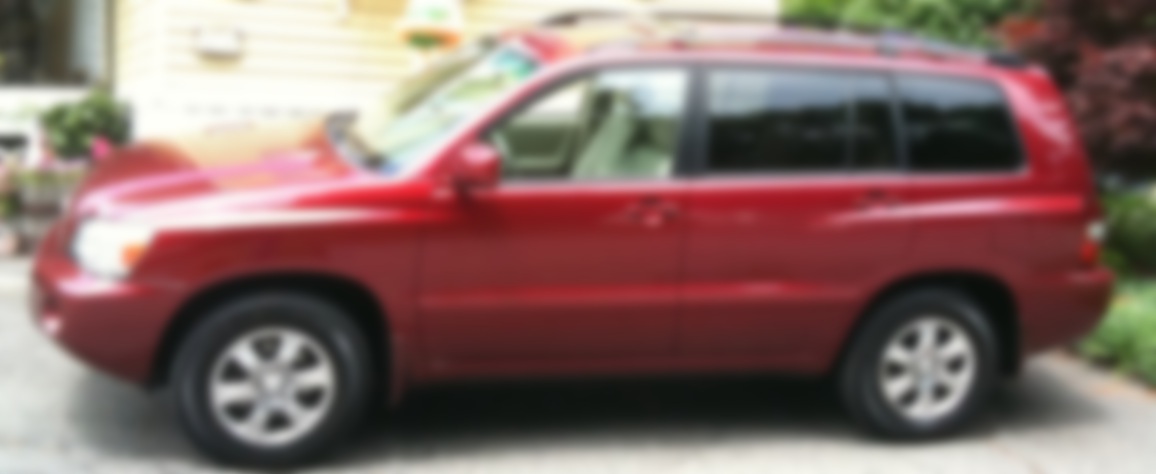
I’ve been car-less for a long time, which is tough in this country. After the usual research and footwork, I wound up buying a  Toyota Highlander, 2005, less than 80,000 miles on the odometer, a tad over budget. It looked good (and, with deep red coloring, is the perfect visual for this disease), it felt fantastic… But I noticed the engine hadn’t been fully serviced. It’s been in the shop for two days now. It’s supposed to be ready.

What started in a sweet blaze of optimism is going sour as the time comes closer to put my signature on paper. (We closed the deal after hours.) I had to call for an update to find out the car was ready; now it turns out my insurance company is one they don’t like the flavor of; and it turns out, with additional tone of voice, that I’m supposed to make an appointment to do the paperwork.

Excuse me? At a car dealership, I need to make an appointment for paperwork?

This does not bode well. I suspect distraction. I’ve already asked for a copy of the documentation on the work that was done.

… So here’s the thing.

I’m a nice, middle-aged, former RN… with a devastating, incurable and painful disease… with (I’m happy to say) a growing readership… using this vehicle as a tool to work for the greater good.

And documenting the entire process.

Is this a person anybody would really want to deal badly with?

I’m pretty sure the answer is no. But we shall see how this goes. I’ll keep you posted.