Moderation, part 2 (with footnotes)

Last week’s experimental overdose was not without consequences. There were a couple of days of the most astounding vacuousness, combined with a lethargy and inertia so profound that I find it hard even to remember… Also, record-setting levels of forgetfulness.

So that was the “overdoing on bad stuff” side of the question.

Because I don’t know when to quit, apparently, I did another experiment yesterday: allowed myself to run out of greens, and had a whole day without my Brain Food shakes. That was the “neglecting the good stuff” part, because of course //wide eyes// one must have both the yin and the yang.

Here’s how that went:

I was scheduled for a massage at one, but my massage therapist had (for once) forgotten to change it in his schedule, so he thought it was at noon. As I was leaving the house, I walked through a cell signal (few and far between here) and got the happy blurt that tells me I have a message. It was Ed, my massage therapist, calling to see if I was all right because it was 30 minutes into my session and I wasn’t there. (It’s not like me to be late.)

Here’s the fun part: I stood there, phone in hand, mentally cursing because now I had to go back in the house and look up his number.

While holding the cellphone he’d called me on.

I went back inside to where I keep my cell phone plugged in, looked at the empty space, realized my mistake, cursed inwardly, went back outside to make the call. Before I started dialing, I realized my vision was too bad to drive without my glasses. (It varies with my brain state.) Slightly panicked, I went back inside for my glasses. I didn’t want to forget and drive off without them, which I feared I might be capable of.

By the time I got there, I’d forgotten why I had gone inside, and was very annoyed with myself for wasting time. I stood there, staring into the blurry living room which I could not see across accurately, wondering what the hell I had come inside for and why it was important enough to keep me from driving off.

I went back outside, and was almost at the car…

when I realized, again, that I couldn’t possibly drive like that. Muttering, “Glasses, glasses, glasses,” so I wouldn’t forget again (which I was fully capable of), I went back inside and retrieved them.

I came back out, found my way to the phone zone, and made a slightly hysterical call to my massage therapist. I was now 15 min. late by my time, and an hour and a quarter by his. Bless his golden heart, he calmed me right down, and my day was considerably better soon after.

I’m preparing for a cross-country meander, meant to be conducted within my limits of capacity – mental, physical, and financial – which may be yet another fantasy, but at least it will be an interesting one.

I’ve taught myself 2 important lessons this week, though, and it’s good to be absolutely clear about them before I have so much else to think about:

1. Sugar in strictest moderation. It used to be a matter of avoiding pain, but this was a neurologic meltdown of a depth and duration best avoided in future.

2. Eat my damn Brain Food shake. I didn’t spend all these years figuring it out, just to dis my own discovery. Figuring out how to get them on the road just became the most important job of my life!

Is it just me? I sometimes wonder how many of us, who turn to sweets for comfort and let our distaste for kale exceed our longing to function (as I certainly did until very recently), could be doing so much better.

My pain levels rest very low, as long as I eat right and drink enough water. And my mental function — as, wow, I have reeeeeally demonstrated this week — is hugely affected by what I do, and don’t, get into my system.

  • If I still ate wheat, I’d be so thoroughly impaired I’d be in need of daily care to make sure I showered and ate and — literally — didn’t wander into traffic. 
  • If I still ate corn regularly, I’d be so sore, cranky and ill-behaved that it would be impossible to find an aide to help me. 
  • If I still ate rice I’d regularly be in so much pain I couldn’t think of anything else.
  • If I still ate grains in any amount (even of good quality, as I used to), I’d be nearly immobilized by the extra weight I’d be carrying, making that care even more necessary but even harder to get. 
  • If I ate sweets for comfort, I’d never really find it. But I’d keep trying, probably by eating more sweets! With insulin resistance, it’s a vicious cycle of longing with temporary and partial satisfaction overlaying a bottomless need.

How many undiagnosed food sensitivities and metabolic dysregulations are deepening the levels of Hell in which CRPSers live? Especially given that it’s a disease of the central nervous system, which most certainly does include the gut? It really makes me wonder.

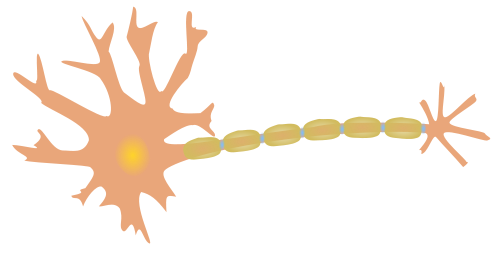
The largest concentration of nerves outside the brain is in the gut, and there’s a breathtaking new field of science about that, called gastroneurology or neurogasteroenterology (it’s only been around for 20 years, so the name is not yet fixed).

Metabolically, I’m just not that weird,  that so many core, neuro-immunologic issues that show up in me could be all that unusual. It makes me wonder if my brain is really all that broken, or if it’s just signalling really hard…

I know how desperately hard it is to change the way you eat, because it means changing the way you have to respond to your most primitive longings at your most vulnerable and achingly needy times. (I have an extremely high tolerance for uncertainty and an extremely low one for needless stupidity, especially in myself, and that has been a great help in working this out.)

It helps to have a structure worked out and some sort of support: hence the success of Weight Watchers and clinician-approved eating patterns like the Stone Age diet or the South Beach Diet.

These dramatically different strategies coexist because … drumroll please … we aren’t all the same! Some will work on some, others will work for others.

Personally, I’m intrigued by the immunological component of digestion and assimilation (another key characteristic of gastroneurology), best addressed by the Blood Type bouquet of diets. The Type O eating pattern (with added wheat) was what I did naturally when I was fit and well, and guess what, I’m type O.

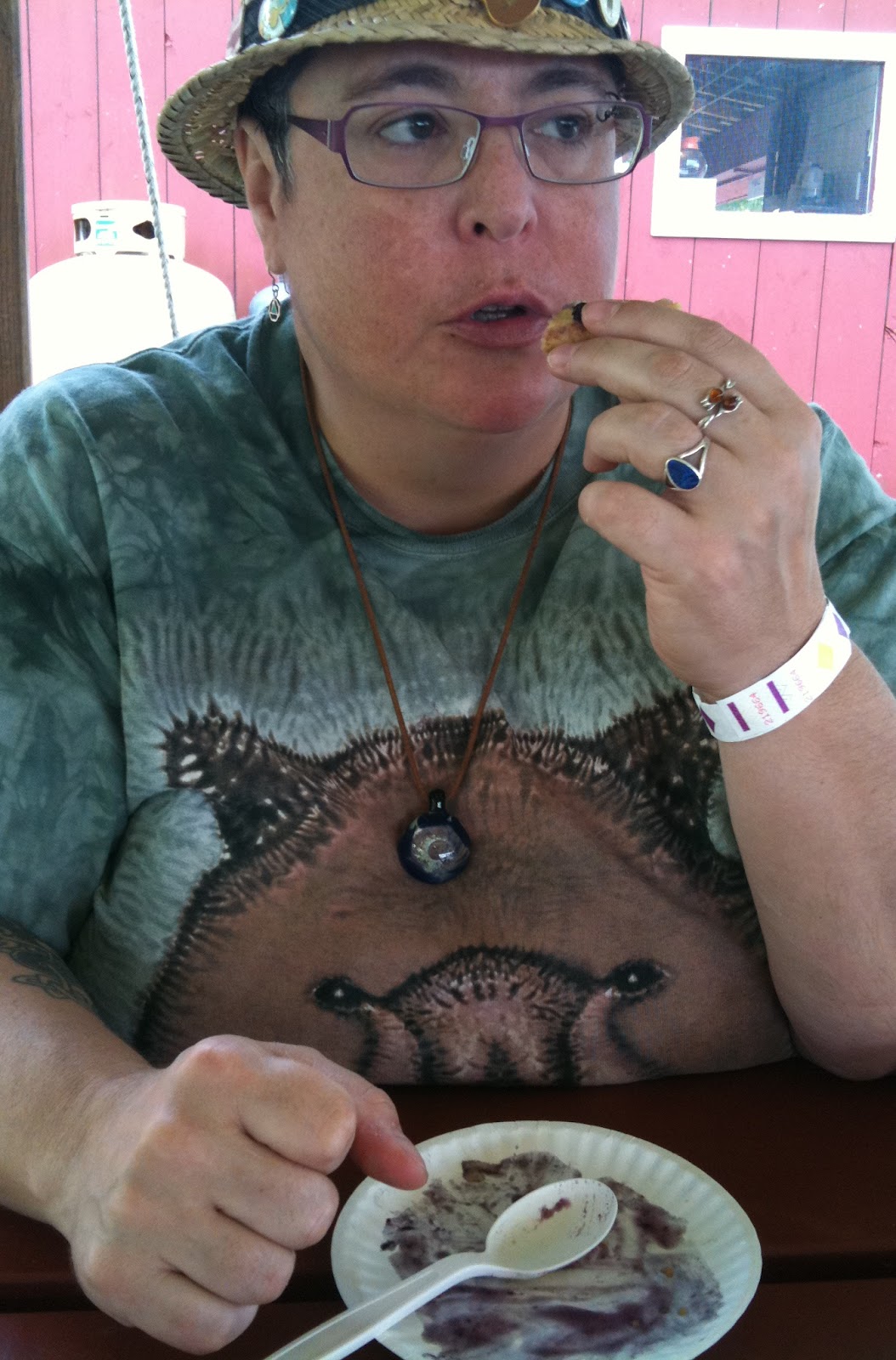
mmmmm, lunch!

But things have gotten weirder since then…

Now that I’ve finished my tea, it’s time for breakfast. Guess what that’ll be? 🙂

Links:

Moderation… in moderation

I’m usually vigilant about what goes into me because it makes such a difference in what I can put out.

Today, I went up to Heath Fair, the kind of country fair that has pulling contests for everything from bullocks to tractors, first through third prizes for identical piles of potatoes, rare critters no factory farm would make room for (like this 4-horned goat),

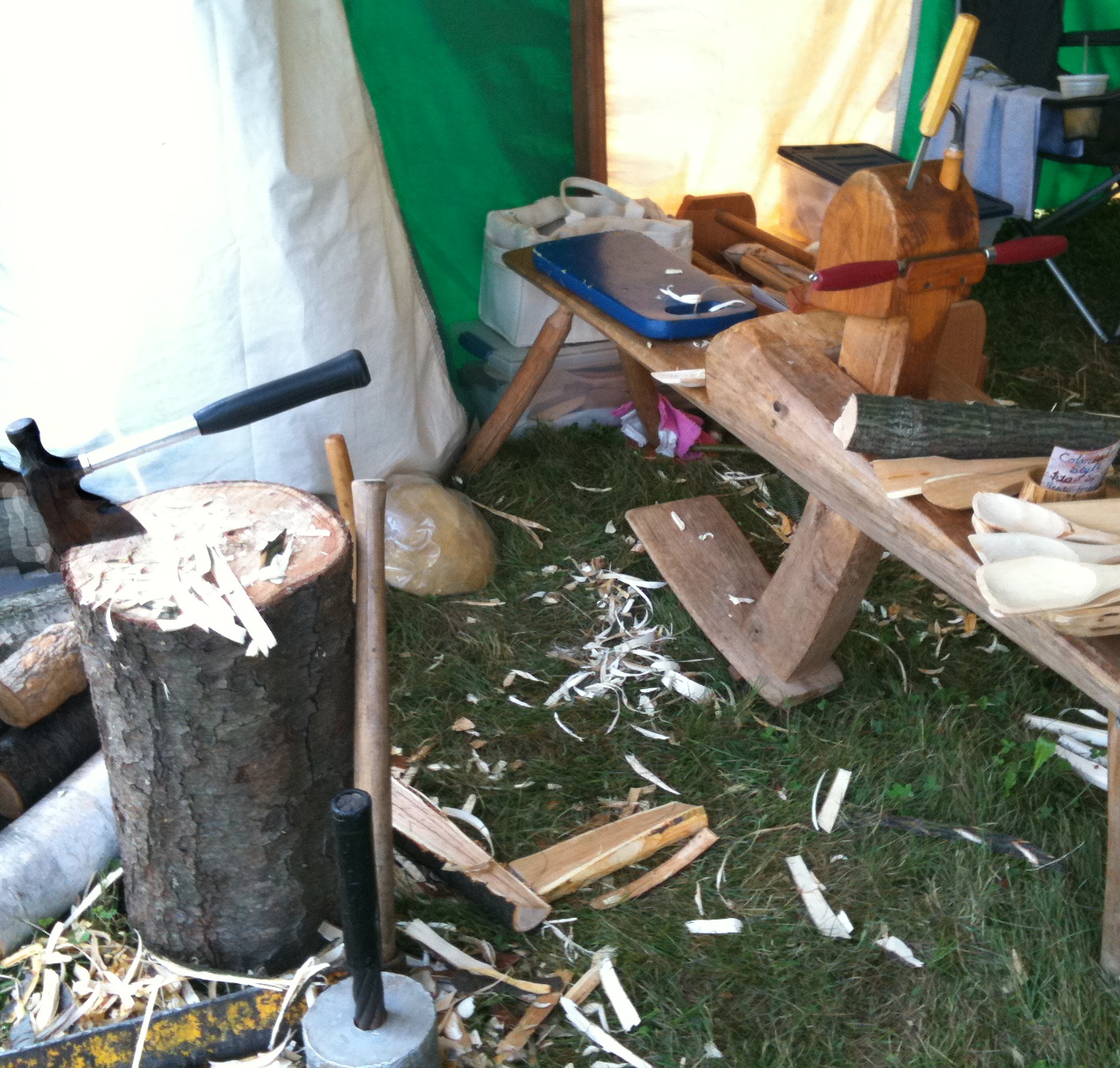
… and also henna tattoos, a massage booth, Chinese food options, and extraordinary handicrafts with century-old handtools being used by gnarly-handed, smiling neighbors.

I started the day with a good solid Brain-Food shake, but once we hit the Fair, that was it.

French fries made from fresh local potatoes, fudge made from fresh local milk, coffee with maple syrup from fresh local farmers.

Then we got home and had ice cream and cheese.

I haven’t touched a single bit of produce (that didn’t have a ribbon on it) since breakfast.

I’m doing okay. Daffy, but okay. A little sore through the elbows, but okay. Not able to soak up any science, but okay. Very glad I didn’t have to drive home, but that’s okay, too.

We stopped on the way home to catch the closing of the Pow-Wow on the Mohawk Trail, a lovely arty cozy time with friends and their friends. And that was more than okay.

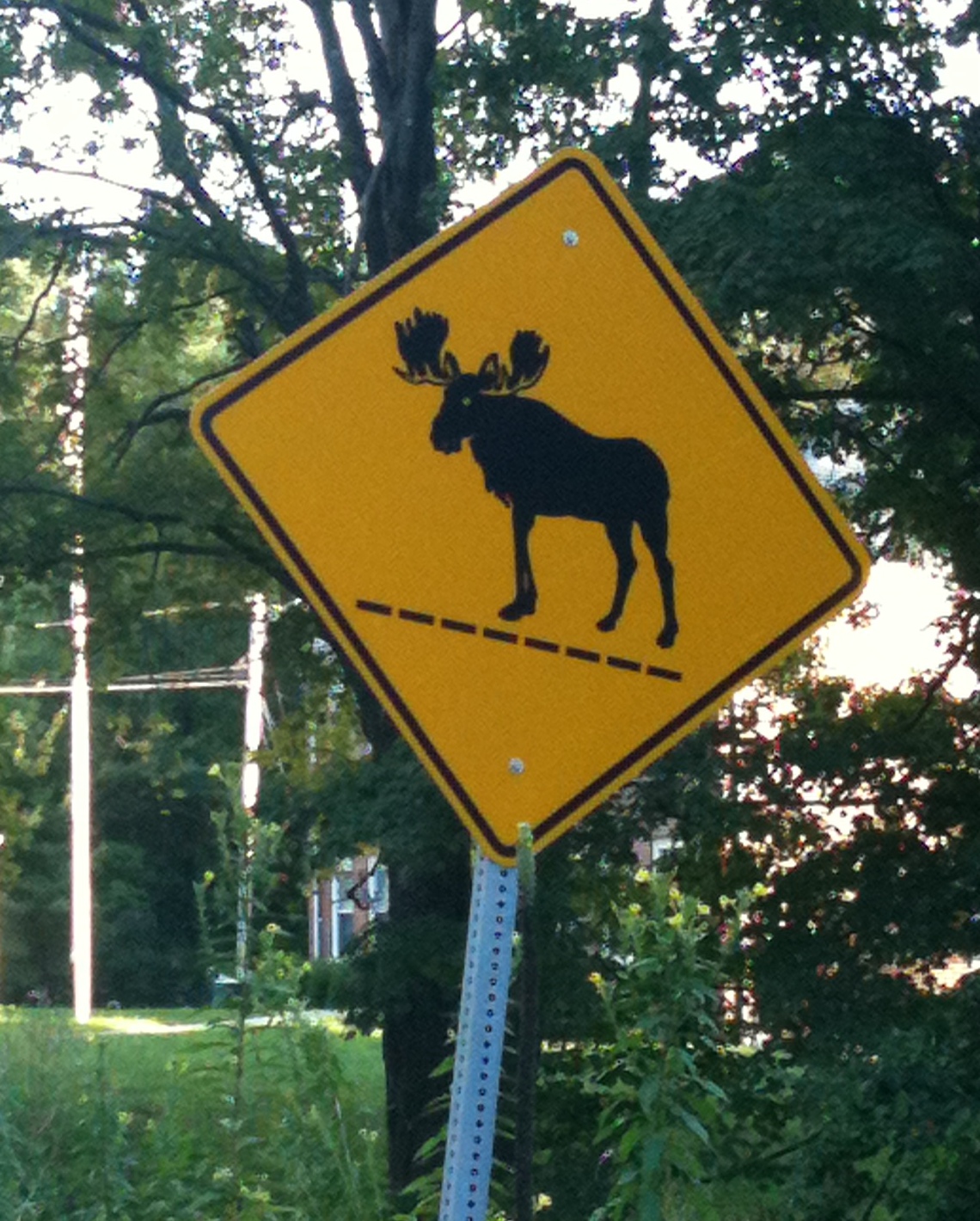
Whipped cream on top: learning that moose have moved down to this area…

As long as I do this wild irrational feasting on weird stuff about once or twice a year (no more), I should be … okay.

For one thing, it’s good to keep your body guessing. (That’s why dieters need to have one good belly-filling meal every 2-3 days, so the body doesn’t go into famine mode.)

For another, I suspect it does me good to remind myself why I don’t eat this stuff normally. Even though my body is handling it like a champion, that’s because my usual diligence has created a certain amount of metabolic slack; I can absorb a bit of crap without disaster.

Still no wheat, though. I’m adventurous, but not self-destructive. My lovely hostess, Laurie, indulged me by getting some of the homemade wild blueberry pie and assuring me it was every bit as good as it should be.

While tomorrow brings another day of quantities of greens that could make even Dr. Terry Wahls raise an eyebrow, I’m kind of digging the memory of one day with so much creamy, mouth-melting sweetness. I’m smart enough (finally) to know what’ll happen if I keep it up any longer, but I’m old enough to really, truly enjoy my memories just as they are — without regret, without longing, just with simple pleasure. This is a nice one.

Mmmm…

And tomorrow’s shake will be just as good as ever. Possibly even better.

What comes first, comes first

Hard lesson I keep re-learning: My very first priority is taking care of this bodymind complex. My very second priority is taking care of my relationships. Studying and writing about this disease and everything that relates to it … no better than third.

No matter how fascinating a line of inquiry is… no matter how badly I want to make that conference call… no matter how scintillatingly brilliant that blog post that’s unrolling in my head will be…

Something else has to come first.

If I haven’t had my brain-food shake, or it’s time for a massage, or the phone is ringing and it’s someone I haven’t connected with in awhile, then shake or massage or phone comes first, in that order.

And then, CRPS doing what it does to attention and memory, whatever I had on my mind beforehand is gone. Taking notes, unfortunately, doesn’t work — I’ve tried it. Notes work for those whose brains maintain networks of ideas, who can trigger a cascade of memories from the brief mnemonics. I’m working to get it back… which brings us back to the first priority.

And, I’ve found over the years, the second priority is inextricably linked to the first — directly and indirectly. But I think that’s a whole ‘nother post, all by itself.

I’ve been a Type A worker for about 24 years. Relaxing does not come naturally, but I’ve learned to manage it in reasonable doses. Losing work is bad enough, but losing it before I’ve even had a crack at doing it is, well, what those with pithier vocabularies call a mindf!ck.

Knowing that I’ll probably lose the work, and making the choice to go ahead anyway, takes more discipline than I always have. But — despite the learning difficulties — I’m getting better. Even I can learn to keep my priorities in order.

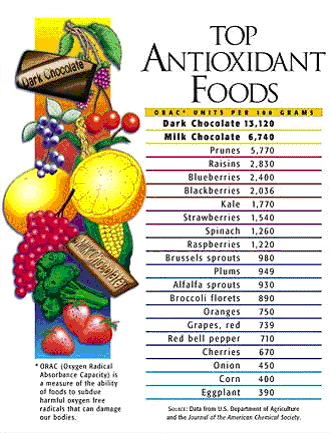
Recipe: Kale Shake & the Sunshine Band

Being able to manage means having enough brain and energy to work with. In recovery from a major setback, that means getting down enough kale and berries to choke a couple of horses.

The most manageable way for me to get them in is via my handy little one-person blender. It keeps them raw (maximum nutritional value) and prechews the kale, which can really be troublesome after the 3,000th bite.

Here’s my basic recipe. Options and rationales are below.

– handful of berries (I prefer blueberries and cane berries), or 1/3-1/2 a half-pint container.
– about 1/2 cup water (helps soften berries)
– 3-4 medium to large stalks of the fluffy kind of kale, called “lacinato kale.” 7 or 8 stalks of the smooth variety. Chop in strips ~1″ wide, depending on blender strength.
– about 1/2-3/4 cup apple juice or cider.
– 1/8-1/4 teaspoon cinnamon.

– Options:
   = Dessertspoon of nut butter or a slosh of yogurt, for protein and a bit of oil/fat to help me absorb all the nutrients.
   = Pinch of stevia powder: adds sweetness, further aids with blood sugar stabilization.

Kale: given the quantities I eat this in, it has to be organic or I’m in strife.

Berries: I use either fresh or frozen, whatever is available and affordable. Always organic or close to it, because industrial growers use lots of pesticides on most berries and they’re hormone-based (estrogenic) – I used to live near strawberry country and the spraying was really obnoxious. I tried using berries grown by industrial methods, to save money, but it put me on a horrible hormonal roller-coaster… 2 solid weeks of PMS? Not so good.

Cider/apple juice: provides malic acid, which helps clear garbage out of the cells. Also helps cut the bitterness and predigests the burpy stuff out of the kale. Use a splash of raw cider vinegar if you have to use another juice.

Cinnamon: It cuts the bitterness the rest of the way, and helps stabilize blood sugar. There’s a lot of sugar in this, for me. You wind up not tasting it, but the shake goes down better.

Options: I often add the nut butter. The resulting texture is creamier. The yogurt, even a little bit, makes the shake more filling, so it’s good for making it feel like a meal.

I recommend adding a bit of oil/fat, because it’s so important to squeeze all the nutrition I can out of each bite (especially when nausea makes eating unpleasant) and oil or fat helps with the absorption of key nutrients in this shake.

I also find that pain is less and thinking is better if I get adequate fat in my diet, meaning, a moderate amount more than I need to absorb this nutrition; one day I’ll remember why.  It rings a bell from my nursing school classes. Might relate to the demyelination issue in chronic CRPS.

If I don’t add a bit of something oily to the shake, I have a slice of aged cheese or meat, which provides brain-friendly fat and also gives my body neurotransmitter precursors — adding more oomph to the brain-value of what I’m eating.

It’s an uphill slog but I’m determined to get better again. These shakes really help. Trouble is, there’s only so much room in an individual tummy, and I do need to stay under a bearable weight and eat other things to stay in balance.

Sigh… It’ll work out. It’s hard to be patient enough, but healing in the face of profound illness does take time. If there’s one thing I’m learning, it’s patience.

Time for another shake…

The mighty steed (maybe)

As some of you know, I have it in mind to travel around the country, in a vehicle I can stand to use for more than an hour a day, and interview fellow CRPSers who know more than I do. If we pool our knowledge effectively, I’m absolutely certain that we can point the way to a cure, so this is by way of being the most important work of my life.

The output of these interviews is going to go under an umbrella project, a 501(c)(3) we’re putting together, called “CRPS: Art & Spirit” – but that’s another blog.

I’ve been car-less for a long time, which is tough in this country. After the usual research and footwork, I wound up buying a  Toyota Highlander, 2005, less than 80,000 miles on the odometer, a tad over budget. It looked good (and, with deep red coloring, is the perfect visual for this disease), it felt fantastic… But I noticed the engine hadn’t been fully serviced. It’s been in the shop for two days now. It’s supposed to be ready.

What started in a sweet blaze of optimism is going sour as the time comes closer to put my signature on paper. (We closed the deal after hours.) I had to call for an update to find out the car was ready; now it turns out my insurance company is one they don’t like the flavor of; and it turns out, with additional tone of voice, that I’m supposed to make an appointment to do the paperwork.

Excuse me? At a car dealership, I need to make an appointment for paperwork?

This does not bode well. I suspect distraction. I’ve already asked for a copy of the documentation on the work that was done.

… So here’s the thing.

I’m a nice, middle-aged, former RN… with a devastating, incurable and painful disease… with (I’m happy to say) a growing readership… using this vehicle as a tool to work for the greater good.

And documenting the entire process.

Is this a person anybody would really want to deal badly with?

I’m pretty sure the answer is no. But we shall see how this goes. I’ll keep you posted.

Not even anger is wasted

I’ve been struggling with how to make certain changes when my mind and body are so intolerant of change. I’m not naturally intolerant to change — quite the opposite! — but CRPS makes changes cost me a whole lot more.

Selling my home of 6 years, moving twice in one month to different regions under difficult circumstances, starting a relationship (which quickly became long-distance), having a setback with CRPS, and getting a windfall, is a heck of a lot of change in less than two months.

Some of them are good changes (for a change, ha ha) and am I ever grateful for that! But they cause significant shifts in the mind, which causes significant shifts in the body. …With chronic CRPS, there’s simply no practical difference between physical shifts and mental or emotional shifts any more. The domino effect is complete.

I had malabsorption syndrome for a few weeks there, where all my food went whizzing through me and I couldn’t get much nutrition out of it. It has settled down, but I still have considerable endocrine weirdness and I’m gaining too much weight (more than my intake should cause.) This means my feet and knees are under still-heavier attack from CRPS and fibromyalgia.

I find this disturbing enough to be frightening — if my feet get wiped out, there goes my one good form of exercise — until I got reminded of one of those things I used to know, back when philosophy was easy, before this past decade’s descent into Hell: “Fear and sorrow inhibit action… anger generates it. When you learn to make proper use of your anger, you can transmute fear and sorrow to anger, and anger, to action.”

That’s from Millman’s Way of the Peaceful Warrior, a book I couldn’t read for years because allegory’s contrived tone always put me off. One of the great advantages to getting my butt so severely kicked for so long is that I finally shed a lot of intellectual arrogance; I can now stomach the clumsiness of allegory, if there’s something worth gleaning from it.

That tip alone might be worth the effort. I’ve got plenty of anger, and rightly so. Rather than always managing it out of sight, I can dump my fear in there, where I can use it.

Chosen change is mine. Make way.

Brain fog …and living anyway

I’ve been struggling with chronic brain fog for awhile. I generally wait for a clearer time to blog, but I’m not sure that’s sensible. It’s been ages.

This could go on for quite some time, especially since my figuring out how to fix it is going to involve a better-functioning brain than I’ve been able to bring to bear. Or else a flash of insight. Or a tremendous stroke of luck. Possibly a gift from the great good gods. I’m open to all of that!

The old idea was that it was silly to post unless I could post something I’d be happy to reread, and I can tell when I’m not happy to reread something if it gets changed or deleted. I’ve been changing and deleting  more, indicating a certain amount of wasted effort.

I’m beginning to think it’s silly not to post. This is life with CRPS, after all. It goes on, whether I’m ready for it or not, and frankly, it does involve a certain amount of apparently wasted effort.

Just enough

The feds owe me backpay. It should come to quite a chunk of money. Naturally, some of my friends are spending it for me according to their own wishes and tastes. Bless their hearts.

It’s not here yet, and I have to manage with what I have. I’m grateful for my monthly disability income. It would be nice to have more, but it’s enough for me to live on. Just enough. My  income is more than many have, and I have really simple tastes… but most people can live a whole lot cheaper than I can, because my “basics” are different.

I want to ask my blithe friends to point to something in their cupboards — something to eat. Anything.

  • Pasta? For me, that’s 3 days of poor vision, no memory, no thought, of being so disoriented I’m unable to drive, let alone get to the end of a sentence. Corn and rice aren’t quite as bad, but they still cost my body too much.
  • Beans? Depends on the bean, but it usually means sluggish bowels, insulin resistance, worse nerve pain (because the endocrine misbehavior triggers inflammatory responses), and disproportionate weight gain. Every extra pound I weigh is a tax on my feet and legs, where the pain and swelling are already about all I can cope with. 
  • Cannned goods?  Neurotoxic preservatives that set my thoughts rattling, interfere with sleep, make me feel like someone took a baseball bat to my head. 
  • Soda? Oh boy, let’s talk about soda. The phosphoric acid alone will send my peripheral and central nervous systems into spasms, and the caffeine throws my fight-or-flight response a curve-ball. Don’t even get me started on the corn syrup. Corn fractions are bad, but high fructose corn syrup is a straight descent into neurogenic Hell.

I have to put expensive berries and piles of organic greens in my cart.

  • If I don’t eat them several times absolutely every day, my brain starts to shut down. 
  • If I eat too much of the herbicides and pesticides used in conventional produce, it’s a quick descent into autonomic Hell, with weeks of constant PMS, radiant gin blossoms, and blood pressure that won’t settle down. 
  • I choose the high-end cheddar over the store brand. Want to know what they use to keep the store brand “fresh”? I need to let my bowels continue working, thank you… But aged cheeses provide precursors for the neurotransmitters used in memory and decision-making; when I’m having trouble thinking, sometimes all I need is a bit of good cheese and a couple of hours to absorb it.

I spend hundreds of dollars each month on supplements, herbs and homeopathic preparations, carefully tuned at every purchase to make sure I’m getting the best possible effect for my money. Collectively, they let

  • my mitochondria cope, 
  • my nerves fire, 
  • my brain work, 
  • my body repair itself — reasonably successfully, most of the time. 

I constantly double-check and experiment to make sure I’m not wasting my money, that every one of them makes a real difference. They are not optional, and there is no slack in the system.

I can’t live like a normal person. If I try, I’m dead. It’s not drama, it’s just a fact.

I don’t choose to live like this because I can afford it. I live this way, and do without other things. I think of those who live in houses or flats with multiple rooms, petting the companion animals they can afford to feed, with their feet on a coffee table or rug, drinking out of their own mugs. And the poor things don’t realize how good they’ve got it, but eye my windfall askance and look for something more to be dissatisfied with. It’s human nature. I’ve done the same, back when I could afford to.

Everything I own right now fits into a messenger bag and a carryon; that’s it. There are three boxes and a dive bag stored with a friend somewhere. I know I’ll see the friend again (to the extent one can be sure of anything), but heaven only knows whether I’ll see the stuff, because stuff tends to leave me by freaks of chance. In the end, if it’s not important enough to keep with me, how badly do I really need it?

I’ve learned to be relaxed about possessions. Having the US Postal Service lose thousands of dollars of art, books and paraphernalia at a formative moment in life, can have that effect. All I need is enough to wear, plus the laptop and e-reader. Other things (pots, knives, movies) are useful, but I find them hard to hold onto; they keep slipping away, one way or another.

I know exactly what I’m going to do with that backpay. Every penny will be used. Not spent, not frittered, not idly indulged with. Nothing will be wasted. It should be just enough.

There is still no excess or slack in the system. But as long as there is just enough, I can make it work.

Vocation and purpose (illustrated)

I’ve spoken of myself as a writer for ages, and made a decent living writing professionally (about software) for several years — until I got disabled as a consequence of the long hours.

Look a little more closely…

My inward life (narrative, spirit, meaning) and outward life (events, tasks, purpose) have been approaching each other at an increasing rate, and the transparency this creates causes some re-evaluation of publicly-held assumptions like what I am. For instance, is being a writer my core occupation — my “real” job, where “real” means “true, valid, essential”?

It dawned on me that writing, for all its wry, playful and muscular delight, 

is, for me, a means to an end. Here’s why.

I’ve considered myself a writer since I was 10 years old. My mother gave me a blank book to write my poems and stories in, when I was 11 years old — a step up from my plethora of scoliotoc spiral-bound notebooks — so at that point I was clearly committed.

But my earliest coherent memories are of comforting her, of trying to rescue baby birds, of helping to wash and change my baby brother.

So there’s something I’ve been doing longer than writing.

As an adolescent, I probably spent more time rescuing cats, dogs and (more successfully this time) birds than I did putting words down on paper.

Writing is a joy, and it’s a tool. I know I wrote the right thing when someone says, “That really cleared things up for me,” or more transcendently, “This helped me so much.”

I write to heal. First, I wrote to heal myself, but now, it’s a way of doing a bit of good in the world outside my own head.

As I remarked to a friend of mine, some people go into the healing professions because they like the feeling of power it gives them to help others.

(Many of them are very good at their challenging jobs, so I’m not inclined to dis their motivations.)

Some of us go into it because we like to help people find their strength and set themselves free.

I used to enjoy some of that power, though I believe I did a good job of maintaining perspective in the face of the quite extraordinary impact an emergency nurse can have. 

Of course, what I really loved about that job was the scope and depth of challenge, and the instant feedback. Never a dull moment, and I learned a lot.

Now I have lost what taste I had for power over others, even benevolent power. But I have always loved helping people find their strength and watching them set themselves free.

These days, when I think of anything worth doing (after taking care of myself), that’s what it comes back to: helping people find their own strength, and watching them set themselves free.

Writing lets me do that in absentia, while I’m unconscious, perhaps even long after I’m gone. If I do my job well, others will be reminded of their own strength, or find the clue they need to set themselves free.

So, I’m a healer… who writes.

At least I have better dress sense and less disturbing kibitzers than this guy.

I hope it helps.

(revised 12 March 2013, to add images and improve clarity)