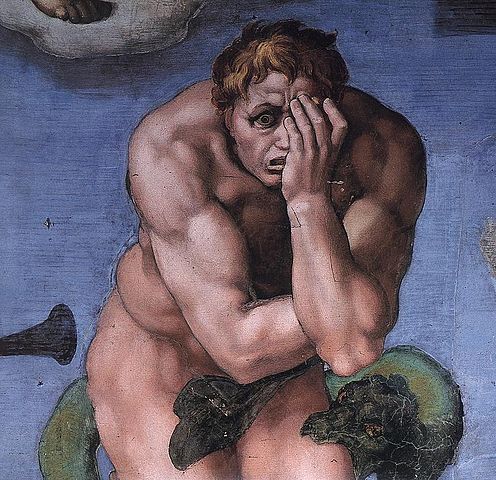
We get a lot of disbelief from normos who can’t imagine why we don’t spend more time in the shower. This is what you show them, to reduce the explanation time and shorten the period of disbelief. We have really good reasons, a whole variety of them. (Mom, this explains why I always look for a bathtub to use instead, but you can give it a miss.)
I’ve talked over The Shower Issue with many people.
Keep in mind that I remember when showers felt wholesome and refreshing. I know what people mean when they say, “Have a Nice Shower — you’ll feel better.”
I have to make Nice Shower a proper noun to distinguish it from other showers. Nice Shower abandoned me long ago. We hardly ever meet each other now… maybe once a year or so.
They’re still dead wrong. I don’t get Nice Showers, though I sometimes get bearable ones.
Some people find each moment of preparation, ambulation, ablution, and drying off to be exhausting beyond belief. Taking a shower consumes most of the day.
Some people have ferocious blood-pooling and dysautonomia from their reaction to standing upright while being covered in water that’s running down — like their battery. Bloodpooling feels awful, and the stubborn dizziness can be nauseating.
Some people can’t articulate why it’s so awful because the English language is not good at describing unpleasant states or experiences. If it’s not bleeding, breaking, crushing, or falling, our language runs out.
For me, it’s several things, and it varies widely from time to time. Here are some of the options in play for me…
Every drop running down me might as well have a hook in its head and be pulling the life-force from me. That’s a real drag when it happens. Literally, ha ha.
The tactile experience of being jabbed, tapped, and scraped by a thousand little nails or pins (different sized shower sprays just mean different sized nasty objects) is, frankly, appalling. 0/10 do not recommend.
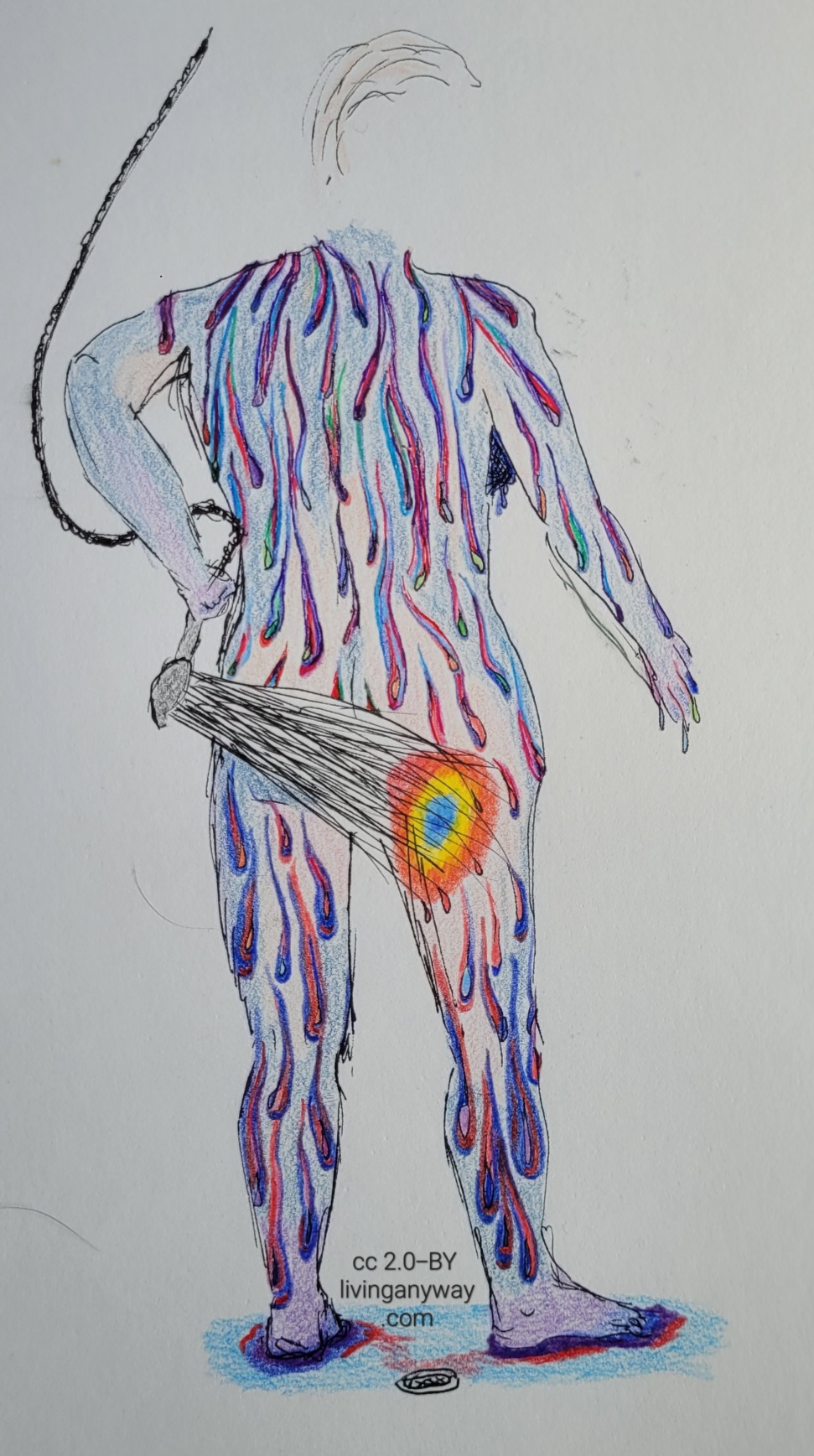
And then there’s the temperature issue. In me, CRPS hot-wires my perception of temperature on my skin far beyond what’s reasonable, including my perception of temperature changes. The micro-changes, on days like today, are no fun at all. Imagine something feeling like a stream of hot coals when it first lands, then like a band of ice next to it, repeating that pattern — until the next droplet. The water in the basin, regardless of its actual temperature, feels freezing, with a runnel of boiling-hot swirling through it. I came up with an image for it, which even shows the nicer temperatures, though not how quickly it all changes again.
It’s a bit oversimplified, scaled for Web-based use, but it gives an idea of what the temp-two-step is like:
Too bad it doesn’t actually show. That’d be awesome!
Anyway… when people say that showers are horrible, it’s fine to just believe them, even when your own experience is quite different.
New series: Quickies. Short, practical notes, mostly about things to try for problems with CRPS, dysautonomia, mast cell & histamine disorders, etc.
Problem
I get what my grandmother would have called chilblains: cracks in the calluses around my feet and sometimes on my fingers. Nasty, uncomfortable, and — because they’re surrounded with thick walls — hard to heal.
Option
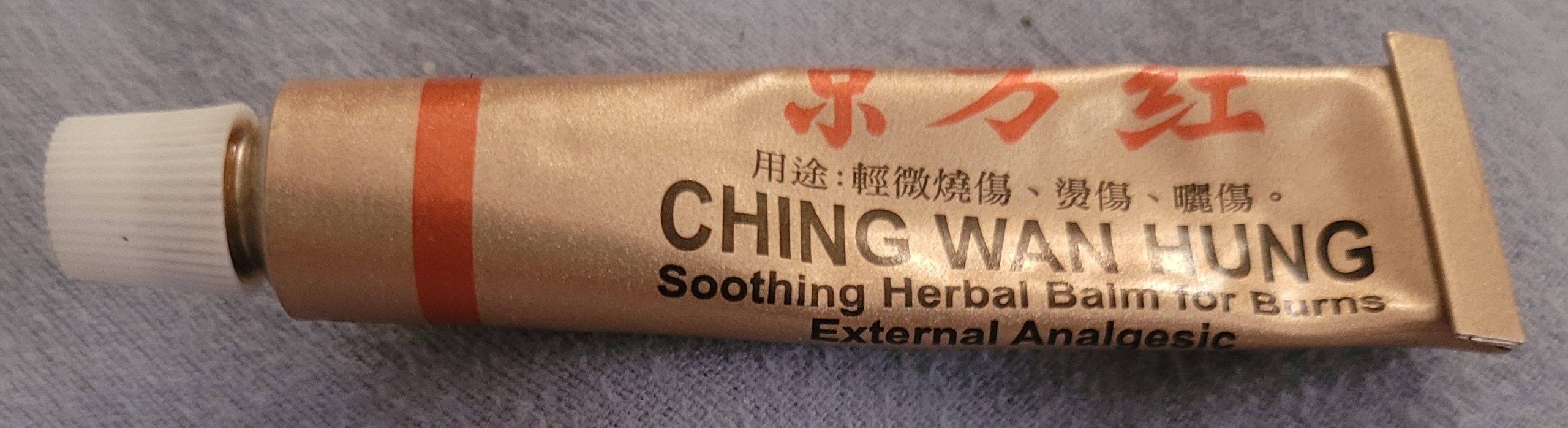
I’m an old nurse. I know a lot about healing wounds of all kinds. Nothing worked, at all …until I tried Ching Wan Hung, in the copper-colored packaging.
Ching Wan Hung: Different manufacturers but similar copper packaging
It’s a traditional herbal product with Chinese cinnamon, which smells a whole lot different from the tropical stuff we eat. It also has menthol, which I can’t tolerate normally, but is no problem for me here. I can scarcely smell it, so maybe it’s a dosing or production issue. Most herbal salves bring on menthol like a battering ram.
Usage
I squish it right into the cracks and holes of the sores, rub it in well, then put a dark sock over it for an hour. (It stains light colors.) Then I get on with my nap, or my task, or whatever. I put it on twice a day, before getting out of bed and at bedtime. I should probably use it more often for faster results, but I’m not very good at that.
It doesn’t work for everyone, just as everything else I tried, that did work for other CRPSers, didn’t work for me. It’s another option.
Sourcing
I’ve found it online at the usual places and at my local Asian/ international market, usually in little copper-colored tubes, which is more hygeinic than the larger tub you have to stick fingers into. It’s cheap for what it is, too.
You can ask for “Chinese burn cream” if you can’t remember the name.
Caveats
Use common sense (all my readers are extremely sensible, so of course you will).
If it brings up a rash or makes you wheeze, wash it off well and never use it again. Not for wounds that bleed readily or might be infected. Never use on bites, because mouths are utterly filthy and bite wounds need different care. If you can’t feel the tissues where your chilblains or non-healing sores are, see a doctor about them and follow their advice over mine. And so on.
This is about the messy intersection of CRPS & the mechanical aspects of central nervous system dysfunction, and dealing with those effects.
I’m writing through the waunnng, waunnng, waunnng of a ringing headache. I’m hoping that if I hydrate, urinate, and (carefully) ambulate enough, it’ll pass faster. We shall see. Meantime, I’ll do my best to pass on some useful info.
The brain and spine are supposed to float in cerebrospinal fluid. We are supposed to stay hydrated enough to keep those sensitive tissues from grounding out.
We have 2 kidneys – each one capable of filtering twice the water we actually need – as a practical accommodation for the fact that, throughout history, most water was filthy and needed lots of filtering.
We have 4 times the kidney power we need for a busy, messy lifetime. We’re supposed to use them! The more we use them, the healthier they can stay. They love to do their job.
When we’re properly hydrated, our brains and spines can float comfortably in their spaces. When they float comfortably, they have plenty of shock absorption protecting them.
Spinal care
Dr Faye Weinstein taught me an important part of brain & spine care.
I had too little cartilage in my knees, so I had developed the habit of dropping into chairs instead of using my legs to lower myself neatly.
She hated that. She visibly flinched, and one day she finally cried out in audible distress, “Stop doing that!”
I stopped doing that.
Just as she had predicted, my baseline level of misery became less.
Once I was out of the habit of dropping into chairs, then, when I did it again, it caused headaches and sometimes back pain (depending on my hydration, of course). I was no longer used to enduring this as part of my daily quorum of yuk.
That was (checks watch) over 10 years ago. My brain and spine, oddly enough, haven’t gotten any younger since then.
Yesterday (after a couple of days of being “too busy” to hydrate properly), while I was turning to admire something across the street (a boat or a building; I forget which)… I stepped off a step I hadn’t noticed. One step down, caught myself, barely stumbled, no harm done. Massaged my neck a bit, to ease the slight jamming on one side. In my formerly healthy system, that would have been that. Probably would have forgotten about it instantly.
But now is different.
It took 10 minutes for the icky feeling to set in at my low back and back of head. It took a little over 2 hours for the whole brain-fog and uncontrolled body pain to take hold. Chronic CRPS really is wired into the whole neurological system, and one of the hallmarks is how the spine takes on an anti-life of its own in the face of any signs of disrespect.
Clearly, my spine felt seriously disrespected.
Content warning – skip this description if you’re squeamish about pain:
We know that I have no effective pain control left to me, with genetic tweaks making narcotics disgusting (they make the pain worse, cause untreatable nausea, and trigger horrific mood swings), and mast-cell activation making NSAIDS unbearable (they cause a soft-tissue-wide inflammatory pain, making it feel like shards of hot glass are hammered into all my cells).
So, how to approach this?
There’s a super-concentrated lemon balm extract that helps calm down inflamed nerves. Lemon balm has been used to calm nerve inflammation & pain for, approximate thousands of years.
Since all the nerves coming out of my spine are feeling very hot right now, I’m taking that about every 8 hours.
Note: check this against your meds, especially with GABAnergics. Ask your pharmacist to check their standard herb-drug interaction charts.
Pain salve on my spine and up my neck before bed, and also on arms/ shoulders and hips once I tried to sleep, helped noticeably.
It was a rocky night, but I’ve been getting as much water down as my tummy will tolerate and, now that my kidneys have been flushed 3 times, the headache is noticeably easing.
Conclusion
We can’t be alert every second. Our senses are so distracting at the best of times. Finding ways to manage these impacts is unspeakably important.
Long-term pain patients tend to get self-concerned to a degree that could be obnoxious normally, but it’s a legitimate self-care attribute in a life where one wrong move or one wrong exposure can destroy weeks or months of work.
Image by neurollero on flickr, CC share-alike attribution license.
One benefit of this self-attention is learning how to manage and mitigate the problems that arise by catching them early, and sharing the info in the hope that it’ll do some other painee or their caretakers some good. We have to learn from each other. Nobody else is as qualified.
I headed to psychotherapy after texting, “I’m on my way. I’ll see you in person today, barring the unexpected”
I was feeling a bit cautious, because a couple hours before, the thought had come to me, “when things get hectic, trust your training.”
What training? Was I about to have a series of intrusive thoughts harking back to the times I’ve had to file restraining orders, one of which magically disappeared and I had to flee the area – right before Christmas? I hoped not. Martial arts training has certainly come in handy, but come on…
No, no intrusive thoughts, but I did wonder which set of training I should have in mind.
A few miles down the interstate, I saw a pickup truck stopped dead, and a sedan facing it.
People were only just getting out of the truck. I put my flashers on and pulled in behind.
I definitely trust my training in this kind of situation. I put my anxiety to one side and sailed in.
The only person to worry about was a littlie in the back of the sedan. Had spontaneous pulse – a good one – and respirations. He could speak, to the limit of saying, “I want my Mommy” (sound of heart-strings tearing), so I checked his spine at his neck. It was there, but not quite right. Once he could speak more, he told me his neck hurt where I touched it (I’d been holding his head & neck stable since I felt it). As I told the fire department medic later, “on me, it’d be a chiropractic adjustment. On a littlie that age, I’m not sure.” He nodded and sent his buddy in with a pediatric cervical collar.
Littlie’s mother was on the phone the whole time with him. So much love swirling around in that car. I told the Dad that I noticed it, and that it’s healing.
At each stage – or rather, just before the next round of excitement – I explained to Littlie that there would be more people, highly trained people who really cared about him being okay. Let him know roughly what to expect at each stage. Coached him to go along with things as well as he could. When the fireman asked him to squeeze his finger, he squeezed my hand instead (sound of heart melting).
I could see most of my words going over his head (as expected), but I could also see the sense of reason and structure calming his exhausted and shocky brain so he could tune in a little more.
I grew up in a musical household, so naturally I hummed pretty little made-up tunes and it visibly calmed him – and possibly his parents too, a little.
I’ve been working on learning how to stabilize a shocky system for 25 years, on top of my trauma nursing work. I’m only a patient – and a nerd – but still, I have lots of good training. I trusted my training in that, too.
I gave his mother my number right before the fire department and EMTs rolled up. I think it was a training day, because there were 7 or 8 more people there, one of them a cheerful charming know-it-all (every team needs one of those) who got the best responses out of Littlie.
I let the kid know I had to go but his Mommy would stay on the phone with him and he’d be cared for by these really nice people. Told his Mom I loved her kid and he was terrific (sound of heart-strings pulling).
Once his c-collar was on (definitely a training day; I helped get it positioned and sealed correctly in the end) and they had the gurney ready, I realized I had to stand up. After perching my crippled butt by one hip on a steel door frame for half an hour. In front of people. Specifically, a total of 9 or 10 fit, athletic slabs of beef (-cake) no less than 10 years younger than me, and most of them half my age.
This was not going to be great for the ego, but I knew I could get a laugh out of it.
So I used both arms and every available leg (which was slightly less than 2) to lever myself upward, saying, “I’m an *oooold* trauma nurse” by way of cover, and squirmed through the kindly, protective testosteronic press and into fresh air.
I signed off with everybody and retreated to my comfy car.
I called my psychotherapist and said, “Remember what I said about ‘barring the unexpected?’…”
We had a phone session once I was safely off on a side street and in a proper parking space. She was full of commentary about how I applied those psych skills and met psychosocial and informational needs appropriately, as well as the nursey stuff. So yeah, that was good…
… because my brain was churning constantly about every single moment and thought and decision for an entire hour. Looking for a fault. Looking for something I’d missed or where my training had lapsed or been forgotten. Cycling through, over and over, looking for any lapse.
This used to be how I improved my skills – look for errors, even tiny ones, and figure out how to prevent or avoid them in future. Now, it’s just my ADHD brain torturing me.
And computer says Nope. Failed to suck. I’m pretty sure I failed to suck. That’s a relief.
I’ve been thinking about it pretty much nonstop, but rather than worrying myself woolly, I got an organizing thing for my car and picked up some food. Both of these are calming, grounding things, perfect for pulling my adrenaline out of the stratosphere.
Then I crawled home and had fresh corn and gluten-free carrot cake for dinner. It’s good to have a little sweetness when your body is still convinced the world is full of excoriation.
I’ve had no calls from them and I don’t expect one. They’ve got to be absolutely wrung out regardless of how things went. The kid comes first, and then comes their own care and self-management.
They don’t have to think of me ever again: I know how shocking and painful it could be to revisit the moment.
I’d love to know. I hope like crazy that the kid came out of it OK. I never got to follow up with patients when I was a nurse (because confidentiality), and I’d sure appreciate it if this family wanted to give me a heads-up just to soothe that old itch.
All that being said, I want all you non-nurses to know that they don’t owe me one word of contact or one moment of concern. I was in the right place at the right time with the right training, and I trusted my training. That’s what we do.
They have the hard part: figuring out next steps with a shook-up and possibly injured Littlie who was going home early because he was already ill.
That kid was having a rotten day.
I sure hope it got better.
Forestalling future problems
I don’t have a jump-kit for my car. That could be a problem in the future. I was lucky this time because all I needed was my brain, arms, hands, and voice.
It’s probably the 6th or 7th accident I’ve stopped at and I really do know what’s needed at the roadside – and it isn’t much. I used to get confused by the fact that I didn’t have a stethoscope, oxygen on tap, i.v. gear, and All Tha Meds. Once I’m on scene, though, it gets very easy.
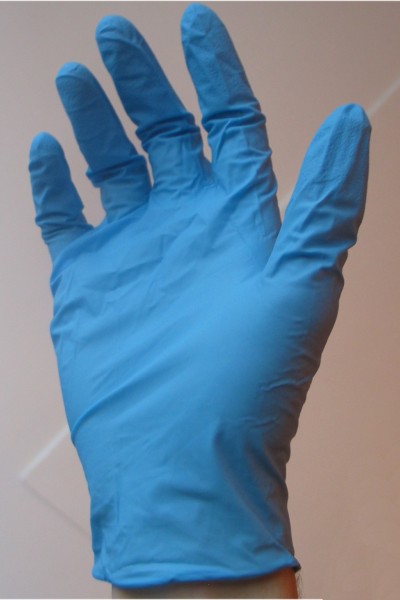
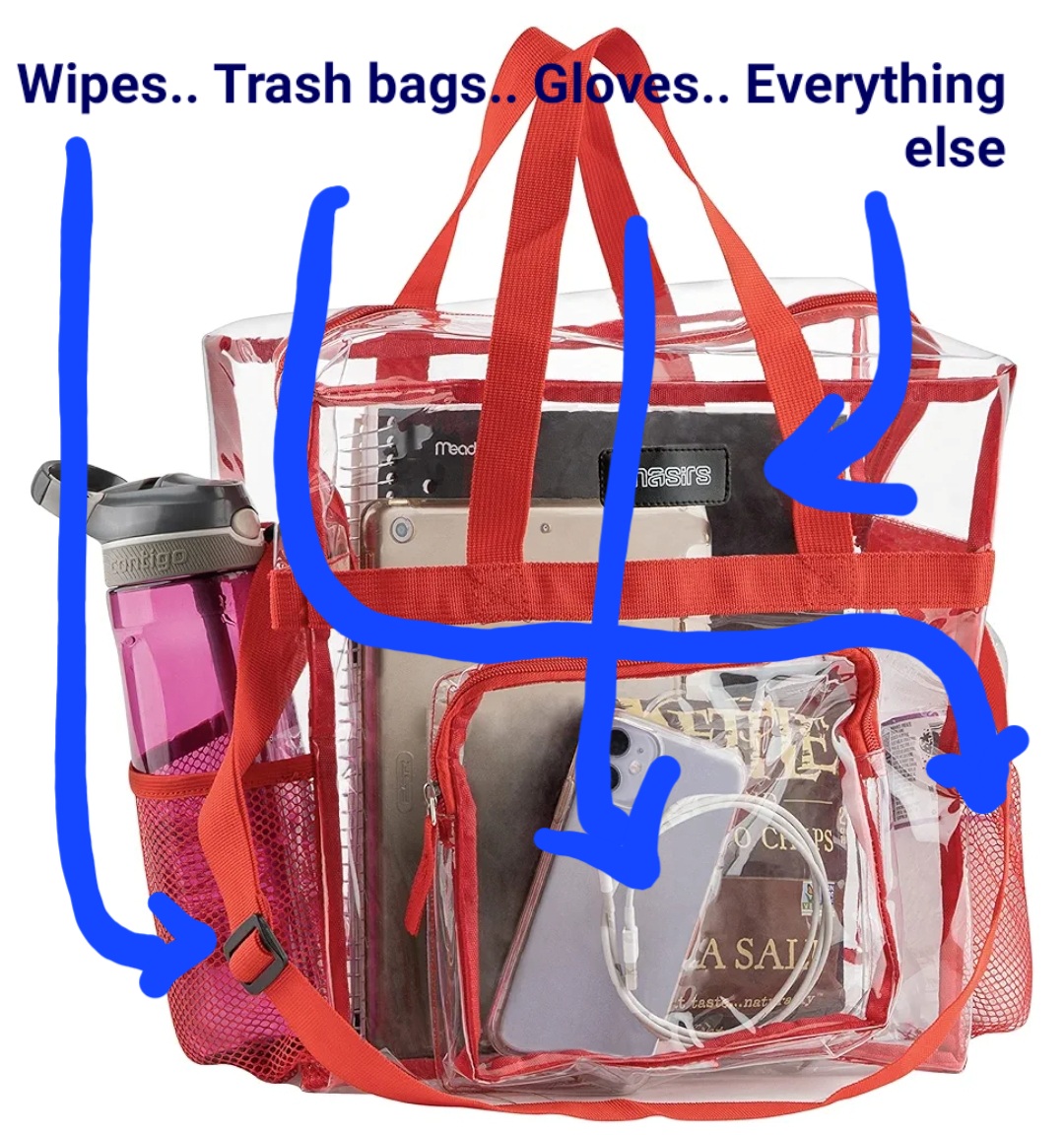
Any blood or, indeed, anything wet? Nitrile gloves, packed up in pairs and stowed in a closed outer pocket to keep them clean & dry and easy to get on.
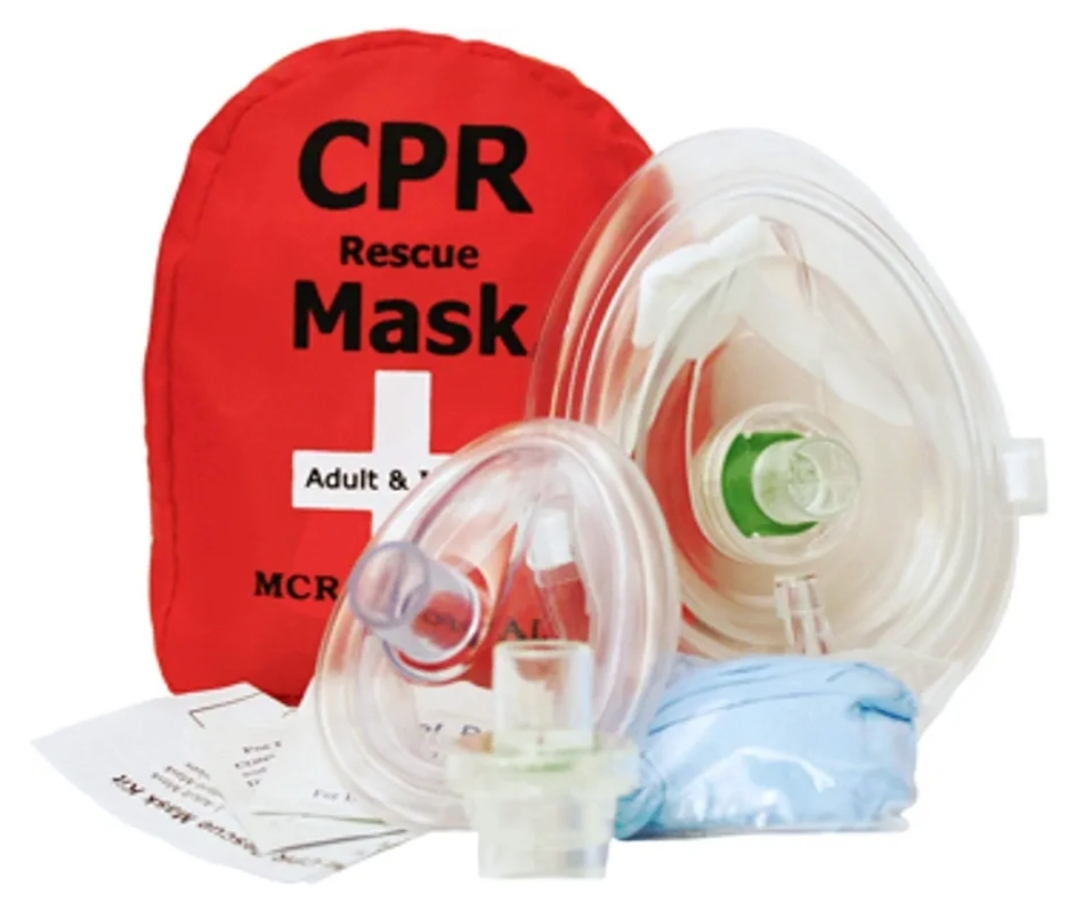
Heaven forbid, does anybody need CPR? This very rarely happens, but when it does, I don’t want to have to dig for the needful. I physically can’t do chest compressions (though I can coach any able-bodied person properly) but I can darned well use a mask with a one-way valve as if I’ve had years of practice. Years. You don’t have to have that (the training has shifted away from doing rescue breathing) but I feel that I do.
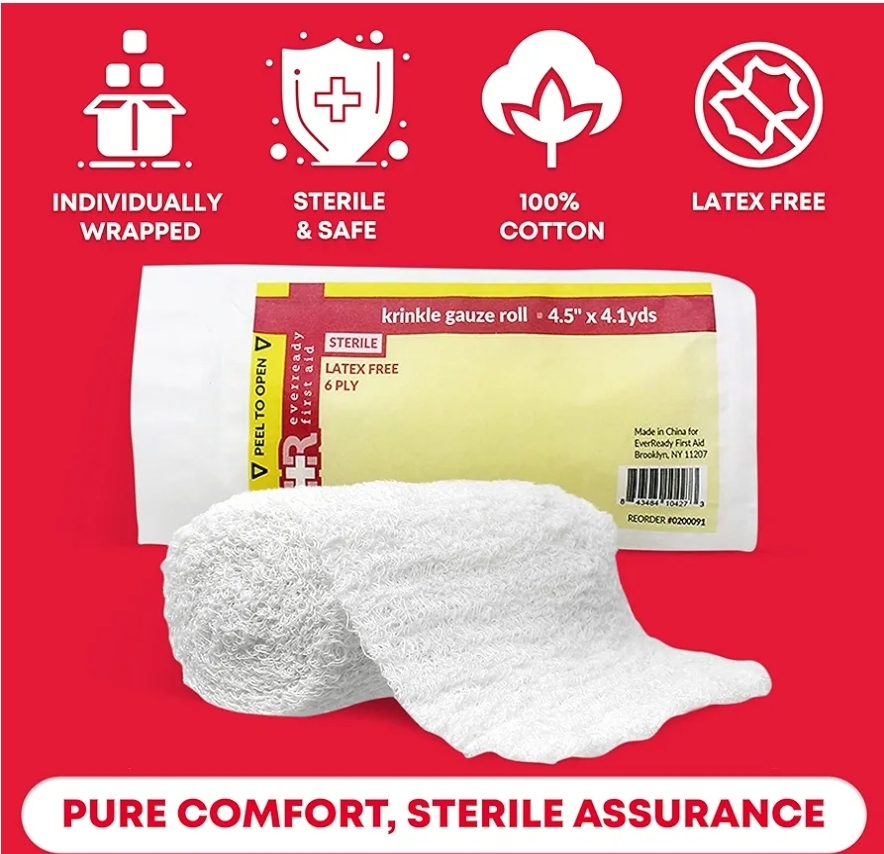
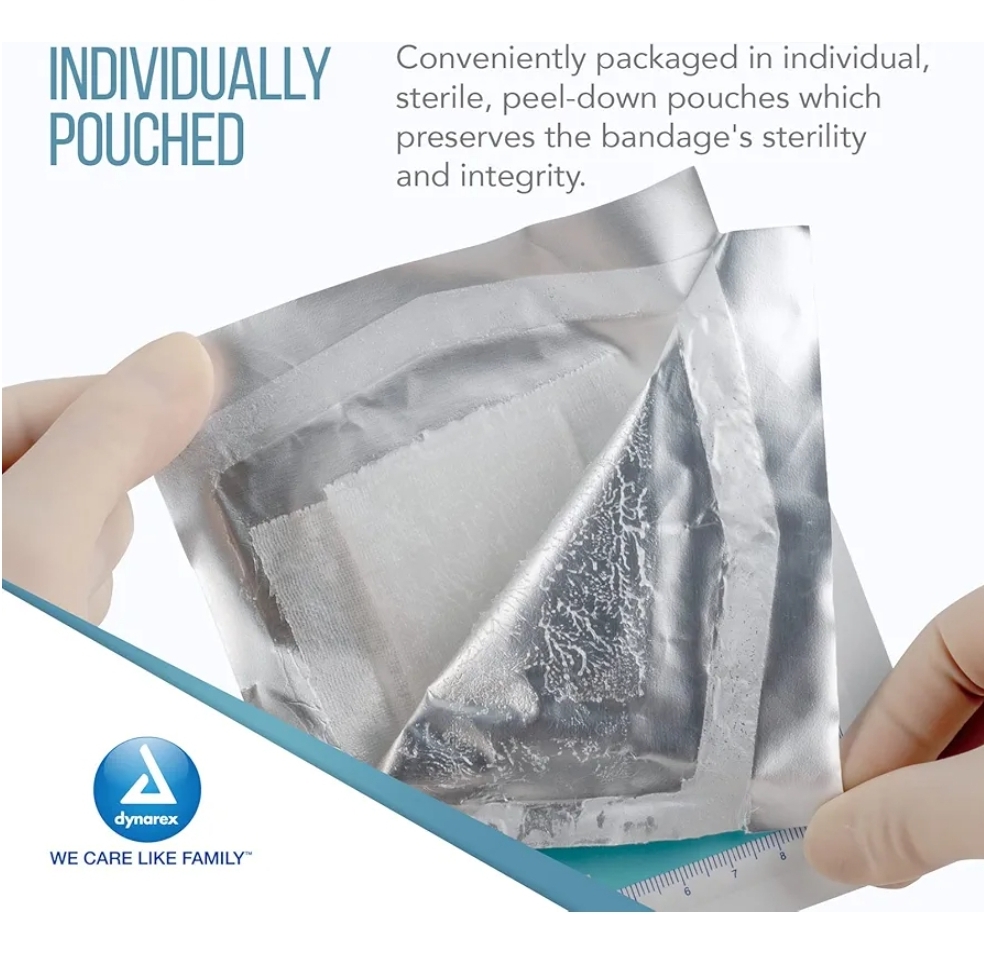
Pressure dressing? Kerlix. Sling? Kerlix. Wound cleaning? Kerlix makes a great sponge. Wound wrap? Kerlix. Piece of clean water-resistant paper to slap over a bubbling wound? Wrapping off a Kerlix.
So, plenty of Kerlix.
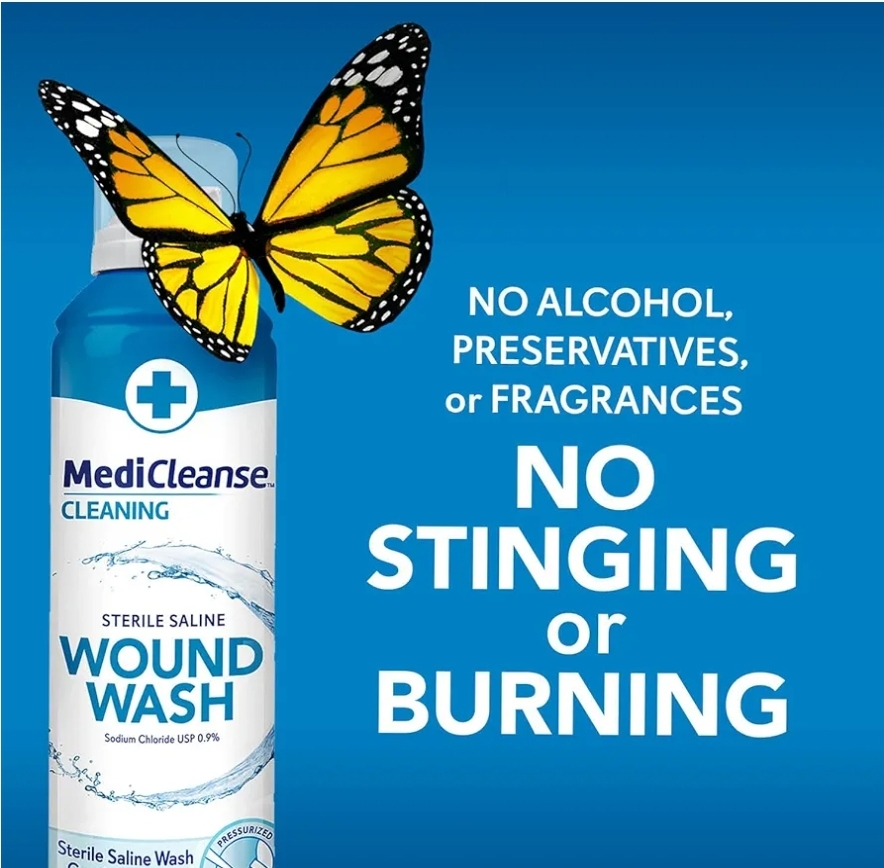
Road rash? Plenty of saline rinse (and a Kerlix) then a petroleum dressing to stabilize the damage until the ER can do a better job.
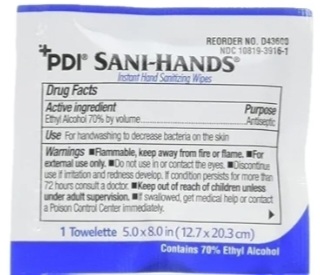
And possibly most essential: disinfectant cleansing towels, individually wrapped and big enough to grab. Those get used before if there’s time, during if the patient wants cleaning up, and definitely afterwards.
Because allergies & neurological reactivity, I stick with ethyl alcohol 70%.
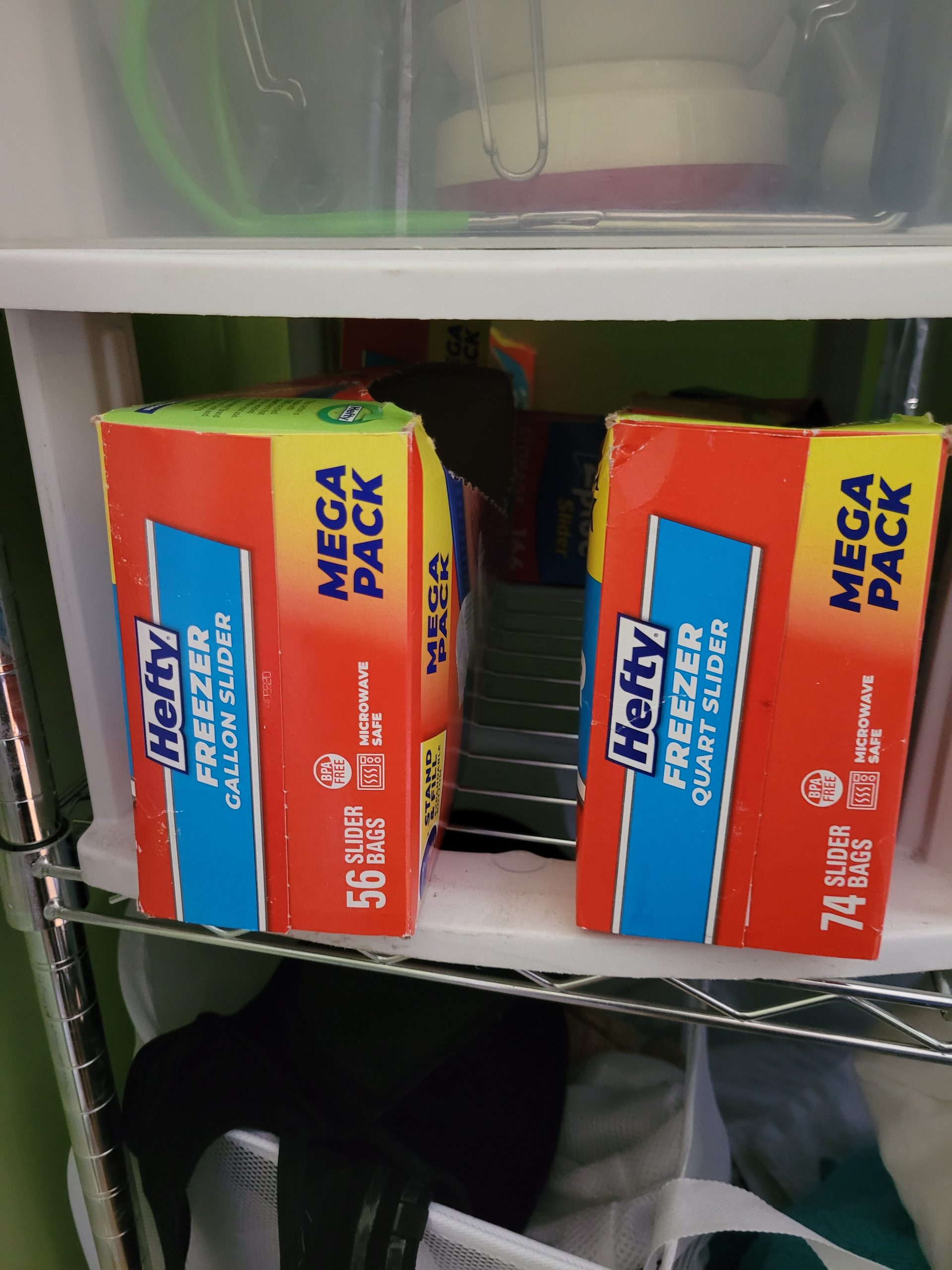
Secure the mess. A gallon-sized zip bag or 2 for garbage and wrappings. Having a garbage bag is one of the things that separates rescuers from ego-trippers.
Oh, did I say that out loud? Sorry. I don’t want anyone not to stop & help… I just wish that, if they’re going to the effort of bringing gear, they could pick up a bit. Seeing blood and mess is not good for survivors & passers-by.
I got all these online for about $10 each, and also got a clear bag (with outside pockets) to put the kit in.
I’ll keep backstock at home.
What I don’t carry
Blood pressure readings, stethoscopes, and pulse oximetry are at-home and in-hospital concerns: we want to know if what we’re doing is working over time and refine our understanding of the body’sfunctional state.
In the field, the main issue is not whether the patient has rales or a murmur, but whether the lungs and heart are keeping them alive – a much simpler, larger-grained issue.
So, these tools might be nice to have, but for a noodle-noggin like me, they’re an added complication and a bunch of expensive equipment to lose at the scene.
In the field,
You need to keep pulse and respirations going,
the spine stable,
make sure the inside stuff stays inside
and in place,
and (as much as possible) the outside stuff stays out – or at least doesn’t move much where it’s inside the person.
And that, ladies and gentlebeings, is Advanced First Aid and Basic Life Support in a nutshell. You’re welcome 😊 Now go get that training… please?
I wrote the start of this for a fellow spoonie today and realized it’s a good starting point for a subject most people find overwhelming: reading medical science when you’re starting off as a non-scientist.
The article I cite first is a good example to start with, because it’s written well and has passages of clear English to work with. So…
I suggest reading the abstract and introduction. After that, just skim the first sentence of each paragraph, since (in science writing) that tells you what the paragraph is about.
If the first sentence makes no sense, skip that paragraph.
If you can figure out the first sentence, glance at the rest of the paragraph to see if there’s any more to glean. If not, move on..
It’s a skill
Reading science is a skill, and skills take time to master. That’s expected! Share what you glean with your doctor and ask them to help you understand it better.
Honestly — this isn’t to puff myself up, it’s just the nature of patients to dis themselves, so hear me out — if you can read my stuff and make out half of it, you are plenty smart and literate enough to start reading science. It’s just work and time, and the time will pass whatever we do, and the work will get easier with time. We just have to take care of ourselves and pick our time, when we’re chronically ill.
Using the right amount of honey
Doctors might give you attitude about comparing your Google search to their medical degree, but that’s not what you’re doing: you’re studying up on your condition, which is wise, and you’re expanding your info base on this thing that has imposed on your life, which is survival.
So, feel free to correct them sweetly, and don’t be afraid to pour some admiration on them if it helps them to re-focus on your information-gap.
The point is not who knows more overall. That’s not in question. When you talk to your doctor, you’re talking to someone who had to memorize, for instance, the Krebs cycle (here’s a partial explanation: https://www.medschoolcoach.com/the-krebs-cycle-mcat-biochemistry/) — so, yes, they have a depth and nuance of knowledge that’s nearly impossible to replicate without going to medical school.
They like having that acknowledged, because they take a lot of painful flak for not knowing everything about everybody’s illnesses all the time, and they need to know that you know what an effort they made to be able to work as a doctor.
So, it’s good to acknowledge that enormous effort.
Then they are usually able to hear you when you clarify that you’re not arguing with them, you’re trying to improve your understanding of this thing that affects you so profoundly. You trust them to help because of their knowledge.
Trust. Help. Knowledge.
These are keywords because they are core professional values for most doctors.
They’re important to acknowledge, and great to invoke and rely on.
That said… if you can’t rely on these characteristics in your doctor, even after you tell them that that’s what you need, then it might be time to find another doctor if you can. These core values are far more important than whether a doctor has good social skills or a good handshake.
When all is said and done, guess who has to live (or not) with the outcomes? It’s you. While the doctor is the subject-matter expert on the medical info around your condition, you are the subject-matter expert on being in your body and dealing with the fallout. There’s a degree of respect that should go both ways, though modern practice makes that hard.
The key to reading science is realizing — or at least, going ahead as if — you’re perfectly capable, and just need to practice. Science is written by humans, and you’re a human too.
1. You are a perfectly sensible person. If you’re reading this, you know how to read (or access translations from) English; also, you have access to a whole world of dictionaries. MedlinePlus is especially helpful in explaining concepts and helping us learn to read medical stuff.
2. Not all scientists can write well in English, and none of them write in English all the time. That’s okay. They went to school for a long time to get extra vocabulary and learn to do what they do; good for them. They’re still people, and they have to write in English at least some of the time. That’s where you can come in.
3. You can read the English just fine. Trust yourself and take time. With practice, you can learn more lingo over time, and get better at reading more science.
Just work from what you can understand now, and let that grow over time. You’ve got this.
Choosing credible sources
While you’re learning to read science, start where you can and work from there. As you get more confident and your understanding grows, you’ll learn to be choosier.
The gold standard for science info
When learning how to assess science, you’ll hear a lot about placebo-controlled, double-blind studies and that method is often important. This method of science gives us more reliable statistical probabilities about whether something will work in a certain situation. The statistical probabilities become reliable when several thousand people (“subjects”) have been tested, probably over many different studies.
With rare diseases, this is obviously pretty unlikely, so we have to work with less scientific certainty. C’est la vie.
Statistical probabilities have more limited value for patients than doctors, because we’re individuals, not pooled data. There used to be a phrase used in medical school: “Statistics mean nothing in the case of the individual.” This has gone by the wayside a bit, but it’s still true.
We may have to cast our nets further afield, because we’re looking for clues that might help us, personally. Be aware when you’re doing that, and put those science reports in your mental “hmm, maybe” folder.
I showed a case study that had a marvelous impact to one of my best doctors. He said to me, “If I could put that effect in a bottle, I would. It worked for that person, and we have no idea why. We do know that it doesn’t work for all these other people. Everybody’s different. Figuring out how to apply one thing to help a lot of people is our holy grail!” Lloyd Saberski, MD.
And that’s why doctors rely on the pooled data gathered from the scientific method. They want to help as many people as possible with each thing they try. Otherwise they fear they’ll spend too much time chasing rainbows.
We patients have to find our own rainbows, just as we have to count on our doctors to keep an eye on what’s statistically worth trying. It really is teamwork, and we both need to do our jobs.
What’s peer review?
Before you give a study to your doctor, it’s worth checking if it’s from a peer-reviewed journal. Don’t expect them to put too much stock in it otherwise.
Peer review means that other people in related fields have checked it over for sanity and validity. This is important for us patients, as well as the doctors who rely on the information.
You can Google whether the journal your article was first published in is a peer-reviewed journal. JAMA, BMJ, and the Lancet are all reliably peer-reviewed.
The value of literature reviews
Then, after a fair amount of studies have been done on a topic, there’s usually a literature review. This is when a qualified scientist takes a close look at all the studies, throws out the ones that were badly designed or poorly run (because bad technique creates bad data. “Garbage in, garbage out”) and writes an overview of what the current good science says.
They also discuss the strengths and weaknesses in the data, and suggest where future science funding could go, in light of the science so far.
Literature reviews are wonderful places to improve your knowledge of your disease/condition, expand your vocabulary, and get a lot better at understanding what goes into the science on your condition in the first place.
For instance, it used to be widely believed that most people with Complex Regional Pain Syndrome had had traumatic childhoods. (“Blame the parents” LOL.) There was a literature review done on about 30 years’ worth of studies, and it turned out that almost all of them were so badly-designed, poorly run, and calculated with so much bias, that nearly all of the studies had to be thrown out!
This taught me very important lessons:
– Just because most people say it, doesn’t mean it’s right, even if they should know better. This is an excellent attitude to have while reading science.
– Methods matter. You’ll learn over time how to sense whether the methods used are appropriate to the topic studied. The wrong method can lead to truly bogus results. The method has to fit the material.
– People lose their minds when they think about pain, as well as when they think about childhood trauma. In practical terms, this means I have to approach all normal (non-CRPS) people’s reasoning about my condition (which is characterized by relentless agony which a non-CRPS’d brain cannot even conceive of) with compassionate criticism. They do not know what it’s like, nor how to live with that pain and still think rationally. They’re not able to know. I don’t want them in a position where they do know, because that’ll mean their lives are as battered as mine is.
Therefore, every word they say has to be filtered through my awareness of how their minds get lit up by unreason, when they think about my pain. This, believe it or not, is perfectly natural. (Look up “amygdala hijack” for background on this mechanism.)
I survive because I’ve learned to substantially displace or ignore one of the most powerful primitive signals in the human body. That isn’t natural, and nor should it be.
These scientists mean well, without question. However, their logic is necessarily fractured when thinking about this, because they lack my tools for facing it. I need to dig into their data and methods before I can buy into their conclusions.
That’s good to know!
The conclusion of that literature review? CRPSers are likely (not guaranteed) to have had relatively eventful lives. Whether the events were traumatic or wonderful wasn’t relevant to our probability of developing CRPS.
In other words, we live in interesting times!
Where to find science to read
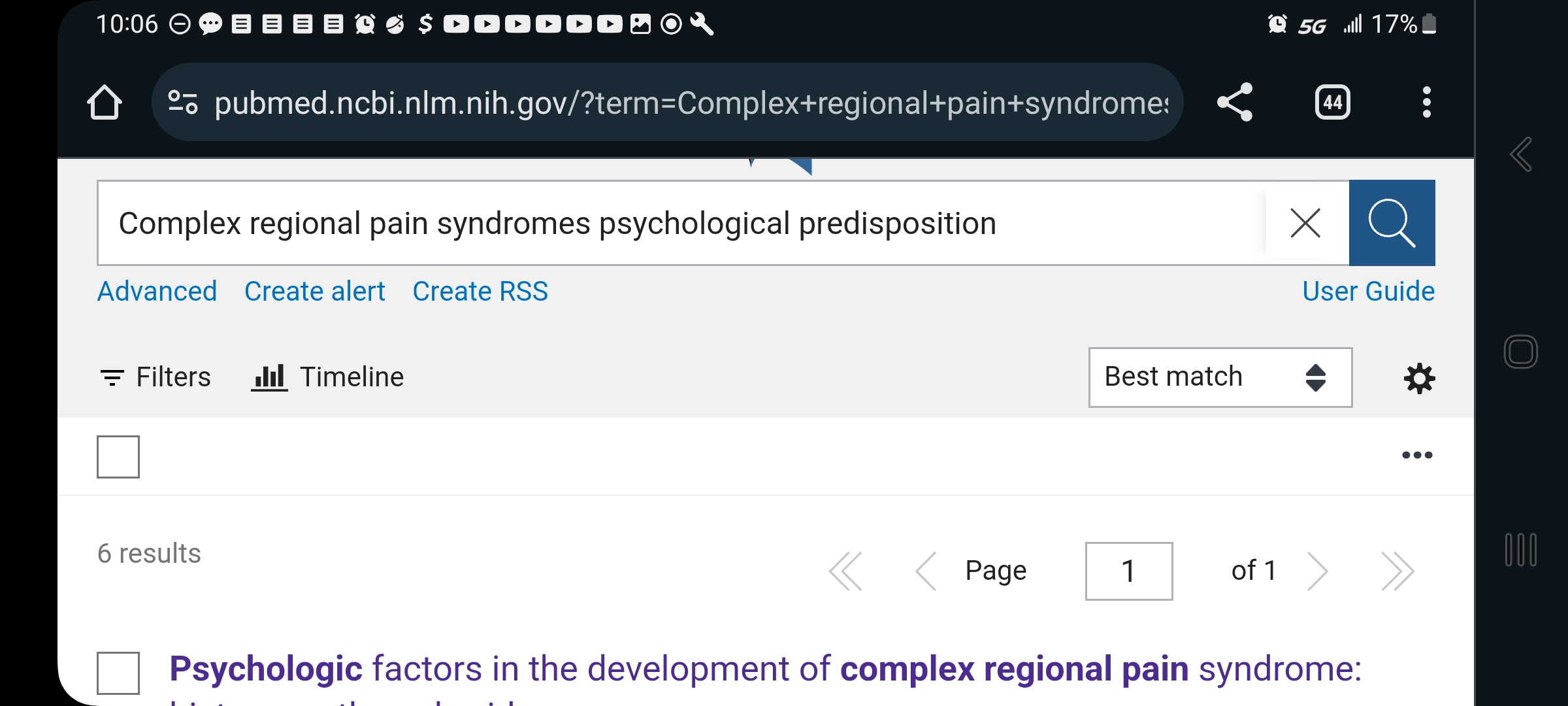
Google pubmed, and you’ll find the National Library of Medicine (NLM) division of the National Institutes of Health (NIH). This is a searchable science library which hosts articles from all around the world, in whatever language they were published in plus English. You can search any valid medical term — for instance, use the full name of your disease rather than its initials, for better results:
Here, you can see that I typed out “complex regional pain syndromes” instead of CRPS.
Some of them have full articles that are free to read (look for “Full Text Link”) …
The square brackets around the title tell you it originated in another language. The note under the title tells you which one. Good science is done all over the world. I’m glad we can access so much of it!This image shows what pops up when you touch the Full Text Link button.This is the original site that published this paper. As you can see, it’s in German here, but an English translation is also printed below the German version. For better or worse, English is the world language for science and medicine. I feel lucky being born into an English-speaking family, because it’s tough to learn. All those synonyms… and the crazy spelling!
…But most will show only the abstract, that is, the high-level overview of what the study is about. For our purposes, that’s the most important thing, so it gives you something useful to work with.
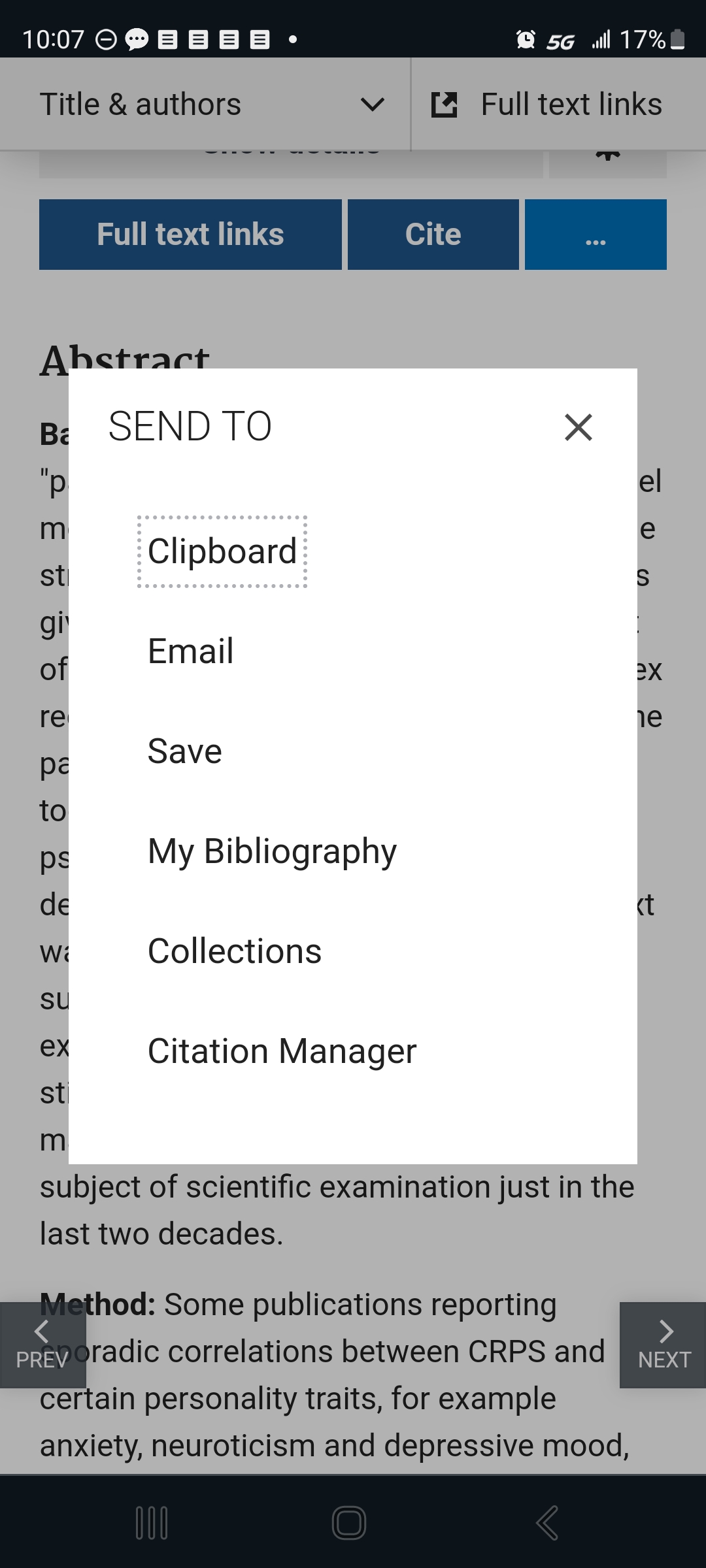
The interface gives you options for saving, sending, and citing the articles.
Touch the “…” button to get this helpful menu. If you get a free account with the NLM, you can use these to help you keep your studies organized and accessible.
To use these, just touch or click the one you want. They do exactly what they say they will.
If you touch one of the menu options that requires them to store the info on their side — like “Collections”, “Bibiography”, or “Citation Manager”– it will give you what you need to sign in (if you already have an account) and, at the very bottom, the option to “Sign up”:
The site is very helpful; just slow down and let yourself look at one thing at a time.
Once you feel more self-assured, try out Google Scholar. It’s smaller in some fields and generally less selective, but that can be good. I suggest saving it for later only because it’s got fewer guard-rails. We’re all different, though, and you might find that easier.
These two libraries aren’t identical. They do overlap.
A word about MeSH terms
MeSH stands for Medical Subject Heading. It’s a curated list of specific terms used in the National Institutes of Health materials. This kind of consistency is necessary when organizing a stupendous medical database like the National Library of Medicine.
MeSH terms are listed at the bottom of each article. If that article was useful, you can click the MeSH terms to have them saved to your PubMed search history:
I’ve circled the heading “MeSH Terms”, where it appears below other back-matter after the article.
Here’s a tip: when using their Search tool, don’t worry about capitalization, but be very particular about spaces and punctuation. Copy them exactly.
Using MeSH terms will improve your future searches, because it makes the most of the databases self-referencing mechanisms.
Trust your eyebrows
Best tool in your mental toolbox: when you’re reading sentences you know you do understand and, yet, you feel your eyebrows moving around on your forehead… that logic is not right.
The scientist might be misinformed, biased, pulling a fast one, or just plain wrong, but it doesn’t really matter which — that logic is not right. The underlying pattern-matching part of your brain can tell. That’s a primitive part of the brain and, when you’re paying attention to it, it’s extremely hard to fool!
Trust your eyebrows. If you want to, save the article and come back to it when you know more, so you can figure out where the problem is. I assure you, there is one. Your eyebrows don’t lie.
Feed your brain
Reading science is hard work and brains are big hungry things at the best of times. Feeding it right can be a huge help.
Meds & caffeine
If you’ve got attention problems, adjust your meds and caffeine to give you some extra focus when you’re reading science. It’s a lot more fun that way!
Smart produce
Green, blue, and purple foods are absolutely marvelous for brains — and pain. They feed the nerves, literally. I know you needed an excuse to eat more blackberries, blueberries, collard greens, and rocket salad, aw shucks.
I also know it’s not the cheapest stuff in the market. Explore your local options for farmer’s markets, roadside stands, produce sales, and organized assistance like EBT/food stamps and healthy-living programs giving more access to produce in the state, like they have in Massachusetts and California and other places.
This is a great opportunity to learn more about your condition and to bring what you’ve learned into your life (more on that later), and the upfront effort pays off so much in the end.
Body-safe phenylalanine
Obviously, if you’re prone to phenylketonuria, skip this part! IYK,YK.
Also, keep in mind that this can have an effect on some meds — sometimes giving them a boost, sometimes making things worse. Be sensible, do your due diligence, and study it up for yourself if you’re interested. Also, use your self-documentation skills: note what you do and what it does to you, change what needs to change, and take responsibility for the results of your choices. We are our own best caregivers.
I’m discussing the physiological activity of this thing with the weird name, and what I’ve found in my life and those closest to me. This isn’t any kind of assurance that it’ll do good for anyone else. Put it no further than “hmm, maybe” in your mental filing system and do your own further research to validate what I say and get an idea how it might work for you, yourself.
Basically, phenylalanine is a precursor to the “up” side of the neurotransmitter suite, dopamine and norepinephrine and even epinephrine (they all transform into each other as needed). These neurotransmitters carry messages among the parts of the brain involved in learning and memory. Taking in phenylalanine can have a truly astonishing effect on attention and memory WHEN you’ve got fundamental deficits, as do people with central and longstanding pain and some other conditions.
TL;DR — If it doesn’t make an obvious difference in less than an hour, you don’t need it.
I’ve trialed using aspartame, which went well for me. (Discussing my results with my doctor paved the way to including SNRIs in my med regime, to my considerable benefit.)
Food sources of phenylalanine
This is where hard cheese and smoked or processed meat shine. They’re rich natural sources of phenylalanine. They also have saturated fats which, in moderate doses, seem to help with pain and brain symptoms.
As a moderate part of a well-balanced diet, folks.
This hasn’t been well-studied; it’s one of those things you pick up after being involved with self-managed patients for over 30 years.
It doesn’t take much. I found that 2 or 3 bites of aged cheddar would absolutely light up my brain for 45 min to an hour and a half, depending on my deficit.
One pal of mine keeps meat jerky sticks on hand for study sessions. Aged cheese works better for me; jerky works better for them.
Now, unfortunately, mast cell activation problems have moved cheese and smoked meat out of my diet. When I need a brain boost, and it feels like cheese might help, I have to use a supplement instead.
Supplementing phenylalanine
It’s more measurable to use a supplement called DLPA, or d,l phenylalanine. It’s a blend of natural and manufactured forms of phenylalanine. One works better for pain and another for depression, but the blend seems well-tolerated and helps both. Phenylalanine suppresses certain inflammatory kinases and may help suppress pain at the spinal root (that is, right where the base of the peripheral nerve path comes out of the spine) as well as helping with mentation and cognition. (Sarcastic Sister notes: The recent science about it magically disappeared in the wake of the “war on pain meds” and I won’t pretend to understand why.)
There is a maximum recommended dose before it gets toxic, but if you’re seriously thinking about that, you’ll want to do your own studying, and might want to talk to your doctor about SNRI meds as a possibility. (The N is for norepinephrine, which phenylalanine supports.)
Why bother with learning how to read science?
Knowledge and understanding are the most powerful tools you can have for dealing with complex chronic health problems. It may or may not change what you have to deal with, but it certainly gives you more and wiser options about how to deal with it.
Even if you aren’t ready to start now, you can circle back around to this whenever you want. It’s attainable; you can do it. It’ll always be there (although individual articles and topics may come and go.)
The patients who learn the most and put that to work in their own lives, are the patients who most consistently beat the odds and have the best quality of life over time.
Therefore, better information leads to better living with complex chronic illness. My HIV patients taught me that 32 years ago at my first nursing job, and it’s truer than ever now.
Note: Nobody here says it’s easy. That said, our complex chronically ill lives are never easy.
Pretending that getting through the day is not, itself, almost a superhuman task is a disservice to our strength, so let’s just start off by recognizing that everything we do is really hard work.
Knowing that, I have found that the effort of learning and applying what we learn pays off a whole lot more than passively waiting to be saved and feeling rotten all the while — and still being wrecked & exhausted.
I can whole-heartedly recommend learning and figuring things out. It’s a winner.
When I saw the clip below, I kept nodding and thinking, “You know, if you take out the high-flown language and fanboy reverence for the material… this is what we do. Every <expletive> day. It’s the only way it’s bearable to survive with this level of relentless crap.”
I often remark to fellow chronically ill people that we often have to be superheroes (a more approachable term these days than heroes), not as a matter of ego exercise, but as a matter of survival. That’s just the way it is.
We have to rise above, over and over — rise above circumstances, limitations, wants, and sometimes our very needs.
We have to forgive and forgive and forgive, often without saying a word, just to maintain relationships with less-impaired people and get on with things. How can they understand what it’s like? I wouldn’t (and don’t) wish this on my worst enemy.
They can’t really understand, and nor would I want them to have to. Therefore it’s essential to let most emotional insults and logistical assaults simply slide off. Over and over again. That’s what it takes.
So, for people who are chronically ill and could do with some validation; and for people who seek some insight into what is really required of us and why it’s so flippin’ hard; I present Cinema Therapy discussing the hero’s journey, as demonstrated by one of the most relatable characters any spoonie could wish to find — Frodo Baggins:
I enjoy the Cinema Therapy vlogs because they’re so good-natured, and these two remarkably privileged humans make such an open-hearted effort to be better humans, all the time.
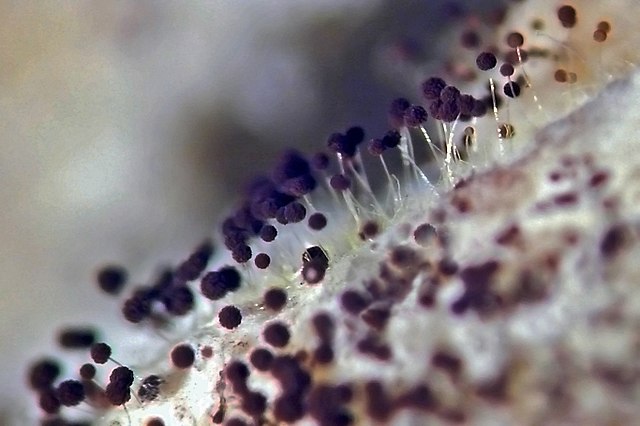
I’m dealing with a mold-spore exposure in my home that’s only somewhat mitigated, and can’t reach a better state until the weather allows me to throw open all the windows for a week or so, to allow the super–low-tox coatings to dry and cure.
Honorary sibling & excellent friend Cougar came over to help with a related errand. I was singing my way through my tasks, which I don’t normally do, but apparently it’s sufficiently “on brand” that it fit right in with his expectations. I told him that I was going through a phase of illness where eating anything is treated by my body like a personal insult, and, in addition, the all-body pain and inflammation were through the roof. He said, “I never would have guessed. Your behavior doesn’t show it at all.”
Woo hoo! Yay me. We humans can have real personality distortion due to horrible pain, and when I can manage myself that well in the teeth of a flare, I take an inward bow and award myself a shiny gold star.
I got the Big Craptasms one by one: Ehlers-Danlos Syndrome (type not yet known), CRPS/RSD, dysautonomia, fibromyalgia, Hashimoto’s thyroiditis, mast cell/histamine activation problems, gastroparesis & sluggish gut. All of these require major lifestyle changes.
I could handle the rest, even the CRPS (given all the good neurotransmitter stabilizers we have these days.) It’s the worsening histamine stuff that’s really driving me crazy right now. I’m reacting to everything.
Reactions don’t stop with itching skin, itching eyes, pouring sinuses, and wheezing. Oh no. That would be too easy.
Reactions set off aaaaaall the other clowns in the circus.
Nasty bunch of customers!
So, here’s what that looks like in my case:
My tissues are more brittle and unstable, so I have to be extra careful doing things (and I’m always doing things. Did I mention being mildly hyperactive?) That’s the EDS.
The body pain of the CRPS I don’t want to focus on long enough to describe, but getting my skin sensitivity under control before bed is kind of a big deal.
The fibromyalgia is like a big spiculated cloud of aggravation that my body wandered into and can’t find its way out of.
The thyroiditis means I have to stay off cruciferous foods (the best winter veg, sob sob) or get back on the thyroid supplement/pituitary see-saw that I’ve struggled with before; meanwhile, the thyroid-driven struggle of having one day and one night in every 24 hours is taking up a lot of planning and will-power, especially at 4 or 5 am when I haven’t been able to go to sleep yet, but still have to get up in a few hours in the hope that my body will get the clue. With most sleep disruption issues, it’s important to fake it ’til you make it.
Gastroparesis is tightly tied to mast cell reactivity for me. That’s also so loaded right now it’s best for me not to think about it, especially since it’s almost dinner time and I have to give my gut some work.
It ties in with the fact that, if I don’t eat enough, my body creates more fat “to get me through the famine”, in that lumpy, painful, inflammatory pattern that just makes everything harder.
Also, the mold fragments themselves create a reaction in my body that’s a whole bucket of nasty by itself: more brain fog, more indigestion, more inflammatory-patterned everything.
And I’m one of the lucky ones. This could be so much worse!
As I think about life generally and my life particularly, I think about travel — as essential to me as breathing is to many people. I don’t need as much of it (obviously) but now and then, it’s essential. I have loved ones, few of whom are near; I can no longer go visit them. There are beautiful sights I’d love to revisit, and more I’d love see for the first time. There are fascinating people I’ve not met yet — some of whom I’ve loved dearly for years.
Yeah… but no.
I can’t stay anywhere, because everyone everywhere uses things that either smell or out-gas or both; moreover, at this end of the reactivity bell-curve, what sets me off might be fine for another who’s similarly sensitive. It’s a total crap-shoot.
Plus, mold. Largely invisible, uniquely ubiquitous above the 37th parallel, usually harmless — but astonishingly bad for me!
If I’m going to go anywhere, I’ve got to customize and control the environment I sleep in, at the very least. Sleep is when the body does its housekeeping and cleanup; it’s as if all the doors and windows are thrown open and the sensitivity gets turned up to 11 — any bad stuff that goes in then, goes in much more and makes things worse. The regular cleanup gets interrupted. It all becomes more crisis-manage-y than housekeeping-y. As you can imagine, in hyper-reactive systems like the one I have, that’s a real mess.
This has been creeping up on me for awhile, and I’ve blithely ignored it because gee freaking whizz, isn’t there enough going on??
I just need a moment to process this.I had to give up a visit to friends this week, because my immune system crawled into the blender and hit “frapee”. (I’m nursing a charming case of stomatitis with both canker and cold sores; my lymph nodes are creating topography a bit like the bumpier parts of Death Valley; and I’m having all visitors stay fully masked with windows wide open, because I’ve got nothing to fight off further pathogens with.)
Because I gave up that trip, I get to sit here and think about what a non-delightful level of fragility I have to plan for as I go forward in my life.
So, on the one hand, this is great information and I clearly need to know it, in order to avoid making myself sicker.
On the other hand… Oh FFS, life! Really? — I mean, really?!?
When I’ve gotten the particle-board in the kitchen coated, I hope that will buy me a couple of years of being able to stay in my adorable little flat without further toxic exposures. I’m benefiting hugely from this stability, and the location can’t be beat. I love it and I’m grateful. With the semi-permanent fix in place, I can probably recover quite a lot of the ground I’ve lost — although of course there’s no guarantee, and the best-case scenario involves many months of recovery and being very careful about avoiding other toxic triggers for a couple of years, until the mast cell “bucket” can drain.
Thanks to the diligence and care of my 2 new helpers, this is an attainable goal. Pheee-yew!
Beyond that, I’ve got some thinking and learning to do. I may revisit this subject of controlling my environment while on the go, when I have anything useful to say.
Yesterday, it came naturally to be warmly present for V during a big event where I stood in for her, even at a distance of 3,000 miles or so. Gotta love technology for that!
Today, I think of D and the anticipatory grief is like a warm finger of current, pulling at me without tearing at my core or dragging my mind away. He’s here now, and everyone who cares about him is working on a graceful last chapter to his intense, vivid, improbably well-groomed life. (Yes, he’s quite a character!)
This recovery is not all perfect: after yesterday’s 8-hour social endurance event (a physical and physiological experience piled on top of a very neurologically demanding week) I woke up this morning with a pure dys-autonomic experience I haven’t had in a very long time.
On the very cusp of waking, as I first became physically aware of the real world, my body’s temperature-regulation mechanism dropped off the rails.
I suddenly got intensely cold, that bone-deep cold that makes the smallest touch of air feel like knives. Imagine full-body Reynaud’s, with added concertina wire. It’s amazing how cold my skin suddenly gets to the touch when this happens, after feeling just right at the moment I started to wake.
So, I did what I learned to do 10 years ago, when the dysautonomia really kicked in with this: I pulled my down duvet completely over me and tucked in every gap, wrapping it right around my head, and constructed a little tunnel just big enough to breathe fresh air through. (Fresh air seems to speed up the recovery period.)
Nothing I can do after that but wait for it to pass, as my regulatory thingies come to terms with being awake instead of asleep (one autonomic function) and being able to be at the right temperature (another autonomic function.) I know that it will pass, while my system creeps toward wakefulness.
Big shrug. The Nasty Cold Snap hasn’t been part of my day in a very long time, which is good!
This just goes to show that the physical/physiological impact of these flows of stress and anguish isn’t negated. Expecting that would be unrealistic.
They are manageable. That’s the point.
Doing those “brain first aid” things makes handling the weighty, current reality bearable. That means I’m still capable of several important tasks:
I can bring my tips and tricks to bear against the physical effects of this illness.
I can think my way through ordinary (to me) problems.
I can remember that things pass: the Nasty Cold Snap will pass, as the mental shock passed, as even terror passes when it’s allowed to.
I return fairly quickly to my normal frame of mind — which beats trauma-brain all hollow!
There’s still a bit more physical recovery involved, mostly giving my systems a chance to finish returning to their normal function and easing up on the extra weakness, reactivity, and pain.
But, basically, I’m OK. I’m able to show up for myself and my friends. That’s what it’s all about.
My point (and I do have one) is…
The skills I learned in psychotherapy really work when I use them, and I’m so relieved.
I want to make the point that psychotherapy is not “just like talking to a friend”, because our friends don’t need a graduate degree to be our friends. Psychotherapy is a professional-level, highly customized form of care, even if it feels relaxed (creating an environment where you can relax is one of the skills of a good shrink.)
Nor is it a passive process; the skills and concepts only work if you work them. It’s good to be heard; that said, it’s also good to remember that real healing involves relevant changes. The fun (??) part is, in medicine, we may influence the changes but there’s a significant random element involved in them; in psychotherapy, the client steers the whole process. While being an active, involved patient can improve outcomes in medicine, being an active, involved client does improve outcomes in psychotherapy.
So, there’s the core message behind this 2-part series, part of the ongoing “what works” toolkit. Psychotherapy works, when done properly and used diligently. Just like any other kind of care. It’s not magic. It’s skills.
As some of you know, CRPS & dysautonomia involve constant re-traumatizing of the brain & nervous system. Our brains have flows that can resemble that of people living with domestic violence, because the CRPS itself keeps waling on us physiologically, in the same way people who get abused are waled on physically and emotionally.
This is why psychotherapy is part of the gold standard of treatment for intense chronic pain generally, and CRPS particularly: it takes good, highly specialized training — and ongoing coaching — to keep re-claiming and re-training the brain, so it can climb out of the being-beat-up mode and stay in the this-is-what’s-going-on-right-now mode.
Since I take the view that “whatever it takes, I’ll do it” is the way to work with such an intransigent, mean-spirited illness… I’ve naturally been persistent about holding to the gold standard of treatment, and working hard to implement everything that works for me. (Let it be clear that, just because that’s such a nice pat sentence, it is a hard road and a lot of work. Sisyphus thought pushing the same rock up the same hill was a lot of work? He should try claiming & holding ground against pain-brain.)
I’ve had tremendously capable psychotherapeutic teachers & coaches, and my present providers are over the moon for me. I tell them, “Gee, it’s like this stuff works!”
***
It’s graduation season in this college-rich area, and there are a lot of transitions taking place. I had a glorious week of family visiting and more social time than I’ve had all year. It was lovely and absolutely wonderful… yet, for a dys-y system, it’s still a lot of work. Big emotions, even good ones, trigger big neurotransmitter flows and that takes managing.
Yesterday, I got set straight by a friend I’ll call V, which was terrifying (really don’t want to lose that one) but the relationship will be better for it.
Big emotions kick out dysautonomic systems, so I started up the brain-stabilizing routines. Cool.
Then, I found out that a friend I’ll call D had nearly bled out last week and was currently in the hospital with massively metastatic cancer. He was diagnosed with limited cancer right before the first Covid-19 lock down. You know what happened with hospitals after that.
So, because he couldn’t get any treatment when it was treatable, he’s now faced with pretty horrific options and chose to go for comfort care for a very short life rather than horrendous chemo with a poor outlook anyway. He was an extreme athlete and had a rough life as a wee wiry guy in the city, so pain is no stranger, but at his age, it starts looking stupid to chase more discomfort.
Because of wacky human stuff, we hadn’t spoken in quite awhile. I’m glad we couldn’t see each other during the call because I know I was crying from the first sentence he spoke, and I suspect he was too. He’s a live wire & a cheery sprite by nature, and he made me laugh before I made him laugh, so I’m happy to say he won that round. We sorted out some heavy material and he said very nice things that were good to hear.
After that conversation, my usual brain-care toolkit was useless.
The first thing I do is, “don’t rehearse, replay, or dwell on it.” This is because that’s how trauma-tracks get laid in.
The more it replays in the mind, the deeper the distress gets planted. So, whatever it takes to prevent another topic of PTSD from getting laid in, is what I do.
I do come back and evaluate the experience for lessons a little later, but first… got to let the flaring, blaring intensity wash off before it stains, so to speak!
When the anguish of 2 perilous-feeling conversations, atop a beleaguered and recently worn brain, keeps roaring back, my usual low-key books/ shows/ audio/ doodling distractions aren’t enough.
I sat back and reached for a thought I’d had recently. There’s nothing more stabilizing for those who can do it than… what was it again?
Activity. Bilateral activity.
In my case, taking a walk.
So, with my phone reading me an audio book at the same time (clever, right?), I pulled on appropriate garments and got my wobbling butt out the door, one foot after another.
Blaring replays started up often, but I’ve had practice with this technique, and I reminded myself that *now* I walk, breathe, and follow along with a silly story; processing events comes later, *not now.*
The blaring replays got quieter by the end of the walk, and by the time I was 2 blocks from home, I could just about bear to be in my skin again.
The combination of bilateral activity (walking, wheeling, and most forms of warming activity qualify) and the distraction of a plot to follow combined to get me through the first stage of harrowing. Yay!
I followed up on a task I’d committed to for V and meditated briefly on how to follow through on family notification for D, a task that couldn’t go further last night.
The first task wasn’t executed perfectly, but I saw the error almost immediately and rectified it.
The second task, the one for D, has yet to be tried: there’s no good way to tell someone their estranged, love-hate sibling is dying, but of course it must be done and it’s not my job to try to be perfect in an impossible situation, it’s my job to be an honest, kind, and diligent friend to both of them.
So, today, once my pills are down (i.e. in a couple of hours) I’m going to the Y for non-weight-bearing exercise (because there’s only so much walking my hips and legs will tolerate) and then do something involving lots of colors (either drawing or crochet) afterwards, while listening to another story… and waiting for D’s sibling to call, so I can relay the dreadful info.
Update:
D’s sibling called, took the news with love and tears, and we conferenced in D for an agonizingly beautiful conversation. Older Sibling being lovingly overbearing and Younger Sibling trying to keep one foot in what’s really do-able, with me occasionally calling time or translating across the gaps, felt very normal to me, even though it’s not my family.
Some things are just human.
So I’ll keep breathing. And drinking lots of water. And taking extra vitamins, because this kind of stuff sucks them right outta me. (Truth to tell, you’ve only heard half of it. It’s been quite a heckin’ week.)
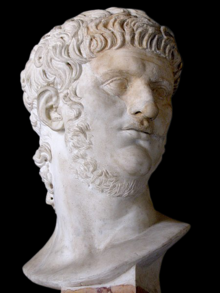
I can see the point of fiddling as your own city burns. Wait, I mean, Nero was a hot mess and a dreadful person to have in charge, if the legends are true.
The point I’m striving (awkwardly) to make is that arty activity calms and settles the mind, so that even devastation is less all-consuming.
I think today is a colored pencils day, or possibly even crayons. Crochet takes more thought, and I don’t want to hold myself responsible for that yet. Besides, my arm tendons are acting up, so crochet isn’t wise.
Update, Part 2:
I think I’ll take some crayons to the gym. Is that allowed? XD
Feelings pass. It’s what they do.
New normals emerge, and we learn to live with what was once unthinkable.
Adaptation is a big job sometimes, but, well, here we go again.
Two years ago, if I were walking down a sidewalk next to trucks belching diesel, I had to breathe shallowly and mentally plan on the nausea and neuro-huckery that was likely to follow.
When I went shopping at Big Y — well, I couldn’t, because the massive bakery displays at both ends of the store could wipe me out in a heartbeat.
I was sadly giving up my Goodwill/Salvation Army pillaging habits because the unquenchable stench they saturate the stuff with made me so sick it was harder and harder just to walk in there, and my de-stinking magic stopped working on fabrics. Sad sniffle… I used to get half my furniture from there, and most of my better clothes.…
I considered getting surgical masks, but I already knew how many leery looks & disparaging comments that public mask-wearing used to provoke. I try to avoid getting leery looks, because people are a lot less likely to be pleasant or helpful towards someone they’re leaning away from.
Then The Modern Pandemic hit, and everything changed.
Nearly two heartbreaking and traumatic years later, the message that this is the new reality is starting to take hold; testing and explanations of what makes a mask effective is available from legitimate labs and reputable sources; and I’ve made myself 2 custom-fitted, Isy-safe, well-made masks that are easy to clean and dry well overnight.
Colorful though they are, they just don’t stand out any more! Masks are part of the New Normal, and generally provoke smiles and friendliness instead of the opposite.
So, on today’s walk, I wound up surrounded by fuming traffic — and put my mask on. No problem. Then I went shopping at Big Y and went from end to end of the store — with my mask on. No problem. I was too tired to go to Goodwill today, but when I do go there, I put my mask on — and I don’t smell a thing until I get everything well outside and take my mask off. (I can still get the smell off of hard-surfaced things.)
Mind you, it’s not like my own breath is a bucket of roses (!) — but it still smells way, way better than diesel, and it doesn’t make me sick!
It took awhile to realize it, but masks really set me free and make my *whole* world (not just the pandemic aspect) much, much safer and more comfortable to be in.