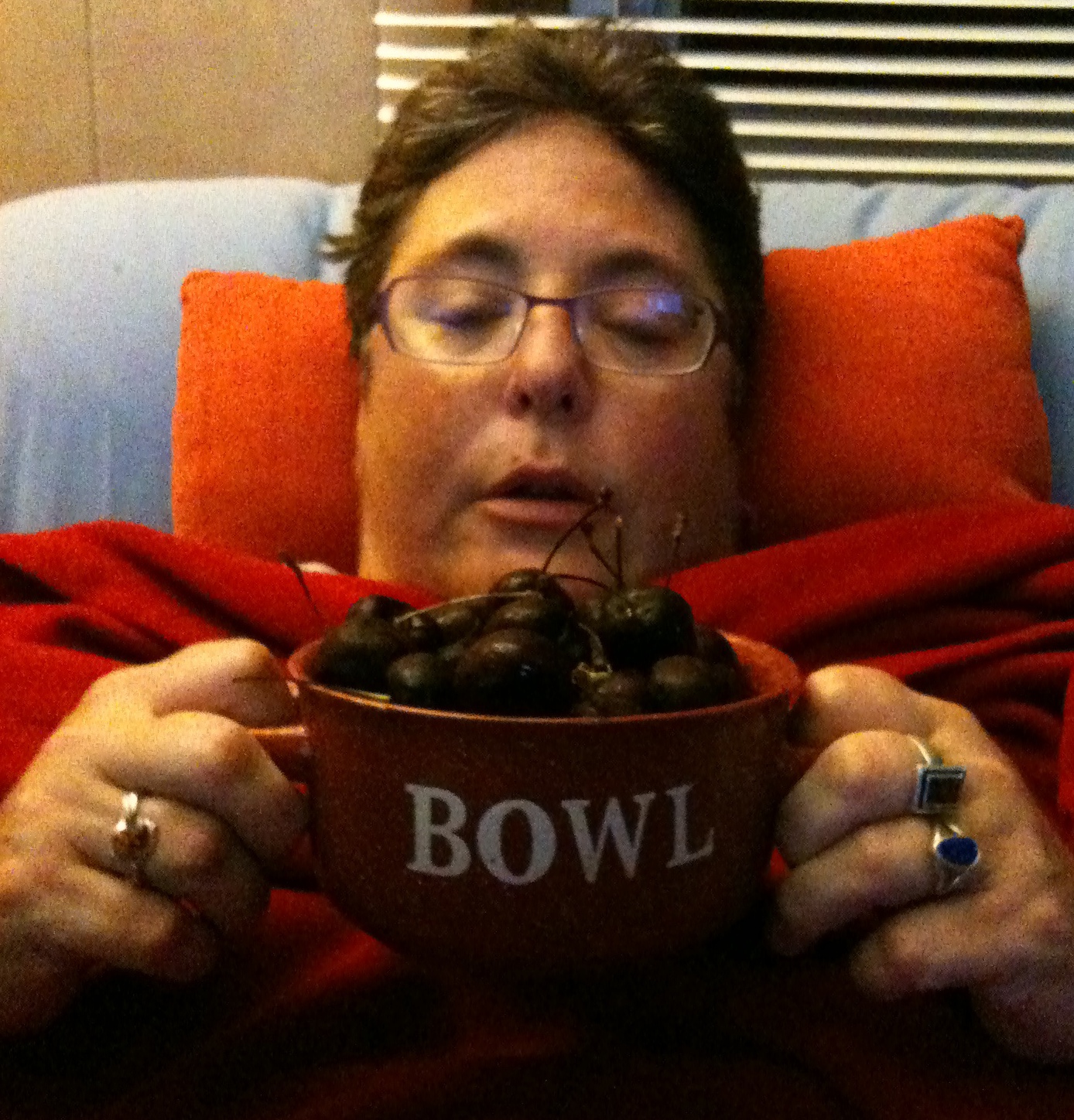
Posture matters, across species

For the past forty-mumble years, and for some time to come, my experience of life is shaped by the particular body I’m in. The reciprocal nature of the mind-body experience fills more books than I’d ever want to read, and that’s saying something, so let’s cut past that idea of, “Wow, the mind can influence the body and the body can influence the mind, but neither has sole control of the steering wheel” and look at the subtle, but strangely clear, ways that it plays out – at least in me.

I lived in a dog-friendly marina. – Trust me, this is relevant.

It’s not just about the scenery.
I found that, even before I knew the neighborhood dogs, I could tell which ones belonged on the dock by their posture as they stood, sat, walked, and moved.


I saw dogs in every degree of getting along — or not.

I saw the active posture of dogs who were used to plenty of food and care…


and dogs who clearly weren’t.


This was interesting to me as I was coming out of a period of being thugged on by every force outside myself that had a duty to care for me. Being, not only neglected, but frequently tormented and abused in response to most of my efforts towards survival and care, left me very nervous indeed.

Not good for the brain. Or anything else.

I was having trouble with my posture, and – limited by impaired kinesthesia (the sense we have of where our body is in space) – I was working out exactly what the trick points were.

– My low back was in a tight sway, sticking my stomach and butt out egregiously. I lost over an inch of height to that sway in my back.

– I recently realized that, when I fall back in this posture, my abdominal muscles are braced outward. I’m not slack in the belly; the muscles are braced for an incoming blow!

– My neck was hunched against my shoulders. This was funny because I did used to have a bit of a weightlifter’s neck, short and thick; but that was many years ago… when I lifted weights.

– My tailbone was curled in tight, which I only realized after my physiotherapist at the time taught me to straighten it out as a way of releasing tension on the nerve “sleeve.”

– The points of my shoulders were rotated inward. I attributed this to an effort to ease the nerve opening through my shoulders, but that doesn’t actually make sense.

All of these things reduced effective nerve flow to my limbs, shortened the wrong muscles, limited blood flow to where I needed it most, and reduced my capacity for physical exercise.

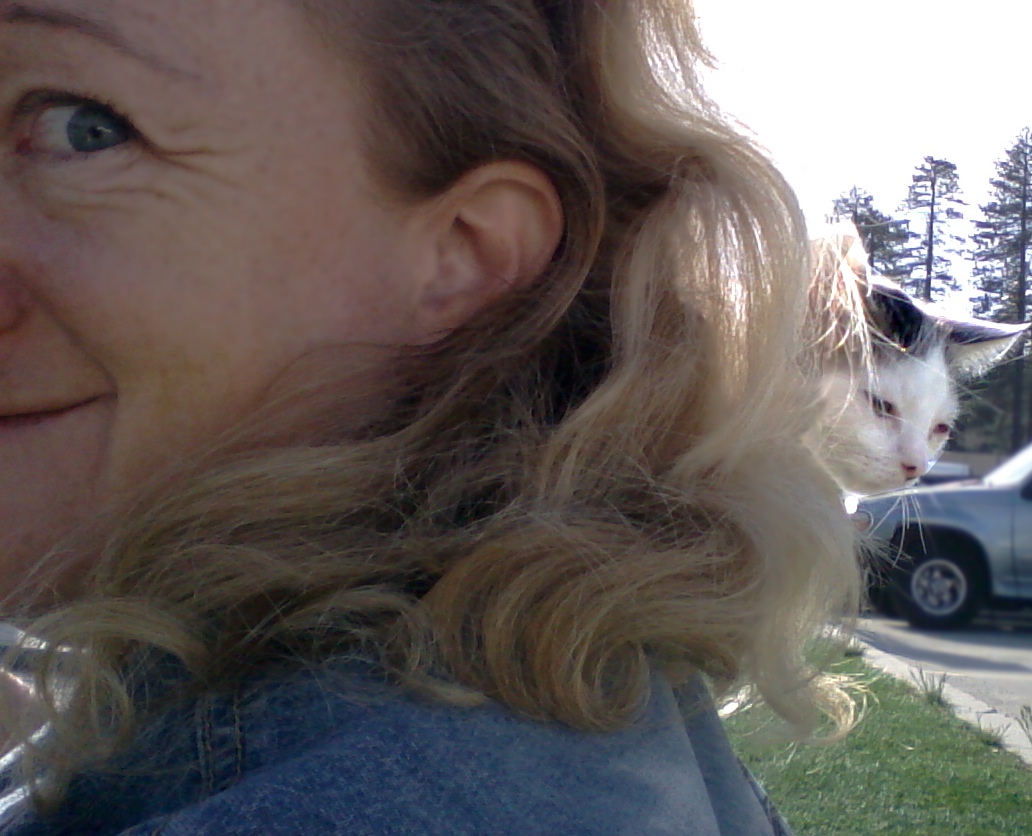
And you can see how happy it makes me!

Since activity is key to managing CRPS and keeping the autonomic nervous system under some kind of regulation, this is actually a huge problem.

Good posture is not about vanity, it’s about feeling better, being stronger, hurting less, and surviving tolerably well.

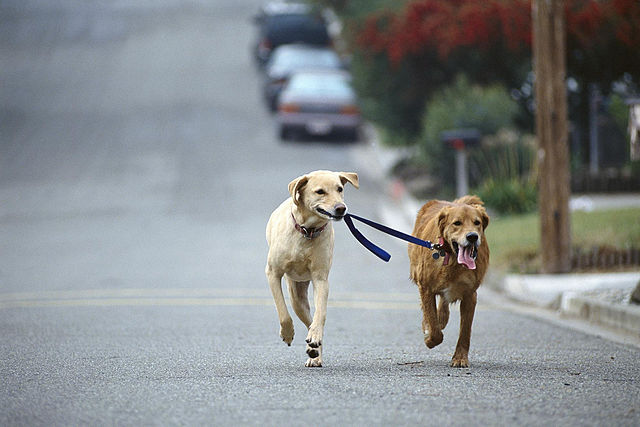
Watching all those dogs running around and deciding whether to let others sniff their butts,

You’re not imagining things: the pit bull is missing a leg.

I realized exactly what my posture looked like: a dog in a hostile area, not wanting to fight, but protecting its spine while bracing for blows. Always ready to snap into action. Never knowing when things will go sour, but pretty sure they soon will.

That’s what those years had brought me to. It was a reasonable response, but not useful.

This is what’s really going on when I fall back into that posture.

I’ve managed to explain this “braced dog” image to my current physiotherapist, who’s wonderfully willing to work with my rather original views. He comes up with ways to tell my body how to stand/sit/move like a calm, alert animal, instead of one that’s braced for the next fight… 

I can’t do anything about the 3 extra cup sizes
this endocrine dysregulation caused, but
my back and shoulders hurt less anyway.

And I remind my too-nervous nervous system that a calm dog can snap into a fight about as fast, but tends to find far fewer of them.

In the meantime, relaxed animals have a lot more fun.

Postscript on self-imaging

Nearly every time I see pictures of someone in regard to posture or movement explanations, it’s someone really fit.

Now, really. Is that who needs to know?

Much as I loathe looking at myself from the outside, using my own image here is preferable to the implicit lie of using others’ figures. So here I am, warts (so to speak) and all.

/shrug/ Could be worse.

Pushing back on neuroplasticity

I got the Sydney norovirus right before it hit the news. I’m recovering, but slowly; the persistent low-grade nausea is annoying — and worrisome. I don’t want my body to get the idea that this is the new normal…

Brain plasticity is a major culprit in CRPS and its maintenance —
  • from the first refusal to cut pain signals off…
  • to the growth of the brain cortex area that monitors that body part, so it can handle more pain signals and provide less space for normal body areas…
  • to the deeper remapping and rewiring that alters cognition, disrupts memory formation, screws up autonomic signalling, knocks endocrine and digestive function out of whack…
  • and so forth.


It’s important to stay on top of the brain, so to speak.

 
Thanks to the brilliant pioneering work of Dr. V. S. Ramachandran, we now know that mirror therapy and reducing-lens therapy can remap the brain’s perception of injured body parts to something closer to normal. That was a huge help with the pain, when I had CRPS in limited areas.
 
The reality-shattering concept behind mirror therapy is, basically, that conditioning can work in reverse: rather than allowing ourselves to be the passive objects of what our brain becomes accustomed to doing, we can push back against the brain’s alterations using our natural mechanisms of perception and intent. (The basis of Dr. Ramachandran’s discovery is that perception alone can provide the altering input. Intent gives it more focus, force and direction.)
 
The relationship between body, intention, and brain is interactive, multi-dimensional, and interdependent. 

Having said that, it’s not completely reciprocal, nor is it ever under perfect control — unlike a good trapeze act.

 
If we could will ourselves better, then, given the extraordinary focus and determination of my fellow CRPSers, I know for a fact that we would have done so already. I never had met anyone with as much determination as me, until I met my core group of CRPS friends. If will alone were the answer, we’d have it!
 
CPRS is complex indeed.
 
Anyway… back to what we CAN do.
 
Communicating with the brain, in language it can’t ignore
 
The basic principle of RE-re-mapping the brain is this: describing to the brain, in language it can’t ignore (combining sensory perception and intent), what it should be doing.
 
In my Epsom bath article, I described rubbing a washcloth over body parts that have distorted perceptions and telling them silently, over and over again, “It’s just a washcloth. Feel just a washcloth.”
 
Where there is normal perception, or even nearly-normal perception, I stroke from the normal area to the abnormal area — never, ever in reverse! the brain understands the concept of “spread” — and tell my brain and body, with absolute focus, “This is what normal feels like. Feel normal HERE now. This is normal. Feel it here now. That is the correct feeling. It’s just a washcloth. Feel a washcloth.”
 
Not a burning sheet of sandpaper twice the size of my leg. Not a blunt sense of almost nothing, somewhere else.
 
A washcloth, right here.
 
When I’m doing this, I don’t even think about what the abnormal feelings are like; I came up with those metaphors just now, sifting through my memory. I shut the incorrect perceptions out of my mind and dismiss them, over and over, as obviously false information.
 
I have to take a break sometimes when the pain is bad and just breathe, but I don’t think about it, I focus on the point: learning to perceive what’s really there.
 
Vision, tactile input, kinesthesia (meaning that, as my hand and arm moves over the body part, my brain’s mechanisms triangulate on where things really are and its picture of my body gets corrected), and the focus of intent, are all part of the exercise.
 
This combination of factors is what makes it so effective. The multisensory inputs, the constant messaging of proper information, eventually overrides the false information.
 
Slowly at first, but with increasing pace, the normal sensation spreads over into the abnormal area. Every time. Not always completely or perfectly, but often both.
 
So far, I’ve reclaimed normal sensation in my back and most of my left leg, and I’ve kept the sensation and function in my arms at a level almost incompatible with the decade that I’ve had this disease.
 
Considering how bad things have gotten when I let this slide, the value of this exercise is clear to me.
 
Pruning your neurons intelligently
 
Learned responses are due to the basic learning mechanism in the brain:
  1. neurons hook up, and a connection (or association) is made;
  2. if the connection gets used (or the association is allowed to stand), more neurons hook up to make it stronger;
  3. once enough neurons have hooked up, the connection becomes like a good road;
  4. and the thing about good roads is, they get used, even if they’re used for something odd.
It’s important to manage the roads in your brain, especially when you have a neuro-plasticity disease like CRPS:
  • Make sure the roads in your brain are useful to you.
  • Do that by pruning the connections you don’t want.
  • Prune those connections by letting the associations die.
  • Let a connection die by deciding to think about, or do, something else, whenever it comes up.
    Consistently. Persistently. Relentlessly.
  • And keep making that decision every time it comes up.

It works by a negative, which is not how we are taught to do things: turn away from the response, shut out the perception, ignore the link. That’s how you prune an unhealthy connection.

It takes time, but it works. The time will pass anyway, so your brain might as well be better off at the end of it…

Masters of distraction
 
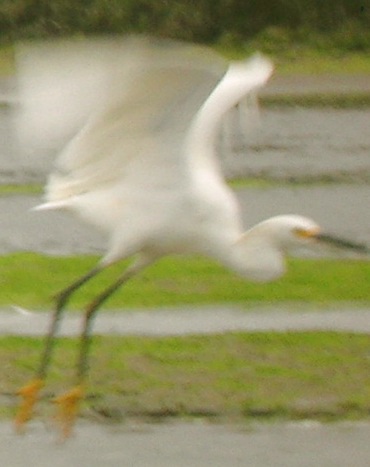
We CRPSers are masters of distraction — not to mention the kind of persistence that this pruning takes. We can learn to be diligent about applying it to sensory associations we don’t want. This is where ADD, used selectively, becomes truly — oh look! Yellow feet!
 
… Wait, what was the connection I was about to make? I’ve forgotten.
 
See? It works!
 
The joy of having a bit of ADD and being a meditator is, you really can choose when and how to let out the ADD — as long as you do it often enough. It’s a great tool, and I’m grateful for it.
 
Pruning specific sensory and functional associations
 
I’ve had recurring nausea for months now. It’s related to upticks in stress, of which I’ve had more than an elegant sufficiency in the past year.
 
Then there was this tummy bug…
 
It’s day 5 and I haven’t vomited in 3 days but I’m still nauseous. While this bug is supposed to leave one nauseous for quite some time afterwards, I really don’t want my brain getting the idea that sending nausea signals is going to be the new normal. I’m not going to let the nausea become habitual. So I’m pruning those connections.
 
I can’t will nausea away, as it comes from quite deep in the brain from a primitive place. And, unlike pain, distraction doesn’t help much for long.
 
So I’m balancing the use of ginger (short acting, “hot i’ the mouth”, sugary) and anti-nausea meds (long-acting, makes me slower in brain and gut) to shut down the nausea for a good part of each day. 
 
This means I’m not nauseous for a good part of the time. This helps retrain my brain away from constant nausea by letting the relentless association, and the neurons that make it, die off. I’m going to keep after it over the expected week of recovery still to come.
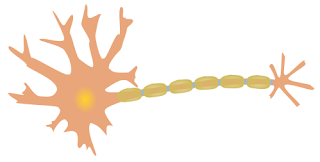
Only constructive connections, please.
That’s one example. It doesn’t take much thought or mental discipline, just persistence.
 
My lovely friend X has a recent example of something different, an obviously inappropriate new association being made.
 
She multitasks, making full use of her functional time. When she was eating, then turned aside to the plastic phone or plastic computer to respond to someone, then turned back, her food suddenly tasted and smelled like plastic.
 
That is a very errant association indeed. Prune it!
 
She is now putting aside the laptop and turning off the phone while she eats, so the association doesn’t develop further. Moreover — and she may have just enough ADD to pull this off — she hopes to be able to switch her attention immediately when the plastic taste pops back into her — Look! Yellow feet!
Egrets make great distraction, especially in funny socks.
It takes time to let those connecting neurons die, but if you get on it quickly, as X did, it can turn around pretty well and pretty quickly.
 
The Principle of Primal Exclusivity
 
This is simpler than it sounds. It’s the opposite of pruning.  
 
When you’re doing something really basic (or primal), like eating or drinking or sleeping or running or sex, keep your attention basically on that activity. It helps keep your brain straightened out about those things.
 
You really don’t want them getting bollixed up, because rewiring primal functions takes more work to undo.
 
That’s one reason why insomniac advice is about having a calming bedtime routine and sticking to it: it’s retraining the brain around a primal activity. The brain needs absolutely consistent signals over a period of time, to retrain successfully.
 
Incidentally, sex (alone or together) is the only activity that (ideally) engages both sides of the autonomic nervous system: arousal is mediated by the sympathetic nervous system, and orgasm by the parasympathetic nervous system. It provides a balancing mechanism I can’t think of occurring in any other sphere of life. Done properly, it could be the perfect autonomic tuning tool…
 
And with that happy thought, I’ll leave you to wash your hands against this norovirus and do whatever seems best.
 

In a house of flu

My darling host V got this year’s brutal tummy flu two nights ago. His daughter, L, and I jumped right on it. A couple gallons of mixed fluids and someTamiflu later, he’s looking better than ever, and is quietly enjoying the privilege of lying around in his jammies and having two women dancing affectionate attendance on him.

Yesterday, I got a little more white grape juice and pedialyte than I thought he’d need, just in case we needed to jump-start someone ele’s treatment. Looks like it was just about enough, though.

Over last night, L and I hammered 3 doses each of oscillococcinum, which we usually find very effective in warding off the flu. I’m used to respiratory flus. We shall see.


Today, L wiped all the knobs and surfaces with alcohol and washed all the towels and linens in hot water. Growing up, she had two rounds of rheumatic fever and her mother had adult polio, and the entire family got chicken pox at the same time; she knows what to do “when there’s sickness in the house,” to use her timeless phrase.

I stood back and made encouraging noises, and wished — for the very first time, every time — that I was able to be just a bit more use.

With the autonomic nausea I’ve been fighting off and on for weeks now, it’s hard to say if I’m actually getting flu-y or if the autonomia is kicking up. As I finished picking up the kitchen, though, my insides let me know that they are considering the value of reverse gear. Nothing substantial, just a warning…

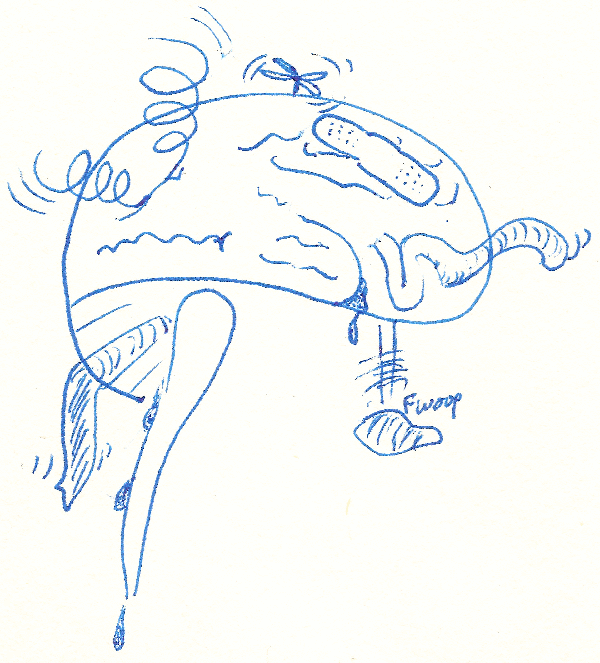
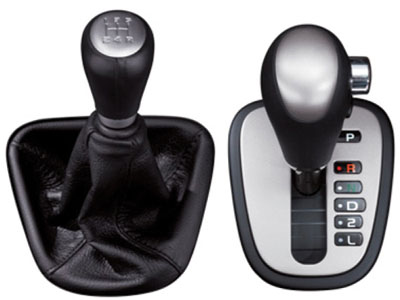
That’s the autonomic transmission, on the right…

Intestinal flu wreaks havoc on the autonomic system:

  • Turns the GI system inside out, which boosts inflammation, disturbs blood sugar, and wastes fluids;
  • Whacks out the electrolytes, which alters nerve transmission and pretty much every other cellular process, generally spiking a pain flare and roasting the higher cognitive functions;
  • Dries out the body, which puts what’s left of the fluid-dependent brain and CNS in the toilet — along with everything you’ve eaten for the last day.

A healthy body has metabolic margins to absorb this with considerably more grace. It’s still bad, mind you — really rotten, in fact. Pre-injury, tummy flus always made me wish I was dead.

In a body with dysautonomia and CRPS, it’s a ghastly festival of burning, of mindless agony, and a sheer dreadfulness to existence that words can’t touch.

So I’m considering a quick Epsom salt bath to preload my system with that lovely electrolyte, I’m getting up a blog post with these wonderfully dinner-appropriate details (hah!), and hoping that L — who, as she has often said, did have her flu shot this year — will be well enough tomorrow to run to the store for more pedialyte and white grape juice.

Everything comes to an end, even the flu. The awareness that there is always an “afterwards” is always with me now. It’s a good thing to keep in mind, because the reflex is to get lost in the now, when it’s overwhelming. But there is always an afterwards.

I’m not worried, I’m not anticipating, I’m not buying into the nerves. My mind always runs contingency plans, but that’s natural for me. (If I can’t come up with a plan B and a plan C, check for a pulse.)

So it’s time to catch up on a few things, push extra fluids, coach my body into the tub and back out again, and take things as they come. The low energy just means I have more time to watch DVDs; the wonky tum just means I don’t have to think as often about what to eat.

But seriously… take every opportunity to be happy; it makes you stronger. 🙂

Recuperating

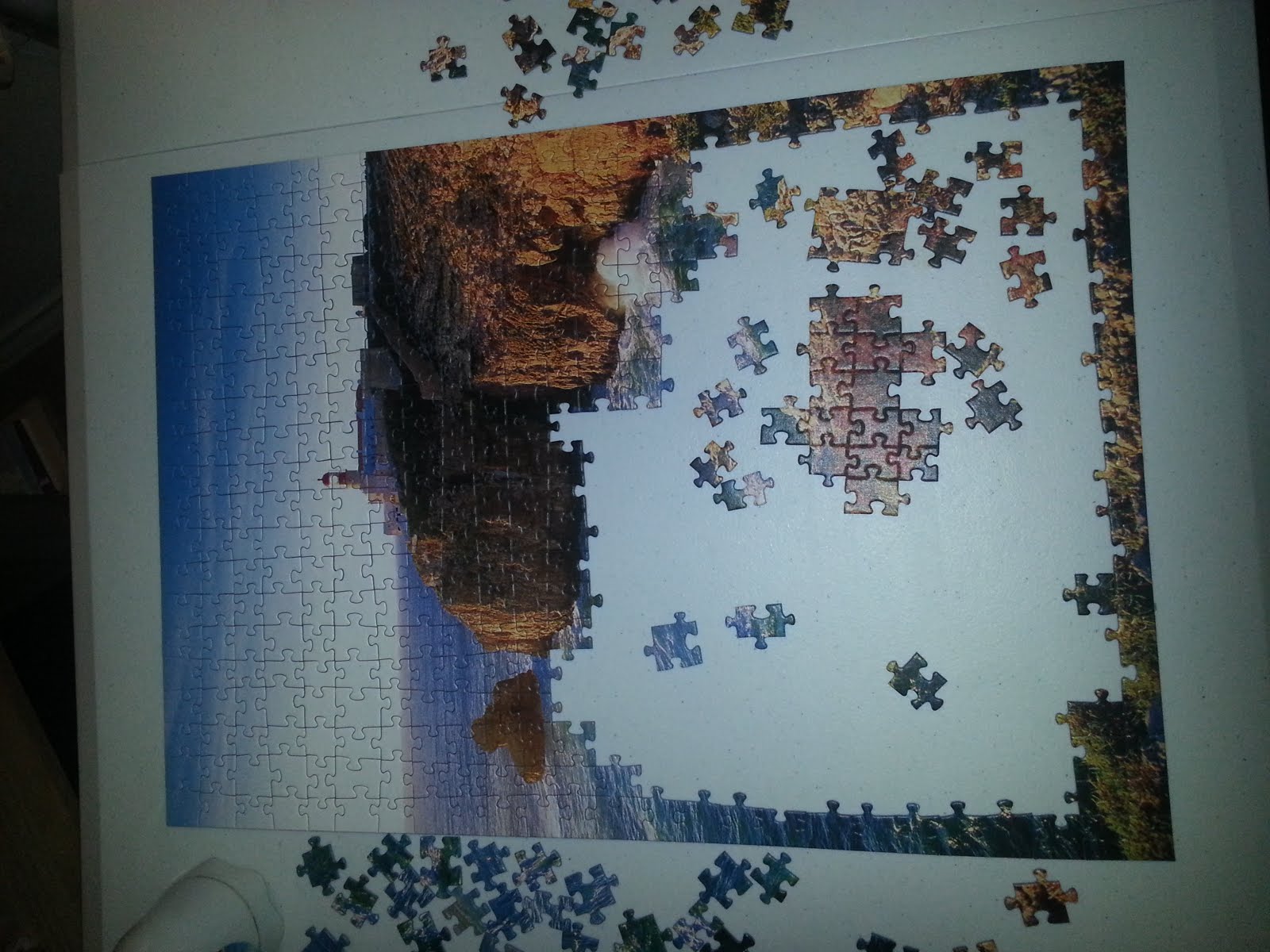
This picture shows the only thing I can do with any real success right now.

Each time a piece goes in, I soak up the little shot of dopamine that success experiences release.

It might help that, in this friend’s household, it’s mandatory to ring the bell when a particularly difficult section comes together, so everyone can look up and give a supportive nod.

The pattern-matching uses a soothingly primitive part of my visual brain, one that’s pretty much unaffected by CRPS.

The gentle motion of hand and eye back and forth, back and forth, soothes the central nervous system.

What’s ironic is that I realize I’m in recovery from a long damn case of too much too often too fast, but right at this moment, I feel stupider and weaker than I have in months.

I think I’m overdue.

Departure day

With  uncharacteristically sublime timing and verbiage, I got us into a breakup conversation that was the kindest, most civil and caring one I’ve ever had. Hard to argue with the heart problems and needing to be where the doctors are a lot less likely to kill me by accident…

Two days later, it seems more like a stretch out than a break up, but I’m not sweating that. I can’t take any more chaos, stress or drama, so I’m going to let things stand. The love is there, so why kick it to the curb? The world needs more love — at least, mine does.

Given the year we meant to take to see if this would (or should) work out, it’s reasonable to take that time to figure out what shape this connection — with its own strange, resilient, unique strength — should really look like.

I’m getting a healing break with an old friend whose life includes just the right mix of rest and activity, good food and indulgence, solitude and society.

Meanwhile, J is going to wash my car inside and out, and pull everything out of it and put it into storage so I can sort it back in more rationally — as I’ve intended to for months. I didn’t even think of that, let alone hint, I swear! He just thought it up himself, to make my life nicer and more manageable.

I’ll bounce back to J’s in early February to get my stuff and get the last business sorted, then go to LA to see my doctor and find a place to stay that meets my needs for awhile — where he could come visit and try for some reality checks.

Anybody got a place in the warmer parts of the San Gabriel range for under $500/month? Where my lovely wolfish un-boyfriend can bring his considerably better-behaved dog? 🙂

A bit of flow

All in all, a successful day, by rational markers…

  • Two huge problems taken care of at long distance (the combination of phone and internet is a wonderful thing). 
  •  J has a brother with him now, a good-hearted dude who totally has his back. Just the kind of person I want him to be seen with around town! 
  • I saw properties in, and did a reasonable checkout of, the nearest town covered by Craig’s List and within any version of my budget. 

It didn’t result in housing, but it did result in info and a certain amount of clarity…

Benefits: more than one color among its inhabitants, both middle-class and poor people, all the usual stores, houses reasonably recent and reasonably well-constructed (by California standards.)

Drawbacks: the classes are strictly segregated, and the gates and walls shut the poorer people IN. That’s just a bad sign… All the stores are big box; I think I saw one non-chain store in my whole tour. A town with shallow roots.

Fun bit: A scam claiming that a house worth $1400/mo is posted on craigslist as being rented at $550/mo; my email query got a fulsome reply from a “pediatrician” (who can’t even spell the word) who just moved to Florida, and might possibly go to Texas next, don’t worry, just fill out all this personal, identifying info and send the money and he’ll FedEx the key…

And if you believe that….

I  checked out the house, called the number on the sign, had a lovely chat with the receptionist for the real-life management company, and forwarded the email after informing her that a thoroughgoing scam like that really is a police matter. (It was at least the third call.)

Unfortunately, the bogus price was the only one I could really afford…

Given the way my credit got trashed by my descent into destitution a few years ago, and the problem with sublets (and therefore getting a roommate), I think this will take a lot of footwork.

I’ve always, always paid my rent. My bills go,

  1. Rent
  2. Warmth
  3. Phone
  4. Food
  5. Everything else

But try proving that, in an economy that means houses and harbors get bought and sold every time you turn around, and housing managers and harbormasters get moved and downsized even more often than retail clerks.

Which brings us to the next thing. I spoke of being out of the flow, nothing feeling right. Well, that seems to be shifting — all things being subject to change without notice, and not assuming I’m right or anything. But there is a blossoming of hope and possibility, and whatever brings it, I am truly grateful.

I have the thundering inward message to spend at least the next 18 hours on self-care. No running around until I have done so. No house-hunting until further notice.

This is painfully hard because I’m spending a lot per night (for me) and I want every day to be worth what I spend on it. That’s a bogus, above-the-neck, able-ist thing to say, though. I have to damn well take care of myself. Otherwise there is no worth, no day, no useful activity.

I got enough food for a couple days, detergent for dishes and laundry, and need nothing more that I can’t get within a short walk in this reasonable neighborhood from my safe, upper-story room.

Time to take care. There are far worse things!

with a tip of the hat to Zorba the Greek 😉

Think zebra

This title has two meanings:

  • Medical students are often told, “When you hear hooves, think horse, not zebra.” This means that a set of symptoms is probably due to a common cause, not an uncommon one. Zebras are rare.
  • There was a popular book about chronic stress and fear that pointed out that, when prey animals like antelope or zebras are attacked, they get really upset; as soon as the attack is over and the predator is gone, they chill right out again. It suggested reacting like the zebra; respond fast, then relax when the threat is gone.
Zebra face
I have a rare disease — a real zebra.

One of its many effects is to hair-trigger my fear, because of the disruption of the autonomic nervous system that regulates the fight-or-flight response and everything that comes with it.

My bf and I are dealing with a crazy ex. It’s an unpleasant experience for anyone, but truly trippy for a former ER nurse (talk about comfortable under stress) who now has a CNS hotwired for the fight-or-flight response. I keep blinking to check whose life this is, anyway.

In between the bouts of crisis management, I’m doing my very best to “think zebra”, do a logical assessment, and chill right out again. One must function, after all.

The daffiness of CRPS-brain (especially one that has been overtaxed with a long trip and multiple moves) means that things I need to do occur to me bit by bit, not in a tidy list. However, I do make lists, and have the backup of good friends with relevant experience: I follow their advice promptly and to the letter.

All that’s left to do is keep on with my mental disciplines: meditation, contemplation, qi gong, and prayer. Studies show it works, though they’re vague as to why. Doesn’t matter what format or religion you meditate or pray in, as long as it’s sincere.

Makes perfect sense in quantum physics — but medicine is stuck in the 1600’s, with the radiant Sir Isaac and classical physics. Maybe it’ll catch up one day.

Meanwhile, here’s a zebra. Time to meditate and pray, then stop and chew grass.

Metabolic moon dance

My digestion is not happy.

Between the stress of househunting (and the way that forces us into other families’ dreadful dramas), some really egregious motels, and too many things hanging fire for too long…

Plus taking that spirochete-assassinating, gut-grating antibiotic doxycycline for three weeks (19 days, actually; those last four pills, I almost vomited just looking at them)…

With a bit too much pain and dysautonomia for a little too long…

Amidst, of course, the infinitely complex metabolic moon dance of CRPS…

In consensus reality,
this is a shot of my old marina’s night lights…
but it’s a great visual metaphor for the body events of CRPS. Fling!
Image c.2008

… Well, things have been better.

They could be a great deal worse, but really, they could be rather better.

I haven’t been able to keep up my kale shakes, because the indigestion is too energy-sappingly unpleasant. My sweetie made a remark the other day that gave me a clue I want to pursue: don’t mix fruits and vegetables.

I used to know that.

I’m going to try berries with kefir and nut butter as the morning shake, and kale with avocado, cabbage and broth in the evening. (And, for the record, I’ve reconfirmed that organic berries are a lot less nauseating in this hotwired system.)

This assumes, of course, that I can get all the ingredients… Handle the blender… Have a place to plug it in… And somewhere to rinse it out afterwards… In the midst of homeless upheaval and chaos… Twice a day.

Editorial comment is useless. There are times when my natural wryness is wholly inadequate to real life.

I’ll let you know how it goes.

Handling my hinges

I had a day off from driving around. After wonderfully quiet morning, I took a walk to the nearest park, half a mile away. The mistletoe was going like gangbusters:

It was shocking to realize how much the tendons in front of my hips had shortened. I had to use a bit of the washing-machine action through the hips, to get a stride more than a couple feet long.

That’s way too hard on the cartilage, so once the washing machine warmed me up enough to stretch without injury, I stretched enough to let me take a tolerable stride without grinding my knees.

There’s only so much my tendons will release, in one careful stretching period. There’s quite a bit of work ahead of me.

I really haven’t been taking position seriously enough: spending so much time driving is not just hard on the torso (which I have managed with better success) but it’s hard on everywhere you bend, especially when your body sucks at bouncing back.

Short tendons in the front of the hip pull your lower back out of alignment, dragging on the front of the spine. This is terrible, as anybody who has ever had the least little bit of low-back trouble can tell you.

The way CRPS makes your tissues less resilient means that a few good stretches will not do what they used to do, back in my 20s and 30s, when 10 min. of dedicated work would put me right back in trim. Like most athletic young adults, I had no idea how good I had it… 🙂

Taking care of my hinges now has to be part of my daily routine. Especially since the driving isn’t over yet. Stretching five or six times a day, like I do my neck, which I’m still losing ground on; walking absolutely every day, or at least six days out of seven. At least it will buy me time, until I come up with something more definitive.

I fight hard to keep CRPS out of my legs in terms of circulation and sensation. Not interested in losing them to any kind of laziness!