Add to that a disease nobody understands without years of serious effort; unbelievable pain; weird deficits (sound volume? Vibration? Time in the shower? Crowds and excitement? How weird is it that that stuff can make us so much sicker, eh?); forgetfulness; loss of perceptions that tell us about social cues; distorted sense of touch; and above all the improbable wobbles, waxing-and-waning, and variations in every dimension… and we could have a recipe for disaster — and occasionally do.
I’ve lost a job, some hard-earned professional respect from my peers, an excellent friend in the making, and several medium-close friends whose presence I still miss, due purely to the effects of the disease.
Kinda sucks, eh?
And I’m definitely one of the lucky ones!
Over the years, I’ve developed a handful of personal guidelines. Key to every one of them is this: I’d rather be effective than right.
What does that have to do with taking care of relationships? (Yeah, kind of a trick question. I can hear many of you shout, “Everything, duh!”)
Life is not fair, this kind of illness is not fair, and there is nothing in this world that can make it fair. Being sick like this is just fundamentally wrong, a vile distortion of life and of fairness — but that doesn’t mean I no longer have a life or that I lose my own sense of fairness.
That, folks, is where the real power of “living anyway” comes in — of doing the imp-possible with character and flair. Life is not fair, but I can still be generous (when it’s reasonable), and to heck with the unfairness anyway. This disease is vile, but I can still be pleasant (most of the time), and to heck with the vileness anyway. Imp-possible WIN!
So, here is my list of personal guidelines for tending the relationships that matter:
1. Nobody shall be worse off for helping me.
Corollary: Be truly grateful, without groveling, when they do.
Reminder: This trumps short-term survival. If I let someone be worse off for helping me, things get very bad very quickly. Don’t go there, ever again.
2. My problems are my own.
Corollary: Help is precious.
Reminder: Treat those who give it accordingly.
3. No, normal people don’t understand.
Corollary: Nor should they!
Reminder: Bless those who try; they are gold.
4. It’s hard to reach out and stay in touch. Do it anyway.
Corollary: The payoff is worth many times the effort, over time.
Reminder: I feel better after hanging up than I did when I was dialing, ~90% of the time.
5. People say more than they can do, not less.
Corollary 1: Don’t believe them when they sound generous.
Corollary 2: Believe them when they state their limits.
Reminder: Be grateful for the more painful information, and courteous about the generous lies. This has led to more subsequent real help (mostly from the curmudgeons) than anything other than #1.
6. I could be wrong.
Corollary: I might not be.
Reminder: Is that what matters?
7. Every New Year, think over two things for the coming year, because these are the only resolutions that matter: i. What do I need to work on to take better care of myself? ii. What do I need to work on to take better care of my relationships?
Corollary: It’s okay to make the same resolution as many times as necessary.
Reminder: Celebrate having made another year!
I’m not kidding. I really do all that. It’s a constant practice, of course. I have to constantly check and recheck and remind myself of each thing on the list, especially if I’ve been slipping. The point of a practice, of course, is that it’s a work in progress — like life.
It takes a lot of humility to abide by these guidelines, and, believe me, humility doesn’t come naturally — I’m genetically wired for its opposite. (You should meet my folks: gifted, glorious, hilarious, adorable, and unselfconsciously smug, every one of them!)
Having said that, the value of what comes from the humility sure is worth the effort, even though it’s overwhelmingly difficult at times.
I intended to go into these guidelines in more detail (explanations, expansions, maybe a few links to science articles to back up an assertion or three), but I find I’m running out of steam and don’t want to leave this theme — again. I’ve got several drafts with a similar title, and couldn’t hammer any of them into shape for a post.
The brutal challenges we have with maintaining relationships really need to be addressed (however brief this is, it’s still something), so you might as well dig into this and comment on what you think about this, what guidelines you’ve come up with for yourself, why you think these might be valuable or not. I love it when you share your thoughts and experiences here.
There are two things I wanted to discuss, which I’ll just drop here and leave for further comments and conversation.
Taking responsibility is not the same as taking blame. This is a very powerful idea. (It’s okay to say, “I’m taking responsibility. I’m not interested in blame.” This shifts focus for everyone involved.) This is particularly important in relation to #1, 4, and 6.
Everybody has their limits. My relationships only work and grow when I respect others’ limits, whether or not they can respect mine. (I can’t do anything about them, but I can do something about me. Moreover, when I give them this slack, people tend to move through their mess and become more considerate in time.) Particularly relevant for #1, 2, 3, and 5.
There’s always an afterwards. I developed these guidelines in light of what tended to leave the most useful “afterwards”, because I intend to be around and continuing to beat the odds for a long time.
This is from one of my Isypedia-type replies to someone with a dreadful case of clostridium difficile (commonly known as c.diff) who had been told to use antibacterial soap to wash.
NB: This is not an opportunity to argue about antibacterial soap, but a sharing of experience from someone who was on the front lines of the “soap revolution” over a quarter of a century ago.
///
A word from an old nurse on this question, one with leaky gut, bouts of multi-system candidiasis, and assorted other gut issues, as well as c. diff …
About c. diff
C. diff is common in hospitals and is an opportunistic infection. (Doctors carry it from bed to bed on their white coats, and few of them even wash the darn things more than once a month. This is disgusting.) Once it’s in you, it hibernates, and comes out in flares periodically, usually when you’re stressed out or when your immune system is down. There’s no question of curing it, but of suppressing it and managing outbreaks.
Healthy gut flora are the first, best line of defense. They simply crowd it out and leave no room for it to grow. A normally healthy person might do fine with eating yogurt, but those of us with chronic or profound illnesses usually can’t meet their needs this way. We need the big guns because our gut flora are likely to be very weak,very few, or both.
There are some great probiotics out there. Good brands are pretty numerous. They include Jarrow, Garden of Life/RAW Vitamin Code (my personal favorite), and Ortho Molecular Products. I use the RAW Vitamin Code 5-day Intensive product for 2 weeks at a time, when I need to reboot my gut. Recently, I had candidiasis and c.diff flare up simultaneously, so I’m using the Ortho Molecular Pro Biotic 225 (tastes weird, so I mix with juice to cut the funk) for 2 weeks and then I’ll do a round of the RAW Intensive (which has a much broader spectrum of organisms, something my body really needs for maintenance — the longer a person has CRPS, the fewer gut species that person has, oddly enough) for 10 days or so.
I get these products on Amazon or at Vitacost.com, where they can usually be found at near-wholesale prices.
About the social and practical aspects of soap
Men have trouble with soap. (I’ve had to teach males of every age to wash their hands for dressing changes or eye care, so yes, I can confirm it absolutely.)
It doesn’t mean they aren’t capable of using it well, any more than women are incapable of lifting weights; they just have to put a little more effort into it, but almost all of them are capable of becoming very capable.
No, really, it’s true. They can. They just have to put a bit more work into it.
Where possible, many men would much rather have a toxin or tool to do the cleaning job for them — hence sonic cleaners and autoclaves for equipment, and benzalkonium chloride or alcohol cleaners for the skin of male responders and providers.
These aren’t as good as soap and water. Notably, alcohol cleaners, which are widely used in hospitals and do kill many germs, don’t even touch c.diff — a peculiarly hospital-based pathogen.
These products are considered good enough, and are certainly a great deal better than nothing at all.
If men (at least, US men) have to use soap, though, it seems easier for them to think about if it’s a tool-ish sort of soap — Gojo (by every mechanic’s sink, next to a fossilized bar), Lava soap (which feels like dirt and has powdered rocks in it), or antibacterial soap (which sounds medical, and therefore like a specialized tool.)
That’s a lot of needless expense. Also, and more importantly for the purposes of this blog, it’s becoming clearer that there are toxicity issues with antibacterial soaps which affect men as much as women and children.
How to clean your skin so well at home, only a surgical scrub could be better
Whatever body part you’re washing, whether it’s hands or what the medical profession delicately refers to as the “peri area” (Latinists, look away from that) and what most Americans call “the crotch”, there is a very simple way to get as clean as you can, short of a surgical prep.
Here’s the magic:
20 seconds by the clock(you’d be amazed how long that really is) with regular hand or body soap,
On your hands, from nails to wrist; Between your legs, from front to back; In both cases, right through all the crevices and any wobbly bits,
Then rinsing well afterwards,
This process will get you as clean as, or cleaner than, any amount of antibacterial soap, without the side effects. That’s what the independent science says, over and over, plain and simple.
The problem is, of course, that most people (especially men) have trouble spending that much time with soap and water.
Personally, I do a quick pass with soap to get the worst of the stinkies off, and then do a second and sometimes a third pass, front to back. I do this every time I shower, and when I’m too sick to shower but can still stand up at the sink to wash. It adds up to 20 seconds, usually closer to 30. My nurse’s nose finds my sick-body smells distressing, so I like to clean them off completely.
When I’m really not up to washing well for at least 5 days out of the week, that’s when the troubles start. Usually, diet and hygiene keeps my gut content, but I recently got a virus and then a long pain-flare and that put me down for over a week of very little proper washing — plus, of course, diminished immunity. That’s probably what led to the multiple gut flares. (They’re much better now, thank you.)
Making the right choice for you
Bottom line is this… IF you can trust yourself to really clean yourself properly, which means 20 seconds of soap (in 1, 2, or 3 increments at a time, as long as it’s 20 seconds total), then ordinary, nontoxic soap is just fine.
If you can’t trust yourself to do that, then yes, you need the extra killing effect that the antibiotic soap can have on pathogens, and will have to risk the consequences.
For triclosan and its relatives, this includes muscle wasting, dose-dependent (the more you use it, the worse it gets); for most others, it includes moodiness, suppressed immunity, more skin issues, and all the stuff that goes with endocrine disruption — possible neurological issues like pins-&-needles and faulty neuro, endocrine, and hormonal responses. (You have to watch the medical science closely to find some of those things, because they rarely make it into the mainstream press. Bad for business.)
And that, ladies and germymen, is the lowdown on how to choose soap.
I’m going through one of those periods where I’m just tired of my body hurting.
This is one of those offhand remarks that makes fellow painiacs nod understandingly, offer a kind look or emoji, and move on, but it makes normal (-ish) people with good social skills cringe and stops the conversation in its tracks.
I don’t want to make nice people cringe, and I don’t want to kill the conversation. I was recently reminded how hard it can be to avoid that while answering “how are you/what have you been doing” with any honesty. In fact, I find myself talking about most of the past 20 years in terms of not getting dead.
I think that’s a hoot, because it’s so improbable and so much against my initial setup and programming. (I have a truly dreadful hangman’s humor.)
Needless to say, most people think it just sounds grim.
My setup and programming
I’m the offspring of a diplomat and a working artist, well-traveled and extremely well-educated, Seven Sisters undergrad… until I went off-road and became something totally bourgeois and practical (a registered nurse) and, when my immune system conked out for no apparent reason, went on to become something nouveau and nerdy (a writer documenting high-end programming software.)
It was a sweet setup: good brain, strong body, great start to a useful life, good plan B when plan A failed.
Eventually, this promising start led (via surgical complications, neurological disruption, extensive worker’s comp and SSDI abuses, failures of care and denials of treatment, tediously protracted near-death experiences — a term I’m longing to refine — and years so close to utter destitution I refused to look at dumpsters because I knew I was not far from winding up in 2 or 3 of them simultaneously, like the other invisibly disabled woman of my age, build, and coloring who landed on the streets of Oakland) to my utter destruction as a professional entity.
That was definitely not in any of the scripts my life was supposed to follow!
My childhood friends now have their own businesses, pocket palaces, successful careers in the arts (most), policy/diplomacy/public service (some), and STEM (a few), and in raising children with little concern for whether they can feed them. I’m deeply relieved and happy for them, while realizing that my own life-path got so completely hijacked I have no idea what I’d be doing if it hadn’t been for this.
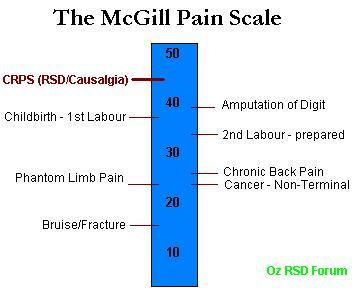
I bet I’d be complaining more, but I’d be doing more too. I wouldn’t be hurting this much for decades, if ever, and even then, only if I had terminal cancer.
Terminal cancer can be a 50. Image from the Australian RSD syndrome support group, Oz RSD Forum
Which brings us to a key point: to discriminate against the disabled is to discriminate against your future self. We’re all getting older; with more lifespan come more proofs of mortality, which include reductions of function, stamina, mobility, and even memory and reasoning.
These, folks, are disabilities, and either they will happen to you or you will be a premature death statistic. There’s no third option.
This is why, when you discriminate against the disabled, you discriminate against your future self — and all those you love.
I wish legislators had the humility to remember that. Perhaps you’ll remind them… Find yours at www.usa.gov.
Where was I? Oh yes.
Pathetic? No.
How do I talk about the last 20 years, especially the last 15, with a person who hasn’t spent an appreciable part of life dancing with Death and occasionally taking the lead?
She looks more embarrassed than anything. Makes sense to me.. From openclipart.org.
How can I convey how incredibly marvelous it is to have a minimum of 2 functional hours — consecutive hours! That’s thrilling! — nearly every single day? And yet, I used to work 10 or 12 hours at at time for preference because I loved immersing myself in the work.
In comparison to that, isn’t 2 hours pathetic? Especially because I did very demanding work, and 2 hours of noodling around in the yard or walking around downtown really doesn’t compare.
It makes me realize how long it’s been since I even thought about the razor-wire-bound memories of “how I used to be” and “what I used to do.”
I compare only as far back to 2008-2012, the pit of the pit, the nadir of my existence.
Bosch knew.
Compared to that, I’m fantastic! Being fantastic is a great thought!
Being at maybe 10% of my youthful vigor is actually amazing, because during that time, I went from being so close to dead it took 25 to 30 minutes to drag myself, fist over fist, all 6 feet from my bed to the other end of the settee, to feed the cat in the morning. I think that level of function (or nonfunction) is a percentage of my youthful vigor that’s several digits to the right of the decimal. It felt like a negative number, that’s all I can say for sure.
There’s nothing I can do about the past, only the future. That’s not pathetic, it’s just life.
Actually, I feel that way about most of this chronic-illness gig. It’s not pathetic, it’s just life.
The power of “use it or lose it” as a tool under your control
The trick to living with chronic illness is twofold:
Figure out what it takes to manage your illness without letting it take up all your focus. It does not belong in center stage, or not often anyway. Life belongs in center stage. Figure out how to make it so.
Figure out how to have a routine, some sort of rational approach to every day. It’s all too easy to lie back and let the world go by. Speaking as an old nurse, I know the immovable truth of the old adage, “use it or lose it.” Having a routine stabilizes the body’s coping mechanisms; knowing what to expect soothes the central nervous system and simplifies healing. So, make a routine; decide what happens next. Make yourself do things, alternating activity and rest. Use your body, use your mind, rest, then use different aspects of your body, different aspects of your mind, rest, and so on.
These two strategies allow me to make more room, more time, and have more attention, for joy.
Joy is not a luxury; it’s essential to proper function.
The gut, brain, immunity, everything, are worse off when there is no room for joy. Whether I can appreciate my partner, the sunshine, a lolcat, whatever, I grab each opportunity for a shot of delight. I call those bursts of joy “brain juice”, because they boost useful neurotransmitter patterns and, cumulatively, reduce my pain and improve my function.
Bit by bit, even as age creeps up and new issues arise, I find myself better and better able to make use of what I still have. In fact, over the last year, with safety and sanity finally framing my existence, I’ve regained an amazing amount of function. I’m so pleased! (Oo! More brain juice!)
I still don’t know how to explain this to a normally healthy person without sounding like something from another realm of existence.
Different is probably fine
Perhaps I am from another realm of existence.
I’m certainly from another realm of experience; longstanding profound illness is special like that.
Perhaps I simply need to get over this idea that, just because I’m back home or just because I’m talking to someone who knew me when I was an arrogant young jerk and saw beyond that to someone worth liking, I should fit in with them.
Perhaps I should have more faith in myself to be interesting and likeable enough to shine through even the CRPS. I clearly shone through the old arrogance and jerkiness, somehow.
I’m far less confident, eloquent (in person), and humorous — at least, less intentionally humorous — than I was in my 20s or 30s, but I’m a whole lot more confident, eloquent, and (occasionally intentionally) humorous than I was a few years ago.
So, I need to remember to keep my focus relevant, and not think too far back.
Emotional boundaries: My pain shouldn’t be your pain
There’s a trick to disclosing without wounding, even when what you’re disclosing is tremendously difficult. Good boundaries are key.
You may have noticed… people tend to pull away from pain. It’s an ancient reaction that happens in the most primitive parts of our central nervous systems. That means, when we’re too raw about our pain, others may pull away from us because that primitive response combines with their emotions around pain, and our pain makes them hurt emotionally.
I remember how I used to open with the idea that my pain is my pain and others don’t need to imagine it or take it on.
We each have our own load. I’ll keep mine; it’s my job.
This approach of “it’s not your pain, so let it go” frees many people up to re-engage from a rational distance which works for both of us. It’s important to give others the distance they need, because then they don’t feel a need to pull back further to protect themselves, and can stay in contact. They don’t feel driven to pull away from all that pain.
Each of us, well or ill, has to carry our own load, and really isn’t equipped to take on others’ loads as well. I try to remember that and respect the loads of others. It usually works out well.
Come to think of it, it’s essential to relationship maintenance.
Taking it on vs. bearing witness
When I was a nurse, I dealt with harrowing human experiences all the time. I could handle it with real care, and go back next day and do it all again, because I was clear that my load was my load and their load was their load, and the most healing and empowering thing to do for another person is to bear witness to their struggle without trying to take over. The one with the struggle is the one best qualified to find their best solutions; having that implicit faith in them, I found, is tremendously powerful.
For those of us in dreadful situations, we don’t get to choose the reaction others have to our struggles. All we can do is try to back-lead, essentially, guiding them tactfully to a more comfortable position.
Allowing well-intended people to bear witness in a safe way is a natural outlet for the sympathy and compassion evoked in decent people. Letting them get sucked into the awfulness doesn’t help anyone.
Put that way, it’s a lot more clear to me. It’s another form of radical presence/radical acceptance, a mental tool which boils down to, “Things may suck right now, but here I am, it is what it is, and this will pass.” Try it — you’ll be amazed how much mental energy it frees up.
The approach for discussing my illness with others may go more like, “It sucked then and it sucks now, but the worst suckage is behind me, it gave me great opportunities for growth and I took ’em. At this point, I’m better at looking ahead than looking behind, and hey, I’ve got interesting projects going…”
So, first I should clarify the needful boundary between my personal load and the rest of the world, and then I can discuss all this with some detachment from the gluey-ness of remembered distress, unbelievable losses, and intransigent pain, and best of all I can point the conversation towards something much more positive.
I’m still not sure exactly how to do that, but I’ll practice.
Well, I don’t know about you, but I feel a lot better about this already. I’m grateful for your company as I figure out my rubric for yet another tricky twist of the Rubik’s cube of life.
Here’s my Doctor Appointment Optimization strategy. This is especially important for new diagnoses, new doctors, and any significant change or comcern you have.
– Between now and your appointment, keep a pad handy and note down anything you want to find out when you see the doc.
– A day or two before the appointment, set up your documentation. Lay those questions out so you have room to write the answers (in printout or on a notepad, whatever works for you.) Also, if it’s relevant or might be helpful, make a current Snapshot to show the doctor. Make copies of whatever science articles or studies you want to share.
– If it’s a first appointment with a new doc, also print out your current Timeline and previous Snapshots so he or she can absorb your info more accurately and easily. Put them where you can be sure they’ll go with you to the appointment. (Consider faxing them ahead of time, with a cover note asking to have them put in your chart. The doc can then review them ahead of your visit. There are benefits either way.)
– Let the doctor lead the appointment, because they find it easier to be forthcoming, but let them know you have a list to check against before leaving. They like that balance as a rule, because they want your need for info taken care of, but need to feel free to do things their way too.
– It’s your appointment. It’s their job to do you, and your case, full justice. Ask, and keep asking, until you feel you understand the answers.
– Write everything down, because the brain flips a switch when you leave the office and it’s amazing what you can forget.
– Get as many relevant printouts as possible before leaving.
– This is key, an enormous time saver in the long run: Go over your notes and handouts once you’re out of the office but before you pull out of the lot. Just take 5-10 minutes to sit down and go over everything, complete unfinished sentences, tie things together, fill in details you didn’t capture right away.
– When you get home, put your stack by your chair, get something to drink/eat, recharge your brain.
– Pick up your stack, pull out your computer or a pad, and put everything you’ve learned and acquired into a plan of action.
What are the most important things you got out of today?
What is the next thing to learn?
What is the next thing to do?
Are your next tasks and appointments on your calendar yet? (If not, do that. The ‘overwhelm’ tends to short circuit common sense. It’s pretty normal, so you might as well plan accordingly.)
– Once your calendar is updated, your to-do list is laid out, and you know the keywords you’ll need for further research, you’ve digested the appointment pretty well. So, get out your Timeline (which of course you have, or, if you’re new to having a chronic condition, you’re about to start) and fill in a new row.
The point of the pre-departure review is twofold:
1. It gives your brain exposure to the info outside the office, after that switch flicks in your brain, but before the info in all its rich detail gets dumped from your short-term memory.
2. With that second exposure helping secure the wealth of detail, it signals your brain to start working on creating networks between the new info and older info. This not only helps put your own situation in perspective and improves your base of knowledge, but it sets off a cascade of subconscious activity of a very helpful kind, destressing the situation and helping you get on top of your condition.
If this looks a lot like great study skills, there’s a reason 🙂 Chronic conditions require study so you can make better decisions on the basis of better understanding. This is definitely, fully, 5-star, hayull-yes, one of those things where the upfront additional effort (which honestly is pretty trivial) pays off a million times over downstream… in easier life changes, less trouble over choices, fewer complications, more time to spend on having your real life.
Speaking from way too much experience, it’s worth it!
May all your appointments go well and all your doctors be excellent.
This disease, like time and life, dips and dances but tends to go in one direction. As long as it doesn’t outrun my ability to adapt and amuse, I can put up with that. After all, we’re all born with a one-way ticket, and sooner or later we have to get off the ride. Not all of us get a chance to prepare for our exit, or even get much warning as to what it will be like.
In my first nursing job, on an HIV unit in the very early 90’s, I had a Mexican soap opera star as a patient. He was lovely, in every way.
If you can, picture a cross between these two. That was this guy. And really sweet, too.
This was his first hospitalization with the disease and he hadn’t found his particular polestar, the thought/idea/perspective that would keep him determined and alive for however long he had. He was a lot of work emotionally, needing much encouragement to keep trying new treatments (and they were very new back then) and to keep eating even when he didn’t feel like it and so forth. He had been in for a long time — over a week.
One day, while I was setting out some medications for a complex patient who needed his meds punctually, and didn’t have time or attention to spare, the soap star came mooching up to my med cart in his hospital gowns (one in front, one in back) and huge, lustrous eyes.
With what attention I had to spare, I thought, “go away, come back later” as hard as I could. Didn’t work that time.
He said, as he’d said before, in the same miserable tone as always, “I’m going to die.”
“It’s a big weight.”
Up until this occasion, I’d stop what I was doing and gave him a full minute of attention and cheer him up a bit.
I didn’t have a minute right then. I had maybe two seconds. “Everyone’s going to die,” I said, barely pausing in my dosing and calculations.
“Maybe it’s only this big.”
Long silence next to me. I kept doing my job. (Keep in mind that nurses are paid to dish meds, not counsel and encourage struggling patients. That’s all that the staffing patterns allow.)
Then, in that delicious accent, a voice like the rising sun announced, “You’re right! Everyone’s going to die!”
I heard him drift back to his room, muttering in wonderment, “Everyone’s going to die… it’s not just me,” and I smiled to myself. I wasn’t usually rude to patients, but it sounded like it was exactly what he needed.
My other patient got his meds on time. So did the rest. At dinner that evening, my soap star sat up and devoured every bite, beaming and bouyant as we had never seen him. I began to see what all of Mexico had fallen in love with. He was discharged next day, full of fight and life again.
Somehow, that brutal realization — that everyone dies, that being doomed to death isn’t special — was what he needed to break the spell of misery that his diagnosis had put him under. He had staggered in a broken boy, and he walked out a free man.
I don’t understand it either, but it sure worked for him.
Perhaps I do understand, at least a little. My experience with that revelation goes a bit further back, though.
I had a book of rhymes when I was little. Most were delightful, but there was an old one about a sick little girl that contained the lines,
“Doctor, doctor, must I die?”
“Yes you must, and so must I.”
Makes you feel all warm and fuzzy, eh?
I went through a jagged 6 months when I got to grips with the meaning of that (plus, I thought it was a rotten thing to say to a sick little girl.) My mother got tired of assuring me I had never been nearly sick enough to worry about it and, on further questioning, assuring me that she and Dad wouldn’t pop off for a long time yet, and I’d be an adult and able to handle it.
Later, I vaguely remember looking around at a sunlit day, seeing my brothers and friends playing in the sun, the leaves of my favorite tree fluttering in the breeze, and knowing everyone would die one day…
…but not yet.
Now, we were all alive and together.
Better grab it! Yes!
A smile pushed up through my whole body, and I went out to play.
I think that’s when I first began to understand the difference between being a spectator of life and being a part of it. That realization was rooted in knowing that it’ll end one day, and I didn’t want to miss out on whatever it had to offer in the meantime.
Perhaps that’s what my remark to my patient did for him; but, being older, he could process it in 6 seconds, rather than 6 months. Everyone dies; but right now, I’m alive!
for lifelong celebrations!
I could be wrong, but I think my insistence on being a part of life is a big piece of my adaptability, not only to this wretched bouquet of stinker diseases, but to everything.
What do you think? I’m curious if there’s a link between knowing death and survival, between a lust for life and adaptability. I’m not talking about Norman Cousins’s ideas of exceptionalism, but of an ordinary, grubby-handed greed to be in this thing called life, warts and all. What does it take to reach that?
This might be the question that shapes our future ideas about adaptation and resiliency.
A dear friend is embroiled in one of those ghastly legal tangles where the vultures are rigged to win. I’m the key defense witness. This comes up later.
This whole winter, I’ve been basking — simply basking! — in the sheer delight of being safe, sheltered, warm, loved, and with as little chaos as anyone with a recent move, a complex illness, and widely scattered relationships can get. Occasionally, I’ve wondered if I’m allowed to be in such a situation, and strained my ears for the sound of the other shoe dropping… Then I do a reality check, tune in with my lovely partner and my lovely housemate/hostess, and it appears that no, it’s okay, things are right, and this is what’s right now.
My nod to the fairly relentless self-management that got me through the past decade has been an occasional effort at meditiation, a minute or three of qi gong, a few moves of t’ai chi now and then, or the occasional mood-check.
In short, diddly-squat.
In December, I lost it with a dear friend.[LINK] I did more mood-checks for awhile, a bit more meditation, maybe ten whole minutes of t’ai chi every other day for a couple weeks.
Diddly-squat doubleplusgood.
I was heartbroken at the mess I’d contributed to, but couldn’t dig up the motivation to really “do the Do”, to restart my hard-won disciplines.
Dear heavens, it was soooooo good to rest, just relax for a change, enjoy the sensation of not looking over my shoulder and not being constantly *forced* to calm sometimes-legitimate terror or possibly-reasonable panic.
It was winter. I was safe. I let my disciplines sleep.
Meanwhile, the brakes on my car[LINK] were acting up, or rather, occasionally failing to. $2,000 later, that was supposed to be fixed.
Gradually, I noticed that J was telling me, more and more often, to lower my voice: “I’m right here!” Huh. I didn’t think I was talking that loudly…
As I relaxed, other humans became more interesting and I started striking up conversations with strangers, as I used to do. They didn’t respond as well as they used to. Odd…
On social media, I found myself being snippy where I used to be sweetly witty or wryly amusing to make the same point. I backed off of my online time, because if I can’t manage myself well, I’d better not interact with anybody else who might be feeling frail. “Do no further harm” has been wired into me from way back. It’s the most basic courtesy.
I took the car back for a second brake job a few weeks ago, only $150 this time, and that seems to have taken care of the problem. So my cynicism about car dealerships remains unimpaired, thank you.
Meanwhile, there were some tellingly unpleasant procedures[LINK] which illuminated a fact I’m still failing to accept: CRPS has moved into my viscera — it has leaped out of the musculoskeletal bounds and gotten right into my core. I used to say my case was “all-body”, but that was because of the gastroparesis and subtle endocrine weirdness, which I figured was simply faulty autonomic signaling. It has definitely become much more.
I could feel every line of my intestines and the springy squashiness of my organs as the ultrasound tech noodled around on my abdomen, and the less said about the gynecological exam the better. It’s real. It’s a bed of coals in there. This finally sank right through my skull over the past few days.
Damn damn damn damn damn damn damn damn damn damn damn damn damn damn damn. With extra damn.
So, now we’re up to this week.
I spoke with the lawyer involved with the vulture case mentioned above. I went off on a tear about the duplicity and injustice involved. He finally broke through by howling my name in exactly the tone my mother used when I was getting out of hand. Once I was quiet (and abashed), he said very sweetly, “If you’re going to go on like that, you might as well hit your friend over the head with a two by four.”
Two things happened. I realized that my self-regulation was much worse than I had ever imagined; and I spent the day in a state of total exhaustion and emotional fragility, the classic signs of a massive adrenal-dump.
SIMPLY GETTING WOUND UP IS BAD FOR ME. The mere state of emotional excitement is poison to my system.
I used to know that.
I used to know when the emotional excitement was coming, and could head it off.
Nope. Caught me completely by surprise.
So, I’ve been processing all this for a few days to a few weeks now. I’m coming to some conclusions, and have a few remaining questions.
I’m pretty sure the spread into my viscera had a lot to do with the merry-go-round of the past few years.
The spread in my brain may be related, in fact it must be; however, I’m pretty sure that re-incorporating my habits of self-care and diligence can get back quite a lot of the gentle precision, sweet tact, and pleasant diplomacy I was once capable of.
So, in keeping with this revelation, I’m going to acknowledge that I’ve completed my alotted time for being on the computer and get up to go do some morning activity. Then I’ll put my feet up for a bit and lunch on brain-supporting food. After a digestion break of an hour or two, I’ll do something physical in the afternoon, including 20 minutes of t’ai chi or qi gong. After that, an hour of work, which today will consist of loading my classical collection onto my tablet. This evening, I’ll spend an hour listening to classical music, then meditate, then apply my lotions for pain and muscle spasms before bed.
There are no bloody shortcuts. None. It’s just work, and it doesn’t stop.
I’m still supremely glad to be safe and warm and loved. I just have to wrap my thick head around the fact that it doesn’t mean I’m off the hook for taking care of myself.
I’m an old ER nurse so please, trust me when I say that nobody gets a guarantee with this life. Nobody really knows what’s next, and indeed, everything CAN change in an instant. Even for the healthiest. (This is why the legislation torturing the elderly and disabled makes me livid. People who favor that legislation are poisoning their own future. Everyone who lives long enough will become disabled.)
The point is this: it ain’t over until it’s over. If you’re still breathing, you still have a life, you still have choices. If you’re still alive, you have some influence over the next moment, and the one after that, and the one after that. Only you can decide where to put your focus, for each breath of this life that is left to you.
Being aware in the midst of the hell is what capable spoonies do, and we find a bit of heaven in it whenever we can. Yes this sucks like nothing we could have imagined, and I have a crazy imagination; but I still KNOW that there is a lot more to my life than this pain, this weakness, this utter destruction of everything I thought made up my life.
Turns out that was all peripherals. When the structures of my life were utterly destroyed, I looked around at the blasted rubble that was all that remained of my old ideas of my work, my abilities, and myself. I wondered who I was.
And I realized I was the point of awareness that was doing the asking. I also realized that, without those assumptions holding me down, and despite the agony and unbearable loss, somehow I was free, I could be more simply and purely myself.
So now I’m on groups for this brutal disease, wanting to give comfort, but knowing the only really true thing I can say is, there is comfort to be had, but it’s up to us to make room for it in our lives, to push right past the pain and fog and grief to look for the rest of what this world still has to offer.
There is excitement and peace and ease and delight in this life, but we have to find ways to make room for it, to find time to notice it, even in the ongoing roar of this pain. Over time and with practice, we get better and better at the peace and the joy and the loving connections, and .. it’s not that the pain is any less, because the rocketing nausea these past few days tells me otherwise, but it doesn’t matter as much, because more important things have taken its place in the core of our lives.
Easier said than done, but it’s basically a matter of practice. It doesn’t come naturally, and nor should it, because anyone who responds to getting a leg ripped off with, “Oh, what a lovely flower!” is probably not going to survive to raise offspring. “Lovely flower, ladies!”
Being frantic in the face of horrible pain is a good survival mechanism — as long as the pain subsides when it should. For those of us who live with that kind of pain, we have to learn to re-program that core survival response (!!!) and be more mindful about how we deal with life.
Find excuses to celebrate. Finished the dishes? Celebrate! Heard from a good friend? Celebrate! Is it Tuesday? Good enough reason — celebrate! It sounds trivial, but it works. It makes your brain stronger, bit by bit. Each success prepares you for more.
In the Years from Hell, when I didn’t think I’d live out the year for a number of years, I was utterly wrung out with misery, and I refused to accept constant grimness. It was intolerable, literally intolerable; if I left my thoughts to dwell in it, I’d have had to finish myself off.
I turned my attention to whatever was not misery, and sucked the juice from it.
I noticed every sparkle of light on the water, every flicker of color in the tiny wildflowers in the grass, the way trees spread and shake their branches, the caress of the air on a fine morning, the particular blend of colors in every sunrise or sunset I was up for, the way the sky and sea reflected each other in every weather.
I got to learn the habits of the birds, from the imposing night herons to the unearthly blue herons, rare goldfinches, raucous terns, fat geese, chatty ravens, and the everlasting seagulls. I noticed the weird little shrimp living in the greenery below the waterline on the docks. When I could, I got up on shore at sunrise around the equinoxes to see the incredible light-show as the San Francisco windows were lit up by the first liquid rays of the sun, a dappled bank of golden glory marching up the hill across the Bay.
I was like a seagull for joy, pouncing on every bit of it indiscriminately. Time enough for the grey grims when there was nothing else to find. I leaped on every chance to find some beauty, some moment to get lost in.
Sometimes I was disappointed: sometimes the weather soured; sometimes a friend wasn’t answering the phone; sometimes a dash of color was a piece of garbage, not a flower. (I still pick up random garbage when I’m out.)
Working to find bits of joy was probably the most important tool in getting me through, because I could use it every day and it didn’t depend on anyone else to work. Fortunately, things did eventually change, and I was there to rise with that tide.
I trained myself well. To this day, I find myself stopping and staring when I see sunlight or moonlight shining on water.
It’s the most beautiful thing in the world to me. It saved my life day after day for years, so that probably makes sense, eh?
Be greedy; work at finding beauty and joy. It’s good for you. If nothing else, it pierces the veil of pain and frustration and it reminds you that there is a larger world, one worth getting to. Your old reality may be gone, but there are aspects of the new reality worth cherishing. I hope you all find the beauties that make you stop everything, just so you can get lost in them and soak up the joy.
A friend I’ll call A died of suicide last night. It’s easy to say of people that they are rare and radiant souls once they’re gone, but A is the sort of person who was generally agreed to be a rare and radiant soul even when she was alive. Pretty angelic, really.
Suicide is a tough gig for all concerned, but being suicidal is living hell. I’m going to try to present some information in an accessible way, but this is an emotional time (it’s also deathiversary season for some of the biggest losses in my life, and there have been more deaths than usual this winter) … I’m very upset and very angry. It’s liable to show. Anyway, here goes…
Most of the time (not all the time), the deed that causes self-death is impulsive, which is the point of the 3-day hold in psychiatric hospitals: get them over that bump, then their coping skills come back, and then they find a way forward.
In cases like A’s, some survivors want to know why our loved one didn’t reach out, didn’t let us know ahead of time. Some want to know why this person “didn’t love us enough to stay.”
That’s a common feeling after suicide. These are all very common responses. Thing is, they miss the causative point.
Reality check
Here’s the thing:
Stop being so selfish!
It’s NOT ABOUT YOU. This is a tough one to swallow because you’re the one left alive and hurting, but it’s something to be faced in order to understand how this could happen.
It’s about being in so much pain that continuing is intolerable and there is no way this person can find to make it stop. Can you even imagine that? If not, then who are you to judge? If you can, then why are you blaming the victim?
Do you think she didn’t try hard enough, or know enough to battle this more effectively?
Actually, that’s a fair question. Some people don’t know enough, and need the chance to breathe, reboot, and find another way forward. (Most people who attempt suicide fall into this category.) It’s not an unreasonable thing to ask, so let’s look into that.
Some things can’t be fixed
My lovely friend A was a sophisticated, educated, well-informed consumer of, and professional in, the health care industry and effective alternative therapies. She really knew her way around.
I have a pain disease that, if I have to be truthful, hurts more every year. I’ve had over 15 years to ramp up to my present level of unthinkable, brain-blistering agony — and to find ways to manage it along the way. I can kid my mind most of the time that the pain is hardly there. I’m not likely to kill myself any time this year, though I might get flattened by a bus in a fit of absent-mindedness due to masking too much pain… you never know. (I’ll keep wearing bright colors and getting assistance around town, so don’t worry unduly, Mom!)
My friend A had a painful condition evolve recently that wouldn’t budge despite much work, and a surgery with… interesting characteristics. I sure don’t need to spell that out for those of you who’ve had, cared for, or performed surgeries. One of her main nerve branches was involved, which tells you the rest. It was risky, tough, and fraught. She knew that. Surgery was the only way to avoid the dreadful situation she faced if she didn’t have it.
By the time she made her last tragic decision, A could easily have been in a level of pain comparable to what I live with, but she did not have 15 years to ramp up. Most of that mountain of agony landed on her inside of a few weeks.
She knew what was going on in her body and worked for years to correct it without surgery.
She knew what the surgery might result in and she tried it anyway.
She knew her options.
She knew what to do to mitigate risk and optimize healing.
It’s likely that she did everything that could possibly be done.
It’s likely that there was too much pain and no way to escape it.
Sometimes, some things can’t be fixed.
I respect her choice. I hate it, it makes me miserable, but given the circumstances, I respect her choice as I respect her right to make it.
I don’t blame A. I wish that things had been different for her.
Please remember the compassion that was at the core of her spiritual and professional life, and return it to her as well as you can. She may need your compassion more than ever, because the end of her life was so awful, and she worked and fought so hard to make it.
She loved you. She loved us all, in her endless outpouring of loving-kindness and intelligence and determination. Please, try to give some of that back to her, now when it’s no longer easy.
Step Up
Of course you’re angry to lose wonderful people to suicide. Want to do something about that?
Vote for universal health care, so people like A can get timely care and prevent minor issues from becoming major ones and then becoming deadly nightmares. Because this should not have happened in the first place.
Lobby for universal housing and emergency accommodations in every state, so people like my brilliant friend Cross don’t have to choose between being murdered by a caregiver or taking their own lives, because NO OTHER OPTIONS EXIST.
Get your elected representatives to re-fund, and stop de-funding, mental health services and social safety nets, so my gifted friend Ethan didn’t have to shoot himself in the head to make the PTSD nightmares stop. Every dollar spent on these programs saves between 10 and 800 dollars in the costs of cleaning up the failures resulting from their absence. Our economy cannot afford that kind of constant, suppurating loss.
YOUR VOTING RECORD AFFECTS THE SURVIVAL OF THOSE YOU LOVE.
Don’t step into the voting box in the hope of choosing your next drinking buddy; the POTUS will never drop in at your neighborhood dive. Try to remember you’re voting for your next Chief Executive. This needs to be someone who’s smart enough and wise enough to do the job of leading a huge country that’s in serious trouble.
If you feel that, against reason and compassion, against economics and decency, you really have to vote against these policies or vote in those who oppose them, then don’t EVER complain to me about losing people you love to suicide, or maltreated illness, or poverty, or homelessness. These deaths are optional 99.9% of the time, and I have absolutely had enough of them!
This worm has turned
I used to be vigorously opposed to suicide. I spent too many hours coding people who had no choice about whether they lived or died, so that the occasional attempted suicides I treated in the ER just made the bile rise in my throat. Those idiots were bloody well going to live whether they liked it or not, and if they reached consciousness, they were getting a short and fiery talking-to from a short and fiery RN.
One day, I confided my thoughts to a longtime trauma counselor. She stopped me dead when she said, with great pain and exquisite kindness, “They do that because they can’t think of any other way to stop the pain.”
I tried to imagine so much pain and so much trapped-ness… and I couldn’t hate them any more.
And then, years later, I developed CRPS… then fibromyalgia… then dysautonomia… and, this week, I’m getting screened for a couple of cancers.
Those of you who follow this blog know that I spent a few years clinging to life by a thread. The pain, disability, and relentless, pounding losses and brutality of the world on the suddenly-disabled, on top of an ongoing roster of bereavements around me, very nearly finished me.
I was suicidal for some of that, only I was not going to screw it up; if I did it, I was going to do it properly. So there were no attempts, there was a thorough exploration of the idea. (At the very bottom of my personal root under the final level of Hell, I found … curiosity. I could not rest until I found out how this story went. Not only would I miss my funeral by several days, I’d never find out if we got a cure in my natural lifetime, if I ever figured out how to blog, what exactly CRPS is, who I had yet to meet, or anything. That was more unbearable than pain for me: unsatisfied narrative curiosity. I can’t explain it, I can only report it. I’m still working out how to crash my funeral.)
The point is, I’m pretty familiar with the landscape of endless pain.
I understand, with diamond-sharp clarity, that there is a point where a person simply shouldn’t have to put up with any more.
I know, as I never did in the innocence of my ER days, that there is such a thing as No More Options.
The word “unbearable” is no longer just an adjective; it has real meaning. Some things should not be borne, and that’s bad enough, but some things really cannot be borne. What then? Do we turn our backs and shrug, feeling we’ve done our jobs?
Those who’ve survived the suicide of someone you loved, you have my absolutely heartfelt sympathy. It’s awful, peculiarly and specially awful. There’s nothing like it.
If you’re really outraged, turn your anger onto a suitable target: the systemic failure that made that cherished person’s life unlivable.
That would honor them, in a remarkably constructive way.
I’m off to make sure I’m registered to vote tomorrow. I don’t want to sit this one out. I’m torn up and miserable, and I want to honor the memory of A and all my dear departed angels.
In CRPS and dysautonomia, several parts of the brain get under- or over-enthusiastic (or both, unpredictably.) It’s easy to oversimplify, but even more confusing; each part of the brain has many jobs, so I can’t say that the anterolateral cortex does one thing and the cingulate cortex another.
I can boil it down by the effects that these remappings have, though. That’s relatively simple!
So, in me, this is what happens as a result of these scrambled brain bits.
1. Obviously, pain signals don’t know when to pack it in. That’s obvious. They just keep going and going and going and going and…
2. Coordination gets impaired. I used to be freakishly well coordinated, so I don’t normally get much sympathy, but this is a bit unfair.
I had 38 years of knowing exactly where my body was in space, of being able to move without triple-checking myself, from the time I first learned to walk. Or, rather, the time I first learned to climb out of my crib. … Several months before I was steady enough on my feet to toddle, I’d do a layback (a climbing maneuver where you grab one edge of a gap with your hands and then walk your feet up the opposing surface) to get up the side of my crib…
Feet push, hands pull, and you go upwards. Photo JMiall on Wikimedia Commons.
…then rappel down the rails and crawl down the hall to my parent’s room to let them know that it was almost dawn and I was ready to play.
I also learned to jimmy the rails so they came down altogether, but that took a little longer. More engineering and upper-body strength involved, you know. (I got a bed well before I was two. They figured it was safer.)
I’m not used to living in a world where my body isn’t exactly where I think it is. I probably take more damage than someone who’s been this poorly coordinated all their lives, because there’s this huge layer of bewilderment and surprise. Not to mention lack of preparedness.
I don’t compensate for it unconsciously — I have to be very conscious about being careful bending over, walking not running down stairs, always wearing de-skids when I go outside in the snow. This requires a bit more bandwidth than just doing things as you normally would.
3. The third and most annoying thing is, my brain just LOVES to go to anxiety.
Anxiety is a bit of a circus. It pushes up my blood pressure and makes my heart beat fast, which is worrisome in itself. It makes my vision go whitish, like everything is covered in fog. All this makes it rather hard to think, to reason out whether I really have cause to be anxious.
Then my stomach starts nudging the back of my throat, which is never pleasant. I keep ginger near all the time, because Tums just make it worse and I can’t stand Rolaids or any of the others.
Then my waste systems get into a tizzy and I feel like I have to go wether I do or not. If I don’t need to go now, then I will in half an hour, because (as I’m sure you remember from anatomy class!) the adrenals sit right on the kidneys and when your adrenaline goes up, so does your kidney activity.
So, on an eventually related subject, I recently got worked up for endocrine and allergy issues. The tests are still rolling in. A couple of blood tests were funky, so I need to get screened for gynecological cancer, and I need to get checked for pancreatitis — which, with my squeaky-clean life, would be decidely, wildly, completely idiopathic — if it isn’t cancer.
Naturally, part of my brain is throwing up images of a midsection riddled with malignancies. I’ve seen a few of those, so it’s not a big stretch.
That’s it, I’m doomed.
Blood pressure.
Heart rate.
White fog.
Stomach… wait, the stomach goes with the pancreatitis.
What notion of reality am I in now? The cancer one or the anxiety one? Because I can ignore the anxiety one — OMG I might have metastatic cancer! Everything’s turning white! My heart’s going too fast! AAAUUUGHHHH —
And this is where my head starts spinning around and the pea soup comes out at projectile velocity.
Not really. It just feels like being in a horror movie sometimes.
I’m lucky. I have a sense of humor. I just think about horror tropes when this circus starts, and I snort and calm down a little bit.
I have to jump on that first lowering of tension or it spins right back up. This is the dysautonomic brain at work — getting right back to panic is the easiest thing for it to do.
If mentally reaching out for my anxiety dials and trying to turn them down doesn’t help, then the very next thing to do is yawn.
It’s an incredible tool — no bad side effects, many uses. Plus, you can do it in company.
Let me explain.
Yawning starts with pulling air into the deepest part of my lungs. I can imagine it going all the way down my spine and filling the bowl of my pelvis. My ribs reach out and stretch nicely. This deep breathing is the first key.
The second key is that my jaws open up wide, releasing that clenched set of muscles there. It’s impossible to grit teeth while yawning.
I may find myself in a yawning cycle — yawn after yawn, for a good five minutes. I figure I need it. All that oxygen, all that jaw-releasing… hard to beat.
Now that my torso, shoulders, neck, and jaws are unclenched, now that I have enough oxygen circulating to let color come back into the world … now I can begin to cope.
The first thing I do, before getting up, is check my breathing. I’ve gone back to breathing from my belly, drawing air down to where it needs to go. Good.
The next thing I check is my head and neck. My jaw muscles feel softer and my neck is flexible; I give it a stretch or two each way to check. This is good.
This is a functional situation now.
Okay, I’ve done all I can. I’ve pulled myself out of the anxiety tailspin. I’ve made the next round of appointments.
As I keep telling others, don’t borrow trouble; all I can do is get on with my life while I wait for those appointments and their results. I’ll take it from there.
It doesn’t help matters that I’m worried about friends and acquaintances who are facing verified life-threatening situations. The background anxiety makes my own triggers harder to handle. But I’ve done all I can there, too. I have to accept my limits and hope for the best for them.
Editorial note…
It’s hard to see good people being treated like disposable objects. There’s something very wrong with that.
As a historian, I know that human societies go through these cycles where the empires get bigger, the oligarchs get out of hand, and then a lot of people die as the system falls over and much is lost, and then eventually a set of new systems arise from the rubble. Eventually some of them flourish, a few emerge as empires, and the whole cycle goes around again.
I hate being in a falling-over period of history. There is so much we could be doing that does not involve ripping people and nations apart to see how much money can be made from the minions before everyone dies.
Sadly, I don’t get to make that decision. I’m not an oligarch.
I’m used to it. I grew up in places where electric outages were common. We’d just get on with our homework or reading or tending rescued kittens’ eyes or arranging little army men or what-have-you.
If it was after dark, a parent would call out calmly, “Everyone ok?” and we’d bring our projects to the living room, saving candles by having one well-illuminated space instead of five poorly-lit ones. It was cozy. Quieter than usual. Arguments rarely started when the electricity was out. It was too pleasant to spoil.
My housemates have different experiences entirely.
I live with two adults with wicked ADD. They NEED the TV. The tech-savvy one NEEDS internet. Sleep is out of reach if they can’t numb out their brains first.
I was soaking up the peace, purring inwardly with the candle glow and the outstanding peace.
Creative Commons Attribution License
No hums, no clicks, no TV, no wifi, no human-made radiation bouncing off my spinal cord and twizzling my brain with little egg-whisks.
I loved it.
Meanwhile, my two darling family members were going quietly insane.
They tried going to sleep to take refuge in unconsciousness until their lives became bearable again.
I could hear the ends of their nerves curling and uncurling, even through the closed doors.
Image by neurollero on flickr, CC share-alike attribution license.
They’d bounce up again in ten or fifteen minutes, one upstairs and one downstairs, and I’d hear them dashing quietly around in their unnaturally quiet spaces.
I sat in the squishiest chair in the living room, curled up like a clean kitten, soaking up the peace.
Creative Commons Attribution License
I’m usually more empathetic. If I could have thought of something to help, I’d have been glad to do it. Perhaps we’ll think of something next time.
At the heartless core of my practical brain, though, I found the thought that they get the evenings that make them comfortable almost all the time — only two evenings out of the past five months haven’t been fully electrified.
I only had one evening so far this winter that was great for me. I was going to make the most of it.
I stretched out in my super comfy spot and purred.
Creative Commons Attribution License plus loads of snuggles