Fully-qualified human beings

When I was working in the software industry, the term “fully-qualified” entered my world in a marvelously exact way.

The specific programmatic terminology here is from the Java programming language. Don’t let it bother you – some things are just details.

Java uses an organizing category called “classes” for unique bundles of code that define all the features, characteristics, and actions that this bundle of code needs in order to do what its name says it will do. (Other programming languages may have other terms.)

Each class has to have all the parts it needs to know when it’s wanted, what it needs to look for, what it has to do, when it has to stop, and what (if anything) should happen next.

If a class is completely and properly defined in all these parameters (and sometimes more), then it’s called a “fully-qualified” class. It can be trusted and can be used across multiple regions.

Not all classes are fully-qualified. They’re okay for quick tasks and have a place in the Java ecosystem, but their usefulness is limited. Those classes, those hunks of code, usually have to be filled out to be fully-qualified or else deleted when the time comes to prepare a program for market.

Any robust program needs an awful lot of classes of many different types. It’s inefficient to have too many similar classes — you’ve got to have different classes to do different tasks. All that they have to have in common (besides logical coherence) is that they must be properly constructed so they can do their task — whatever their particular task is.

This diversity of classes is essential to good programming.

You’re starting to see the metaphor here, aren’t you…

Some people view all others as fully-qualified human beings.

Some people do not. Only a few meet their idea of fully-qualified — that is, complete and correct and fully able to function as they should. This, naturally, means that they have specific and limited ideas of what humans need to do.

When people beat on those who diverge from their idea of truly human (those targets are usually women or gender-bending or people with disabilities or people of color or poor people) they’re acting on the fact that they don’t see these other people as fully-qualified human beings.

The people doing the beating-on are hung up on the feeling that these people are not properly “written”, that they’re missing huge hunks of “code” that limits their function — and makes them fair game for being taken out, sidelined or deleted.

We aren’t all the same, and nor should we be. It’d be a terrible program if we were, and would quickly choke on its own redundancy, crashing itself and possibly blue-screening the whole show.

Maybe we should go back to the old CRT colors and make it orange-screening.

What do you think? Too bold?

My job as a complex chronic patient

My first nursing job was on an HIV unit in 1991. We were in the 2nd wave of the med mixes, so there were some treatment options. We knew which precautions were necessary, and when.

Those precautions had been newly dubbed, “universal precautions”. HIV was the last global pandemic that had a powerful effect on ordinary patient care, legislation, daily activities, travel, everything. The lessons we learned were rolled so thoroughly into our lives that we no longer think about it.

Anecdote from the front lines..

At that time, it was all rather new. Old nurses were afraid to go near any patients on our unit. We had about 80% novice nurses, an unheard-of proportion on a specialty ward in a nationally-ranked hospital in a major city! We had to pay attention, and we had to learn fast.

Because we weren’t abandoned enough already…

Our rather young nursing preceptor had bone cancer in her knee. She went in for surgery as soon as the last of us (me + 1 other) got signed off on training.

But wait, there’s more: as soon as she came out of surgery, she wrote a message insisting they pull the plug on the machines and let her die. Husband supported that, in tears.

Considering how close to hysterical she’d gotten 3 days earlier, when I tried to dig in my heels and tell her I was not ready to practice autonomously and might need more training after her op; and how strenuously this woman — who’d done little but put me down for weeks and express frustration at how slow I was — now insisted I was ready, really ready; and considering how improbable that post-op scenario is, in so many ways… I think she had planned it well in advance. Most expensive euthanasia ever.

Her 2nd-to-last words to me were: “Change your socks. They should be white. Bright colors are not professionally appropriate.” And gave me a fierce look. She came back for a nice goodbye, telling us we were all “good nurses” despite our occasional touches of color (a laugh and a nudge for the main transgressors, me & a fabulous fellow), before she turned and left the unit for the last time.

She’d been working on me about the sock thing for weeks. Slouchy cotton socks in gem-bright colors were still fashionable; drove her crazy.

She was the only one who hated them. The patients, the other nurses, and my immediate supervisor thought my gaudy ankles were delightful. I was referred to as “the one with the socks” and everyone knew. (I also introduced the fanny pack to nursing life. Nobody had heard of it before I showed up with a white, wipe-clean, bleachable one. You’re welcome.)

It’s possible that I got a packet of white socks, as a gesture of respect to that tough young woman… which quickly got grubby-looking, as white socks always do on me, and thus were eliminated from my wardrobe as not being professionally appropriate.

… That was largely irrelevant, but I’ve stopped suppressing my storytelling urge. There are just too many; they leak.

Back to the job of being a complex chronic patient.

It’s surprisingly logical — it just takes a long time to figure it out. I hope this will shorten that course for whoever reads this! There are 3 key principles to follow, and 3 sets of jobs, one for each kind of person involved in each case.

Three key principles

My patients on that ward taught me a lot about how to navigate hard, complex, intransigent illness. There are 3 key principles:

  1. Grandma was right” kinds of things: fresh air, activity, nutrition, sincere friends, learning all you can — they make a huge difference.
  2. Find the light, or life, in the cracks. Doing #1 makes that a lot easier.
  3. Communicate with others in the way they need to be communicated with.

That can be a tricky one, but I’ve got a lot of material on it. Some of it is here on this blog. And one day I’m going to complete and organize that collection of communication tools. (Any day now…)

Three different sets of jobs

It’s important to remember that you can’t do everything. I learned that (and keep re-learning it) the hard way.

There are specific realms of responsibilities which the important people in this situation have:

  • My job.
  • Significant other’s job.
  • Provider’s job.

They’re perfectly straightforward.

My (the patient’s) job
A note on terminology: some object to the word “patient” as dehumanizing. I’ll let you mull over what it means to think of someone who needs care as less than human. I don’t.

I’m sticking with the word “patient” here, because it describes a person who has specific, unavoidable experiences with alterations in their bodies, care providers, and whatever health-care system they have access to.

Complex chronic patients have a depth and breadth of experience with these things that most people simply can’t imagine — and nor should they. We wouldn’t wish this on anyone.

So, as a patient, my job boils down to this…

Take care of myself; take care of my responsibilities; take care of my relationships. All this includes having fun and seizing little joys!

  • Manage my illness. This includes: meds, nutrition, activity, learning about the disease and how to manage it, self-care (whatever that turns out to include, but it always includes pacing: alternating activity and rest.)
  • Track important signs, symptoms, and changes, and document them meaningfully.
  • Share this info with providers and significant others when it makes sense to.
  • Find useful ways to communicate with significant others & care providers about changing needs and abilities.
  • Make all my appointments on time, every time.
  • Contact my Dr for anything I need their support with: changes, meds, treatments, info.
  • Get through the days one at a time. (Thinking of the whole span of my existence is not my job. One day at a time is plenty.)
  • Find life in the cracks: notice the little beauties, regularly do something I enjoy, stop and smell the flowers.
  • Make time for fun and happiness. It makes me so much stronger!
  • Be good to my loved ones, whatever that means and within my limits.
  • Know that I’m the subject matter expert on my body, and hold myself responsible for managing it accordingly.

Significant other’s job
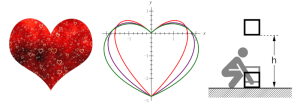
shows images suggesting love, friendship, and work

These two principles can be used by people at work, at home, on the playground, wherever. Very simply, “believe me” and “avoid making this harder, whenever possible”.

Believe me

Nobody — trust me, nobody — can make this stuff up, and there are far too many expensively-educated people working on this for it to be imaginary.

  • If you can’t believe it, then try pretending you do for awhile, just to test the concept, and see how that works.
  • Learn about the disease. There’s good info out there and I, or my doctor, can help you find it.
  • If you’re really important to me, come to an office visit with me and ask the doctor your own questions.

Avoid making this harder

Communicate with me about changing levels of activity and needs. I hate to keep saying how broken I am, so let’s come up with a code to pinpoint the different levels of broken that I could be.

Then, I don’t have to talk about how close I am to puking or crying or passing out, you can know anyway, and we can get on with things appropriately.

That’s what I really want — to be as productive as possible for all the time that I can; to be as good a partner/employee/friend/family member as I can.

Provider’s job
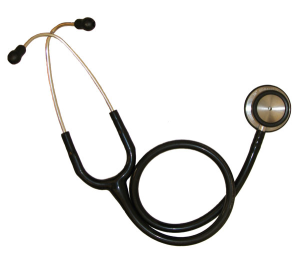
Another note on terminology: I’m old enough to remember when physicians, who were relieved that good schools for PAs, NPs, and APNs were starting to flourish, advocated for the term “provider” as a collective noun, encompassing themselves and the advanced-practice professionals who potentiated their work and multiplied their efforts.

That worm has turned, and now it’s not so popular with physicians.

Please allow this old nurse to use the term with all the respect it originally included, in memory of the brilliant and capable physicians who taught me to use it as the inclusive term of choice.

The provider’s job (as of course you know) is threefold: keeping the larger view, providing appropriate care (of course), and providing info and guidance.

This is sometimes easier said than done, because every time I see you is a rough day. You hold more than the power of life or death over me — you hold the power of tolerability or pure Hell. Thus, it’s natural for me to be a little fragile, possibly overwhelmed, in our conversations.

I do my best to be prepared and “keep it together”. I want to make the best use of our time.

Due to the additional insults of pain and CNS dysfunction, I can be subtly or even grossly impaired when I most need to be responsive, intelligent, and clear.

Given all this, please know that your kindness makes a great difference in my life.

Here is what I hope for, from my providers:

  • Consider context. Notice where I fall in the statistical ranges and how might this affect my care; help me distinguish between reasonable vs. unreasonable efforts, as well as watchable vs. reportable signs/symptoms; steer me through that intersection created by my medical & physiological peculiarities in one axis, and the statistical probabilities generated by reams of studies and years of clinical practice on the axis which crosses it.
  • Prescribe appropriate tests, ancillary care (physical therapy, occupational therapy, speech therapy, and so on), and medications.
  • Respond sensibly and kindly to concerns about meds, therapies, and changes in my illness. (Fragile egg here.)
  • Let me know what I really need to know about my condition, meds, or treatment, before I leave the room (virtual or 3-D), so I neither ignore something important nor over-study and confuse myself. My responsibility to learn benefits from yours to inform me. Also, it helps me to know the right keywords.
  • Be the subject matter expert on the scientific and clinical knowledge-base for the illness I see you for, and be willing to figure out relevant context that my other conditions create.

See this article about just how fabulous an experience it is to have a physician who does all that. It’s such a relief and such a joy. Thank you from the bottom of my vital signs for doing what you do.

All 3 working together = best possible situation

When complex chronic patients can monitor and communicate effectively, prioritizing our care while keeping life in center stage most of the time; when our loved ones can coordinate around our limits, allowing us to be at our best, considering; and when doctors apply their staggering breadth of knowledge to our particular situations with attention; we have a fabulous chance of doing as well as possible.

I like doing as well as possible. I have a lot to give and I want to be able to give it — that said, my care comes first, last, and always; it’s the only way!

Thanks to significant help and support, good friends and loving family, and some real rock-stars on my medical team, I’m well set right now. I’m almost afraid to admit it, because I don’t want to rock the boat…

And here we are

There you have it: the 3 key principles and the 3 main jobs of living/working with complex chronic illness.

I know they are that fundamental, because I’ve had a few providers almost plead with me to come and participate in their patient support groups, specifically so I could talk about it with other patients.

Well, here we are, sharing this information all over the world! Send this article wherever you see fit. I’d love to know what your support groups think about it.

Patients, caregivers, loved ones of complex chronic patients, doctors, P.A.s, A.P.N.s and N.P.s… feel free to comment. This is about all of us, after all.

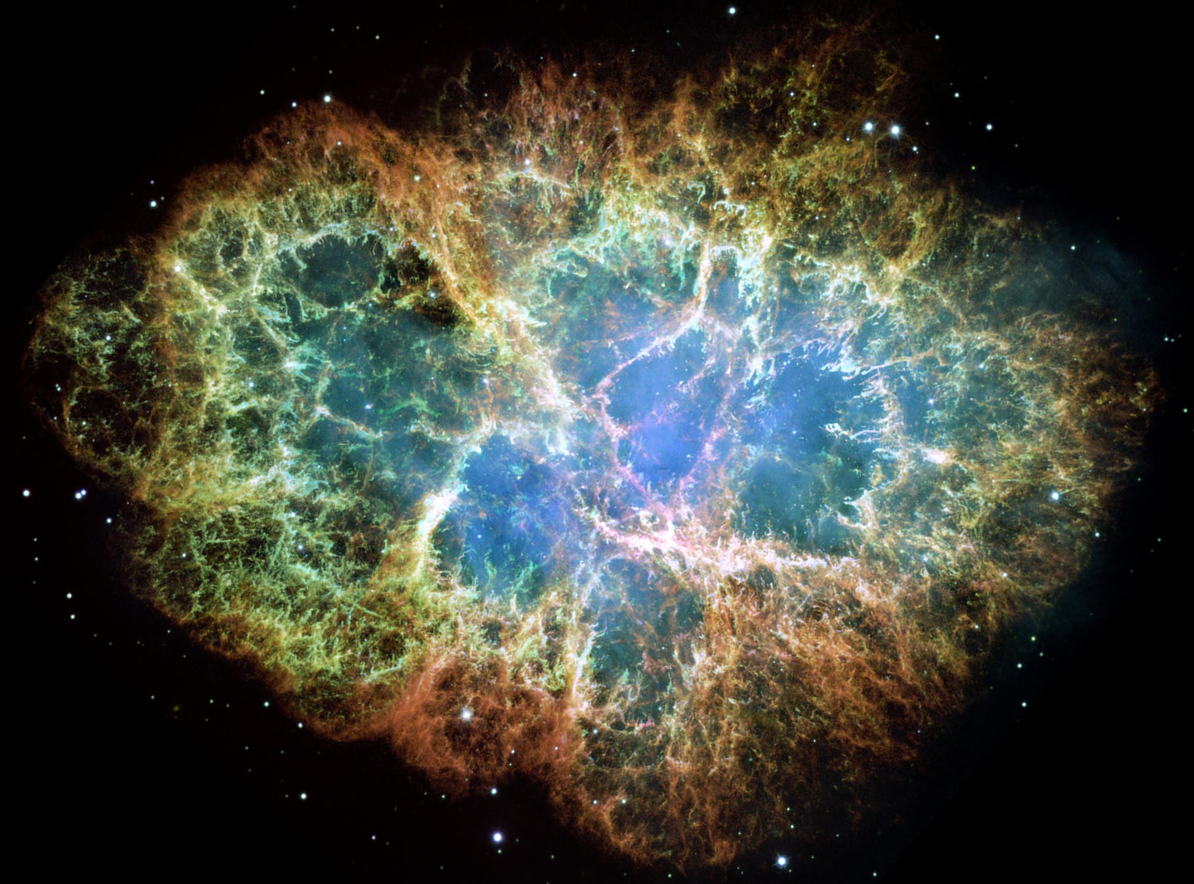
crab nebula, tuned to look like brain activity

May 2023 on the Back 40

In the spirit of this blog’s brief as a “user manual for complex chronic spoonies”, here’s a health update after another interesting year (my personal year starts in May!) with notes on medical support & the relevant self-care for each problem area.

Cultural note:

In American slang, “the Back 40” was (is) probably the least obvious & accessible parcel of a farmer’s land. Either a lot of work or no work happened there, it was hard to find the person doing it, and the effort didn’t show until afterwards.

Good metaphor!

Areas of life…

Mom (& TL;DR): 2+/3, it kinda sucks but I’m getting doctors involved and they’re good. Adjust expectations downward a bit, because this could take awhile to resolve.

Endocrinology

I got a med with a toxic-to-me ingredient (maltodextrin; it’s specifically inappropriate for people with low thyroid!) and that set me back in inflammation, pain, mood, and thyroid function. That’ll take some time to recover from, but…

=> I’m doing All The Things, mostly hydrating & waiting & antioxidants.

Plus a thyroid med I tolerate well.

Not having thyroid supplementation at all for 4 days (after 2.5 weeks of thyroid with toxic crap in it) set my thyroid recovery back further, but let my mood come back closer to baseline and gave me more access to memory & coping skills.

=>More waiting, plus vitamin A, licorice root, and Maine seaweed for the iodine.

And lots of sleeping.

Dr:

I have an appointment with a good endocrinologist in June, which gives me time to look up his articles & see how he thinks, while brushing up on my endocrinology. (Being a passive patient doesn’t work well for me. Too much complexity & too little margin for error. I hope he can cope with a collegially-minded patient.)

G.I.

I tried heirloom corn flour, because I love masa and grits, and the industrial kinds of corn are too hard on me. (Pain, mood disruption, bit more brain fog.)

Well, it took longer than regular commercial corn, and it took making it a staple & eating it a couple times a day, but it turns out that organic heirloom corn can still do that to me. So, more waiting & more hydration, but after Day 2 of No Corn I’m already a little better. Yay!

Good news is, I’ve consistently been able to eat *enough* overall that my body’s starvation response is calming down! I’m no longer gaining weight daily (which is what my body does when it’s starving). I’m able to fit into my biggest clothes that *aren’t* stretchy, another yay.

=> I find that 1200 kcals/day is the functional minimum on any given day. Getting up to 1600 is good, much more stabilizing.

Organic, free-range everything with plenty of olive oil. I have had skillful & compassionate help with cooking since November, and it’s been absolutely life-altering — for the better, which makes a nice change!

Dr:

I’m seeing my GI doc this week. I sure hope he doesn’t retire soon.

Brain & pain

Not so good. It’ll change, but there’s no knowing just when. I’ve got a UI design & documentation project which I badly *want* to do, but I think the better part of wisdom is to write up what my training & experience leads me to envision, and find others to help do the work. Trouble is, when I get to the computer, I don’t want to write it up, I want to just do it… ADHD fail, so far!

CRPS-specific

The bone pain is having a party in my feet, legs, & pelvic girdle. Skin in my arms & legs is more burny, and it’s getting annoying. That feeling of my brain envelope being hot (not something that happens in a normal body) is a frequent occurrence.

=> Eliminating the corn (which spikes up my neuro signalling) and stabilizing my thyroid should help that a lot.

I hope.

Fibro pain

Yeah… May didn’t used to hurt like this. My joints feel like the surfaces do a quick “squish” and ooze steam at every impact.

=>Antioxidants, hydration, pacing, thyroid… and time.

Dr:

I’m seeing my primary on Monday and will ask for a referral to Brigham & Women’s pain clinic to see if we can get a better handle on this.

Ehlers-Danlos Syndrome

Ironically, the more I read about EDS, the more it explains a lot. I haven’t got enough understanding to opine further, but feel free to look it up and put your favorite links in the Comments.

Everything is in a “chase the symptoms” mode until then, and chasing the symptoms means that I don’t get things I otherwise need to manage pain and inflammation, because they trigger spasms and cause tissue tearing, both of which sound like EDS issues.

Welcome to complex chronic illness, where “competing needs” is more than a metaphor — it’s a way of life!

Dr:

I have 2 appointments, one to prep before genetic testing of a more arcane kind than I can get myself, and one to discuss results. The first of these is in November. We made that appointment last fall, so that’s really the best we can do.

Life

Best time of year is here. I hope I can get some recovery & remission, as I usually do in the summer.

The pain & brain fog keep me indoors more than I’d like, especially with the high pollen count making the histamine & inflammation situations worse. (Competing needs again: I love being outside.) It’s just too much to try to mask over all this, and I’d rather not stand out for the wrong reasons. Again.

I’ve been using my rower for exercise, when I can. That’s better for the bone pain than walking on pavement is, and I’m surrounded by pavement.

Major events

Sadly, I just lost an old sailing buddy to his illness.

Worse, I may soon lose a dear & longtime friend to hers, one of my sisterhood which formed around 2010, forged in the fires of the improbable Hell of having CRPS while being intelligent (ding!) female (ding!!) health-industry professionals (ding!!!) seeking effective care for this insane disease (DONNNNNG).

Some things you just get through and hope for the best.

Love makes everything else bearable — and that makes bereavement a stone b*tch.

On the other end of the spectrum of life… my honorary nephew announced I can expect to be a great-aunt this summer, and the first bundle of crocheted baby-gear is in the mail.

His papa, my widowed honorary BIL, is traveling the world with his skills, hard-won insight, and upright down-home charm to spread the word about what *really* constitutes good patient care. The world is becoming better for his work and I couldn’t be happier for him or prouder of his trajectory!

*Huge* yays!

=> I’ve discovered that the way to avoid emotional whiplash is to think about just one thing at a time.

Some of us are *always* living in interesting times.

Conclusion

I’m going to crawl back under my rock & lurk until all this hydration & waiting does some good. Time doesn’t do everything, but it does give other things a chance to work.

Take care of yourselves, and when you can’t do that, take care of each other. (((Hugs))) to those loved ones & spoonie-compatriots who want them.

Seeing, as in looking at, stars

I saw a whole lot of stars last night. Good for the soul, that.

I’ve been taking this opportunity to be in the experience of life without having to explain it, or articulate reasons to anyone outside my own skin. I had almost forgotten what that’s like. With very bright and articulate people in my life, it’s hard to get that in my personal life. Their need to understand is borne of pure love — they worry, because they’ve seen me through some rough times, and in order not to worry too much, they need to understand in their own minds what’s going on in this mind over here, which is in a completely different person. (Mom, you’re in good company with my lot! <3)

I’m in a lot of “thin end of the bell curve” categories, so this can take some doing: INFP (about 2-4% of the population, last I heard), serendipitously rather than linearly accomplishing (about 20%), and ADHD female (goodness knows, but the proportion seems to be growing as the markers are better understood), in addition to the weird requirements of all these illnesses — pretty much guarantee that anything normal won’t work, no matter how carefully I plan and execute.

This is the second summer in a row where things have not gone according to plan, so much so that a new term somewhere between “not according to plan” and “WTF just happened” needs to be coined to express it. I’m beginning to think I should just take this as a new life pattern, since the switchbacks tend to heal the dribbling wounds of layers & layers of PTSD. (Well-managed PTSD is not the same as resolved PTSD, although the most dramatic difference is on the inside.)

My friend and honorary BIL Ron wound up with massively metastatic liver cancer because 2 years of pandemic disruption and lousy treatment from LA’s indigent support system (which is a criminally bad system, worse than war-escaping migrant camps and most internment camps, according to the UN) left his early, localized, treatable cancer as an undiagnosed blurch on a CT scan which he had a few months before the pandemic was identified.

His care was denied because there weren’t enough staff or open beds. He was killed because of, but not from, Covid. When you think about maskless people and Covid deniers, think about treatable, localized cancer turning into a deadly and agonizing bloodbath for people like Ronnie.

Yeah… I’m not bitter… much!

Folks, this is not a drill. It’s not imaginary. It’s a fast-evolving pandemic in its early days. Read up on the Black Death for a little perspective.

A couple months ago, as people told themselves the pandemic was “settling down” right before the peak of record-setting waves of contagion and death (check the data, not the ideology) Ronnie bent down to pick something up, passed out, and woke up in hospital getting the third of eight units of blood. Then he found out over half his liver was lost to cancer and that treatment would only buy him a matter of months.

He opted to skip treatment and make the best of his remaining time.

He wanted to go fishing, so he set his mind to get strong enough for one last boat trip. His family proposed bringing him home to Northern California, where there’s glorious fishing in all sorts of waters.

Long story short, the appalling facility he was in was so good at losing contact information, that his hospice social worker didn’t realize he even had family until I had the option of including a gift card with a care package I sent from Amazon, and I included four names and numbers. Then things started happening.

If you’ve got someone in a facility, send them a card! It’s documentation that people care, and nothing happens in health care without documentation!

I never thought of it as anything other than a nice gesture, but turns out it’s a whole lot more: It’s evidence that they’re worth saving. ÷O

Put your number on it if they’re in bad shape, so the facility has someone to call. Atrocious that this should be needful, but hey, welcome to modern America! o_O

OK… maybe a *little* bitter.

Since I was about ready to have him kidnapped to get out of that stupid facility, we had contingency plans up the wazoo to get him out of there and home.

Even longer story short, it turned out that the only feasible option was to drive him home, which was a 2 person job and only one person in that elderly and health-challenged family could do that, so I changed my own plans (plan is a 4-letter word anyway) and got the soonest ticket I could.

As he listened to this planning conversation, Ronnie smiled from ear to ear with tears streaming down his face. He could take in how much he was loved and wanted, and he was going home to a slice of paradise to be surrounded and supported by the care of those who loved him.

Important note here: he already had this information, but he also had his own layers of damage which made it hard to let the information in. That resistance was there for a reason. You can say something to someone all you want, but if they aren’t equipped to accept it, it won’t go much further. There has to be a big enough change in themselves and their circumstances for those scars to shift, so the info can flow.

Ron was able to put aside everything that kept him from being able to accept that information, and he had, as the wise social worker said, “a moment of pure happiness.”

The following day, his condition deteriorated. We updated our plans to go visit and hope for the best.

The morning I was supposed to fly out, he was gone.

I did my quiet-inner-voice thing, and it said “go anyway.” So I did.

Bodhisattva oath

I’ve been contemplating the distinction between working the Bodhisattva vow and being a doormat (or codependent, as we call it now), off and on, ever since I discovered the concept when I was 12 or 13. It’s been an important part of my work of dealing with the last couple decades of harrowing illness, poverty, and systematized abuse as a patient. It’s become a regular topic recently in my meditation class. This is a big deal and an important point to consider.

The difference, it seems, is about self-care and responsible boundaries. These are particularly key for people who are women, healers, and in a vulnerable situation; it may not have escaped your notice that the wording which defines these terms was developed by men who had quite a bit of support in their work, and such people need a lot less protecting.

It’s healthful for people in habitual authority/access/power over others to embrace a practice of profound and selfless compassion. It gives them more insight and calm.

Those of us whose ground state is based on acute awareness of others require a more nuanced approach.

There are techniques which allow a diligent practitioner to pursue the Bodhisattva vow over the rim of what appears as boundaried behavior without psychological damage, but they only come after many years of serious training and discipline with qualified supervision. So, people like me have to be pretty darned careful how we proceed.

In short, I was in two minds about my own reasons for coming, but I yielded to the quiet tidal bore of my inner voice and took that flight.

Serendipity

I’ve landed in a beautifully imperfect place among people who wear their glorious sweetness and relentless flaws in flowing symmetry. From Ronnie’s kin, I’d expect nothing less.

Above all, I realize it’s not my bathtub to soak in and not a set of problems for me to fix. I’m just here as a welcomed guest and loved part of this extended & protracted family system.

This is a big deal.

There’s a lot of work for me to do (administrative nonsense, since death and life are both business matters; my trip will be paid for) and that’s healthy, because it’s easy for me and a real boon to the family. Healthy boundary there.

There is a lot of soft, verdant ground for me to walk on; a ton of stars spilling across the sky overhead; a cornucopia of Isy-friendly food pouring out of the greenery on this well-kept land; and my allergies have backed off considerably. My ex has put my health needs absolutely first in every consideration and the rest of the family is happy to support that. Definitely healthy.

And me? I’m not over-explaining! It’s amazing :D! I just quietly take care of my needs and appreciate everything that I *can* partake of. Good boundaries there, too.

I’m learning, carefully, again, how to be present. How to unlock from anxiety without letting go of my real needs. My phone is nearby and in signal, but usually off. That’s healthy too, right now. It’s a kind of technology break, which my battered and hyperactive brain is probably long overdue for.

I’m also bereaved in the presence of others who are also old hands at bereavement. It’s a peaceful thing. It feels curiously wholesome, even as grief and mortality are shredding sorts of events. Ronnie and all our late loved ones are very present in their very absence.

I could natter on about the wheel of life and possibly even spout some Buddhist wisdom about interconnectedness and emptiness, but to put it in words is to miss the point. It’s an experience. All you can really do with an experience is to be in it and allow it to be part of you.

So that’s what I’m doing. And there’s real healing in it.

For some things, no explanation is needed because, at root, none is… oh I don’t know… possible?

Anyway, I’m OK. I’m doing the things and being the me and accepting the limits (including transport) while appreciating the strengths (like interconnectedness) and feeling very secure and centered and remarkably peaceful withal. This is good. And if my phone is off, be assured it would be on if I needed it. Right now, the stars and the green and the peace are healing me, and I’m simply letting them. <3

Adaptation tools in use

As some of you know, CRPS & dysautonomia involve constant re-traumatizing of the brain & nervous system. Our brains have flows that can resemble that of people living with domestic violence, because the CRPS itself keeps waling on us physiologically, in the same way people who get abused are waled on physically and emotionally.
Old amber-screen lettering showing *TILT* like on old pinball machines
This is why psychotherapy is part of the gold standard of treatment for intense chronic pain generally, and CRPS particularly: it takes good, highly specialized training — and ongoing coaching — to keep re-claiming and re-training the brain, so it can climb out of the being-beat-up mode and stay in the this-is-what’s-going-on-right-now mode.

Since I take the view that “whatever it takes, I’ll do it” is the way to work with such an intransigent, mean-spirited illness… I’ve naturally been persistent about holding to the gold standard of treatment, and working hard to implement everything that works for me. (Let it be clear that, just because that’s such a nice pat sentence, it is a hard road and a lot of work. Sisyphus thought pushing the same rock up the same hill was a lot of work? He should try claiming & holding ground against pain-brain.)

I’ve had tremendously capable psychotherapeutic teachers & coaches, and my present providers are over the moon for me. I tell them, “Gee, it’s like this stuff works!”

***

It’s graduation season in this college-rich area, and there are a lot of transitions taking place. I had a glorious week of family visiting and more social time than I’ve had all year. It was lovely and absolutely wonderful… yet, for a dys-y system, it’s still a lot of work. Big emotions, even good ones, trigger big neurotransmitter flows and that takes managing.

Yesterday, I got set straight by a friend I’ll call V, which was terrifying (really don’t want to lose that one) but the relationship will be better for it.

Big emotions kick out dysautonomic systems, so I started up the brain-stabilizing routines. Cool.

Then, I found out that a friend I’ll call D had nearly bled out last week and was currently in the hospital with massively metastatic cancer. He was diagnosed with limited cancer right before the first Covid-19 lock down. You know what happened with hospitals after that.

So, because he couldn’t get any treatment when it was treatable, he’s now faced with pretty horrific options and chose to go for comfort care for a very short life rather than horrendous chemo with a poor outlook anyway. He was an extreme athlete and had a rough life as a wee wiry guy in the city, so pain is no stranger, but at his age, it starts looking stupid to chase more discomfort.

Because of wacky human stuff, we hadn’t spoken in quite awhile. I’m glad we couldn’t see each other during the call because I know I was crying from the first sentence he spoke, and I suspect he was too. He’s a live wire & a cheery sprite by nature, and he made me laugh before I made him laugh, so I’m happy to say he won that round. We sorted out some heavy material and he said very nice things that were good to hear.

After that conversation, my usual brain-care toolkit was useless.

The first thing I do is, “don’t rehearse, replay, or dwell on it.” This is because that’s how trauma-tracks get laid in.

The more it replays in the mind, the deeper the distress gets planted. So, whatever it takes to prevent another topic of PTSD from getting laid in, is what I do.

I do come back and evaluate the experience for lessons a little later, but first… got to let the flaring, blaring intensity wash off before it stains, so to speak!

When the anguish of 2 perilous-feeling conversations, atop a beleaguered and recently worn brain, keeps roaring back, my usual low-key books/ shows/ audio/ doodling distractions aren’t enough.

I sat back and reached for a thought I’d had recently. There’s nothing more stabilizing for those who can do it than… what was it again?

Activity. Bilateral activity.

In my case, taking a walk.
Walking cat,distorted with closeness while coming at the viewer
So, with my phone reading me an audio book at the same time (clever, right?), I pulled on appropriate garments and got my wobbling butt out the door, one foot after another.

Blaring replays started up often, but I’ve had practice with this technique, and I reminded myself that *now* I walk, breathe, and follow along with a silly story; processing events comes later, *not now.*

The blaring replays got quieter by the end of the walk, and by the time I was 2 blocks from home, I could just about bear to be in my skin again.

The combination of bilateral activity (walking, wheeling, and most forms of warming activity qualify) and the distraction of a plot to follow combined to get me through the first stage of harrowing. Yay!

I followed up on a task I’d committed to for V and meditated briefly on how to follow through on family notification for D, a task that couldn’t go further last night.

The first task wasn’t executed perfectly, but I saw the error almost immediately and rectified it.

The second task, the one for D, has yet to be tried: there’s no good way to tell someone their estranged, love-hate sibling is dying, but of course it must be done and it’s not my job to try to be perfect in an impossible situation, it’s my job to be an honest, kind, and diligent friend to both of them.

So, today, once my pills are down (i.e. in a couple of hours) I’m going to the Y for non-weight-bearing exercise (because there’s only so much walking my hips and legs will tolerate) and then do something involving lots of colors (either drawing or crochet) afterwards, while listening to another story… and waiting for D’s sibling to call, so I can relay the dreadful info.

Update:
D’s sibling called, took the news with love and tears, and we conferenced in D for an agonizingly beautiful conversation. Older Sibling being lovingly overbearing and Younger Sibling trying to keep one foot in what’s really do-able, with me occasionally calling time or translating across the gaps, felt very normal to me, even though it’s not my family.

Some things are just human.

So I’ll keep breathing. And drinking lots of water. And taking extra vitamins, because this kind of stuff sucks them right outta me. (Truth to tell, you’ve only heard half of it. It’s been quite a heckin’ week.)

I can see the point of fiddling as your own city burns. Wait, I mean, Nero was a hot mess and a dreadful person to have in charge, if the legends are true.

The point I’m striving (awkwardly) to make is that arty activity calms and settles the mind, so that even devastation is less all-consuming.

I think today is a colored pencils day, or possibly even crayons. Crochet takes more thought, and I don’t want to hold myself responsible for that yet. Besides, my arm tendons are acting up, so crochet isn’t wise.

Update, Part 2:
I think I’ll take some crayons to the gym. Is that allowed? XD

Feelings pass. It’s what they do.

New normals emerge, and we learn to live with what was once unthinkable.

Adaptation is a big job sometimes, but, well, here we go again.

When momentum uses inertia

Wizard, with hat and staff, standing next to text of Tolkien quote.That last post, about acknowledging the shimmering sense of mortality I’ve lived with for nearly a year? Well, I kept meaning to post an update, but I’ve been having too much fun making progress elsewhere, and simply dropped the ball. I often think, “oh, I should post that on my blog,” and then – pain diseases being what they are – when I shift context to hop online, I’ve forgotten what it was and quickly get sucked into something else.

At the risk of using terms improperly, I found myself explaining this normality of painee existence as a sort of “acquired ADD.” As it happens, our brains get changed in the same places and pathways that ADD brains live in, so that our scans look amazingly similar. Those ADD-like symptoms are definitely not imaginary. I have found myself using adaptations very much like those I’ve read about in some of the terrific books on ADD. I recommend reading up on it. There’s a ton of helpful material on how to manage with and work around these attention issues.

I miss blogging. So, I hope to automate (or at least simplify) moving information here from social media. There are still interesting questions to answer, and I think that useful info we generate in pain groups should find its way to a more stable, searchable medium.

I have been sinking into this life, having acknowledged that inward message about its likely brevity. I’ve been here a year, and love my little flat more and more each day. I’ve been rearranging, creating more usable space within the same square footage. It’s delightful!

I keep the picture that reminds me of those who made this happen over the decorative fireplace, where it looks wonderful, and send grateful thoughts to its source/s – even when reaching out in real life only creates confusion and misunderstanding. We humans generally, and painees particularly, sometimes realize we don’t control how others receive us, but we can steer our own thoughts. So, I maintain this practice of gratitude, because that’s who I am and always have been, and wait for better times.

More health problems? Certainly! I will write about the gastrointestinal circus another time. I’m currently working on digesting a drink of water, and I’d prefer not to think about it until that’s done. This is the big, hairy, stinking follow-up to the first sign of trouble nearly 2 decades ago, which I wrote about (with disgusting toilet humor, inevitably) over at the post Intestinal Fortitude.

Apart from one misunderstanding and that additional body system, this life is amazing. Bit by bit, I’ve been getting a broader pool of professional and personal help and support. Bit by bit, I’ve been coming up with adaptations that bring more art, craft, and productive time into my weeks, although I have to be careful (of course) about changing tasks and changing position and managing time better than I really want to. For instance: “No,” I had to myself yesterday evening; “you don’t get to finish that row of adaptive crochet! I don’t care how pretty this is, or how soft the yarn. These helpful tools only improve my function, they don’t correct the problem! Put. The yarn. Down. Thank you.  Now go do something else.”

So I did.

And then I treated my right forearm with everything in my toolkit. And then I made myself promise not to pick up those tools for at least two more days, because that’s what it takes to recover when I’m forgetful enough to do crochet on a couple of consecutive days. Change those tasks! Figuring out a crafty solution is not as important as protecting tomorrow’s ability. Or even tonight’s. I can use myself hard, but I’m not allowed to use myself up. I don’t count on a ton of recovery time.

I’m back to using dictation software, in order to make better use of my arm time. The stylistic difference is clear to me, but it probably doesn’t matter. This is a good compromise to make, although it’s not necessarily an easy one. Dictation is a strange, slow way of speaking, and it forces me to think in chunks rather than in thoughts and words. But hey, it works!

Times are changing. Whether or not the current American president behaves any better, whether or not the next American president has the moral courage for fundamental changes, whatever, times are changing. My own possibilities are opening up, and I’m not holding back. I didn’t even know I was, but boy, things have changed since I stopped trying to eke everything out! I’ve got things to do, and I’m not waiting any longer to do them.

If I were more self-conscious, I’d throw in a bumper sticker-appropriate remark here. I’m out of ideas. I’ve got other things to do now. Maybe next time. Maybe. 🙂

Take care of yourselves. When you can’t, take care of each other. When you can’t do that, take care of your world. It helps.

Active presence

I love the term “radical presence” because it feels radical to jump the barrier of overwhelming emotion to land face-to-face with the moment and be able to look straight at it regardless. However, in practical terms it’s the opposite of radical — it’s conservative in the classic sense, because it puts us back into the realm of what’s demonstrably real and solid.

Therefore, conservative presence is the same as radical presence.

What a wonderful object lesson in putting political branding aside.

However, for the sake of clarity, I think I’ll start calling it “active presence”, as it usually takes an act of will.

When I was working as a nurse, an important part of the job was teaching people what they needed to know in order to go on better: dress the wounds, improve activity, improve nutrition, manage impaired systems (immunity, pain, respiratory), take care of relevant organs (heart, liver, pancreas, kidneys, gut, brain) and so on.

I’m sorry to say I was too idealistic at first and found myself being scoldy. The word “should” showed up a lot; worse still, “shouldn’t.” Argh! Words I’d love to take back!

I finally learned the key principle of teaching & training around life skills, especially primal ones like eating/drinking/moving: people have to start from where they are, not from where anyone, including them, thinks they should (ugh) be. The ideal is not relevant, only the real.

The first step, therefore, is to find out what that reality is, no matter how egregious. Their best hope of improvement is almost always in small, manageable steps, starting right from their current reality.

This led me to my first understanding of active presence: change has to start from this eating habit, this activity level, this degree of self management. No others exist yet! Trying to pretend they do only builds castles in the air.

However, I’ve seen patients of mine go, for example, from couch potatoes with snack-stocked shops and triple-bypass heart attacks to organic-grocery-owning half-marathon runners in a couple of years, by starting with tiny stepwise improvements: cardiac rehab class, to slow walks, and on up from there.

woman walking up beach, looking totally at home in her skin.

There are no guarantees (it’s easy to joke about people with great life habits getting hit by a bus) but hydration, nutrition, fresh air, and exercise tend to pay off tremendously– usually after a clunky adjustment period, as body and mind lurch through the initial changes.

Of course, the time that new habits take is going to pass anyway. Would you rather be reaping rewards at the end of it, or find yourself back in the rut that put you into medical care?

I’ve said exactly that to many people, with honest attention. This isn’t a trick question, nor is it an occasion for smarm. It’s a key question we all have to ask ourselves periodically throughout our lives, in one way or another. Everyone has the right to contemplate and answer that question honestly, even if the real reaponse is, “I like my habits/my rut, I see the trajectory, I know where it will take me, and I accept that probable outcome with open eyes.” I’ve had people say that, in tones varying from sweet concern for my feelings to roaring defiance. It’s all okay; it’s their call. I’d ask if they’re interested in cushioning their fall or minimizing damage to others, tailor suggestions accordingly, and then call their physician to adjust expectations and ask about/offer any ideas for mitigation over improvement. (It was never a total surprise to their doctors.)

As a patient, I have made — and continue making — complex changes in order to stay as well and functional as possible. I’m persistent like that. To me, being incapacitated is intolerable. I’d rather have better options.

“When you’re alive, anything is possible. It’s being dead that seriously limits your options.”
– Jodi Taylor

Active presence puts me on ground firm enough to step off from, and actually get somewhere. I’ve been living with a strong inward nudge to simplify, focus, and hurry up, because I don’t have much time left. It may be fallacious (I hope so), my subconscious working to override my “completion anxiety” about larger works. Given the accuracy rate of these deep, strong inward messages up to now, I’d be a complete idiot to ignore it. So, I’m simplifying, focusing, putting my ego (which is where this anxiety resides) off to one side, and buckling down on building the structure of my legacy in my head. I’ll discuss that more when there’s some output.

Dying is horrible. I don’t want to do that, ever. I’ve started to, a couple of times, and I’ve seen far too many loved ones go, especially those with these diseases. No words, no words for it… That said: Being out of this relentless, grinding circus of delicately-balanced tolerability, with horrific and likely further life-limiting consequences for certain mistakes? Really looking forward to being done with it! There will come a time — at some point, for me as for anyone — which will suck, and shortly after that, I’m absolutely certain there’ll be an end to this (extremely well-managed) biological terror and the unimaginably cruel pain that drives it.

I have this stubborn inner nudge that it’s not far off for me personally. That’s definitely NOT my choice, it’s the circumstance I find myself in. Without having wanted or chosen it, I somehow find acknowledging it to be hugely freeing!

That is intensely weird, I know. Also uncomfortable and maybe bitter and sad.

But that’s what is true for me, right here and right now.

From here, and only from this point in my often tortuous reality, can I move on.

I accept that.

Here I am.

Time for the next little step. Who knows where it’ll take me in the long run?

Let’s find out.

Chaos theory

  1. As regular readers know, I’ve had an eventful life. The past 20 years, particularly, have been a circus of bizarre improbabilities, oxymoronic paradoxes, and irreconcilable conundrums. My life reads like a dystopian comedy, if your sense of humor is sufficiently twisted.

This is why I’ve got the category “imp-possible” going in this blog. It looks merely cute, but it has a lot of layers. Imps could be little devils, or little fairies, or little children. They emphasize the power of the small. It feels like the only power left. “Imp” also suggests the power of the unexpected.

As the current American president’s so-called “tax cut” comes home, the US Disability Income management agency, Social Security, has decided to trim costs in anticipation of their lost income: they’re cutting my pay, on the grounds that the Worker’s Compensation element of US health care paid me off for being hurt. Separately, they handed over a bunch of health insurance money so Medicare wouldn’t have to pay for my work-related treatment.

Social Security confused the two, and then added zeros to the left of the decimal, divided it by 12, multiplied that by the square root of Guatemala (I’m making this up, just like they did), slapped a bonus on it, and decided I make OVER $5,000 PER MONTH and they’re going to count 80% of that and dock my pay by ~$160 per month…

I’m allowed to make over $5,000/month? Where? How? Sign me up! But wait… huh?? You think I actually have $5,000/month???

Yeah, I’m confused too. (The payout was good, but not that good: I got a sturdy, 10-yr-old car and a year’s worth of rent in a clean, dry cottage out of it.)

That $160 is what allows me to keep my pain-cream-making gear & off-season clothes in storage *and* pay for my writing course at the 50% discount I negotiated with the teacher (I’m doing that course instead of buying books & music for a few months.) I’m not sure any of that counts as extra these days.

They said this would be (future conditional tense) reflected in my pay as of December 2019 (whaaaaat???)…

Either they’re as confused as the rest of us, they’re in even harder denial about which year this is, or they’re setting up to make the pay cut retroactive in case they decide that that’s in their best interests. Also, Social Security being who they are and the current US administration being who they are, this feels like the first move against our lifeline, not the only move.

… I’m sitting here speechless again. Happens every time I think about it.

This is on top of the brutal horrors of approaching winter (relentless agony, burning brain, incapacitating fog), no bathtub (CRPS’s disruptive surface effects creep up my legs and over my back and make my shoulders, hips, and right arm into bloated purple sausages wrapped in electrified barbed wire, with no way to push back), encroaching mold (which multiplies everything, including mast-cell hyperreactivity/disabling allergies, heart dysrhythmias, gut problems, and it adds respiratory diseases to the mix), and gastroparesis so bad that every other day I have to do a big ol’ — you don’t want to know. Trust me. Even I can’t make it funny.

My psychotherapist is savvy, sweet, and has that merciless faith in her client that the best of them wield like surgeon’s tools (yes, this is relevant, hang on through the curve)… I fell apart completely in our virtual visit and whispered in stricken tones, “I don’t know if I’ll make it this time.”

After acknowledging the depth and legitimacy of my feelings and recognizing my prior successes against staggering odds (she does know her job!) she encouraged me to see the breadth of creative possibility embedded behind, “I don’t know.”

I blinked, because that sounded pretty darned merciless, even for a top-flight psychotherapist. (Keep in mind that surgeon’s tools include, not just scalpels and silk, but electric saws and the sprung barbs known, deceptively, as towel clips.) She wouldn’t give up, though.

I agreed to accept that as a working hypothesis.

On reflection, that thought began to feel more like pre-2019 Isy, before my heart got ripped out and stomped on a little too hard by a few too many, and my system fell apart so badly in the storm of it. It began to feel more like the Isy who, 13 years ago at the start of the Hell Years, looked around at the absolute rubble & blasted mess of everything I thought defined my life, and realized someone was still there doing the looking, so there was still an “I” and I wasn’t done yet. It felt more like the Isy who made the term “imp-possible” a regular category. I didn’t know where that would lead me, but…

I didn’t know how to finish that sentence yet.

This morning, while listening to an audiobook that’s a romantic comedy about overthinky nerds (still relevant; hang on through one more curve), I used the toilet successfully for the first time in months, without having to resort to the apparatus hanging nearby for the thing I’ve had to do that I won’t tell you about. (It involves soap & warm water, nothing too ghastly.)

I use audiobooks to keep my brain from overheating. It gives me just enough to focus on that I don’t drive my thoughts off a cliff, and it’s not so intrusive or demanding that I can’t do ordinary tasks at the same time.

This one had gotten to a part where the author discusses basic chaos theory: chaotic systems (and I defy any biologist to come up with a more chaotic system than a dysautonomic human body with longstanding central pain syndromes) … where was I? Right. Chaotic systems tend to get more and more chaotic until a sort of tipping-point is reached and they reorganize at a higher level of criticality.

What the heck does that actually mean, anyway?? What do they mean by a higher level of criticality?

Partly, it means that a lower level of energy is required to maintain that state of chaos, even though it’s still a higher level of chaos.

And that (I thought, as I looked up at the equipment I was going without at last) meant that I could do more coping with less effort.

Once you’ve prioritized your needs hard enough and developed your adaptations effectively enough, it gets a whole lot harder to throw you off your game.

I can work with that.

The next level of chaos is here. I have no idea how it’ll unfold. That said, I’ve already reorganized at a higher level of criticality.

I’ll meet it somehow. I don’t know how. I’m still here doing the looking, so I’m not done yet.

In honor & memory of Ruth Bader Ginsberg.

Living anyway, up at the sharp end

Ladies, gentlemen, and others, we can do this.

The tracks have been laid. All we need to do is acknowledge them, and accept where they can lead us.

The most recent relentless global pandemic was HIV. (Note: We still don’t have a safe & effective vaccine for it.) It changed all our lives forever, in ways that most people no longer notice.

My first nursing job was on a unit that specialized in HIV, in 1991. The treatments were new, the extensive effects of the disease still poorly understood, and everything was still very much in flux. Sound familiar?

We were pretty sure how it was transmitted — hence the dawn of Universal Precautions, where old nurses had to learn new tricks, like putting on latex gloves and a mask while running to a code blue. My class learned it alongside our other skills, so we usually found ourselves promoted to leading operations until the “dinosaurs”, who otherwise knew what they were doing, got kitted up.

What I learned from my patients then was that, in facing such a horrifying illness, basics matter:
– good nutrition,
– good information,
– adequate activity,
– relentless adaptability,
– cheerful determination,
– true friends, and
– emotional integrity — the only ballast burly enough to keep a person upright through wave after wave of bereavement and harrowing loss.

Obviously, those lessons tailored my response to my own ghastly illnesses. The more science discovers, the more sense it all makes.

“Emotional integrity? Huh?”
This is closely related to “radical presence” and “radical acceptance”, useful terms in trauma therapy.

This sense of the world spinning out of control, all bets are off, legitimate fear and uncertainty, not sure how we’ll survive, the horror of realizing that we can never go back to our pre-Covid-19 reality? That’s all traumatic, in the psychological sense. It’s legitimately frightening and disruptive of life.

This pandemic is a profound, global, traumatic event, and not everyone is handling it well — some leaders especially.

When dreadful things happen, we want to fly, fight, or freeze.

Flight:
Pandemics can travel with — or to — you, so, as Europe learned during the Black Death, running tends to make things worse all over.

Fight:
Pandemics don’t have faces. They can’t be punched or shot. Doesn’t work.

Try telling that to the weird extremists screaming for their imaginary right to kill and die without even trying.

Ah, denial. It’s so predictable, and it does not help.

The opposite of denial is emotional integrity.

This is the knife that cut through the fog after my Dad died; the sharp anguish somehow opened up my eyes to the silvered beauty of morning mist on the trees, and the bottomless comfort of being around my brothers — the only people to be similarly wounded by the loss, and whose sense of humor is as quirkily angled as mine.

There was no point pretending he wasn’t dead. Nothing would bring him back.

There’s no point pretending that Covid-19 and all that goes with it isn’t happening. Nothing will undo its intrusion or the consequences of our leadership and our collective actions.

It’s okay, and healthy, to let go of the fact now & then and focus on something equally real but maybe more fun, or at least more pressing. Doesn’t change the new reality that awaits the return of your involvement in dealing with it.

The weird and counterintuitive point is this:

Starting from “This is what’s real, and it truly sucks” opens up the barn door and lets out all the good feelings too.

Suddenly the air smells better, my real friends matter more, priorities simplify, internal muddles settle down… Although I become more keenly aware of the grief and loss and pain, it’s also natural to be more aware of the things that help me bear it. It worked then and it has worked through all the 21 years (, 3 months and 21 days) since then, in which I’ve lost far, far more than I ever imagined was possible. (Long-term spoonies and the much-bereaved, you get it. Like many, I’m both.)

You know how the sun keeps coming out and the world keeps turning even though you’ve just had a loss that leaves you almost prostrate? There’s a reason. Open up and let it in. It’ll wash through and leave you stronger.

Emotional integrity is learning how to stand and face the feelings, look straight at them, acknowledge them, name them, assert what they are. Then release yourself into the wider view that incorporates and surpasses them. Grief is complex anyway, so it makes sense, when you face it, to expand awareness enough to accept feelings that don’t suck, too. It’s weirdly freeing.

Sounds odd, but it works. 5 thousand years of meditative development and ~50 years of neurological and psychological science all show this. Powerful tool; simple, though not always easy, to use.

I write this to remind myself, because I’m struggling.

I’ve lost another friend to suicide (not impulsive; she was truly done with her life), on top of the Covid-19 reality and the slaughter of my homing dreams and the shockingly multifarious personal devastations of 2019. Oh, and worsening disease with spreading & intensifying CRPS and either worsening neurovascular dysfunction or maybe a vascular manifestation of EDS, which recently killed a most excellent friend who was my angel of survivorship.

So yeah, tough times. Absolutely craptastic in so many ways. (But it could certainly be worse. I finally reside somewhere safe & kind, and I’m truly grateful.)

But still, I live. Still, I walk. Still, I love. More than ever. Still… I must find a way to go forward.

I don’t have to feel good. It’s a tiresome fact of my life that I almost never do. (The last time was a little over 2 years ago, in a successfully pain-killing vitamin C and Epsom bath after the right meds, my lover peeking in and giggling, and the songbirds going nuts outside.)

I just have to continue to feel — and remember not to close the door too hard or too long on grief and pain, because then I lose joy and wonder as well.

We can do this. We can all learn to do this. I mean that in pure sincerity.

It’s worth the effort of learning to do so at will, and not wait for the rare gifts of unavoidable joy to bring back a bit of life. I think we have to go out and get it, thorns and all.

Of course it hurts. Is that the point? There’s so much more to life than just all this terrible pain. I know that, even when I don’t feel it.

This is the diamond-hard point of “living anyway.” I never said it was easy. What I have said, often, is: there’s a future worth having — we just have to live long enough to get to it.

L’chaim: here’s to living… long enough.

A 3-point reality check in the armpit of winter

I’ve got a sweet, safe little spot all to myself now. I can’t talk about it much but the gratitude and relief is STUPENDOUS. It took over a month to begin to come home to the fact that I get to come home now.

Last week, I didn’t spend much time upright. Months of overdrafts on my body’s account were called in: colossal spoon-deficit.

If I’d had the energy to feel much, I would have been alarmed. I just couldn’t. I couldn’t anything: think, choose, feel, read, watch, be.

Pale mass of bubbles from underwater

Just drifted through the hours, mostly lying down, listening to audiobooks I’d read (or had read to me; thanks, Mom!) at least a dozen times before. Drifting in and out of the stories. Falling asleep early, waking late. Weird, spacey surges of energy got the kitchen cleaned a couple of times, and enough whole food cooked (can’t afford premade) to keep me fed for another 2 or 3 days.

The laundry pile and state of the floors don’t bear thinking about. I’ve started cleaning the floor, one square yard at a time, and so far that’s one square yard. Yay!

Last week, I was incredibly seduced by the idea of giving up the considerable ongoing effort of living. Oh, the peace, the comfort, the over-ness…

Eventually, I made an agreement with myself to simply wait until summer. That’s all. Anything else I did would be pure bonus. Even knowing I’ve got dreadfully important things to do, I had to be ready to put them aside to get this internal agreement to work.

Reasons

Of course, part of this is the wacky human version of hibernation, an unsatisfying slowdown without the restfulness or calm feelings that make it pleasant.

Cold dark winters are brutal. I never stop thinking about 2 things: deep warm baths and warm places to go in the winter. There’s no tub here and I’m not doing any more packing for awhile, though.

Compounded by longtime central pain, dysautonomia now with heart effects, bereavement, and recent protracted survival-stress, it’s really no darned wonder that letting this ride stop appealed to me!

I made promises which I take seriously, and there’s no question of my hurting myself. That’s just not going to happen.

I only wanted so badly to stop pushing back all the time, stop doing the relentless self-disciplines around every life activity — eating, sleeping, moving around, taking care of self and pet and home, making it to all those appointments, staying on top of my tasks, tracking the endless cyclogram* of signs & symptoms & exposures & feelings & barometric changes & solar weather & functional levels… you get the picture.

Stylized image of woman asleep with enormous red and black dress billowing around and supporting her. White snow falls from a deep blue sky

What chores await

I want the business from my failed homing efforts cleaned up and moved on as soon as possible, so I can stop paying rent on a useless space. Going back to it is a desperately nauseating thought. The place nearly killed me, I realize in retrospect.

At least one of my friends realized that at the time. Sigh.

Line drawing of woman flat on floor, with woozles coming out of her head
Image mine. Creative Commons share-alike attribution license, credit livinganyway.com.

I’m used to pushing past feelings, of course — “CRPS R US!” — but this stage of illness makes an issue out of being too dizzy or vomity to drive safely. (The vomiting is really intense and leaves me no control of my arms and legs… or anything, actually.)

I toy with the idea of a tree falling on the thing hard enough to trigger an insurance writeoff… happy thought! Well, actually, I’m not fussy; anything that totals it and doesn’t harm anyone would be fine with me.

Dreaming is free. Meanwhile, I’m working on healing as hard as I can. This is one of several weighty and important things to manage, and I know a few of you know how much that’s like trying to run with no legs.

But I’m getting better

This morning, I could actually taste the raw sugar in my tea. That’s kind of amazing. I didn’t realize I’d simply stopped being able to taste sweetness. It’s these little things that give me some rational hope.

This first day that I’ve been well enough to get out, I loaded up on blue fruit and low-FODMAP carbs.

Hubris, meet Reality-check

I’m sitting down to give these palpitations a chance to calm down before heading home. If I’m up to it, I’ll get some digestible protein; if not, I’ll go home and get back to horizontal.

Something about that statement seemed odd. H’mmm…

I know what to do when a statement seems odd: do a simple 3-step reality check!

Isy’s 3-step reality check**:
1. Review what I just said.
2. Take a moment to notice the totality of how my body feels, right now.
3. Think back over past 24 hours and look for other symptoms.

That took 5 seconds for the first 2 steps and another 6 for the third. It gets very efficient with practice.

I said to myself, “Self… Palpitations and breathlessness now, and seeing spots last night & this morning? You’re going home to lie the heck down, pal! No argument!” (The spots relate to blood flow, in my case, so heart symptoms have been acting up in a non-chest way.)

Can’t argue with that.

…Well, I could, but it’d be wilfully stupid and I disapprove of wilful stupidity — not just in politicians, but also in myself. So I’d better get stable enough to drive and then go home and lie down.

1 hr later…
I did.

Cats are masters of pa:ng 🙂

Footnotes
*A cyclogram is a way of charting multiple changing elements in a single system, using a circular graph. It can be useful for seeing overlaps, backtracks, correlations, and other patterns among the different elements. Whether it’s better than an oblong line-graph is a matter of taste, but I find the sense of spinning-ness very apt here!

**Step 1 keeps me on track. I had two professions where everything depended on my getting things right, but I’m not perfect (despite best efforts!) so I got into the habit, very early on, of mental review and double-checking myself.
Step 2 is nearly magical in its effect. I stole it from the stress- and uncontrolled-pain-management skillset. It’s key to getting on top of any mind-clouding moment. Try it out, it’s magnificent!
Noticing the body response is a tremendously powerful step to getting back in charge. Once we can notice the physical self in an overcharged state, we can learn to steer it to a better physical state — breathe better, stand or sit better, lift the neck, release the shoulders — and wow! Suddenly it’s not about being so overwhelmed, it’s about a single moment (in a whole life) which we’re managing and moving more gracefully through. Great tool. Gets better and better with practice.
Step 3 I add for health issues, because chronic conditions need more context so we can figure out what’s going on. I started doing that for patients 30 years ago, so there’s a special rolodex in my brain for recent symptoms. When that rolodex went missing during the Hell Years, I noted symptoms & signs in my journal, which lived by my berth on the boat, always in reach. Over time (time which was passing anyway) that ability gradually got rebuilt.
Tracking matters. It really matters.