Many people have figured out before me that approaching life coherently, as a complex creature with inward & outward lives, as physical and energetic beings at once, and so on, is probably a really good idea.
I’ve spent years describing myself as a “text-based life form”, and “better in print than in person.” That was useful for a time; most of us need something to cling to, to carry us through, when we feel terribly broken.
This summer was transformative. I started it wholly committed to making my legacy; I’ve come out of it realizing that I’m very much alive, and that, if I’m going to get anything done, it has to be as a whole person — minding my relationships with those who can relate to me, minding my physical care as a loving duty rather than an intransigent puzzle, tending my crafts as sweetly as I need to be tending my recuperation, and so on.
Somehow, I’m absolutely certain that only in this way — and not in the head-first, head-down policy of my old working self — only in this way can I make meaningful progress.
Of course, that means it’ll take longer up front. But, as an old mariner, I’m well aware that prep is between 80 and 90% of the final result — so you take the time and do the prep, if you want good results.
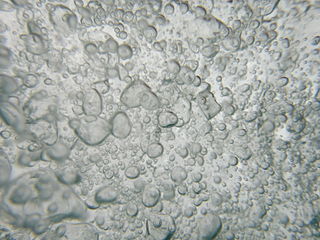
I happily think of star nurseries (thank you, NASA , for this image), which look like glorious messes — but, from these, galaxies are born.
Logical? Well, not in any linear sense. Organically it works, though.
I love the term “radical presence” because it feels radical to jump the barrier of overwhelming emotion to land face-to-face with the moment and be able to look straight at it regardless. However, in practical terms it’s the opposite of radical — it’s conservative in the classic sense, because it puts us back into the realm of what’s demonstrably real and solid.
Therefore, conservative presence is the same as radical presence.
What a wonderful object lesson in putting political branding aside.
However, for the sake of clarity, I think I’ll start calling it “active presence”, as it usually takes an act of will.
When I was working as a nurse, an important part of the job was teaching people what they needed to know in order to go on better: dress the wounds, improve activity, improve nutrition, manage impaired systems (immunity, pain, respiratory), take care of relevant organs (heart, liver, pancreas, kidneys, gut, brain) and so on.
I’m sorry to say I was too idealistic at first and found myself being scoldy. The word “should” showed up a lot; worse still, “shouldn’t.” Argh! Words I’d love to take back!
I finally learned the key principle of teaching & training around life skills, especially primal ones like eating/drinking/moving: people have to start from where they are, not from where anyone, including them, thinks they should (ugh) be. The ideal is not relevant, only the real.
The first step, therefore, is to find out what that reality is, no matter how egregious. Their best hope of improvement is almost always in small, manageable steps, starting right from their current reality.
This led me to my first understanding of active presence: change has to start from this eating habit, this activity level, this degree of self management. No others exist yet! Trying to pretend they do only builds castles in the air.
However, I’ve seen patients of mine go, for example, from couch potatoes with snack-stocked shops and triple-bypass heart attacks to organic-grocery-owning half-marathon runners in a couple of years, by starting with tiny stepwise improvements: cardiac rehab class, to slow walks, and on up from there.
There are no guarantees (it’s easy to joke about people with great life habits getting hit by a bus) but hydration, nutrition, fresh air, and exercise tend to pay off tremendously– usually after a clunky adjustment period, as body and mind lurch through the initial changes.
Of course, the time that new habits take is going to pass anyway. Would you rather be reaping rewards at the end of it, or find yourself back in the rut that put you into medical care?
I’ve said exactly that to many people, with honest attention. This isn’t a trick question, nor is it an occasion for smarm. It’s a key question we all have to ask ourselves periodically throughout our lives, in one way or another. Everyone has the right to contemplate and answer that question honestly, even if the real reaponse is, “I like my habits/my rut, I see the trajectory, I know where it will take me, and I accept that probable outcome with open eyes.” I’ve had people say that, in tones varying from sweet concern for my feelings to roaring defiance. It’s all okay; it’s their call. I’d ask if they’re interested in cushioning their fall or minimizing damage to others, tailor suggestions accordingly, and then call their physician to adjust expectations and ask about/offer any ideas for mitigation over improvement. (It was never a total surprise to their doctors.)
As a patient, I have made — and continue making — complex changes in order to stay as well and functional as possible. I’m persistent like that. To me, being incapacitated is intolerable. I’d rather have better options.
“When you’re alive, anything is possible. It’s being dead that seriously limits your options.”
– Jodi Taylor
Active presence puts me on ground firm enough to step off from, and actually get somewhere. I’ve been living with a strong inward nudge to simplify, focus, and hurry up, because I don’t have much time left. It may be fallacious (I hope so), my subconscious working to override my “completion anxiety” about larger works. Given the accuracy rate of these deep, strong inward messages up to now, I’d be a complete idiot to ignore it. So, I’m simplifying, focusing, putting my ego (which is where this anxiety resides) off to one side, and buckling down on building the structure of my legacy in my head. I’ll discuss that more when there’s some output.
Dying is horrible. I don’t want to do that, ever. I’ve started to, a couple of times, and I’ve seen far too many loved ones go, especially those with these diseases. No words, no words for it… That said: Being out of this relentless, grinding circus of delicately-balanced tolerability, with horrific and likely further life-limiting consequences for certain mistakes? Really looking forward to being done with it! There will come a time — at some point, for me as for anyone — which will suck, and shortly after that, I’m absolutely certain there’ll be an end to this (extremely well-managed) biological terror and the unimaginably cruel pain that drives it.
I have this stubborn inner nudge that it’s not far off for me personally. That’s definitely NOT my choice, it’s the circumstance I find myself in. Without having wanted or chosen it, I somehow find acknowledging it to be hugely freeing!
That is intensely weird, I know. Also uncomfortable and maybe bitter and sad.
But that’s what is true for me, right here and right now.
From here, and only from this point in my often tortuous reality, can I move on.
I accept that.
Here I am.
Time for the next little step. Who knows where it’ll take me in the long run?
My own health took a hard dive late last year and the damage continues to evolve…
…On top of an increasingly human-hostile political system and increasingly deadly climate.
Fun times.
So, yeah, sitting here on a big pile of crap. But that’s not the problem.
What really bugs me is this relentless, quiet, basso-profundo voice murmuring in the back of my brain, “Hurry up. You don’t have much time. You, personally, don’t have time to waste. Pick your focus. Nothing else matters. Get to work. You don’t have much time.”
I used to have a lot of projects running at once…
I didn’t tell anyone, but I secretly hoped I’d be able to run again. I used to run 4 miles up & down a canyon in the redwoods before work most days. It was glorious. Before that, on the other coast, I ran 5 to 10 miles along the banks of the river in Alexandria, Virginia, because it felt good and kept my head clear for work on the HIV ward. I ran from one place to another because it was faster than walking.
Yeah. Well. Between dysautonomia screwing up my circulatory responses and adrenal glands, the tissue fragility of mast cell dysfunction vs. undiagnosed EDS offering to rip holes in my tissues again, and the recurring exercise intolerance, I can let that one go. I enjoyed it at the time, look back on it fondly, and intend to be grateful for that much.
I was going to start a business with a line of absolutely stellar pain creams I came up with. Seriously good stuff! It’s at least as good as the medical marijuana salve I used to make from top-shelf medical-grade bud — but totally legal everywhere! I was looking forward to getting that out to my fellow painees, doing some good and making some money. (Comment if you’re interested. I could be persuaded to sell my stock-on-hand.)
Instead, I’m willing my recipes and equipment to a friend who knows people. She can get it out, and make more when that’s gone. Meanwhile, I’ve got a few hundred bucks locked up in the only exception to my “2 piles” rule for money: 1 pile (my paycheck) for monthly expenses, and 1 pile (an insurance account from the Worker’s Comp branch of the higgledy-piggledy US system) for treatment and survival. That 3rd pile, which belongs to the business and only to the business, is gathering dust. It might help her get started.
As regular readers know, I once hoped to make my own safe home to age, work, rest, and die in.
The downside to owning a home is clearer than ever, and to a limited budget and limited body, it’s a disaster waiting to happen. That dream is dead, staked, burned, and the ashes are buried at the crossroads.
I love fixing sh-tuff. The dopamine wave is delicious. However… too many piles of sh-tuff waiting to be fixed, plus associated tools and supplies.
I’ve donated, bartered, and tossed away more than I even knew I had to spare. So far, I don’t really miss it.
Months ago, I gave up all my arts & crafts except writing and drawing. (And making masks.) I came up with some chirpy sounding reason, but it was about clearing my agenda and narrowing my focus.
There’s something intense about that voice. I look back and realize I’ve been responding to it since before this GI crisis evolved. Thinning out my pursuits. Thinning out my belongings. Thinning out my life.
Narrowing my focus long before I could hear the words this clearly.
For awhile, I thought it was a symptom of wonky chemistry, as I’ve had to do that medication square-dance that people who need neurotransmitter stabilizers have to do now and then. Chemistry is pretty good in here now, and that voice is clearer than ever.
So, here’s what there is to work with:
* I’ve done a lot of writing and training.
* The biological-sciences part of my brain has kept its doors jammed open, despite all the other closures.
* I’m an honest enough historian to know how too many people have been shut out of the process of using their health care systems, due to gender, race, class, and lousy sociohistorical times.
* Me and my friends have developed some powerful tools for being seen and being believed.
* Also, we’re pretty delightful cartoonists. (Hey, it’s a great teaching tool!)
It might be time for all of this to come together. My mission, should I choose to accept it, is to “drive” turning all this into a body of work that can continue teaching, training, and translating between chronically & profoundly ill patients and the rest of the world, long after I’m gone.
I have only 2 jobs now: stay as well as possible for as long as possible, and craft that legacy.
It’s frightening to contemplate pushing everything else off my plate, but the experience of the past year has shown me, over and over, the peace and release that happens after.
I don’t have to find the perfect home, although I’d sure be grateful if it landed on me and sucked me right in. (I can’t pack myself up to move one more time.) I have to make this one work better, and get on with the rest of my life. I honestly don’t think I’ve got a lot of time.
But then, I’m not sure that’s the point. Maybe I just can’t focus on more than 2 jobs anymore.
As regular readers know, I’ve had an eventful life. The past 20 years, particularly, have been a circus of bizarre improbabilities, oxymoronic paradoxes, and irreconcilable conundrums. My life reads like a dystopian comedy, if your sense of humor is sufficiently twisted.
This is why I’ve got the category “imp-possible” going in this blog. It looks merely cute, but it has a lot of layers. Imps could be little devils, or little fairies, or little children. They emphasize the power of the small. It feels like the only power left. “Imp” also suggests the power of the unexpected.
As the current American president’s so-called “tax cut” comes home, the US Disability Income management agency, Social Security, has decided to trim costs in anticipation of their lost income: they’re cutting my pay, on the grounds that the Worker’s Compensation element of US health care paid me off for being hurt. Separately, they handed over a bunch of health insurance money so Medicare wouldn’t have to pay for my work-related treatment.
Social Security confused the two, and then added zeros to the left of the decimal, divided it by 12, multiplied that by the square root of Guatemala (I’m making this up, just like they did), slapped a bonus on it, and decided I make OVER $5,000 PER MONTH and they’re going to count 80% of that and dock my pay by ~$160 per month…
I’m allowed to make over $5,000/month? Where? How? Sign me up! But wait… huh?? You think I actually have $5,000/month???
Yeah, I’m confused too. (The payout was good, but not that good: I got a sturdy, 10-yr-old car and a year’s worth of rent in a clean, dry cottage out of it.)
That $160 is what allows me to keep my pain-cream-making gear & off-season clothes in storage *and* pay for my writing course at the 50% discount I negotiated with the teacher (I’m doing that course instead of buying books & music for a few months.) I’m not sure any of that counts as extra these days.
They said this would be (future conditional tense) reflected in my pay as of December 2019 (whaaaaat???)…
Either they’re as confused as the rest of us, they’re in even harder denial about which year this is, or they’re setting up to make the pay cut retroactive in case they decide that that’s in their best interests. Also, Social Security being who they are and the current US administration being who they are, this feels like the first move against our lifeline, not the only move.
… I’m sitting here speechless again. Happens every time I think about it.
This is on top of the brutal horrors of approaching winter (relentless agony, burning brain, incapacitating fog), no bathtub (CRPS’s disruptive surface effects creep up my legs and over my back and make my shoulders, hips, and right arm into bloated purple sausages wrapped in electrified barbed wire, with no way to push back), encroaching mold (which multiplies everything, including mast-cell hyperreactivity/disabling allergies, heart dysrhythmias, gut problems, and it adds respiratory diseases to the mix), and gastroparesis so bad that every other day I have to do a big ol’ — you don’t want to know. Trust me. Even I can’t make it funny.
My psychotherapist is savvy, sweet, and has that merciless faith in her client that the best of them wield like surgeon’s tools (yes, this is relevant, hang on through the curve)… I fell apart completely in our virtual visit and whispered in stricken tones, “I don’t know if I’ll make it this time.”
After acknowledging the depth and legitimacy of my feelings and recognizing my prior successes against staggering odds (she does know her job!) she encouraged me to see the breadth of creative possibility embedded behind, “I don’t know.”
I blinked, because that sounded pretty darned merciless, even for a top-flight psychotherapist. (Keep in mind that surgeon’s tools include, not just scalpels and silk, but electric saws and the sprung barbs known, deceptively, as towel clips.) She wouldn’t give up, though.
I agreed to accept that as a working hypothesis.
On reflection, that thought began to feel more like pre-2019 Isy, before my heart got ripped out and stomped on a little too hard by a few too many, and my system fell apart so badly in the storm of it. It began to feel more like the Isy who, 13 years ago at the start of the Hell Years, looked around at the absolute rubble & blasted mess of everything I thought defined my life, and realized someone was still there doing the looking, so there was still an “I” and I wasn’t done yet. It felt more like the Isy who made the term “imp-possible” a regular category. I didn’t know where that would lead me, but…
I didn’t know how to finish that sentence yet.
This morning, while listening to an audiobook that’s a romantic comedy about overthinky nerds (still relevant; hang on through one more curve), I used the toilet successfully for the first time in months, without having to resort to the apparatus hanging nearby for the thing I’ve had to do that I won’t tell you about. (It involves soap & warm water, nothing too ghastly.)
I use audiobooks to keep my brain from overheating. It gives me just enough to focus on that I don’t drive my thoughts off a cliff, and it’s not so intrusive or demanding that I can’t do ordinary tasks at the same time.
This one had gotten to a part where the author discusses basic chaos theory: chaotic systems (and I defy any biologist to come up with a more chaotic system than a dysautonomic human body with longstanding central pain syndromes) … where was I? Right. Chaotic systems tend to get more and more chaotic until a sort of tipping-point is reached and they reorganize at a higher level of criticality.
What the heck does that actually mean, anyway?? What do they mean by a higher level of criticality?
Partly, it means that a lower level of energy is required to maintain that state of chaos, even though it’s still a higher level of chaos.
And that (I thought, as I looked up at the equipment I was going without at last) meant that I could do more coping with less effort.
Once you’ve prioritized your needs hard enough and developed your adaptations effectively enough, it gets a whole lot harder to throw you off your game.
I can work with that.
The next level of chaos is here. I have no idea how it’ll unfold. That said, I’ve already reorganized at a higher level of criticality.
I’ll meet it somehow. I don’t know how. I’m still here doing the looking, so I’m not done yet.
Update on wifiddling…
I got an idiot-proof radiation meter. Wifi is in the microwave band of 2,500 GHz and the additional 5,000 GHz band, which are part of the radiofrequency band, abbreviated as RF.
Here’s the reading from upstairs’s wifi, beaming down to where I used to have my sofa:
Here’s the reading where I have the sofa now:
I found a couple other hottish spots, but I also found a sitting spot that registers nearly 0 in every direction (as does most of my bed) and that’s where I take tea and pills in the morning.
I really like having data. After finishing my last post, I thought I was going to have to spend $1500 at the very least for partial protection, and start at $2200 for the whole enchilada, and where the heck would I get that? (My savings are tied up in a messy little mobile home I can’t go anywhere near.) Instead, it turns out I just need to move the furniture a little, and stay back from the windows that look next door. MUCH cheaper!
It turns out I’m just shatteringly tired. I’ve been living with too much fear for too long. Fear uses up a lot of energy and neurochemicals. On top of the relentless pain signalling (which uses a lot of energy and neurochemicals) and the neurochemically-expensive and exhausting work of having to juggle the exponentially increased effort and decisions required by disability AND poverty (each of which uses a lot of energy and neurochemicals)… once I got a safe and sane chance to rest, it’s like aaaaall those energy bills are coming due at once.
… To clarify my relationship to an excess of rest, let me relate a work anecdote.
I was new to software. I was still used to the pace of nursing, which is inhuman and unforgiving. I said something about having completed 4 out of 5 of my tasks (which I didn’t realize I had another week to complete) but I hadn’t completed the 5th because, I said with chagrin, I was probably being a lazy cuss.
The entire room erupted in laughter. Me — lazy? What a joke!
After 20 years post-injury and still being upright, articulate, and seasonally functional (which takes a TON of relentless work) I’ve almost adjusted to the idea that I’m the opposite of lazy. What I can do, I will, as soon as I can do it safely and adequately. That’s just how my programming goes. Good thing, too, or I’d never have made it this far.
It turns out I’m just phenomenally tired right now, 99.98% of the time. I’ve begun to stop apologizing for it, because it’s clearly beyond me. It just is, and will continue to be until it’s over.
When I can, I will do more. I have absolutely no worries about that, because I know in my bones that I’m the opposite of lazy.
I just really need to rest. I didn’t know it was possible to be this weary. Of all I’ve read about profound idiopathic exhaustion, the only thing that consistently works with no further damage is to rest thoroughly enough and long enough. Plus maybe a bit of careful, inch-by-inch support with Chinese herbs, which I’m also starting.
After the ghastly fiascos of last year, imagine my overwhelming relief to finally — FINALLY! — find a clean, safe place to live, in one of my favorite towns in the world.
The past weeks of unbudging exhaustion — starting from roughly the time everyone in the building got back from their holiday vacations — I put down to my body going into a “deep recovery” mode after the astonishing stresses it survived. I knew neighbors had wifi, as most adults do in this country, and noticed I felt better in the sunny side of my bedroom — behind an enormous brick wall, as the bedroom is an addition built onto a century-old, balloon-built brick building — so I’ve been spending a lot of time sitting there, letting all that earthing happen between me and the wifi signals.
Today, more or less out of the blue, two or three neurons fizzed together and I realized there was something differently-familiar to this feeling of having had all the air let out of my tires and my batteries totally drained. There was a knot of yuk behind my xyphoid — right about where the vagal nerve comes through the diaphragm and shakes hands with the stomach on its way past — which has rarely gone away.
Following these clues — my neighbors getting back, the bitter exhaustion, the yuk behind my xyphoid — I pulled out my elderly-but-spry laptop and asked it about the wifi signals it can see.
Here is what it sees in the living room:
Here is what it sees in the bedroom, behind the double layer of brick wall with a door in the middle:
That one bar of difference is definitely palpable, to me. Also, I know that one of my near neighbors has turned off their wifi right now (bless them!) because there’s sometimes another network on this list which has all 5 bars when it shows at all; it chases me right out of the living room because I can feel it like an incoming missile to my gut.
This exercise simply goes to prove my longtime suspicion that, indeed, wifi is the Un-Healer for me. I can’t get off the couch for long, simply because I’m being soaked in it all the time.
Give me a moment to get myself together, please. This is tough. Bosch knew.
It could be worse. I could be unsafe, breathing mold, AND being soaked in wifi.
Solutions
First, a key term:
Faraday cages are structures that use particle absorption, grounding, or deflection to create a radiation-free space inside. I’d expect to incorporate all three elements, for a more durable and predictable kind of protection.
Grounding
There are some low-tech, lower-cost things to try that can have the effect of minimizing my exposure to wifi signals:
– Grounded skin, that is, a grounding mat I keep my skin connected to, to carry away the signal before my body takes it up much. I haven’t had terrific results from these yet, but I may have gotten a bogus mat before. I’ll experiment with wire and foil before investing in anything better.
– Rad sinks (already in place), a mass of metal dense enough to act as its own ground — in my case, big heavy old-fashioned steel filing cabinets. I should really paint them thickly in matte black to get the best results (preventing signal-bounce), but it’s hard to think of a less useful work-setting for a colorist like me. I’ll keep thinking about it, though, because I’m pretty sure it could help.
After that, it gets a bit more iffy vs. more expensive.
Shielding
Make a Faraday-shielded pod I can pick up and move around, and sit in when I’m doing anything for long. Given the inexpensiveness and availability of pop-up structures, black felt yardage, and that shiny mylar stuff, I could cobble that together, probably with a zipped door and a couple of battery-powered computer fans. But dayum, would that be claustrophobic, gloomy, noisy, and a space-hogging eyesore! Also, it would render most furniture effectively unavailable for shielding time.
I’ve tried rad-blocking clothing. This poor challenged body needs a good few feet between my skin and shielding, or the feedback gets incredibly painful. Can you imagine that thing that microphones do with feedback, happening to your spine & everything connected to it? Yeah, that’d be cute by comparison to the experience of me wearing rad-blocking clothing for 5 minutes. So, rad-blocking clothing is not an option for me.
– Creating a shielded-fabric blockade around my bed, looking rather like a mosquito net but costing the equivalent in silver netting, which it often is. Silver is an excellent conductor. If properly grounded (always a consideration for a Faraday cage you want to use for more than an hour!) this can, at least, create a low-rad place to sleep that still has air flow — and room for the cat. It’s not the total radiation seal that a proper Faraday cage should be, but it’s a compromise that works well for many people. I can certainly tell if it needs to be better sealed for my purposes; boy howdy, is that clear to me now!
Shielding & grounding my whole space
Then there’s the costly, smelly-toxic, protracted option of having a minimum of 2 good coats of rad-blocking paint (at ~$200/quart, I’m guessing a total of 5 or 6 gallons for these high ceilings, plus the ghastly oil-based primer required), securely wired into the building ground at appropriate points by an electrician ($1k), with adequate layers of 3M UV-filter film ($?) cut to fit every single window ($hundreds for labor, because I can’t do that), the sashes of which will also have to be painted or filmed over… And do something to cover the gorgeous old maplewood floors to block rad bounce from the basement. That, given my abiding love and admiration of maple in every form, would be absolutely criminal.
So, that’s not going to happen.
Or, of course, there’s the prospect of moving again, to which my internal response is way out of the decibel range that blogs can carry. I have JUST gotten my hotwired system to stop leaping awake every hour or two, convinced I have to pack and move again. I really need not to move for a good while.
This is a great place in so many ways, and I really like being here right now. I aim to make it work.
I project that my solution, whatever it is, will be a compromise, like this home — so much going for it, but still missing crucial elements. I’ll have to come up with something that will protect me enough to heal while I’m here, since that’s the point.
First steps
I think the first thing to do is shield the bed. Like I said, not perfect, but it should improve my overnight recovery-time. The means to do that is readily available and I already know the better makers and materials-technology. I could probably get that up in a week.
After that, I’m thinking portable pod, big enough for a chair inside with a little writing desk. Might rig up a window or viewing port, using something reflective but not too dark.
Any engineers want to come play with these ideas and problem-solve here? 🙂
I’ve got a sweet, safe little spot all to myself now. I can’t talk about it much but the gratitude and relief is STUPENDOUS. It took over a month to begin to come home to the fact that I get to come home now.
Last week, I didn’t spend much time upright. Months of overdrafts on my body’s account were called in: colossal spoon-deficit.
If I’d had the energy to feel much, I would have been alarmed. I just couldn’t. I couldn’t anything: think, choose, feel, read, watch, be.
Just drifted through the hours, mostly lying down, listening to audiobooks I’d read (or had read to me; thanks, Mom!) at least a dozen times before. Drifting in and out of the stories. Falling asleep early, waking late. Weird, spacey surges of energy got the kitchen cleaned a couple of times, and enough whole food cooked (can’t afford premade) to keep me fed for another 2 or 3 days.
The laundry pile and state of the floors don’t bear thinking about. I’ve started cleaning the floor, one square yard at a time, and so far that’s one square yard. Yay!
Last week, I was incredibly seduced by the idea of giving up the considerable ongoing effort of living. Oh, the peace, the comfort, the over-ness…
Eventually, I made an agreement with myself to simply wait until summer. That’s all. Anything else I did would be pure bonus. Even knowing I’ve got dreadfully important things to do, I had to be ready to put them aside to get this internal agreement to work.
Reasons
Of course, part of this is the wacky human version of hibernation, an unsatisfying slowdown without the restfulness or calm feelings that make it pleasant.
Cold dark winters are brutal. I never stop thinking about 2 things: deep warm baths and warm places to go in the winter. There’s no tub here and I’m not doing any more packing for awhile, though.
Compounded by longtime central pain, dysautonomia now with heart effects, bereavement, and recent protracted survival-stress, it’s really no darned wonder that letting this ride stop appealed to me!
I made promises which I take seriously, and there’s no question of my hurting myself. That’s just not going to happen.
I only wanted so badly to stop pushing back all the time, stop doing the relentless self-disciplines around every life activity — eating, sleeping, moving around, taking care of self and pet and home, making it to all those appointments, staying on top of my tasks, tracking the endless cyclogram* of signs & symptoms & exposures & feelings & barometric changes & solar weather & functional levels… you get the picture.
What chores await
I want the business from my failed homing efforts cleaned up and moved on as soon as possible, so I can stop paying rent on a useless space. Going back to it is a desperately nauseating thought. The place nearly killed me, I realize in retrospect.
At least one of my friends realized that at the time. Sigh.
I’m used to pushing past feelings, of course — “CRPS R US!” — but this stage of illness makes an issue out of being too dizzy or vomity to drive safely. (The vomiting is really intense and leaves me no control of my arms and legs… or anything, actually.)
I toy with the idea of a tree falling on the thing hard enough to trigger an insurance writeoff… happy thought! Well, actually, I’m not fussy; anything that totals it and doesn’t harm anyone would be fine with me.
Dreaming is free. Meanwhile, I’m working on healing as hard as I can. This is one of several weighty and important things to manage, and I know a few of you know how much that’s like trying to run with no legs.
But I’m getting better
This morning, I could actually taste the raw sugar in my tea. That’s kind of amazing. I didn’t realize I’d simply stopped being able to taste sweetness. It’s these little things that give me some rational hope.
This first day that I’ve been well enough to get out, I loaded up on blue fruit and low-FODMAP carbs.
Hubris, meet Reality-check
I’m sitting down to give these palpitations a chance to calm down before heading home. If I’m up to it, I’ll get some digestible protein; if not, I’ll go home and get back to horizontal.
Something about that statement seemed odd. H’mmm…
I know what to do when a statement seems odd: do a simple 3-step reality check!
Isy’s 3-step reality check**:
1. Review what I just said.
2. Take a moment to notice the totality of how my body feels, right now.
3. Think back over past 24 hours and look for other symptoms.
That took 5 seconds for the first 2 steps and another 6 for the third. It gets very efficient with practice.
I said to myself, “Self… Palpitations and breathlessness now, and seeing spots last night & this morning? You’re going home to lie the heck down, pal! No argument!” (The spots relate to blood flow, in my case, so heart symptoms have been acting up in a non-chest way.)
Can’t argue with that.
…Well, I could, but it’d be wilfully stupid and I disapprove of wilful stupidity — not just in politicians, but also in myself. So I’d better get stable enough to drive and then go home and lie down.
1 hr later…
I did.
Cats are masters of pa:ng 🙂
Footnotes
*A cyclogram is a way of charting multiple changing elements in a single system, using a circular graph. It can be useful for seeing overlaps, backtracks, correlations, and other patterns among the different elements. Whether it’s better than an oblong line-graph is a matter of taste, but I find the sense of spinning-ness very apt here!
**Step 1 keeps me on track. I had two professions where everything depended on my getting things right, but I’m not perfect (despite best efforts!) so I got into the habit, very early on, of mental review and double-checking myself. Step 2 is nearly magical in its effect. I stole it from the stress- and uncontrolled-pain-management skillset. It’s key to getting on top of any mind-clouding moment. Try it out, it’s magnificent!
Noticing the body response is a tremendously powerful step to getting back in charge. Once we can notice the physical self in an overcharged state, we can learn to steer it to a better physical state — breathe better, stand or sit better, lift the neck, release the shoulders — and wow! Suddenly it’s not about being so overwhelmed, it’s about a single moment (in a whole life) which we’re managing and moving more gracefully through. Great tool. Gets better and better with practice. Step 3 I add for health issues, because chronic conditions need more context so we can figure out what’s going on. I started doing that for patients 30 years ago, so there’s a special rolodex in my brain for recent symptoms. When that rolodex went missing during the Hell Years, I noted symptoms & signs in my journal, which lived by my berth on the boat, always in reach. Over time (time which was passing anyway) that ability gradually got rebuilt.
Tracking matters. It really matters.
“Departure & apology” is moot, completely overtaken by events.
“Outrageous fortune” has the seeds of a good tutorial for navigating intensely difficult, but very predictably-patterned, situations which painies are very likely to find themselves in sooner or later, especially in relation to other painies. (Currently, it’s mostly “bleeding on the page,” which is not very useful.) With a top-flight professional in the field as a cowriter, I think we can turn that into a useful tool which could help limit damage in other situations and provide good tactics and strategies for self-extrication and perspective.
To provide some sort of segue between two very different periods of life, I’m including the end of the second piece here. It seems like a pretty good transition marker.
So now… I spend alternately painful and peaceful hours in meditation. I walk in the fresh air whether it’s warm enough or not. I drink another glass of water every time I pass the sink. This will pass. This will pass. I still live, so I must breathe and keep on. This will pass.
It’s now a week … and already the formless future is beginning to gain a bit of shape. It’s nothing like what I’d imagined before. I imagine nothing now. I wait to see what emerges. So far, my family of origin is leaping onto their shining steeds; high school friends are posse-ing up with an offhand, “That’s Buxton; we look out for each other”; and a meditation center that works for me and a glowing kindred spirit have popped out of the fog, pointing out a way before me.
Meanwhile, the milkweed is bursting its pods — a glorious, silken, dizzyingly delicate reminder of the peaceful beauty of letting go…
Outrageous fortune is starting to come from a different direction now. I will feel whole again someday; I feel it in the wind.
Hours before leaving the city after all that horror, my driver’s-side wing mirror got creamed. The rest of that side is fine, hardly a scratch, but… no wing mirror.