I’m likely to post more often, about littler things, and to mask less about the impacts of my illness and circumstances. I’m hunkering, and inviting you to join me.
Today’s topic is about a beautiful thing.
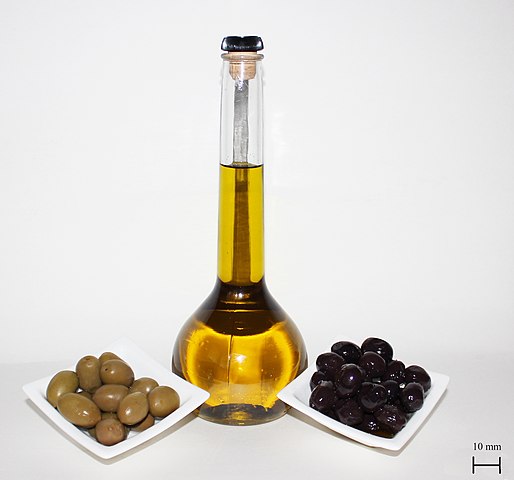
Olive oil is proof that the Earth loves us and wants us to be comfortable.
Sadly – and, I’m sorry to say, despite marvelous advertising and gorgeous labels – most of the olive oil you can buy is mixed with other oils, whether or not that’s legal or whether the labelling indicates this. This dilution is so integrated in key parts of the industry that there’s not much hope of stopping it, but honest people keep trying (https://www.foodnavigator.com/Article/2024/08/08/olive-oil-fraud-increases-in-europe).
However, it’s a big world and artisanal food is becoming more accepted and appreciated. This creates light between the cracks, so it’s still possible to get 100% olive oil that’s not diluted with something unfortunate, as long as you have a sufficiently sensitive laboratory on hand to check it with.
I do. My analytical laboratory looks remarkably like a reactive, chemically over-sensitive, mast-cell-activated human system which I’ve been working with and paying attention to almost since I was born. It’s expensive to maintain but easy to move. It goes everywhere with me, so I can always check what I eat, drink, and breathe – whether I like it or not!
It’s not always clear about the details of what it reacts to, but if there’s something at all whacky with whatever I’m taking in, my system will generally let me know in anything from moments to hours.
My body can’t stand any rancidness and it screams its head off at oils that should, theoretically, be fine – as long as they’re highly processed. Canola and deodorized oils are pure hell for me, triggering pain like ice-picks swinging into my arms and stomach.
Certain kinds of refining techniques make otherwise innocent oils do likewise, although they might fool other, more ordinary labs into reporting that there’s simply nothing amiss. Technically, there isn’t, and an ordinarily healthy body would agree with that. Lucky things.
My body has its own criteria and levels of accuracy, levels which remind me that some physiological events are triggered by molecule-sized exposures (as are hormones and immunity, even in healthy systems) rather than by mouthfuls or serving sizes.
Experience has taught me that it’s cheaper and easier to pay attention to my built-in laboratory and its reports, rather than try to convince myself it’s imaginary and the marketing, labels, and purported 3rd-party tests must be more correct than my own body. Nah… my body is a better guide about what to do for my body.
Where to start
The easiest test of olive oil’s purity is whether the oil smells olive-y. (If you don’t want olive-smelling oil, might as well use something else anyway.) I always start there.
From much experimentation over the years, I’ve found that olive oil that’s 100% Californian is pretty reliable. Almost anything can be grown in that region, but the market for adulterants (like deodorized hazelnut oil, commonly used in the Mediterranean) is hotter in their more natural state in California. I can’t really imagine California nut farmers – a proud group, not to mention bright & as profitable as possible in a drought-torn land – processing their oils into bleah and selling it for pennies on the dollar. Nope, they’ll take top dollar for their good nut oils, thankyew!
Olives are probably better-suited to California’s arid weather than thirsty nut trees. So, apparently, it still makes financial sense to deliver all-olive olive oil.
Naming names
I’ve found 2 brands of olive oil that currently work for me. There used to be 3, but one got hugely popular and ramped up their supply to meet demand and draw down prices, and (for whatever reason – I’m not making any accusations) their oil started hurting like heck.
Oil #1
Paesanol is a family-grown Italian oil. It has a slightly buttery mouth-feel with an olive-rich scent and a glorious flavor. The organic version is as good as a pain pill, actually knocking back the pain and confusion for about 4 hours, or even breaking the cycle. The price varies considerably through the seasons and right now it’s at peak price. (I stop paying attention when it gets over $30/bottle). The price should come down again when the new season is bottled and shipped, probably pretty soon.
It doesn’t have all the usual tags and certifications that a foodie might look for. I live in a great growing region and I know that good farming doesn’t always mean being willing or able to handle the extra paperwork that certificates require. Whatever its status, it works like a charm for me and I love it.
Oil #2
My go-to (now that Paesanol is out of reach price-wise) is Cobram Estate, a 100% Californian olive oil from an area I used to live in. It’s very good, though it doesn’t have quite the lush personality of Paesanol. Slightly peppery, which I like (because I can’t have real pepper any more). It marries well with other flavors, making it a wonderful base for simmering with garlic and herbs and making flavored oils with, topping soup with, mixing with veggie mash for those of us on low-residue diets, or splashing on eggs or salad or bread or anything else. Excellent all-arounder.
It helps a little with the pain, but, most reliably & importantly, it never makes it worse. That’s the key, really.
Afterthought
As food prices rise (amidst record profits for agri-biz and food suppliers, hmm), I expect to have to revisit this and try some more beautiful bountiful olive oils. I hope I can find a few that settle well and don’t hurt. It’s good to have options. 2 is not a lot of options.
Most people want a reasonable life: reasonable effort should result in a reasonable income, so they can keep a roof over their heads, feed and clothe their kids reliably, and be able to get out once in awhile.
This is increasingly difficult. That’s not reasonable.
As for me, I want to be, not only safely housed and fed, but also in not-too-much pain so I can get a few things done that help, cheer up, and inform & amuse those I care about.
I’m profoundly curious. (Take that however you want, LOL)
When I was an inch from dying, around 12-14 years ago, when there was nothing left of anything I thought made up my life… I found, down there at the bottom of everything that had been, this relentless creature who had to know how the story would go. I could not allow death to overtake me because I’d never know. So I lived – on pure willpower for a while, but then things started to change and get better & better.
This came up in my Pain Psychology appointment today, following on from the “new pain doc” appointment I’d had the day before. I’ve had 4 pain specialists in 9 years, and (thanks to extended litigation) around 19 in the past 20. Since much more than my life depends on my pain docs, and I have no control over the situation, this is harrowing, every single time.
My medical PTSD is a main focus of my pain psychology treatment, which is how this came up for discussion.
My curiosity is clearly more fundamental than my reflexes and primal needs, so, “Let’s figure out how to use it to interrupt some primally-driven anxieties.” Today’s quote from Kylie Steinhilber, PhD, my pain psychologist. From this, we discussed 2 further insights:
Being inquisitive is about holding an empty mind/heart in the present: pure now, with an open eye to the unknown future.
Trauma responses are about having emotional context and re-experiencing that history, thinking (“knowing”) it will go this way or that way based on what’s happened before.
I’ve never realized that quite so clearly.
If this had been a rough “new pain doc” visit, I could go to the open & curious state of, “so that’s what’s here/now. I wonder where it will go?” – instead of falling into the misery and grim anxiety of “knowing” what it will be like based on prior experience.
Note to self:
BE CURIOUS about where the story will go! That is rational, even though it doesn’t come with a plan.
Prior experience matters, but it’s a lot better for me to stay open and inquisitive and be with what’s going on now. More options, less antipathy between us, and that opens up communication – which improves outcomes, even in a crap situation.
Serendipity was my brain’s home base pre-injury, & it likely still is. It’s OK to go there and hang on when things get uncertain.
I’m in the 20% of humans who thrive through a serendipitous approach, although it drives more linear people (the 80%) up a tree, because it looks crazy to them & sometimes makes them want to reach for a net – or a straight-jacket.
When I use their (the 80%’s) linear approach (which I’m technically good at; mad skillz), the best I can do is mediocrity, if that. It doesn’t work well, no matter how careful the planning and research I put into it. Makes no sense, but that’s how it goes.
Chaos and WTFery are going to find me. I’m one of those people that things happen to. No, that’s not logical, but accepting it is rational. Interesting distinction between logic and reason there.
I see my mental job as learning – over & over – how to ride the metaphorical wild horses, not keep trying to dodge their flinty hooves as they run over my well-plotted garden.
20% of humans are like this. We’re not alone, just unusual.
Note to self:
I CAN TRUST MYSELF to know how to go and when to stop. Truly.
Cf. my “15% overdo recovery time” note in my personal pain rating scale. I really do know what it means to overdo by 15%, and why it’s harder to recover from than 10%. *That’s* evidence of a high level of insight & self-management. I can perceive it accurately when I loosen my grip on “tha Plan” and listen to myself.
I said to myself, “Self…
“LET the inner story that ‘everything will go wrong’ BE WRONG.”
Some moments suck anyway, but they pass a whole lot faster when I stay curious and open and let things go differently than expected.
All that said… I am simply over the moon with delight that this “new pain doc” visit was such a good one and that I feel safe at last in that part of the system! That frees up a ton of energy, now and ongoing. The relief is stupendous.
The resident (training) physician remarked, unprompted and naturally, “After all, you are the expert in your own body.”
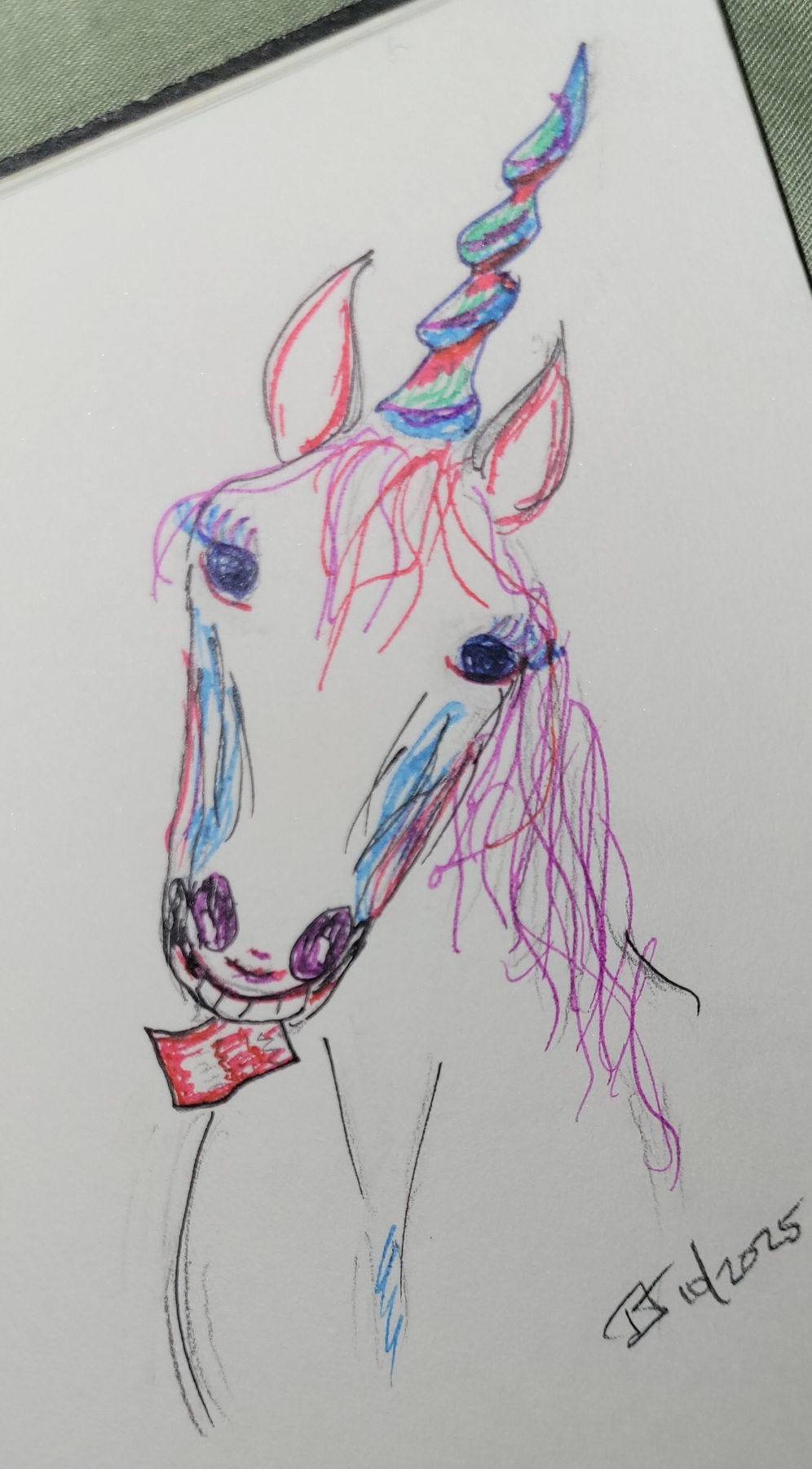
Hearing that from a doctor is a show-stopper. As one friend & compatriot said, “I’d be less surprised if a unicorn came to your door and told you you’d won the lottery.”
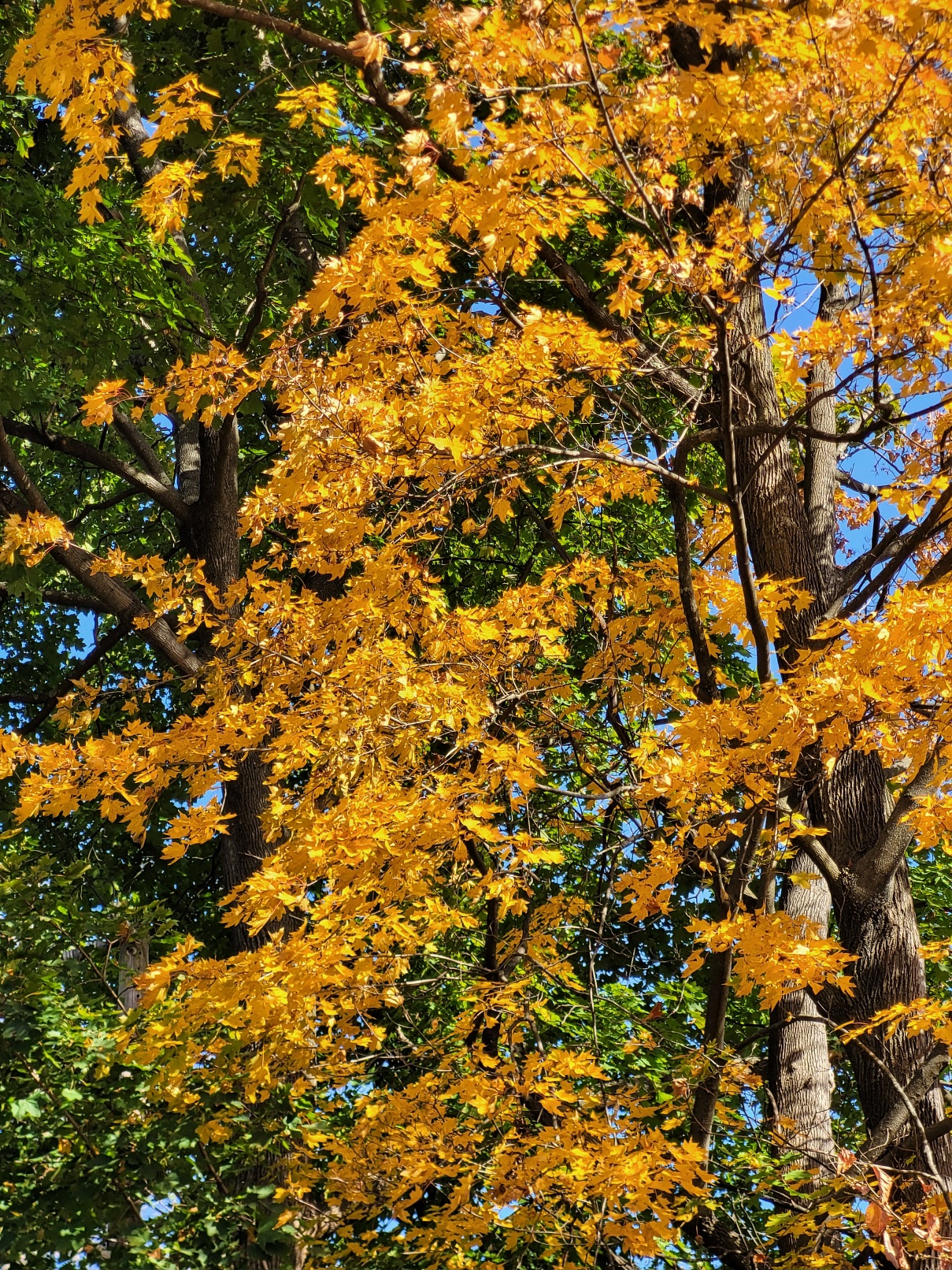
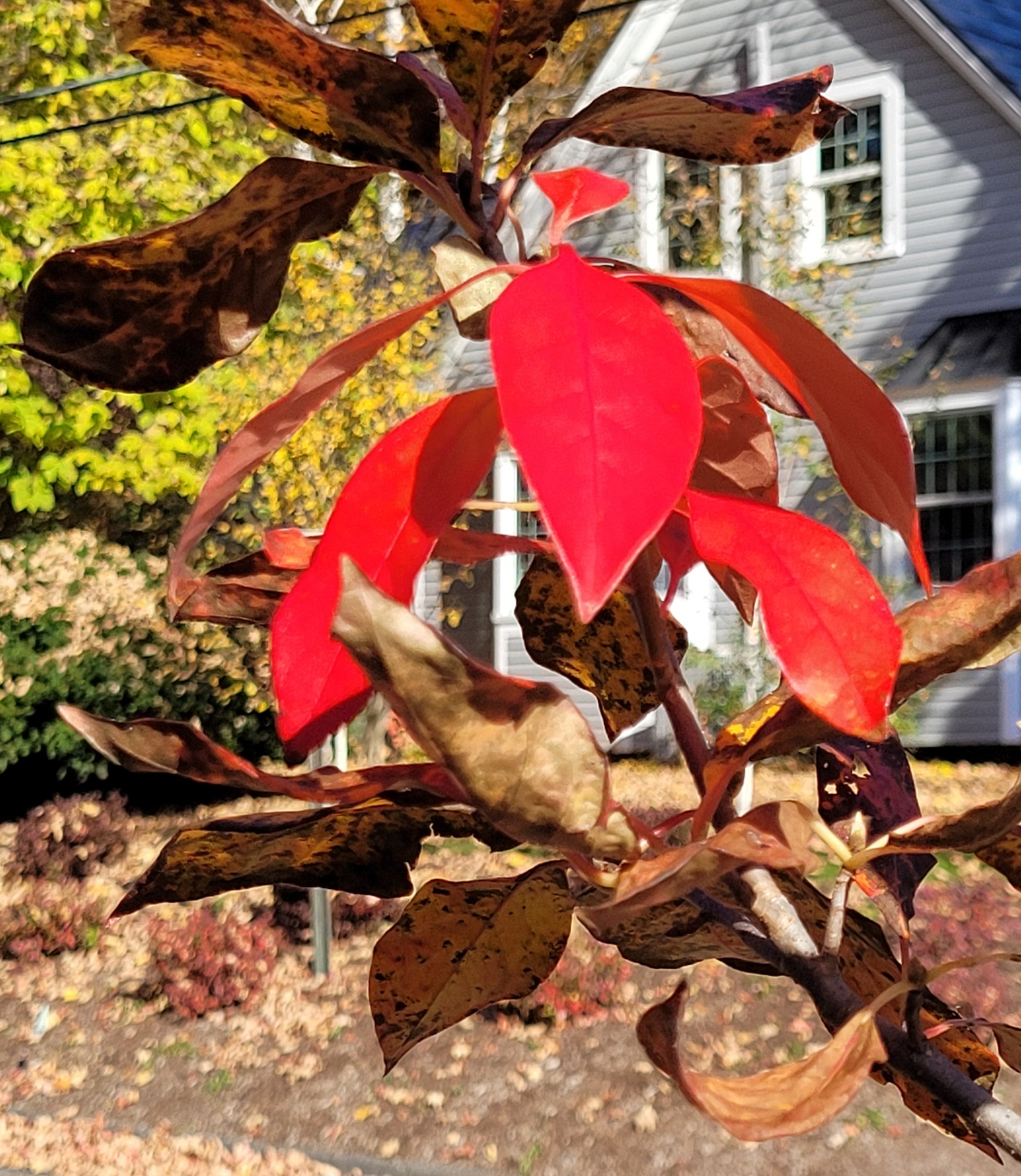
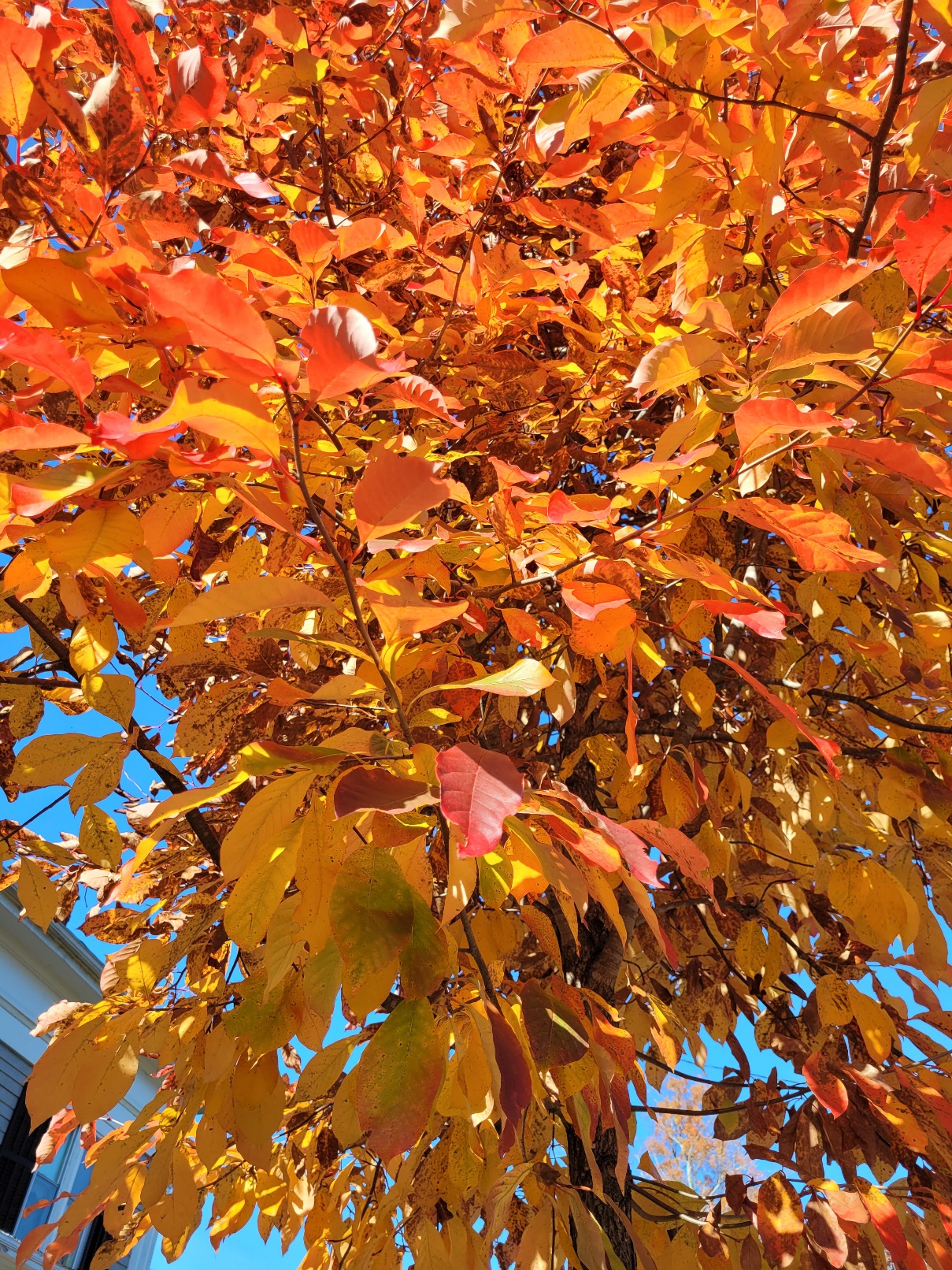
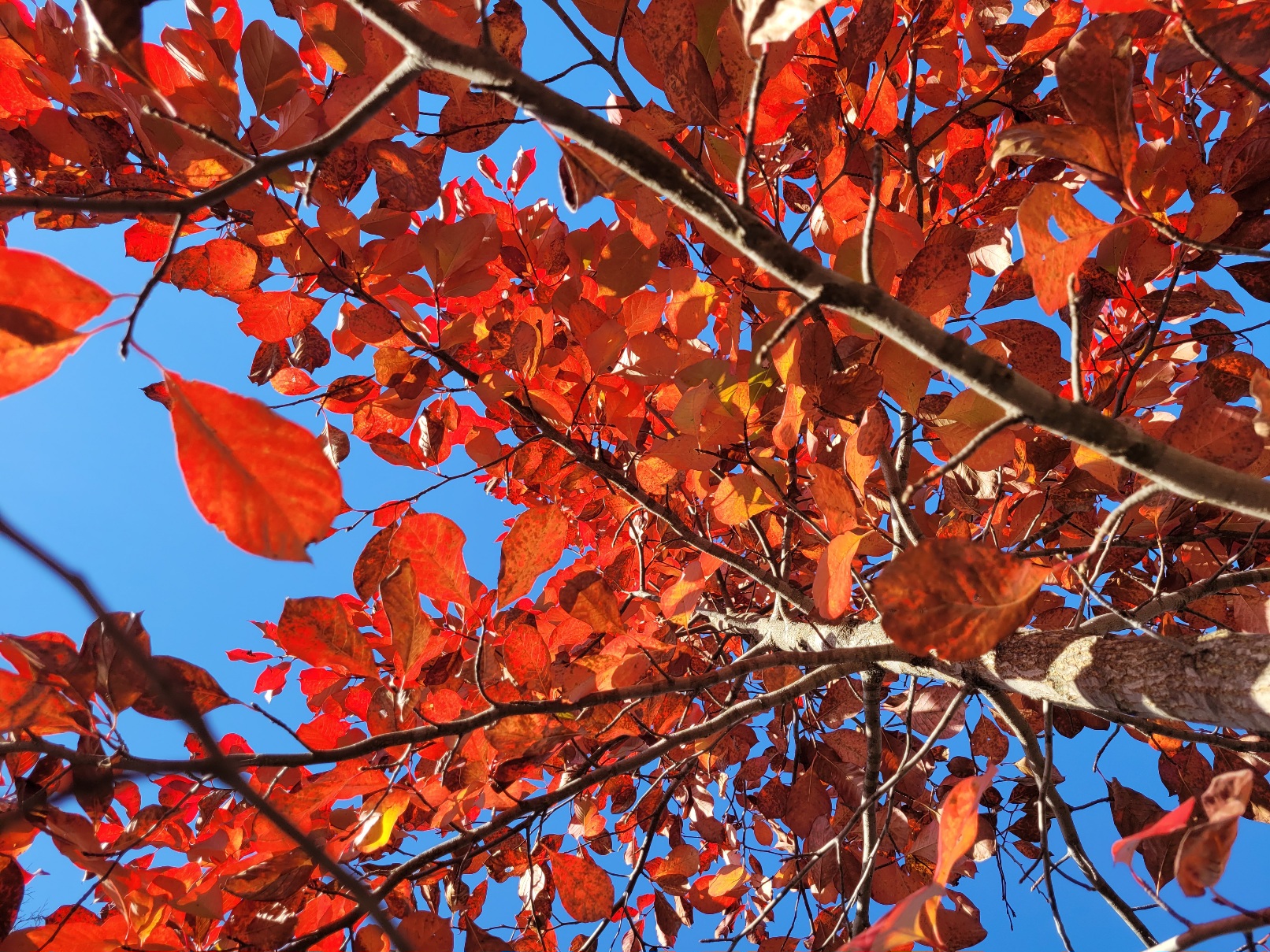
I got into the habit of sharing photos from my outings with a bedbound friend of mine. She left this world years ago, but I still like taking pictures of things I find beautiful, and I still want to share them. My social media tool is buggy about pictures, so I’ve given up on sharing images that way. (Nope, I’m not taking on another platform. Not with this pile of curds in my skull.)
Then I remembered that I have a blog… 🤣
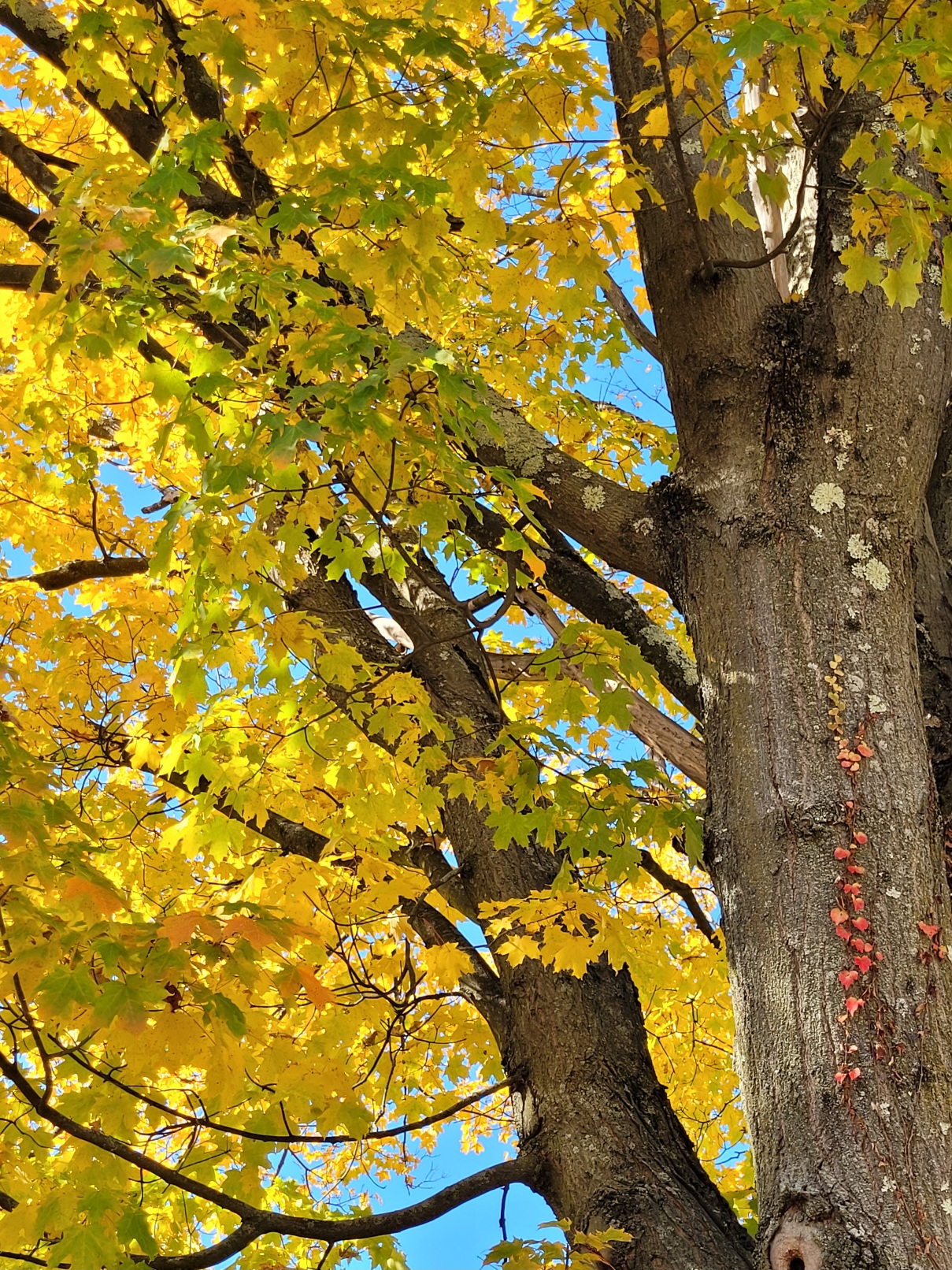
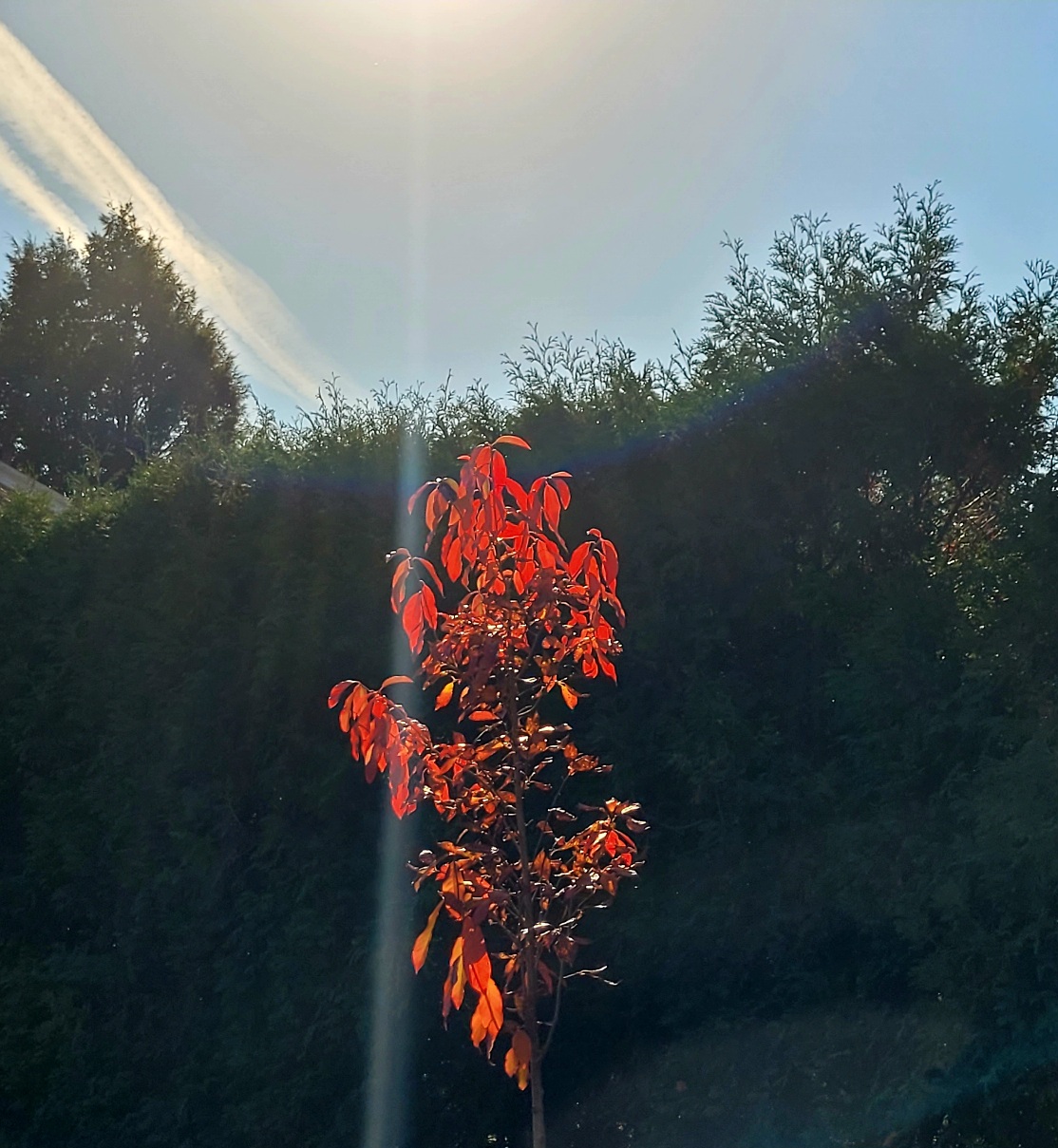
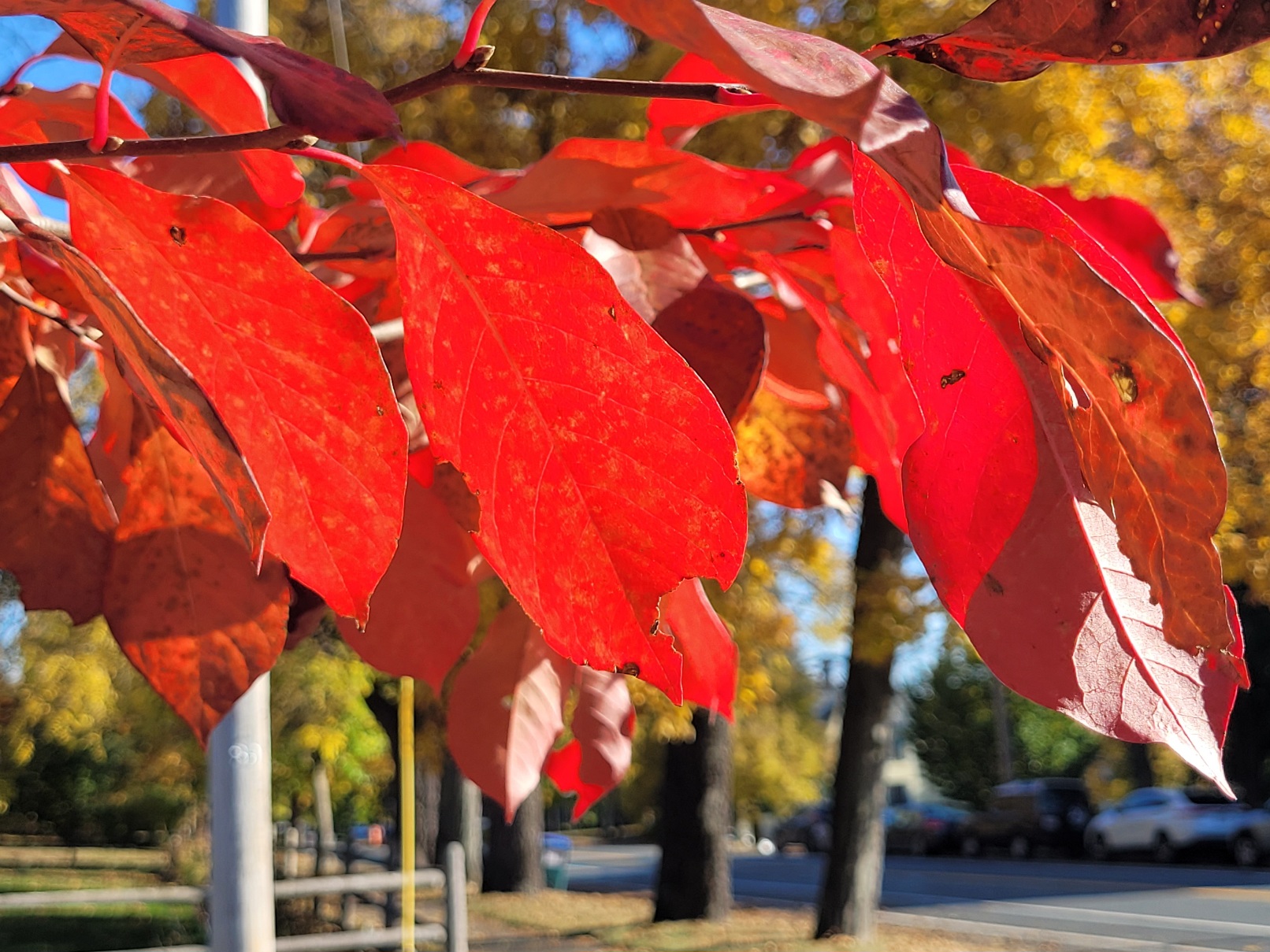
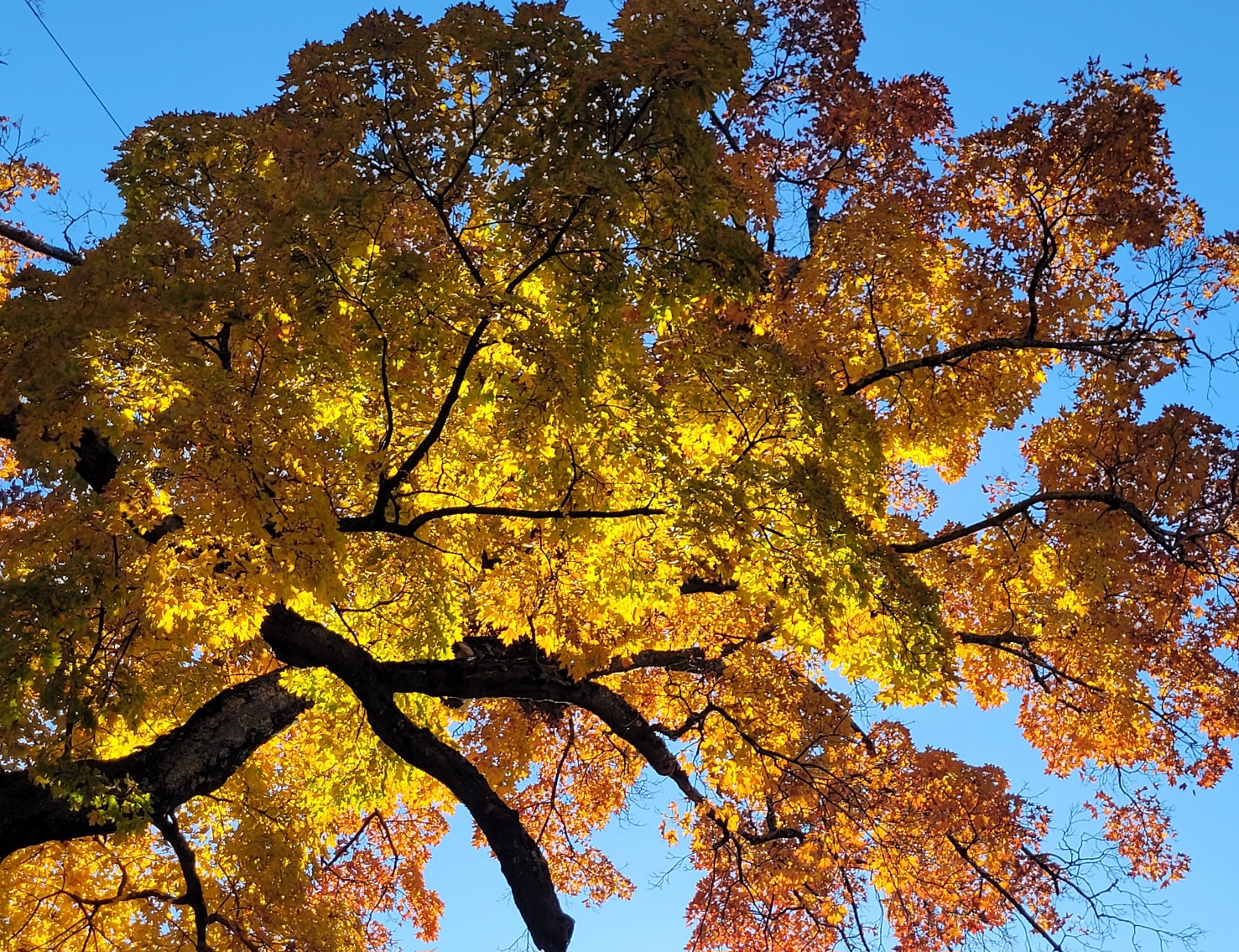
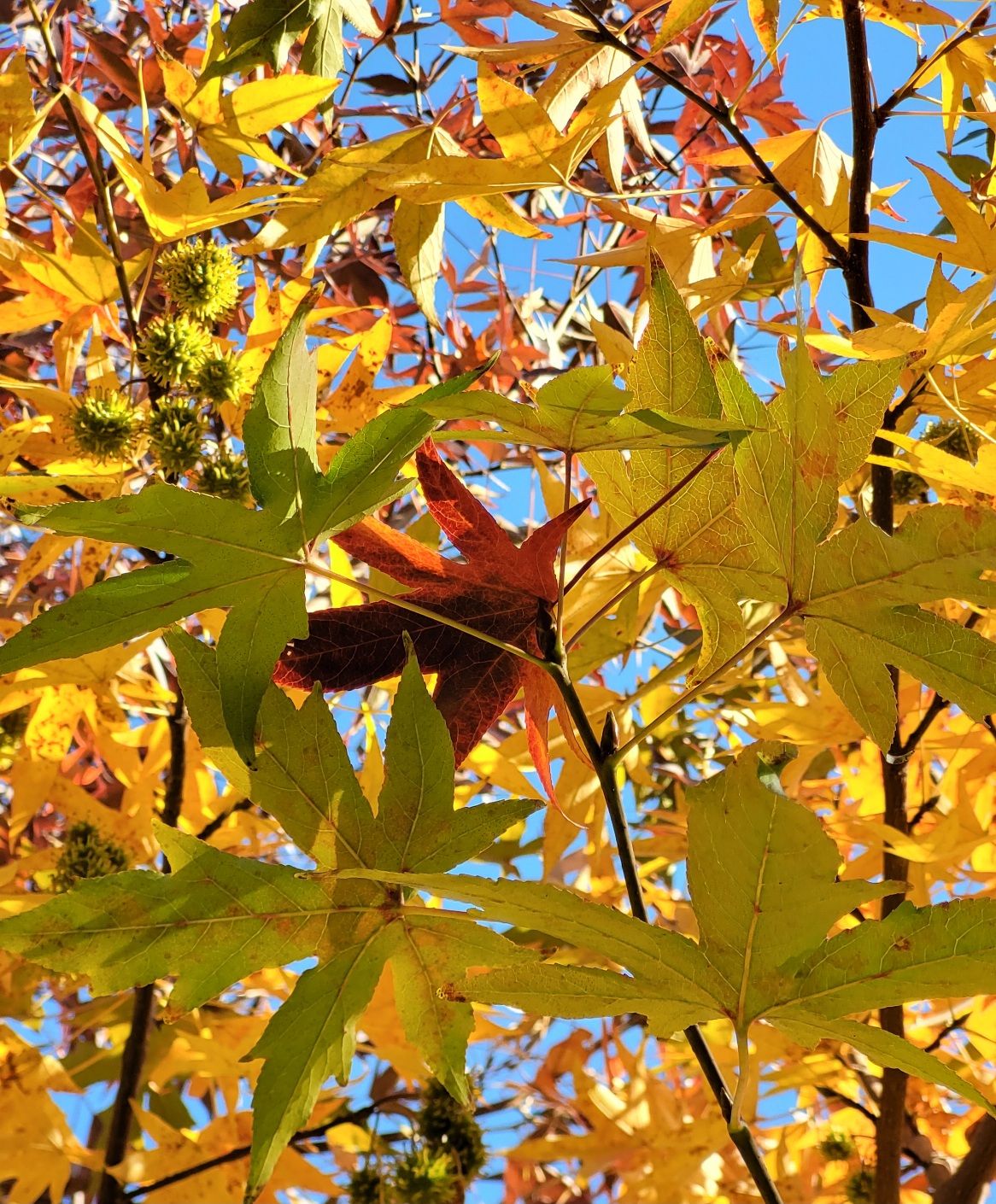
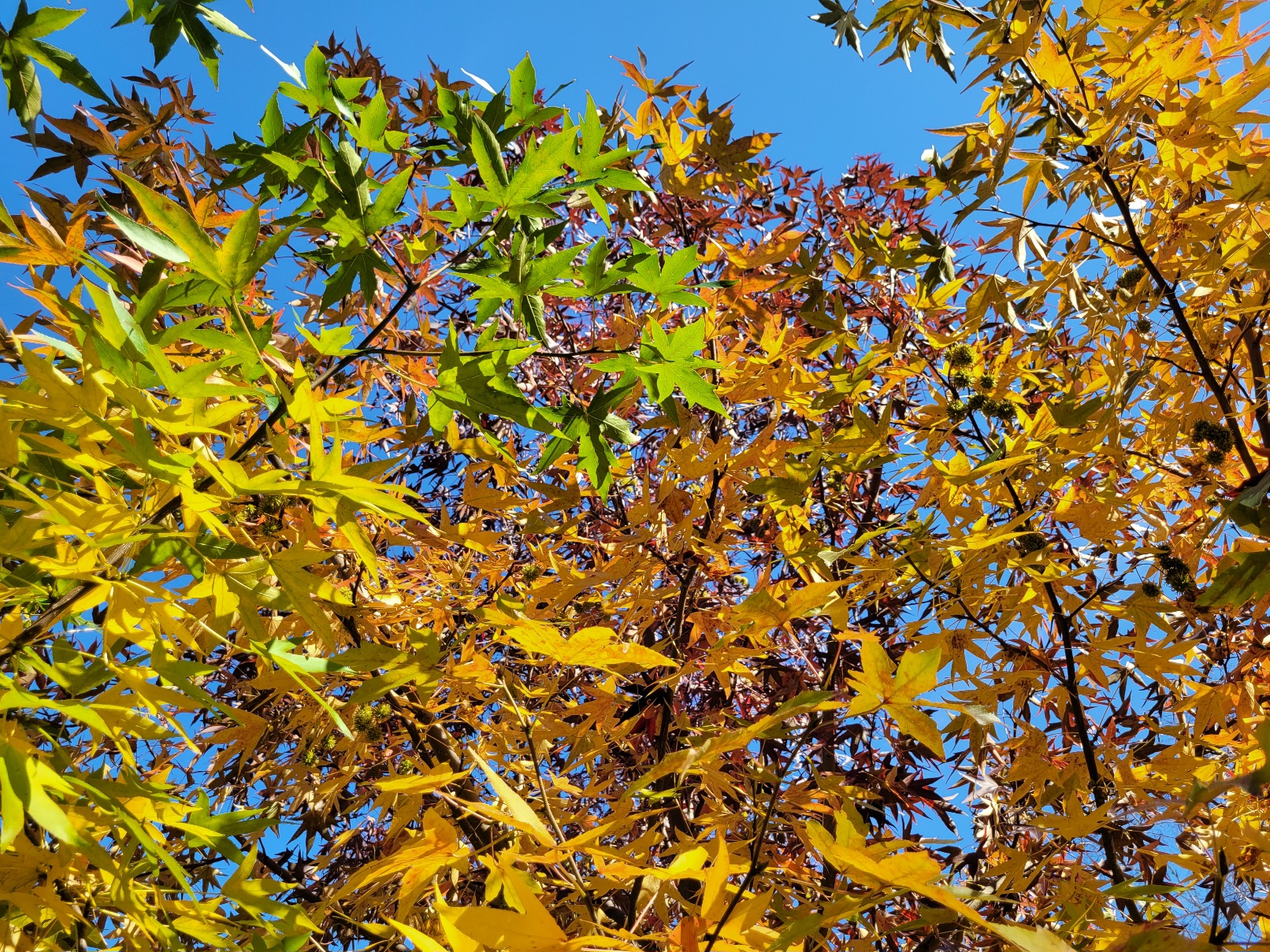
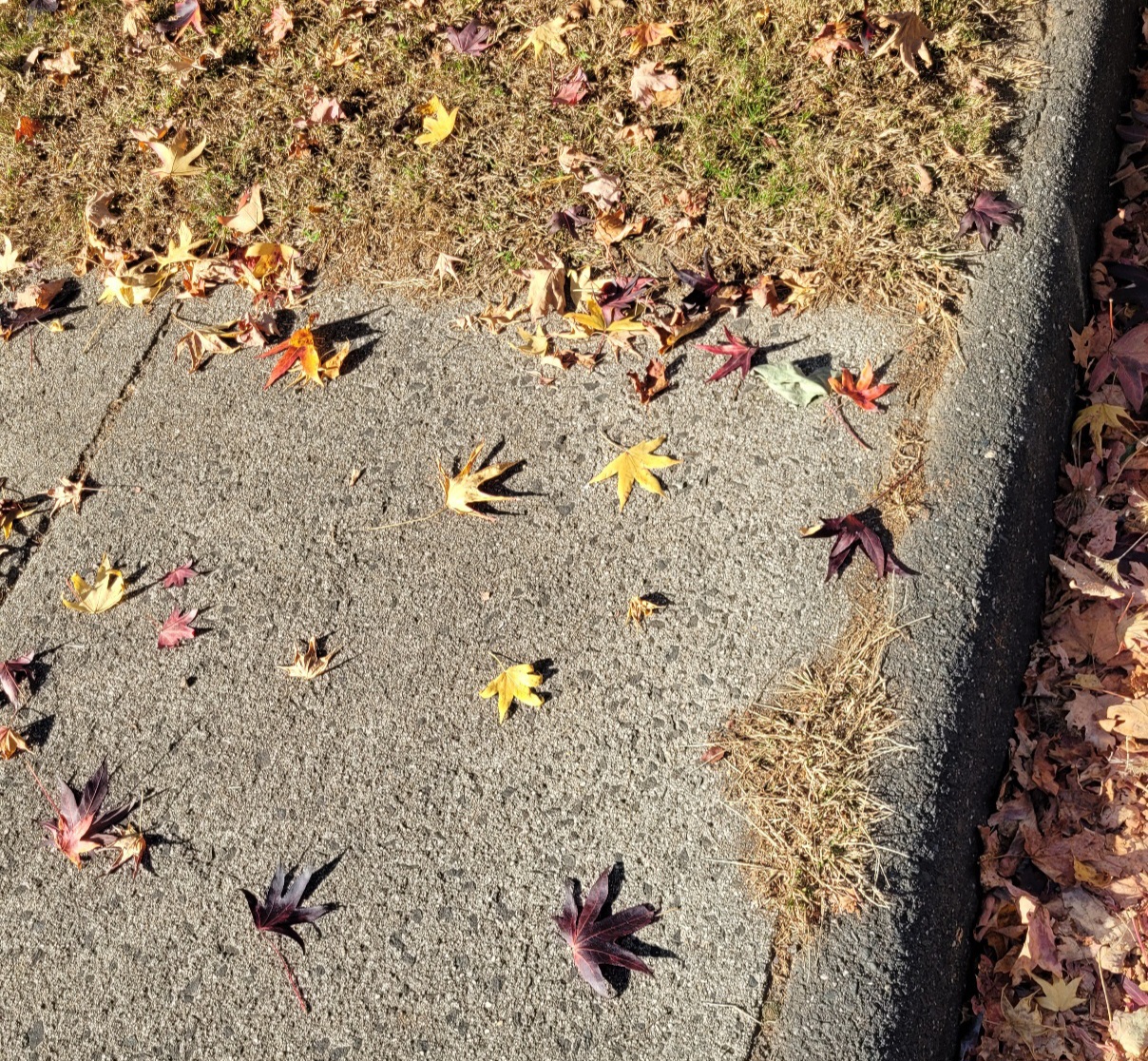
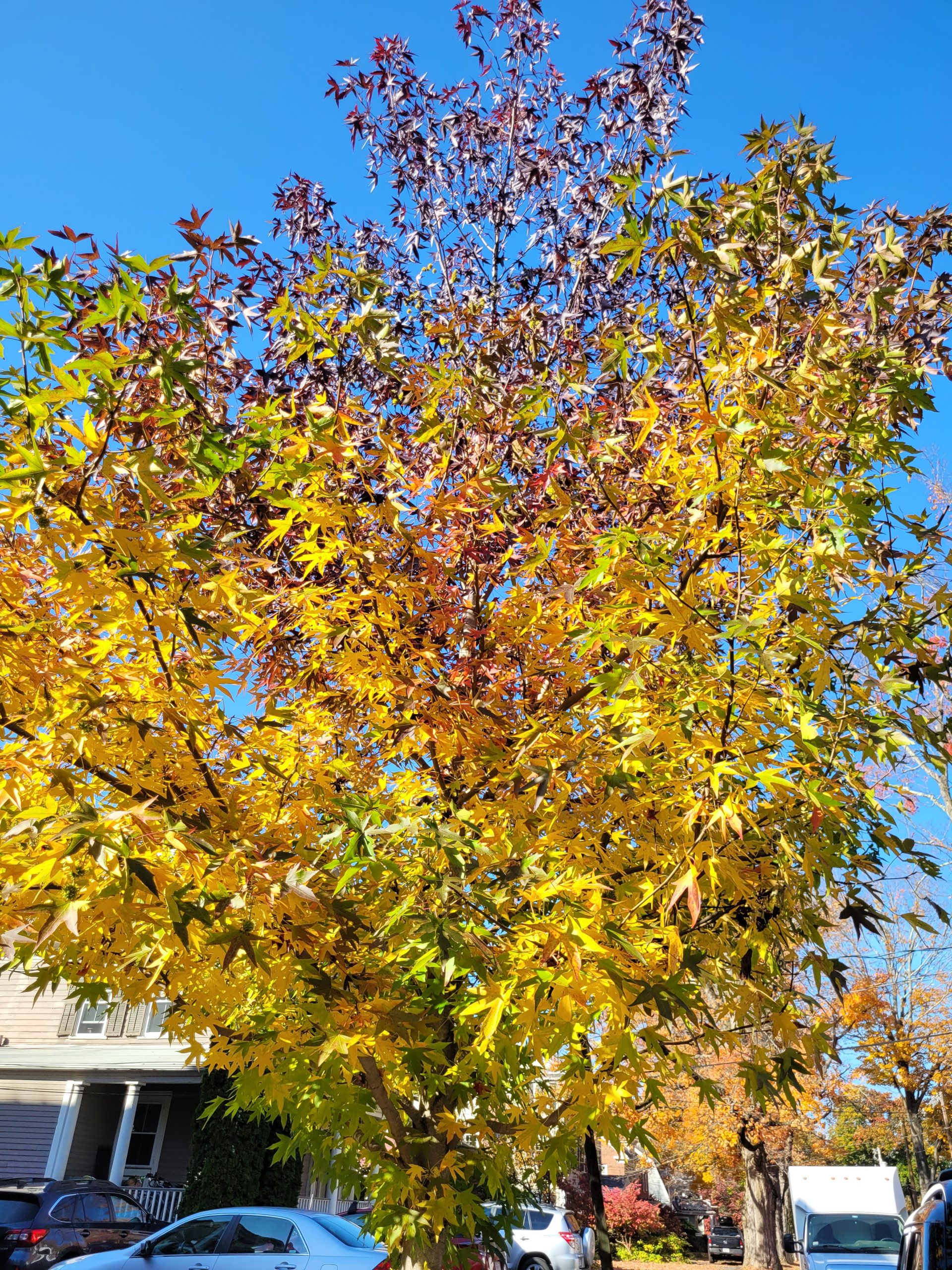
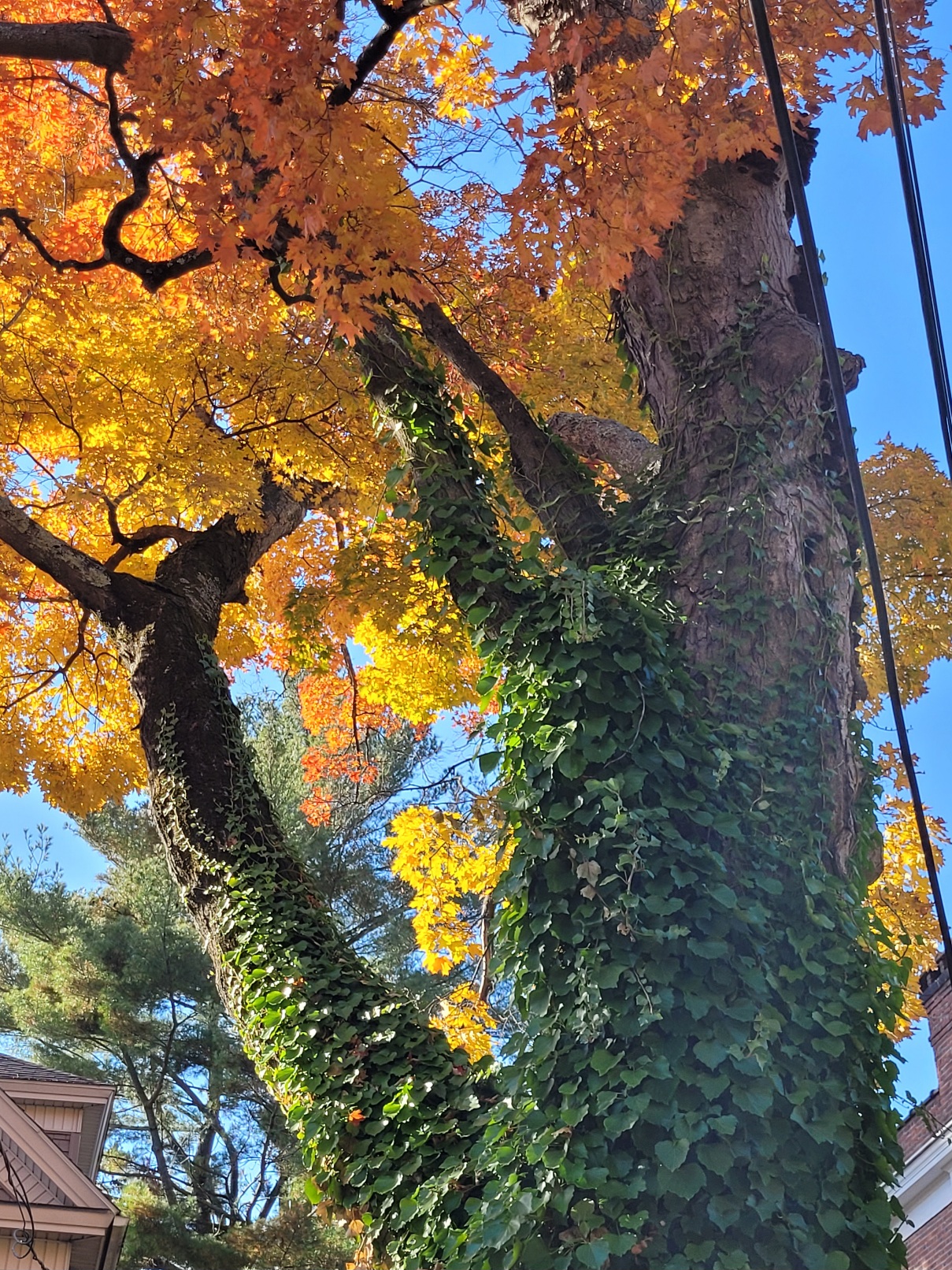
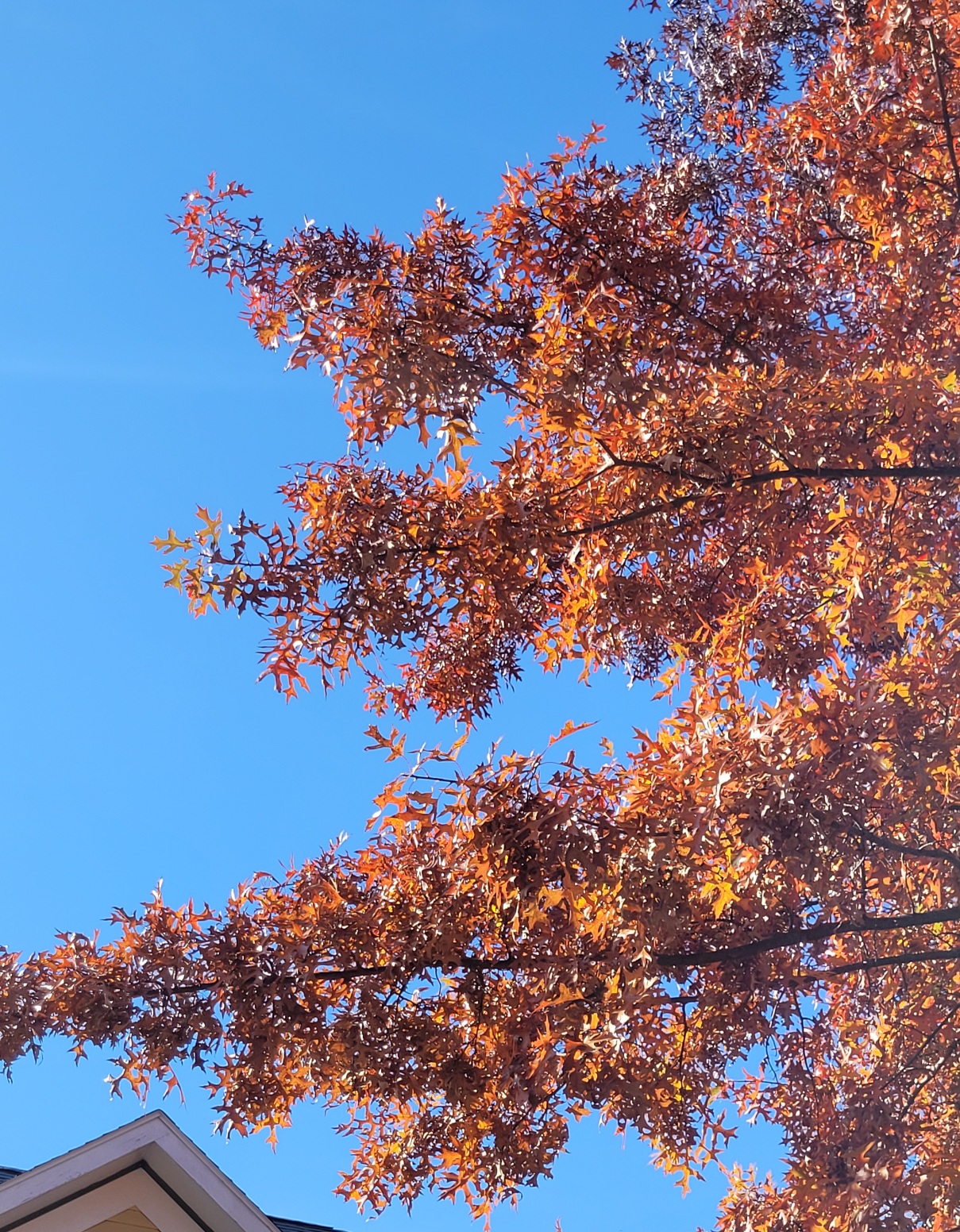
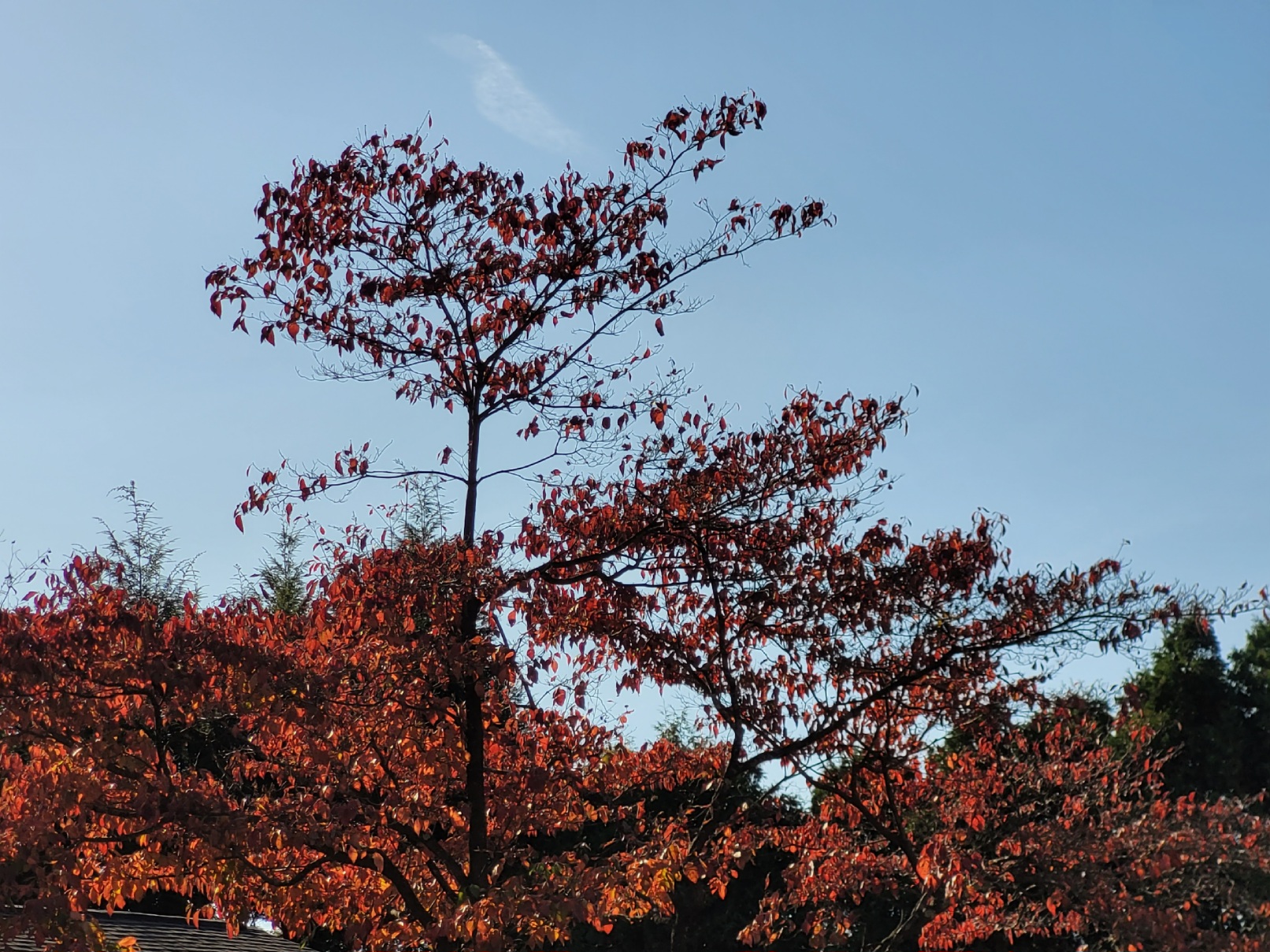
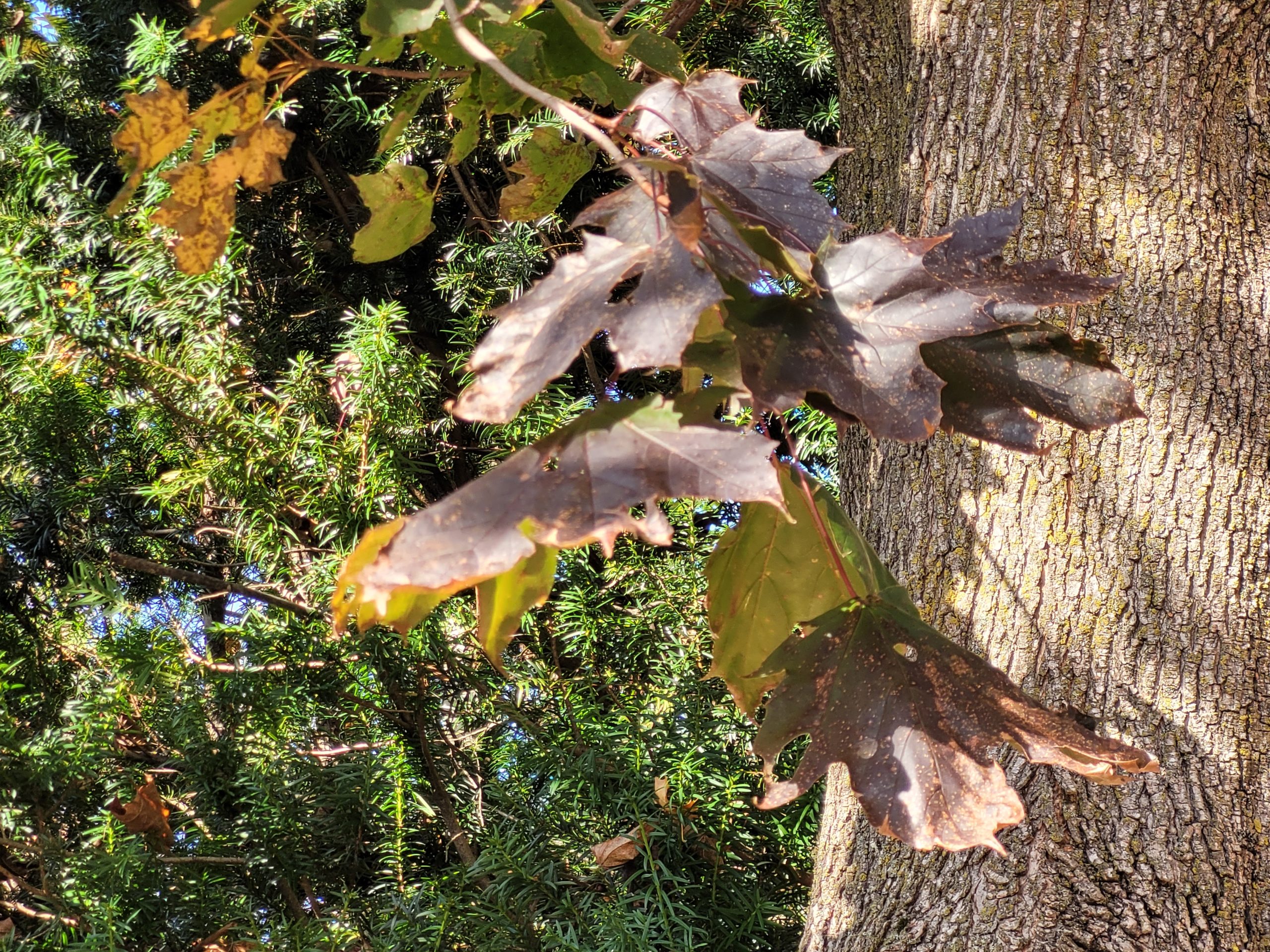
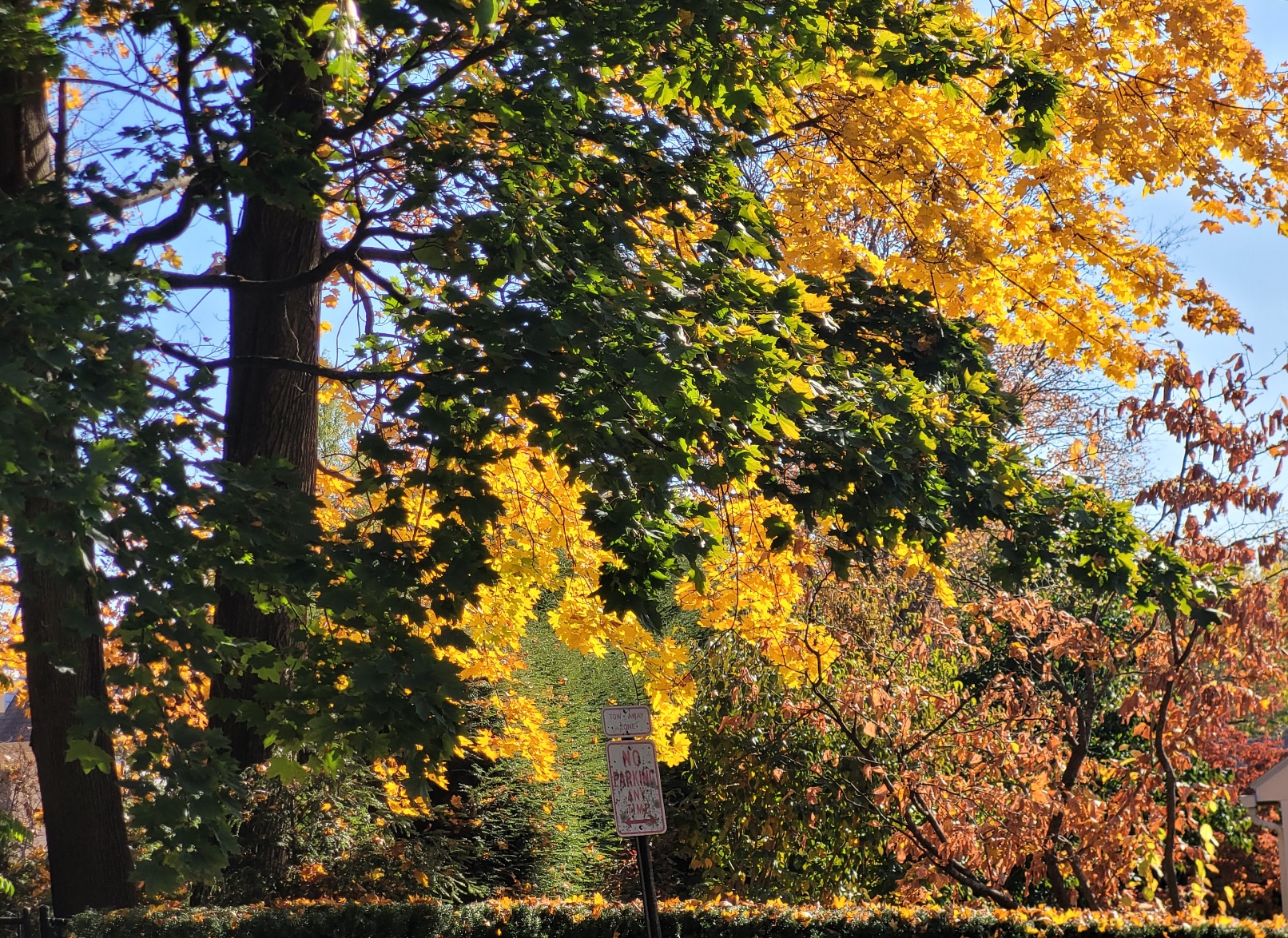
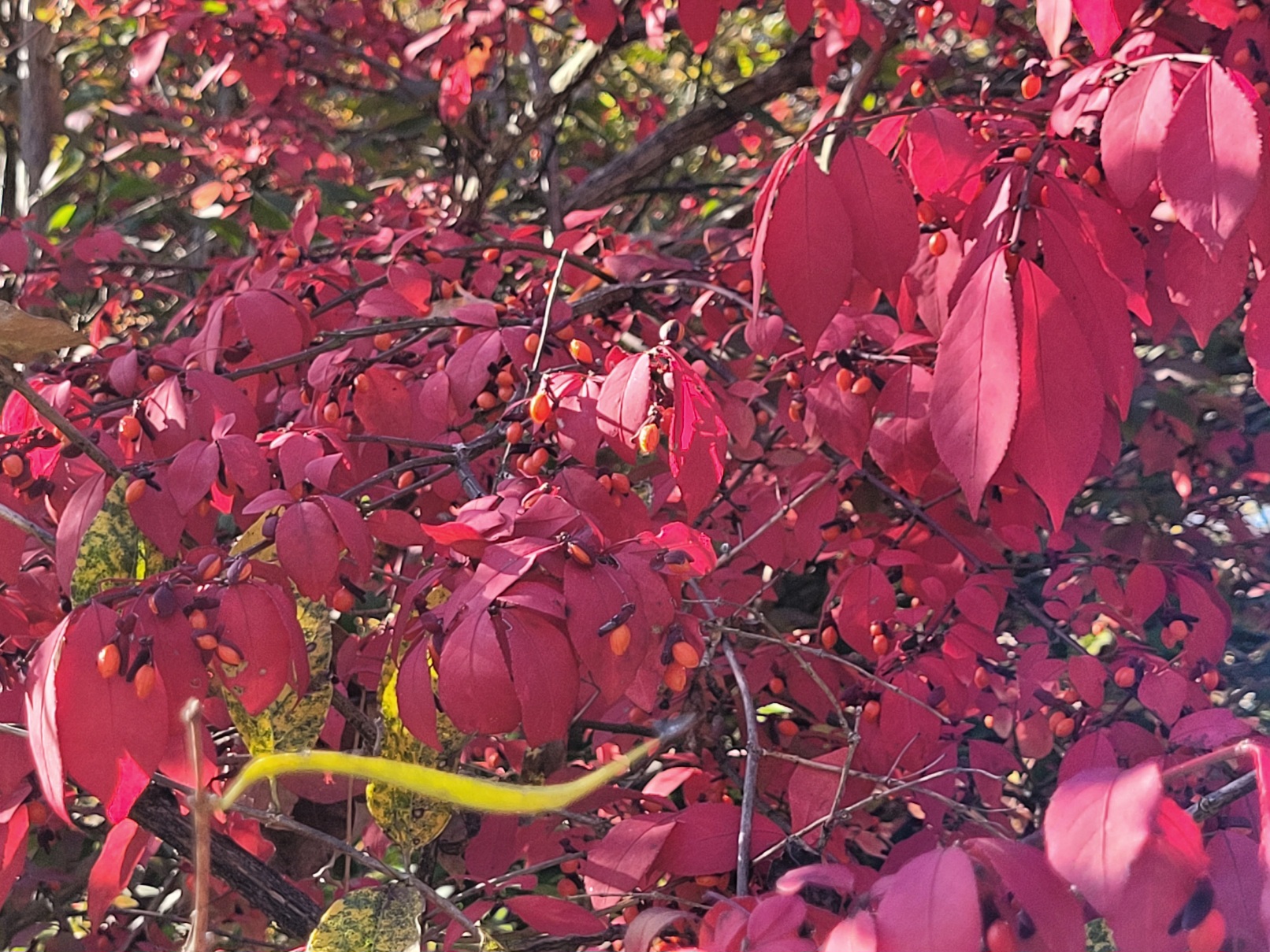
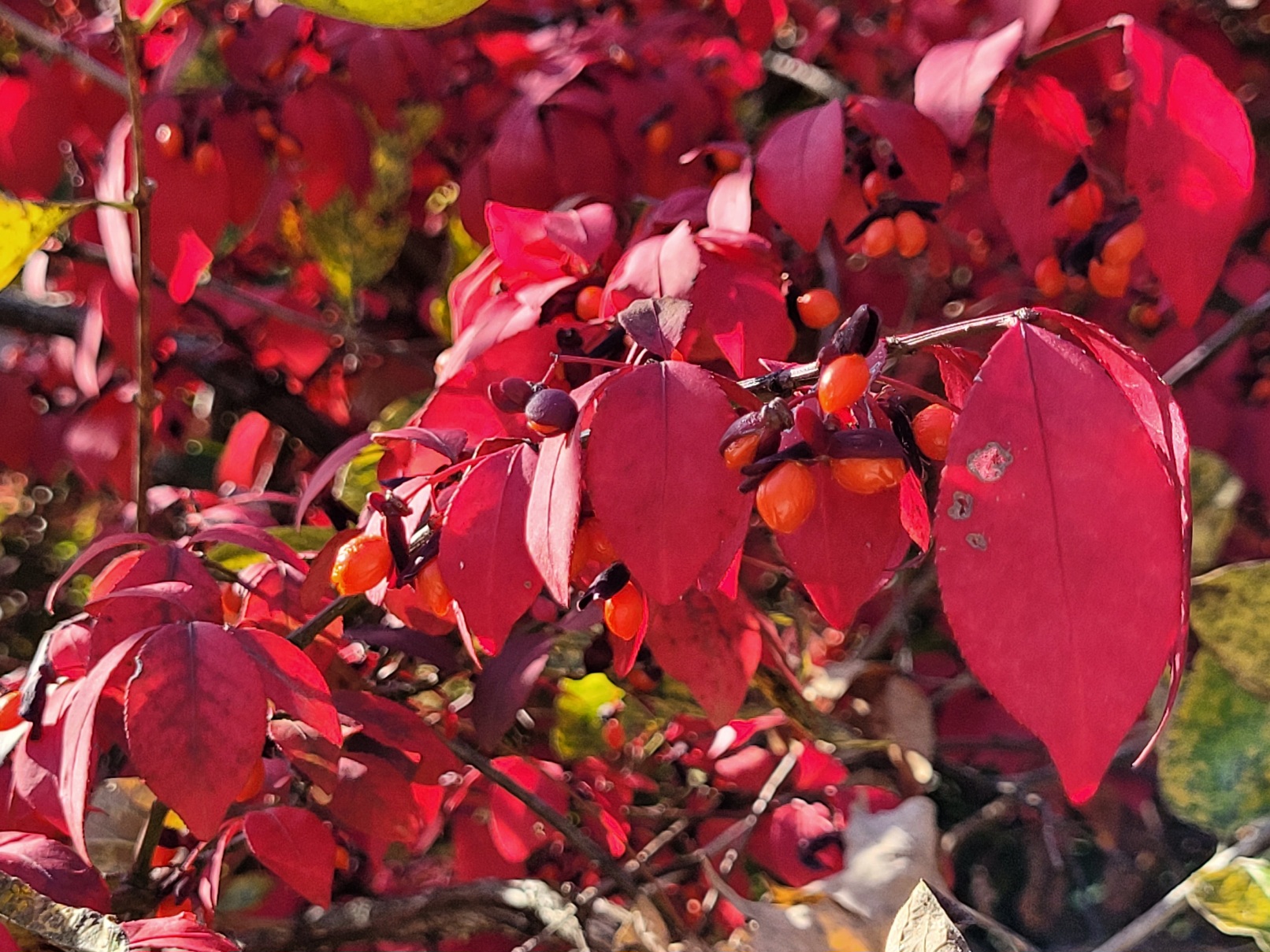
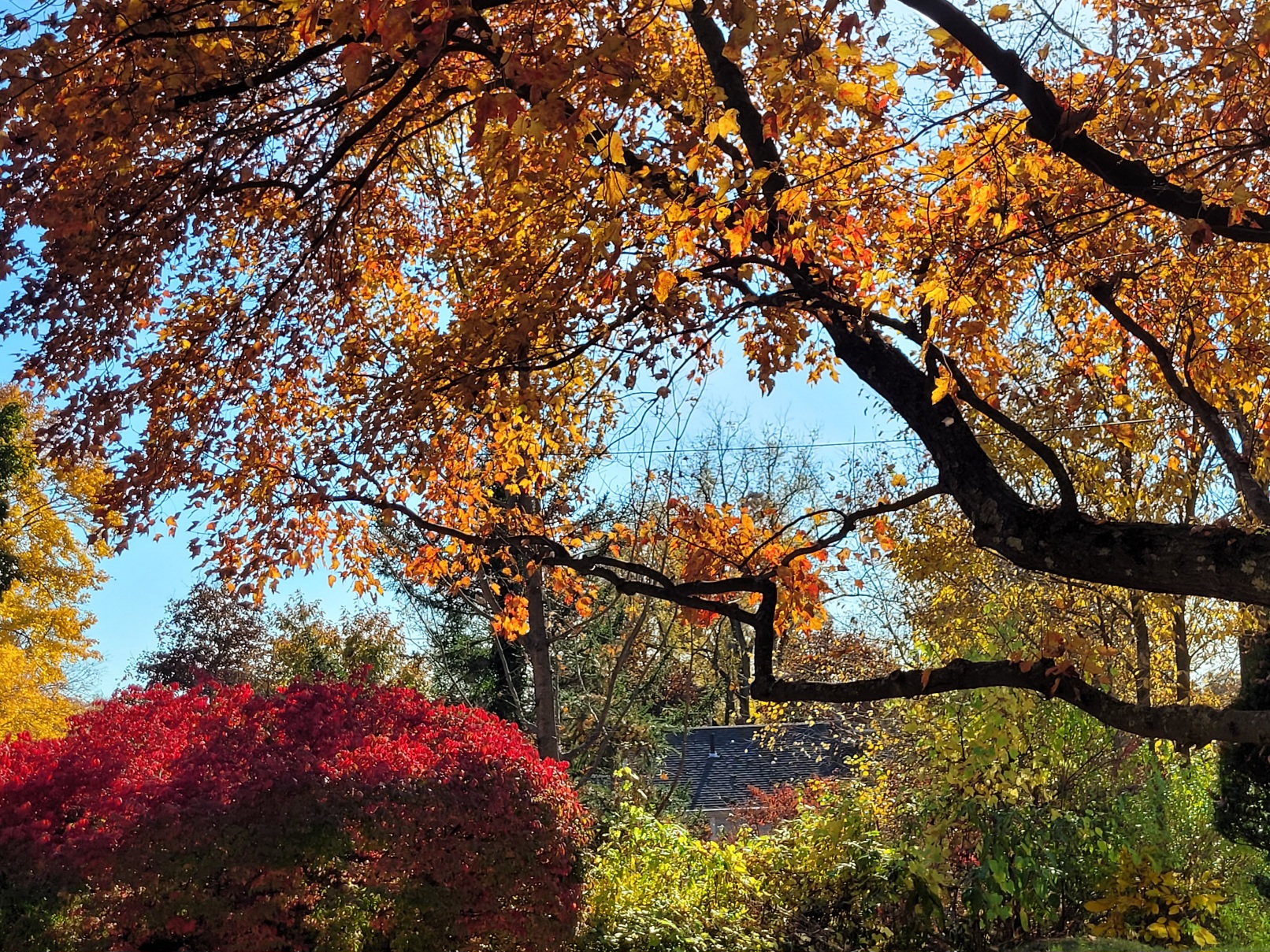
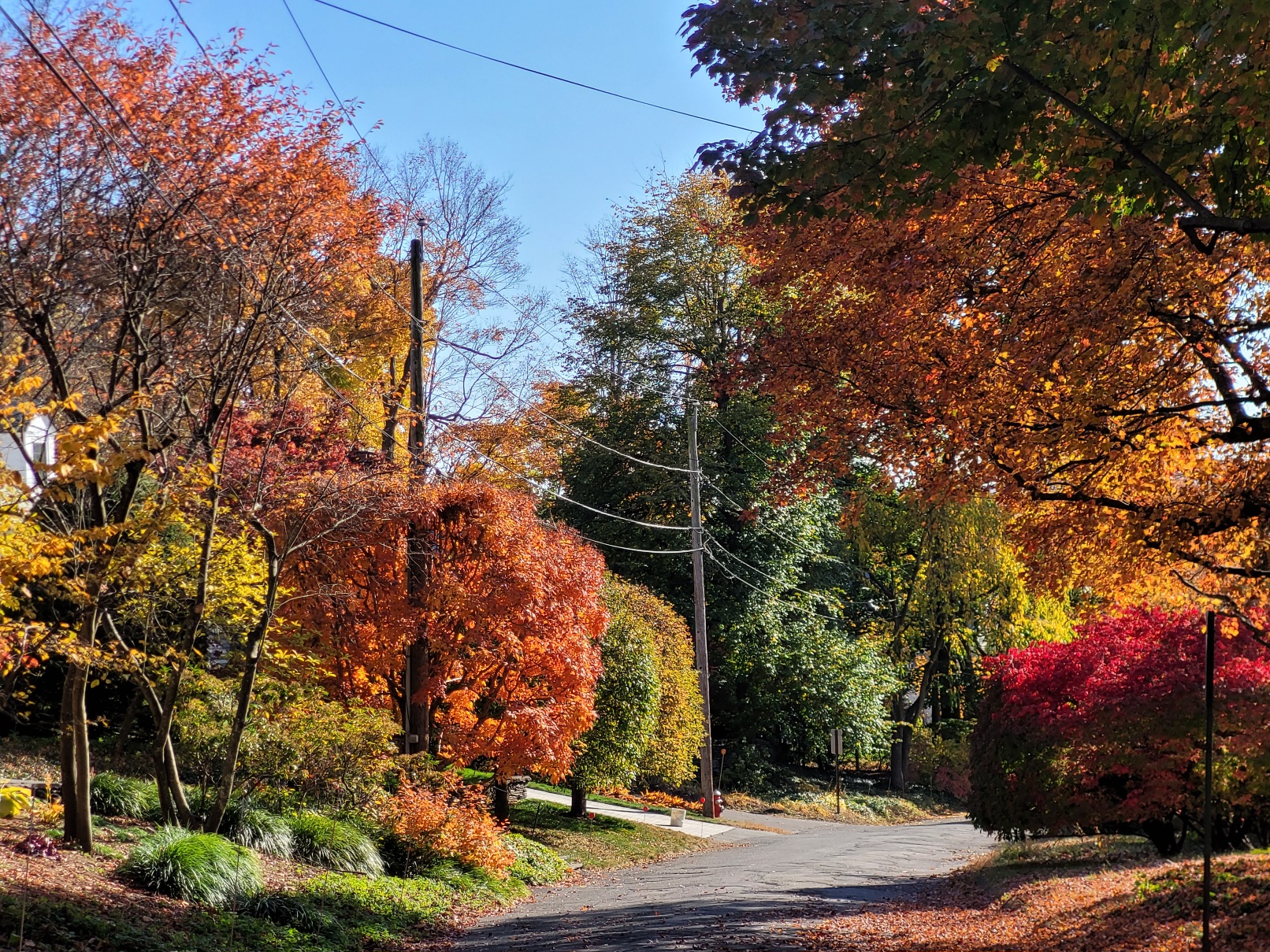
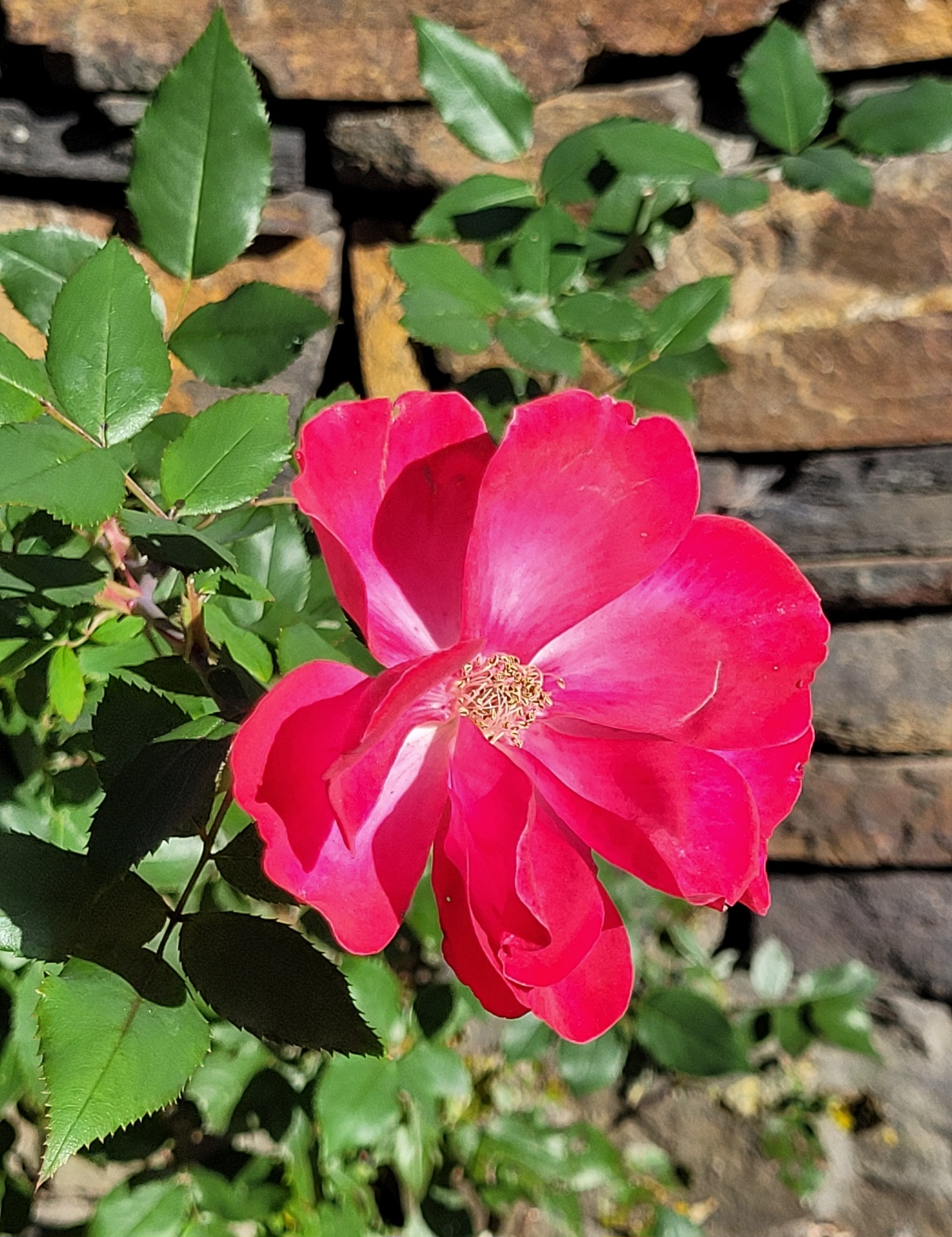
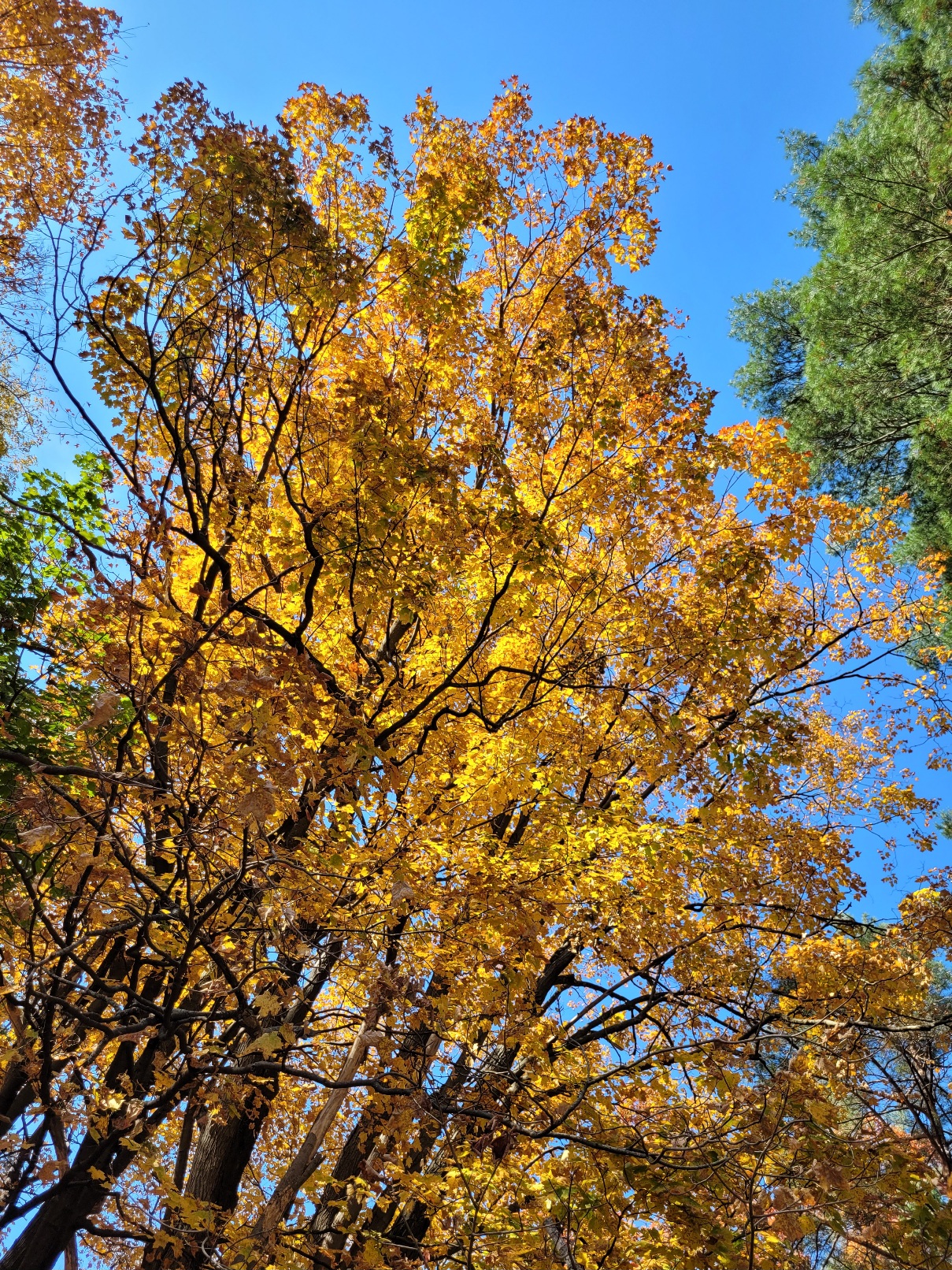
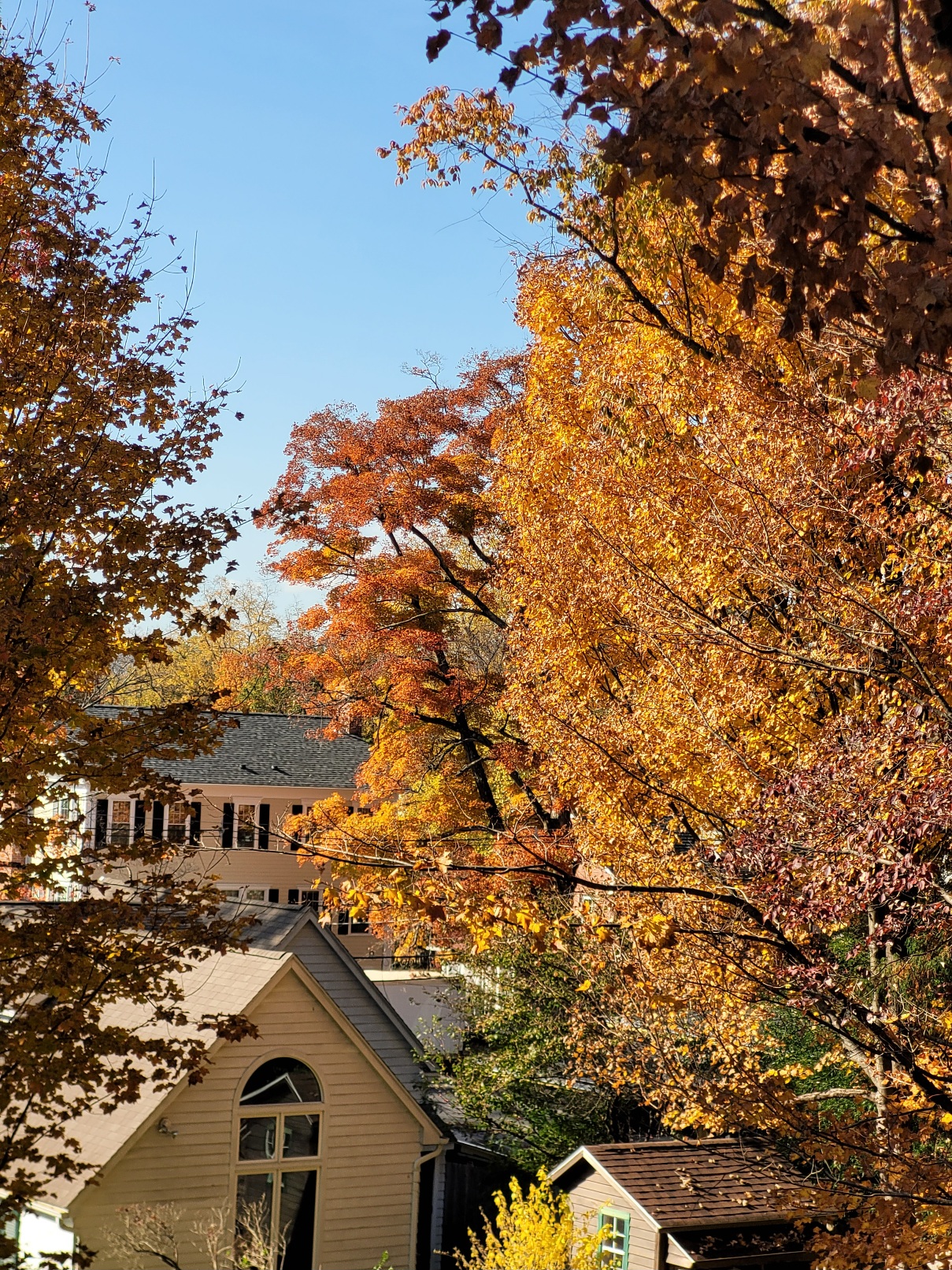
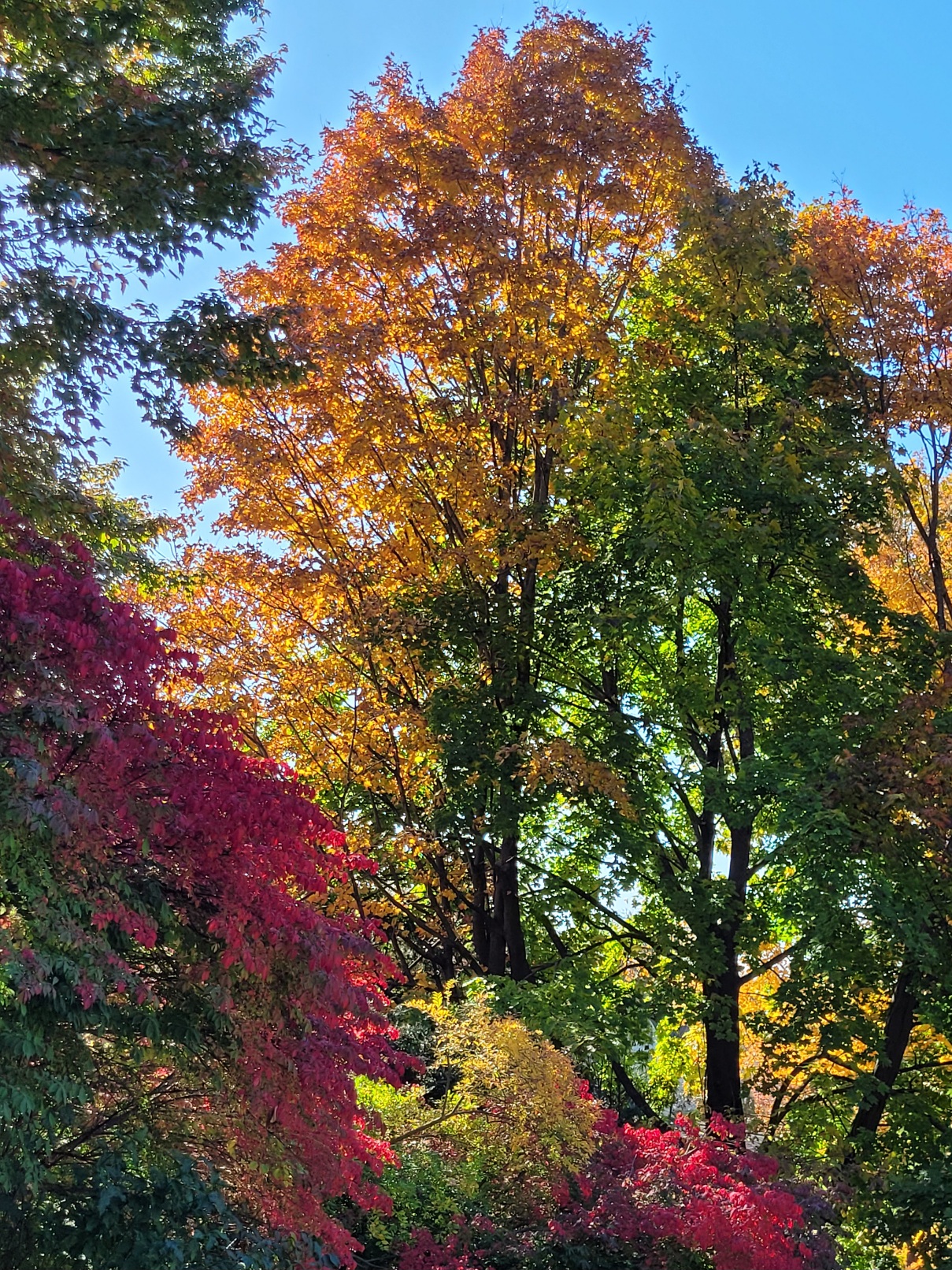
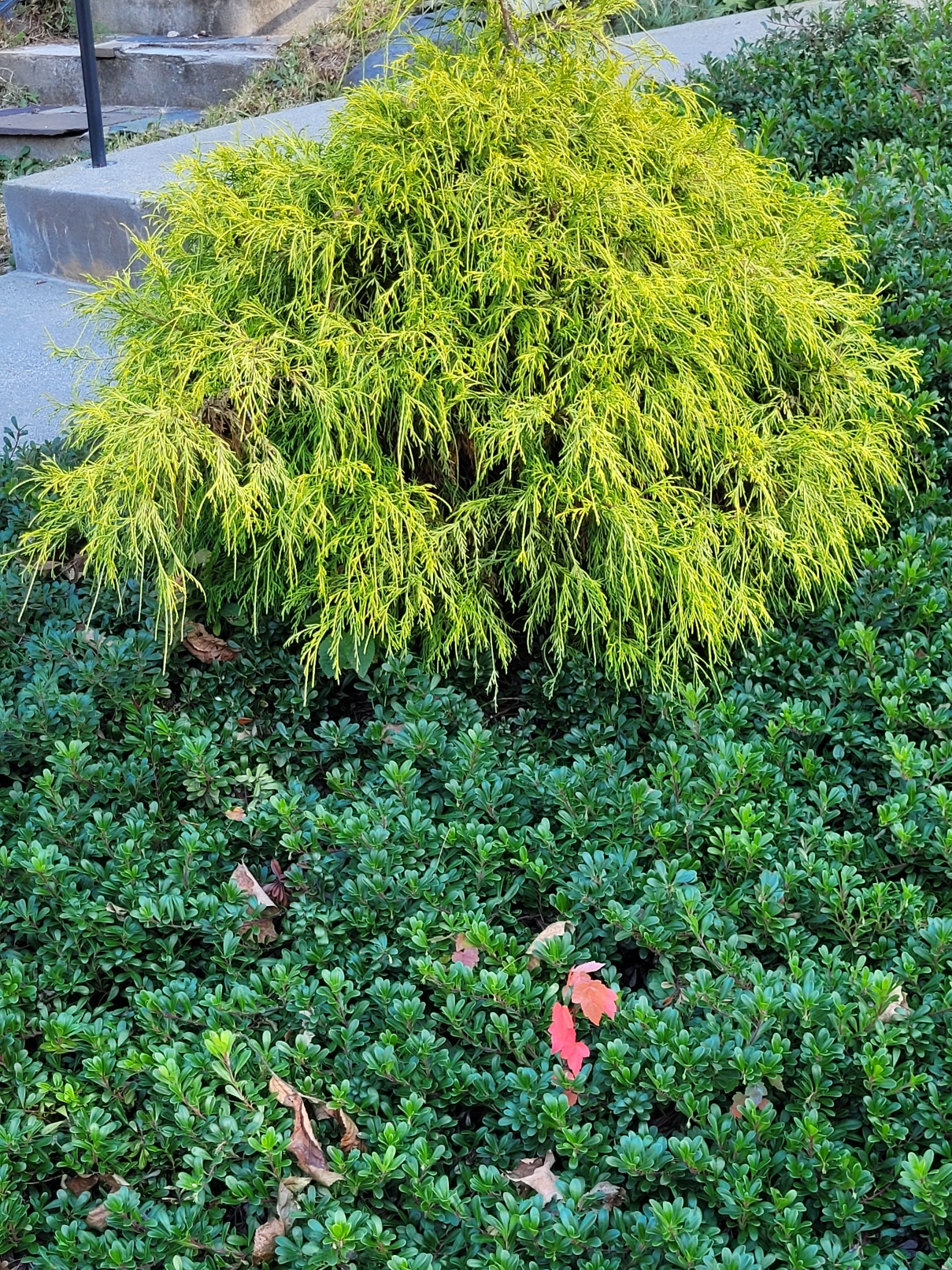
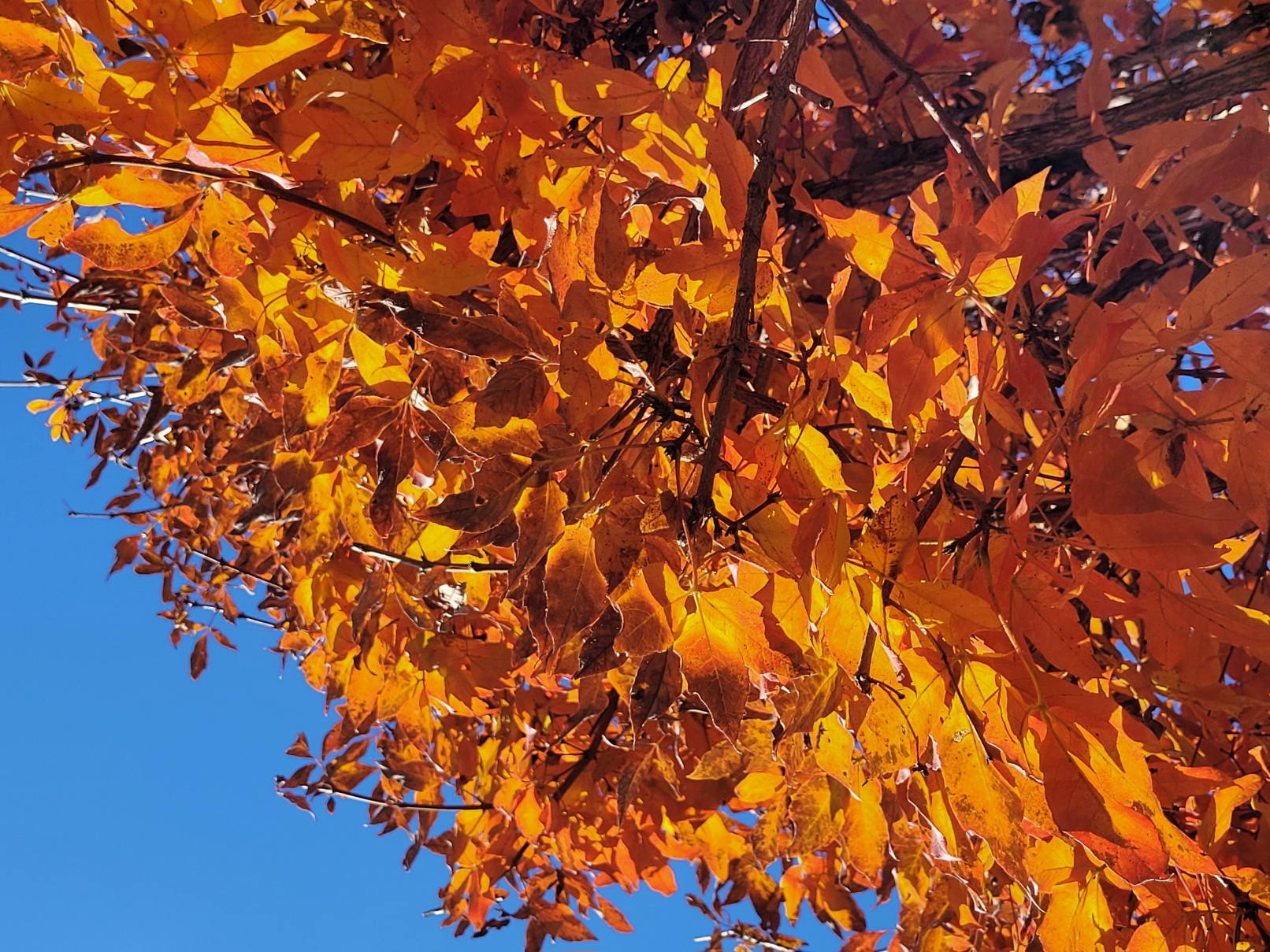
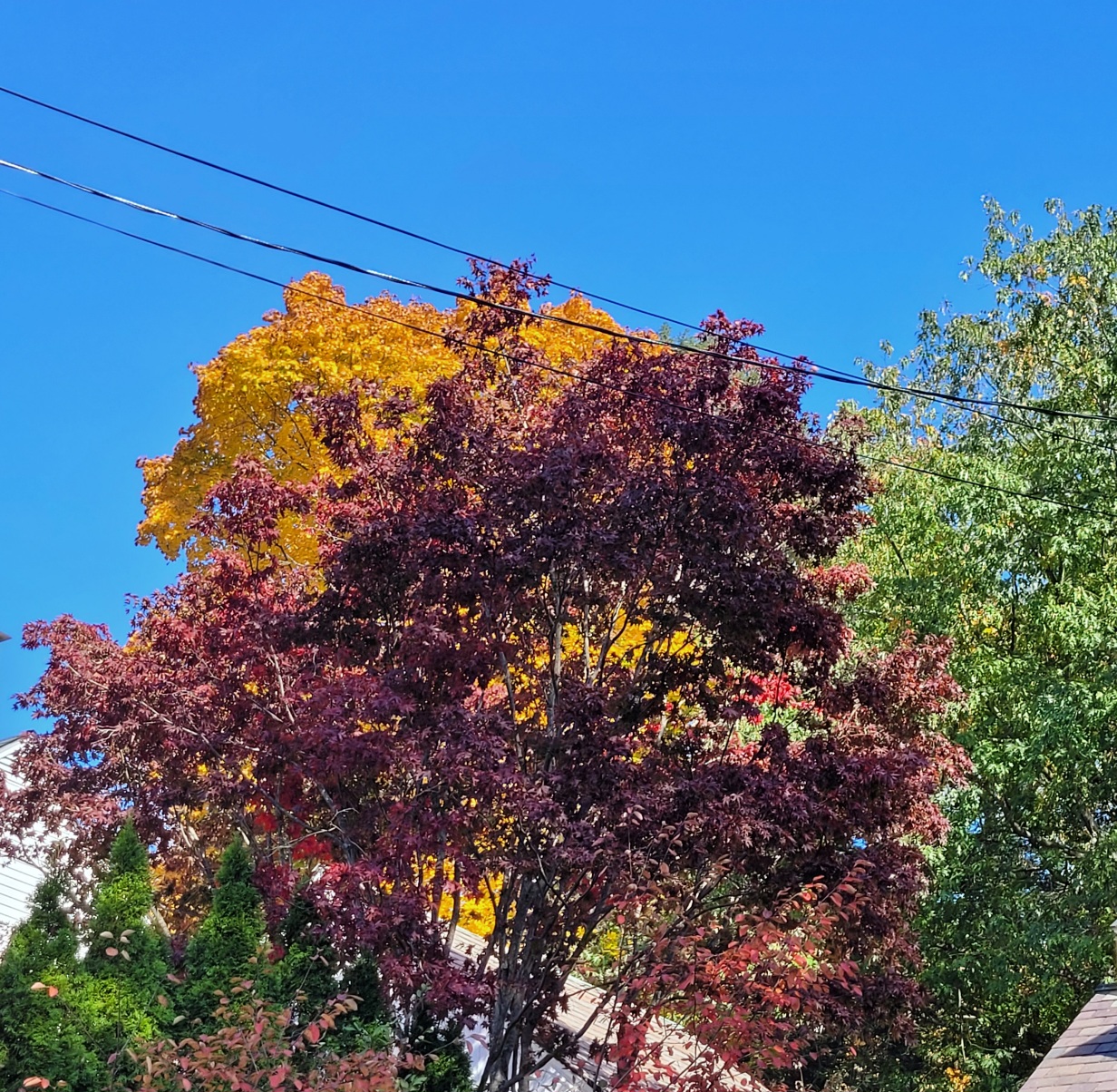
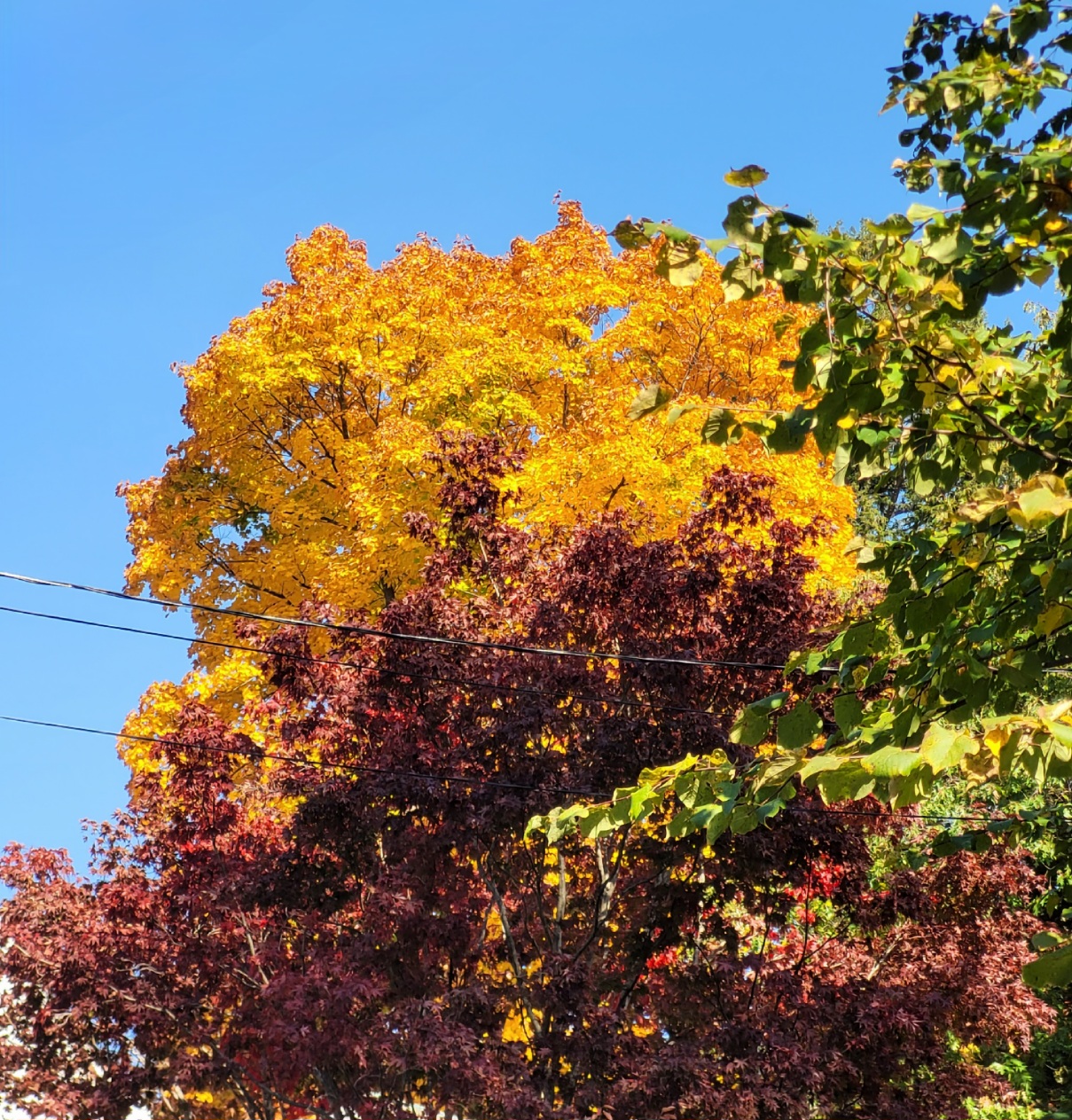
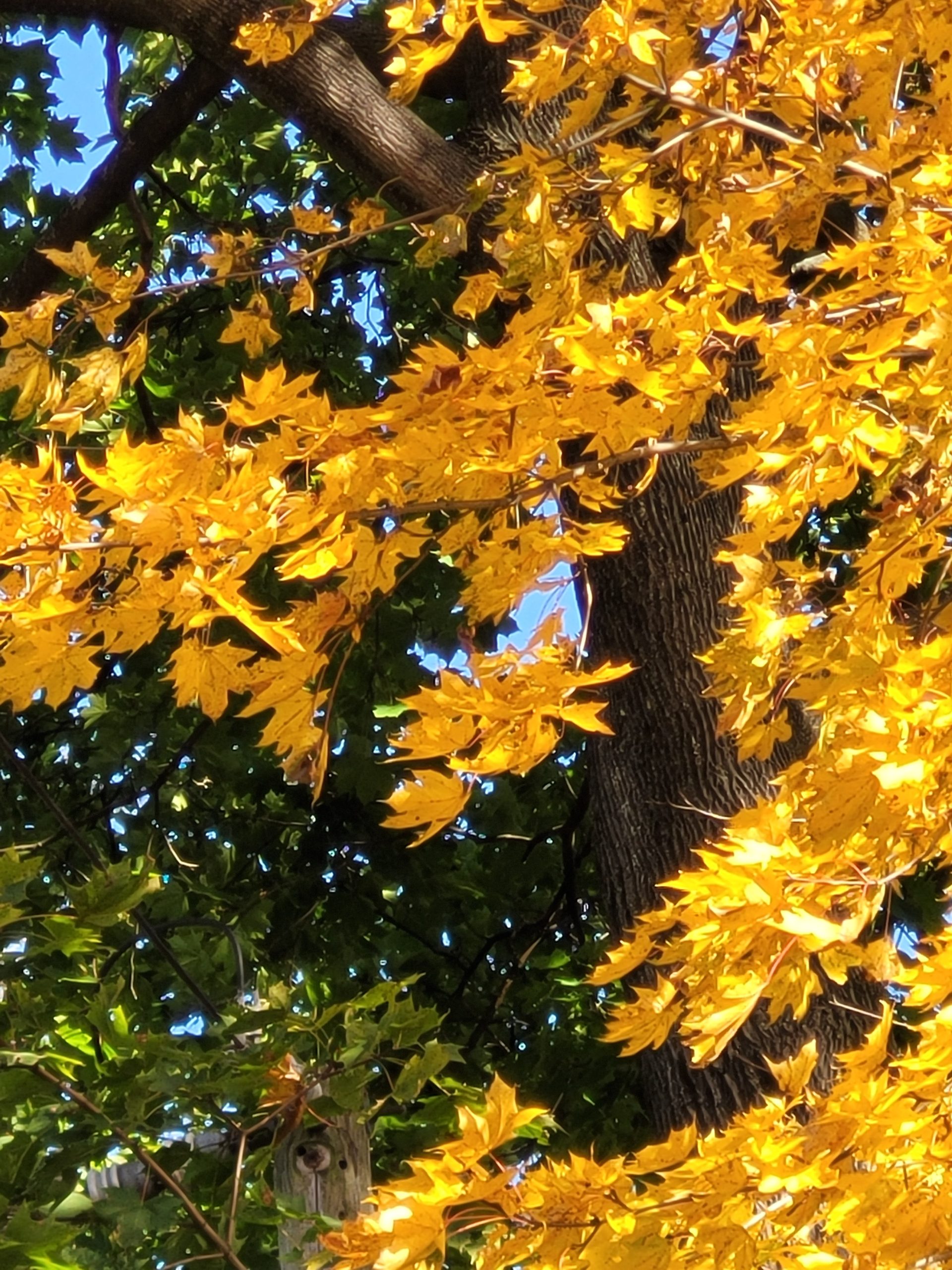
So, here’s today’s crop of images, from a pretty corner of the world that’s now experiencing Autumn.
Note: no filters applied, except for the 1 that’s noted…
Applied a filter to reduce the sun-glare and put the colors back, so you can see what I saw
I absolutely love soaking in the colors here. Thank you for joining me.
I headed to psychotherapy after texting, “I’m on my way. I’ll see you in person today, barring the unexpected”
I was feeling a bit cautious, because a couple hours before, the thought had come to me, “when things get hectic, trust your training.”
What training? Was I about to have a series of intrusive thoughts harking back to the times I’ve had to file restraining orders, one of which magically disappeared and I had to flee the area – right before Christmas? I hoped not. Martial arts training has certainly come in handy, but come on…
No, no intrusive thoughts, but I did wonder which set of training I should have in mind.
A few miles down the interstate, I saw a pickup truck stopped dead, and a sedan facing it.
People were only just getting out of the truck. I put my flashers on and pulled in behind.
I definitely trust my training in this kind of situation. I put my anxiety to one side and sailed in.
The only person to worry about was a littlie in the back of the sedan. Had spontaneous pulse – a good one – and respirations. He could speak, to the limit of saying, “I want my Mommy” (sound of heart-strings tearing), so I checked his spine at his neck. It was there, but not quite right. Once he could speak more, he told me his neck hurt where I touched it (I’d been holding his head & neck stable since I felt it). As I told the fire department medic later, “on me, it’d be a chiropractic adjustment. On a littlie that age, I’m not sure.” He nodded and sent his buddy in with a pediatric cervical collar.
Littlie’s mother was on the phone the whole time with him. So much love swirling around in that car. I told the Dad that I noticed it, and that it’s healing.
At each stage – or rather, just before the next round of excitement – I explained to Littlie that there would be more people, highly trained people who really cared about him being okay. Let him know roughly what to expect at each stage. Coached him to go along with things as well as he could. When the fireman asked him to squeeze his finger, he squeezed my hand instead (sound of heart melting).
I could see most of my words going over his head (as expected), but I could also see the sense of reason and structure calming his exhausted and shocky brain so he could tune in a little more.
I grew up in a musical household, so naturally I hummed pretty little made-up tunes and it visibly calmed him – and possibly his parents too, a little.
I’ve been working on learning how to stabilize a shocky system for 25 years, on top of my trauma nursing work. I’m only a patient – and a nerd – but still, I have lots of good training. I trusted my training in that, too.
I gave his mother my number right before the fire department and EMTs rolled up. I think it was a training day, because there were 7 or 8 more people there, one of them a cheerful charming know-it-all (every team needs one of those) who got the best responses out of Littlie.
I let the kid know I had to go but his Mommy would stay on the phone with him and he’d be cared for by these really nice people. Told his Mom I loved her kid and he was terrific (sound of heart-strings pulling).
Once his c-collar was on (definitely a training day; I helped get it positioned and sealed correctly in the end) and they had the gurney ready, I realized I had to stand up. After perching my crippled butt by one hip on a steel door frame for half an hour. In front of people. Specifically, a total of 9 or 10 fit, athletic slabs of beef (-cake) no less than 10 years younger than me, and most of them half my age.
This was not going to be great for the ego, but I knew I could get a laugh out of it.
So I used both arms and every available leg (which was slightly less than 2) to lever myself upward, saying, “I’m an *oooold* trauma nurse” by way of cover, and squirmed through the kindly, protective testosteronic press and into fresh air.
I signed off with everybody and retreated to my comfy car.
I called my psychotherapist and said, “Remember what I said about ‘barring the unexpected?’…”
We had a phone session once I was safely off on a side street and in a proper parking space. She was full of commentary about how I applied those psych skills and met psychosocial and informational needs appropriately, as well as the nursey stuff. So yeah, that was good…
… because my brain was churning constantly about every single moment and thought and decision for an entire hour. Looking for a fault. Looking for something I’d missed or where my training had lapsed or been forgotten. Cycling through, over and over, looking for any lapse.
This used to be how I improved my skills – look for errors, even tiny ones, and figure out how to prevent or avoid them in future. Now, it’s just my ADHD brain torturing me.
And computer says Nope. Failed to suck. I’m pretty sure I failed to suck. That’s a relief.
I’ve been thinking about it pretty much nonstop, but rather than worrying myself woolly, I got an organizing thing for my car and picked up some food. Both of these are calming, grounding things, perfect for pulling my adrenaline out of the stratosphere.
Then I crawled home and had fresh corn and gluten-free carrot cake for dinner. It’s good to have a little sweetness when your body is still convinced the world is full of excoriation.
I’ve had no calls from them and I don’t expect one. They’ve got to be absolutely wrung out regardless of how things went. The kid comes first, and then comes their own care and self-management.
They don’t have to think of me ever again: I know how shocking and painful it could be to revisit the moment.
I’d love to know. I hope like crazy that the kid came out of it OK. I never got to follow up with patients when I was a nurse (because confidentiality), and I’d sure appreciate it if this family wanted to give me a heads-up just to soothe that old itch.
All that being said, I want all you non-nurses to know that they don’t owe me one word of contact or one moment of concern. I was in the right place at the right time with the right training, and I trusted my training. That’s what we do.
They have the hard part: figuring out next steps with a shook-up and possibly injured Littlie who was going home early because he was already ill.
That kid was having a rotten day.
I sure hope it got better.
Forestalling future problems
I don’t have a jump-kit for my car. That could be a problem in the future. I was lucky this time because all I needed was my brain, arms, hands, and voice.
It’s probably the 6th or 7th accident I’ve stopped at and I really do know what’s needed at the roadside – and it isn’t much. I used to get confused by the fact that I didn’t have a stethoscope, oxygen on tap, i.v. gear, and All Tha Meds. Once I’m on scene, though, it gets very easy.
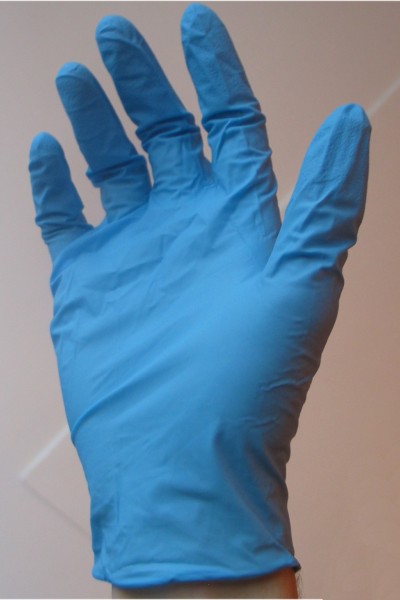
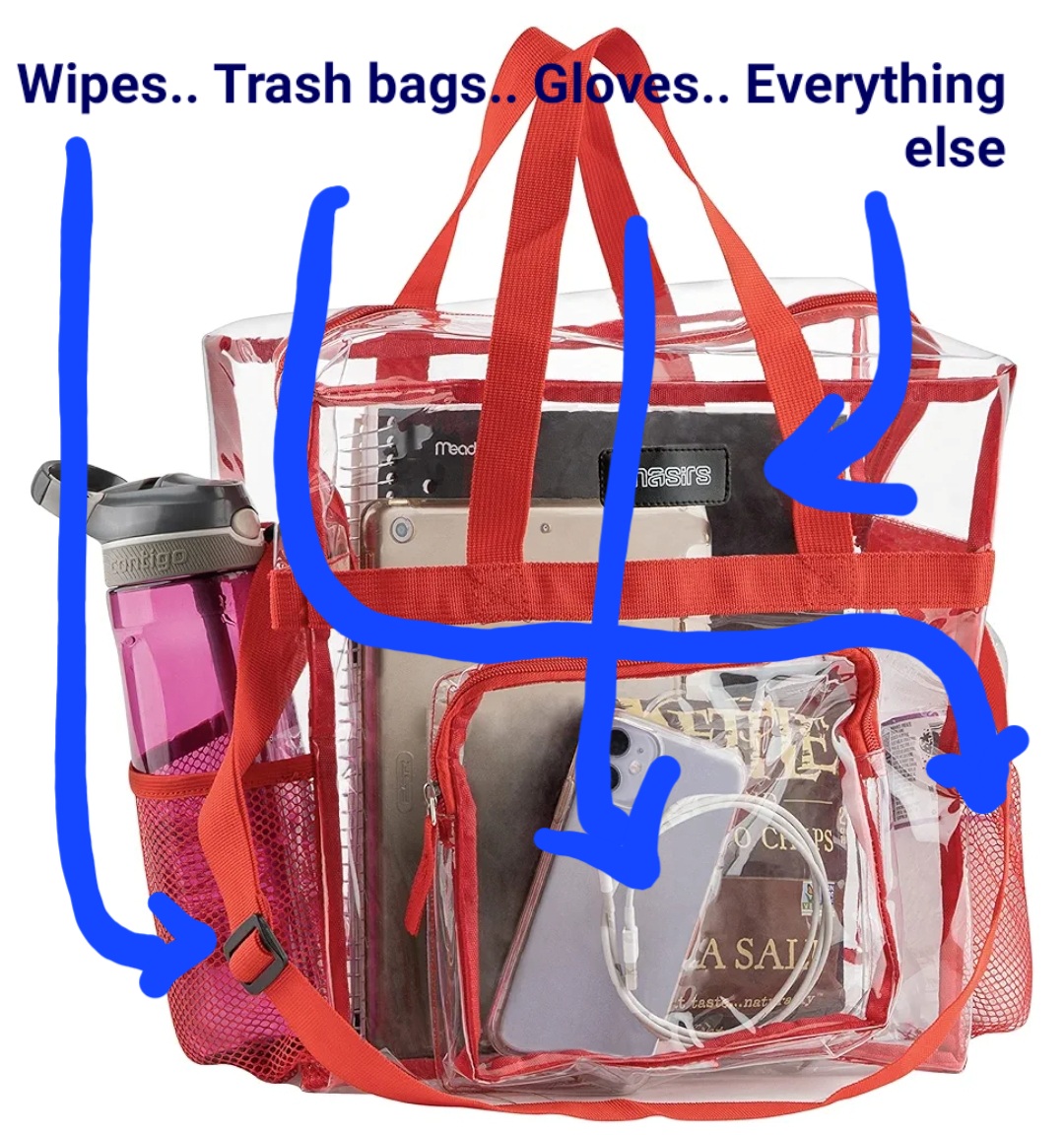
Any blood or, indeed, anything wet? Nitrile gloves, packed up in pairs and stowed in a closed outer pocket to keep them clean & dry and easy to get on.
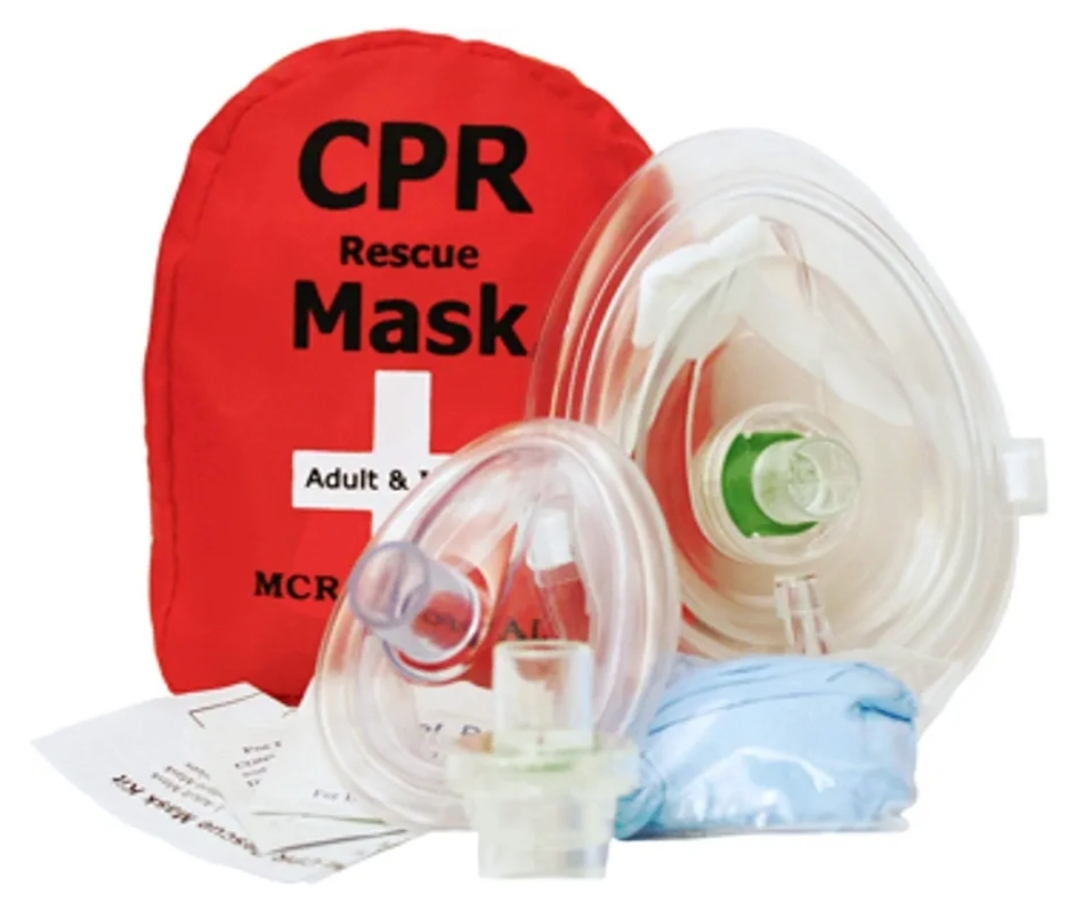
Heaven forbid, does anybody need CPR? This very rarely happens, but when it does, I don’t want to have to dig for the needful. I physically can’t do chest compressions (though I can coach any able-bodied person properly) but I can darned well use a mask with a one-way valve as if I’ve had years of practice. Years. You don’t have to have that (the training has shifted away from doing rescue breathing) but I feel that I do.
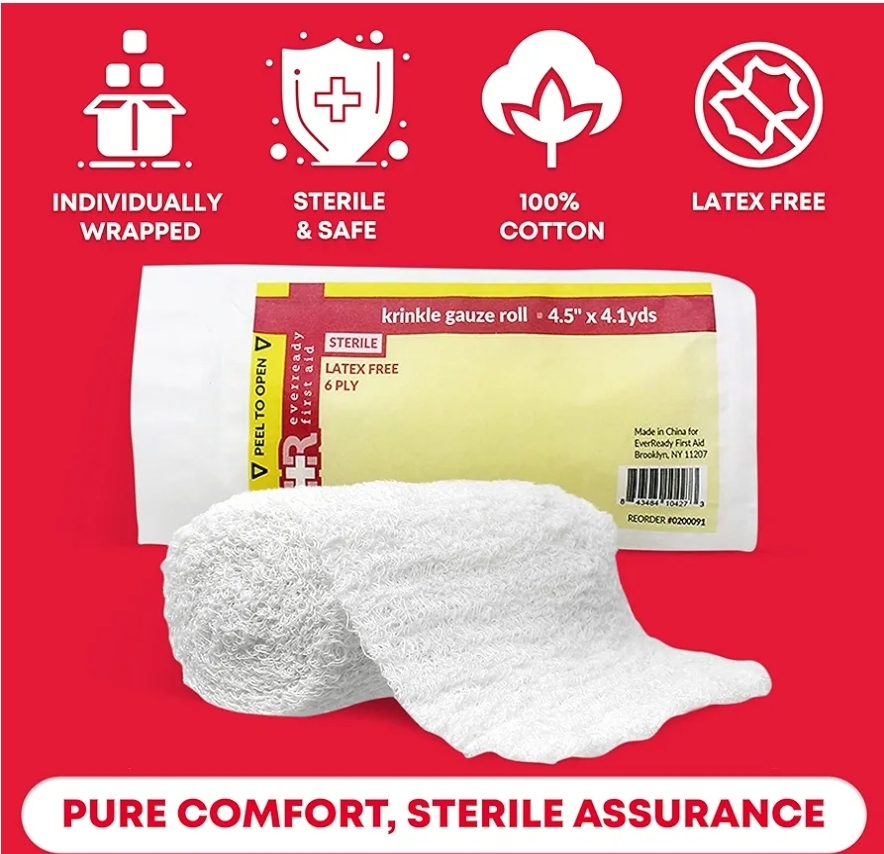
Pressure dressing? Kerlix. Sling? Kerlix. Wound cleaning? Kerlix makes a great sponge. Wound wrap? Kerlix. Piece of clean water-resistant paper to slap over a bubbling wound? Wrapping off a Kerlix.
So, plenty of Kerlix.
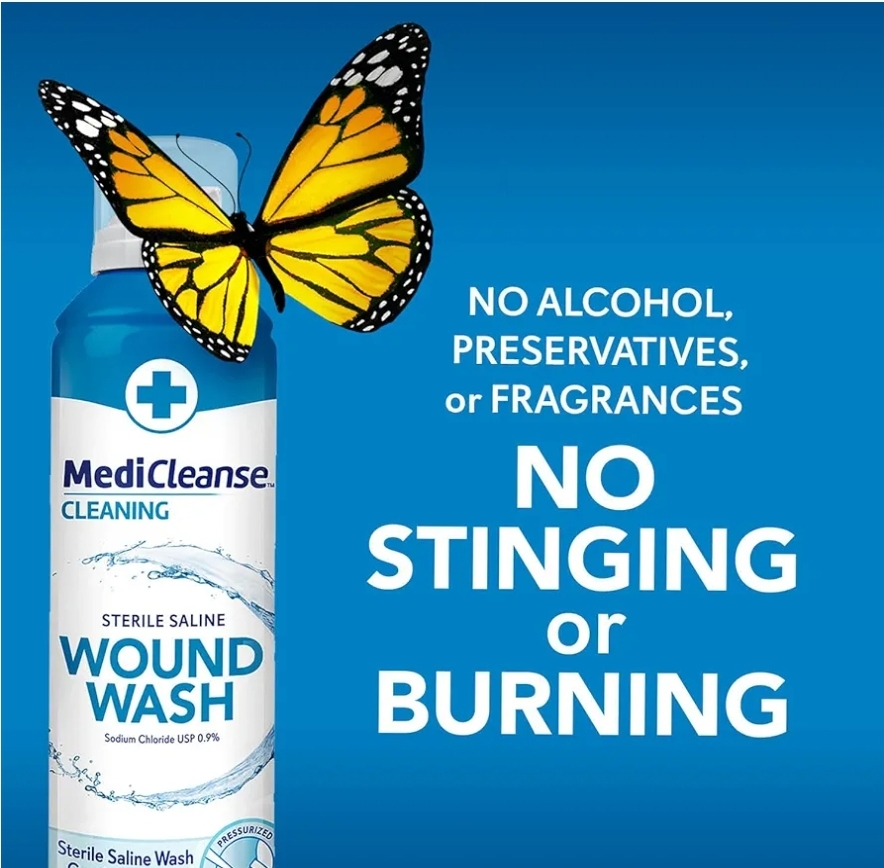
Road rash? Plenty of saline rinse (and a Kerlix) then a petroleum dressing to stabilize the damage until the ER can do a better job.
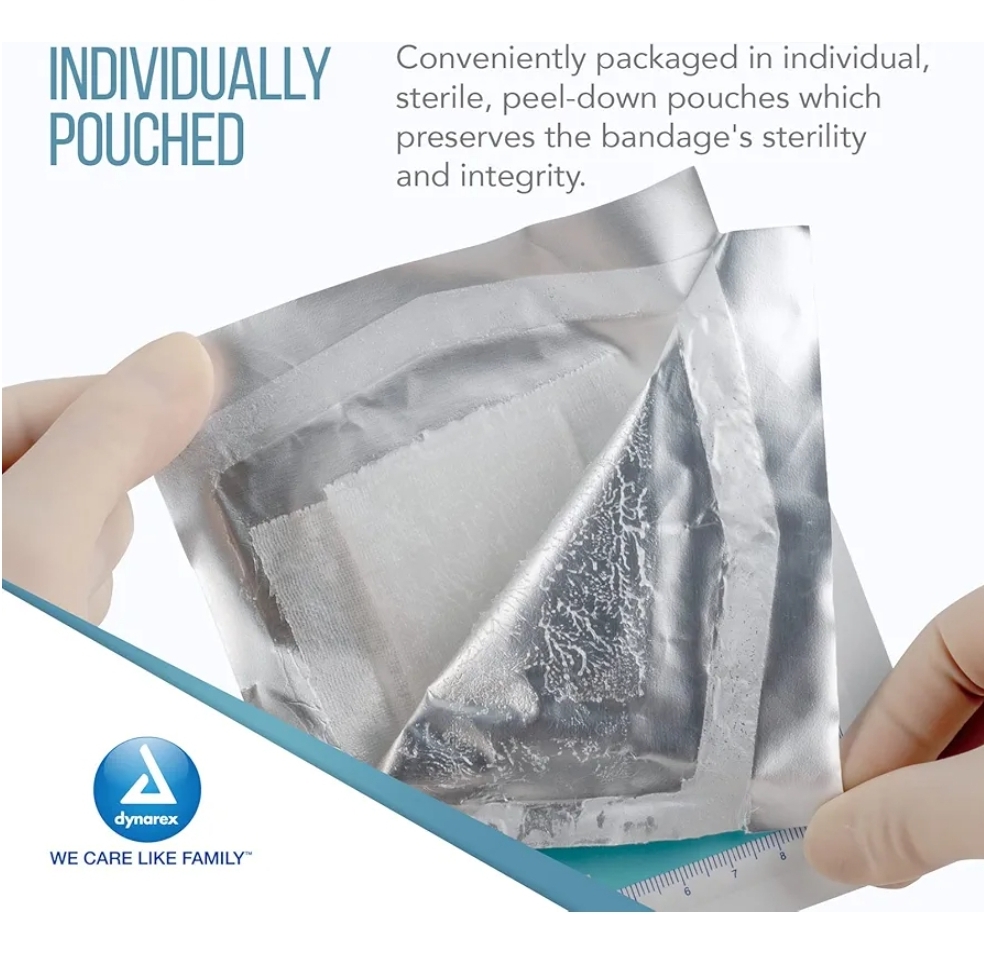
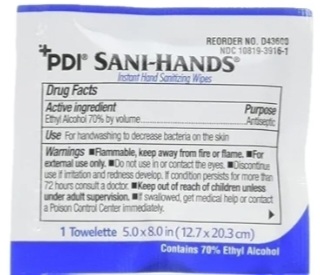
And possibly most essential: disinfectant cleansing towels, individually wrapped and big enough to grab. Those get used before if there’s time, during if the patient wants cleaning up, and definitely afterwards.
Because allergies & neurological reactivity, I stick with ethyl alcohol 70%.
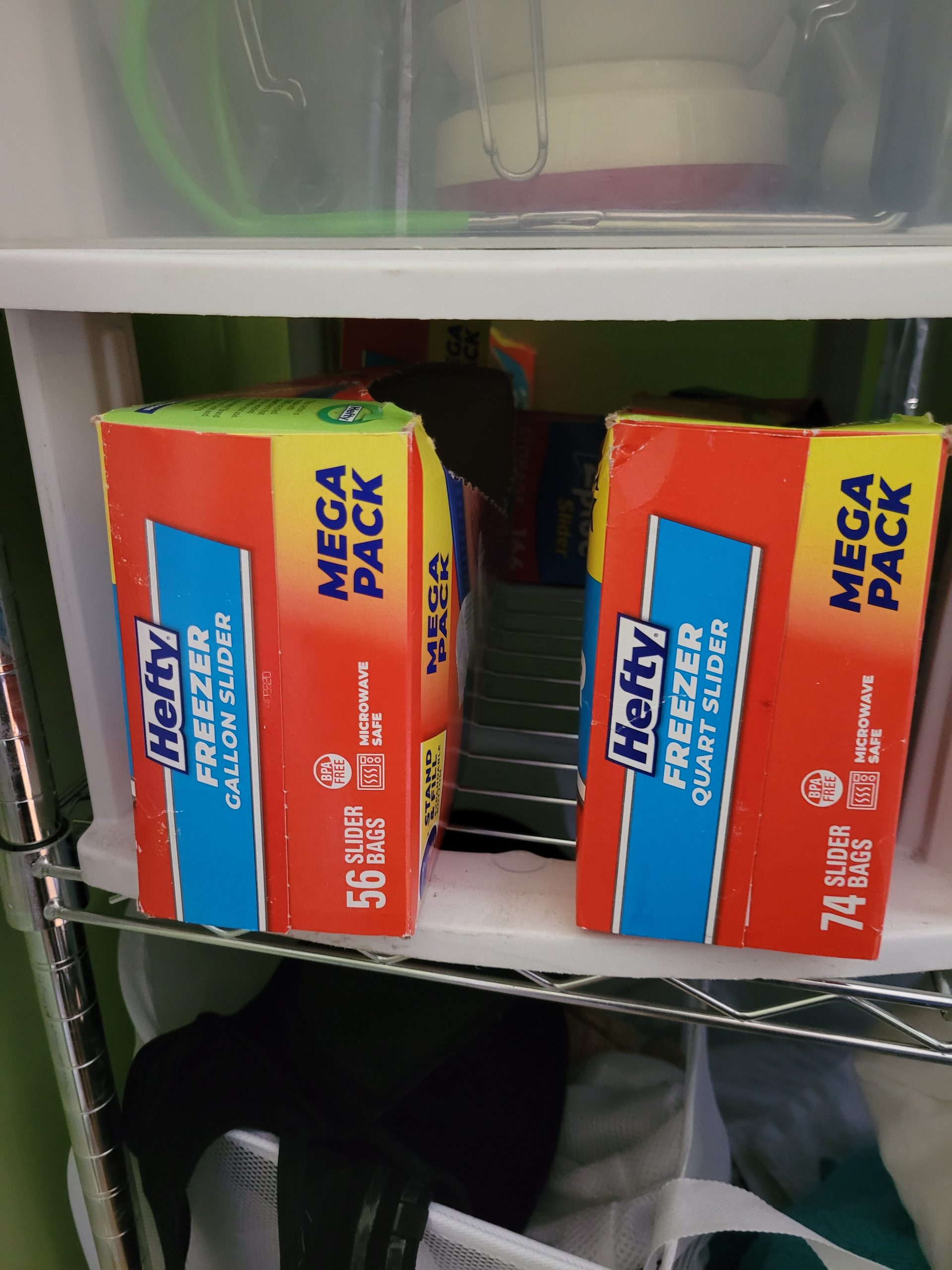
Secure the mess. A gallon-sized zip bag or 2 for garbage and wrappings. Having a garbage bag is one of the things that separates rescuers from ego-trippers.
Oh, did I say that out loud? Sorry. I don’t want anyone not to stop & help… I just wish that, if they’re going to the effort of bringing gear, they could pick up a bit. Seeing blood and mess is not good for survivors & passers-by.
I got all these online for about $10 each, and also got a clear bag (with outside pockets) to put the kit in.
I’ll keep backstock at home.
What I don’t carry
Blood pressure readings, stethoscopes, and pulse oximetry are at-home and in-hospital concerns: we want to know if what we’re doing is working over time and refine our understanding of the body’sfunctional state.
In the field, the main issue is not whether the patient has rales or a murmur, but whether the lungs and heart are keeping them alive – a much simpler, larger-grained issue.
So, these tools might be nice to have, but for a noodle-noggin like me, they’re an added complication and a bunch of expensive equipment to lose at the scene.
In the field,
You need to keep pulse and respirations going,
the spine stable,
make sure the inside stuff stays inside
and in place,
and (as much as possible) the outside stuff stays out – or at least doesn’t move much where it’s inside the person.
And that, ladies and gentlebeings, is Advanced First Aid and Basic Life Support in a nutshell. You’re welcome 😊 Now go get that training… please?
Poems don’t need me to write them, but sometimes I need to write something that sure isn’t prose. This is today’s poetical offering on the altar of, “it wasn’t ever in the script, but this is life, and it’s kinda cool.”
Odd legacies
Dinosaur footprints & petroglyphs..
Ancient cousins were marveling,
And it took ’til now to find their signs!
Some legacies don’t appear for
Eeeeeee
eeeeee
eeeeeons
But still send shivers up spinal tracts.
Some legacies (like genes) vanish. No trace.
30 years ago, I hoped to be
That Writer whose words were indelible,
Lifting sore hearts, harboring sore minds
Against the casual brutality
Of any age. Documenting software
Cured that, as each season’s work was irrelevant
In days. I still hoped, ached, tried…
But now, I feel that my legacy is written in the flow of blood through hearts –
Ephemeral, but going on forever.
Perhaps an heir of mind will scratch
Petroglyphs near footprints
For others to find in nine thousand years
And send shivers up spinal tracts.
I wrote the start of this for a fellow spoonie today and realized it’s a good starting point for a subject most people find overwhelming: reading medical science when you’re starting off as a non-scientist.
The article I cite first is a good example to start with, because it’s written well and has passages of clear English to work with. So…
I suggest reading the abstract and introduction. After that, just skim the first sentence of each paragraph, since (in science writing) that tells you what the paragraph is about.
If the first sentence makes no sense, skip that paragraph.
If you can figure out the first sentence, glance at the rest of the paragraph to see if there’s any more to glean. If not, move on..
It’s a skill
Reading science is a skill, and skills take time to master. That’s expected! Share what you glean with your doctor and ask them to help you understand it better.
Honestly — this isn’t to puff myself up, it’s just the nature of patients to dis themselves, so hear me out — if you can read my stuff and make out half of it, you are plenty smart and literate enough to start reading science. It’s just work and time, and the time will pass whatever we do, and the work will get easier with time. We just have to take care of ourselves and pick our time, when we’re chronically ill.
Using the right amount of honey
Doctors might give you attitude about comparing your Google search to their medical degree, but that’s not what you’re doing: you’re studying up on your condition, which is wise, and you’re expanding your info base on this thing that has imposed on your life, which is survival.
So, feel free to correct them sweetly, and don’t be afraid to pour some admiration on them if it helps them to re-focus on your information-gap.
The point is not who knows more overall. That’s not in question. When you talk to your doctor, you’re talking to someone who had to memorize, for instance, the Krebs cycle (here’s a partial explanation: https://www.medschoolcoach.com/the-krebs-cycle-mcat-biochemistry/) — so, yes, they have a depth and nuance of knowledge that’s nearly impossible to replicate without going to medical school.
They like having that acknowledged, because they take a lot of painful flak for not knowing everything about everybody’s illnesses all the time, and they need to know that you know what an effort they made to be able to work as a doctor.
So, it’s good to acknowledge that enormous effort.
Then they are usually able to hear you when you clarify that you’re not arguing with them, you’re trying to improve your understanding of this thing that affects you so profoundly. You trust them to help because of their knowledge.
Trust. Help. Knowledge.
These are keywords because they are core professional values for most doctors.
They’re important to acknowledge, and great to invoke and rely on.
That said… if you can’t rely on these characteristics in your doctor, even after you tell them that that’s what you need, then it might be time to find another doctor if you can. These core values are far more important than whether a doctor has good social skills or a good handshake.
When all is said and done, guess who has to live (or not) with the outcomes? It’s you. While the doctor is the subject-matter expert on the medical info around your condition, you are the subject-matter expert on being in your body and dealing with the fallout. There’s a degree of respect that should go both ways, though modern practice makes that hard.
The key to reading science is realizing — or at least, going ahead as if — you’re perfectly capable, and just need to practice. Science is written by humans, and you’re a human too.
1. You are a perfectly sensible person. If you’re reading this, you know how to read (or access translations from) English; also, you have access to a whole world of dictionaries. MedlinePlus is especially helpful in explaining concepts and helping us learn to read medical stuff.
2. Not all scientists can write well in English, and none of them write in English all the time. That’s okay. They went to school for a long time to get extra vocabulary and learn to do what they do; good for them. They’re still people, and they have to write in English at least some of the time. That’s where you can come in.
3. You can read the English just fine. Trust yourself and take time. With practice, you can learn more lingo over time, and get better at reading more science.
Just work from what you can understand now, and let that grow over time. You’ve got this.
Choosing credible sources
While you’re learning to read science, start where you can and work from there. As you get more confident and your understanding grows, you’ll learn to be choosier.
The gold standard for science info
When learning how to assess science, you’ll hear a lot about placebo-controlled, double-blind studies and that method is often important. This method of science gives us more reliable statistical probabilities about whether something will work in a certain situation. The statistical probabilities become reliable when several thousand people (“subjects”) have been tested, probably over many different studies.
With rare diseases, this is obviously pretty unlikely, so we have to work with less scientific certainty. C’est la vie.
Statistical probabilities have more limited value for patients than doctors, because we’re individuals, not pooled data. There used to be a phrase used in medical school: “Statistics mean nothing in the case of the individual.” This has gone by the wayside a bit, but it’s still true.
We may have to cast our nets further afield, because we’re looking for clues that might help us, personally. Be aware when you’re doing that, and put those science reports in your mental “hmm, maybe” folder.
I showed a case study that had a marvelous impact to one of my best doctors. He said to me, “If I could put that effect in a bottle, I would. It worked for that person, and we have no idea why. We do know that it doesn’t work for all these other people. Everybody’s different. Figuring out how to apply one thing to help a lot of people is our holy grail!” Lloyd Saberski, MD.
And that’s why doctors rely on the pooled data gathered from the scientific method. They want to help as many people as possible with each thing they try. Otherwise they fear they’ll spend too much time chasing rainbows.
We patients have to find our own rainbows, just as we have to count on our doctors to keep an eye on what’s statistically worth trying. It really is teamwork, and we both need to do our jobs.
What’s peer review?
Before you give a study to your doctor, it’s worth checking if it’s from a peer-reviewed journal. Don’t expect them to put too much stock in it otherwise.
Peer review means that other people in related fields have checked it over for sanity and validity. This is important for us patients, as well as the doctors who rely on the information.
You can Google whether the journal your article was first published in is a peer-reviewed journal. JAMA, BMJ, and the Lancet are all reliably peer-reviewed.
The value of literature reviews
Then, after a fair amount of studies have been done on a topic, there’s usually a literature review. This is when a qualified scientist takes a close look at all the studies, throws out the ones that were badly designed or poorly run (because bad technique creates bad data. “Garbage in, garbage out”) and writes an overview of what the current good science says.
They also discuss the strengths and weaknesses in the data, and suggest where future science funding could go, in light of the science so far.
Literature reviews are wonderful places to improve your knowledge of your disease/condition, expand your vocabulary, and get a lot better at understanding what goes into the science on your condition in the first place.
For instance, it used to be widely believed that most people with Complex Regional Pain Syndrome had had traumatic childhoods. (“Blame the parents” LOL.) There was a literature review done on about 30 years’ worth of studies, and it turned out that almost all of them were so badly-designed, poorly run, and calculated with so much bias, that nearly all of the studies had to be thrown out!
This taught me very important lessons:
– Just because most people say it, doesn’t mean it’s right, even if they should know better. This is an excellent attitude to have while reading science.
– Methods matter. You’ll learn over time how to sense whether the methods used are appropriate to the topic studied. The wrong method can lead to truly bogus results. The method has to fit the material.
– People lose their minds when they think about pain, as well as when they think about childhood trauma. In practical terms, this means I have to approach all normal (non-CRPS) people’s reasoning about my condition (which is characterized by relentless agony which a non-CRPS’d brain cannot even conceive of) with compassionate criticism. They do not know what it’s like, nor how to live with that pain and still think rationally. They’re not able to know. I don’t want them in a position where they do know, because that’ll mean their lives are as battered as mine is.
Therefore, every word they say has to be filtered through my awareness of how their minds get lit up by unreason, when they think about my pain. This, believe it or not, is perfectly natural. (Look up “amygdala hijack” for background on this mechanism.)
I survive because I’ve learned to substantially displace or ignore one of the most powerful primitive signals in the human body. That isn’t natural, and nor should it be.
These scientists mean well, without question. However, their logic is necessarily fractured when thinking about this, because they lack my tools for facing it. I need to dig into their data and methods before I can buy into their conclusions.
That’s good to know!
The conclusion of that literature review? CRPSers are likely (not guaranteed) to have had relatively eventful lives. Whether the events were traumatic or wonderful wasn’t relevant to our probability of developing CRPS.
In other words, we live in interesting times!
Where to find science to read
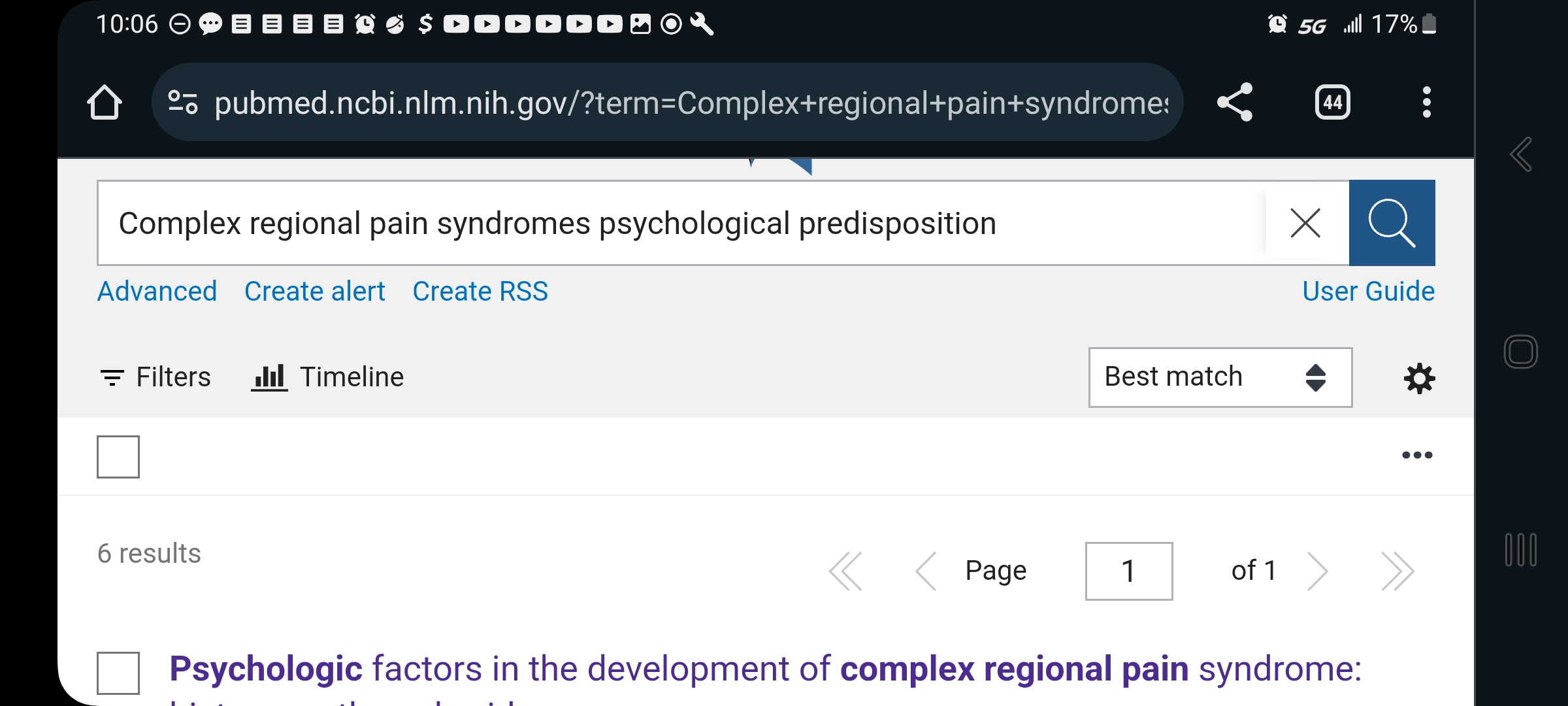
Google pubmed, and you’ll find the National Library of Medicine (NLM) division of the National Institutes of Health (NIH). This is a searchable science library which hosts articles from all around the world, in whatever language they were published in plus English. You can search any valid medical term — for instance, use the full name of your disease rather than its initials, for better results:
Here, you can see that I typed out “complex regional pain syndromes” instead of CRPS.
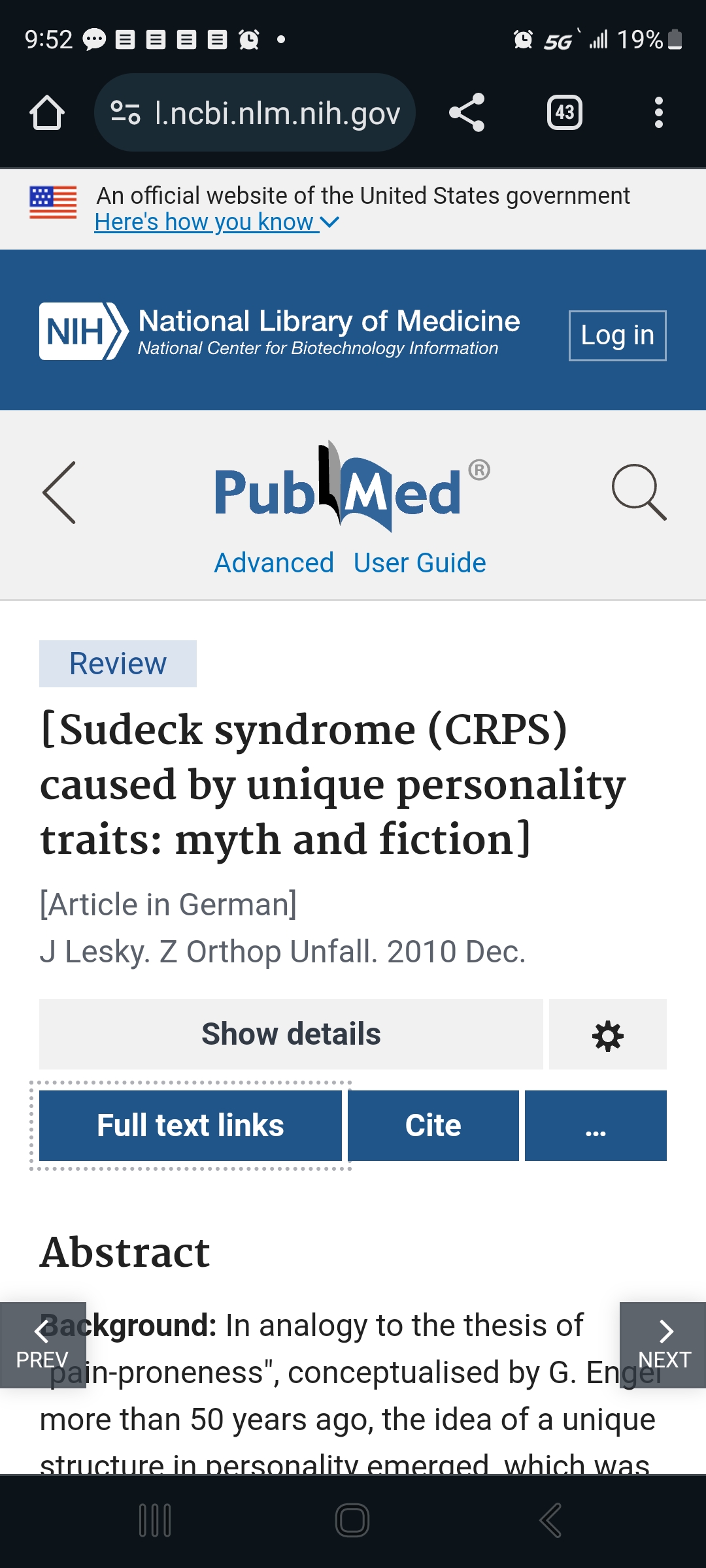
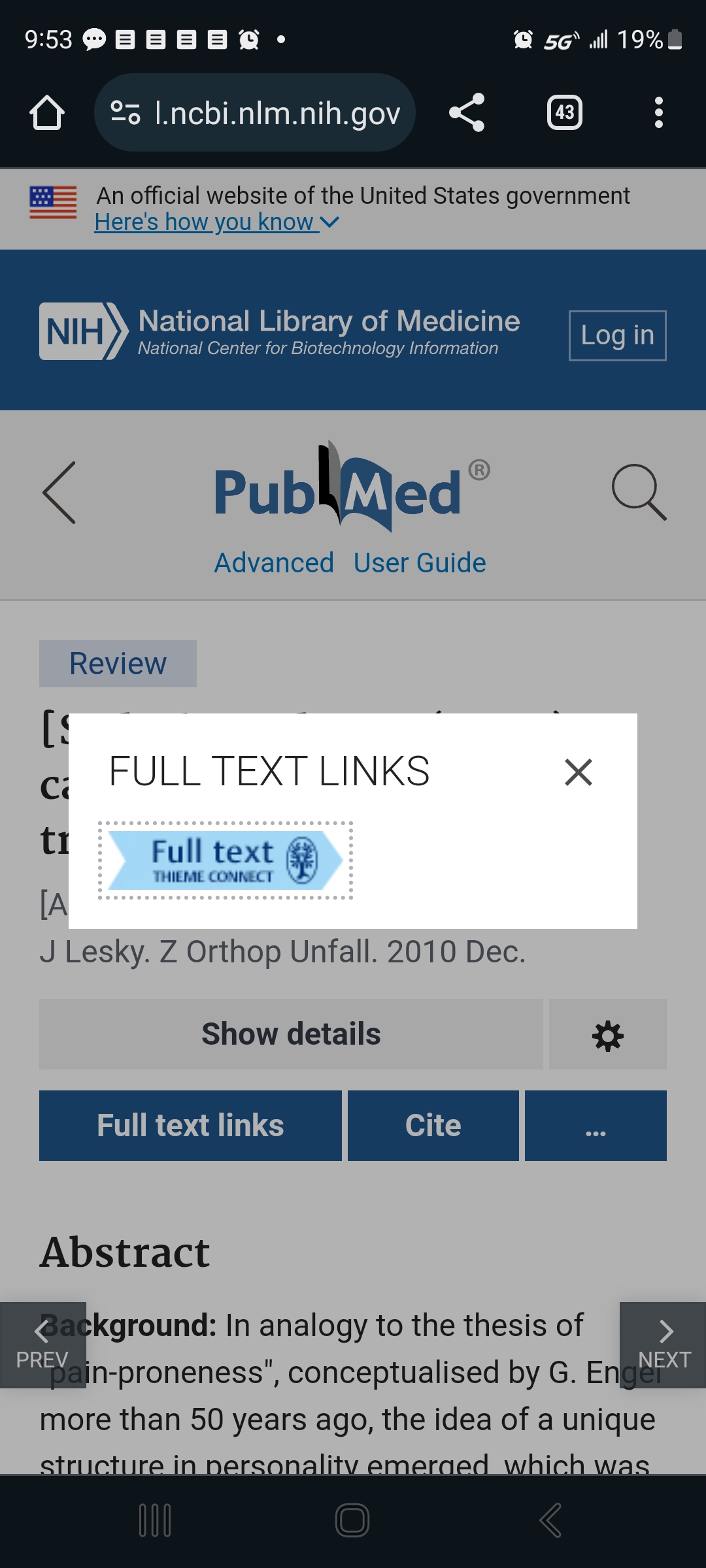
Some of them have full articles that are free to read (look for “Full Text Link”) …
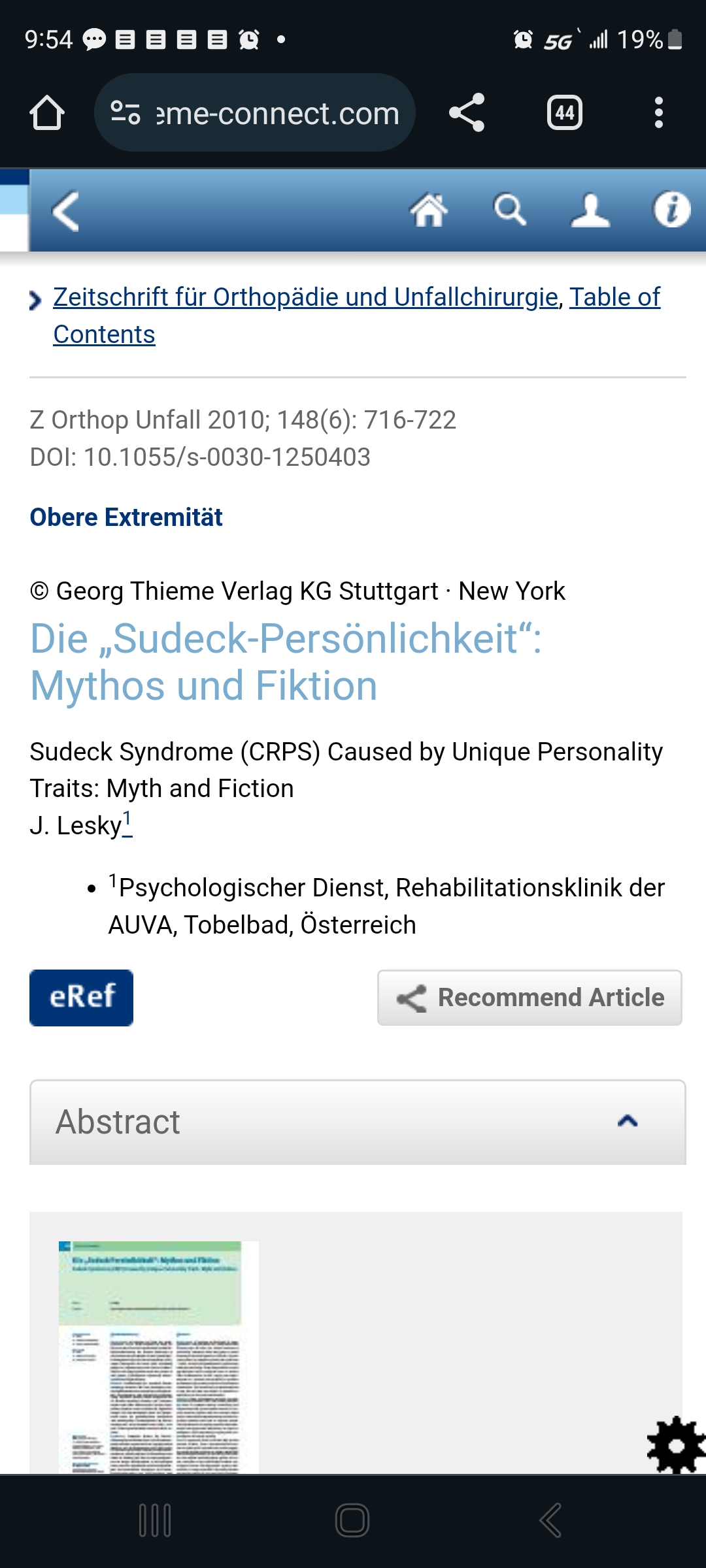
The square brackets around the title tell you it originated in another language. The note under the title tells you which one. Good science is done all over the world. I’m glad we can access so much of it!This image shows what pops up when you touch the Full Text Link button.This is the original site that published this paper. As you can see, it’s in German here, but an English translation is also printed below the German version. For better or worse, English is the world language for science and medicine. I feel lucky being born into an English-speaking family, because it’s tough to learn. All those synonyms… and the crazy spelling!
…But most will show only the abstract, that is, the high-level overview of what the study is about. For our purposes, that’s the most important thing, so it gives you something useful to work with.
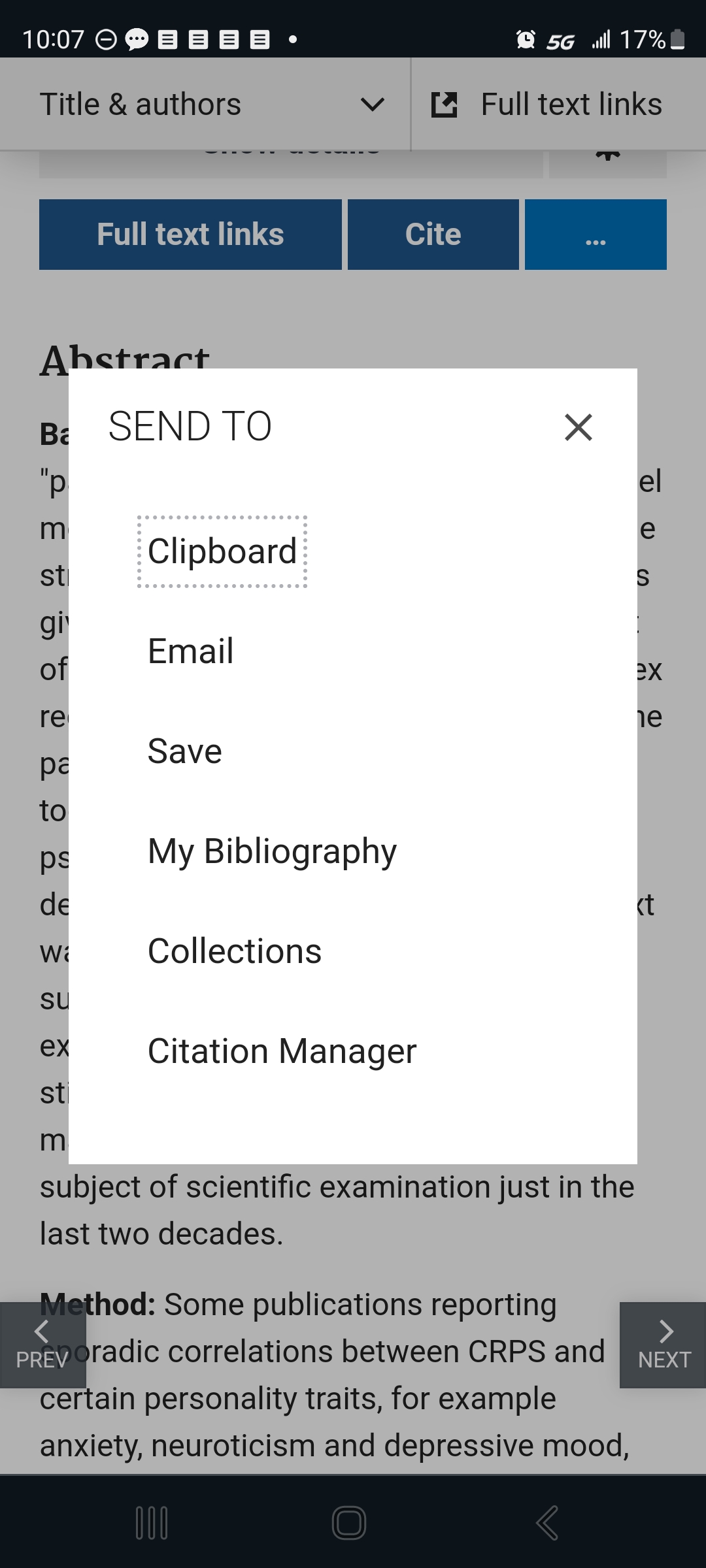
The interface gives you options for saving, sending, and citing the articles.
Touch the “…” button to get this helpful menu. If you get a free account with the NLM, you can use these to help you keep your studies organized and accessible.
To use these, just touch or click the one you want. They do exactly what they say they will.
If you touch one of the menu options that requires them to store the info on their side — like “Collections”, “Bibiography”, or “Citation Manager”– it will give you what you need to sign in (if you already have an account) and, at the very bottom, the option to “Sign up”:
The site is very helpful; just slow down and let yourself look at one thing at a time.
Once you feel more self-assured, try out Google Scholar. It’s smaller in some fields and generally less selective, but that can be good. I suggest saving it for later only because it’s got fewer guard-rails. We’re all different, though, and you might find that easier.
These two libraries aren’t identical. They do overlap.
A word about MeSH terms
MeSH stands for Medical Subject Heading. It’s a curated list of specific terms used in the National Institutes of Health materials. This kind of consistency is necessary when organizing a stupendous medical database like the National Library of Medicine.
MeSH terms are listed at the bottom of each article. If that article was useful, you can click the MeSH terms to have them saved to your PubMed search history:
I’ve circled the heading “MeSH Terms”, where it appears below other back-matter after the article.
Here’s a tip: when using their Search tool, don’t worry about capitalization, but be very particular about spaces and punctuation. Copy them exactly.
Using MeSH terms will improve your future searches, because it makes the most of the databases self-referencing mechanisms.
Trust your eyebrows
Best tool in your mental toolbox: when you’re reading sentences you know you do understand and, yet, you feel your eyebrows moving around on your forehead… that logic is not right.
The scientist might be misinformed, biased, pulling a fast one, or just plain wrong, but it doesn’t really matter which — that logic is not right. The underlying pattern-matching part of your brain can tell. That’s a primitive part of the brain and, when you’re paying attention to it, it’s extremely hard to fool!
Trust your eyebrows. If you want to, save the article and come back to it when you know more, so you can figure out where the problem is. I assure you, there is one. Your eyebrows don’t lie.
Feed your brain
Reading science is hard work and brains are big hungry things at the best of times. Feeding it right can be a huge help.
Meds & caffeine
If you’ve got attention problems, adjust your meds and caffeine to give you some extra focus when you’re reading science. It’s a lot more fun that way!
Smart produce
Green, blue, and purple foods are absolutely marvelous for brains — and pain. They feed the nerves, literally. I know you needed an excuse to eat more blackberries, blueberries, collard greens, and rocket salad, aw shucks.
I also know it’s not the cheapest stuff in the market. Explore your local options for farmer’s markets, roadside stands, produce sales, and organized assistance like EBT/food stamps and healthy-living programs giving more access to produce in the state, like they have in Massachusetts and California and other places.
This is a great opportunity to learn more about your condition and to bring what you’ve learned into your life (more on that later), and the upfront effort pays off so much in the end.
Body-safe phenylalanine
Obviously, if you’re prone to phenylketonuria, skip this part! IYK,YK.
Also, keep in mind that this can have an effect on some meds — sometimes giving them a boost, sometimes making things worse. Be sensible, do your due diligence, and study it up for yourself if you’re interested. Also, use your self-documentation skills: note what you do and what it does to you, change what needs to change, and take responsibility for the results of your choices. We are our own best caregivers.
I’m discussing the physiological activity of this thing with the weird name, and what I’ve found in my life and those closest to me. This isn’t any kind of assurance that it’ll do good for anyone else. Put it no further than “hmm, maybe” in your mental filing system and do your own further research to validate what I say and get an idea how it might work for you, yourself.
Basically, phenylalanine is a precursor to the “up” side of the neurotransmitter suite, dopamine and norepinephrine and even epinephrine (they all transform into each other as needed). These neurotransmitters carry messages among the parts of the brain involved in learning and memory. Taking in phenylalanine can have a truly astonishing effect on attention and memory WHEN you’ve got fundamental deficits, as do people with central and longstanding pain and some other conditions.
TL;DR — If it doesn’t make an obvious difference in less than an hour, you don’t need it.
I’ve trialed using aspartame, which went well for me. (Discussing my results with my doctor paved the way to including SNRIs in my med regime, to my considerable benefit.)
Food sources of phenylalanine
This is where hard cheese and smoked or processed meat shine. They’re rich natural sources of phenylalanine. They also have saturated fats which, in moderate doses, seem to help with pain and brain symptoms.
As a moderate part of a well-balanced diet, folks.
This hasn’t been well-studied; it’s one of those things you pick up after being involved with self-managed patients for over 30 years.
It doesn’t take much. I found that 2 or 3 bites of aged cheddar would absolutely light up my brain for 45 min to an hour and a half, depending on my deficit.
One pal of mine keeps meat jerky sticks on hand for study sessions. Aged cheese works better for me; jerky works better for them.
Now, unfortunately, mast cell activation problems have moved cheese and smoked meat out of my diet. When I need a brain boost, and it feels like cheese might help, I have to use a supplement instead.
Supplementing phenylalanine
It’s more measurable to use a supplement called DLPA, or d,l phenylalanine. It’s a blend of natural and manufactured forms of phenylalanine. One works better for pain and another for depression, but the blend seems well-tolerated and helps both. Phenylalanine suppresses certain inflammatory kinases and may help suppress pain at the spinal root (that is, right where the base of the peripheral nerve path comes out of the spine) as well as helping with mentation and cognition. (Sarcastic Sister notes: The recent science about it magically disappeared in the wake of the “war on pain meds” and I won’t pretend to understand why.)
There is a maximum recommended dose before it gets toxic, but if you’re seriously thinking about that, you’ll want to do your own studying, and might want to talk to your doctor about SNRI meds as a possibility. (The N is for norepinephrine, which phenylalanine supports.)
Why bother with learning how to read science?
Knowledge and understanding are the most powerful tools you can have for dealing with complex chronic health problems. It may or may not change what you have to deal with, but it certainly gives you more and wiser options about how to deal with it.
Even if you aren’t ready to start now, you can circle back around to this whenever you want. It’s attainable; you can do it. It’ll always be there (although individual articles and topics may come and go.)
The patients who learn the most and put that to work in their own lives, are the patients who most consistently beat the odds and have the best quality of life over time.
Therefore, better information leads to better living with complex chronic illness. My HIV patients taught me that 32 years ago at my first nursing job, and it’s truer than ever now.
Note: Nobody here says it’s easy. That said, our complex chronically ill lives are never easy.
Pretending that getting through the day is not, itself, almost a superhuman task is a disservice to our strength, so let’s just start off by recognizing that everything we do is really hard work.
Knowing that, I have found that the effort of learning and applying what we learn pays off a whole lot more than passively waiting to be saved and feeling rotten all the while — and still being wrecked & exhausted.
I can whole-heartedly recommend learning and figuring things out. It’s a winner.
A year ago, I ordered a DNA whole-genome sequencing (10x) test from Dante Labs. It was on sale for a price I haven’t seen before or since. The medical standard is 30x-200x, but 10x is the first good baseline.
They didn’t staff up for the increase in work. Took many months to get the raw data. These aren’t human-readable, but I couldn’t get anything else to read them either; the files were unrecognizable.
3 weeks ago, I sent a nasty note asking where my readings were. They turned up by return email.
Even though they were in PDF (Portable Document Format, emphasis here on Portable), I couldn’t get my usual PDF readers to open them. Eventually, I used Google Drive as a PDF reader, and that worked.
Results
I’m happy to say that I have no genetic predisposition to gut cancer, alcoholism (bit of a miracle there), or Alzheimer’s.
I’ve got just one genetic tweak that could predispose me to breast cancer, but it’s not the worst of them.
My reading seems to orient on habitus (body shape & size) and inflammation. Keep in mind that this is a company oriented toward the public, and presumably that’s what they’re asked for.
CW/TW: Lots of this material focuses on weight and size. Feel free to skip it if that’s not helpful.
There’s a lot of genetics now known around appetite and weight, as well as inflammation. These days, that doesn’t matter in my case, because mast cell activation, leaky gut, and gastroparesis have turned eating into a recurring nightmare.
CW: specifics on dietary limitations
I can’t eat many things because of mast cell activity (allergic responses), I can’t eat much because of gastroparesis (sickening gut pain & nausea), and I can’t eat sweets or non-squeaky-clean food because my system is highly inflamed and that stuff hurts.
So, all the dietary correction has already happened. Lots of pureed produce and little bits of healthy fowl, with occasional rice or tapioca when I’m especially nauseous, is the extent of my diet– plus all the olive oil I can persuade my body to accept gracefully. A bit of chevre now and then as a treat.
I know people who have it so much worse than I do. It stinks, but I can cope for now.
You just know I have to make this fun. For me, at least. Ready? Here we go…
How many of you have eaten with Mediterranean cooks? Anything strike you about that?
Right! It’s a bleached-wheat diet!
If you tell any Mediterranean-born person to take the white starch off the table, they’ll look at you funny and reach for the pasta, offer you another piece of filo-based yumminess, or grab another piece of bread to clean their plate with.
I mean… if you can digest the wheat, it’s wonderful, but it’s not what is meant by doctors who say, “You should follow the Mediterranean diet!”
If you’re there for breakfast, you’ll see that even most health nuts think a biscuit or pastry and reeeeally strong coffee is the only way to start the day. Check the labels on those biscuits — loads of added glucose!
Mediterranean people do not traditionally follow a diet that limits simple carbs. Simple carbs are the absolute basis of any given meal. It’s a cultural reach — and a moment calling for self-congratulation! — when they use whole wheat or brown rice instead.
These are the people who gave us salt-cured meats. Not only do they eat pork and beef, they slice or chop it fine and eat it raw. As haute cuisine!
Seriously, what US-based nutritionist is likely to recommend that to an impaired gut??
It’s the olive oil and produce that matters. Plus beans and lentils, if your stomach allows. Eating one serving at each meal. These are the dietary things that are typically Mediterranean. (To-go bags are not a thing, because diners expect to get 1 meal out of each order, not 2 or 3.)
I can’t eat leftovers now anyway.
2. Faulty fat processing
Oops, can’t balance Omega 3 and 6 properly; need to supplement with Omega 3, oily fish. (I can’t eat fish. Urgh.) Stay away from oils of corn and sunflower, which are too 6-y.
Why? Because inflammation. (Remember that word.)
3. Faulty fat metabolism
Another way my body can’t process lipids (fats & oils) properly. Harder to de-chonk.
4. More chonk, plus stress-eating
Oh boy, yet more ways my system is coded for chonkage and, specifically, stress-eating and greasy food. Who knew there was a gene for that? (I was never very fond of greasy food, except as an occasional treat.)
Also, watch closely, because there’s a mental tesseract to navigate here…
Melanocortin-4: so much more
The gene (MC4R) that encodes for something called the Melanocortin-4 receptor, which Dante characterizes as “too bad, you’re fat & hungry”, actually has *even more fundamental* roles: it helps to regulate estrogen-related hormones — which, in turn, regulate all sorts of cellular activity, in addition to b**bs & breeding — and it plays an important role in suppressing inflammation.
Dante forgot to mention it, but if you go to PubMed and search for “melanocortin-4” you’ll find it there, in the science.
Chonk AND inflammation. Oh joy.
5. Still more faulty fat & glucose metabolism
So, I’m prone to insulin resistance and Type 2 diabetes.
Nothing new to me there. Since at least my 30s, I’ve been testing out as being close to pre-diabetic. I’d lower my sugar intake and be more consistent about exercise, and it’d normalize again. I’ve got fewer options now.
6. Yet again… faulty fat metabolism
Chonk again: more faulty fat metabolism and potentially more hungry for them. Plus, bad lipid profile.
My lipids first went wonky 4 years ago and, although my last lipid profile was less bad, it was not good either. I knew this was genetic.
7. That MTHFR!
The MTHFR parts of the gene do a lot, because it’s behind all the housekeeping & repair of every cell. The way it skews homocysteine is directly related to developing cardiovascular disease.
To manage problems here, use methylated vitamins. That simple.
I already do. Onward…
7. Il-6: all the inflammation all the time.
Also related to Type 2 diabetes and, obviously, inflammatory disorders.
8. Detox is hard
Got 3 out of 4 variants weakening my system’s ability to clean up the cellular metabolism of some neurotransmitters (catecholamines) and those all-important estrogens (stress & belly fat, bones, skin, heart and vessels).
If I’d never gotten very sick in the first place, these are probably some of the dominoes that wouldn’t have fallen. A bit of extra conscientiousness about what I took in (which I did have) and methylation vitamins could have done the trick.
9. Vitamin D runs low
3 of 3 listed variants that make it harder for my body to manage and process vitamin D correctly.
Dante doesn’t mention it, but this affects not only vitamin D activity, but also calcium regulation (and therefore calcium-channel nerve signalling as well as bone mass) and cellular integrity, because the active form of vitamin D — cholecalciferol — has a role in bringing biologically useful cholesterol to the cell walls. Anybody who’s had edema, sprains, or infected wounds knows exactly what weakened cell walls can feel like.
10. Low caffeine tolerance
I definitely knew that already!
Curiously, many people with my variation tend to overdo caffeine. Perhaps it’s my lousy detox genes that make too much caffeine such an unpleasant experience for me?
11. Alcohol, on the other hand, is fine
Fortunately, I have no problem with it either way.
12. Decidedly lactose intolerant
That’s a bit weird. I had no idea.
13. Health & activity
There’s a lot of verbiage, but it boils down to what I learned long ago:
1. I’m made for power rather than endurance. Adjust workouts accordingly.
2. I need to space my workouts, because my body requires the recovery time. Pace workouts accordingly.
In short, the habit I recently had of walking every day was the worst thing I could do for my genome. Too bad, because it was so useful and pleasant!
Good thing I got a rowing machine last year. I’ll be developing shorter, more intense workouts on it (instead of trying to cope with the spiculating agony of the endurance workouts I’ve been trying for) and gradually step up from once a week to every other day. I think that hits all the criteria.
Reflection
Given the above, I am absolutely up to my ears in appreciating what a good job I’ve done for most of my life in staying as fit as I did! I didn’t look well at American size 8 (and my immune system was impaired, despite healthy diet & activity) but I floated around sizes 10-14 — depending on my stress level, LOL — until I got really ill.
Currently, if I eat too little, I keep getting bigger. I can’t eat too much (and eating enough is a bear) because of all the above. I’ve been below a decent size when I had a bout of wasting syndrome 10 years ago, but that mechanism of losing weight through deficient calories is well and truly broken.
Activity is the only thing I can do differently, so, with this useful guidance in hand, that’s my next step.
My poor ol’ body has been carrying an unfair load for a long time. It does its very best, but the dice are loaded and, of course, aging intensifies all the problems and reduces all the healing mechanisms that keep it going.
Its experience as a physio-electro-mechanical system constantly in search of homeostasis – that is, a flexibly stable state — is seriously affected by the fact that it’s got these conditions which seem to think that homeostasis is a nice big target to shoot at and instability is fun. Woohoo!
I’m having what I suspect is a barrage of endocrine stuff which, among other things, makes my body’s pain and ability to adapt simply go phut.
CW: graphic descriptions of pain.
The bone pain triggered by walking is off the charts. Now I get one walk per week, it has to be less than 2 miles, I come home and go straight to sleep for 3-4 hours after, and have no attention or stamina the following day; I have to write off that time completely. My muscles and tendons feel like they’re filled with burning shards of glass. My leg bones feel like gelid columns of fire, like stiffened napalm, so that I’m half-afraid they’ll go squish and disintegrate under me, and who knows where that napalm would go if they did.
Honestly, that’s weird.
Activity is good. Moving is the secret of life.
Used to be.
My cycles still help at times. The recumbent trike, while it unloads my lower back beautifully, exacerbates my neck posture, which redounds into headaches for days. It also takes up a huge amount of space (it’s over a meter wide), so I have to stick to the wider paths and not try to use it in winter. However, it gave me back a lot of life last summer and fall. I had no idea what this year had in store for me, or honestly I’d have gotten something cheaper. Less safe, less comfortable (despite the neck thing), less of a joy to ride, because that trike is fantastic of its kind and fits like a glove… below the neck.
The cute retro bicycle? I didn’t sell it (though I probably should). I’ve been able to use it on some good days, but unfortunately I was still right about the road vibration on my spine and arms, and the pressure on my carpal tunnels. But it does fit into narrower spaces.
So, at this point, I have 3 modes of transport which used to work well, but this absolutely relentless business of being chronically ill has nearly, if not quite, taken them away.
Breathe, me. It’s just a problem.
It’s just a problem, and problems are meant to be solved.
I have a rowing machine which is currently my safest option for activity, although it doesn’t get me anywhere. It uses most of the body’s muscles, and I can tell because I can go for 6-8 minutes before I get sick and light-headed and the burning shards turn up. I’ve been trying to go up from 6 minutes without making myself sick, but my body can’t get past the 7.5-minute barrier without the spiculated pain all over and the desperate exhaustion for days. And yes, I incremented very slowly, but it just won’t work.
Weird. I cannot get used to that.
Time was I’d row for 20 minutes at “fit man” level, and go even longer in the water. I wanted to get a sea kayak and use it for transportation; I loved the motion of kayaking and could not imagine a better way to start or end the day. Middle-distance running (3 to 13 miles, depending on how much time I had) was a lot more affordable and accessible, so I did that instead. I was one of those annoying people who really enjoyed running.
I try not to think about that. These kinds of losses are about so much more than “hey, I could do this thing, yay me”; it’s more about how I fit into life and engaged with the world around me, about the tools I had available to help me through the hard times and illuminate the good ones. So much is out of reach.
That’s life.
Breathe, me.
I’ve got more specialist appointments crammed into the next few months than I’ve had in years; possibly ever. The science is a lot further along than it was when I was working as a nurse, thank goodness. The reason why I get heavier when I don’t eat enough is technically understood. The trouble lies in getting people to believe it and trust that I’m telling the truth.
It’s very weird to me to be disbelieved: I’m white, well-educated, have big blue honest eyes, and present info well. Now, as a fat middle-aged woman, apparently I’m inherently much less credible. Obviously, I must be kidding myself (if only!) and comfort eating (if only!) and clearly just being too lazy to work out (if only!)
I have no idea how that works, because you don’t get to middle age with significant illnesses by being stupid or incapable of self-care.
Breathe.
Keep breathing.
Problems are meant to be solved.
I’ve been thinking over solutions to the “how to be able to get things done outside the house” issue. I have partial solutions – all of them depending on others or on problematic systems.
For now, they’ll have to do. I’m glad I’ve got even them, of course. For all the towering cost of agony, uncertainty, and logistics, it beats having none.
Keep breathing.
I have a good home that I love. That’s one huge thing right, an unbearably difficult problem that has definitely been solved. From here, I’ll just have to figure out the rest.
When I saw the clip below, I kept nodding and thinking, “You know, if you take out the high-flown language and fanboy reverence for the material… this is what we do. Every <expletive> day. It’s the only way it’s bearable to survive with this level of relentless crap.”
I often remark to fellow chronically ill people that we often have to be superheroes (a more approachable term these days than heroes), not as a matter of ego exercise, but as a matter of survival. That’s just the way it is.
We have to rise above, over and over — rise above circumstances, limitations, wants, and sometimes our very needs.
We have to forgive and forgive and forgive, often without saying a word, just to maintain relationships with less-impaired people and get on with things. How can they understand what it’s like? I wouldn’t (and don’t) wish this on my worst enemy.
They can’t really understand, and nor would I want them to have to. Therefore it’s essential to let most emotional insults and logistical assaults simply slide off. Over and over again. That’s what it takes.
So, for people who are chronically ill and could do with some validation; and for people who seek some insight into what is really required of us and why it’s so flippin’ hard; I present Cinema Therapy discussing the hero’s journey, as demonstrated by one of the most relatable characters any spoonie could wish to find — Frodo Baggins:
I enjoy the Cinema Therapy vlogs because they’re so good-natured, and these two remarkably privileged humans make such an open-hearted effort to be better humans, all the time.
I’m enjoying my monthly latte, and it’s excellent. The café is playing songs from my youth — more precisely, Elder Brother’s youth. He got an extra share of social instincts, and the latest music — starting in the early 1970s and going through the mid-1980s, an unbeatable time for music — soaked through his walls and filled my burgeoning world from the time I was in single digits. Name any great artist of that time, and I heard them through his walls.
In the evenings, my mother would claim ownership of the air with “her” music, playing records (vinyl was it, for a long time) of gorgeous classical music and the occasional lush opera; the latest by Jacqueline DuPré; a masterclass from Yitzhak Perlman… unless she felt like practicing piano, when she’d float upon Mozart or Haydn, or dance out a buoyant dose of Scott Joplin. (She could jam on that ragtime!)
Because she adored her kids and knew how to listen to music even when it wasn’t “her” genre, she learned some Beatles, 5th Dimension, and Elton John. She even wound up getting a guitar and learning that, because this was the very height of popular American folk music and she had a social conscience as well as an ear for music. Carole King, Buffy Sainte-Marie, and Pete Seeger came into the rotation.
I never learned to choose music, because I had the astonishing luxury of growing up on the best of it chosen by those around me.
So, I’m sitting here finishing a creamy gorgeous latte that won’t make me sick; listening to the Beatles, Steely Dan, CSNY, Prince, Paul Simon, Peter Frampton, and other luscious familiar voices; in the middle of one of the sickest and sorest summers of my entire life (which is saying something)… and this, folks, this right here is a glorious moment.
In this moment, I do not hurt. I’m not struggling to stand or move. I don’t have to fight to remember something crucial or organize another superhuman effort to stretch across the sometimes-impossible gulf between a conventional physician and someone who’s been very sick for a very long time. I’ve acquired 5 new specialists so far, and, mostly, I’m desperately tired.
Right now, I’m gently suspended in a better time. It doesn’t demand anything from me; it just feels good to pay attention to it.
I told the barrista, “This is the song list of my youth.”
She said, “Aw!”
I said, “I had a great youth.”
She caught my eye and was too moved to speak for a moment.
I’m not misty-eyed. Must be allergies acting up. Even though I feel so good.
 Author: