Excercise intolerance, the invisible vampire

I’ve been walking for 2 1/4 miles 6 out of 7 days per week for a few weeks, and it stopped kicking my butt, woohoo! I could come home and go straight into another task. This took awhile; at first, I had to lie down with my calves & feet up on a suitcase for a couple hours & stay down for hours except for bathroom breaks, then I just had to lie down for hours, then it went down to half an hour of horizontal time, and finally it was fine.

So I bumped it up — like a fairly well-informed patient– by no more than 10%, or a whisker under 2.5 miles. Today was the first day. I had to lie down for a couple hours, and moving at all is brutal. I move like a centenarian who’s been sucked dry.

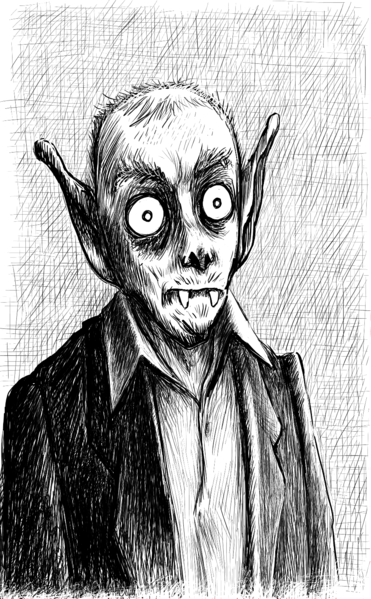
Dazed looking fellow with fangs
This outstanding cartoon is by JNL and is freely available under a Copyleft free art license

So, after realizing that yes, even though I can walk more than 2 miles, I *still* have excercise intolerance… I decided to look it up and learn more about it.

Further inquiry

You know me: I like primary sources. Doesn’t mean I always understand them, but I can usually glean the right vocabulary from primary science and improve my searches from there.

What a 1 hour scroll through the National Library of Medicine turned up today is that excercise intolerance is usually related to specific kinds of heart failure (already ruled out), certain profound lung diseases (definitely not), certain complications of diabetes (nope, thank goodness), and mitochondrial illnesses usually due to genetic variations that leave them struggling (definitely something I’ll check again, in light of this new info. I’ve got those geneticgenie.org results somewhere…) It can also go with POTS, postural orthostatic tachycardia, which I have a variable case of.

So what is excercise intolerance?

As I understand it currently, excercise intolerance means that, instead of excercise building muscle and oxygen-carrying capacity, exercise chews up tissues and reduces oxygen-carrying capacity.

Much like what happens when the vampires have been at ya.

Edvard Munch’s colorful take on vampiric prey, massively stylish as ever.

It’s very uncommon in the general population, and many people think they know better than to “believe in” it.

No wonder. It’s completely counterintuitive! How can excercise possibly make you weaker, sicker, and more broken-down?

Because some of us are just that lucky. Or something.

That which doesn’t kill me…

Makes me seem weirder and even harder to relate to.

It also generates inflammatory crap much faster than the impaired body can clean it out, which means more pain, more limited range of motion, and longer recovery time.

Yep, it’s fun to have! XD

It used to be that, once I broke the 2-mile mark, the only symptom I’d get after too much excercise was simply feeling like I’d had too much excercise, and a couple of Advil and a couple of good night’s sleep would take care of it. There *was* such a thing as “no more excercise intolerance”, and it was lovely.

I didn’t realize there were also such wide degrees of excercise intolerance. *This* doesn’t feel like I just did too much exercise and all I need is a little time. This feels like I’ve had an inflammatory surge, a mast cell activation episode, like my bones are charring gently, and like everything is about 10 times harder.

Now I know: Excercise intolerance can keep up! (Foul expletives mumbled under the breath.)

In the interests of data collection (and getting physician attention), I’ve pulled out my pulse oximeter and will check my oxygenation and pulse rate before, during, and after my walks.

Data! Yummy data! Nom nom nom nom. It’s not a cure, but it might help in the longer run. — Walk. The longer walk, haha.


First aid kit – homeopathic side

I’d like to eschew certain arguments altogether. This is not about dissing or justifying one approach over others. Every one of us has to figure out what works for our own individual selves. Anybody who feels they have the right or duty to argue otherwise, please read the last 3 paragraphs first. Thank you!

My homeopathic first aid kit

I used to keep just Arnica montana and Symphytum officinale around. As an old trauma nurse & athletic over-doer, dealing with sprains, bruises, and occasional bone bruises & minor fractures was the main point, and these two remedies are outstanding.

Then Zicam became over-the-counter shortly after Oscillococcinum hit the market during flu season, followed a year or two later by the blend Cold Calm, and winters got a lot less snurgee. So that was another win. It was interesting to finally care whether a virus came on fast or slow, because until then, it didn’t matter, because I was in for 10 to 14 days of aching yukiness either way. (Generally speaking, if it hits fast, it’s flu; if it comes on over a day or three, it’s a cold.)

It was good to be young! And healthier! XD

The current cabinet

Now I’ve got a lot more to deal with, including lower and fewer possibilities for meds, herbs, and food. Homeopathics are taking up more of my “treatment options” space as other things fall away and conventional therapeutics have less to do for me.

Here’s my current lineup:

Pain

Body pain: Arnica, 6c or 30c, or both starting with 30c and going down.

Bone pain*: still evolving this solution. Currently isolating effects of Symphytum o.(absolutely brilliant for previous fractures and bone aches in early CRPS) vs. Bryonia (commonly used for my type of bone pain) vs. Calcarea flourica (helped with aching bones 15 years ago, on occasions when Symphytum wasn’t helpful.)

Muscle cramps and spasms: Magnesium phosphorica, known as Mag phos by its many fans, 6c for pre-spasm tension or sudden onset, 30c for deeper or more persistent cramping.

Labeled as a remedy for menstrual cramps, I have found it to be outstanding for my skeletal muscles and intestinal muscles as well — as long as:

  • My serum magnesium is ok (I supplement with chelated magnesium twice a week, since my body plows through this electrolyte at a consistent rate);
  • My other electrolytes are ok, including calcium, and my vitamin D is high enough to regulate the calcium properly;
  • My hydration is adequate. If I can’t experience thirst normally, I blink and feel for discomfort in my eyelids, or pinch up the skin on the back of my hand and give it 1/10 of a second to return to flat. (I need to stay in the upper level of hydration for the sale of my brain & spine — as well as my kidneys, which work hard to deal with my meds.)

Note of caution: Muscle spasms are not necessarily a simple fix. Start with the simple thing and work out what your underlying tendencies are: dehydration is usually easy to sort out, and you’ll know if it helps within a day; magnesium/calcium/electrolyte levels need a simple blood test to discover; once you’ve got good info to work from, you’ll know if your next step is supplementation, medication, homeopathy, or a call to your doctor.

So, please, start with getting good objective info so you know what your particular system is likely to need when your muscles cramp. There is definitely such a thing as too much dietary magnesium, so throwing magnesium chelates at spasms can make things considerably worse if that’s not the underlying problem!

G.I.

Colic & abdominal cramps: Mag phos for the win! See above.

Constipation: As I’ve recently been reminded… first, call your pharmacist, and ask about your med side effects. Sigh, so easy to do, so hard to remember to do.

Homeopathically, Sepia and Alumina took turns being helpful, but didn’t complete the turnaround I needed.

In the end, getting off a key med, while also minimizing histamine release in my gut, while also supporting digestion with a prescribed suite of digestive enzymes and some Chinese herbs, while also eating tapioca with nothing in it but a bit of coconut sugar nearly every darned day for 6 weeks… turned that intransigent problem right around. Plus, Mag phos for the abdominal cramps.

This is a 5-star example of a multi-front approach: med revision, diet revision, toxicity reduction, and a combination of supportive measures: prescription, dietary, herbal, and homeopathic.

Life, at this end, isn’t simple. Simple solutions often aren’t enough. That’s why I value the “multi-factor” approach: nothing works that well in isolation, so I often wind up getting everything possible to head in the desired direction.

Brain

“Heated” brain feeling & stormy sensory sensitivity: still best with herbal concentrated lemon balm, which is effective & reasonable. Good homeopathic fallbacks (for me) are Silicea or Kali phosphorica, depending on accompanying feeling of irritability (Silicea) or dullness (Kali phos.).

*Bone pain treatment note: The bone pain started up as Savella cleared my system. My bowels got back into gear over the same span of time. This week, I trialled a small dose (12.5 mg twice daily) of Savella to see what it did; in 2 days, the bone pain decreased by ~80% — and my bowels shut down at the same time, leaving me with the poor sleep, delayed recovery, body pain, and joint pain that comes with the inflammatory bloom that produces.

I might give it one more shot, but honestly, there was no other change involved and I hate torturing myself.

I’ve learned what it’s like to survive without a working gut,  and it’s too hard. The knock-on effects of pain, fog, and allergic activity is brutal.

So, my current personal project is to figure out another way to manage bone pain. It’s just awful, but a stalled gut is still worse.

Diet and nutrition has brought me a very long way forward, but at the moment, there’s not much more it can do. I’ve had a squeaky clean diet for years, but now it’s so carefully tuned it could probably hit high C. This may change, and if I have to do something else, I’ll figure it out when the time comes.

Pharmaceuticals have come a long, long way, especially these amazing mixed-SNRI neurotransmitter supporters. However, between my genetic tweaks affecting med assimilation and the natural effects of biochemistry, there isn’t an obvious way forward here, now that Savella has washed out for me.

Herbs are so built into my life that it’s a specific mental effort to think what else I could try here. Given that herbs A. Require frequent dosing and B. Do have side effects and I’m exhausted with side effects right now, that currently there’s nothing herbal I know of that I’m willing to try.

Homeopathics have a history of being more predictable, consistent, reliable, and safer for me than herbs and pharmaceuticals (though I owe my life to pharmaceuticals and am not dissing them, just facing another tough reality). There are several possibilities to explore, so that’s where the next step leads me.

Onward!

Felix the Cat with bag of tricks and scientist

Last 3 paragraphs

My own approach is absolutely comprehensive — pharmaceutical, nutritional, dietetic, physical, psychological, mental, herbal, artistic, behavioral, and energetic techniques all play a part, and there’s peer-reviewed science behind over 90% of what I do. Every single intervention gets tested on me — and assessed for benefit and drawbacks — before being incorporated, and gets retested at least yearly.

I’m a diligent empiricist; as I’m responsible for exactly 1 clinical case, that is the most rational approach. Empirical science is the only method of scientific inquiry which consistently considers the individual case.

Sarcastic Sister adds:

Anyone who sincerely & totally refutes the value of homeopathic remedies is welcome to borrow my body for a week or two & see what works for themselves; I’d be happy to borrow theirs while they figure it out.

New set of wheels

I walk everywhere I need to go. I finally tried the bus, and honestly, it could have been worse — but the base of my spine is still not prepared to put up with more than about a mile of that banging.

The problem with walking is that my legs are getting really good at “Burning Bones” — one of those trippy CRPS nerve games where it feels like the bones themselves are covered in & consisting of fire.

I used to wonder what burning bones were like and felt lucky for not having experienced it — and highly inclined to keep hammering massive doses of D3 to keep my blood levels in normal range. (D3 helps keep calcium in the bones & teeth, where it belongs, and prevents excess calcium from causing nerves to misbehave, among other things.)

Well, this clears *that* up! I know exactly what burning bone pain feels like now. But still, I’m well aware it could be so much worse: I just get little yellow flames, not big blue-based barn-burning flames. Those are definitely worse. I don’t know if I could keep walking through big blue flames.

Do I walk through the little yellow ones?

Go on, guess.

Shows woman flat on floor, with woozles coming out of her head
Creative Commons share-alike attribution license, credit livinganyway.com.

Carrying the bag I use as a purse adds a few pounds to the load on my legs, hips, and knees, and a bag or two of groceries adds about another 10-12, however carefully chosen they are for weight.

Plus, I’ve been slinging those from my shoulders — better than a backpack, which puts the stress right across the anterior nerve plexus for the shoulders, but — as we say about little yellow flames for bones — is, um, less than ideal.

I have tried every grocery cart conceived of in the last decade. The vibration on my hotwired palms is like hanging onto a working jackhammer covered in razorwire. (I don’t recommend doing that, however much you want to see what this is really like.)

I stared longingly at jogging strollers all year.

I designed my own grocery conveyance, priced the parts, and realized I had just designed a jogging stroller and it would cost about as much.

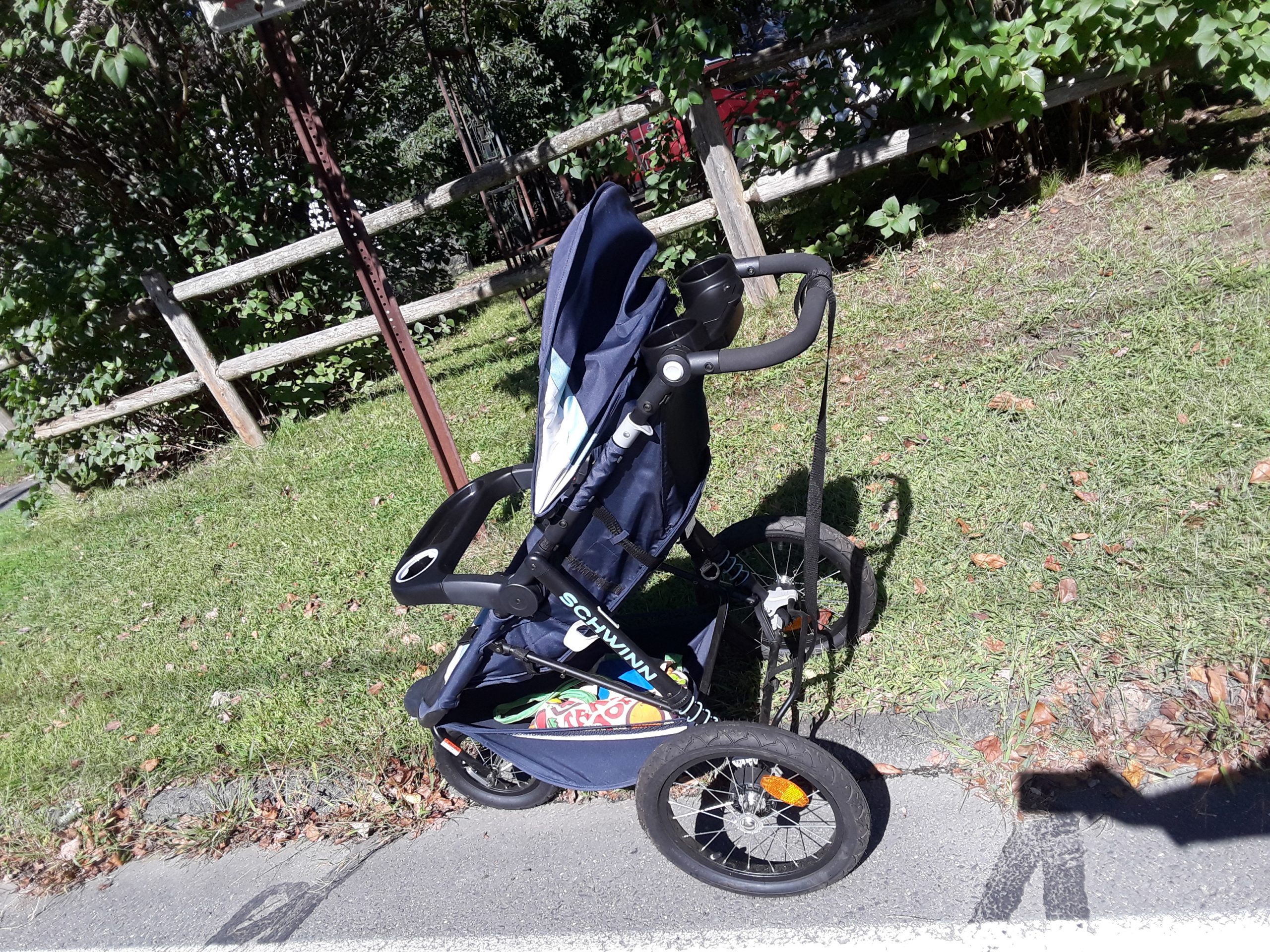
I haunted Craigslist and Freecycle for weeks, until an add for a Schwinn jogging stroller popped up.

Shows cupholder bracket affixed to handle of stroller

Is that a cushy push or what? ?

And, guess what, it has pockets! — I mean, cupholders! (Cupholders are definitely the pockets of non-clothing items, say I.)

For once, I kept myself from saying *just how much* this means to me and why, because who wants to hear sob stories, right? I handed over the very reasonable sum, thanked him 4 times but not nearly enough, and sailed away.

Even though my legs are starting up the burning bones awfully quick today, in every other respect I feel like I’m walking on air.

I can pick my own *groceries*! OMG!!! And *get them home* with minimal further damage! WOOHOOO!!

Life is good.

Thank goodness for that sweet family who let this go ❤, and for craigslist.org for linking our complementary needs.

Planning ahead

I’m getting an allergy panel in a month or so. This means I have to be off my antihistamine for 5 days before.

THAT means I have to start tapering off ~2 weeks ahead of time; 3 weeks would be safer, but I don’t see how to endure over 3.5 weeks total with that level of obnoxious symptomatology and brittle physical fragility. 

That said, I *really* want the data.

You might ask, “Why?” (Or possibly, depending on how familiar you are with the twisted satire that is my health record, “WhyTF?? Are you *crazy*??” As if you didn’t already have a definite opinion about *that*! ?) 

Well, here goes…

Flash back to 2013

Years ago, under the tutelage of a late & very lamented friend who Knew Mast Cell Stuff like I know the back of my hands, I finally (in 2013) did my empirical testing around whether mast cell & histamine activation-like signs & symptoms I was struggling with, would respond to treatment. 

Step 1: reducing & eliminating competing problems

I had already gotten excellent neurological & biofeedback training, which worked well for many things (Go, Pain Psychologist Dr Faye Weinstein! I got tremendous and lasting benefits from my work with her. Highly recommended. “Stabilize, stabilize, stabilize.”) While I had excellent results from the neuro stabilization, it didn’t make much difference to the allergies, a particular “flavor” of brain fog, food & digestion issues, or the usual allergy circus of itching facial orifices & random urticaria.

The histological issues persisted most obnoxiously. This was 9 years ago when the mast cell activation diagnoses were not as well developed, and at a time that, though I had access to an enormous pool of well trained doctors, I was already up to my hip-waders in the maximum number of appointments I was able to keep. 

What do you think? Pursuing testing and inquiry into a set of issues that were still widely considered to be a matter of hysteria? — For a middle-aged woman with pain diseases and 60 extra pounds of weight, do you think *that* would have been a good use of my limited time? 

Smh!

So, I went empirical on it.

Two methods of science: “empirical” and “scientific” method

Both methods are scientific, in that they require diligent examination & limiting of variables as well as testing, retesting, and recording results accurately. 

(But hey, that nomenclature isn’t confusing, right? <eyeroll>)

It boils down to this: 

Empirical method: what works in this case in particular? 

Scientific method: what’s generally likely to work in many cases?

The empirical method of science is brilliant on a case-by-case basis, there’s nothing better; but avoid making assumptions beyond that case. The scientific method of science depends on hundreds, ultimately thousands, of cases, and from all those together, it generates statistical probabilities about what’s *likely* to work under certain circumstances as a general rule. It’s much more widely applied, but explicitly *not*  individualized.

This is why, as someone dealing with multiple rare issues, I test everything ~3 times on myself before deciding if it’s a good idea for my particular situation.

Now the next section will make more sense.

Right med, right dose, right time

I tried several antihistamines to see which one helped me the most. 

Then I experimented with dosing to see how much it took to get me functional most of the time. 

Then I experimented further with once-daily dosing, or dividing the dose in two and taking it twice daily. It had better results (and no “oog” feeling) if I took it twice a day.

In the end, I wound up on one of the top 3 meds for mast cell/histamine issues. I also wound up at the common dose for those with a solid case of Mast Cell Activation Disorder. (The twice-daily dosing was my own special twist, but I’ve since learned it’s not that uncommon among “masties”, as people with mast cell dysfunctions refer to themselves.)

Without any further ado, my doctors added MCAD to my list of diagnoses.

(As with every med and supplement, I continued testing it every 6 months or so, backing off the dose and looking for the minimum effective dose, but stopped doing this because of … we’ll get to that.)

But, frankly, a differential diagnosis doesn’t yield enough info to change anything causative. If I can nail specific allergens — or culprits — and receive treatments that can actually reverse this ghastly crap, that would be *great*!

So, I really want the data.

Histamines & tendon problems

I stopped trying to cut down on the antihistamines a couple of years ago, because I couldn’t bear any more injuries that threatened my mobility.

“Mobility? Huh??” I hear you ask.

One of the things the antihistamine helped with was tissue-tearing. I didn’t expect that, but was delighted not to be twisting my ankles on uneven ground or sudden jumps away from traffic, then having to crawl or scoot home because hopping on 1 foot when your tendons don’t work is a terrible idea.

As I thought about it, it made sense though…

Histology review:

Q: What happens when your histamines are active?

A: Among other things, inflammation in and around your cells.

Q: What happens when cells get inflamed?

A: Among other things, cell walls get weak and leaky.

Q: What happens when connective tissue cells get weak?

A: They tear more easily. 

Ah hah!

So, yeah, maybe MCAD could weaken my connective tissue after all — especially because, for one thing, I started out hyperflexible, which is a setup for these kinds of problems; and for another thing, the fibrosity of fibromyalgia has made my connective tissue more brittle & easier to tear.

Ducky! Another hat-trick! ??

Back to the testing

This is the test where they put a grid on your back and scratch or inject tiny amounts of different stuff into your skin. In about 20 minutes, whatever you’re going to react to should be a nice hot ruddy lump, technically a “wheal”. 

For this to happen, your body has to have nothing interfering with histamine reactions — in other words, no anti-histamines.

Since the antihistamine I wound up on has a long half-life, I have to be off it for 5 full days before testing.

Prepping for the test

Because going from full dose to no dose means I can barely get out of bed safely (see “Histamines & tendon problems” above), I have to taper down. I’ve done this before, usually to eke out my meds when my supply is running late. It’s familiar territory. 

Experience tells me that:

  • I have to taper at a rate of no more than 12.5% of my daily dose at a time.
  • I’m best off (in this terrible sitiation) stopping for 3 days at each new dose before the next step down.

This means that it would take 20 days to taper off to 0 (shorting the last step to 2 days instead of 3) *and then* 5 more days at 0.

Doing this with tissues crying, “Go on — tear me!” And every bite of food, breath of air, bit of furniture, bump in the sidewalk, or tussock of grass all giggling in evil tones (so to speak), eager to hear my muffled yells.

Yeah. Tasteless spoofing aside, that’s not a great situation to spend 3.5 weeks in.

Then, of course, as soon as I can horse down my meds again, it’ll be several days before I qualify as human.

Then, about another 1 to 3 weeks before I get back up to baseline function.

My Halloween costume will require very little makeup for me to pass as a zombie, so that’s one bonus.

What a month-and-a-half to look forward to!

Is all this really necessary?

Well… I really, *really* want the data. If this is at all reversible, wouldn’t that be worth a few weeks of howl-worthy endurance?

Obviously, yes… but I don’t think I could keep at it for over a month. I’m good at enduring, but I’ve got hard limits.

I really, *really* want the data.

Managing towards the best possible outcome 

My doc prescribed me some prednisone to take in order to avoid winding up in the hospital over this. I look at the results of my last round of prednisone — the change in my face and the truly shocking stretch marks (which made my dermatologists blanch and leap back, no kidding) — and I consider this truly last-ditch stuff. Beats nothing, I guess. It might keep me out of our ER.

There are dietary issues to consider. (What follows is a brain-dump from my years of querying doctors and reading, as well as my empirical food testing.)

Food matters: boost the signal

I know that the system being tested (mine) can respond more truthfully if it’s familiar with the molecule being tested. For instance, I haven’t eaten gluten in years, so this test might possibly come up negative to that. 

Doesn’t mean that, the next time I walk past a bakery without my mask on, I won’t get an itchy swollen throat and everything won’t turn white for a bit, it just means my body had enough of a break to stand down, and will need to re-arm.

With that in mind, I might grab a couple of saltines before I go in. If I could calm the gluten circus enough to just be safer walking around, that would be awesome.

Food matters: reduce the noise

I’m getting off the aged and fermented food, because that makes such a dramatic difference in my pain and swelling. This includes seafood and beef and anything packaged (look up what creates histamine in food).

Despite that, I’m making exceptions for things which I want to make sure my body has experienced in the month before testing — nuts, bananas, stone fruit, fish, grains in addition to glutinous ones, even beans — although that’ll be a period of gastroparesis hell, but this system must not be “bean-naïve” for the test.

Because I really, *really*, REALLY want the data. This is the kind of info that could change the course of my life for the better. 

For that, I can get through some serious struggle. 

Ramping down steeper

I’m going to go down 12.5% of my dose every 2 days, instead of 3. This will shorten the ramp-time to 2 weeks. Recovery might be a little longer, but I can maintain attention on what I’m doing this for, for that length of time. 

Until then, I’ve got a lot of cooking to do and a freezer to stuff with things that 

  1. Won’t hurt me more than absolutely necessary, and
  2. Will include exactly what I think I need to be exposed to, to maximize the value of the test. 

If you’re in a similar situation, remember that your mileage may vary. Ask your own docs, and then ask their nurses the same questions.

The differences in the answers tend to reflect the wholism that nurses work with, a nitty-gritty pragmatism that rounds out the more optimistic notional-ness that doctors can succumb to. Both views matter.

For only the second time in my life, I might do actual menu planning. I’m usually more of a “what’s fresh? What’s cheap? What’s safe? What’s appealing? Throw it in the pan” kind of cook, but that takes brain. I’d like to insulate myself from a potentially very brain-free near future and reduce my frustration over the coming month. Having easy-to-grab, safely frozen meals sounds fabulous.

Here’s my plan…

The grocery order just arrived, so if you’ll excuse me…

The freedom of masking

Two years ago, if I were walking down a sidewalk next to trucks belching diesel, I had to breathe shallowly and mentally plan on the nausea and neuro-huckery that was likely to follow.

When I went shopping at Big Y — well, I couldn’t, because the massive bakery displays at both ends of the store could wipe me out in a heartbeat. 

I was sadly giving up my Goodwill/Salvation Army pillaging habits because the unquenchable stench they saturate the stuff with made me so sick it was harder and harder just to walk in there, and my de-stinking magic stopped working on fabrics. Sad sniffle… I used to get half my furniture from there, and most of my better clothes.… 

I considered getting surgical masks, but I already knew how many leery looks & disparaging comments that public mask-wearing used to provoke. I try to avoid getting leery looks, because people are a lot less likely to be pleasant or helpful towards someone they’re leaning away from.

Then The Modern Pandemic hit, and everything changed.

Nearly two heartbreaking and traumatic years later, the message that this is the new reality is starting to take hold; testing and explanations of what makes a mask effective is available from legitimate labs and reputable sources; and I’ve made myself 2 custom-fitted, Isy-safe, well-made masks that are easy to clean and dry well overnight. 

Colorful though they are, they just don’t stand out any more! Masks are part of the New Normal, and generally provoke smiles and friendliness instead of the opposite.

So, on today’s walk, I wound up surrounded by fuming traffic — and put my mask on. No problem. Then I went shopping at Big Y and went from end to end of the store — with my mask on. No problem. I was too tired to go to Goodwill today, but when I do go there, I put my mask on — and I don’t smell a thing until I get everything well outside and take my mask off. (I can still get the smell off of hard-surfaced things.)

Mind you, it’s not like my own breath is a bucket of roses (!) — but it still smells way, way better than diesel, and it doesn’t make me sick! 

It took awhile to realize it, but masks really set me free and make my *whole* world (not just the pandemic aspect) much, much safer and more comfortable to be in.


Wholeness is order

Many people have figured out before me that approaching life coherently, as a complex creature with inward & outward lives, as physical and energetic beings at once, and so on, is probably a really good idea.

I’ve spent years describing myself as a “text-based life form”, and “better in print than in person.” That was useful for a time; most of us need something to cling to, to carry us through, when we feel terribly broken.

This summer was transformative. I started it wholly committed to making my legacy; I’ve come out of it realizing that I’m very much alive, and that, if I’m going to get anything done, it has to be as a whole person — minding my relationships with those who can relate to me, minding my physical care as a loving duty rather than an intransigent puzzle, tending my crafts as sweetly as I need to be tending my recuperation, and so on.

Somehow, I’m absolutely certain that only in this way — and not in the head-first, head-down policy of my old working self — only in this way can I make meaningful progress.

Of course, that means it’ll take longer up front. But, as an old mariner, I’m well aware that prep is between 80 and 90% of the final result — so you take the time and do the prep, if you want good results.

I happily think of star nurseries (thank you, NASA , for this image), which look like glorious messes — but, from these, galaxies are born.

Logical? Well, not in any linear sense. Organically it works, though.


When momentum uses inertia

Wizard, with hat and staff, standing next to text of Tolkien quote.That last post, about acknowledging the shimmering sense of mortality I’ve lived with for nearly a year? Well, I kept meaning to post an update, but I’ve been having too much fun making progress elsewhere, and simply dropped the ball. I often think, “oh, I should post that on my blog,” and then – pain diseases being what they are – when I shift context to hop online, I’ve forgotten what it was and quickly get sucked into something else.

At the risk of using terms improperly, I found myself explaining this normality of painee existence as a sort of “acquired ADD.” As it happens, our brains get changed in the same places and pathways that ADD brains live in, so that our scans look amazingly similar. Those ADD-like symptoms are definitely not imaginary. I have found myself using adaptations very much like those I’ve read about in some of the terrific books on ADD. I recommend reading up on it. There’s a ton of helpful material on how to manage with and work around these attention issues.

I miss blogging. So, I hope to automate (or at least simplify) moving information here from social media. There are still interesting questions to answer, and I think that useful info we generate in pain groups should find its way to a more stable, searchable medium.

I have been sinking into this life, having acknowledged that inward message about its likely brevity. I’ve been here a year, and love my little flat more and more each day. I’ve been rearranging, creating more usable space within the same square footage. It’s delightful!

I keep the picture that reminds me of those who made this happen over the decorative fireplace, where it looks wonderful, and send grateful thoughts to its source/s – even when reaching out in real life only creates confusion and misunderstanding. We humans generally, and painees particularly, sometimes realize we don’t control how others receive us, but we can steer our own thoughts. So, I maintain this practice of gratitude, because that’s who I am and always have been, and wait for better times.

More health problems? Certainly! I will write about the gastrointestinal circus another time. I’m currently working on digesting a drink of water, and I’d prefer not to think about it until that’s done. This is the big, hairy, stinking follow-up to the first sign of trouble nearly 2 decades ago, which I wrote about (with disgusting toilet humor, inevitably) over at the post Intestinal Fortitude.

Apart from one misunderstanding and that additional body system, this life is amazing. Bit by bit, I’ve been getting a broader pool of professional and personal help and support. Bit by bit, I’ve been coming up with adaptations that bring more art, craft, and productive time into my weeks, although I have to be careful (of course) about changing tasks and changing position and managing time better than I really want to. For instance: “No,” I had to myself yesterday evening; “you don’t get to finish that row of adaptive crochet! I don’t care how pretty this is, or how soft the yarn. These helpful tools only improve my function, they don’t correct the problem! Put. The yarn. Down. Thank you.  Now go do something else.”

So I did.

And then I treated my right forearm with everything in my toolkit. And then I made myself promise not to pick up those tools for at least two more days, because that’s what it takes to recover when I’m forgetful enough to do crochet on a couple of consecutive days. Change those tasks! Figuring out a crafty solution is not as important as protecting tomorrow’s ability. Or even tonight’s. I can use myself hard, but I’m not allowed to use myself up. I don’t count on a ton of recovery time.

I’m back to using dictation software, in order to make better use of my arm time. The stylistic difference is clear to me, but it probably doesn’t matter. This is a good compromise to make, although it’s not necessarily an easy one. Dictation is a strange, slow way of speaking, and it forces me to think in chunks rather than in thoughts and words. But hey, it works!

Times are changing. Whether or not the current American president behaves any better, whether or not the next American president has the moral courage for fundamental changes, whatever, times are changing. My own possibilities are opening up, and I’m not holding back. I didn’t even know I was, but boy, things have changed since I stopped trying to eke everything out! I’ve got things to do, and I’m not waiting any longer to do them.

If I were more self-conscious, I’d throw in a bumper sticker-appropriate remark here. I’m out of ideas. I’ve got other things to do now. Maybe next time. Maybe. 🙂

Take care of yourselves. When you can’t, take care of each other. When you can’t do that, take care of your world. It helps.

Wizard, with hat and staff, standing next to text of Tolkien quote.

Sizing the Covid-19 problem, for real

Like many, I’ve been watching the extraordinary infinity-ring circus of Covid-19 with rising confusion.

Old amber-screen lettering showing *TILT* like on old pinball machines

I hate being that confused.

So, I thought about how to cut to the chase. I investigated mortality figures, looking for clarity on the competing narratives about the actual danger posed by Covid-19. (This is aside from the epidemiological information, which is hard work for me and possibly beyond a lot of people. Look into attack rate, latency, and lag if you want to know more about the reasons for its spreadability.)

This boils it down to one simple, definitive marker:

How many die? Because that’s the point.
Lead-grey statue of dark angels swooping down from the sky

Comparing mortality numbers

This is all out of a U.S. population (as of 2019) of 328,200,000.

Annual US death rates from various causes in 2019 (or 2018):

36,560 … Highway fatalities (2018.)
 5,250 … Fatal workplace injuries (2018.)
48,236 … Adverse medical events ending in death (including surgical problems, allergic responses, medical devices, prescription errors, and fatal drug overdoses.)☆
61,200 … Seasonal flu, 2018-2019 season.
15,820 … Those with HIV, of all known causes (2018.)
Fatalities due to Covid-19 in the US in 2020, only up to Sept 1:
About 180,000

Expected to exceed 200,000 in 2 more weeks.

???

Questioning the data

If this number were as low as 2X the nearest competitors, I’d have dug into the question of just how bad the Covid-19 reportage is.

(Hint: lots of problems, some pushing the numbers up, others pushing the numbers down.)

It’s nearly FOUR TIMES higher than the nearest causes of death. Even I can’t pick a big enough hole in that number to change the outlook!

Bottom line

This final figure is inescapably bigger — in only 8-9 months! — than any other major/relevant cause of mortality in an entire year in the U.S.

So… death by Covid-19 is a real problem. A huge problem.

It’s a real, huge, problem.

Please protect yourself & others: don’t share air or germs.

Self-protection skills

For my fellow chronics, don’t be too worried. Surviving this is a 3-part skill, and you’ve mastered much worse. You can do this.

1. Dilute your air. ?
2. Protect your airway. ?
3. Wash wash wash. ?

Here’s what that means:

1. ? Get as much air as possible around you. Avoid recirculated air. Open windows in closed buildings. Dilute, dilute, dilute your air. Even a little! (Work within your constraints.)

2. ? Cover all your breathing apparatus with something that meets these practical criteria for masks that protect *you* as well as others:
A. Seals: doesn’t gust air out the edges and passes the “doesn’t fog glasses” test.
B. Protects: has enough material/filtration that you can’t see any light specks peeking through, when you hold it up to the light.
C. Doesn’t vent. (Apart from exposing others, venting can also create weird ripples for super-small viruses to ride back in on. Look up “Venturi effect”.)

After reading mask tests until my eyes bubbled, I agree with these guidelines. Plus, no codes to remember!

3. ? Wash, wash, wash your paws & whatever you touch or touch with. Alcohol will do in between times.

Dealing with questionable cleaners

After two painful toxic exposures, I learned that 40 proof in a spritz bottle smells better, is easier & potentially cheaper than the gooey store stuff, and is far safer than methylated or isopropyl.

Alcohol-free folks: look into spritzing 3% hydrogen peroxide, which kills viruses faster than Clorox (watch your clothes, it can bleach too), proven essential oil blends, or even soapy wipes. Read labels for virus killing info.

Summary

THIS IS NOT IMAGINARY.

The death toll from Covid-19 is horrific — no matter how small the comparative R’s are.

It really IS a huge problem, still unfolding.

It’s appropriate to take it very seriously — and intelligently.

You’re not helpless. You really can protect yourself and your loved ones with that simple 3-part skill set:

1. ? Dilute your air.
2. ? Protect your airway.
3. ? Wash wash wash.

Follow these guidelines for the best chance of staying well.

Reflect: “adequate protection” means masks AND 6 feet (“safer six”.) Both masks and “safer six.” Look around and see where that does or doesn’t happen.

Tip: Most eateries do takeout now, and parks are open for meeting in ????.

We all have horrible choices ahead. Hope it helps to have a little coherent, practical, straightforward info. ?‍⚕️?‍??‍?

Note on, & list of, sources

Sources are all primary data collection organizations within the federal government, which has access to all the original info streams:

– U.S. Census Bureau
– U.S. Bureau of Labor Statistics
– Bureau of Transportation Statistics (a dept. of U.S. DOT)
– The Joint Commission (of AHQS)
– DHHS-NPDB (National Practitioner Data Bank)
– HIV.gov
– CDC.gov
– EPA.gov

☆A statement along the lines of “prescription drug mismanagement results in >2M injuries and 100,000 deaths annually” is cut & pasted into many articles, some going back to 2005, despite the advances in monitoring and treatment in the past 15 years. Therefore, those figures are meaningless.

I wish politicians realized that made-up figures never improve the debate. They’re only bad for everyone’s blood pressure, at the very least.

Next step, stop!

Update on wifiddling…
I got an idiot-proof radiation meter. Wifi is in the microwave band of 2,500 GHz and the additional 5,000 GHz band, which are part of the radiofrequency band, abbreviated as RF.

Here’s the reading from upstairs’s wifi, beaming down to where I used to have my sofa:
TriField Meter showing RF reading of .029
Here’s the reading where I have the sofa now:
TriField Meter showing RF reading of .004
I found a couple other hottish spots, but I also found a sitting spot that registers nearly 0 in every direction (as does most of my bed) and that’s where I take tea and pills in the morning.

I really like having data. After finishing my last post, I thought I was going to have to spend $1500 at the very least for partial protection, and start at $2200 for the whole enchilada, and where the heck would I get that? (My savings are tied up in a messy little mobile home I can’t go anywhere near.) Instead, it turns out I just need to move the furniture a little, and stay back from the windows that look next door. MUCH cheaper!

It turns out I’m just shatteringly tired. I’ve been living with too much fear for too long. Fear uses up a lot of energy and neurochemicals. On top of the relentless pain signalling (which uses a lot of energy and neurochemicals) and the neurochemically-expensive and exhausting work of having to juggle the exponentially increased effort and decisions required by disability AND poverty (each of which uses a lot of energy and neurochemicals)… once I got a safe and sane chance to rest, it’s like aaaaall those energy bills are coming due at once.

… To clarify my relationship to an excess of rest, let me relate a work anecdote.

I was new to software. I was still used to the pace of nursing, which is inhuman and unforgiving. I said something about having completed 4 out of 5 of my tasks (which I didn’t realize I had another week to complete) but I hadn’t completed the 5th because, I said with chagrin, I was probably being a lazy cuss.

The entire room erupted in laughter. Me — lazy? What a joke!

After 20 years post-injury and still being upright, articulate, and seasonally functional (which takes a TON of relentless work) I’ve almost adjusted to the idea that I’m the opposite of lazy. What I can do, I will, as soon as I can do it safely and adequately. That’s just how my programming goes. Good thing, too, or I’d never have made it this far.

It turns out I’m just phenomenally tired right now, 99.98% of the time. I’ve begun to stop apologizing for it, because it’s clearly beyond me. It just is, and will continue to be until it’s over.

When I can, I will do more. I have absolutely no worries about that, because I know in my bones that I’m the opposite of lazy.

I just really need to rest. I didn’t know it was possible to be this weary. Of all I’ve read about profound idiopathic exhaustion, the only thing that consistently works with no further damage is to rest thoroughly enough and long enough. Plus maybe a bit of careful, inch-by-inch support with Chinese herbs, which I’m also starting.

Rest. What a concept.

Well, here I go…

Ready? Set?

Resting.

No wonder I can’t get up! Rad realities

After the ghastly fiascos of last year, imagine my overwhelming relief to finally — FINALLY! — find a clean, safe place to live, in one of my favorite towns in the world.

The past weeks of unbudging exhaustion — starting from roughly the time everyone in the building got back from their holiday vacations — I put down to my body going into a “deep recovery” mode after the astonishing stresses it survived. I knew neighbors had wifi, as most adults do in this country, and noticed I felt better in the sunny side of my bedroom — behind an enormous brick wall, as the bedroom is an addition built onto a century-old, balloon-built brick building — so I’ve been spending a lot of time sitting there, letting all that earthing happen between me and the wifi signals.

Today, more or less out of the blue, two or three neurons fizzed together and I realized there was something differently-familiar to this feeling of having had all the air let out of my tires and my batteries totally drained. There was a knot of yuk behind my xyphoid — right about where the vagal nerve comes through the diaphragm and shakes hands with the stomach on its way past — which has rarely gone away.

Following these clues — my neighbors getting back, the bitter exhaustion, the yuk behind my xyphoid — I pulled out my elderly-but-spry laptop and asked it about the wifi signals it can see.

Here is what it sees in the living room:
List of available wifi networks, several with 4 bars

Here is what it sees in the bedroom, behind the double layer of brick wall with a door in the middle:
List of available wifi connections, mostly 3 bars

That one bar of difference is definitely palpable, to me. Also, I know that one of my near neighbors has turned off their wifi right now (bless them!) because there’s sometimes another network on this list which has all 5 bars when it shows at all; it chases me right out of the living room because I can feel it like an incoming missile to my gut.

This exercise simply goes to prove my longtime suspicion that, indeed, wifi is the Un-Healer for me. I can’t get off the couch for long, simply because I’m being soaked in it all the time.

Give me a moment to get myself together, please. This is tough.

Detail of a Bosch painting. Whiskery demon holding and reaching for a misereable man.
Bosch knew.

It could be worse. I could be unsafe, breathing mold, AND being soaked in wifi.

Solutions

First, a key term:

Faraday cages are structures that use particle absorption, grounding, or deflection to create a radiation-free space inside. I’d expect to incorporate all three elements, for a more durable and predictable kind of protection.

Grounding

There are some low-tech, lower-cost things to try that can have the effect of minimizing my exposure to wifi signals:
– Grounded skin, that is, a grounding mat I keep my skin connected to, to carry away the signal before my body takes it up much. I haven’t had terrific results from these yet, but I may have gotten a bogus mat before. I’ll experiment with wire and foil before investing in anything better.

– Rad sinks (already in place), a mass of metal dense enough to act as its own ground — in my case, big heavy old-fashioned steel filing cabinets. I should really paint them thickly in matte black to get the best results (preventing signal-bounce), but it’s hard to think of a less useful work-setting for a colorist like me. I’ll keep thinking about it, though, because I’m pretty sure it could help.

After that, it gets a bit more iffy vs. more expensive.

Shielding

Make a Faraday-shielded pod I can pick up and move around, and sit in when I’m doing anything for long. Given the inexpensiveness and availability of pop-up structures, black felt yardage, and that shiny mylar stuff, I could cobble that together, probably with a zipped door and a couple of battery-powered computer fans. But dayum, would that be claustrophobic, gloomy, noisy, and a space-hogging eyesore! Also, it would render most furniture effectively unavailable for shielding time.

I’ve tried rad-blocking clothing. This poor challenged body needs a good few feet between my skin and shielding, or the feedback gets incredibly painful. Can you imagine that thing that microphones do with feedback, happening to your spine & everything connected to it? Yeah, that’d be cute by comparison to the experience of me wearing rad-blocking clothing for 5 minutes. So, rad-blocking clothing is not an option for me.

– Creating a shielded-fabric blockade around my bed, looking rather like a mosquito net but costing the equivalent in silver netting, which it often is. Silver is an excellent conductor. If properly grounded (always a consideration for a Faraday cage you want to use for more than an hour!) this can, at least, create a low-rad place to sleep that still has air flow — and room for the cat. It’s not the total radiation seal that a proper Faraday cage should be, but it’s a compromise that works well for many people. I can certainly tell if it needs to be better sealed for my purposes; boy howdy, is that clear to me now!

Shielding & grounding my whole space

Then there’s the costly, smelly-toxic, protracted option of having a minimum of 2 good coats of rad-blocking paint (at ~$200/quart, I’m guessing a total of 5 or 6 gallons for these high ceilings, plus the ghastly oil-based primer required), securely wired into the building ground at appropriate points by an electrician ($1k), with adequate layers of 3M UV-filter film ($?) cut to fit every single window ($hundreds for labor, because I can’t do that), the sashes of which will also have to be painted or filmed over… And do something to cover the gorgeous old maplewood floors to block rad bounce from the basement. That, given my abiding love and admiration of maple in every form, would be absolutely criminal.

So, that’s not going to happen.

Or, of course, there’s the prospect of moving again, to which my internal response is way out of the decibel range that blogs can carry. I have JUST gotten my hotwired system to stop leaping awake every hour or two, convinced I have to pack and move again. I really need not to move for a good while.

This is a great place in so many ways, and I really like being here right now. I aim to make it work.

I project that my solution, whatever it is, will be a compromise, like this home — so much going for it, but still missing crucial elements. I’ll have to come up with something that will protect me enough to heal while I’m here, since that’s the point.

First steps

I think the first thing to do is shield the bed. Like I said, not perfect, but it should improve my overnight recovery-time. The means to do that is readily available and I already know the better makers and materials-technology. I could probably get that up in a week.

After that, I’m thinking portable pod, big enough for a chair inside with a little writing desk. Might rig up a window or viewing port, using something reflective but not too dark.

Any engineers want to come play with these ideas and problem-solve here? 🙂