Releasing the gods within

Modern mythology (á la comic-book heroes & Harry Potter) make extraordinary powers something odd, often imposed on those who never asked for it or are forced into concealing it in order to survive.

I don’t have a lot of time for the victim mentality, however charmingly restated. (I love Harry Potter and X-Men but still take them in small doses.) And the idea that it’s abnormal to be super-anything is not congruent with my experience. I don’t know anyone who isn’t super-something.

Embracing the deep weirdness of reality and going from there seems much more effective — and realistic. Notions of normalcy are hopelessly entwined in history and place, sealed with the invisible glue of social fear.

In other words, normalcy is unstable and profoundly irrational, even as we’re desperate to hang onto and justify it.

Not very helpful for dealing with bodily meltdown, lasting pain, deep disruptions and the massive issues of powerlessness, poverty and loss that are shaking so many. It’s too easy to feel like a victim and a freak.

I’ve been delving into the mythology of the Titans, creator gods (like Gaia, Rhea, Ouranos, Kronus) who gave rise to the later — and nastier — Olympians (like Jupiter, Mars, Hera, and all that crowd.) They deal with devastating changes, massive loss, pain, betrayal, mutilation, everything we face — but not for one minute do they imagine that they are ordinary, held to small standards, ineffective or meaningless.

They move and think and act and feel as if it mattered, because it does; they are born to their extraordinariness and they own it, warts and all.

I want to reframe the stories we tell ourselves so that we start out being extraordinary — not by accident or as oddities, but by right. Then the overwhelming tasks we face become merely heinously difficult, not completely beyond us.

We need not waste energy trying to conceal how much we can really bring to bear. We have better things to do.

Define stability

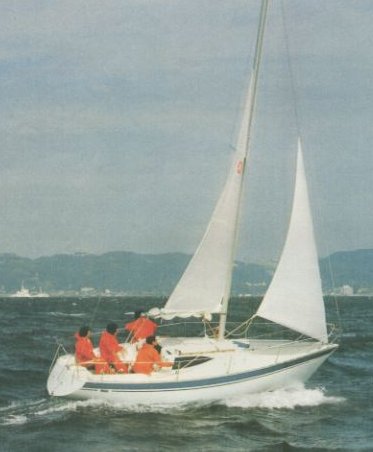
I live on a boat. Not a houseboat, a sailboat. It’s 29 feet long, 9’4″ at the widest point (outside measurement), and has overhead clearance of just barely 6′ in the main cabin.

Since I’m less than 9′ wide and 6′ tall, this works for me.

A small boat is an unstable surface, shifting with every step and wiggle. You keep your balance by toning your abdominal muscles – as soon as you tighten your midsection, the wobbly feeling disappears, and even if the boat’s surface is 30 degrees from horizontal, you can still keep your feet under you.

I have the strongest core of anyone I know who doesn’t either live on a small boat or teach Iyengar yoga, because that’s just how it works.

A friend of mine moved away and couldn’t get rid of his even smaller boat (25′ with rather less overhead clearance), so he sold it to me cheap. The main difference between his and mine is that the smaller boat has a larger engine and a thicker hull. It was designed to sail across the Pacific.

Now I have two boats. (That’s COMMODORE Idiot, thank you very much.)

For various reasons, it’s time to leave the Bay Area. I’ll be returning part-time to rural Massachusetts, but I can’t hack the cold season. It would be far cheaper and less painful to gnaw bits off me with a blunt and rusty saw. So I have to come up with some way to live and somewhere to be during the off-season.

Did I mention that I have a boat? … In fact, two?

I’m discussing a boat-partnership with a friend of mine who is capable of the work, but hasn’t found out if he really likes it yet. We’re going to work on the boats this winter, getting them ready to sell; in the fullness of time, we’ll know if we’re cashing them in for an upgrade to sail towards the Equator in, or flogging them and splitting the money then going our separate ways.

The second option is easy, sensible, and well within my expectations and experience of life. Our friendship could easily continue intact.

The first is not necessarily any of those things. But the long-term benefit of it is that it would probably give me a second home to go to, somewhere warmer, with the comfort of a friendly face to greet me.

Some think that coming away with a sack of cash is more like stability. Having money reassures me in a way known only to those who’ve done without. It feels solid.

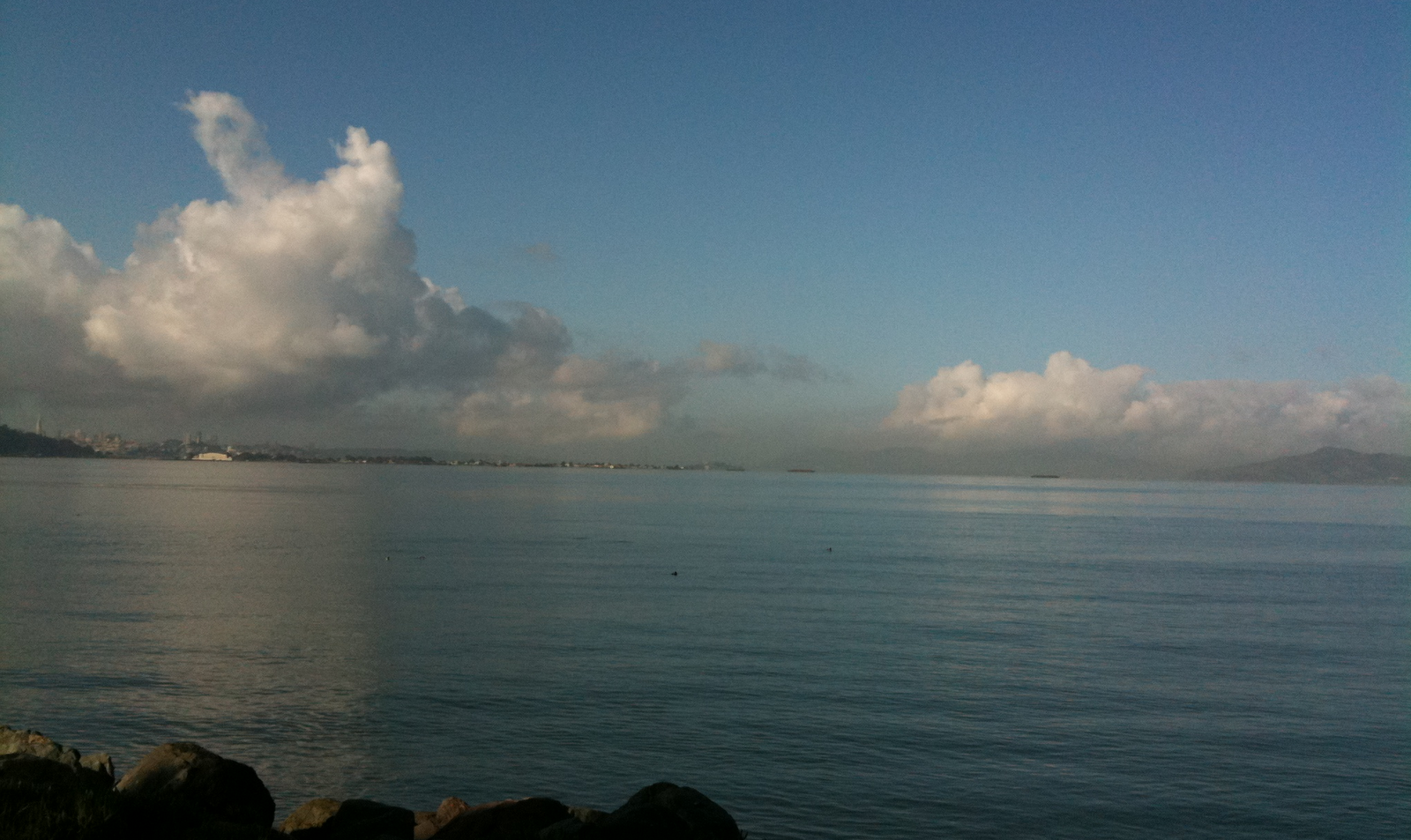
But what’s the value of solidity? I’m used to ground that moves under my feet. Snug up your core, and it’s easy to handle. And there’s nothing like casting off and taking off, nothing over you but open sky, and your own home flying through the water with such poise that it makes even the cormorants faint with envy.

[IMG cormorant superflock on my birthday sail]

Stability might mean solidity. Or it could mean being able to balance different forces well. Which of these sounds more interesting? Even – or perhaps especially – when you aim to make each day as sparkly and intriguing as a handful of jewels?

[Just wait till I get the pictures up :)]

Pain Manifesto

This came out of cold chronic CRPS type 1, a debilitating condition of intractable chronic pain, nervous system disruption, and multi-system dysregulation — destroying the body’s ability to manage heat/cold, blood sugar, immune defense, circulation, sensation, bone density, movement, vision, digestion, heart function, and ultimately survival.

“Standard” treatments don’t work well for me; moreover, they involve invasive procedures too brutal to tolerate and medications I’m either outright allergic to, or that impair me so profoundly I can no longer function. At all.

So I took myself off my meds, thought things over, and came to the following conclusions.

MY CHRONIC PAIN MANIFESTO

Yes, it hurts.
It’s going to anyway.

So should I hoard my days
And fast from life?
Comfort myself with poisons,
Blister-packed and FDA approved?

Some think it would be best all ’round.
I’d cure them if I could (heh!)
But I’m too tired for
Yet another pointless struggle.

The sunlight pours through trees like prosecco
And reminds me what it means to live:

Voices warm with love, the
Mouth-smack of good food,
The hug of hills and the
Rough snuggles of the sea.

Hoard my days? I’ll spend each one
Like it’s stuffed with jewels
Pouring through my hands like a miser’s dream.

Feast on this:
The cost of life is much the same.
The difference lies in how you spend it.

Considering the end: a new beginning

Mortality is tricky. We’re all going to go sometime, but we are hardwired to avoid the very thought of death. And so we should be.

However, when my loved ones die, my life (so far) continues – though significantly changed. Death has ripple effects on the living. This is why we have wills, wakes, and difficult conversations with the elderly and infirm.

My dad was a financial planner when he died. Here I am, 45, with a horrible condition and a little bit of property… As a financial planner’s daughter, I know perfectly well that the responsible thing to do is sit down and make a will, living will, and any other terminal documents I need. So I’ve started that process.

The old man would be proud!

Naturally, the first thing people ask is, in sweetly worried tones, “Are you okay?”

Having begun this process, I’m much better. It reassures me to know that certain important things will be said, certain horrible things will be avoided, and — though there’s no getting around the fact that bereavement sucks — there will be more love and comfort in those ripples than there would be otherwise.

It also makes me think in terms beyond myself. Legislation around CRPS is almost nonexistent, because people don’t think of it as terminal. However, as I remarked in my bio-blog, the diseases it causes most certainly are.

Sound familiar? Anyone here remember the health care terminology changes in the ’90s? (Read the bio-blog for more hints.)

I can do something very important with my death (hopefully many years off) -– I can make sure it’s properly attributed. No disease without a body count is ever taken seriously, and it’s time to start counting bodies with this horrible disease.

Personally, I have been struggling with a panicky fear of mortality because of this disease: each time I have a flareup, my body is never quite the same again; each time I have a lasting attack of the stupids, I have no idea if I will get my brain back; my heart is becoming more irregular. Barring a miracle or an accident, I’m facing a rotten time. With this disease, I look at the end, and all I can do is scream. I hope I have hidden it well!

However, the thought of this final gift — proper attribution, a ripple of awareness, the hope of better care for my compatriots — this tiny thing, this little spark, has had a tremendous effect: I feel the force of my life again.

It’s true: when you’re skirting paradox, you’re close to the naked truth.

Contemplating the end with wide-open eyes, returns my thoughts to getting more juice out of life. There’s a lot of it left, all things considered. My end will not be in vain, and with that in mind, the time until then seems much more promising.

Links:
Bioblog about myelin & attribution
“Nothing you do is in vain”

A gift to share

I had the pleasure and privilege of speaking with Dr. Adams, who (among other things) teaches clinical at UCSF Medical School. He provided me with a brilliant overview of the recent history of public health.

“Remember [the federally mandated public health targets called] Healthy People 2000 and Healthy People 2010? We missed those goals by miles. We don’t even _have_ a target program now. The next one could just be: Breathe. And I’m not too sure we could even hit that!”

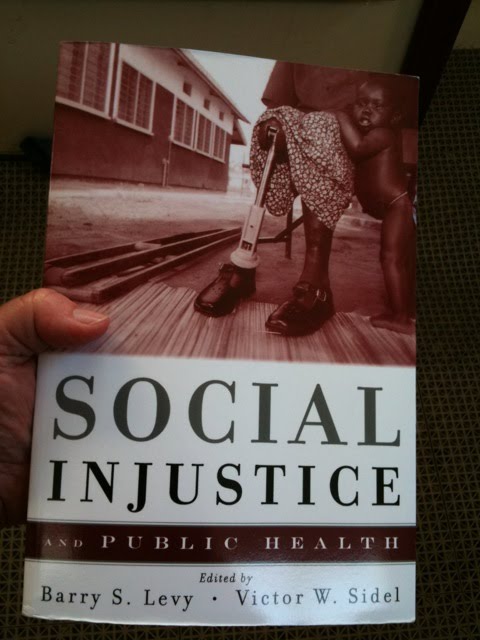
He kept me spellbound for half an hour. I don’t think I got a word in edgeways, but he must have liked the quality of my listening, because he gave me this book off his shelf as a gift:

He said, “Be calm when you read it. Sit down, breathe, and take it easy.” Caveat emptor.

This doctor uses the (numerous!) expensive letters after his name for something besides paying the mortgage … He and his posse sent a copy of this book to President Obama, with a cover letter explaining the devastating consequences of a profit-driven health care system. 

They heard back from a medical advisor: the President put the book in his Presidential Library, but the advisor had to state that the for-profit industries had their influence so well laid in that, if the President breathed a word about single-payor care, it had been made clear to the White House that he would be abandoned by both sides of the aisle.

Abandoned. Completely. For standing up for the American people. The same American people who let those pikers into Capitol Hill in the first place.

You’ve been bought & sold. We all have.  Weren’t you looking? I’m not sure I was. 

The industries speak for us because we haven’t spoken up enough for ourselves. Politicians are nervous, ego-driven creatures desperate for a good image, and we’ve let the moonshiners polish their images — and their apples — while we bitch about the rent. 

The rent matters. Lots. Sadly, signing Internet petitions does not. 

Is it too late?

Well, you’re still breathing, aren’t you? So am I. Emigrated yet? Me neither. Guess it’s not too late, then. 

Be heard, unfiltered. Call. Fax. Write. Put a stamp on it. Letters matter. Phone calls matter. These represent a big hurdle in people’s minds, and politicians know it. They weight them accordingly. 
(http://www.usa.gov/usa/Contact/Elected)

Paper, three sentences, stamp and envelope are not really that hard to do … just slightly strange to think about. Try it & you’ll see what I mean. 
(http://www.usa.gov/usa/Contact/Elected)

If you have expensive letters after your name, this is an excellent way to get more mileage out of them. Your words are weighted more heavily still. 
(http://www.usa.gov/usa/Contact/Elected)

Let your politicians feel insecure about their policies, where they don’t serve you or those you care about. Let them feel watched.  Let them get nervous and worry about their hair; it means they’re procrastinating about changing their minds, even as their minds are changing. 
(http://www.usa.gov/usa/Contact/Elected)

Call. Write. Use stamps. Fax. Be seen. Be heard. Vote. And monitor voting. 

It’s surprisingly little trouble after all. 
http://www.usa.gov/usa/Contact/Elected

To find your reps and congress-critters, choose the category and plug in your zip code here: 
http://www.usa.gov/usa/Contact/Elected

Fair Share Challenge: what taxes do for me

This budget horror-show has given us a lot to think about. The role of taxes in our country is probably the biggest, sorest issue of them all right now.
“Why should we pay taxes? That money is ours – we earned it!”I heard this from a member of the armed services who’s quite intelligent.   
Out of respect and consideration for my impassioned, but perhaps distracted, old friend, I wanted to find a non-partisan, preferably non-political way to discuss the point of taxation. So let’s simply see how that money gets used in real life.
Everything in bold-face type is heavily subsidized or completely funded by government money – local or federal, for better or worse. Do any of these tax-funded things affect you?
I take pain medicine which was funded by government grants to develop. My treatment was developed by government grantees. It keeps me alive and functional, so I can write things like this. Is that a good use of taxpayer dollars (printed at the Mint and monitored at the Federal Reserve)?
Read on and let’s all decide.
My nephews go to school by bus, when their mother can’t take them. She has just received her teaching credentials, so she will soon be working as a teacher. Their father, my brother, is a Marine. He runs a base where he supervises the training of National Reservists of the Army, Marines, and Air Force.  He recently visited a friend in the VA hospital.  All of his children were born in military hospitals.
Since they all run on a tight schedule, they use their car a lot. It uses gasoline; they used to have one that ran on diesel; the next one may be an electric hybrid. To cover short distances, they use local roads. To cover long distances, they use highways. They’re careful of road crews, and drive sensibly over bridges and through tunnels (I hope.) Me, I mostly use the bus and train.
My brother and his wife pull over to make room for fire trucks, police cars and ambulances. (Many ambulance systems have been privatized; however, they still work on the basis of city or county contracts that are funded by taxes.)
They eat on the healthy side of a normal American diet. With three growing boys in the house, they eat plenty of wheat and corn-based products, such as bread for sandwiches, cereal, pasta, and so on. They’re allowed occasional treats, including candy and soda sweetened with corn or cane sugar.  I bet they get their beef from the grocery store, so you know it was raised on soy and corn, and was probably fed antibiotics.  Those boys are pure dynamite anyway.
My dear old friend David used to work at the library. He still volunteers there. His pension keeps him in a simple but comfortable style of life. He likes to attend church, though most of his real friends are out and about on the city sidewalks.  He keeps in touch with a friend who has been in the mental hospital, and their conversations help her stay on track.
When my Dad died suddenly, I attended support groups at the local Hospice.  I used to be a nurse, working in hospitals and home care.  In the ER we took care of prison inmates when they got hurt. 
I ran out of work at one point and wound up on food stamps and welfare.  I will never forget that they kept me alive until I could find work again.  Since then, I haven’t really minded paying my fair share of taxes.  
During the last election cycle, I saw an angry woman on TV waving a sign that read, “Get your government hands off my Medicare!”  I hope she understands things better now. 
This has given me a lot to think about.  
And, fellow bloggers, here’s an invitation/challenge: how much better can you write on this theme?  How much do you really know about government support for the things you use every single day that make your life do-able?  How does this pertain to your work, paycheck, interests, family – whatever really matters?
I’d love it if you’d share links here and let me know.

Beyond courage & compassion

Here is a link to an article I once would have found moving and relevant to my nursing practice:

Courage and Compassion

The central idea is that the writer is dealing with an Ivy Leaguer with early dementia, who does the usual things of declaring that it’s “not that bad” even as her mind shatters piecemeal. The writer is trying to figure out how to be a good therapist while trying not to panic at the thought that it could happen to her. She looks for her answer in Buddhism, which is not a bad start.

I wrote a response which seemed too long to go through the web page’s comment function. I thought it over, and decided to post these ideas here, since this is the quintessence of learning how to live with the unbearable.

For several reasons — including being wildly overmedicated on antidepressants — I’ve gone back and forth across this line of intellectual capacity and incoherence. Since my central nervous system is still compromised, I will inevitably go back across that line again, if I live long enough. (Sadly, science focuses on the pain of my condition rather than the impaired function. As far as I can tell, the scientific subculture in psychiatric medicine has absolutely no regard for intellectual capacity in its patients, considering intelligence disposable — when it’s mentioned at all.)

There is another reason why this writer’s patients tell themselves it’s not that bad. Like most of those with an acquired disability, they find that there is more to life than they imagined, and that functioning with an impairment in an aspect of life they once considered essential, has opened up their minds — and their hearts — to aspects of life they never realized they valued so much.

This newly-demented woman is still loved. Her survival is still assured — to the extent one can say that in this world. Even though she lived all those years depending so heavily on her intellectual capacity, there comes a time, when everything is swept away and every characteristic you thought defined your “self” is gone, when you realize that something is still standing there, asking the question, “Who — or what — am I?”

Our ideas of who we are, are, I suspect, an essential part of samsara, or the world of illusion. I know that, whatever happens to me, the answer to the question of identity is both eternally answered and perfectly unanswerable.

In the end, it may be that we find we don’t need those illusions. If I didn’t have to struggle to survive, if I had a spouse and children and insurance, functioning without my intellect would have been immeasurably easier. When I lose it again, I have no idea what I’m going to do. However, I have a pretty good idea which of my friends will be able to stay with me on that journey. The past few years have been enlightening in that respect.

Suffering is, by definition, a willful engagement in the anguish of life. I find that it soon loses its charm. Is it more useful to struggle with the engagement of my ego, or to turn my attention to what works — the love in my life, the warmth of the sun, the value of the moment, the puzzle of doing the very next task?

In front of a boat propped up on blacktop, a man holds a bubble wand with bubbles streaming away, lit up by sunlight.

Losing my mind was a stunning lesson in the fact that it’s not about my limited and ego-driven ideas of myself. It was a door to perceiving what really fills my world, what lies beyond my expectations and beyond my uniquely limited understanding. Through her work with these people, this writer may have the privilege of discovering that, without having to pay the savage price that most of us have to pay for that understanding.

She writes with desperate fear of facing this herself, but this opportunity could be the gift that insulates her from the very devastation she fears, even if it does happen.

We humans are driven to comfort as the sparks fly upward, but there are times when it makes sense to turn your back on present comfort to ensure your future safety. Her fear won’t ease until it’s dealt with, as this issue is part of her work.

As for me, it’s time to go meditate. I intend to weather my future well, regardless of how little intelligence I can bring to bear at any given moment.

Chiron the Centaur: Earliest recorded case of CRPS?

I’ve been mulling Greek mythology as it has come down through my European ancestors and been rendered into my English tongue. Mostly, it seems that people haven’t changed much, even when they’re mythical. One of the most intriguing mythical figures I know of is Chiron, the centaur.

Chiron was the first of the centaurs, and of them, the only immortal. That devouring titan Kronos was into a nymph named Philyra, but Kronos’ wife (and sister) Rhea wandered by when he was in flagrante delicto. Not wishing to upset his wife or stop what he was doing, he changed into a horse in midstream (as it were) the better to hide in plain sight. Legend is silent on what Rhea did, possibly just figuring those nymphs were a funny lot, but Philyra bore a child with a novel equine aftereffect, and was so repulsed at the sight that she disowned him on the spot and begged her other uncle, Zeus, to make her into a linden tree (…why?). Since she subsequently had other children with Kronos, I assume the transformation was temporary.

Kronos and Philyre’s ongoing affair resulted in at least two other children: the twins Bythos and Aphros, who were like tritons, men to the waist and fish below, only they had horse’s hooves in place of men’s hands. Obviously, something was trying to tell their progenitors to stop horsing around.

Rejected by his mother, abandoned by his father, Chiron could have fallen into misery and loss, as many do, but with a huge dash of luck, he made it through. I can’t find anything in the mythology about how he survived his infancy, let alone how he grew up. When another nymph spawned a herd of half-human, half-horse beings (…why??), Chiron and his wife and daughters took them in, adopted them, and raised them as their own, so it’s probable he was fostered by someone conscientious and kind. His family likewise fostered and reared any number of heroes, including Jason (of the Argonauts), Achilles (of the Trojan War) and Aesclepios (who gave his name to the physician’s staff of office.)

This second generation of centaurs were quite different from their divine foster-father: where Chiron combined human understanding with animal knowing, they combined human desires with animal spirits — and let brains go hang.

Chiron, a loving, generous, brilliant individual, was what biologists call sui generis — he invented himself. He grew up to become a musician, a brilliant and knowledgeable healer, a hunter, a gymnast (among people who valued physical skill), a prophet, and a martial artist so gifted and so clear that gods and heroes came to him for training.

He was accidentally wounded by a poisoned arrow belonging to a friend, amidst a silly brawl his rambunctious semi-equine foster-children started, over wine. I find those details very telling: the youngsters got out of hand, someone got careless, people died — and in this mess of love and greed and chaos, his whole life changed completely, his old way of being pulled apart in one ridiculous moment.

The pain of the wound never left him; some say it killed him by sepsis in a matter of days, others that it lingered on for years. It tortured him beyond bearing, but by and large he learned to bear it, becoming more and more of a recluse as the pain crept into his mind and disrupted his ability to manage himself. Once a teacher and musician who thrived on company, he withdrew from the world in obstinate self-involvement — or, speaking from the other side, in obstinate refusal to inflict the results of his condition on others. As an immortal, he had no choice but to survive; he didn’t have to like it.

When the chance came to give his own immortality to his friend (some say it was to save Prometheus, some say Prometheus persuaded the gods to give the immortality to Hercules), he didn’t hesitate: he surrendered his life and escaped the pain and the silent, hidden destruction at last. Zeus placed him in the heavens as Sagittarius, whence he could visit Earth in spirit — unlike going to Hades, which is strictly a one-way trip.

The kicker: his name, “chiron” or “kheiron”, means “hand”, signifying “handy”, and also serving as the root of the Greek word for “surgeon.”

He is recognized in the constellation Sagittarius, and more recently in the minor planet Chiron. Aphros, his piscine brother, became king of Carthage in modern Libya and gave his name to a whole continent. Aphros (“sea-foam”) and his twin Bythos (“sea-deeps”) are honored together as Pisces, heavenly gratitude for their aid in Ashtarte/Aphrodite’s safe birth. They got along with their titan half-brother, Poseidon, but I don’t know how their once-fertile father Kronos felt about them. It’s not like he was good parent material.

"Nothing you do is in vain"

My older brother’s sister-in-law has been doing international relief work for almost as long as I’ve known her. She was so helpful and wise, at the time that I was considering it myself, that I didn’t go into the field, though the thought of being so useful to those in such need was overwhelmingly seductive.

I know I don’t have the mental scale that lets you balance what you can’t accomplish with what you can, and decide whether the tradeoff is acceptable. The conditions are so harsh and the scale of work so grim that it imposes limits on care that are unimaginable to those of us who take soap and clean towels for granted; let’s not even think about bandages or IVs. I’d have come off very badly indeed, and that means I couldn’t have done much good.

In our intercontinental conversation on the subject (she’s British), she pulled off a balancing act I have strived to acheive ever since: clearly convinced of my capacities, without any assumption that she knew what they were. When you think about it, that’s very sensible — everybody’s good at something, often several somethings, and there’s nothing that says they have to wear their talents on their sleeves.

I was desperately intrigued by international aid work, but not sure I should pursue it and not even sure how to start; I wanted to know what to do to improve my chances.

She told me, “It doesn’t really matter what you do.” Shifting up from her lovely gentle, understated, soft British manners, I was riveted to my chair as her voice became more resonant, more intense, and I could hear the words marching from the depths of her soul, as she said something like this: “Do what you do; follow your instincts; do the work that comes to you. If [disaster relief] is the right work, the opportunities will open for you when you put yourself in their way, and whatever you’ve done until then will help you get there. If something else is right for you, then whatever you’ve done will help you get there instead.” And then, with a certainty that still makes my bones ring, “Nothing you do is wasted effort. Nothing you do is in vain.”

That was a third of my lifetime ago. Even now, when I have to pull myself through these non-international, unaided situations that are unimaginably grim in a totally different way, I remember her words and how she said them: “Nothing you do is in vain.”

Knowing that no effort is wasted effort, everything becomes much less difficult. Even in such a tiny life as mine has become, this matters hugely. In fact, it totally changes the game.

She was awarded an MBE in this year’s Queen’s Birthday Honors list. Clearly someone agrees that her own work is far from in vain.

Reverse culture shock, transcontinental style

Dear Reader … I’m a Yank. It’s true. I may have sparkly blonde hair, find it easy to talk to strangers, and not assume that anyone who smiles at me has an agenda, but that’s because I’ve been living in Central Coast California for 1/3 of my life.

Here in California, when you tell an acquaintance that they’re particularly clever or sweet, they grin pinkly and do a little riff on, “aw shucks, stop it again, quit it some more,” and like you the better for it. In New England, they’re liable to lift their chins — apparently avoiding a slobbery little dog — and take it as their due … while wondering what your agenda is, and bracing to resist it.

I know this because, after living in each place for a few years and watching the expressions and asking why, I found myself doing these exact same things. (I’m not immune, but I try to be aware.)

I’m also planning to go between the mid-Atlantic seaboard and the Northeast, which I’ve done before, and that has a charming set of subtle cultural potholes of its own.

For instance, if you call a stranger “ma’am” or “sir” in Alexandria, they figure you have nice manners and relax a little.

If you do that in New York, they raise their chins (ever so slightly) and figure you’ve taken a lower peg than themselves in the pecking order; then they’re either magnanimous or obstructive, but usually magnanimous.

If you do that in Massachusetts, they look around in a flustered manner and can’t quite figure out if you’re making fun of them or are putting them on a pedestal they aren’t sure they should occupy. … Which is in interesting contrast to the reaction to compliments.

Mind you, those who know me well have it figured out: compliments are taken pleasantly and “ma’am/sir” lightens the mood. So I’m not worried.

But I am glad that California has the cultural weight that it does, because — as I learned long ago — saying in an explanatory tone, “I’m from California,” smooths out any number of cultural faux pas. And there are sooo many pas to faux up.