Recipe: Even Brain Food Shakes evolve

As my digestion has gotten more frail, I’ve had more and more trouble with my Brain Food shake.
 
I went to a powder, because organic kale was hard to find and unwieldy,  and the nonorganic kind smells like a chemist’s armpit. And was still unwieldy.
 
But those shakes still hit my stomach like a cannonball.
 
J listened to me complain for the second day in a row and said, “Don’t eat fruits and vegetables together. Of course it’s impossible to digest.”
 
I stared at him a moment. “I used to know that,” I said with chagrin.
 
That was over a month ago and I think I’ve finally figured out how to make the greens taste like something other than pond.
 
So here are the current incarnations of my Brain Food Shakes, the simplest way to get maximum nutrition with minimal effort:
 
Morning Shake:
 
– 1/4 pound Trader Joe’s frozen Wild Boreal Blueberries (high anthocyanins, low toxins)
– heaping soupspoon almond butter (good oil, protein, minerals) (TJ’s is cheapest)
– Cal-mag supplement (for nerve transmission, teeth and bones; 1 tablespn Lifetime brand, blueberry flavor)
– 1/8 tsp clove powder (massive antioxidants, calms nerve pain, and I love clove)
– ~3 oz apple juice concentrate (malic acid helps clear cellular detritus)
– stevia (stabilizes blood sugar, cuts any lingering bitterness)
 
Whizz it until the flakes of blueberry skin are more or less uniform and quite small.
 
I’ve recently added:
 
– fat pinch of schizandra berries (massive antioxidants, seems to stabilize neurotransmitter behavior; whole berries take extra time in the blender)
– lecithin (improves digestibility and oil uptake)
 
Once everything’s whizzed down smooth, I add at the last minute:
 
– 1/2-3/4 cup blueberry kefir (I really like Lifeway brand, blueberry or plain)
 
The point of blenderizing is to chop open those cells so the nutrition is easy to get to, but with kefir or yogurt, the cells only work if they’re intact. So I whizz in kefir just until blended, maybe 2 seconds.
 
I mix in blackberries and fresh local berries when I can. On the road, I use dried currants, which are an overlooked “antioxidant powerhouse”, in modern marketing lingo. They can make the sweetness overwhelming, though.
 
This afternoon (fruit is more appropriate in the morning, veg in the afternoon) I tried something like this:
 
Afternoon Shake:
 
– Vegetable juice (TJ’s Garden Patch, but I’m open to suggestions)
– Scoop of green powder (I get distinct results from Garden of Life brand Perfect Food Raw; brain really perks up)
– 1/4-1/2 an avocado (cleans up blood vessels, great oil)
– 2 handfuls chopped kale (most nutritious veg per calorie; thanks to TJ’s for taking the work out of prepping organic kale)
– 1 handful sliced cabbage (sulfur for brain, glutathione precursor; also, does something magical to the kale so it tastes smooth and mild)
– salt (reduces ANS/POTS symptoms of dizziness and wonky bp)
– lecithin
– 1-2 individual grains of Epsom salt, a.k.a. magnesium sulfate (sulfur for the brain, magnesium for nerve transmission and electrolyte balance)
– water enough to make it go
 
Has a wonderfully fresh, pleasingly grownup flavor. A bit of cilantro, onion and lemon, and you could call it gazpacho.
 
I’m considering a pinch of curry powder, for the antiinflammatory circumin and that wonderful taste. It doesn’t need it, but it could add a bit of variety. 
 
I’ve often said that it HAS to taste good, or I won’t be able to keep doing it. And, since I test regularly (that is, try to do without), I know I have to keep doing it.
 
And as long as it tastes this good, I’m happy to do so.

Half-glassed — a metaphor for flexibility

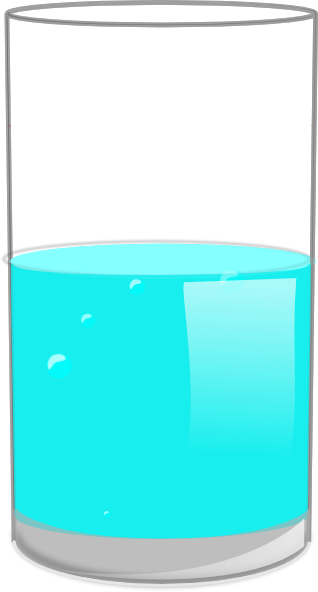
We all know the old trope: half full, or half empty?

I worked at Borland, which means, I worked with highly capable engineers who were accustomed to doing things right. I once got a very friendly, but very earnest, lecture about the half-glass phenomenon: the point is not whether the glass is half-full or half-empty.

The problem is, the glass was not designed for that amount of water. You either have to fill the glass,

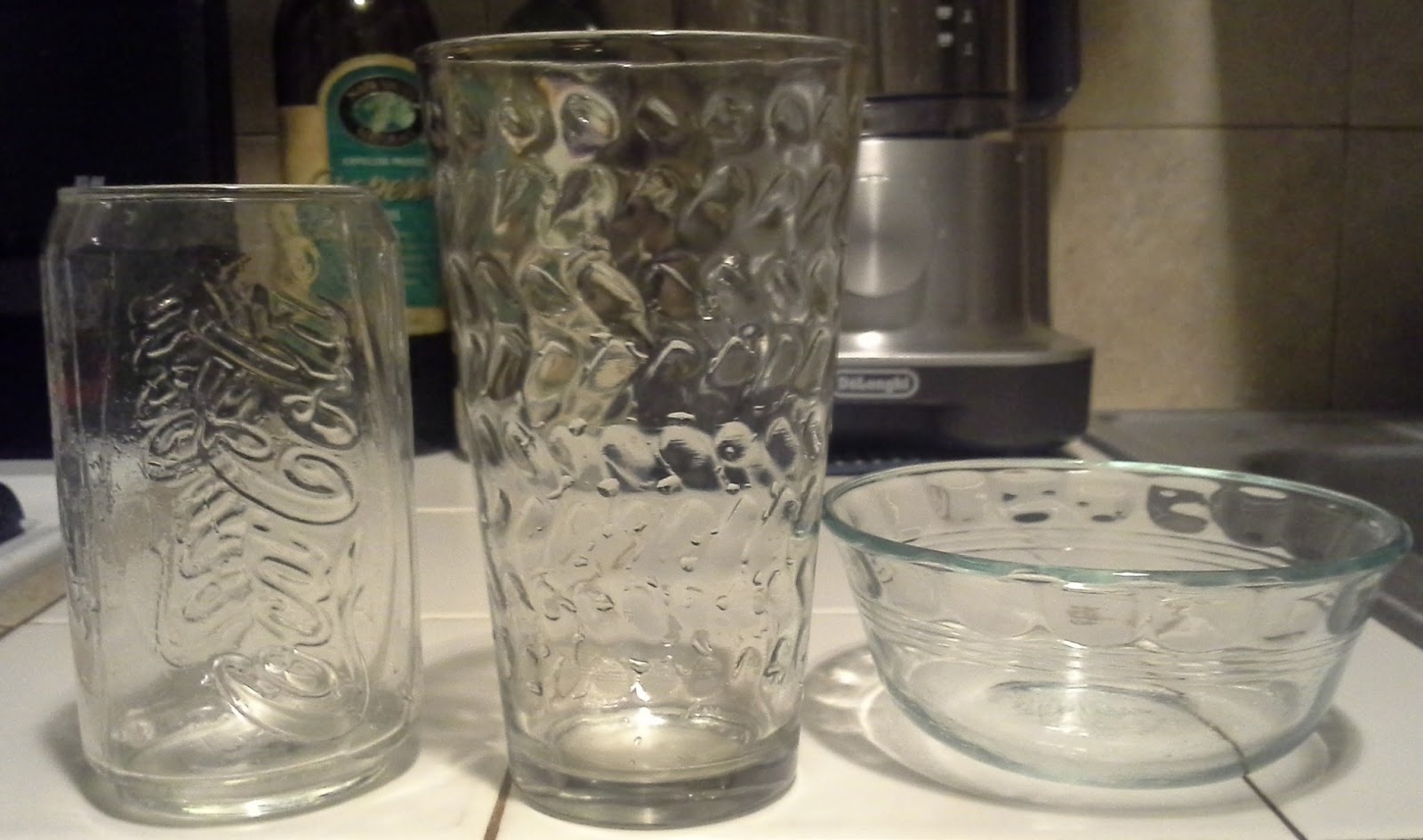
… or use a vessel that’s designed to hold that quantity.

The whole half-glass thing drives them crazy. It’s not a matter of attitude, it’s just bad design!

I love engineers. There’s something adorable about the way they storm the gates of Accuracy, convinced it’s the same as Truth.

At first glance, that attitude looks silly at times. On deeper thought, they’re usually right.

I was thinking about the engineering approach to the half-glass issue, while my subconscious was still bathed in reflections on Rosalie.

I realized that the engineering approach is exactly what those of us with crippling disease have to do: our glasses, our outward lives, were designed to hold a lot more than we’ve got right now.

We either have to build up what we have to put into it, or we need to use a smaller glass. A significant disparity between what our lives can hold, and what they do hold, is depressing. They need to match up better.

Rosalie alternated, and I think all of us with chronic disease (and determination) do that as well. Sometimes we can build ourselves up, and expand what we can put into that glass; sometimes we adjust our expectations and commitments, making the glass smaller so that the contents fit.

I like this image, because it reminds me that I can do either thing. When pushing against my limits doesn’t work, when I really can’t get another drop of water into that glass, I can pull back my expectations and switch to a smaller glass.

By now, I have mental cupboards full of wildly mismatched drinkware – a glass for every occasion, for every level of function so far.

The one on the right is for when my hands don’t work.

“My cup runneth over” takes on a new meaning now, doesn’t it? When it does, I’ll reach for a bigger glass.

Rosalie’s gold

I met Rosalie about 15 years ago, when she put me up for my dad’s second wedding. I fell in love with her on sight, when she threw open the door and bathed me and my brothers in such warmth and delight that even awkward, dorky I felt completely welcome in her life.

I stayed in the little den next to her bedroom, overlooking the pool. Her house was built in the 50s, when her neighborhood was inexpensive and remote. It has an endless view across the whole valley of Los Angeles.

She was a spring chicken, only 83 years old. She had already had two back surgeries to fuse vertebrae, and scooted around – with characteristic energy – in the distinctive crow-backed shuffle of post-fixation chronic back pain.

About five years later, my CRPS journey started. Rosalie was my first model of how to handle increasing pain and disability with a degree of grace and poise. Whenever I came to visit my stepmom or her mother, I’d see if Rosalie’s and my schedules would allow a visit. In all those years, I don’t think she failed to raise a smile more than once or twice, despite some brutal trials.

She had several more surgeries, implanted devices, physical therapy, and she swam laps in her pool whenever she could possibly manage it, inviting whoever came over to swim with her to have a glass of wine and tonic water (or gin instead of wine, for my stepmom) afterwards.

She kept love in focus: for her offspring and her dear friends, she had a seemingly bottomless well of love and regard, regardless of the vicissitudes of life and relationships.

She was always herself: whatever her opinion, and whether or not you agreed with it, she would let you know. No energy and no words were wasted on making things seem nicer than they were. You never had to wonder what her agenda was. And she managed that without ever being pissy or the least bit mean. Conservation of energy, including emotional energy, is a big issue for pain conditions, because pain is so exhausting; she didn’t waste a drop.

Yet she was famous for the radiancy of her outlook, not to mention of her smile. As soon as she had answered the question, “How are you?” with customary honesty, she visibly put that aside, turned her bright eyes on her visitors, and got them talking about more interesting things. She kept her focus where it belonged: on the rest of life.

As I said at her memorial service yesterday, she always looked for the nuggets of gold, whatever else was going on. She always looked for a way forward, whatever held her back.

If you’ve read this blog for any length of time, you know that I hardly ever write about anything until I’ve found the nugget of gold. You know that I always look for a way forward, whatever holds me back.

I can find this in myself, in large part because Rosalie gave me a living, breathing, occasionally querulous but never unfair, always loving, always real example of how to do it. I need those living models. I can learn only so much in theory.

This is real life. And sooner or later, it ends. I’m slightly bowled over by this intensely personal realization that the true radiance of a life can outlast the grave. Rosalie’s radiance is with me still, reflected off these nuggets of gold.

Marathoning, murder, and masses

Who the hell would bomb a marathon? The shock and fury make my eyes hot and narrow.

Second thought: what a way to go – accomplishment, adrenaline, euphoria, and a quick blast.

Yesterday, ironically, I realized I was fully recovered from overdoing. That only took 11 days… I took careful walks around the park while recovering, so as not to lose much ground.

Leading myself along, and minding my posture.
Today I roughly doubled my walking distance and I’m back up to ~18 min. On a flat.

I’m grateful.

I grew up in Egypt, a Middle Eastern country. We were there in the relatively tranquil days of the late 1970s: Sadat was secure in power, a secularist who stood no nonsense and could be bought – excuse me, persuaded – into a peace treaty that ended several thousand years of war. (For the meantime.)

Islam was a thoughtful, neighborly religion. Guests were treated like the loveliest royalty. A blonde 13-year-old girl with a forward figure could (at least, did) walk the streets in daylight fearing nothing more than vile remarks and, in a crowd, a vile grope.

That was the key to life in a tourist country: avoid the crowds.
 
When terrorist attacks happened, and they were rare then, they happened in crowds. My family was constitutionally adventurous and put off by mob thinking, quite apart from the (really tiny) chance of bombs, so we just did what came naturally and took off on our own.
 
We saw crowds the way a sailor sees sandbars: a lot of work, and not much fun to get stuck with.

Moreover, I’ve always been an introvert in the Myers-Briggs sense, meaning that I recharge in solitude and that I find society in large doses simply exhausting.

Now, with CRPS, this distaste for crowds has become a deep aversion. The physical dynamic of being in crowds is unbearable: when people bump me unexpectedly, it’s horrific; the noise overwhelms my sensory brain, which, let’s face it, is overworked already; and, of course, my hotwired autonomic nervous system is ready with the fight or flight response… with nowhere to go that isn’t in the crowd.

Breathe. Breathe. Breathe.

I was reading Angela N. Hunt’s book about living while training for a first marathon, and her description of the starting crowd was appalling. For me, it would be like being inside a tiny electric fence, cattle jostling around against the outside, bashing and zapping me mindlessly and endlessly.

Not do-able. Not even think-able.

But that’s just a problem, and problems are meant to be solved.

There are several possible solutions: invoke the ADA and start in my own class behind the crowd; rustle up about five good buddies — preferably large, sturdy types — to run around me for the first half, and be a better fence until the crowd thins enough;

run a different marathon course over open country, with only a handful of others; or abandon the whole thing.

I can hear some strenuous votes for the last option. In the wake of the Boston marathon bombing, I’ll ignore them. Completely.

I will go on. If distance is not an insuperable barrier, then neither is willful fear. I’m a woman, weakened, disabled, and rather poor; I have enough to be afraid of. I don’t let it stop me. Why should this? I’ll wear the names of the dead, if it helps. I won’t let it stop me.

I will go on. I’ll find a way to avoid the crowds, in some creative and tasteful fashion.

I will go on.

“Watch me go.”

Overdoing…the first time

My walking time in PT went from 5 min. to 10 min. when we decided to start training for the marathon. My walking at home took the 10 min. up to nearly 20 min., a third of that uphill.

That was nearly a mile. In a burst of what I thought was genius, on Friday I decided to walk down to town (0.8 miles), run a couple of errands, sit down on a sunny bench if need be, and walk back (0.8 miles, all gently but steadily uphill.)

Then, I thought bouyantly, I’d throw necessaries in the car and take off for my two week vacation.

Well, I got as far as making it back to the house. I knew, as I started back from town, that this had been a bad idea, and that there were three outstanding questions: would I have to find a place to sit down en route, exactly how hard would it hit me, and how long would it take to recover.

Saturday was a dead loss.

Sunday, I packed in small loads, resting for an hour or two between each trip to the car. No kidding: an hour or two. By Sunday around 4pm I was beginning to recoup a little. I left at 5.

I had forgotten what a mitochondrial shriek-fest felt like. An almost devastating feeling that my flesh turns to rot when I try to get up. I don’t recommend it.

Mitochondria are the wonderful little hitchhikers that house our bodies’ energy factories, in return for a warm place to live. They are most thickly concentrated in nerve cells and muscle cells. I knew all along that rebuilding my mitochondria was going to be perhaps the most essential part of training, but after my stellar success on the Hill, I thought I had more to draw on than that.

A delightful piece of training advice I got years ago was, “You can do all the cardiovascular you want.” Perhaps that was true at the time, although I noticed I did better when training four days per week than five or six. Perhaps I should’ve remembered that last week.

I think I should’ve rested for a day after my Hill expedition, for one thing. More importantly, I should’ve had a backup plan on my “adventure”, so I wasn’t stuck with the hike back. And I probably shouldn’t have done this around the excitement of going to see my sweetie.

My kitten just typed $. I have no idea…

Perhaps he’s telling me that overdoing doesn’t pay.

Marathon — second thoughts

I’ve gotten some interesting responses to my marathon proposal, some of them very worried, bless their excellent, loving hearts. I feel I owe some explanation.

My tiny handful of fellow “imps of the possible” are all for it, completely understanding the uncertainties and sidetracks and possible (even probable) different endings in store – and knowing that it’s the reach that’s important, that spreading

Back in the saddle again

The grip of the last round of the Yucks started to break right after posting my last. I hate it when I have to go that far to get past a bad spot, but hey, I’ll do whatever it takes to keep heading in the right direction.

Dignity is optional. Progress is not. Words I live by.

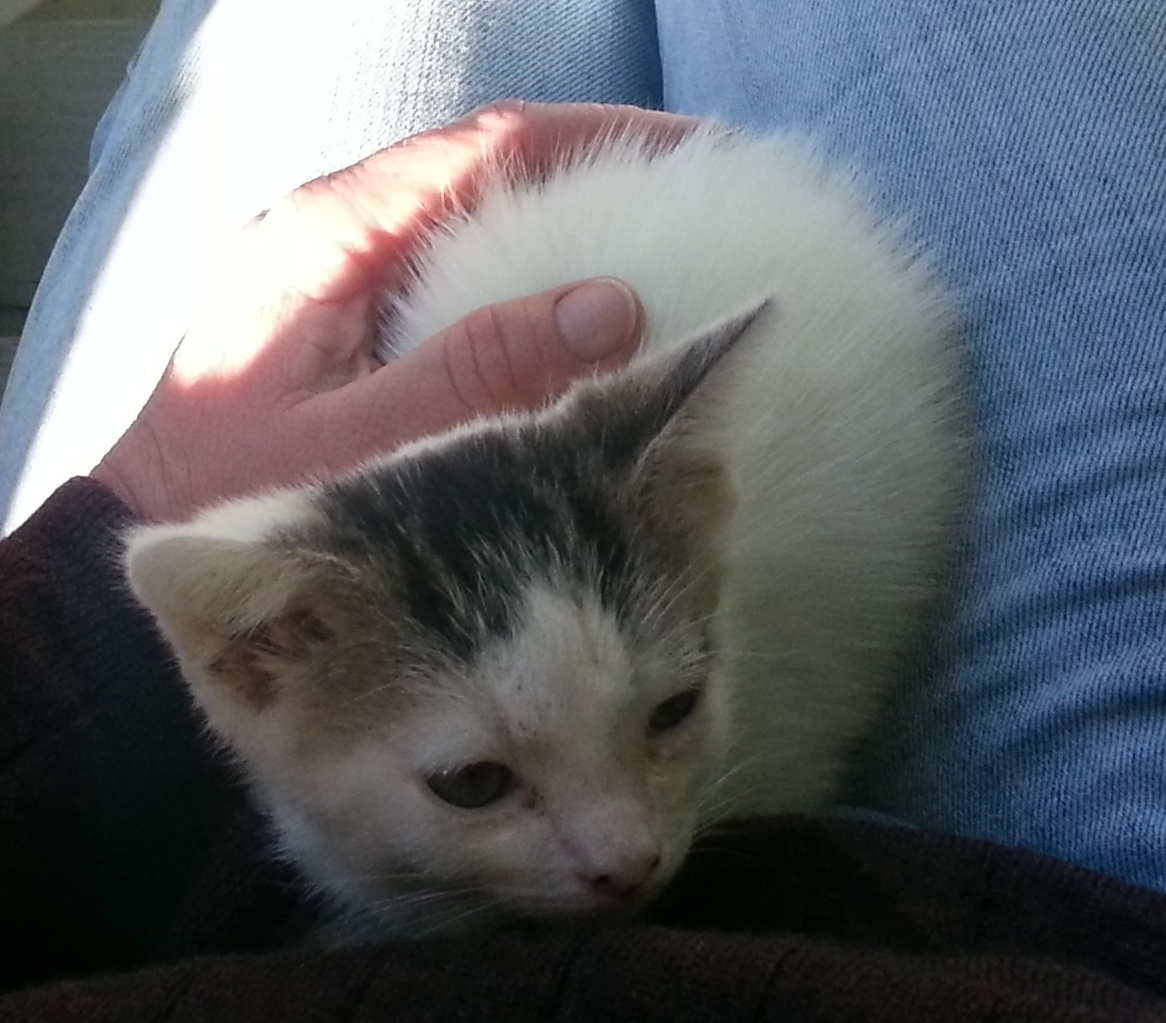
My new kitten has changed apparent gender twice, and is back to being a boy kitty — not that it matters in any practical way. I was looking for a name as elegant, good-natured and playful as he/she/it, while treating an upper respiratory infection that made that left eye look like a mouse:

My cat’s mouse

But then, with returning health and strength, his natural energy and violence reasserted itself. He has exactly two gears:
1. Unconscious (or nearly so)
2. Full-tilt, greedy, grasping, and spikily impulsive (as the scratch-marks around my blinked eyelashes attest)

So I’ve named him Siddhartha, in the hope that something will rub off.

Siddhi playing hide-n-seek.
(“Siddi” is an Arabic address used towards a respectable gentleman.
Another fine malapropism from the chronically punny.)

All of his front nails are trimmed now…

In health care, we call this “desensitization”

As for my own care, I’m up to 2/3 of my reiki time and 2/3 of my basic qi gong routine, and hope to get some t’ai chi in today as well. This is tremendous progress.

Vegetables are once again a chief component of my diet, thanks in no small part to an enormous bag of frozen “Normandy style” blend from Costco and our local dollar store, which sells cheap organic produce out of cardboard boxes.

I actually did laundry yesterday.  Today, I hope to take a shower and — gasp — wash my hair!


I realize only a minority of you will find that truly inspiring, but the rest can have a good laugh… and then think for a minute 🙂

For me, life with CRPS is indeed a matter of tiny triumphs and great goals. For the record, I’m still bound and determined to advance the search for a cure, and yes, I’ve gotten slightly more concrete in my ideas about that… More to come in time.

And now, just for the deliciously hokey yodeling at the end…

Links list:
Here is a recap and explication of the links used in this post:

Frustration at the wall

I’ve had my nose shoved up against a wall for two and a half weeks now. It’s very frustrating but it’s the nature of this disease that, at times, I’m going to get stopped in my tracks, and I may not always understand why.

I have had less energy than I do now, but I have never had less motivation. Me? Unable to start something? This is so out of character that it’s a bit like seeing Mother Teresa bite a kitten — unfathomable.


Speaking of eating, I’ve been craving sugar so intensely I have truly felt like I’d lose my mind if I didn’t eat sweets. I haven’t had serious sugar cravings for almost a decade. That was one problem I never ever thought I’d be dealing with again. That’s finally lightening up, thank goodness — and thanks to some mental judo and nutritional first-aid. I can’t take on any more weight or the pain in my feet will become unbearable, and my hips are already giving me hell.

I have great blog ideas, but getting them into words isn’t happening. No… words… come… together. This is so strange I don’t even need to elaborate. This is the first thing I’ve been able to write in weeks and it’s not a blog, it’s a tirade. Excuse me while I scream.

My muscles across my shoulders and upper back are so tightly knotted I can’t do my exercises or qi gong or even more than a stroke or two of tai chi without that weird warping sensation when the muscles pull my moves awry — and then the nerves pull back and howl. Some activity would be better than none, but low as that bar is, I just can’t make it over.

I got a break from my muscles last night when I loaded up on Flexeril (if you follow this blog, you know it’s almost unheard-of for me to hit the CNS-affecting meds) but the lethargy, brain fog and stupidity this caused, for 18 hours afterwards, is hideously limiting in itself.

After trying to do my most basic stretches just now, I took another dose. I will NOT let this twisty locked-up posture become the new normal.

And somehow, nevertheless, I will function tomorrow enough to get my pills and get my gear and get my food for the day and get my sorry ass over to OT and PT and hope something can break through this maddeningly comprehensive barricade.

Needless to say, this is not my usual pleasant, mindful, lemons-into-lemonade sort of post.

This is me grabbing the damn lemons and throwing them right back, hoping to hear a few screams as they connect. 

In the fullness of time, I expect I’ll be able to  find a trigger, or a clue, as to what exactly started this and how to avoid it in future.  I can’t see it from here, and maybe this is the start of what I dread most: The Slide, the final descent into irresistible helplessness and incompetence.

But I think not. I’m too damn angry to give it that much room.

Let’s see what happens next. My money’s on the chunky blonde with the harsh mouth and crappy attitude. 

… And the new kitten…

Posture matters, across species

For the past forty-mumble years, and for some time to come, my experience of life is shaped by the particular body I’m in. The reciprocal nature of the mind-body experience fills more books than I’d ever want to read, and that’s saying something, so let’s cut past that idea of, “Wow, the mind can influence the body and the body can influence the mind, but neither has sole control of the steering wheel” and look at the subtle, but strangely clear, ways that it plays out – at least in me.

I lived in a dog-friendly marina. – Trust me, this is relevant.

It’s not just about the scenery.
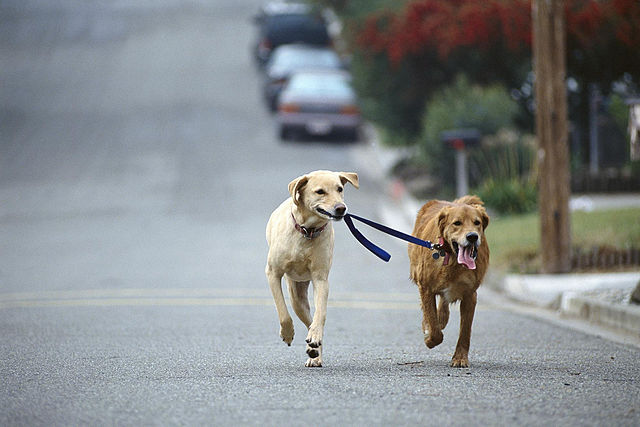
I found that, even before I knew the neighborhood dogs, I could tell which ones belonged on the dock by their posture as they stood, sat, walked, and moved.


I saw dogs in every degree of getting along — or not.

I saw the active posture of dogs who were used to plenty of food and care…


and dogs who clearly weren’t.


This was interesting to me as I was coming out of a period of being thugged on by every force outside myself that had a duty to care for me. Being, not only neglected, but frequently tormented and abused in response to most of my efforts towards survival and care, left me very nervous indeed.

Not good for the brain. Or anything else.

I was having trouble with my posture, and – limited by impaired kinesthesia (the sense we have of where our body is in space) – I was working out exactly what the trick points were.

– My low back was in a tight sway, sticking my stomach and butt out egregiously. I lost over an inch of height to that sway in my back.

– I recently realized that, when I fall back in this posture, my abdominal muscles are braced outward. I’m not slack in the belly; the muscles are braced for an incoming blow!

– My neck was hunched against my shoulders. This was funny because I did used to have a bit of a weightlifter’s neck, short and thick; but that was many years ago… when I lifted weights.

– My tailbone was curled in tight, which I only realized after my physiotherapist at the time taught me to straighten it out as a way of releasing tension on the nerve “sleeve.”

– The points of my shoulders were rotated inward. I attributed this to an effort to ease the nerve opening through my shoulders, but that doesn’t actually make sense.

All of these things reduced effective nerve flow to my limbs, shortened the wrong muscles, limited blood flow to where I needed it most, and reduced my capacity for physical exercise.

And you can see how happy it makes me!

Since activity is key to managing CRPS and keeping the autonomic nervous system under some kind of regulation, this is actually a huge problem.

Good posture is not about vanity, it’s about feeling better, being stronger, hurting less, and surviving tolerably well.

Watching all those dogs running around and deciding whether to let others sniff their butts,

You’re not imagining things: the pit bull is missing a leg.

I realized exactly what my posture looked like: a dog in a hostile area, not wanting to fight, but protecting its spine while bracing for blows. Always ready to snap into action. Never knowing when things will go sour, but pretty sure they soon will.

That’s what those years had brought me to. It was a reasonable response, but not useful.

This is what’s really going on when I fall back into that posture.

I’ve managed to explain this “braced dog” image to my current physiotherapist, who’s wonderfully willing to work with my rather original views. He comes up with ways to tell my body how to stand/sit/move like a calm, alert animal, instead of one that’s braced for the next fight… 

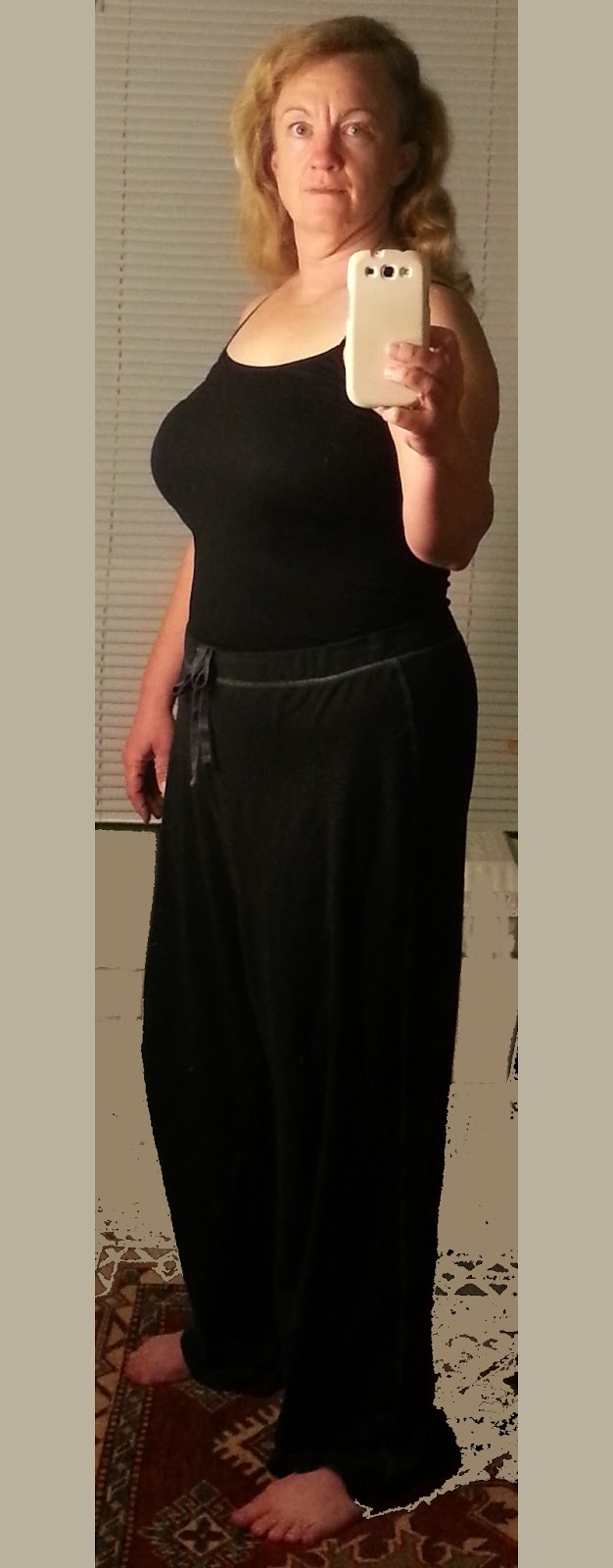
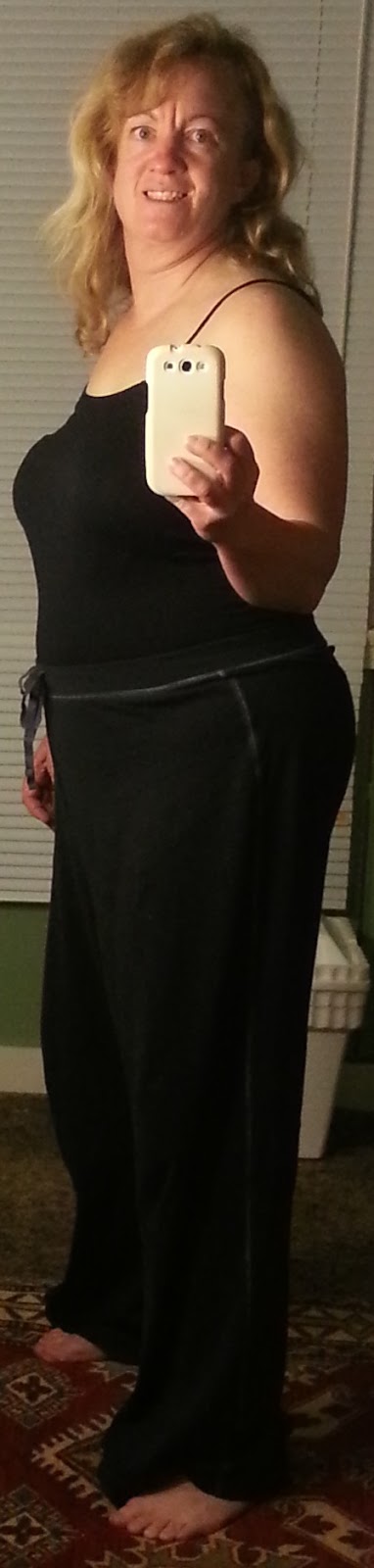
I can’t do anything about the 3 extra cup sizes
this endocrine dysregulation caused, but
my back and shoulders hurt less anyway.

And I remind my too-nervous nervous system that a calm dog can snap into a fight about as fast, but tends to find far fewer of them.

In the meantime, relaxed animals have a lot more fun.

Postscript on self-imaging

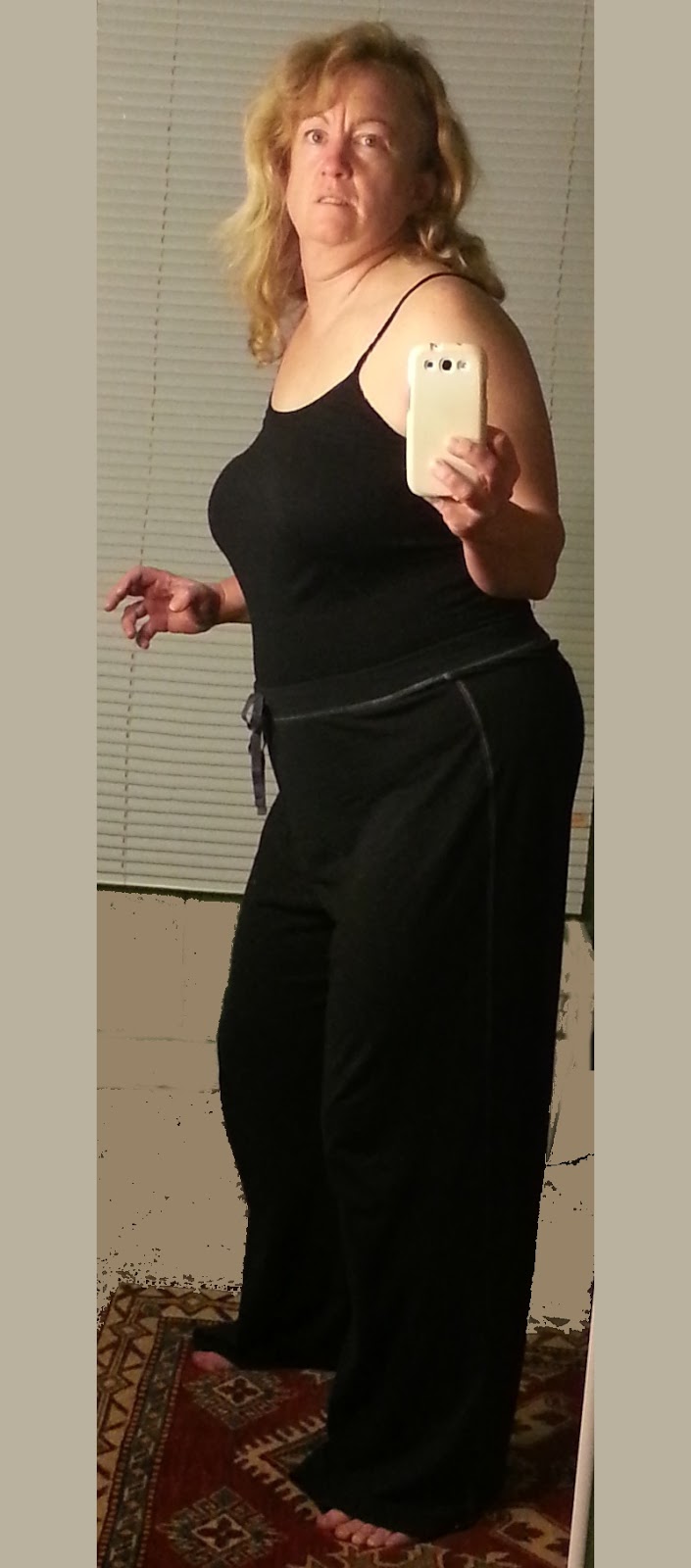
Nearly every time I see pictures of someone in regard to posture or movement explanations, it’s someone really fit.

Now, really. Is that who needs to know?

Much as I loathe looking at myself from the outside, using my own image here is preferable to the implicit lie of using others’ figures. So here I am, warts (so to speak) and all.

/shrug/ Could be worse.

Obsidian drive

I’m behind on my articles, but it’s been an awful week on the internet, with a remarkably slimy predator spreading poison and deceipt like I spread nut butter: lavishly. Boyfriend J gave me a necessary reality check to stop my charging about in pointless anguish, then exerted his remarkable capacity to adjust my mood.

We took a walk in the creek where we admired treasure troves of river-rubbed obsidian, much of it the size of a fist, some rather larger. We got really excited about some of the larger stones, grapefruit-sized.

Only ones that fit in a pocket followed us home:

Then, as it was Sunday, we decided to go to church. For us, this involves no pastors, but maybe pastures…

We went up and around new roads, over beautiful hills, along streams, through forests… and found the sources of all that obsidian.

Great bands of fat black glass sloped up through orange, yellow, white earth.

Some of it spilled onto the edges of the road, much of it clinging to the rockfaces.

Chunks the size of heads, boulders the size of steamer trunks. J remarked, “We hit the motherlode, baby, we hit the motherlode!”

I was so scamperingly excited to get pictures and samples that J was both cracking up and worrying slightly. When I was preparing to dash down a narrow stretch of road to get a shot, h e didn’t send me on and wait by the car… he grabbed my hand and led the way, saying, “If we’re going to get hit by a drunk driver, we’re going to get hit together. Come on, baby, let’s go.”

He met a carnivorous specimen which tried to bite off his finger when, trying to give me a more interesting shot, he reached out to touch it:

This piece has been hacked at by amateur geologists trying, and failing, to collect that enormous sample — well, trophy. J was just being friendly, but the edges are just as glassy-sharp as if he had had more hostile intentions.

It made our river-rubbed fist- and grapefruit-sized pieces look very small indeed — and very gentle!

The temperature dropped suddenly, 3 degrees in 2 minutes and falling. I turned from the rockface and took this picture of the lush region above the volcanic bed just as it did so:

J chased me into the car and ignored all my mindless “ooh, ooh!” noises and frantic pointing after that.

He has seen me, in a 70 degree (Fahrenheit) room, bundled up in a huge sweater and shaking with autonomic chill. When he knows what to look out for, he does a better job of taking care of me than I do. “If I had to drag you by the hair, I was gonna get you off that mountain. By your heel, your ass, whatever. It was getting too damn cold.”

I have to say, it feels good to have backup. I don’t take it for granted.

According to some theories, all this glorious obsidian might have something to do with why this one area of NoCal does not feel like it’s festering… but I’ll let the classical physicists, quantum physicists, wiccans and shamans argue about that. I’m just soaking up the joy of living practically on top of a fat pile of one of the coolest rocks in the world.