The wall, redux — with demons on the side

Sooner or later, deep and chronic illness (like, oh, let’s take an example at random, CRPS) will bring you face-to-face with your worst demons. It’s only a question of when, and precisely how.

When I came to adulthood, I realized that I felt a powerful need to earn my right to take up space and breathe the air. You’d think I’d be a cringing slave with that underlying attitude, but I wasn’t. I felt I deserved good pay, reasonable work/life conditions, and common courtesy, because that was fair; I just didn’t deserve to live.

Once I could no longer work, but had to fight like mad to live, this was a bit stressful. Like many, I almost didn’t make it. But then, as the very deepest trough began fading into memory, I noticed that something remarkable had happened.

Rewind about 10 years… I was a nurse for eight years, which put me in a critical relationship to others at critical points in their lives. I might have dealt with 10 patients in an hour, but, in the moment that I was dealing with each person, that was the most important person in my life. I may have coded hundreds of people, but every life I fought for, I fought for with all I had.

There were no caveats or conditions: if you were my patient, you had my absolute attention every moment I was with you.

I think this healer outranks me, but you can see
how focused he is on his patient. It’s like that.

I found that it’s impossible for me to work hard for someone’s survival, and not come to care about them – no matter who or what they are.

Fast forward to where we started, after the deepest trough, around early 2010… I had spent several years increasingly incapacitated, used up all my money, all my favors, all my savings, and lost a lot of friends – some of them to the Grim Reaper.

I won’t go into the brutal and abusive bureaucracy of California EDD or Oakland Social Security offices, because if you haven’t been through it, you wouldn’t believe me. That bad. Worse, even.

I woke up one spring day, with a strange sense of dawning inside. It took an hour or two to wake up, and to realize that I’d been fighting so hard, for so long, for my own survival, that I had become important to myself.

I no longer felt I needed to earn the right to live.

Ever since that time, I’ve never had a serious case of any kind of block – writer’s block, self-care block, learning block, anything – that lasted more than a couple days, unless it was explicitly disease-related.

Then, with this move to a strange area, with no connections, near a city I almost loathe… To get real care, for the first time in years, from seven highly skilled and capable professionals…

I hit a wall. Not just a block, but a huge, massive, precision-crafted, towering, deeply bedded, gateless wall.

Since writing “Frustration at the wall“, I’ve been faking it in the hope of making it. That’s a lot of weeks to keep running up against the same damn wall!

I finally started talking about it – I’m a writer; I’m a woman; I process by words; let’s move on – and began to get unscrambled. Then I had the deeply disconcerting pleasure of having my brain picked apart, cleaned with a dental pick, and neatly reassembled by the deliciously incisive Dr. Faye Weinstein. 

I can’t help thinking that the following is going to strike a few chords with some of my lovely readers…

I am, as she said with characteristic precision, “a helpful, compulsively self-reliant minimizer.” Really, why should I trust these people, who wield the power of Gods over what happens to me?

There’s a deep part of me that says “blow that, let’s go hide instead” and off I go, hiding behind advising on Facebook and diving into books and catching up on others’ crises; my condition is not that bad, so my care is not really that important, and it’s not like these people care more for me than their own crap anyway, so I’m on my own really.

My distraction activity is all very worthy, so I needn’t justify it. But, well, so much for the many new things I need to do to put together my own health…

Unconscious reactivity could be the death of me yet.

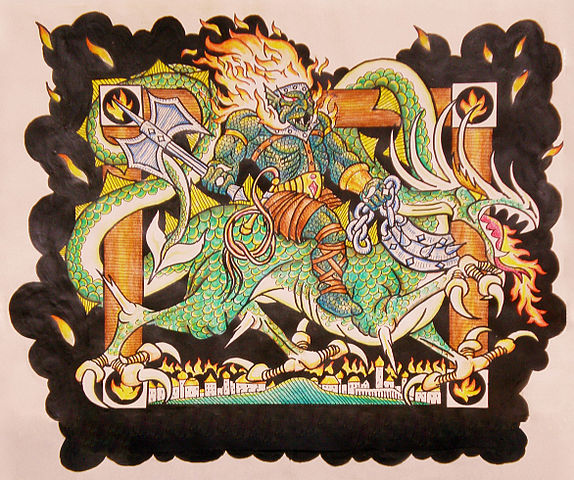
I said this illness would raise all your demons, even the ones you’ve hammered a stake through the hearts of. It turns out that the squat and fetid cranks who propped up my old conviction that I “don’t deserve to live” are still there, farting wetly and hawking loogies.

With apologies to Heironymous Bosch.

The demons of our earliest perils can shape our responses to major change forever. The trick is to see them for what they are, face them honestly, and put them back where they belong: in the past.

(Easier said… I think a booger just landed in my hair. At least, I hope it was a booger.)

To add to that, with years of excruciating work behind me and more ahead, my old motto of “change or die” doesn’t carry the same weight: Yes, part of me wants to lie down and die. The frantic, aching, endless weariness is beyond description.

But change is more interesting. A lot more interesting. And I only get to do this life once.

Conscious curiosity could be the birth of me yet. With luck.

With a better sense of what I’m doing, I’m preparing to turn and, with tactful and gentle persistence, come to terms with those monsters.

I might as well. I’m going to be here awhile.

Speaking of which…

Marathon training update

After one day to recover from the trip south, I was able to pull off my .8 mile route up and down this hill, and recover enough a few hours later to unpack the car (that’s a lot of steps!) and get some things done. Today was a lot of appointments, which involved walking at least a mile on city surfaces.

On Thursday or Friday, I hope to increase my hill walking to 1.1 or 1.2 miles. We shall see. No more overdoing.

Unexpected adventures with the rent

Yesterday I did 10 minutes on the treadmill. Today, I walked almost a full mile of this hill in 18 minutes and 16 seconds — no shuffling, no stopping, lots of striding, not much slowing down. Woo hoo!

I’d better start scouting trails and footpaths around here. I’m going to need more options soon.

As I calm my breathing in preparation for my autogenic exercise (more on that later), I have to admit that I had some angst to work off, and that probably had something to do with the pace I kept up.

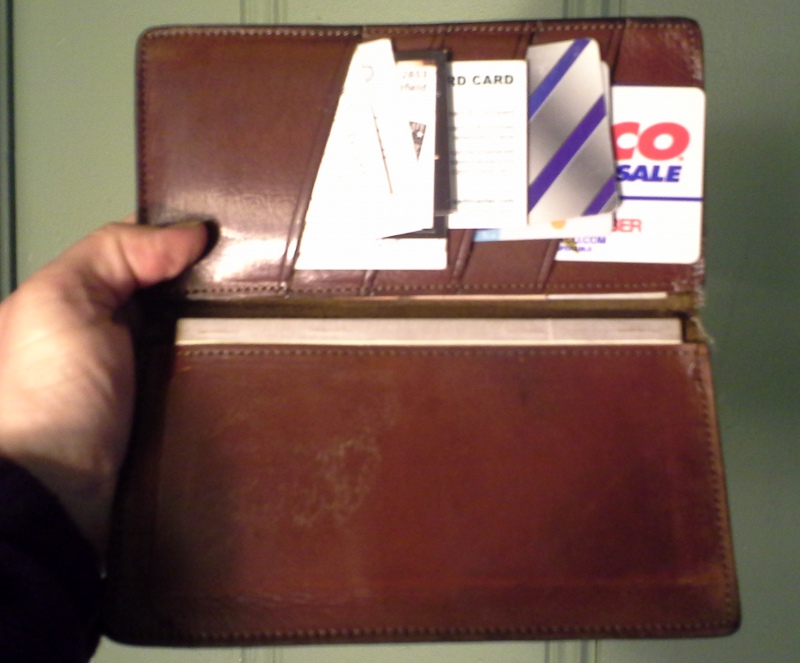
Last night, I realized I’d lost my ATM card. I have one bank, one card, and one checkbook. … Er… had…

The card was gone.

The checkbook was empty.
I’m fresh out of cash.
And rent is due.
Suuuuuuuuuucks.

Welcome to My Brain on CRPS!

To be completely apt, these should be thoroughly scrambled.

I went to the landlady’s bank to see if we could do a wire transfer.
Turns out they’re closed on Wednesday.

I called a different branch and asked if they could.
No, not without an account of my own.

I asked if I could open an account with a wire transfer.
After 20 minutes on hold, it turned out that I could only open an account with cash or a check.

Rather than repeating myself, I said, “You realize that does me no good.”

I called my bank (a local savings bank) in Massachusetts. They were pleased to tell me that someone had called in my missing card and it had been cancelled promptly. 2 weeks to get another one.

They couldn’t do a wire transfer because they’re rather old-school, and I hadn’t gone into a branch and filed the appropriate form in person.

But — and this is why I stay with them — they didn’t end the conversation there.

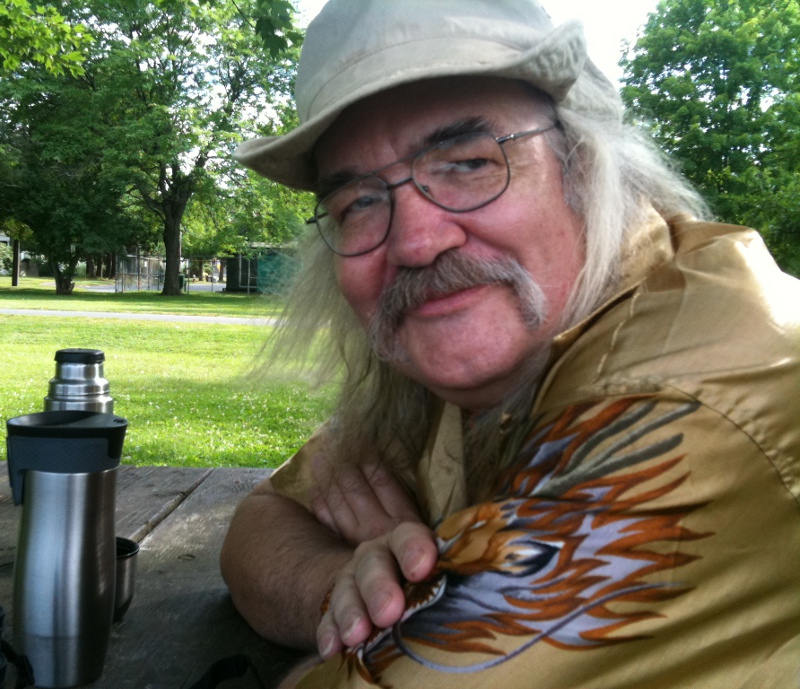
After exploring several possibilities, which turned up as dead ends, I thought of Cougar, one of my angels (a word with specific meaning.) He bears a passing resemblance to a slimmer and semi-shaven Jerry Garcia..

A recent photo by yours truly.

But, more importantly, he takes my mail. Why?

In case you hadn’t noticed, I move around a lot. (I’m looking for a place that has an affordable cost of living, good soil, first-rate medical care, and no extra pollution or radiation, and one day I’ll find it.) I’m here in California for awhile for medical care, BUT, no matter where the rest of me goes, my mailing address remains the same.

The benefits are tremendous:

  • Not only is my steel-sieve brain spared the affliction of changing my address every time I move,
  • Not only are my ridiculous paws spared the trouble of wrestling with envelopes and handling papercuts (a task which cougar claws are apparently well-adapted for),
  • But my memory and cognition issues get a real break from having to deal with pieces of effing paper. I have developed a mental block around dealing with pieces of effing paper, so I get them into softcopy as soon as possible.

Or, rather, most of the time, Cougar does… Because he doesn’t just take in my mail, he scans it in and sends me softcopy of anything I ask him to open. This means I have COMPLETE RECORDS of everything I need to keep track of.

He’s the Magnificent Mail Mage, and I’m grateful. Take that, Pain-Brain!

He’s my current Cash Carrier, now. The management staff at my lovely little bank have agreed to work with him as my designated agent, and will provide him with the cash I request — which he will then send to me via Western Union, so I can take care of business here. And with it, I’ll pay rent, open a bank account locally, and try not to let this happen ever, ever again.

Meanwhile, it’s time to get my heart rate down from the clouds and that strangely full feeling out of my tissues. Easier said…

While the excitement is over for the moment, I have a vivid memory of the stress-tracking line on the biofeedback machine, and how bloody hard and bloody long it takes to get the level to drop after it goes up over something as small as one giggle.

This was no giggle. In fact, it was several hours of no giggle. None. A totally giggle-free period.

I found it stressful.

The walk helped. And I hope — when I find some good forest trails to explore — to spot some wildlife.

Meanwhile, I’m off the hook for laundry and shopping. It all has to wait until tomorrow. Bonus!

Everyone should have a little cougarosity in their lives…


Posture matters, across species

For the past forty-mumble years, and for some time to come, my experience of life is shaped by the particular body I’m in. The reciprocal nature of the mind-body experience fills more books than I’d ever want to read, and that’s saying something, so let’s cut past that idea of, “Wow, the mind can influence the body and the body can influence the mind, but neither has sole control of the steering wheel” and look at the subtle, but strangely clear, ways that it plays out – at least in me.

I lived in a dog-friendly marina. – Trust me, this is relevant.

It’s not just about the scenery.
I found that, even before I knew the neighborhood dogs, I could tell which ones belonged on the dock by their posture as they stood, sat, walked, and moved.


I saw dogs in every degree of getting along — or not.

I saw the active posture of dogs who were used to plenty of food and care…


and dogs who clearly weren’t.


This was interesting to me as I was coming out of a period of being thugged on by every force outside myself that had a duty to care for me. Being, not only neglected, but frequently tormented and abused in response to most of my efforts towards survival and care, left me very nervous indeed.

Not good for the brain. Or anything else.

I was having trouble with my posture, and – limited by impaired kinesthesia (the sense we have of where our body is in space) – I was working out exactly what the trick points were.

– My low back was in a tight sway, sticking my stomach and butt out egregiously. I lost over an inch of height to that sway in my back.

– I recently realized that, when I fall back in this posture, my abdominal muscles are braced outward. I’m not slack in the belly; the muscles are braced for an incoming blow!

– My neck was hunched against my shoulders. This was funny because I did used to have a bit of a weightlifter’s neck, short and thick; but that was many years ago… when I lifted weights.

– My tailbone was curled in tight, which I only realized after my physiotherapist at the time taught me to straighten it out as a way of releasing tension on the nerve “sleeve.”

– The points of my shoulders were rotated inward. I attributed this to an effort to ease the nerve opening through my shoulders, but that doesn’t actually make sense.

All of these things reduced effective nerve flow to my limbs, shortened the wrong muscles, limited blood flow to where I needed it most, and reduced my capacity for physical exercise.

And you can see how happy it makes me!

Since activity is key to managing CRPS and keeping the autonomic nervous system under some kind of regulation, this is actually a huge problem.

Good posture is not about vanity, it’s about feeling better, being stronger, hurting less, and surviving tolerably well.

Watching all those dogs running around and deciding whether to let others sniff their butts,

You’re not imagining things: the pit bull is missing a leg.

I realized exactly what my posture looked like: a dog in a hostile area, not wanting to fight, but protecting its spine while bracing for blows. Always ready to snap into action. Never knowing when things will go sour, but pretty sure they soon will.

That’s what those years had brought me to. It was a reasonable response, but not useful.

This is what’s really going on when I fall back into that posture.

I’ve managed to explain this “braced dog” image to my current physiotherapist, who’s wonderfully willing to work with my rather original views. He comes up with ways to tell my body how to stand/sit/move like a calm, alert animal, instead of one that’s braced for the next fight… 

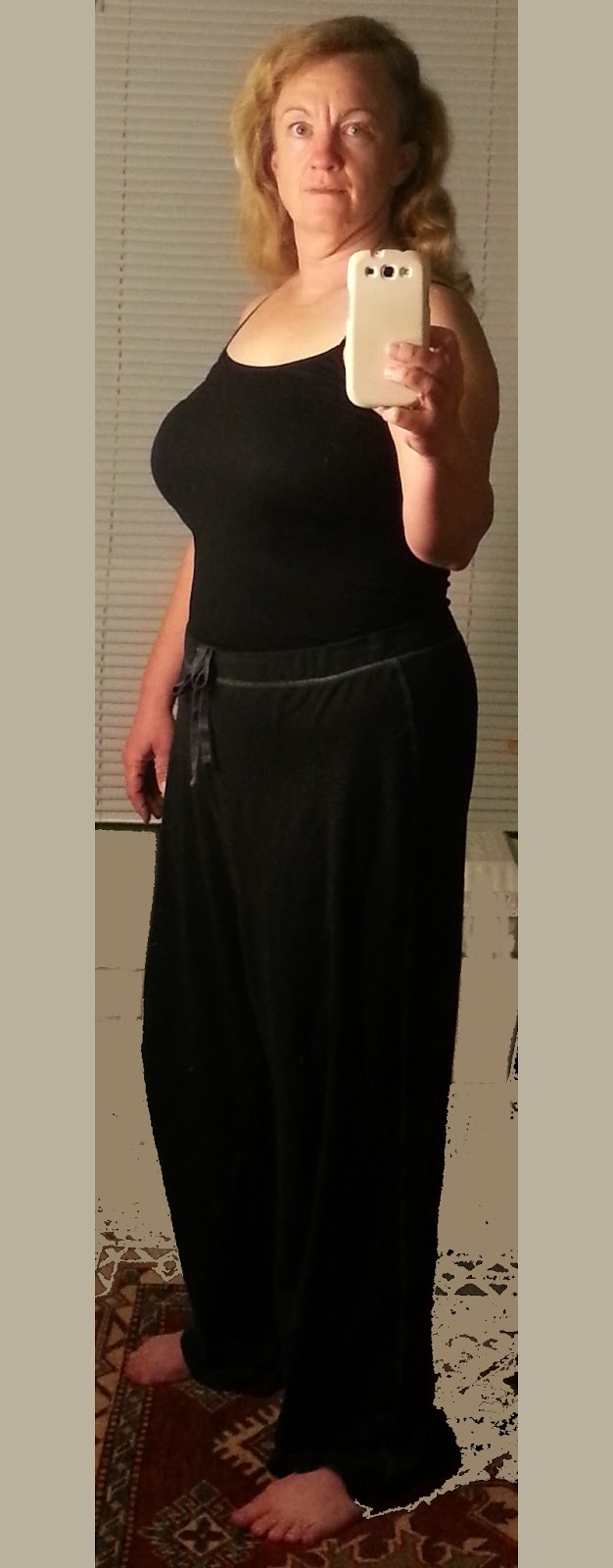
I can’t do anything about the 3 extra cup sizes
this endocrine dysregulation caused, but
my back and shoulders hurt less anyway.

And I remind my too-nervous nervous system that a calm dog can snap into a fight about as fast, but tends to find far fewer of them.

In the meantime, relaxed animals have a lot more fun.

Postscript on self-imaging

Nearly every time I see pictures of someone in regard to posture or movement explanations, it’s someone really fit.

Now, really. Is that who needs to know?

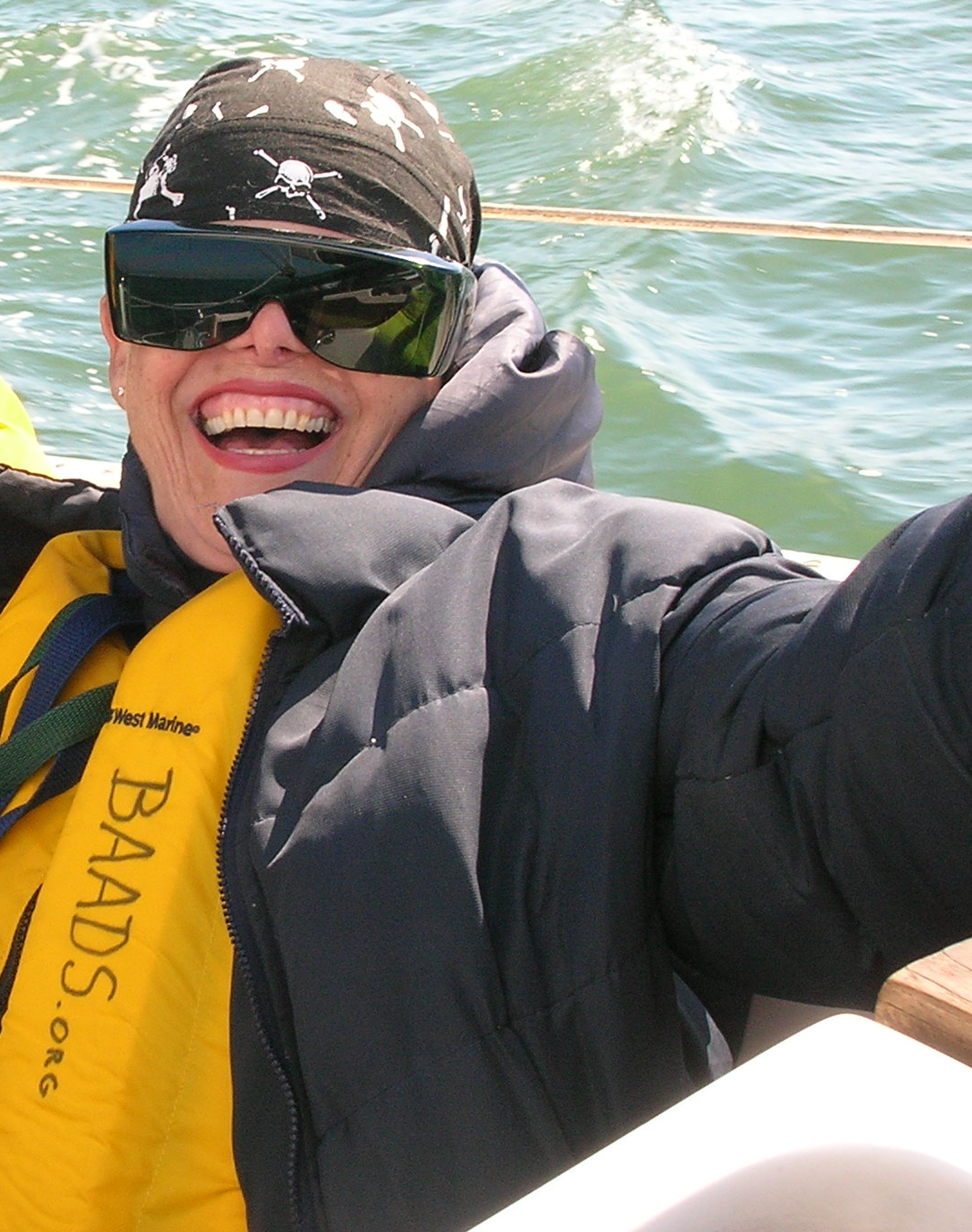
Much as I loathe looking at myself from the outside, using my own image here is preferable to the implicit lie of using others’ figures. So here I am, warts (so to speak) and all.

/shrug/ Could be worse.

Pain rating scales that describe reality

I’m filling out paperwork for these assessments. It’s a lot of homework, especially since they didn’t provide anything I could edit in softcopy. (Wait… how long have computers and the internet been around? Doesn’t the ADA require hospitals to provide access? … ok, never mind. Anyway.)

 
I got to the usual 1-10 pain rating scale and my gorge rose. That’s so irrelevant to my life now that I can’t even throw a dart at it.

 
Between my self-care strategies and spectacular mental gymnastics, the level of what most people would experience as “pain” is a secret even from me, until it’s strong enough to blast through the equivalent of 14 steel doors, each three inches thick. At that point, the numeric level is off the charts.

 
What’s useful and relevant is how well I can cope with the backpressure caused by the pain reflexes and the central and peripheral nervous system disruption this disease causes.

 
You can read on without fear, because for one thing, it’s not contagious, and for another, your experience of pain — whether you have CRPS or not — is uniquely your own. This is mine, as it has changed over the years…


Step 1: Acute CRPS, with otherwise normal responses

My first pain rating scale, just a few years into the disease’s progress, was suitable for a normal person’s experience. My experience of pain was still pretty normal (apart from the fact that it didn’t know when to stop):

Mental impact

Physical changes

0


No pain at all.


1


Hurts when I stop and look.


3

3

Neither looking for it nor distracted.


5

5

Noticeable when concentrating on something else. 

Nausea, headache, appetite loss.

7

7

Interferes with concentration. 
Drop things, grip unreliable.
8

8

Difficult to think about anything else. 

Trouble picking things up.

9

9

Makes concentration impossible. 

Interferes with breathing pattern.  No grip.

10

Can’t think, can’t speak, can’t draw full breath, tears start –  or any 3 of these 4.

Unrated even numbersindicate a worse level of pain than prior odd number, which does not yet meet the criteria of the following odd number.

Note that weakness is only loosely related to pain.  I drop things and have trouble picking things up at times when I have little or no pain.  However, as pain worsens, physical function consistently deteriorates.

Notice how the scale ties the rating numerals to physical and mental function. This is crucial, for two reasons — one personal and one practical:

 
– Personally, I can’t bear to let misery get the better of me for long. Tying the numbers to specific features keeps the awful emotional experience of pain from overwhelming me. Making the numbers practical makes the pain less dramatic.

– Practically, in the US, health care is funded by a complex system of insurance. Insurance companies are profit-driven entities who are motivated not to pay. They don’t pay for pain as such, only for limits on function. This makes my pain scales excellent documentation to support getting care paid for, because MY numbers are tied to explicit levels of function. (Hah! Wiggle out of that, you bottom-feeders.)


Step 2: Early chronic CRPS, with altered responses

My next was upwardly adjusted to describe learning to live with a higher level of baseline pain and noticeable alterations in ability:

Mental impact

Physical changes

3

3

Neither looking for it nor distracted.  Forget new names & faces instantly.

Cool to touch @ main points (RCN both, dorsal  R wrist, ventral L wrist). Hyperesthesia noticeable.  .

5

5

Interferes with concentration.  Anxiety levels rise.  Can’t retain new info. Can’t follow directions past step 4. May forget known names.

Nausea, headache, appetite loss.  Grip unreliable.  Hyperesthesia pronounced. Color changes noticeable.

7

7

Absent-minded.  White haze in vision.  Can’t build much on existing info.  Can follow 1 step, maybe 2.  May forget friends’ names.

Drop things.  Cold to touch, often clammy. Arms & palms hurt to touch.

8

8

Speech slows.  No focus. Behavior off-key. Can’t follow step 1 without prompting.

Can’t pick things up; use two hands for glass/bottle of water. 

9

9

Makes concentration impossible.  Hard to perceive and respond to outer world.

Interferes with breathing pattern.  No grip. Everything hurts.

10

Can’t think, can’t speak, can’t stand up, can’t draw full breath, tears start –  or any 3 of these.

Notice how specific I am about what general tasks I can complete — following instructions, lifting things. These are the fundamental tasks of life, and how do-able they are is a fairly precise description of practical impairments.
 

Step 3: Established chronic CRPS

And my third changed to describe living with more widespread pain, a higher level of disability, and — most tellingly — a physical experience of life that’s definitely no longer normal:

Mental impact

Physical changes

3

3

Neither looking for it nor distracted.  Forget new names & faces instantly.

Cool to touch @ main points (RCN both, dorsal  R wrist, ventral L wrist, lower outer L leg/ankle, R foot, B toes). Hyper/hypoesthesia. Swelling.

5

5

Interferes with concentration.  Anxiety levels rise.  Can’t retain new info. Can’t follow directions past step 4. May forget known names.

Nausea, headache, appetite loss.  Grip unreliable.  Hyper/hypoesthesia & swelling pronounced. Color changes. Must move L leg.

7

7

Absent-minded.  White haze in vision.  Can’t build on existing info.  Can follow 1 step, maybe 2.  May forget friends’ names.

Drop things. Knees buckle on steps or uphill.  Cold to touch, often clammy. Shoulders, arms & hands, most of back, L hip and leg, B feet, all hurt to touch. L foot, B toes dark.

8

8

Speech slows.  No focus. Behavior off-key. Can’t follow step 1 without prompting.

Can’t pick things up; use two hands for glass/bottle of water.  No stairs.

9

9

Makes concentration impossible.  Hard to perceive and respond to outer world.

Interferes with breathing pattern.  No grip.  No standing.  Everything hurts.

10

Can’t think, can’t speak, can’t stand up, can’t draw full breath, tears start –  or any 3 of these.


The CRPS Grading Scale

The other scales measure the wrong things now. Asking me about my pain level is bogus. It would have the asker in a fetal position, mindless; is that a 5 or a 10? Does it matter?

 
I need to avoid thinking about depressing things like my pain and my disability. I focus pretty relentlessly on coping with them and squeeezing as much of life into the cracks as possible — on functioning beyond or in spite of these limitations.

 
The fourth rating scale is much simpler than its predecessors. It’s based, not on level of pain or disability, but on the degree to which I can compensate for the disability and cope past the pain. Therefore, this rating scale remains meaningful, because it describes my actual experience of life.

Mental impact

Physical changes

A. Coping gracefully

(baseline)

Track to completion, baseline memory aids sufficient, comprehend primary science, think laterally, mood is managed, manner friendly.

Relatively good strength and stamina, able to grasp and carry reliably, knees and hips act normal, nausea absent to minimal, pulse mostly regular.

B. Coping roughly

B

Completion unrealistic, extra memory aids required and still don’t do it all, comprehend simple directions (to 3-4 steps), think simply with self-care as central concern, unstable mood, manner from prim to edgy to irritable.

Moderate strength and stamina, grip unreliable and muscles weaker, balance goes in and out, knees and hips unreliable, nausea and blood sugar instability alter type and frequency of intake, occasional multifocal PVCs (wrong heartbeats) and mild chest discomfort.

C. Not coping well

C

Hear constant screaming in my head, see white haze over everything, likely to forget what was just said, focus on getting through each moment until level improves, manner from absorbed to flat to strange, will snap if pushed.

Muscle-flops, poor fine and gross motor coordination, major joints react stiffly and awkwardly, restless because it’s hard to get comfortable, unstable blood sugar requires eating q2h, bouts of irregularly irregular heartbeat.

D. Nonfuntional

D

Unable to process interactions with others, suicidal ideation.

Unable either to rest or be active. No position is bearable for long.

There is no Grade F. Did you notice that? As long as I have a pulse, there is no F, which stands for Failure.

In the words of that divine immortal, Barrie Rosen, “Suicide is failure. Everything else is just tactics.”

So what’s the point of all this?

Documenting our own experience in terms that are meaningful and appropriate advances the science. The treatment for this disease is stuck in the last century in many ways, but that’s partly because it’s so hard to make sense of it. The better we track our experience with it, the better outsiders can make sense of it.

 
Since studies, and the funding for them, come from those who don’t have the disease, this is the least — and yet most important — thing that we can do to improve the situation for ourselves and those who come after us.
 

This isn’t a bad snapshot of the natural history of my case, either. Understanding the natural history of a disease is a key element of understanding the disease. Imagine if we all kept pain rating scales, and pooled them over the years. What a bitingly clear picture would emerge.

 
I’ve never sat back and looked at all of these pain rating scales together. It’s certainly an interesting mental journey.

 
Important legal note: These forms are available free and without practical usage limitations; to use, alter, and distribute; by individuals and institutions; as long as you provide free access to them and don’t try to claim the IP yourself or prevent others from using it. All my material is protected under the Creative Commons license indicated at the foot of the page, but for these pain scales, I’m saying that you don’t have to credit me — if you need them, just use them.
 

Bien approveche: may it do you good.

Pushing back on neuroplasticity

I got the Sydney norovirus right before it hit the news. I’m recovering, but slowly; the persistent low-grade nausea is annoying — and worrisome. I don’t want my body to get the idea that this is the new normal…

Brain plasticity is a major culprit in CRPS and its maintenance —
  • from the first refusal to cut pain signals off…
  • to the growth of the brain cortex area that monitors that body part, so it can handle more pain signals and provide less space for normal body areas…
  • to the deeper remapping and rewiring that alters cognition, disrupts memory formation, screws up autonomic signalling, knocks endocrine and digestive function out of whack…
  • and so forth.


It’s important to stay on top of the brain, so to speak.

 
Thanks to the brilliant pioneering work of Dr. V. S. Ramachandran, we now know that mirror therapy and reducing-lens therapy can remap the brain’s perception of injured body parts to something closer to normal. That was a huge help with the pain, when I had CRPS in limited areas.
 
The reality-shattering concept behind mirror therapy is, basically, that conditioning can work in reverse: rather than allowing ourselves to be the passive objects of what our brain becomes accustomed to doing, we can push back against the brain’s alterations using our natural mechanisms of perception and intent. (The basis of Dr. Ramachandran’s discovery is that perception alone can provide the altering input. Intent gives it more focus, force and direction.)
 
The relationship between body, intention, and brain is interactive, multi-dimensional, and interdependent. 

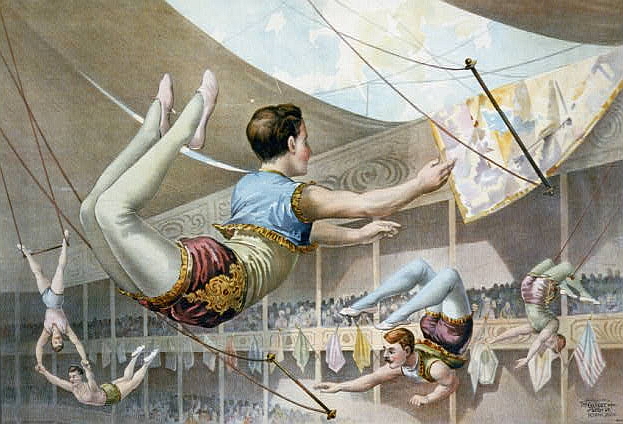
Having said that, it’s not completely reciprocal, nor is it ever under perfect control — unlike a good trapeze act.

 
If we could will ourselves better, then, given the extraordinary focus and determination of my fellow CRPSers, I know for a fact that we would have done so already. I never had met anyone with as much determination as me, until I met my core group of CRPS friends. If will alone were the answer, we’d have it!
 
CPRS is complex indeed.
 
Anyway… back to what we CAN do.
 
Communicating with the brain, in language it can’t ignore
 
The basic principle of RE-re-mapping the brain is this: describing to the brain, in language it can’t ignore (combining sensory perception and intent), what it should be doing.
 
In my Epsom bath article, I described rubbing a washcloth over body parts that have distorted perceptions and telling them silently, over and over again, “It’s just a washcloth. Feel just a washcloth.”
 
Where there is normal perception, or even nearly-normal perception, I stroke from the normal area to the abnormal area — never, ever in reverse! the brain understands the concept of “spread” — and tell my brain and body, with absolute focus, “This is what normal feels like. Feel normal HERE now. This is normal. Feel it here now. That is the correct feeling. It’s just a washcloth. Feel a washcloth.”
 
Not a burning sheet of sandpaper twice the size of my leg. Not a blunt sense of almost nothing, somewhere else.
 
A washcloth, right here.
 
When I’m doing this, I don’t even think about what the abnormal feelings are like; I came up with those metaphors just now, sifting through my memory. I shut the incorrect perceptions out of my mind and dismiss them, over and over, as obviously false information.
 
I have to take a break sometimes when the pain is bad and just breathe, but I don’t think about it, I focus on the point: learning to perceive what’s really there.
 
Vision, tactile input, kinesthesia (meaning that, as my hand and arm moves over the body part, my brain’s mechanisms triangulate on where things really are and its picture of my body gets corrected), and the focus of intent, are all part of the exercise.
 
This combination of factors is what makes it so effective. The multisensory inputs, the constant messaging of proper information, eventually overrides the false information.
 
Slowly at first, but with increasing pace, the normal sensation spreads over into the abnormal area. Every time. Not always completely or perfectly, but often both.
 
So far, I’ve reclaimed normal sensation in my back and most of my left leg, and I’ve kept the sensation and function in my arms at a level almost incompatible with the decade that I’ve had this disease.
 
Considering how bad things have gotten when I let this slide, the value of this exercise is clear to me.
 
Pruning your neurons intelligently
 
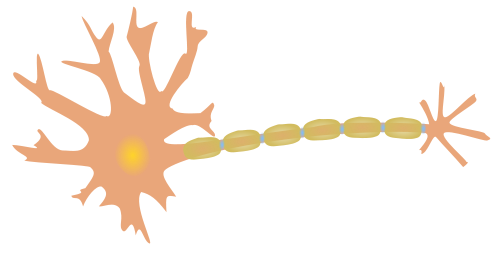
Learned responses are due to the basic learning mechanism in the brain:
  1. neurons hook up, and a connection (or association) is made;
  2. if the connection gets used (or the association is allowed to stand), more neurons hook up to make it stronger;
  3. once enough neurons have hooked up, the connection becomes like a good road;
  4. and the thing about good roads is, they get used, even if they’re used for something odd.
It’s important to manage the roads in your brain, especially when you have a neuro-plasticity disease like CRPS:
  • Make sure the roads in your brain are useful to you.
  • Do that by pruning the connections you don’t want.
  • Prune those connections by letting the associations die.
  • Let a connection die by deciding to think about, or do, something else, whenever it comes up.
    Consistently. Persistently. Relentlessly.
  • And keep making that decision every time it comes up.

It works by a negative, which is not how we are taught to do things: turn away from the response, shut out the perception, ignore the link. That’s how you prune an unhealthy connection.

It takes time, but it works. The time will pass anyway, so your brain might as well be better off at the end of it…

Masters of distraction
 
We CRPSers are masters of distraction — not to mention the kind of persistence that this pruning takes. We can learn to be diligent about applying it to sensory associations we don’t want. This is where ADD, used selectively, becomes truly — oh look! Yellow feet!
 
… Wait, what was the connection I was about to make? I’ve forgotten.
 
See? It works!
 
The joy of having a bit of ADD and being a meditator is, you really can choose when and how to let out the ADD — as long as you do it often enough. It’s a great tool, and I’m grateful for it.
 
Pruning specific sensory and functional associations
 
I’ve had recurring nausea for months now. It’s related to upticks in stress, of which I’ve had more than an elegant sufficiency in the past year.
 
Then there was this tummy bug…
 
It’s day 5 and I haven’t vomited in 3 days but I’m still nauseous. While this bug is supposed to leave one nauseous for quite some time afterwards, I really don’t want my brain getting the idea that sending nausea signals is going to be the new normal. I’m not going to let the nausea become habitual. So I’m pruning those connections.
 
I can’t will nausea away, as it comes from quite deep in the brain from a primitive place. And, unlike pain, distraction doesn’t help much for long.
 
So I’m balancing the use of ginger (short acting, “hot i’ the mouth”, sugary) and anti-nausea meds (long-acting, makes me slower in brain and gut) to shut down the nausea for a good part of each day. 
 
This means I’m not nauseous for a good part of the time. This helps retrain my brain away from constant nausea by letting the relentless association, and the neurons that make it, die off. I’m going to keep after it over the expected week of recovery still to come.
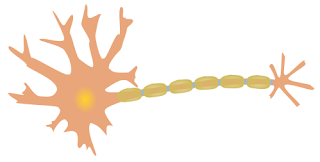
Only constructive connections, please.
That’s one example. It doesn’t take much thought or mental discipline, just persistence.
 
My lovely friend X has a recent example of something different, an obviously inappropriate new association being made.
 
She multitasks, making full use of her functional time. When she was eating, then turned aside to the plastic phone or plastic computer to respond to someone, then turned back, her food suddenly tasted and smelled like plastic.
 
That is a very errant association indeed. Prune it!
 
She is now putting aside the laptop and turning off the phone while she eats, so the association doesn’t develop further. Moreover — and she may have just enough ADD to pull this off — she hopes to be able to switch her attention immediately when the plastic taste pops back into her — Look! Yellow feet!
Egrets make great distraction, especially in funny socks.
It takes time to let those connecting neurons die, but if you get on it quickly, as X did, it can turn around pretty well and pretty quickly.
 
The Principle of Primal Exclusivity
 
This is simpler than it sounds. It’s the opposite of pruning.  
 
When you’re doing something really basic (or primal), like eating or drinking or sleeping or running or sex, keep your attention basically on that activity. It helps keep your brain straightened out about those things.
 
You really don’t want them getting bollixed up, because rewiring primal functions takes more work to undo.
 
That’s one reason why insomniac advice is about having a calming bedtime routine and sticking to it: it’s retraining the brain around a primal activity. The brain needs absolutely consistent signals over a period of time, to retrain successfully.
 
Incidentally, sex (alone or together) is the only activity that (ideally) engages both sides of the autonomic nervous system: arousal is mediated by the sympathetic nervous system, and orgasm by the parasympathetic nervous system. It provides a balancing mechanism I can’t think of occurring in any other sphere of life. Done properly, it could be the perfect autonomic tuning tool…
 
And with that happy thought, I’ll leave you to wash your hands against this norovirus and do whatever seems best.
 

The point of mythology — and there is one

I’m working on a series of 3 novellas, a triptych:

1. Kronos in season: The growing-up of a primal god.
2. Hell — the bright side: The original story of Persephone, the original career woman.
3. Pain, a comedy: the intimate family drama that came down to us as the story of Chiron, the wounded healer — and possibly the first recorded case of CRPS.
(Warning: slapstick and hangman’s humor, sometimes simultaneously.)

I’ve been bogged down on number 2 for the best part of a year. In other words, I’ve been stuck in Hell… heheh.

“That Heironymous Bosch. What a weirdo.” – Good Omens

When asked what I write, I usually talk about CRPS and turning medical science into plain English. When asked what my favorite thing to write about is, I have to say, it’s mythology.

“Wait — mythology? … Why??”

Because myths are about the greater parts in ourselves. Those of us in unbearable situations (like the Newtown teachers or Mother Theresa or, indeed, anyone with a terrible illness) have to be superhuman at times. Sometimes most of the time.

Myths remind us of our innate capacity to reach beyond our limits and own the moment, hideousness and all, so that we can lift ourselves beyond all reason and find a way to make things better.

We have modern myths, like James Bond, Star Trek, the X-Men and Harry Potter.  While they have their limits as myths, they still meet the inward need to see that part of ourselves that can bear the unbearable, survive the murderous, and emerge victorious from a no-win situation.

I should have died at least 5 times in the past 10 years. But here I am, very much against the odds, still thinking (sort of) and writing. Rediscovering mythology played a part in that.

And, more than ever, I find it incredibly easy to tell those enormous stories as if I were talking about real people in real time — because, in my own mind at least, I am. When I write about gods and demons, I’m writing of things I know, although under different names.

You should meet my friends with CRPS — and some of their parents. These people embody powers of creativity, diligence, determination, resourcefulness, strength and brilliance that make the great gods of prehistory look like punks, and leave modern adjectives beggared. Telling myths is easy-pie after talking to them!

If we should stick to writing what we know, then I’ve been to Hell and back so often they’ve installed a revolving door for me. I’ve wept on the knees of Hera. Sedna is my sister. I’ve heard Taliesin’s lament. Coyote has my home address, and comes over (too often) for tea… I have my suspicions about what he puts in his cup — and mine.

I won’t discuss the demons, except to say that they, too, can usually be healed. But it’s always by the thing you wouldn’t think of.

“O..kay.” Checks my head for tinfoil hat. “But what does mythology have to do with CRPS?”

It gives us back the unstoppable inner part of ourselves that can defeat it in the end.

And that’s good medicine.


Departure day

With  uncharacteristically sublime timing and verbiage, I got us into a breakup conversation that was the kindest, most civil and caring one I’ve ever had. Hard to argue with the heart problems and needing to be where the doctors are a lot less likely to kill me by accident…

Two days later, it seems more like a stretch out than a break up, but I’m not sweating that. I can’t take any more chaos, stress or drama, so I’m going to let things stand. The love is there, so why kick it to the curb? The world needs more love — at least, mine does.

Given the year we meant to take to see if this would (or should) work out, it’s reasonable to take that time to figure out what shape this connection — with its own strange, resilient, unique strength — should really look like.

I’m getting a healing break with an old friend whose life includes just the right mix of rest and activity, good food and indulgence, solitude and society.

Meanwhile, J is going to wash my car inside and out, and pull everything out of it and put it into storage so I can sort it back in more rationally — as I’ve intended to for months. I didn’t even think of that, let alone hint, I swear! He just thought it up himself, to make my life nicer and more manageable.

I’ll bounce back to J’s in early February to get my stuff and get the last business sorted, then go to LA to see my doctor and find a place to stay that meets my needs for awhile — where he could come visit and try for some reality checks.

Anybody got a place in the warmer parts of the San Gabriel range for under $500/month? Where my lovely wolfish un-boyfriend can bring his considerably better-behaved dog? 🙂

An upside down day

Today was a day when everything seemed to turn at least one somersault, including my mind. In fact, I just took off the headset and turned one myself, to complete the set.

Extreme stress makes me a little whimsical…

Food & housing

I woke up this morning in a motel that was as creepy as it was the night before, when the desk clerk had looked up and down at sweet, white, worried me, and said in her most reassuring tones, “I’ll give you the room on the second floor, on the corner, right where I can see you.”

On the one hand, I was glad there was someone to look out for me. On the other, it was horrifying that it was so baldly necessary. A bit like my relationship lately.

Today was the last day of intestinal meltdown before heading into real wasting syndrome: relentless nausea, episodes of dizziness, and nearly volcanic indigestion. The next step is relentless diarrhea. I’ve had wasting syndrome once this year already, and that was enough.

The automatic drive is about to go in reverse…

Time to put more money into staving off physical self-destruction: I called a good hotel with monthly rates, and made a 30 day reservation.

The indigestion is considerably better, and at least I can eat past the nausea. Success! I WILL save this system!

I finally had a good, real conversation with boyfriend J this evening. For all our mutual problems, there’s a lot of love there. This separation is agony for both of us.

I finally got to say what I have been tripping over all day: nothing feels right. I usually have a strong sense of flow, of what should happen next and how to get there. But it’s as if I got washed up on the riverbank weeks ago, and however hard I try, I can’t catch up with the current. I’m more lost than I have ever been.

Being away from my sweetie, and pouring so much money I really need elsewhere into the painful boondoggle of a separate life, is lonely and brutal.
So I have some thinking to do…

Metabolic moon dance

My digestion is not happy.

Between the stress of househunting (and the way that forces us into other families’ dreadful dramas), some really egregious motels, and too many things hanging fire for too long…

Plus taking that spirochete-assassinating, gut-grating antibiotic doxycycline for three weeks (19 days, actually; those last four pills, I almost vomited just looking at them)…

With a bit too much pain and dysautonomia for a little too long…

Amidst, of course, the infinitely complex metabolic moon dance of CRPS…

In consensus reality,
this is a shot of my old marina’s night lights…
but it’s a great visual metaphor for the body events of CRPS. Fling!
Image c.2008

… Well, things have been better.

They could be a great deal worse, but really, they could be rather better.

I haven’t been able to keep up my kale shakes, because the indigestion is too energy-sappingly unpleasant. My sweetie made a remark the other day that gave me a clue I want to pursue: don’t mix fruits and vegetables.

I used to know that.

I’m going to try berries with kefir and nut butter as the morning shake, and kale with avocado, cabbage and broth in the evening. (And, for the record, I’ve reconfirmed that organic berries are a lot less nauseating in this hotwired system.)

This assumes, of course, that I can get all the ingredients… Handle the blender… Have a place to plug it in… And somewhere to rinse it out afterwards… In the midst of homeless upheaval and chaos… Twice a day.

Editorial comment is useless. There are times when my natural wryness is wholly inadequate to real life.

I’ll let you know how it goes.