Of Mice, Medicine, and Malefactors

Older Brother and his wife, Aunt Krusty, sent me a fabulous little doohicky from a medieval town they visited. It’s a brooch of a common design element used in the Middle Ages: a tabby cat with two tails and fabulous eyebrows offering a mouse, with the legend, “visis mu” — “here’s the mouse.”

Pewter pin of tabby cat as described in text.
Close inspection shows both letter “s”s to be upside down. I’ve known a few artisans, and they like making people twist their heads around. Besides, that’s relevant. You’ll see why.

The enclosed card contains the usual wonderfully vague, semi-academic wording saying that animals with two tails (no mention of fabulous eyebrows) are signifiers of evil forces at work, but beyond that, nobody really knows what this means.

I thought some academics kept cats…?

My lovely polyglot friend Sylvie does. Sylvie is a CRPS compatriot who lost a frightening percentage of weight late last year, from which she’s still recovering. Her cat Nala has become a serial killer of the entire species Rodentia, bringing her grisly accomplishments to lay at Sylvie’s feet — or couch, or pillow — with startling frequency. Naturally, they aren’t always quite dead.

Pinto cat biting into white mouse on a lawn.
Not Nala, but a kindred spirit. Photo Tomasz Sienicki @ Wikimedia Commons.

Cats don’t have thumbs, so they don’t really get it about cooking and cupboards. All Nala knows is that Sylvie obviously needs to work on her hunting skills, but in the meantime, Nala can at least help her fatten up.

Also, cats tend to gatomorphize, just as those of us who are close to them tend to anthropomorphize. Nala has no idea that mice, gophers, shrews, and moles do Sylvie no good at all; that, on the contrary, they’re upsetting, messy, and potentially infectious. Nala thinks they’re good, and Nala cares for Sylvie, so they must be good for Sylvie.

She honestly believes that, with all her furry, loving little heart. “Visis mu! Have this great mouse!” So the slaughter continues.

Sylvie’s garden blooms, but her house is an abattoir at times. This is not a bad metaphor for explaining one of the more difficult aspects of being under a doctor’s care.

Most doctors really mean well. Becoming a physician takes an enormous amount of work, which requires great commitment to complete. It’s a hard job with ridiculous hours, especially for the first few years.

That doesn’t mean they’re all bright or gifted or even humane. It just means they believe in the value of medicine and surgery, enough to spend a decade or more learning to do it.
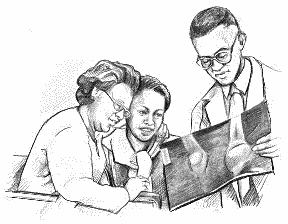
Line drawing of doctor going over an x-ray with patients.
There is much care and dedication among many doctors.

Doctors are intensely, let’s say, socialized to stay within the parameters of accepted practice. It keeps them out of trouble, although it may also keep them from true excellence at times.

Mostly, they love those parameters. They love having guidelines. They are truly, madly, deeply convinced of the value of the meds and procedures that they’re trained in. It doesn’t help that, if they put a foot wrong outside of those parameters and things don’t go well, they can lose everything. They are heavily incented, so to speak, to stay inside whatever they understand their parameters to be.

And, of course, the peer pressure is enormous.

Now, this is tough for CRPS patients. There is so much variation from one CRPSer to the next, that there are NO established treatment parameters that meet the medical gold standard of being consistent, repeatable and reliable over a majority of patients.

None. Nada. Zilch. There is not one thing that consistently works well for most of us — at least nothing that comes from a bottle or an operating room. Activity, rest, hydration and nutrition all seem to be key, but even their benefits are hugely variable, and you rarely hear about them from physicians.

For a while, it was thought that COX-2 inhibitors combined with membrane stabilizers, came close to being a semi-magical bullet. (Gabapentin/ Neurontin, pregabalin/Lyrica, and so on, are known to most patients as anti-seizure meds, but many healthcare providers call them membrane stabilizers.)

Then it turned out that the Dr. Scott Reuben, the physician who popularized that treatment, was making the numbers up (here, reported to his colleagues and here, reported to science fans.)

Old poster of a show called, "Pinocchio, the tale of a marionette"
He was so busy being a puppet of the drug companies paying him, that he forgot what it means to be real.

COX-2 inhibitors were given a general thumbs-down over cardiac effects (which many people with chronic CRPS have enough trouble with anyway) and, as peri-surgical meds, did not live up to Reuben’s promise that subsequent chronic pain would be less.

Ironically, it had already been established that 500 mg of vitamin C two or three times daily for 3 months after surgery does have significant demonstrated benefit, reducing the incidence of CRPS – the most intractable and severe form of chronic pain – by 35-80%, depending on the extremity, extent of injury, and probably the degree of compliance. Moreover, vitamin C is very cheap, as well as very effective. (See extensive links list below.)

The anti-seizure meds, unfortunately for pain patients, did not get removed from first-line treatment.

By then, unfortunately, whole nations (Great Britain and the Netherlands, take a bow) had adopted Reuben’s corrupt recommendations for first-line treatment. It takes a lot more effort to undo that level of adoption than it does to hoodwink an entire sub-economy of peer reviewers and medical specialists, apparently.

The arrogantly reputable journals that accepted his work, and subsequently published other work which was based unquestioningly on his false results, are still trying to live it down. What’s interesting is that other doctors couldn’t replicate his results, so he was the only one publishing these great data… yet journals and physicians continued to publish and follow his recommendations. I do hope the journals revised their “peer-review” process to include more actual, I don’t know, reviewing, perhaps by peers.

Old cartoon of Pinocchio sitting on a pile of books, with a book open on his lap.
It took a lot of people to permit and perpetuate Reuben’s false reports. They are not innocent.

It could take decades to undo much of his damage, and meanwhile, the advancement of treatment has been down the wrong track for years, while other more appropriate avenues of treatment have been ignored or even forgotten.

So, millions of CRPS patients are being first-lined with truly obnoxious meds with iffy benefits and ghastly side-effects, rather than being examined as individuals, and assessed as to whether:

  • neurotransmitter support, most provably with antidepressants, would be more appropriate, given disease-related onset of affective symptoms (antidepressants), sleep problems (tricyclics), or dysautonomia (SNRI);
  • a short, hard attack of narcotics and aggressive PT would answer in the case of a hardy, active, or young person;
  • a proprietary or tech-based treatment, like TCMI or Calmare, are indicated for those who show active neuroplasticity or respond well to electrical stim; or
  • this person is a good candidate for ketamine protocols of one kind or another, some of which are no more toxic than membrane stabilizers.
  • it might be reasonable to try a more experimental approach which has demonstrated significant promise, notably magnesium infusions, immune globulin therapy, or temporary immune suppression.

Oops… Doctors, as a group, forgot to look at the patients in their excitement to have a designated treatment protocol. “Visis mu! Take this mouse – it’s government approved!

If you've worked with government agencies, you know why they're laughing.
If you’ve worked with government agencies, you know why they’re laughing.

But the doctors doing the offering really think this is a great idea. That’s what the guidelines say, after all, and they are evidence-based – except that that evidence was cooked.

While anti-seizure meds do work very well for some, starting with them reflexively is not reasonable: the cost-benefit profile is worse than most of the other potential first-line alternatives, due to high rates of side effects and comparatively unimpressive rates of usefulness.

Using them as a first-line treatment delays more effective, lower-cost treatment for many people in horrific pain, and, between the delay and the cognitive and neurologic side effects of this class of drugs, causes greater impairment (with higher associated costs) in far too many. It should be a second or even third line treatment, if you go by the evidence that has remained credible – taking a back seat to less fraught (not perfect, but still less problematic) therapeutic agents and interventions.

But the docs who lean on it really think it’s great.
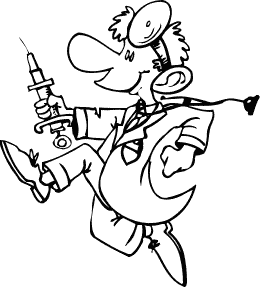
sketch of excessively happy doctor running with a hypodermic needle
“Visis mu! Visis mu! Look – it’s a great mouse!”

Reminds me of my previous pain doctor, a competent technician with a bedside manner directly related to the patient’s appearance. He has a good reputation in his area – which tells you what a lot of rubbishy practitioners there were in the area.

He wanted to shove into the neck of my spinal column a couple of widgets which were the size of Starbucks drinking straws – you know, those really fat ones that you could suck a steak through, if it’s tender enough. Two of those, jammed into a six-inch length of a space that didn’t have enough room for one, and which – as we now know – was already inflamed in much the same way that the spinal cord of someone with a spinal cord injury is inflamed.

He liked it because shoving surgical hardware into other people’s bodies is what he does best, and these widgets have embedded electrodes which could zap the pain signal at the spinal root of my arms and he thought it would work really well and I had the right psych profile for it and this was the greatest thing since sliced bread.
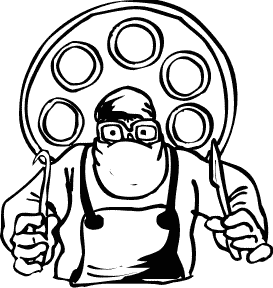
"Visis mu! Visis mu! This is a truly excellent mouse which I am shoving smugly up your spine!"
“Visis mu! Visis mu! This is a truly excellent mouse which I am shoving smugly up your spine!”

It was a nice idea, and, again, this particular thing works spectacularly well for some people. For me, not so much. In fact, it was a disaster. It was truly worse than the CRPS pain, which takes some doing. The equipment trial still gives me spasms due to the mere memory of the staggering physical trauma it entailed.

Truly, each of us is unique.

Once he realized that I couldn’t accept his mouse, his whole manner changed. Just like a sulky cat, nursing his disappointment seemed a lot more important to him than finding something that would help me.

How could I be so callow and blind that I couldn’t appreciate this great mouse he wanted to give me? There’s just no helping some people! His neglect and disaffection was so damaging I had to fire him and move on to the excellent Dr. Richeimer at USC Pain Center, 4 hours’ drive away and worth the two-night stay in the armpit of LA.

Another dear friend, the angelically kind M, has roughly 3 dozen anaphylactic reactions a year. She is so hyper-reactive to so many things that driving past a town with the wind in the wrong direction could be the death of her. 3 dozen anaphylactic reactions a year, and she’s in her fifties now. Yes, amazing.

She saw a young cardiologist, who did what young cardiologists do: he threw upon her a huge, bloody gopher, covered in prickles and gore. “Your heart is dicky! This could kill you in a year! Visis mu, I can save you! Isn’t this exciting?”

Sepia-toned photo of a very dead, gutted gopher.
I processed this image out of respect for X’s exquisite sensibilities.

Personally, I think the appropriate thing to do is to pick that gopher up and shove it down his throat, but when a patient does it, it’s assault and battery with a biohazardous weapon.

The cardiologist, naturally, is doing exactly what he was trained to do and is wildly excited to have such a thrilling case and such interesting news. She, who already faces death on a weekly basis, should clearly get wound up about this because it might kill her if she doesn’t.

Gopher poking head out of hole, looking grumpy, with long claws and nasty teeth.
“Visis mu! This is a glorious mou — er, gopher! Check out those charming teeth, those tiny claws, that helpful expression! Awesome!

A brickbat? A muzzle? What do you think? Words simply fail. All I can think of is applying to him the kind of cat that has nine tails. It’s not a good way to model compassion, let alone tact, however.

As for me, I have to pick a primary doc for myself. My old one retired from private practice, and I miss him, because I could just walk in and look at him and he’d know.

I’m just thrilled at the prospect of training someone new, who will be a generalist treating the peripheral issues of someone with an incredibly peripheral-intensive disease. There will to be many rounds of “visis mu”, as he comes up to speed. And, since it’s all well-intended, I have to find a way to accept one or two mice as graciously as possible. One can only recoil so often before they decide they can’t treat you.

"Visis mu! I care for you, so let me do this wildly inappropriate thing, because I’m too rushed to think things all the way through!"
“Visis mu! I care for you, so let me do this wildly inappropriate thing, because I’m too rushed to think things all the way through!”

They mean well. They really do.

I never have figured out what to do when a cat, with every evidence of caring attention, brings me a mouse. I try to be nice about it, and that’s the best I can do.

Obit
Sadly, Sylvie’s furry little caregiver, Nala, departed this earth for the Happy Hunting Grounds. By a series of flukes, Sylvie wound up with a rescue cat, Filou (meaning roughly “brat” or “mischief-maker”), who has taken over her care with great enthusiasm — and much less bloodshed.

Links

Grouped by subject.

Sylvie’s blog on “neuroalgodystrophie”, mostly French but some bilingual French/English: http://sylvieghyselscrpsdrc.wordpress.com/

I’m shielding my friend M for safety reasons, but I can point you to a blog on managing immune suppression and chronic pain with few drugs and much natural care: http://www.tamingthebeast.ca/

Scott Reuben’s villainy, as reported to colleagues in Anesthesiology News:
http://www.anesthesiologynews.com/ViewArticle.aspx?d_id=21&a_id=12868
And in Scientific American: http://www.scientificamerican.com/article/a-medical-madoff-anesthestesiologist-faked-data/

Vitamin C after surgery or trauma, value established before Reuben’s fall:
From 1999, in The Lancet: http://www.thelancet.com/journals/lancet/article/PIIS0140-6736(99)03059-7/abstract
From 2002, in Belgian orthopedic periodical: http://www.ncbi.nlm.nih.gov/pubmed/12584978
From 2007, in the Journal of Bone and Joint Surgery: http://jbjs.org/content/89/7/1424.long

CRPS at the top of the McGill Pain Index:
https://elleandtheautognome.wordpress.com/2012/09/05/mcgill-pain-index-crps-and-fibromyalgia/

UK treatment protocols for GPs treating CRPS: https://www.rcplondon.ac.uk/sites/default/files/documents/complex-regional-pain-full-guideline.pdf

Netherlands treatment protocols for treating CRPS: http://www.posttraumatischedystrofie.nl/pdf/CRPS_I_Guidelines_patient_version.pdf

Relatively useful treatments for CRPS:
Most suggestions are pulled from the current IASP recommendations for diagnosis and treatment of CRPS or the pivotal work of Dr. R. J. Schwartzman, Dr. van Rijn, and Dr. Breuhl (part of the team that developed the IASP guidelines), with updates from recent science available on PubMed.

Dr. Robert J. Schwartzman’s seminal works..
Outstanding primer on CRPS and what it can do in Systemic Complications of Complex Regional Pain Syndrome
Neuropsychological deficits associated with Complex Regional Pain Syndrome

Dr. van Rijn’s Spreading of complex regional pain syndrome: not a random process

IASP current recommendations: http://onlinelibrary.wiley.com/doi/10.1111/pme.12033/full#pme12033-sec-0023
Simplified diagnostic tool using IASP criteria: http://biowizardry.info/wp/2014/12/the-hidden-simplicity-of-diagnosing-complex-regional-pain-syndrome/

The authors have their blind spots and biases, of course, so researching any therapies that sound interesting is a good use of time.

The National Library of Medicine at the National Institutes of Health (U.S.) is an outstanding clearinghouse of articles from peer-reviewed scientific journals: http://www.ncbi.nlm.nih.gov/pubmed/?term=complex+regional+pain+syndrome
Just add the term of the treatment you’re interested in to the MeSH term, “complex regional pain syndrome”, to maximize useful hits.

Ethan, in memoriam

I tried to find a song for Ethan, who did love music, but it wasn’t working. I’m not much of a poet, frankly, but it was the only thing I could do.

Here is Ethan’s poem from me.


We did the impossible quietly
Getting the boat into harbor
and keeping it safe through the night

Tight hugs abeam unstable piers
My little brother, so big

When I thought I'd die of weakness
You showed me my strength
And, smiling, would not accept less

Tight hugs killing off mortal fears
My little brother, so big

Long nights talking and talking
'til your gyroscope turned and you looked
at the first stains of dawn on the water

Tight hugs at the end of the tears
My little brother, so big

When you turned searching eyes upon me
For the integrity that rooted your heart
You had the grace to thank me

Tight hugs through difficult years
My little brother, so big

You were so impossibly larger than life
I wrote you into a comedy of death
And you were the best thing in it.

I miss your hugs, my dear.

It’s really too bad (a bit of staggering English understatement, there.) He had found the right life and the right wife, and I was beginning to think I’d eventually meet his children.

I hope he’s free of the demons that hounded him so mercilessly. Wherever he is, I expect he’s raising Hell — kicking righteous butt and making the world fall in love with him, and doing both with equal, unquenchable vigor.

Prelude to winter canning recipes

Don’t you love the change of season? Especially here in Middle Cali, where there’s a hint o’ green to mark the second of our two seasons — Drought and Mold.

But seriously… I just had my first blueberry-clove shake in awhile, and boy am I glad I remembered about them. I’m actually stringing a thought or two together. Not eloquently, but let’s not be fussy, ok?

It’s worth noting that I’m staying off social media until I’ve finished a couple of very important projects. I’m using my brain time in a highly focused manner.

Why? Because the seasons are changing, the barometer is bouncing around like a honeymooner’s pillow, the solar radiation (between eclipse, sunspot the size of Jupiter, and X-class flares) is doing the hesitation waltz ALL over my nervous system, and my otherwise lovely partner is genuinely addicted to TV so I have that constant, impersonal nag grating against my brain.
Sketch of brain, with bits falling off and popping out, and a bandaid over the worst
If I weren’t so well-equipped with irony and sarcasm, I’d be howling like a princess with a split nail right before her prom date.

So I remembered about my blueberry clove shakes. This reminded me that I need to prepare for the REALLY hard times that winter brings. And that made me think that there are a few principles to keep in mind for my dietary framework:

  • Vegetables. Lots of healthy vegetables.

    I have that covered for emergencies already: vegetable juice with one of those thought-out “super green” organic powders (my choice is Garden of Life’s Perfect Food.)
  • Anthocyanins in ridiculously strong doses. This is key for my brain function. Huge.
  • Something for bad pain.
  • Something for bad pain with a different protein profile, to lower the risk of developing an allergy.
  • Immune support. Winter, right? Virus heaven.

Brains which are under siege need appropriate saturated fats. I know, I know, we’re told they’re bad. Back up a bit and take a look at that, because it doesn’t hold up to closer inquiry. What we don’t need are INappropriate saturated fats, which, admittedly, are most of the ones in the grocery store.

Chocolate, coconut oil, organic palm oil, and pastured butter are appropriate fats. These are well within the kinds of foods we have been eating for thousands of years, if not longer.

One reason why a bite of something fatty is like an instant lift. The saturated fat goes right to the brain’s pleasure centers. The brain knows what it needs, and we’re wired to like it.
glee
It’s up to us to use appropriate forms of fat, which our bodies can reliably use.

When I’m fighting off a virus, I crave raw coconut, coconut oil, coconut butter, or coconut milk with a gnawing passion. I’m old enough to do what my body tells me to. Interestingly, studies are coming to light showing that just the coconut oil has real benefit for fighting off viruses, among other things. Imagine what we’ll find in the rest of the nut, one day.

For pain, I find that half a tablespoon of 100% grass-fed/pastured butter is better than a pain pill. (It cuts the pain dramatically but doesn’t make me goofy at all.) It doesn’t always last for more than a few hours, but there are no side-effects that aren’t healthy: it makes my heart stronger, helps stabilize my immune system, and reduces my tendency to pack on weight. I’ve found this to be consistently true over the years, and, since it doesn’t match our expectations of dairy fat, I checked the science.

For a fairly extensive and science-supported discussion, look here. I’ll provide some highlights.

100% pastured bovine fat, of any kind, is such an effective anti-inflammatory that it can reverse heart and vascular damage. I’m not sure why it helps moderate my weight, but I suspect it has to do with cleaning the metabolic pathways.

Conventionally-raised or grain-finished cattle are sensitive to grain, as a species, so they have ongoing low-level immune responses to their feed (even without the steroids and antibiotics normally used in beef and milk production.)
feedlot-NRCSAZ02094_-_Arizona_(471)(NRCS_Photo_Gallery)
Naturally, the histamine outfall, metabolic garbage, and fats get stored in their flesh, milk, and fat.

That’s how animal bodies work — a lot of stuff gets concentrated in our flesh and stored in our fat, and if what went into us isn’t right, what gets stored in us isn’t right, either. That’s why people pay so much for the grass-fed stuff.

Now you know 🙂

Getting pastured butter is not hard. In Ireland, grass is cheaper than grain, and (unlike New England or Wisconsin) it’s available nearly year-round.

Gorgeous black and white Frisian cows grazing deep green grass with colorful, healthy fields patchworked down to the edge of a body of water.
Breathtaking shot of Irish cows from Richard Webb

Next time you’re at a major supermarket, grab yourself a block of Kerrygold butter and try a slice on some non-inflammatory food, like a dish of steamed veggies.

Go on, try it…

Now you know what’s behind the recipes I’m going to post next.

Living without hope – tasks and aftereffects

I lived without hope for years. Years. It was weird to look around one day and realize I had no hope, and that I hadn’t had any for awhile. I didn’t think I was going to see another Christmas… for at least 5 Christmases.
ChristmasTree_NOT
When the few friends who were willing to be honest asked me what I hoped for or what I had ambitions for, I had to tell them that I had no hope and I had no dreams of the future.

They really had trouble with that.

Some just did that weird, head-shaking, “I didn’t just hear that” thing and changed the subject. A few asked if I was suicidal. I had been, and I drifted in and out of degrees of thinking about how to make it painless and permanent if I did kill myself, but I was… surviving.

Actually, I was working really hard on surviving. Hope had been sucking me dry, making me see things that weren’t there, putting my energy into some future I could only imagine, but couldn’t see a way to reach.

If I hadn’t been willing to drop everything, including hope, in order to just focus on the business of living with this horrific reality, I think I wouldn’t have survived. I had no extra energy, and hope was too demanding.

Line drawing of woman flat on floor, with woozles coming out of her head
Image mine. Creative Commons share-alike attribution license 🙂

When I came out of that time, very very slowly, it dawned on me that I had been fighting for so long for my own life that, for the first time in my entire conscious existence, I felt no need to apologize for the space I took up, the effort and attention I required from the world, or, in fact, for anything.

As I told my Mom at the time, “I’ve fought for others’ lives pretty often, and when you’re coding someone, they’re your whole world for the time that you’re coding them.
CPR
“If you fight for someone’s life over any length of time, you come to care about them as well as for them, even if you have nothing else in common. Well, I’ve spent years fighting for my own life, and it’s impossible to fight that long for someone without really coming to care about them. I really love myself, in a solid way, with no caveats, and nobody and nothing can shake that.”

So, I don’t associate hopelessness with futurelessness or lifelessness, as most people seem to do. I have every faith in our ability to face life without hope, because sometimes it’s just dead weight. Sometimes, it distracts us from what’s real.

I have faith in us, hope or no hope. I have absolute faith in our ability to move through the stages of this unbelievable circus we call life, and make them work for OURSELVES in the end.

Faith isn’t the same as hope, because it relies on something that’s present now, not on something that might be possible in the future. I have faith in our doughtiness, an old-fashioned word combining the meanings of nerve, grit, and determination. Boy, do CRPSers have all of that!

In the end, hope is a luxury we can’t always afford. Hoping and dreaming — putting our energy into things that don’t exist — can be a real sink. That is, maintaining hope and dreams can, themselves, take more energy than we can afford.

It sounds counterintuitive to someone who’s never been there, because most people think of hopes and dreams as what pulls us forward.

If hopes or dreams pull you forward, that’s good; if they don’t, reconsider, and maybe refocus.

Refocusing on the sheer present business of finding a way to survive with things as they are right now is not wasted time, it’s not suicidality, and it’s not even an act of despair. It’s profoundly rational, profoundly functional, and even when it’s profoundly difficult, it’s still profoundly worthwhile.

From my own experience, I have to say it’s a strange state of mind to live in, but it’s surprisingly worry-free. False worries fall away as fast as false comforts do. Once I accepted the state of life with no hope, there was no room for b.s., either in my world or in my relationships.

Life simplified itself; all I had to do was keep up — or rather, pare down. That was weird too, because I used to find stuff comforting.

In that utterly simple state, though, it wasn’t comforting. It was just stuff.

Having emotional energy invested in something so … stufflike … was absurd. Talk about false comfort!

So, before long, all I had was what I needed; nothing more, and not much less.
teapot-eaglehaslanded
In time, everything changes, even the amount of energy we can spare. I can tell you exactly when I rediscovered the luxury of hope, because I blogged about it here. It was nothing more than the first whisper, because that was all I could support, but it was unmistakeable.

Since then, I’ve also rediscovered flippancy, ambition, and even toilet humor. (My sense of irony never left, which makes me think it’s essential. H’mm…)

But a few things still remain, deep currents in the otherwise twinkly surface of my character:

  • stuff is good only if it’s useful and there’s room for it;
  • nobody, but nobody, decides when I die but me; and
  • I love myself. I may be grubby, nerdy, daffy, clever, ill-yet-unconquered — but I love myself absolutely, without vanity, and without caveats.

If it took living without hope, then I’m better for having done it.

Aphorism for the day: Don’t be afraid of what life brings you. You never know what’s on the other side. It’s just a matter of getting there.

me-fingers-peace

Preparing for winter in “Settler summer”

I’m too conscientious a historian to call it Indian summer, when the normally pleasant California shoulder season turns murderously hot.

I’m cleaning up, getting rid of clothes that were old a year ago and replacing them, and canning, dehydrating and even preserving food. I feel driven to, although it’s a lot of work and not necessarily CRPS-friendly tasks.

J cannot fathom why I’d be cooking in this heat, let alone making heavy, hearty food like bacon mash.

He’s cutting firewood instead.

Yeah, I know. We’re both kinda special.
matchgrins-horsenwoman_decamps-pauline_4blog
I have 4 blog posts almost ready to go up, but I keep making the mistake of starting my online time at social media. Within minutes, my attention is shot. I can’t finish a blog. I can barely finish a sentence.
me_wrysmile
This is the first vaguely functional day I’ve had after a spectacularly ghastly mast-cell-mediated flare.

Silly me, I ran out of my zyrtec (which I didn’t take very seriously; it’s not important like an SNRI, right? HAH!) and spent one day incoherent and two days merely swollen, crabby and able to cope only by losing myself in mindless tasks or Terry Pratchett books.

Took a day to figure out what was wrong. Partly, that was because I didn’t realize how much the zyrtec was doing for me, and then, of course, there was the headache that made me want to hack off the offending part, which made it quite hard to reason things through.
Sketch of brain, with bits falling off and popping out, and a bandaid over the worst
J is still avoiding me, hiding in the trailer with the tv when he’s not actively butchering logs. It’s possible this chicane isn’t over yet; his behavior is usually a reasonable guide to how unbearable I am.

I only took one zyrtec today, as my stomach would not even think about more. In a couple of days I may be back up to my usual 2. It will be nice to have normal fingers; reasonably functional digestion; less inflammatory pain playing xylophone on my spine, with rimshots off the other joints; and maybe a calm and considerate personality again.

Anything is possible.
Trapeze_artists_1890

Isy’s anti-inflammatory mashed potatoes
Obviously not for those with belladonna sensitivity.

  • 5 pounds organic red potatoes, cleaned and coarsely chopped
  • Turkey broth
  • 1 organic white onion, diced and lightly browned
  • 4 oz grassfed butter, like Kerrygold or Organic Valley Grassfed, in chunks
  • 10-12 oz grassfed aged cheddar, like Oscar Wilde 2 yr, Cabot Extra-Sharp, or Kerrygold aged cheddar, sliced or chunked
  • Optional: nitrate-free naturally-raised bacon, like Niman Ranch, cooked until very crisp, then drained and crumbled fine

Steam the potatoes in the turkey broth.

You might need to assemble the rest by halves, depending on the volume of your mixing bowl or blender.

Dump the rest of the ingredients into a mixing bowl or, if you have a really good blender, use that instead. Put the potatoes and broth on top, so the butter and cheese start melting under them and make it blend better.

Beat or blend until it’s the consistency you like.

Enjoy it nice and warm on an achy day.

Learning to stand: t’ai chi, qi gong, and unscrambling the CNS

About 15 years ago, I studied shaolin kung fu with Ted Mancuso at the Academy of Martial Arts in Santa Cruz. I was outrageously lucky to wind up there. I had too much spiritual feeling to tolerate the gym-type martial arts classes normally found in the US, but not nearly enough discipline to make the most of my time at the Academy.

However, I did learn a few things, including how to block a punch in such a way that my opponent’s spinal reflexes were disabled for my return punch. That was cool.
circulation-allbody-Anna_Fischer-Dückelmann_1856–1917
Being short, blonde, female, well-traveled, and — above all — a sometime Emergency nurse, all my illusions about bad things only happening to bad people were long since destroyed. It’s a great big world out there, and anything can happen to anybody.

So there I was, in my self-satisfied early 30’s, at a top-flight martial arts training school. The fact that the teacher (or “sifu”) had started in qi gong somehow totally eluded me. I was infatuated with the grandmother of martial arts, shaolin kung fu, and really had eyes for nothing else.

Smiling sparrers from Shaolinsuomi at Wikimedia.

I briefly flirted with t’ai chi, but decided it would be too hard on my knees… Knees are important, but shoddily made. I had cruddy cartilage (what was left of it) under my kneecaps. I thought that was painful (how cute!) and was afraid of making it worse before my time (another joke, in retrospect.) I got physical therapy for that problem, and learned that my legs had been aligning poorly at least since I was 11.

Retraining my legs to activate different muscles, ones I could hardly feel (and no wonder), was daunting at first.

I remarked to Sifu Ted, in tones of reflective melancholy overlaying a certain smugness, “I’m re-learning how to walk.”

That was supposed to be the opening line of a short discourse on rebuilding something so fundamental, literally repatterning one of the most reflexive early lessons in life, going right back to the beginning and restructuring an utterly basic activity … yeah. Cute.
children-Versailles_petit_appartement_de_la_reine_web
But, before I could get started, he said, in a tone of unrehearsed frankness overlaying a certain frustration, “I’m always relearning how to walk.”

My verbal hot-air balloon deflated on a laugh, before it ever left the ground.

He said, “It’s true.”

I nodded, and went away to think that over for a decade or so.

I thought of Ted when I realized that combining energy discipline and body work was the best rubric for managing my CRPS. I’m back at his school now, studying — you guessed it — qi gong and t’ai chi.

Um… No, it’s not too hard on my knees.

T’ai chi is second to nothing I’ve tried for correcting posture, the way Ted’s Academy teaches it. While each body is unique, there are certain things that have to happen in order for the movement to work. To do good t’ai chi is to line your body up properly. My low back is slowly opening and lengthening again, and my feet are remembering how to find the ground.

Qi gong is another dimension beyond that. I’m sweating over re-learning how to stand. When I find the words, which may take awhile, I’ll write about it more. To start with, I’ll just say that I had no idea how much I get in my own way — and I’m not that bad, for a Westerner. I started qi gong 20 years ago, but now I’m starting all over again.

I thought it was trippy to go back to when I was 11, and un-learn from there. Now I’m realizing I have to go back to when I was 1.
Faience_beer_stein_with_ball_scene_on_brown_background_web
But I’m looking forward to knowing how to walk.

Move slowly, stay happy… except when pushing one and a half to two inches straight down on the lower half of the sternum

We went to a great farmer’s market, where J got me a ceviche tostada that had to be tasted to be believed. I got a flat of outstanding organic peaches to dry for the winter. All this is much easier said than done, because today, for some reason, is pretty harsh as pain days go.

J wanted to know, in his brusque-backwards way, what I intend to do about it.

I replied that I’d probably trim his hair, then lie down for a bit, then watch a silly show, then come help with the wood — which means, bringing cold drinks and looking on admiringly.

I said, “Managing pain days is basically a matter of, move slowly and stay happy — to the extent that that’s possible.”

He liked that. He added jovially, “Used to be more like, move quick so I can get away from people — then I could stay happy,” he said, veteran of a socially hideous region.

We both laughed.

matchgrins-horsenwoman_decamps-pauline_4blog

Moments later, we saw people beside the road, one lying down. I saw CPR.

CPR

I barked, “Pull over NOW!” J knows my voice, and he’d never heard that tone before. He did. Instantly.

A first responder was doing chest compressions, and getting tired. CPR is incredibly hard work; if Mr. Universe did CPR, he’d tire even quicker.

I got down and planted my less-injured hand on the responder’s stacked palms and between us, we made a strong enough compression to create a pulse in the patient’s leg. This is what you want to do: create an artificial pulse, to sustain the vital organs until the heart itself can be restarted.

The runner had felt chest pains 5 minutes before, according to his workout partner. Then he went over. Just like that.

I won’t go into messy details, but by the time the helicopter was landing and I’d brushed myself off to come home again, I was aware of how strange it was to do this outside the ER, to snap into lifesaving mode from a standing start, and to find myself — without the mental shield of my work-badge and trusty stethoscope — turning away from a still-blue figure and not knowing if he’d make it.

J said of the man behind us, in his elliptical way, “He didn’t look like a jerk.”

I said quietly, “No. He had a really nice face.”

I’m sure he had good medical care. He worked out to keep fit, and had the muscle tone to show for it. He had a bit of chest pain 5 minutes before, then keeled over.

It’s not fair.

I took my clothes off carefully, keeping the dirt off me and turning them inside-out before dropping them in the laundry. I washed my hands and arms to above the elbows. I used to do that on coming home from work, every time. But I’m not able to work, and those weren’t scrubs.

I have some additional prayers to make now, and a body of my own to manage.

I have to move slowly, and stay happy, to the extent that that’s possible. There’s nothing else that could possibly help, because I’m no longer in the ER. I’m a 13-year veteran of the worst pain disease known to medicine, and I helped do CPR today.

I wrote this in the hope of coming to some conclusion that would make it easier to move on from this shell-shocked state of mental mumbling. I haven’t, yet… but let me add one thing.

This man had every chance, once he went down. CPR was started within a minute. The ambulance arrived within 5. He should be getting definitive care within 15 or 20 minutes of hitting the dirt. This is how it’s supposed to go.

In honor of this man who was given every chance, and in honor of my father who never had any, please learn CPR.

Even if your bones are too frail, as mine are, you can still provide the extra push that’s needed.

Even if you can’t risk infection from someone else’s fluids, you can still check for a pulse while others do the dirty work.

Even if all you can do is puff your chair a little closer, you can still direct the able-bodied, because it really helps to have a cool head looking over the whole scene.

Please learn CPR. You’d be amazed at what you can do with it. Those of us with disabilities get too much of the message that boils down to “can’t”, but when it comes to working to save a life, if you know the protocol and what to look for well enough, then there’s usually a “can” that you can go for.

I gave the police my name and number, and I hope to find out if our guy made it. (NB: Details were changed to protect his privacy… but I’m sure prayers and meditations and good thoughts will get through just the same.) I’ll post a comment to let you know.

In the meantime, here are a few links.

My ANS is going to be vibrating for awhile. I’ll start with lemon balm and see what else I can remember to do.

Define “invasive”

I was a Registered Nurse for 8 years — in one of the first HIV specialist units in the country, in the only public ER of one of the murder capitals of the US, in cardiac telemetry, in home care. It was a good, demanding, well-rounded career, if a bit short for my taste.

I’ve often wanted to re-educate my nursing self in light of my experience as a patient.
me-tongue-out
Here’s one of the most outstanding, outrageous lies we tell ourselves as clinicians: medications are not invasive.

That statement bears no resemblance to the reality of those being treated. It relates entirely and exclusively to the clinician’s experience. The clinician’s unstated assumption is, “I’m not hanging onto the thing that’s getting under your skin; therefore, what I’m doing is not invasive.”

News flash: Treatment is not about the clinician. It’s about the person being treated.
me_wrysmile
Medications get taken into the whole body, not just the ill part. Injections go right past the first barrier against infection and assault, the skin. Oral medications go through the mouth, descend into the stomach, and there meet the second barrier to infection and assault, the GI system… which they either aren’t bothered by, or can resist.

They’re then taken up by the blood, which goes everywhere.
circulation-allbody-Anna_Fischer-Dückelmann_1856–1917
They are all processed in the liver (it’s called “phosphorylation” and, privately, I suspect that’s why we tend to have trouble with phosphorus issues when we’re on lots of meds.) This is why too many meds for too long can lead, or contribute, to liver failure.

What goes through the liver goes through the spleen and kidneys, because that’s how it works. This is why some drugs can cause kidney damage.

What hangs out in the blood can, all too often, hang out in the brain. This is why some medications for organ issues or even a simple infection can cause deafness.

Blood circulation exchanges fluids with lymphatic circulation. Blood and lymph communicate with the central nervous system via the blood/brain barrier and the sheath around the spinal cord. The blood/brain barrier provides partial, rather temperamental protection, but it can be suborned by anything that makes the tissues fragile — fever, illness, injury… and some kinds of medication.

What is in the blood goes everywhere.
circulation-allbody-Anna_Fischer-Dückelmann_1856–1917
How is that not invasive?

I’m watching my partner fading with weakness after only a week on a couple of cardiac meds. I’m certain his heart has not gotten worse in a measly 7 days. The only thing that has changed is that he is seeing doctors and taking medication — for nearly the first time in his life. (“No side effects,” my left foot.)

How much of that weariness is stress, how much of it is the past couple of years catching up with him, how much of it is heart disease (actually, that part is pretty clear) and how much of it is medications? Each of these things has some part in it, there’s no question, but drawing the line between them is more than I can really do. I know the meds are part of it, but how much?

Medications are intimately, unavoidably invasive. There is no completely safe dose, and there is nothing that helps you for free.

Everything — meds, interventions, surgeries — EVERYTHING has side effects. There is no single thing you can do to your body, or allow others to do, that doesn’t affect every part of you in some way.

My years as a CRPSer, where the consequences of every change are so exaggerated, makes this pitilessly clear to me.

Given that there is no free ride, we have to look at the tradeoffs. Knowing that there are issues with absolutely everything, however “natural” or “close to our bodies’ own chemicals” it may be, we have to balance that against whatever benefits it may have.

Herbs are included, by the way. My increased sun sensitivity (which my disease causes a bit of anyway) and impairment of birth control (which I don’t take — what, mess with these chaotic hormones?) are side effects I shoulder with my eyes open, so that I can have the neurotransmitter support of the St. John’s wort herb I take twice a day.
St._Johns-wort_(Hypericum_tetrapetalum)_(6316227601)
I review all my medications twice a year at least, to see how I can tread the narrow path between optimum benefit and minimal confusion. Doing this from a chronically slightly confused state is, naturally, a whole different kind of fun. Working out which part of the daffiness is disease and which part is meds and supplements is really my most important task.

My partner has to choose between cautiously building back up some heart strength and circulation — and meanwhile have a life that is a small fraction of what he used to have for energy and activity, unless and until the medications and rehab really work; or risking the total loss of death by having a surgery which would leave him in pain and in rehab for awhile — but, afterwards, bring him back a lot closer to his normal, with many good years ahead.

Wait and see and work and hope, or take a leap and — if you live — work and probably win?

In a way, I envy him. If there were a procedure to do a bypass graft to eliminate CRPS, I’d be in the OR already. I’ve had enough of a twilit life, of exhaustion and fog. I want to get back into the full sun.

I miss running, too.

But it’s his heart, not mine. I do my best to explain things, listen carefully so as not to run over his real thoughts, and grab hold of my anxiety with both hands, so that any decision made is truly his. As it has to be.

Until then, he has to peer through the fog and work through the weariness of these “non-invasive” medications, to make his choices and his appointments. I’m just there to help — and to make sure he’s taken seriously, which is a real drawback to looking as fit as he does.
J-playing-on-treadmill
But that issue is another post…

Acute pain, chronic brain, and naming this ratfink disease

Complex Regional Pain Syndrome is the latest in a long line of names for this disease. Some of the older names have been recast to cover aspects of it, or versions of it, or special cases, and of course there are overpaid people who argue about it intensely. I’m going to go out on a limb and list a few sometime-names, sorta-names, and related-names to go on with:

  • Complex Regional Pain Syndrome
    Until recently, there were two subtypes: Type 1 had no visible nerve damage, Type 2 did. However, with chronic CRPS, there is extensive and pervasive nerve damage, and it makes no difference in treatment after the acute stage, so this subtyping is widely considered irrelevant.
  • Sudeck’s atrophy
    No longer used; atrophy of bone and muscle is really symptomatic, and not always present.
  • Causalgia
    No longer used, except as an old name for CRPS type 2.
  • Reflex Sympathetic Dystrophy
    Used by old-timers and sometimes for CRPS type 1, although CRPS-1 is not necessarily maintained by the sympathetic nervous system.
  • Algodystrophy
    More often used in Europe; also, neuroalgodystrophy. Problematic because it implies that this is the result of autosuggestion. I know I could not have made this up in a million years; moreover, extensive analyses of the literature show that there is simply no truth to that.
  • Neurodystrophy
    More often used in Europe. It’s a perfectly good name, but not the one that the IISP paid a bunch of specialists to come up with)
  • Reflex neurovascular dystrophy
    RND; no longer used, because it only addresses vascular changes, not neurology or systemic issues.
  • Shoulder-hand syndrome
    No longer used, except to refer to upper-body chronic neuropathic pain while dodging a CRPS diagnosis.
  • Peripheral trophoneurosis
    Good one, eh? No longer used, both because it may spread out of the periphery, and it’s not about neurosis. See “algodystrophy” above.

For more on comparative naming and different nations’ approaches over the years, check out the RSD Canada site.

A certain amount of acute CRPS does clear up (or go into remission) before it’s even diagnosed. Since it can take years to get diagnosed, there’s not a good way of figuring out what those numbers might be. Even after diagnosis, acute CRPS can go into full remission and never show up again, before it becomes the ground-in form of trouble I call chronic CRPS.

In its chronic form, CRPS is a disease of dysregulation — of everything being thrown off balance. Our efforts to push back against any given part of that are quite likely to throw our systems off balance in some other way.

The body doesn’t balance simply, like a seesaw; it dances in 4-D homeostasis, which I’ve explained here. It’s a bit more like this:
Trapeze_artists_trimmed
Now imagine pushing one of those trapeze bars the wrong way.

Adjustments need to be carefully incremental in order not to distort the system further, but often need to be done quickly because the situation is so horrible to be in.

It’s a conundrum.
Sketch of brain, with bits falling off and popping out, and a bandaid over the worst
Personally, I’d like to have different names for acute and chronic CRPS. Here’s why:

Acute CRPS is all about the pain, with swelling and dystonia and circulatory high-jinks playing second fiddle. With acute CRPS, good results are consistently found with vitamin C (500 mg twice or three times daily is the usual dose range) and also with activity plus pain control, both quite aggressive.

Apart from that, therapies vary widely as to what will work with whom, but chances of remission in the first few months are very good, and in the first few years are still comparatively good.

After that, the whole situation changes.

With chronic CRPS, you realize that you have to find a way to live around the pain because so many other things are going wrong, life itself has to take center stage at some point, and pain has to take its turn in the wings.

Once the brain plasticity has gotten going, it’s no longer just a pain disease, but a disease of dysregulation, as the signals change and the body’s responses to the signals change and the brain’s ability to even recognize appropriate responses to temperature, circulation demands, sensation, perception, and so forth, all slide downhill.
Bosch_painting_of_Hell_(582x800)
In acute CRPS, having the word “pain” in the name is absolutely appropriate, because that must be addressed to let the brain reboot and get back to normal.

In chronic CRPS, pain often remains a huge part of it, but the central brain-changes are what creates and sustains the disease state. Pain is, clinically speaking, a ghastly distraction.

It’s a key symptom, a good guide (since muscle weakness, sweat and circulatory changes all tend to track to it at least some of the time), but it is not the driving force of the disease. The brain changes are.
poison_skull
Pain is terribly seductive to researchers, because people who don’t have chronic CRPS think they “get it” about pain (hah!) and, since that’s easier to relate to than the word “complex,” let alone the hopelessly misunderstood terms “regional” and “syndrome”, what they focus on is the pain.

The real problem is the brain, not the pain.

In my private internal world of reason and order, chronic CRPS is actually known as Complex Neuro-plastic Dysregulation, CND.

My eyes make words out of letter groups, usually just by adding a vowel. What comes to mind for me is, if you don’t win at CR[a]PS, you get C[a]ND.
craps-tshirt-front
Makes all kinds of sense to me 🙂

Threads on the loom: bereavement and CRPS

When I was 4, we moved to New Jersey from Turkey, as my parents thought their kids should get a feel for their native land. Our new backfence neighbors were a large and lovely family from Virginia, so I learned to spell “dog” both with and without a “w” by the time I was six.

The youngest daughter got me going on poetry. We read A. A. Milne and Louis Untermeyer in between dips in the kiddie pool. Her Mom, Mrs P, gave me drawing lessons when I was about 9.

My Mom was very maternal in her genuine enthusiasm for all my art. (I found that frustrating, because I knew it could be better and had no idea how to make it so.)

Mrs P did not have that problem with me… Her key edicts make reasonable rules for living: For one thing, I should not draw the whole scene until I was capable enough (don’t let things overwhelm you.) I had to pick the parts that were most important or that caught my eye, keep it simple, and do it right – or else there’d be erasing, and, if you erase too much, the surface gets harder to work on. (Isn’t that the truth.)

She was also good for the reality check. She quickly eliminated my grade-school habit of drawing red apples and brown trees, but made me look at a real apple and draw that; hold my colored pencils up to the tree and see which colors really matched.

See what’s really there, not what I expect or what I’ve been told things should look like.

The biggest note of approval I ever got from her was, “not bad.” By the time I was 6 weeks in, I was able to collect a “not bad” or two almost every lesson, which pleased me no end.

CRPS took away the link between brain and hand that let me make art, but one thing really stuck with me …

Why settle for good or even great, when you could aim for making it absolutely right?

“Good” and “great” are about others’ opinions, but “absolutely right” is something ageless that stands on its own.

Later that year, our parents sat us down to have a family meeting. Dad had been offered a job in Cairo, Egypt. He wanted to know what we thought about moving to Egypt in a few months. Mom and Dad discussed pros (long list) and cons (short list.) Older Brother asked about schooling (very good) and the social scene (unknown, but probably interesting.) Younger Brother piped up with characteristic curiosity and adaptability.

It seemed like a done deal, but I was wrong. Dad looked at me and said, “What do you think, Isy?” I must have looked surprised. He said, “You have a good sense of people. I don’t want to finalize this decision until I hear what you think it’ll do to us, either way.”

Should I be nice? My first instinct was to be nice, to stick up for the shabby underdog (in this case, New Jersey), to do what I thought was expected of me … but it stuck in my craw. Perhaps Mrs P’s lessons on seeing things as they really are had sunk in.
I said, quite honestly, that New Jersey was not being good for any of us (except maybe Younger Brother) and that Egypt would be new and interesting. We all liked new and interesting. So, as far as I could see, it was hard to see a downside to going, and hard to see an upside to staying.

So we went. And I got an early lesson in the value of calling it like I see it.

Our vacations were dreamlike, because we were close to some of the most striking sights in the world:

  • El Alamein and the remains of fallen soldiers from 5 continents;
  • The Red Sea, when it was still the most outstandingly varied and brilliant source of sea life on Earth (it’s still good in spots, as that video shows);
  • The southwest coast of Turkey when Bodrum (formerly known as Halicarnassus) was still a fishing town and their medieval castle the tallest building in it;
  • And, of course, the remains of roughly 8,000 years of Egyptian history from before the Old Kingdom, down through all those Rameses, Greek absorption, Roman annexation, Medieval flowering and Mameluk co-optation, the French and British tradeoffs, modernization as the royal family fell and the secular dictatorship accepted Nazi help to fend off the British return, the flowering of art and writing as the world wars faded and the newly mobile masses could collect like runoff from the tortured continent to the north. The Ancient history is only the beginning…

During the day, I learned about path-finding, history, and sea life, and in the evenings my mother read to us from local literature such as the Odyssey, the Iliad, My Family and Other Animals, even A Connecticut Yankee in King Arthur’s Court (the sharpest satire on jingoism and culture shock ever written.)

My parents had a gift for making the most of teachable moments.

The move turned out to be an excellent choice for all of us: Older Brother became a track star on the international circuit, I found a crop of kindred spirits, Younger Brother’s precocious historicity kept growing, Mom became a successful working photographer (and, as it happened, a role model of working womanhood for every intelligent female friend I had), and Dad got paid to help people – then towns – then governments get better and better at handling their money and improving their chances for a sustainable future.

The day I drafted this is the 38th anniversary of that move.

Dad was great at practical stuff. He genuinely liked humans, despite being such a historian. He often said that people are like table wine. Each one is a blend of different strains: good and bad, clever and foolish, creative and not, good with money and profligate, nice and otherwise… and each person’s blend is a little bit different. If you can accept each of them as the blend they are, and not try to change them – into a different blend, or even into beer, for instance – then you could really come to appreciate the variety that this world has to offer.

People are what they are. Accepting that makes for better connections.

The first time he taught me to drive was when we were on vacation in France, which was cheaper to get to than the US. We had rented a historical farmhouse that was about to become a gîte (at which point the price would go up), so we got all the benefits – a fireplace Younger Brother could stand up in, window sills two feet thick to sit on, a lush yard going down to a creek at the bottom with a moat up one side of the yard, a line of stately chestnut trees, twittering birds, fresh eggs and raw milk from the neighbor – for considerably less than we should have paid.

The rental car looked like it came straight out of a matchbox, but it was a real, rattly little French Renault. Dad sat in the passenger seat and directed me to the driver’s seat. He told me about the brake, the gas and clutch, the gear shift, the friction point, and how it all came together. I got the friction point coordinated and tested it a few times.

Then he said, “Okay, here we go.” I checked the friction point again and then stopped. He said, “No, I want you to go. Go ahead and drive across the yard.”

Oh, okay then. I can do this.

I grabbed the wheel tightly, engaged the gear, and eased past the friction point.

The car snorted briefly, pawed the ground, took the bit firmly between its teeth, and off it went. Or so it seemed to me.

The car charged off the gravel, kicking it up behind. It careened over the lush yard, carrying us past (fortunately) the huge stone house. It rocked and bounced off of molehills, scoring crazy tracks through the soft green earth.

I noticed my Dad was yelling, but he never yelled, so that was confusing. I didn’t understand a word of it, anyway.

Completely out of its metallic mind, the car charged past the trees, heading straight for the neatly-dug moat.

I was helpless to stop it. My own involvement had escaped my awareness completely. I simply hung onto the steering wheel for dear life, eyes wider than ever, completely absent to the fact that MY FOOT WAS ON THE GAS.

All at once, Dad finally got his full-grown leg around the gear shift and kicked my foot off the gas pedal and stamped on the brake in one astoundingly swift move.

The car sputtered, died, rocked to a standstill.

Its front wheels were on the lip of the moat. Below us, three feet of water and unimaginable depths of sticky mud glittered silently.

Little clods of earth trickled out from under the front tires and dropped in, stirring tiny clouds as each one descended through the water and into the mud.

All was quiet. Even the birds were too shocked to peep.

I sat there, frozen, hands locked on the wheel. I was alive. And dry. It was shocking.

I didn’t dare to move.

I heard Dad take a breath, and then take another. I felt, even with my head still turned away, two completely different speeches considered, then thrown away before he even made a sound.

I turned to see what he’d finally settle on, and whether it would finally involve a pair of hands wrapped around my throat – something I’d never seen him do yet, but you never knew, especially after a performance like that.

A pair of blue lasers drilled me to my seat.

Very quietly, very clearly, very firmly, he said, pronouncing each word distinctly:

“When what you’re doing doesn’t work… Try. Something. Different.”

Words to live by.

It was years until I was anywhere as green as Bordeaux. I lived along the Mohawk Trail in my 20’s. My excellent friend Paul was the hub of a wide circle of friends who, even if we couldn’t always stand each other individually, felt strangely as if we were still part of the same tribe: Paul’s tribe – or, as we called it at the time (such was his gift for invisible influence) The Tribe.

Paul was a master of appreciating people just as they were – even if that was not necessarily what the person in question wanted to be. He was the first to say, in assured tones,

“You’ll figure it out, Bella.”

He wasn’t kidding, either. He had complete faith in me, in spite of the evidence. I don’t know why. It sure helped, though.
My Dad died in early February 1999 while swimming in Egypt. I still remember the way the word “No” echoed off the walls of my little room at 4:08 am, when I got the call. The second flight on my 3-legged trip back East was overbooked, and I was going to get bumped.

I went up to the desk with my untucked button-down shirt, uncombed hair, and my own pair of blue lasers. Very quietly, very clearly, very firmly, I said, pronouncing each word distinctly, “My father is dead. I’m going back to bury him. I will be. On. That. Plane.”

And I was.

On January 23rd the following year, Paul decided to sleep late, and never woke up. On the plane to his funeral, I wrote to the father of one of my oldest friends from Egypt days, who had end-stage cancer. It started something like this:

“I’m on my way to a dear friend’s memorial, and I’m keenly aware that life is short and time is passing. Even though I don’t know you well, because you were my friend’s father rather than my friend directly, you matter to me. I want to let you know how important you’ve been throughout my life.” And then I told him about the ways his life had intersected mine over the years, brightening it along the way.

It was the last letter he received in this life.

Deathiversaries.

That’s my word for those days that sneak up on the calendar, dropping shards of stabbing tears out of a clear blue sky, breaking my knees for a moment as the agony of the unfillable absence hits me anew.

Now, not to strain the violins further, but the period that encompassed the deaths of my father, Paul, and my friend’s father also encompassed several other bereavements, a crippling stroke of my grandmother’s, the heartbreaking failure of my almost-marriage, the end of my nursing career due to illness, being too sickly-weak to make it to the mailbox and back for months, starting a new tech career from nothing but raw talent and pure luck, and moving.

And I really hate moving.

That was all in 18 months. I was a different person at the end of it. I’m sorry to say that it was someone who could face the devastation of CRPS with a lot more poise, but it still sucks.

Last Monday, January 20th, my old neighbor and teacher Mrs P died in her sleep. I haven’t seen her in 38 years (minus a week) but something as sharp and bright as faceted crystal slid out of my world.

My kitten Ari was a comfort to me, flinging himself firmly onto my body, as if to shove his strength and warmth into me.

He was enormous in every way: 10 pounds at 10 months and all of it lanky muscle, enormous love, enormous cheer, enormous charm, enormous athleticism, enormous independence, enormous courage, enormous confidence, enormous sense of humor … he was enormously unusual, even for a cat. He was an enormous invitation to life, just by the way he lived it.

Four nights after that, Ari disappeared. The following morning he was found on the road, dead and cold. Our Lovely Neighbors got us through, from finding his body to explaining to J to telling me. (I’m weaker now. It’s the buckling knees I remember.)
Partner J dug a perfect meter-deep grave, bedded it 6” deep in sprigs of fresh California bay while I blew sage smoke in, and I carried my kitten down to his final spot in the sun, at the bend in the path where he played with our dog and the Lovely Neighbors’ numerous cats.

I took the loss hard.

I’m an old hand at grieving. I can walk through the stages and the process in my sleep, although my body handles it worse all the time.

  1. The initial devastation and shock.
  2. The tasks:
    1. communicating the news,
    2. planning the funerary rites,
    3. preparing the final rest,
    4. performing the rites one needs to lay the deceased, as well as life with the deceased, to rest,
    5. cleaning up their things,
    6. comforting each other,
    7. getting something to eat,
    8. reminding everyone to be extra careful and remember to drink lots of water, which we tend to forget nevertheless.
  3. The reactions:
    • Noticing the way sunshine lands on my skin and birds sing in the trees but it seems to come from a world that’s not quite the one I’m in.
    • The way I have casual surges of wishful thinking: wouldn’t a bullet in the brain be nice about now? This isn’t suicidality (I promise), it’s my mind’s way of signaling that it’s overwhelmed by horrible feelings that it can’t do anything about, and it’s tired and doesn’t know what to do.
    • Re-learn the daily habits that this person (of however many feet) used to be involved in. That’s so dislocating. I don’t need to eyeball a certain corner of the bed before moving my feet now. I’m not even awake when I do that. It’s so horribly weird to wake up by realizing I don’t have to look.

Then the misnamed “stages” of grief, which are really nodes, which can be visited in any order.

  • The anguish, where life without that person has to be faced.
  • The anger, like, why couldn’t that little cuss cross under the bridge as usual, instead of testing one more damned limit and crossing over?
  • The bargaining, although I stopped bargaining years ago. I don’t seem to do that now. Too many unanswered prayers wept and bled into silence.
  • The sweet memories that stab like a ray of sun in my eyes, bringing tears that gradually wane over time, until those memories bring mostly sunshine.
  • Finding a new pattern beginning to emerge in my life, one that encompasses that absence without filling it, but making it less of an obstacle over time. They call that “acceptance”, but I think that’s a bit of a misnomer. I’d call it adapting.

I’ve only realized how very deep and interconnected life is by losing parts of mine. In that 18-month period of multiple losses, I found myself mulling the image of a complex weave on a loom, where each person and each influence in my life was a thread.

Some threads were solid and stable, some were wildly colorful, some thick with burrs, some wove in and out of the pattern, some were knotty and strange, some were pure gold.

When a major thread, or a lot of threads of any size, were ripped off the loom, then the fabric was distorted and there was a visible gap in it for a long time. I could weave on, but that band of the fabric was weaker – sometimes for years, sometimes for a lifetime. It takes a very long time to rebuild from the loss of enough warp threads.

It takes time to work new threads into the weave of life, and longer still to see which ones work in the overall pattern, and which ones fall out on their own – or need to be pulled out, for the damage they do to the rest.

Some people and influences are part of the warp, as they’re meant to stay in the weave for its length and are made to be strong. Career, close family, good friends, matters of identity – these are all warp threads which usually shape and color our lives all along its length. Each one has its own color and texture and breadth, which varies from person to person, and each contributes a depth of color and texture to the weaving that nothing else can provide.

In life, unlike fabric, the warp threads are highly individual.

When one of those gets ripped out, the whole weave … well … warps.

Some people and influences are weft threads, and are easier to change out. Doctors are usually weft threads, although the need for medical care is a warp thread for some of us. Jobs are weft, while careers are usually warp.

I lost a number of warp threads in that 18-month period. Between the end of January and the second week of February, the closest bereavements hit, year after year. The weave of my life has warped, over and over, in the armpit of winter.

I shift my stance from relying unthinkingly on having a lot of strength inside and out, to being mindful and precise about where to put my diminishing attention and energy.

I’ve learned to be more and more aware of good times, genuine love, beautiful days, radiant people, perfect moments, delicious food …

When I look back, I have far fewer regrets when I really noticed good things at the time.

I didn’t expect to have that kitten in the first place.
Even in this season of bereavement, I didn’t expect to lose him so soon.

But when he was here, keeping me permanently in a mild state of befuddlement because he was so much larger than life but still so very young, I sure noticed.

One day, that should be a comfort.

Meanwhile, as CRPS continues to change the game on me, I’m trying to learn to handle bereavement-amidst-deathiversaries with this new and different body-system.

My autonomic system is normally in a state that maps most closely to that of someone who’s being continually beaten with a live cattle prod, but years of practice have taught me when to ignore it and how to manage the results somewhat.

It gets better and worse from time to time. Stress, uncertainty, poor diet, missed meds, solar flares (believe it or not), and injuries, all crank up the volume on my oscillating central nervous system.

Bereavement is stressful, unpredictable, and contributes to poor diet, missed meds, and injuries. (Possibly solar flares for all I know.) Deathiversaries are a hardwired physical memory of bereavements. Having both at once is like being hit from both sides at once. Double oscillations that don’t cancel each other out, but feed into each other and magnify their effects.

All right… What’s an oscillating nervous system like?

Right now, the skin on my face is so raw that my partner’s nice springy beard feels sharper than a cheese-grater. My left lower leg wants to turn into a lump of Dacron, impenetrable and basically useless. My wrists and forearms, well, the less said the better, but I have to hold my mug with both hands to avoid wearing what’s in it. I went outside in soft shoes today (I usually wear hiking shoes) and the friendly little stones in the yard slowed me down considerably, as each one wanted to get way too personal with my foot-bones.

That’s the physical side of CRPS.

Because of the brain changes that make that stuff happen, there’s a parallel process that happens on the emotional side. Imagine the same degree of relentless rawness and unquenchable pain inside the heart and mind, and you’ll have some idea what it’s like.

I’ll give you a minute, if you like.

I don’t mean to whine, it’s just a fact of life with this disease. It takes a lot of managing, because my mental state wants to default to, well… how distressing and upsetting it is to be beaten continually with a live cattle prod.

How do you deal with an oscillating nervous system?

When your world is being purged, it’s important to replenish and nourish. This means extra antioxidants, extra meditation/biofeedback, extra hugs, and – if possible – someone else to clean the house and help with laundry and cooking.

One must eat, clean, and cope, and if it takes help, then I ask for help.

Herbal lemon balm extract helps cut the flared nerve pain. Chamomile and lavender tea, maybe with tulsi, helps me get to sleep. Some people do well with vervain or ashwaganda.

Homeopathics like ignatia amara and hypericum ease other parts of my nervous system responses. Also, I use an essential oil blend from Young Living called Valor, to reduce the hotwired panic reflex and hyper-alertness.

In case it isn’t obvious …

I don’t care what academics say, I only care what works for me. Empiricism is the only form of science that matters in the individual case.

I keep busy in order to keep my mind from exploding over the surfeit of losses and memories of losses, while CRPS takes the brakes off of all the feelings – physical and emotional alike.

This leaves me to manage the resulting inward chaos with whatever poise I can fake, because I know that a certain part of it is grief but a certain part of it is simply brain damage.

Either way, it will ease up in time.

So I keep busy, take my supplements, comfort the dog (whose heartsick look would make a stone weep), try not to draw attention to my partner’s look of not knowing what hit him, and wait …

Mostly, I wait for the balm of time, because it doesn’t change the loss, but it helps me learn to live with it.

Also, it moves the deathiversaries into my rearview mirror for another year. Until then, I’ll hold the love and leave the pain as much as I can.

Lastly, I wait for the fierce oscillations of my nervous system, humming and shaking like a five-foot-high tuning fork, to decrease and diminish and eventually …
quiet down …
to … a …
stop.

There is always an afterwards. Survival is simply a matter of getting to it.

Managing CRPS under this kind of duress is not magic, it’s persistence.

I keep breathing and let the awful moments pass. I’m old enough, both as a person and a CRPSer, to know that there are better ones ahead.

All I have to do is get there.