More on environmental insults on a hyper-reactive system

I’m dealing with a mold-spore exposure in my home that’s only somewhat mitigated, and can’t reach a better state until the weather allows me to throw open all the windows for a week or so, to allow the super–low-tox coatings to dry and cure.

Honorary sibling & excellent friend Cougar came over to help with a related errand. I was singing my way through my tasks, which I don’t normally do, but apparently it’s sufficiently “on brand” that it fit right in with his expectations. I told him that I was going through a phase of illness where eating anything is treated by my body like a personal insult, and, in addition, the all-body pain and inflammation were through the roof. He said, “I never would have guessed. Your behavior doesn’t show it at all.”

Woo hoo! Yay me. We humans can have real personality distortion due to horrible pain, and when I can manage myself that well in the teeth of a flare, I take an inward bow and award myself a shiny gold star.

I got the Big Craptasms one by one: Ehlers-Danlos Syndrome (type not yet known), CRPS/RSD, dysautonomia, fibromyalgia, Hashimoto’s thyroiditis, mast cell/histamine activation problems, gastroparesis & sluggish gut. All of these require major lifestyle changes.

I could handle the rest, even the CRPS (given all the good neurotransmitter stabilizers we have these days.) It’s the worsening histamine stuff that’s really driving me crazy right now. I’m reacting to everything.

Reactions don’t stop with itching skin, itching eyes, pouring sinuses, and wheezing. Oh no. That would be too easy.

Reactions set off aaaaaall the other clowns in the circus.

Nasty bunch of customers!

So, here’s what that looks like in my case:

  • My tissues are more brittle and unstable, so I have to be extra careful doing things (and I’m always doing things. Did I mention being mildly hyperactive?) That’s the EDS.
  • The body pain of the CRPS I don’t want to focus on long enough to describe, but getting my skin sensitivity under control before bed is kind of a big deal.
  • The fibromyalgia is like a big spiculated cloud of aggravation that my body wandered into and can’t find its way out of.
  • The thyroiditis means I have to stay off cruciferous foods (the best winter veg, sob sob) or get back on the thyroid supplement/pituitary see-saw that I’ve struggled with before; meanwhile, the thyroid-driven struggle of having one day and one night in every 24 hours is taking up a lot of planning and will-power, especially at 4 or 5 am when I haven’t been able to go to sleep yet, but still have to get up in a few hours in the hope that my body will get the clue. With most sleep disruption issues, it’s important to fake it ’til you make it.
  • Gastroparesis is tightly tied to mast cell reactivity for me. That’s also so loaded right now it’s best for me not to think about it, especially since it’s almost dinner time and I have to give my gut some work.
  • It ties in with the fact that, if I don’t eat enough, my body creates more fat “to get me through the famine”, in that lumpy, painful, inflammatory pattern that just makes everything harder.
  • Also, the mold fragments themselves create a reaction in my body that’s a whole bucket of nasty by itself: more brain fog, more indigestion, more inflammatory-patterned everything.

And I’m one of the lucky ones. This could be so much worse!

As I think about life generally and my life particularly, I think about travel — as essential to me as breathing is to many people. I don’t need as much of it (obviously) but now and then, it’s essential. I have loved ones, few of whom are near; I can no longer go visit them. There are beautiful sights I’d love to revisit, and more I’d love see for the first time. There are fascinating people I’ve not met yet — some of whom I’ve loved dearly for years. 

Yeah… but no.

I can’t stay anywhere, because everyone everywhere uses things that either smell or out-gas or both; moreover, at this end of the reactivity bell-curve, what sets me off might be fine for another who’s similarly sensitive. It’s a total crap-shoot. 

Plus, mold. Largely invisible, uniquely ubiquitous above the 37th parallel, usually harmless — but astonishingly bad for me!
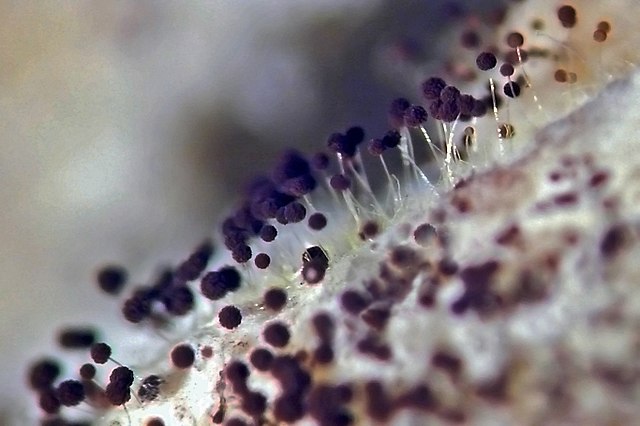
If I’m going to go anywhere, I’ve got to customize and control the environment I sleep in, at the very least. Sleep is when the body does its housekeeping and cleanup; it’s as if all the doors and windows are thrown open and the sensitivity gets turned up to 11 — any bad stuff that goes in then, goes in much more and makes things worse. The regular cleanup gets interrupted. It all becomes more crisis-manage-y than housekeeping-y. As you can imagine, in hyper-reactive systems like the one I have, that’s a real mess.

This has been creeping up on me for awhile, and I’ve blithely ignored it because gee freaking whizz, isn’t there enough going on??
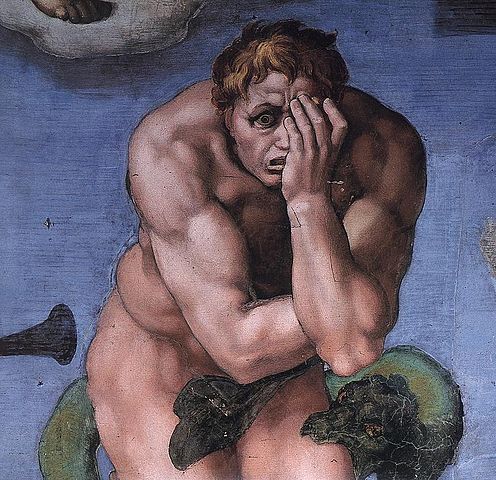
I just need a moment to process this.I had to give up a visit to friends this week, because my immune system crawled into the blender and hit “frapee”. (I’m nursing a charming case of stomatitis with both canker and cold sores; my lymph nodes are creating topography a bit like the bumpier parts of Death Valley; and I’m having all visitors stay fully masked with windows wide open, because I’ve got nothing to fight off further pathogens with.)

Because I gave up that trip, I get to sit here and think about what a non-delightful level of fragility I have to plan for as I go forward in my life.

So, on the one hand, this is great information and I clearly need to know it, in order to avoid making myself sicker.
On the other hand… Oh FFS, life! Really? — I mean, really?!?

When I’ve gotten the particle-board in the kitchen coated, I hope that will buy me a couple of years of being able to stay in my adorable little flat without further toxic exposures. I’m benefiting hugely from this stability, and the location can’t be beat. I love it and I’m grateful. With the semi-permanent fix in place, I can probably recover quite a lot of the ground I’ve lost — although of course there’s no guarantee, and the best-case scenario involves many months of recovery and being very careful about avoiding other toxic triggers for a couple of years, until the mast cell “bucket” can drain.

Thanks to the diligence and care of my 2 new helpers, this is an attainable goal. Pheee-yew!

Beyond that, I’ve got some thinking and learning to do. I may revisit this subject of controlling my environment while on the go, when I have anything useful to say. 

Competing needs vs. Layered needs

CW: food & size & related topics.

Many things are coming together and my soul is taking warmth and strength from the concatenation of care. I’m incredibly lucky — even blessed — and I feel my good fortune with all my heart. It’s a great, and unforeseen (by me), turn of events, after decades of raw struggle.

One of these blessings takes the form of a gifted young man who takes my complex & often conflicting dietary needs as a delightful challenge, rather than a terrible curse. His work with me is a hugely encouraging capstone to,

  1. A lifetime of food-nerdery,
  2. A career of nutrition-nerdery (not the same thing),
  3. Decades of increasing dietary stringency,
  4. Years of gastrointestinal fuss.

It turns out that addressing underlying nutritional needs can re-shuffle metabolic activity so that former limits are a lot less limiting.

I know, right? Who knew???

Horse & woman laughing hysterically

I’ve been dealing firmly with mast cell activation & histamine reactivity, by keeping everything I eat super fresh, freezing it in portions immediately, reheating in the microwave (which tastes a lot better than cooking it in the microwave in the first place), and keeping the dishes & utensils squeaky clean.

After doing this for awhile, it turns out I can eat brassicas again (cauliflower and broccoli, 2 of my favorite veg) without my thyroid flipping me the bird as it passes out.

I feel profoundly rewarded.

Competing needs: no brassicas; lots of winter veg.

Layered needs: calm down the mast cell activity & histamine responses, and my immune system is perfectly happy to take brassicas on board without trashing my thyroid in response!

Also, I was gaining weight rapidly around the time this kitchen-magician showed up; since my diet was so limited at the time (homemade parsley buns, homemade blueberry buns, farm-frozen chicken, and sprouted lentils, with only olive oil & salt for flavoring) it was very easy to do a calorie accounting.

It turned out I was in hardcore starvation mode, getting only 700-1000 kcals/day. That’s not enough. It kicked my cortisol into high gear, which is overdriven anyway due to pain & dysautonomia, and manufactured excess adipose tissue from (apparently) thin air & bad grace.

I’ve roughly doubled that calorie intake; with my kitchen-wizard’s help, I’m getting loads more veg, too, which for me are a sort of cure-all — whatever is wrong with me, it eases up if I get more veg.

Keep in mind that *any* consequence of starvation is unhealthy. Losing 80 pounds to starvation is even more horrifying than gaining them. It hurts less, but it’s more dangerous to kidneys and system function.

It’s a peculiarity of our modern sensibilities that gaining weight due to starvation is absolutely invisible, because being fat is considered so repellent (the word “gross” translates as “fat” — that’s a strong linguistic clue), that shaming & blaming is the default response, even — especially — by physicians who should know better than to disbelieve, shut down, and further humiliate their starving patients.

This obviously needs to change.

My clothes fit more naturally and my feet & legs hurt noticeably less 3 weeks on. So, that’s much better!

Competing needs: more nourishment; fewer calories & more activity, I’m told.

Layered needs: adequate calories, so my cortisol can stop screaming about starvation and let my body work better!

There will probably be a lot more about the details — why are all my veg heavily processed or overcooked? What’s the recipe for those buns? How many diagnoses am I working around, anyway? How do you get onions in when you can’t go near them raw? — but that is, as it were, food for future posts. There’s a lot more info in this topic. It’s possible there are a few books in it.


Putting words to the problems

Thanks to wonderful people, I’m getting help in my home. Holy hosannahs, people, it. Is. Amazing.

Stone angel with hands clasped in prayer, standing on a pillar, sun like a glorious halo

My part of the bargain is to get the state to step up to the extent I can persuade it to, hoping it covers the cost.

Ever since governments realized that keeping people safely at home is much cheaper and more productive than warehousing them, sensible states work to make that possible.

Naturally, they have checklists and formulae to determine what they’ll provide, based on neat cookie-cutter notions of disability, developed in tidy rooms by people with steady pay, good benefits, and a remarkable degree of job security.

I mean… I… ay, ay, ay.

TW: Describing the usually silent reality

Fellow spoonies can guess at the blind horror it was to climb right down into the mess of this life — where getting through the day requires me to gently ignore as much as possible — and blurch it all up, but thanks to an excellent psychotherapist who knows how to pull me off the ceiling, it happened today.

Mom, it’s okay if you skip this! It’s clever & apt, but grim in parts. Keep in mind that it’s not the whole story, just the relevant hard parts, because it’s written to the task of getting money out of the system.

I separated the “Why it is like this” from the “What it is I need” and I thought this might be helpful to share with others, since I’m far from the only one who has to do this. Hope it helps.

Letter stating what my helpers do

Dear Gate Keeper,

Here is a discussion of my needs and the help provided. Thank you for taking the time to look into this.

Cooking:

Diagnoses affecting my intake are numerous and often mutually contradictory (e.g., insulin resistance & gastroparesis.) Inadequate nutrition makes everything worse, as you know. Multivitamins can only do so much.

I mentioned “no shortcuts”: this means sauces, dressings, snacks, everything, has to be made from scratch, thoroughly cooked, and frozen fresh in order to be safe. This is largely due to mast cell activation syndrome (everything super fresh & clean) compounded by the inflammatory reactivity of fibromyalgia, CRPS, dysautonomia, and multiple food allergies and sensitivities which already existed (making the cost of failure high), plus gastroparesis (so everything has to be processed and cooked.)

Everything has to be frozen in serving sizes, because the mast cell reactivity and the downstream consequences of failing to account for that are so devastating. Then those many containers have to be washed and put away. Please see housekeeping about why this is such a big deal.

Shopping: pushing a cart is like holding onto a rail wrapped in barbed wire while every bump is like a blow to the frame driving the barbed wire deeper. Not having to go through that is important for being able to do anything else in the day.

Here’s what Person A does for me:

  • Shopping: drives me there, handles cart, keeps us on task, remembers what I forget.
  • Keeps kitchen clean, functional, organized.
  • Keeps fridge and freezer ditto, which I couldn’t do for years (temperature, metal & glass contact; see below.)
  • Works closely with me to understand dietary limits and possibilities. Much learning, checking, & creative thought involved.
  • Preps, portions, and stores fresh food.
  • Makes sauces, dressings, and desserts; stores them in usable portions for me to dress my meals with.
  • Cooks main meals and snacks meeting my stringent needs.
  • Serves me a fresh, hot meal every time he’s here. Everything else I defrost in the microwave.
  • Portions and stores everything.
  • Cleans the endless parade of dishes.
  • Provides apt advice on how I can make my nutrition easier to access and more satisfying.
  • Every bite has to be cooked (gastroparesis & g.i. disorders) so this means considerably more work and more dishes.


Housekeeping:

Anything involving contact with things that affect transmission of temperature and electricity is agonizing. CRPS and its peripheral nerve activity are essentially a matter of disrupted signaling, and these are hugely exacerbated by contact with metal, glass, running water, any water at anything other than body temperature, vibration (which is brutal – imagine a full-thickness burn happening inside your tissues down through the bones) and other sensations which would ordinarily not even warrant notice, but to systems like mine are limned, imbued, and soaked in pain. Not just ouch or even agony, but a pain that causes the motor nerves themselves to fail without warning of any kind. It’s very distracting and worrisome, as well as uncomfortable and risky. It can be dangerous, as the many glass objects I’ve broken in the past year attest. Dish gloves don’t work for me due to tendon problems and what the gloves are made of.

I’m a fall risk, due to the dystonia and the repurposing of motor nerves to carry more pain. (I can supply excellent peer-reviewed articles to support all of this. If I forget to provide them and you want to see, please let me know.) And, because of the many sensitivities and reactivities I live with, packaging and serving my food in glass dishes is essential. Cleaning them is mandatory. There are no better options.

Due to the combined effects of hyperflexibility, hyperreflexia, complex regional pain syndrome and the nerve damage and “windup” that goes with it, histamine intolerance and the tissue effects of inflammation, and other factors… movements beyond very moderate range have to be deliberate and controlled, or I risk injuring myself again.

This means that things like folding sheets, reaching, or making ordinarily repetitive motions put me at risk of injury, with disproportionately bad results and disproportionately long recovery time. Amidst all this, sensory sensitivity has developed across the board. (I was an emergency nurse, mid-distance runner, hiker, rock climber, and I liked the meditative nature of housework. This current reality is hard to live with, but it is what it is.)

Here is the list of tasks Person B does for me:

  • Recurring serious attacks on dust and mold in the home. I havent’ been able to get treatment for these allergies to a successful degree, and they impair me badly. Dealing assertively with these environmental insults is key.
  • Change bed. [I’ve deleted the bit about the worst incontinence. You’re welcome!]
  • Vacuum floors (vibration, auditory, grip)
  • Vacuum baseboards, corners, overheads vs dust.
  • Move furniture to vacuum underneath.
  • Damp soapy wipe down of baseboards, shelving, & all the surfaces vs dust.
  • Wash curtains vs dust
  • Mop floors vs dust in cracks
  • Clean bedroom carpet and rugs in house vs mold and dust
  • Deep clean bathroom, bedroom, and kitchen, to keep mold levels below functional threshold.
  • Spot clean (I drop things often)
  • Fold laundry
  • Dishes all the time. They have to be washed really well, because of the mast cell issue.
  • Errands: trips to P.O., pick up meds, get cleaning products, stock up on masks, and hopefully outings when it’s warmer.
  • Reminders: get meds, fill med organizer, change towels, etc.
  • Laundry: bedding, towels, clothes, rags. I have a small apartment washer that we have to use exclusively, due to horrible reactions to commercial cleaning products.
  • Clean asthma gear & vital-sign gear.
  • Equipment maintenance for air filters: changing filters, wiping down, checking seals, etc.

It’s hard to realize, until you‘ve been through it, how very helpful it is not to be tortured by ordinary tasks of daily life.  I appreciate your willingness to look into this.

Please let me know if you need any supporting documents.


Thank you so very much for your time…