TIL: how to handle legal-ish problems in MA

TIL (Today I Learned) is a new category that lets me capture the random sh-…stuff I learn while “living anyway”.

Today’s fun topic is, “You don’t have to hire a lawyer when your employer is screwing you. You can contact the Attorney General’s office and let them handle it.”

This is based on Massachusetts. This is widely considered a blue state, but it has usually had a Republican governor until recently. What we are, is a well-educated state. We tend to vote for smart people. That suits me.

The A. G. has a job to do

From an ordinary American’s point of view, the Attorney General’s Office exists to protect you from bad-faith dealings with those who are in a position to screw you pretty badly: employers and businesses. Not only do they need to follow the law, like we all do, but they need to keep their activities from skating too close to the edge of it.

The A.G.’s job is to provide access to protection from so-called “bad actors”, and to intervene when it’s needed.

In case you wondered.

First, we’ll look at employment law.

The A. G. handles employers who behave badly to employees

If your employer is:

  • Stiffing you for pay or benefits you’ve earned,
  • Crossing the line on hours required or how you’re supposed to work,
  • Failing to provide safety gear for the job, from PPE to jack-lines and harnesses,
  • Refuses adaptations(*) for your sight, hearing, movement, or typing problems so that you can do your work – which you’re qualified for and able to do with reasonable accommodations,
  • Etc.!

Then…

Start by collecting your evidence – emails, work schedules, time cards, photos or footage, text messages, relevant pages from the company manual, and anything else that helps to tell the story. Get time and date clues in everything, whenever possible.

Write out the problem. (It’s a great idea to write a first draft with all the emotions and bad language first. It’s good to get that out of the way to clear the mind a bit.)

Facts, facts, facts, one after the other. The facts alone will tell your story. A word or two about your essential motivation is good, though – e.g., “Fearing for my safety, I refused to do that task without proper gear” is a useful statement of what informed that decision. Consequences matter. That’s a fact!

If you peel off the emotional impact of what was done to you, it leaves All The Room for the emotional impact of events on the reader. That is a lot more powerful than all the descriptions of feelings ever.

Then, take a look at this page and upload your report when you’re ready

https://www.mass.gov/how-to/file-a-workplace-complaint

They’ll be in touch and either take the case to court or guide you on whatever next steps are most appropriate. They may advise suing and will suggest lawyers who will take the case on contingency – meaning, you give them a 30% cut if you win (even though they do most of the work), or nothing at all if you lose.

(*)A note on adaptations and disability

Thanks to many years of effort by people like you & me, the Americans with Disabilities Act was passed in 1990 (1 year before I became a Registered Nurse) and then, after 18 years of experience, was updated in 2008 (3 years after I became too crippled to work) so that its requirements were clearer and so there were fines and consequences for not following it.

Since disabled people have been one of the last legally and socially acceptable targets of prejudice (especially at work), this legislation was historic indeed.

The current text of the ADA is here:

https://www.ada.gov/law-and-regs/ada/

At the federal level, this law is under attack. Here is the latest:

https://www.cbsnews.com/news/airlines-disabled-passengers-wheelchairs/

This is the most accessible of the articles I found about this.

Those of you who are familiar with wheelchair-riders know just how expensive, valuable, and necessary these things are. Some of you (like me) know people who’ve lost the use of their chairs because of damage by airlines. It’s unthinkable to us, but it happened a lot; was finally addressed; and now that protection is at risk. Call your legislators if you care about this:

https://www.usa.gov/elected-officials

If you’ve had a disability – or other right-to-access – issue that seems illegal or seriously wrong, then go to the Civil Rights page of the AGO, where they handle all the issues of social injustice – disability, religion, race, gender, and so on – and follow the procedure:

https://www.mass.gov/how-to/file-a-civil-rights-complaint

Consumer (not employee) complaints

Hot tip: if you’re being screwed over by a business you bought goods or services from, the same approach applies: go to the AGO and funnel your issue into the Consumer Complaint division.

In MA, that journey starts here:

https://www.mass.gov/how-to/file-a-consumer-complaint

It might take a couple of months to get to the top of the pile, but they will open negotiations if you’ve written a clear, factual complaint. (I’m naturally assuming all my readers would only submit legitimate reports of unjust treatment, though most sites will feel compelled to remind you not to submit frivolous complaints. As if we have that kind of time!)

When they call you to start negotiating, be patient and tactful – yet clear. No name-calling the opponent, no matter how much they deserve it. Let the facts speak for themselves. Walk through each step of the process and let it unfold, because the negotiator hasn’t been what you’ve been through and they need to learn what that jerk you’re dealing with is like, for themselves.

I say this only because I have a little trouble with it myself. Pain-brain makes it hard to be detached, but it’s worth the effort.

In short…

The Attorney General’s Office has your back.

If they don’t, we’ve all got a much bigger problem.
The times, they are a-changing

Without descending into the morass of modern U. S. history and politics, let’s just say that I’d like the first months – up to half a year – of the new regime to happen with me being somewhere bearable, where good produce is a lot cheaper and the medical care both stable and affordable.

None of this is likely here, where my food prices rose about 30% during the harvest season and there is much loose talk and planned chaos around Medicare and the dole (which I depend on to stay alive) – not to mention the cost of everything rising by 15-60%.

The pundits and those who follow them tell me not to worry, because there are rules and procedures “they” have to follow.

Given the Mump track records regarding rules and procedures, all I can do is smile sweetly so as not to worry my loved ones, and let my mental gears turn more quietly.

Hot tip #1: a tariff is a tax. These get passed on to the consumers, not sucked up by the companies from countries exporting to us.

Hot tip #2: as we’ve seen so clearly over the past 5 years, industries don’t just raise costs in line with their own expenses, but jack them up to see just how much the market will bear. Given a captive market, this has gotten really ugly. Remember eggs last year? The sub-prime lending fiasco leading to the 2008-9 crash? Yeah, it’s an established pattern.

So anyway… here I am: if I stay in one place, I’ll be wrestling hard with un-meetable expenses (my dietary needs are simple, but not cheap) and a constantly-cycling urge to run away. That’s neither stable, healthy, nor fun. Been there, did that, threw away the t-shirt.

I didn’t grow up in one place, or even one country. I’m not mentally stuck here, and I don’t believe I have to put up with the scrambling anxiety or insufferable expenses to come as the Mump Regime and its trail of chaos gets itself through the initial reality-checks.

I’ve been toying with the idea that it’s healthful and good to be warm, stable, and happy. That takes adjusting to, because so much of what makes me feel anchored to the world is about work. I love to be productive. It makes me feel superbly grounded to be useful/helpful to others. This is very compelling… but as far as my daily choices go, doesn’t have a lot to do with being warm, stable, and happy.

It does have to do with abusing my eyes and attention with falling down back-lit rabbit-holes and trying to turn the swarms of information floating around in my brain into streams of relevant words, pertinent to the question I’ve just read.

But I’ve got serious limits and, as it turns out, I am much more useful and productive after I’ve been taking really good care of myself and playing and recreating and being happy outdoors – a lot.

This doesn’t sound like computer-gazing, which is how most of my work happens.

This focus on making myself happy is a weird concept, and I’m still working out a lot of the details. I mean, not even details – I haven’t settled on where to start; even my departure date is unfixed. Getting the right people in to keep my place clean & warm while I’m gone is kind of a big deal too. I’m not prepared to move and won’t sacrifice my sweet little home – not until I’ve got a much better offer in hand, anyway!

Anything could happen. I’m trying to keep breathing properly as I say that.

Maybe it’s time to take a sabbatical…

Tough gift, but a good one

American Thanksgiving is the 4th Thursday in November. I had a gift that day – a difficult one, but I’ve been unwrapping it and wondering ever since.

Wide-eyed kitten staring at a roast chicken on table in front of its face

My phone (which has my i.d. and my bank cards in it, and it provides my only internet access) disappeared on Wednesday evening.

While this is momentous for anyone these days, I have a disease-specific reason for being harrowed by it:

  • I listen to audiobooks to drown out my brain’s ongoing response to the ongoing pain, wonky signaling, and that disconcerting imbalance between what I need and what I have or can get to keep my environment safer for my body. To me, it sounds like screaming; I’ve heard others describe it other ways, as crunchiness or a kind of rattling wobble or other experiences entirely. My sensory processing apparatus decided that it’s a constant, ongoing scream from someone too upset to be the least bit self-conscious. Audiobooks and internet rabbit-holes are fantastic ways to manage this, partly by drowning out the internally-generated sound by the external one that I want to hear, and partly with the power of distraction.
  • Pain, reasonable & irreconcilable anxiety about how I’m going to get through anything from this day to the next chapter in my life, and the occasional neurological crumping (when my cognition shuts down and my coordination goes to hell, so I can’t make ideas or hold things) … all of these are best addressed by comfort and distraction. For me, books and memes and contact with absent friends are all good for that.

For Thanksgiving – when everything is shut aaaaaaaall day – I had none of that.

I just need a moment to process this.

It was a sad day. I couldn’t make or receive any of the usual holiday calls with people I love. I couldn’t go out to eat, and the previous evening I’d had to put back all the holiday food I had in my cart and get only what I could pay for in the cash I had on hand.

I had the sweetest visit from 2 friends (I explained why I had nothing to feed them with) who made it their mission to check on me twice daily until I was en-phoned again, and that helped me get through several hours much better.

Apart from that, I had little to do but hear the screaming, and wonder what I would do next year in a country that has voted for unprecedented chaos that, on the showing so far, is liable to shatter a large part of what makes it possible for me to live. The litany starts off like this: “The level of daily chaos to come is unbearable to think about. Every time I read up on the latest plans or appointments, it gets worse.” Not good for dysautonomia, among other things.

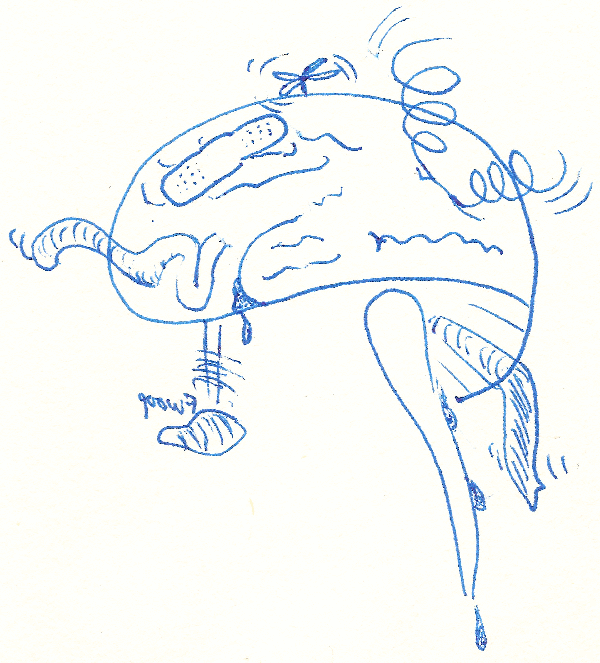
Sketch of brain, with bits falling off and popping out, and a bandaid over the worst

At the end of the day, I began to apply a bit of cognition to this experience (as you do) and realized something important…

The screaming was a whole lot quieter than it used to be; than it was, say, a year ago.

Last year, it was a lot quieter than when I first moved in here, right before the Pandemic. That was a tough time and the screaming was so loud I had to play the audiobooks and dvds at a fairly ridiculous volume to get the benefit. (The neighbor knocked on my wall a couple of times.) That volume might be partly why I now have ongoing tinnitus, a ringing in my ears that’s always at a different pitch and volume from the inward screaming. Clearly, my brain decided not to confuse the two.

Also, I noticed that my mind had actually recovered some ebb and flow!

There were times of day where it was natural to fix things, other times for doing something creative, times to sit and be quiet and times to move around and chat with the cats…

Natural texture and dimension in my mental activity, which the constant audiobooks had smoothed out and neutralized since they came back until that day of enforced quiet.

To the able-bodied and -minded, this is perfectly natural. It didn’t used to be for me. I had 10 or 12 alarms set throughout each day to tell me exactly when to do each kind of activity, because that mental texture had been quite, quite lost.

I got through 2 nights and a day without any alarms. I survived, and I also realized that alarms are jarring.

Who knew??

It turns out that my slowly-healing autonomic system has finally agreed with me that a stable diurnal schedule is a good thing to do, so I wake up within the same half-hour every day, without needing to be kicked awake by a series of 3-4 alarms.

The phone climbed out of its hiding place the next day. (Of course, I had already thoroughly checked there.) I canceled almost all of the alarms, except the one for feeding the cat.

I can make a short list for each day and get through it by riding those mental waves – and being kind if I can’t get them done at the very time that I wish to. It seems that being kind to myself knocks down a number of stress-related barriers.

Horse & woman laughing hysterically

I’m still digesting this new experience of the world. It’ll probably continue evolving over some time to come.

It’s not exactly normal to have such a significant level of recovery when you’re close to pushing 60 and sitting on 25 years of pain-related neurological disruption, including 20 years of dysautonomia.

So yeah, it was a sad day and not an easy one, but what a gift it turned out to contain!

I needed such a gift. My life is about to change drastically, and it’s up to me to work out which path to take through it. None of them are easy, but some could be more rewarding than others.

Can’t wait to see, not only how I’ll screw up, but what I’ll learn from it!

I’m going to try something new, as I navigate this tricky shift in life: asking for input and advice from people outside my head and its rabbit-warrens of associated ideas.

I know, wild idea… and for that reason alone, probably worth trying.


What’s your forward path?

I’ve seen more than the usual amount of material about having hope, lately.

I see why, of course. Many people view hope as an incentive to carry on when things are going badly and they can’t change that.

So, hope serves as a forward path or guiding light, a way to keep going when you’re not sure you’re going to wind up anywhere good.

Speaking as a long-term survivor of a pretty rotten condition, I certainly understand the value of that!

The point, I’d say, is the forward path itself, the guiding light that gives us the idea of having something positive to go for, when the usual ideas and activities don’t work or make things worse.

Hope is one way, but not the only way. Sometimes hope is counterproductive, and if you’re convinced that hope is the only way to keep going, that can be a real downer.

To me, hope is like a pretty lie: I’d like to believe it, but there’s no logical support for the hopeful ideas that, for instance, I could attain full remission and be able to work to support myself again, that the Atlantic circulation will strengthen again and stave off total disaster, or that my country could look forward to a survivably rational government in the new year.

And yet, some people cherish those hopes in themselves, and who am I to persuade them otherwise? Their futures are for them to envision. I’ve got to deal with my own, and that’s plenty!

My own sense of a forward path is something I have a hard time articulating…

It depends partly on the deep sense of history I grew up with, 10,000 years of the ebb and flow of human vanity, decency, terror, greed, and stunning insights.

I’ve read notes and letters from people burying their entire families in the Black Plague… between king and lord of warring states… Spanish merchants discussing trading alliances along the Great Lakes in North America in the mid-1300s, very hush-hush… Gilgamesh and his passionate grief for Enkidu… love songs from every age and between every gender… desperate missives from ancient Romans fleeing the fall of their government to families who never answered them, or told them there simply wasn’t enough to go around and still keep everyone else in their accustomed style and comfort.

Whatever we suffer, we are not alone in it. We are one more part of a very long course of events, and every problem has been faced before. It’s up to us to find the best solution for this particular version at this moment in time – and we have this great depth of information about how it has been faced before.

We are never alone in our terror, betrayal, or pain. Somehow, that helps me.

Another part is that – another lesson from history – there is a future worth having, if you can stay alive long enough and do what it takes to increase your odds.

This alone has gotten me through some things that should have been terminal: I had to see what the future worth getting to would be. So far, it’s been a fantastic outcome, relatively speaking. Well worth getting to!

The last thing, which is the hardest to explain although it’s the easiest to notice, is my stubborn idea that it’s my job to hew my best and truest path through this life – do my best while being honest about my capacity, be guided by my humane ethos, keep the long view, and don’t let the misery of my circumstances decide how I’m going to face them. That job belongs to my will. It has had a lot of practice.

Sounds really noble or something. It sure doesn’t feel noble! It feels messy and rebellious and defiant, most of the time. It requires me to disrupt expectations about how women, who are middle-aged women, who are white middle-aged women, who are white middle-aged women who originated from upper-middle social strata and good education… should behave. In short, people who are supposed to have options and protections and resources that I haven’t even been able to dream of for a very long time.

That’s what I felt I should have been. It’s a useless “should”, but a gluey one.

For all that I’m pretty cheerful (especially with the morning sun on my face, like now), I don’t have much truck with “hope”, because it feels like placing too much weight in an imaginary basket. I can bank on my diligence, curiosity, and determination, though. They aren’t imaginary at all; this blog reminds me of that.

I think that every one of us has to find the forward path or guiding thought that works for us individually in our own ways.

We’ve each got to play to our own strengths, and do our best to keep the deep-dyed “should” phrases in their place.

Sometimes hope is just another “should”, and it’s okay to set it aside for other motivators. You’re still whole without it.

Maybe it helps to know that the Darwinian statement, “survival of the fittest,” does not mean those who have the strongest minds or the healthiest bodies – despite the narrow libertarian/right-wingy assumptions and the hunter-gatherer-based ideas of cost/benefit.

It means “those most able to adapt to fit the new environment” and that, dear reader, means us: the disabled and neurodivergent are the OG adapters to strange environments, the fittest to figure out how to handle the increasingly worrying future.

One way or another, this era in history – with its uncertainties, intensity, and rising waves of change – is ours. Like it or not.

Collectively, we can do this. Individually, as ever, it’s an open question – but let’s find out.

I’m curious how this will go…


Why Pride means life

On my 21st birthday, I went out with a bunch of women friends, including 2 couples. All of us health-care workers. Drunk jerk got thrown out of a car right behind is as we stood on the sidewalk deciding where to go next.

He decided that us being out without a man, and clearly happy in our own company, was a terrible transgression. Then he noticed the couple vibes. Then he called us “a bunch of” d-word. Then he tried to kill one of the women in a couple.

Someone else saw him draw a knife. He went to slash her throat. Someone else pulled her back, by her arms unfortunately.

I saw him raising a fist to a defenseless friend, her eyes huge, staring at the fist.

Somehow I levitated between 2 parked cars and a couple meters of pavement in the time it took his hand to move another foot.

I landed in front of him with my arms raised in a blocking stance my Dad taught me at 9 or 10 years old. He said, “I’m teaching you to block with both arms at once, so you don’t get confused in the heat.” That worked!

The attacker looked stunned. Took a step back. I stepped back. He took another, one more, then turned and ran.

I ran back to the bar we’d come out of, passing a couple of delightful young men, shouting a warning: “There’s a man, with a knife, back there.”

I had no idea my left side was covered in blood pouring out of my face.

Those two precious darlings ran. Found out later they ran *towards* the attack, followed my friends’ pointing fingers, and kept him blocked in at the train station, where he had just missed the last train out. Trust me, it takes balls to be a queen.

When the back door of the bar finally opened, the barkeep peeped out and said, “Sorry, we’re clo — oh, dear — somebody get me a towel with ice in it!” He clamped it to my face and that was the moment I realized my left shoe was squishing with the blood in it and I kinda lost my cool.

I hammered on the brick wall with my bare fists, screaming “Never again! Never again!”

I had already been a female for 21 years, which taught me a lot about uninvited violence; had learned about the Stonewall riots; knew the horrific statistics of how often non-heteronormative women are attacked “to teach them a lesson”; and had started getting involved in “let’s all treat each other like frkn human beings & not torture and kill each other like it’s a sport” types of activism.

So. All that was behind that “Never again”. It was too much in my life already, and I was barely an adult.

When the cops brought the attacker in the bulletproof squad car, so I could identify him, I couldn’t see at first because his hand was over his face. Cop went around to the side to ask him to lower his hand. He turned sideways, and I saw the profile that had gone to sink a knife into the throat of a defenseless woman.

It seemed logical at the time that I didn’t want to fight the cops, one on either side of the car. I decided to go through the windshield instead. It was only bulletproof glass; between fingernails and fury, I saw no reason (in my state at the time) not to get through it.

A minute later, with drunk dude stark white and frozen with terror, one of my friends (an ER nurse) pulled me off the hood by the slack of my best black jeans (this was the late 1980s) now smearing blood on the hood of the car.

She and the cop looked at each other and chorused, “I think that’s a positive ID.” ?

While this makes a great story, the memory of it also makes it very, very hard to speak up against microaggressive b.s. because you never know where it will lead. Name calling can go anywhere. Being in a group is some protection but not as much as you might think. If I’d tripped on my gods-assisted leap across that distance, my friend would be dead, and her partner would not have been even acknowledged as a widow, and all of us would have been stuck with that harrowing memory with no tolerable ending.

I now have long hair and am not nearly as fit, so I have the leverage of obvious straight privilege more than I ever did before. (Not that I’m personally wedded to gender or orientation. Binarism is a bit weird to me, but hey, you do you.) My actual sexuality has been all over the map and is currently parked in Neutral: don’t have it, don’t want it. But hey, you do you — that’s the bottom line.

That language changes all the time. When I was an activist, at first “queer” was an all-embracing term, but then the language started moving to an acronym. In the move to acknowledge all the variety, that acronym has gotten unwieldy. The English language being the adaptable thing that it is, another word-based term will emerge to act as the modern umbrella term; that’s still in process.

You don’t have to like LGBTQAI+. If you’d actually read, as I have, holy books in an intellectually responsible translation, you’d find that the major ones are OK with it. God is OK with it, but you do you: just keep your hands to yourself.

You don’t have to support LGBTQAI+ businesses or like having LGBTQAI+ employees. If you check the stats, you’ll find that businesses with strong LGBTQAI+-positive policies and culture get more and better work out of ALL of their employees. A tolerant environment is very freeing to everyone, not just the nominally unusual! But you do you; just keep your hostility to yourself. It’s not OK to be hateful or spiteful at work.

You don’t have to want a LGBTQAI+ family. If you check the records, you’ll find that kids raised in LGBTQAI+ homes are just as smart & just as competent (and generally somewhat more adaptable) as anyone else’s kids. You do you; just keep specific laws off those bodies, because it’s no more your business than your sex, your private parts, your children, and your home life belong in other voter’s hands.

You do you. Let others do them. That’s basic humanity.

It’s not just LGBTQAI+ people who suffer for it. It really is a disservice to everyone.

Let’s get this crapshow turned around, because we really need to get together on issues beyond the personal, if any of our descendants are going to have a bearable future.

Related: health care coverage, economic policy, and racism

The same thinking that underlies racism, sexism, and classism underlies the thinking that says, “Hey, let’s get rid of health care coverage for those who aren’t federal politicians, well-employed, or wealthy.”

The bottom line is treating people as things, and money as the thing of most value.

All humans have something to give, which is only freed up when the basic needs of survival are met; money is a means of exchange but is, itself, neither food nor drink nor fuel nor care. It only gets us any of these things if everyone buys into it as a medium of exchange. That piece of paper has no intrinsic value.

Rational policy is based on the understanding that humans give and receive value, while money represents a part of that value. Corollary is, money must move around to gain value; letting it pile up in drifts and hold still is bad long-term policy, as Reagan’s advisors can now see.

“Trickle-down” assumed that rich people would spend. Rich people don’t spend. They save and invest. Thus, their money moves as little as possible, in order to keep more money coming back to them, where it stagnates further. The real economy (wages, employment, individual bankruptcies, COL, savings, home-ownership, etc.) is nearly dead in the water, but the stock exchange is doing better than ever; that’s how bad the disconnect is now.

With wages lower than a worm’s belly and the formerly-thriving middle class nearly all gone, most human energy is consumed by the struggle for survival. We have, in fact, enough resources and infrastructure that the only people who need to work are those who really want to (that would still be far more than half of us; stop seeing your exhaustion as laziness.)

Given the chance to survive, humans give back. It’s simply what we do. As some cities and a few countries have discovered, with housing, food, and care assured, creativity and productivity blossom. Value grows. Stability grows with it. So does the economy, by the way. Not in leaps and bounds, but at a steady, calm, non-bubbly, sustainable rate.

Weird idea, eh? I mean, who wants stability, right?

matchgrins-horsenwoman_decamps-pauline_4blog

I’ll give you a moment to pull yourself together…

Keeping people feeling cheated, disenfranchised, and looking for someone to blame other than those who hold the scales, is a great way to kill that kind of success. Racism, sexism in all its forms, and classism are the key tools used to divide and conquer us.

By request, I’m pasting in a stream-of-consciousness post I made elsewhere about racism. It relates to “living anyway” because, as with having a horrible disease, having and not having race/gender privilege does NOT have to poison my life, destroy my chances for freedom-within-my-limits, or negate my right to find true joy.

I know you know this about me, but in light of the horrors of the week, I just want to lay this out there, in order to be absolutely clear. Ready? here’s some Isy intensity. (Is-ensity?) …


I abhor racism. I abhor it in myself above all, and every day I try to educate/inform/reflect/analyze/remove a little more from my own mind and heart. I screw up sometimes, and the guilt for every screwup never leaves me. (True. OTT, but true.)


None of us are free until all of us are free. That’s not polemic, it’s basic psychology. The thinking that pulls us apart is irrational and hostile to our individual and collective well-being. Take a course; take two; you’ll see. It takes real work to get through the mental blocks to understand that fully, and classes provide the guidance and support to make that task feasible. It’s worth it.


I take an anti-ism/liberation course or pick up an enlightening book once or twice a year at least, sometimes more if I need it. The reason is this: I shower every day or two, because if I don’t, the stink builds up; same thing happens to the mind of a White woman living in this grubby world. Gotta clean up my thinking, because it’ll inevitably get mucked up by living in my skin in this larger reality.


  • As long as Native Americans of all ages are systematically robbed and murdered and left uncounted, I’m hollering for justice;
  • As long as Black people are shot down like amusement-park targets, I’m a co-conspirator in Black liberation;
  • As long as Latinos are thrown out like trash, I’m a gringa curandera for the soul of this nation;
  • As long as Asians, from the Subcontinent or the mainland or any of the islands, are silenced, entombed in unmarked graves, and their history erased from these shores, I’m an impassioned teacher of history;
  • As long as … go on, try to think of a race this country HASN’T systematically trashed. Even Whites — cf. indenture, which has changed its name but not its condition since the founding of this country.


Think the rich are free? Imagine the underlying terror of knowing that 99% of the population would gladly end you and destroy all you cherish. (A bit like the rest of us feel about the forces they keep in play, but still.)


Want to know more? Use primary sources. Nothing is more telling, or compelling, than the words and images of those who were there. Want to know what the data are? Go to the proximal sources — ignore the pundits. Racism, and its toxic twins classism and sexism (including gender isms; graduate class on that coming shortly), poison all didactic thinking to some degree. Look at primary sources, and digest them yourself. It’s worth it.


None of us are immune from the effects of racism. Even loads of money only cushions you, as long as you can access its benefits; it doesn’t make you safer outside your circle. Speaking as someone who changed socioeconomic class dramatically, and rather quickly, I’m strongly aware of the value of having social ethics that don’t lock me to an income bracket or neighborhood.


Nobody, but nobody, is free, until all of us are free.

Hatred is no way to run a country, let alone a life.


Fiercely and lovingly yours,

Isy

Talking about CRPS with boundaries, perspective, and joy

I’m going through one of those periods where I’m just tired of my body hurting.

This is one of those offhand remarks that makes fellow painiacs nod understandingly, offer a kind look or emoji, and move on, but it makes normal (-ish) people with good social skills cringe and stops the conversation in its tracks.

I don’t want to make nice people cringe, and I don’t want to kill the conversation. I was recently reminded how hard it can be to avoid that while answering “how are you/what have you been doing” with any honesty. In fact, I find myself talking about most of the past 20 years in terms of not getting dead.

Line drawing of woman flat on floor, with woozles coming out of her head
Image mine. Creative Commons share-alike attribution license, credit livinganyway.com.

I think that’s a hoot, because it’s so improbable and so much against my initial setup and programming. (I have a truly dreadful hangman’s humor.)

Needless to say, most people think it just sounds grim.

My setup and programming

I’m the offspring of a diplomat and a working artist, well-traveled and extremely well-educated, Seven Sisters undergrad… until I went off-road and became something totally bourgeois and practical (a registered nurse) and, when my immune system conked out for no apparent reason, went on to become something nouveau and nerdy (a writer documenting high-end programming software.)

It was a sweet setup: good brain, strong body, great start to a useful life, good plan B when plan A failed.

Eventually, this promising start led (via surgical complications, neurological disruption, extensive worker’s comp and SSDI abuses, failures of care and denials of treatment, tediously protracted near-death experiences — a term I’m longing to refine — and years so close to utter destitution I refused to look at dumpsters because I knew I was not far from winding up in 2 or 3 of them simultaneously, like the other invisibly disabled woman of my age, build, and coloring who landed on the streets of Oakland) to my utter destruction as a professional entity.

Lead-grey statue of dark angels swooping down from the sky

That was definitely not in any of the scripts my life was supposed to follow!

My childhood friends now have their own businesses, pocket palaces, successful careers in the arts (most), policy/diplomacy/public service (some), and STEM (a few), and in raising children with little concern for whether they can feed them. I’m deeply relieved and happy for them, while realizing that my own life-path got so completely hijacked I have no idea what I’d be doing if it hadn’t been for this.

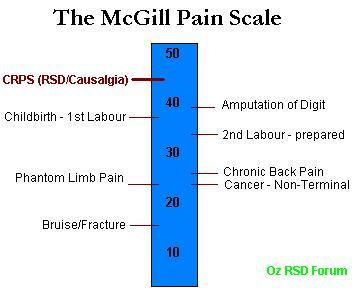
I bet I’d be complaining more, but I’d be doing more too. I wouldn’t be hurting this much for decades, if ever, and even then, only if I had terminal cancer.

Image from the Australian RSD syndrome support group, Oz RSD Forum
Terminal cancer can be a 50.
Image from the Australian RSD syndrome support group, Oz RSD Forum

Which brings us to a key point: to discriminate against the disabled is to discriminate against your future self. We’re all getting older; with more lifespan come more proofs of mortality, which include reductions of function, stamina, mobility, and even memory and reasoning.

These, folks, are disabilities, and either they will happen to you or you will be a premature death statistic. There’s no third option.

This is why, when you discriminate against the disabled, you discriminate against your future self — and all those you love.

I wish legislators had the humility to remember that. Perhaps you’ll remind them… Find yours at www.usa.gov.

Where was I? Oh yes.

Pathetic? No.

How do I talk about the last 20 years, especially the last 15, with a person who hasn’t spent an appreciable part of life dancing with Death and occasionally taking the lead?

Old-timey line drawing of a skeleton with fiddle and snake dancing absurdly with a woman trying to look away.
She looks more embarrassed than anything. Makes sense to me.. From openclipart.org.

How can I convey how incredibly marvelous it is to have a minimum of 2 functional hours — consecutive hours! That’s thrilling! — nearly every single day? And yet, I used to work 10 or 12 hours at at time for preference because I loved immersing myself in the work.

In comparison to that, isn’t 2 hours pathetic? Especially because I did very demanding work, and 2 hours of noodling around in the yard or walking around downtown really doesn’t compare.

It makes me realize how long it’s been since I even thought about the razor-wire-bound memories of “how I used to be” and “what I used to do.”

I compare only as far back to 2008-2012, the pit of the pit, the nadir of my existence.

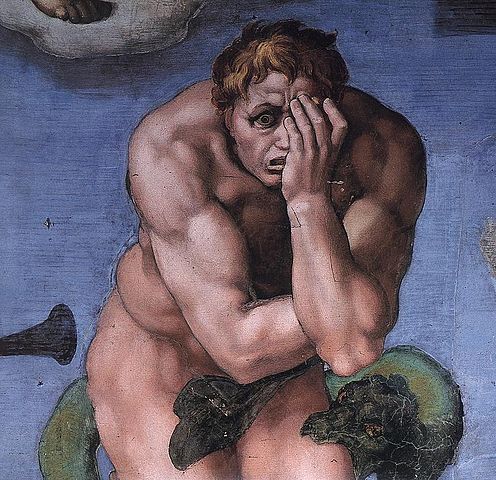
Detail of a Bosch painting. Whiskery demon holding and reaching for a misereable man.
Bosch knew.

Compared to that, I’m fantastic! Being fantastic is a great thought!

Being at maybe 10% of my youthful vigor is actually amazing, because during that time, I went from being so close to dead it took 25 to 30 minutes to drag myself, fist over fist, all 6 feet from my bed to the other end of the settee, to feed the cat in the morning. I think that level of function (or nonfunction) is a percentage of my youthful vigor that’s several digits to the right of the decimal. It felt like a negative number, that’s all I can say for sure.

There’s nothing I can do about the past, only the future. That’s not pathetic, it’s just life.

Actually, I feel that way about most of this chronic-illness gig. It’s not pathetic, it’s just life.

The power of “use it or lose it” as a tool under your control

The trick to living with chronic illness is twofold:

  •  Figure out what it takes to manage your illness without letting it take up all your focus. It does not belong in center stage, or not often anyway. Life belongs in center stage. Figure out how to make it so.
  •  Figure out how to have a routine, some sort of rational approach to every day. It’s all too easy to lie back and let the world go by. Speaking as an old nurse, I know the immovable truth of the old adage, “use it or lose it.” Having a routine stabilizes the body’s coping mechanisms; knowing what to expect soothes the central nervous system and simplifies healing. So, make a routine; decide what happens next. Make yourself do things, alternating activity and rest. Use your body, use your mind, rest, then use different aspects of your body, different aspects of your mind, rest, and so on.

These two strategies allow me to make more room, more time, and have more attention, for joy.

Joy is not a luxury; it’s essential to proper function.

The gut, brain, immunity, everything, are worse off when there is no room for joy. Whether I can appreciate my partner, the sunshine, a lolcat, whatever, I grab each opportunity for a shot of delight. I call those bursts of joy “brain juice”, because they boost useful neurotransmitter patterns and, cumulatively, reduce my pain and improve my function.

Bit by bit, even as age creeps up and new issues arise, I find myself better and better able to make use of what I still have. In fact, over the last year, with safety and sanity finally framing my existence, I’ve regained an amazing amount of function. I’m so pleased! (Oo! More brain juice!)

I still don’t know how to explain this to a normally healthy person without sounding like something from another realm of existence.

Different is probably fine

Perhaps I am from another realm of existence.

I’m certainly from another realm of experience; longstanding profound illness is special like that.

Perhaps I simply need to get over this idea that, just because I’m back home or just because I’m talking to someone who knew me when I was an arrogant young jerk and saw beyond that to someone worth liking, I should fit in with them.

Perhaps I should have more faith in myself to be interesting and likeable enough to shine through even the CRPS. I clearly shone through the old arrogance and jerkiness, somehow.

I’m far less confident, eloquent (in person), and humorous — at least, less intentionally humorous — than I was in my 20s or 30s, but I’m a whole lot more confident, eloquent, and (occasionally intentionally) humorous than I was a few years ago.

So, I need to remember to keep my focus relevant, and not think too far back.

Emotional boundaries: My pain shouldn’t be your pain

There’s a trick to disclosing without wounding, even when what you’re disclosing is tremendously difficult. Good boundaries are key.

You may have noticed… people tend to pull away from pain. It’s an ancient reaction that happens in the most primitive parts of our central nervous systems. That means, when we’re too raw about our pain, others may pull away from us because that primitive response combines with their emotions around pain, and our pain makes them hurt emotionally.

I remember how I used to open with the idea that my pain is my pain and others don’t need to imagine it or take it on.

Sysiphus looking miserable as he pushes a rock up hill... with poor body mechanics.
We each have our own load. I’ll keep mine; it’s my job.

This approach of “it’s not your pain, so let it go” frees many people up to re-engage from a rational distance which works for both of us. It’s important to give others the distance they need, because then they don’t feel a need to pull back further to protect themselves, and can stay in contact. They don’t feel driven to pull away from all that pain.

Each of us, well or ill, has to carry our own load, and really isn’t equipped to take on others’ loads as well. I try to remember that and respect the loads of others. It usually works out well.

Come to think of it, it’s essential to relationship maintenance.

Taking it on vs. bearing witness

When I was a nurse, I dealt with harrowing human experiences all the time. I could handle it with real care, and go back next day and do it all again, because I was clear that my load was my load and their load was their load, and the most healing and empowering thing to do for another person is to bear witness to their struggle without trying to take over. The one with the struggle is the one best qualified to find their best solutions; having that implicit faith in them, I found, is tremendously powerful.

For those of us in dreadful situations, we don’t get to choose the reaction others have to our struggles. All we can do is try to back-lead, essentially, guiding them tactfully to a more comfortable position.

Allowing well-intended people to bear witness in a safe way is a natural outlet for the sympathy and compassion evoked in decent people. Letting them get sucked into the awfulness doesn’t help anyone.

Put that way, it’s a lot more clear to me. It’s another form of radical presence/radical acceptance, a mental tool which boils down to, “Things may suck right now, but here I am, it is what it is, and this will pass.” Try it — you’ll be amazed how much mental energy it frees up.

The approach for discussing my illness with others may go more like, “It sucked then and it sucks now, but the worst suckage is behind me, it gave me great opportunities for growth and I took ’em. At this point, I’m better at looking ahead than looking behind, and hey, I’ve got interesting projects going…”

So, first I should clarify the needful boundary between my personal load and the rest of the world, and then I can discuss all this with some detachment from the gluey-ness of remembered distress, unbelievable losses, and intransigent pain, and best of all I can point the conversation towards something much more positive.

I’m still not sure exactly how to do that, but I’ll practice.

I’m definitely better at looking ahead!

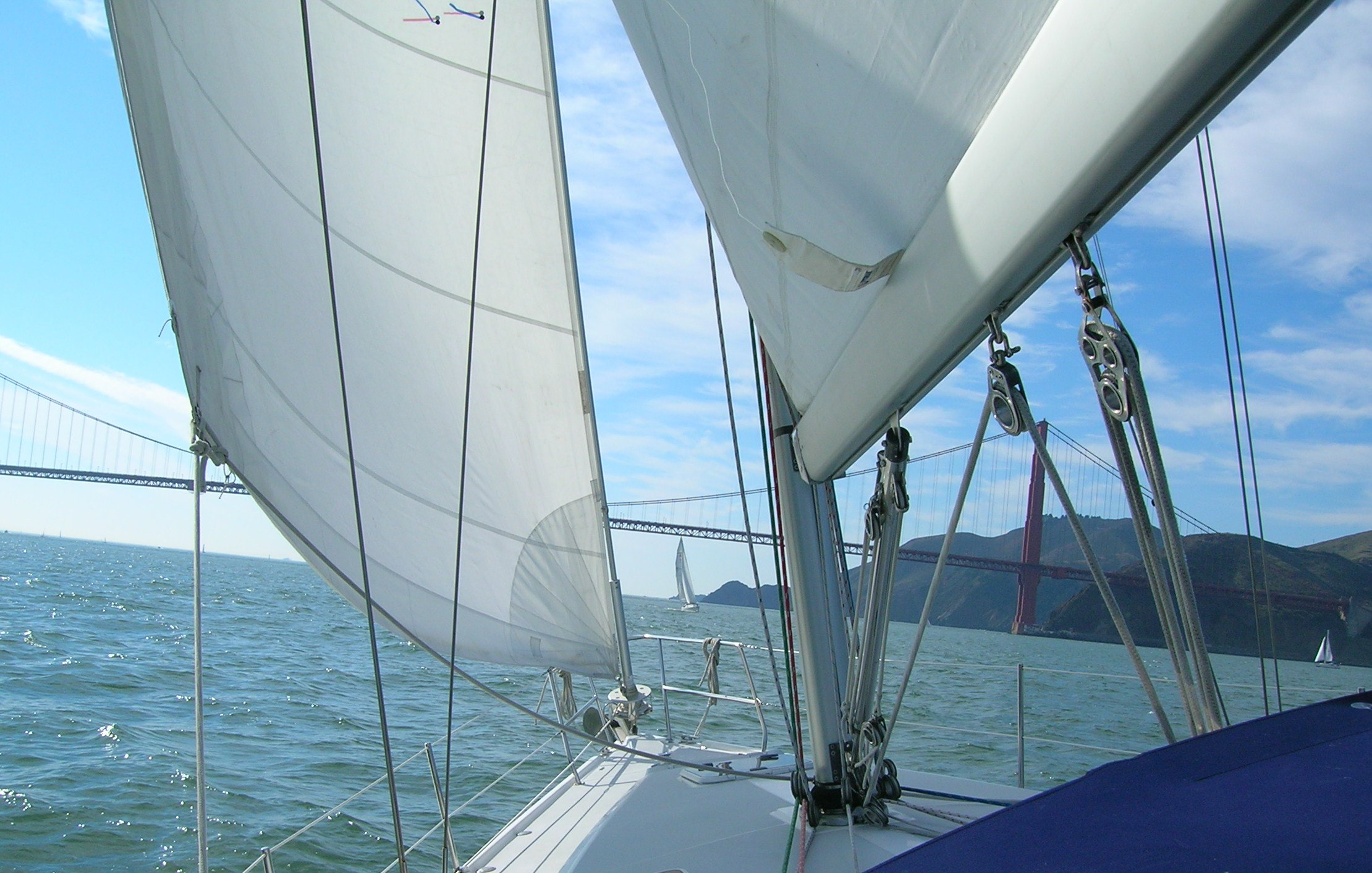
view forward from deck of sailboat. Mainsail on right, jib on left, Marin headlands and Golden Gate visible between.
Image mine, share-alike attribution (livinganyway.com) license, C.2015 🙂

Well, I don’t know about you, but I feel a lot better about this already. I’m grateful for your company as I figure out my rubric for yet another tricky twist of the Rubik’s cube of life.

Refocus on what works: In memoriam

Debbie died yesterday. She was a never-failing source of encouragement and intelligent support on one of my key online CRPS support groups.

She died on the table, while undergoing a medical procedure. I don’t know exactly what it was, and given my respect for patient confidentiality, it’s none of my business.

She’s the first person to die of my disease, to whom I felt personally attached. Needless to say, it’s sobering as hell.

I’ve written about the need to attribute deaths from this disease correctly. I’m preparing my own final papers. These thoughts are nothing new.

But today, they are biting deep.

I’ve recently become highly politicized over rights abuses and intolerable corporate stature in my country. I have privately — and quietly — become convinced that the US healthcare system is so completely predatory, so opposed to its own mandate, that it will never offer healing for anyone in my position.

Debbie’s death has broken through my professional anxiety about appearing detached and scientifically sound. I have, at long last, become politicized about the most important subject in my life, after 25 years of personal and professional involvement up to my back teeth.

I have minimized my discussion here of what actually works. That dishonest omission has done us all a great disservice. I’m going to discuss what works, whether or not it’s FDA approved, pharmaceutically profitable, or adequately studied.

Medical studies are a shining example of the fact that we inspect what we expect, not necessarily what we need. The fact that studies have not been done on most modalities, or not rigorously done in double-blind experiments, doesn’t mean the modalities don’t work.

It means the studies need to be done. Period.

Where I understand the mechanisms of action, I will explain them. Where studies don’t exist, I’ll detail what should probably be explored.

But I have had enough of silence. I will not die as Debbie did. I will not die on the table. I certainly will not die saturated with soul-destroying pharmaceutical-grade poisons, as so many of us do.

I will find a better way. I will find a way that works. I’ll do my best to persuade others to study the modalities involved, and to fund the studies. My legislators will learn to recognize my name on sight, because their slavish debt to the pharmaceutical industry is absolutely intolerable and it’s up to me, and others like me, to convince them of that.

I wish Debbie a painless and peaceful rest. I hope her extraordinary husband finds enough strength and comfort to manage life without her.

For myself, I want the intelligence, resources and strength to find a solid cure, make it happen, and spread the word.

No more silence. It’s too much like consent or, worse, collusion.

I do not consent to the deaths of my friends.

With my eyes now open, I’ll no longer collude.

Let’s find a real way out.