Moderation… in moderation

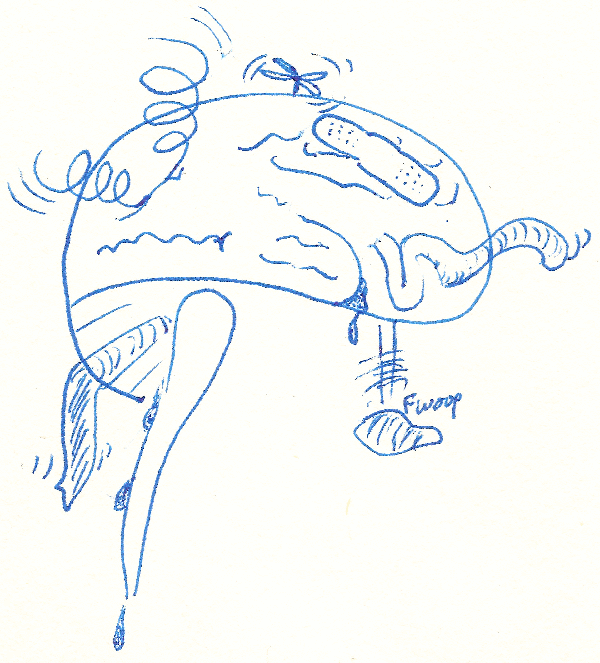
I’m usually vigilant about what goes into me because it makes such a difference in what I can put out.

Today, I went up to Heath Fair, the kind of country fair that has pulling contests for everything from bullocks to tractors, first through third prizes for identical piles of potatoes, rare critters no factory farm would make room for (like this 4-horned goat),

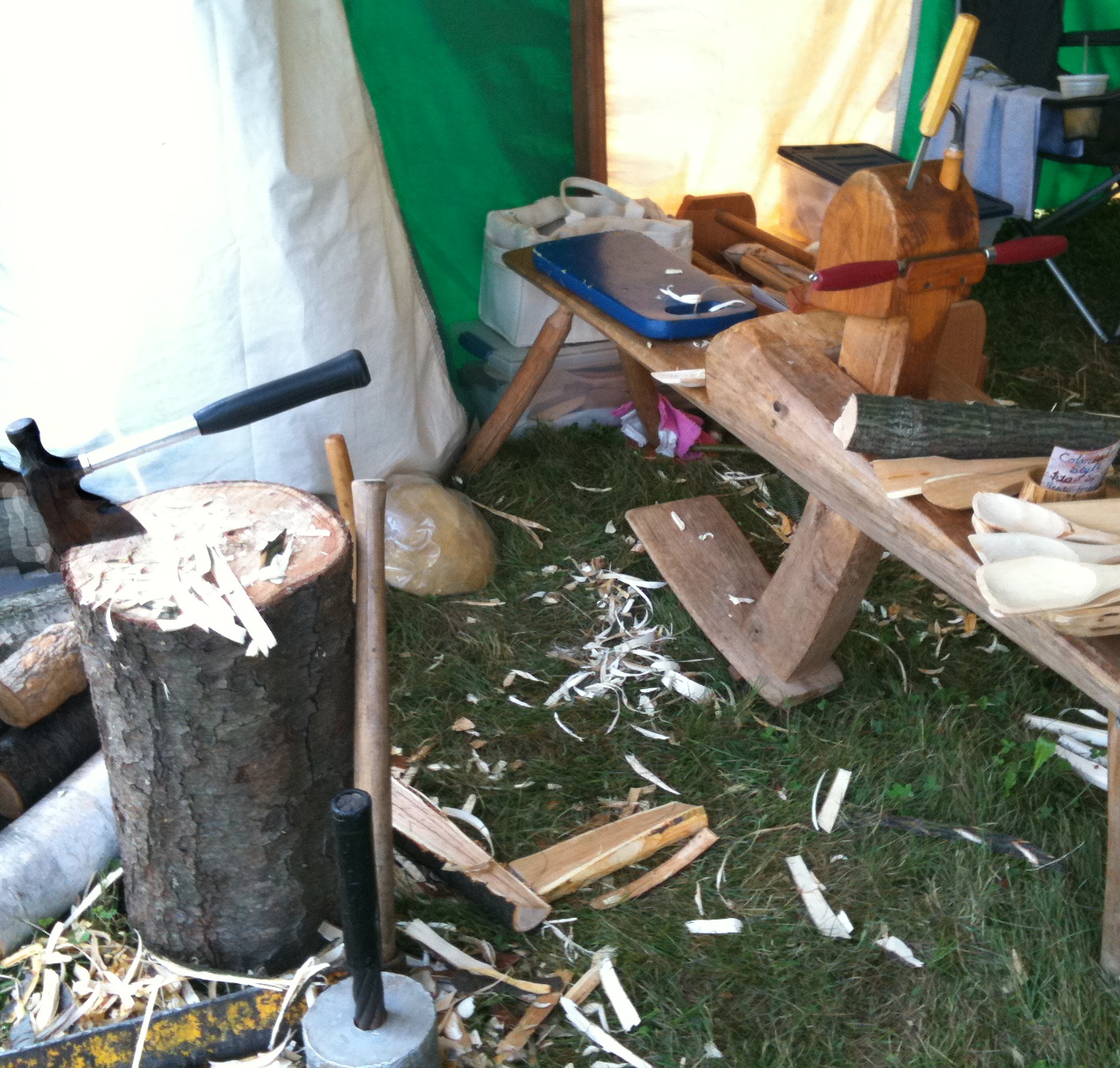
… and also henna tattoos, a massage booth, Chinese food options, and extraordinary handicrafts with century-old handtools being used by gnarly-handed, smiling neighbors.

I started the day with a good solid Brain-Food shake, but once we hit the Fair, that was it.

French fries made from fresh local potatoes, fudge made from fresh local milk, coffee with maple syrup from fresh local farmers.

Then we got home and had ice cream and cheese.

I haven’t touched a single bit of produce (that didn’t have a ribbon on it) since breakfast.

I’m doing okay. Daffy, but okay. A little sore through the elbows, but okay. Not able to soak up any science, but okay. Very glad I didn’t have to drive home, but that’s okay, too.

We stopped on the way home to catch the closing of the Pow-Wow on the Mohawk Trail, a lovely arty cozy time with friends and their friends. And that was more than okay.

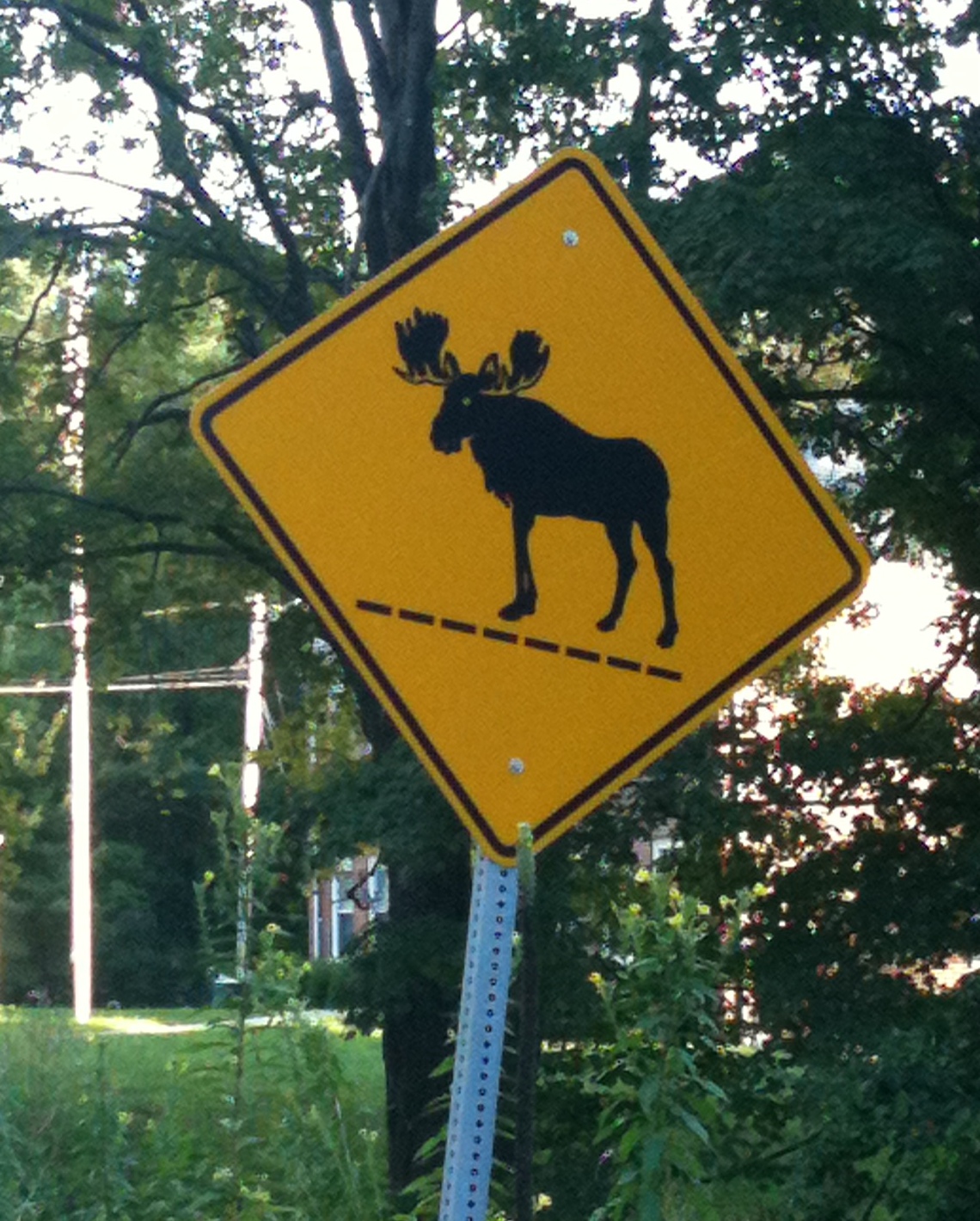
Whipped cream on top: learning that moose have moved down to this area…

As long as I do this wild irrational feasting on weird stuff about once or twice a year (no more), I should be … okay.

For one thing, it’s good to keep your body guessing. (That’s why dieters need to have one good belly-filling meal every 2-3 days, so the body doesn’t go into famine mode.)

For another, I suspect it does me good to remind myself why I don’t eat this stuff normally. Even though my body is handling it like a champion, that’s because my usual diligence has created a certain amount of metabolic slack; I can absorb a bit of crap without disaster.

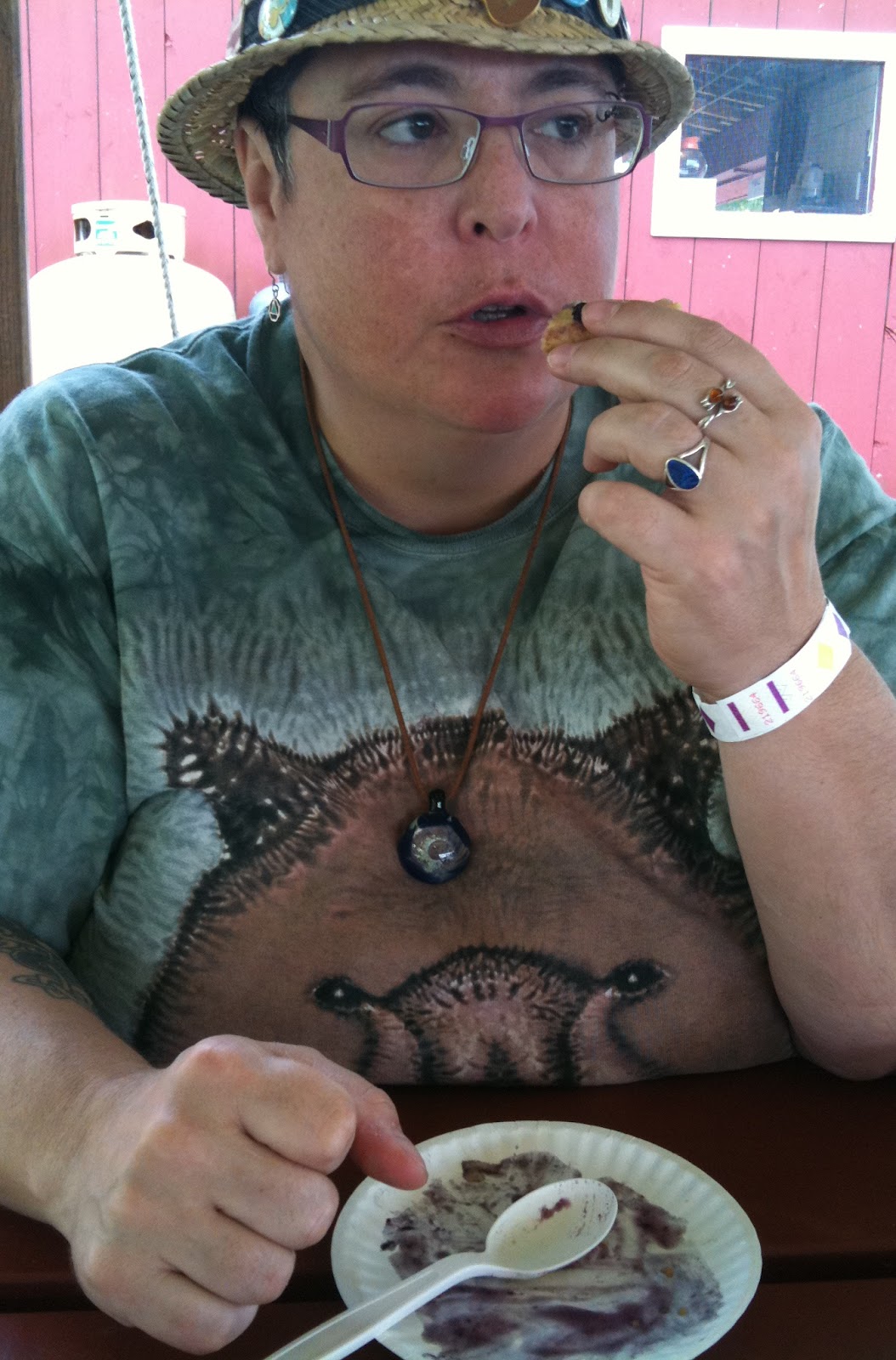
Still no wheat, though. I’m adventurous, but not self-destructive. My lovely hostess, Laurie, indulged me by getting some of the homemade wild blueberry pie and assuring me it was every bit as good as it should be.

While tomorrow brings another day of quantities of greens that could make even Dr. Terry Wahls raise an eyebrow, I’m kind of digging the memory of one day with so much creamy, mouth-melting sweetness. I’m smart enough (finally) to know what’ll happen if I keep it up any longer, but I’m old enough to really, truly enjoy my memories just as they are — without regret, without longing, just with simple pleasure. This is a nice one.

Mmmm…

And tomorrow’s shake will be just as good as ever. Possibly even better.

What comes first, comes first

Hard lesson I keep re-learning: My very first priority is taking care of this bodymind complex. My very second priority is taking care of my relationships. Studying and writing about this disease and everything that relates to it … no better than third.

No matter how fascinating a line of inquiry is… no matter how badly I want to make that conference call… no matter how scintillatingly brilliant that blog post that’s unrolling in my head will be…

Something else has to come first.

If I haven’t had my brain-food shake, or it’s time for a massage, or the phone is ringing and it’s someone I haven’t connected with in awhile, then shake or massage or phone comes first, in that order.

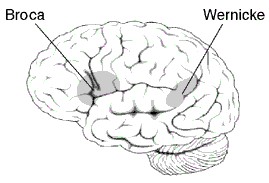
And then, CRPS doing what it does to attention and memory, whatever I had on my mind beforehand is gone. Taking notes, unfortunately, doesn’t work — I’ve tried it. Notes work for those whose brains maintain networks of ideas, who can trigger a cascade of memories from the brief mnemonics. I’m working to get it back… which brings us back to the first priority.

And, I’ve found over the years, the second priority is inextricably linked to the first — directly and indirectly. But I think that’s a whole ‘nother post, all by itself.

I’ve been a Type A worker for about 24 years. Relaxing does not come naturally, but I’ve learned to manage it in reasonable doses. Losing work is bad enough, but losing it before I’ve even had a crack at doing it is, well, what those with pithier vocabularies call a mindf!ck.

Knowing that I’ll probably lose the work, and making the choice to go ahead anyway, takes more discipline than I always have. But — despite the learning difficulties — I’m getting better. Even I can learn to keep my priorities in order.

Not even anger is wasted

I’ve been struggling with how to make certain changes when my mind and body are so intolerant of change. I’m not naturally intolerant to change — quite the opposite! — but CRPS makes changes cost me a whole lot more.

Selling my home of 6 years, moving twice in one month to different regions under difficult circumstances, starting a relationship (which quickly became long-distance), having a setback with CRPS, and getting a windfall, is a heck of a lot of change in less than two months.

Some of them are good changes (for a change, ha ha) and am I ever grateful for that! But they cause significant shifts in the mind, which causes significant shifts in the body. …With chronic CRPS, there’s simply no practical difference between physical shifts and mental or emotional shifts any more. The domino effect is complete.

I had malabsorption syndrome for a few weeks there, where all my food went whizzing through me and I couldn’t get much nutrition out of it. It has settled down, but I still have considerable endocrine weirdness and I’m gaining too much weight (more than my intake should cause.) This means my feet and knees are under still-heavier attack from CRPS and fibromyalgia.

I find this disturbing enough to be frightening — if my feet get wiped out, there goes my one good form of exercise — until I got reminded of one of those things I used to know, back when philosophy was easy, before this past decade’s descent into Hell: “Fear and sorrow inhibit action… anger generates it. When you learn to make proper use of your anger, you can transmute fear and sorrow to anger, and anger, to action.”

That’s from Millman’s Way of the Peaceful Warrior, a book I couldn’t read for years because allegory’s contrived tone always put me off. One of the great advantages to getting my butt so severely kicked for so long is that I finally shed a lot of intellectual arrogance; I can now stomach the clumsiness of allegory, if there’s something worth gleaning from it.

That tip alone might be worth the effort. I’ve got plenty of anger, and rightly so. Rather than always managing it out of sight, I can dump my fear in there, where I can use it.

Chosen change is mine. Make way.

Just enough

The feds owe me backpay. It should come to quite a chunk of money. Naturally, some of my friends are spending it for me according to their own wishes and tastes. Bless their hearts.

It’s not here yet, and I have to manage with what I have. I’m grateful for my monthly disability income. It would be nice to have more, but it’s enough for me to live on. Just enough. My  income is more than many have, and I have really simple tastes… but most people can live a whole lot cheaper than I can, because my “basics” are different.

I want to ask my blithe friends to point to something in their cupboards — something to eat. Anything.

  • Pasta? For me, that’s 3 days of poor vision, no memory, no thought, of being so disoriented I’m unable to drive, let alone get to the end of a sentence. Corn and rice aren’t quite as bad, but they still cost my body too much.
  • Beans? Depends on the bean, but it usually means sluggish bowels, insulin resistance, worse nerve pain (because the endocrine misbehavior triggers inflammatory responses), and disproportionate weight gain. Every extra pound I weigh is a tax on my feet and legs, where the pain and swelling are already about all I can cope with. 
  • Cannned goods?  Neurotoxic preservatives that set my thoughts rattling, interfere with sleep, make me feel like someone took a baseball bat to my head. 
  • Soda? Oh boy, let’s talk about soda. The phosphoric acid alone will send my peripheral and central nervous systems into spasms, and the caffeine throws my fight-or-flight response a curve-ball. Don’t even get me started on the corn syrup. Corn fractions are bad, but high fructose corn syrup is a straight descent into neurogenic Hell.

I have to put expensive berries and piles of organic greens in my cart.

  • If I don’t eat them several times absolutely every day, my brain starts to shut down. 
  • If I eat too much of the herbicides and pesticides used in conventional produce, it’s a quick descent into autonomic Hell, with weeks of constant PMS, radiant gin blossoms, and blood pressure that won’t settle down. 
  • I choose the high-end cheddar over the store brand. Want to know what they use to keep the store brand “fresh”? I need to let my bowels continue working, thank you… But aged cheeses provide precursors for the neurotransmitters used in memory and decision-making; when I’m having trouble thinking, sometimes all I need is a bit of good cheese and a couple of hours to absorb it.

I spend hundreds of dollars each month on supplements, herbs and homeopathic preparations, carefully tuned at every purchase to make sure I’m getting the best possible effect for my money. Collectively, they let

  • my mitochondria cope, 
  • my nerves fire, 
  • my brain work, 
  • my body repair itself — reasonably successfully, most of the time. 

I constantly double-check and experiment to make sure I’m not wasting my money, that every one of them makes a real difference. They are not optional, and there is no slack in the system.

I can’t live like a normal person. If I try, I’m dead. It’s not drama, it’s just a fact.

I don’t choose to live like this because I can afford it. I live this way, and do without other things. I think of those who live in houses or flats with multiple rooms, petting the companion animals they can afford to feed, with their feet on a coffee table or rug, drinking out of their own mugs. And the poor things don’t realize how good they’ve got it, but eye my windfall askance and look for something more to be dissatisfied with. It’s human nature. I’ve done the same, back when I could afford to.

Everything I own right now fits into a messenger bag and a carryon; that’s it. There are three boxes and a dive bag stored with a friend somewhere. I know I’ll see the friend again (to the extent one can be sure of anything), but heaven only knows whether I’ll see the stuff, because stuff tends to leave me by freaks of chance. In the end, if it’s not important enough to keep with me, how badly do I really need it?

I’ve learned to be relaxed about possessions. Having the US Postal Service lose thousands of dollars of art, books and paraphernalia at a formative moment in life, can have that effect. All I need is enough to wear, plus the laptop and e-reader. Other things (pots, knives, movies) are useful, but I find them hard to hold onto; they keep slipping away, one way or another.

I know exactly what I’m going to do with that backpay. Every penny will be used. Not spent, not frittered, not idly indulged with. Nothing will be wasted. It should be just enough.

There is still no excess or slack in the system. But as long as there is just enough, I can make it work.

Vocation and purpose (illustrated)

I’ve spoken of myself as a writer for ages, and made a decent living writing professionally (about software) for several years — until I got disabled as a consequence of the long hours.

Look a little more closely…

My inward life (narrative, spirit, meaning) and outward life (events, tasks, purpose) have been approaching each other at an increasing rate, and the transparency this creates causes some re-evaluation of publicly-held assumptions like what I am. For instance, is being a writer my core occupation — my “real” job, where “real” means “true, valid, essential”?

It dawned on me that writing, for all its wry, playful and muscular delight, 

is, for me, a means to an end. Here’s why.

I’ve considered myself a writer since I was 10 years old. My mother gave me a blank book to write my poems and stories in, when I was 11 years old — a step up from my plethora of scoliotoc spiral-bound notebooks — so at that point I was clearly committed.

But my earliest coherent memories are of comforting her, of trying to rescue baby birds, of helping to wash and change my baby brother.

So there’s something I’ve been doing longer than writing.

As an adolescent, I probably spent more time rescuing cats, dogs and (more successfully this time) birds than I did putting words down on paper.

Writing is a joy, and it’s a tool. I know I wrote the right thing when someone says, “That really cleared things up for me,” or more transcendently, “This helped me so much.”

I write to heal. First, I wrote to heal myself, but now, it’s a way of doing a bit of good in the world outside my own head.

As I remarked to a friend of mine, some people go into the healing professions because they like the feeling of power it gives them to help others.

(Many of them are very good at their challenging jobs, so I’m not inclined to dis their motivations.)

Some of us go into it because we like to help people find their strength and set themselves free.

I used to enjoy some of that power, though I believe I did a good job of maintaining perspective in the face of the quite extraordinary impact an emergency nurse can have. 

Of course, what I really loved about that job was the scope and depth of challenge, and the instant feedback. Never a dull moment, and I learned a lot.

Now I have lost what taste I had for power over others, even benevolent power. But I have always loved helping people find their strength and watching them set themselves free.

These days, when I think of anything worth doing (after taking care of myself), that’s what it comes back to: helping people find their own strength, and watching them set themselves free.

Writing lets me do that in absentia, while I’m unconscious, perhaps even long after I’m gone. If I do my job well, others will be reminded of their own strength, or find the clue they need to set themselves free.

So, I’m a healer… who writes.

At least I have better dress sense and less disturbing kibitzers than this guy.

I hope it helps.

(revised 12 March 2013, to add images and improve clarity)

Imp-possible

Healing this disease is supposed to be impossible. In my experience, the word “impossible” is relative.

Some things simply cannot be done: scaling Everest with flippers on your feet, for instance. Scaling Everest in a hot little bikini might be do-able, for all I know, although it hasn’t been done yet. I’ve met one or two people who seemed well suited (so to speak) for the job.

Many things that are widely considered impossible are simply heinously difficult, requiring extra time, diligence, and determination. They may be practically impossible, because most people are not willing to try that hard and can’t imagine that anyone else would be. I’ve met a few of those, too.

When facing the practically impossible, it helps to have a certain blithely F-U attitude, to be willing to flip a bird or two at the forces – or people – that seem to hold me from it. Not to hold resentment, but to detach from their limitations and clarify that they have no hold over me.

It helps to realize that those who tell me it’s impossible are really speaking for themselves, but that doesn’t mean they get to speak for me.

In short, it helps to have that inner steel spring that winds me up beyond any comfort zone and propels my willful butt over the heads of everyone who has failed before they began, and lets me look at them – not with contempt, because that has no place at this height – but with a cheerful bouyancy that holds the possibility that maybe there’s room for them up here, too.

This attitude is springy without being snappish, free-spirited without wasting time in rebellion, wild and fresh with only its own inner guidance for discipline.

It’s impish, in other words.

And this gives us a word we can use to describe things like scaling Everest in a skimpy swimsuit, or inviting cannibals to a linen-dressed tea, or curing CRPS:

Imp-possible.

I rather like that.

Curing CRPS is imp-possible. Excellent. Bring on the bikinis.

Pride of pwnership

I transferred my prescription to a new pharmacy today. When I was asked about existing conditions, I said, “CRPS – Complex Regional Pain Syndrome – and fibromyalgia.” My tone, I realized, was firm and proud.
At first, that freaked me out. Proud? To have CRPS? Just how far have I come to identify myself with this disease? 
It bothered me, but not as much as it should have. I put it on a back burner to mull for a bit.
I did some paperwork and watched a movie: Mulan, and I don’t think that’s irrelevant.
I realized that it’s not having CRPS and fibromyalgia that I’m proud of. It’s having CRPS and fibromyalgia, and still being alive – still hugely engaged – still moving to a new place, still sorting out my paperwork, still finding a new adventure, and still organizing that adventure even as it unfolds. 
I identify with whatever it took to develop the nerve, courage, and modicum of grace that got me this far. I identify with what it took to discover those who kept me alive, and made that life worth living. I identify with having gotten to the point where the things that I think about, much of the time, have nothing to do with pain, frailty, and other losses. I have this ridiculously awful disease, but that’s not where my life is. 
I have CRPS, but the verb “to have” has a number of meanings: to possess, to be in relationship to, to be required, to have a duty or need, and so on. If you’ve ever done any translation, you know what a headache the verb “to have” can be. 
In this case, it might just mean that I own the disease, in the way that hackers mean when they spell “own” with a P: pwn. To pwn something (a device, troublesome software, the CIA mainframe) is to figure out how to dominate it, because you know exactly how to make it play ball — whether that’s legal, approved, or otherwise. 
As it happens, that’s pretty much what I intend to do with CRPS.
I’m okay with being proud about that.

Tern to the present

This is the third major purge of my possessions in 7 years. 

The first time, I decided that anything that I was keeping for sentimental value had to trigger only good feelings; I’d keep nothing that made me unhappy.

The second time, I moved onto the boat, so everything had to have at least two uses.

Now, I’m eliminating everything that isn’t easy to handle, as well as being useful and pleasing.

That meme is extending into the realm of perception. Images and events that used to trigger emotional cascades, because of memories and associations, are finally losing their sickening zap. Associations fall away, and images and events stand out  in simple splendor as just what they are: unlayered, transient, colorful, done.

For instance, I used to hate terns, because their cry sounds exactly like a drowning cat. I blame their awful caw for my not being aware that my cat was in jeopardy when he died. For a couple years now, I’ve gotten snarly at tern-time, when they come here to breed. But, with this shift in my perspective, a tern is just a tern. My excellent companion was still an excellent companion — and, obviously, a kindred spirit.

A tern is not about the past or the future. It’s here now. It’s just that, at this moment, one is floating past with its strange sharp wings twinkling; then it hovers and wiggles for a moment; twists, plunges, spears the water; bobs up again, looking smug, with a little fish in its mouth; takes off and disappears.

Usually, there is no fish. But right now, there goes a pleased tern, enjoying the moment.

It’s just a tern, and it’s doing tern things in a ternish kind of way. Tomorrow it will do tern stuff in a slightly different, but still ternish way. Doesn’t matter. It’s just a tern — nothing more nor less.

There is no furry friend dying alone.

There is just a bird.

Gorgeous photo: Geert Wilders at http://www.freerepublic.com/focus/f-chat/2426290/posts

And I want credit for resisting the obvious urge to make a crack about taking a tern for the worse.

Oops…

Anyway.

I stumbled across a quote that seemed shiningly appropriate:

“To live here and now, you must train yourself: in the seen there will be just the seen, in the heard just the heard, in the sensed just the sensed, in the thought just the thought. That is the end of  sorrow.” – Gautama Buddha

I don’t know about the end of sorrow, but it’s true that it is far easier to manage my moods, notice my body’s signals, and do what I need to do, when I keep things in this charmingly simple, deceptively rigorous perspective.

It’s rigorous because it goes against all my socialization about the importance of hair-trigger reactions and emotional responses: Am I an ice-queen? Don’t I care about things? Aren’t I human? What’s wrong with me?

I’ve gotten all of those remarks in my time, when I strove for calm in former years — especially from mere acquaintances and random strangers, which always shocked me. How I, and those around me, survived my 13th-23rd years is unimaginable at this distance of time and self-certainty, but falling into the reactivity trap was one good way not to get verbally assaulted.

One advantage of being plumply middle-aged is that, for one thing, people watch you less; for another, a degree of equanimity seems to be less … annoying.


Exqueeze me?!?

I’ve had it up to here with emotional reactions. CRPS is a roller coaster par excellence, for emotional reactions. I’m quite done, thank you, and I’d like to get off now.

Actually, I think I just did.

And now, a tern is just a tern. For better … or worse.

Getting it right

H’mm… Struggling with the recurring message from the world around me that I can’t do this, I can’t cure this case of cold chronic CRPS. It’s twinned with the message that, whatever I’m doing, it’s wrong.

I’m not interested in whining, because, as my CRPS cohorts know, this nonsense is par for the course… but every now and then, it’s good to step back and do a reality check.Let’s take a good look at this thinking:

  • On the conventional medicine side, I walked into a new doctor’s office with my tabulated timeline of years of a complex case, pictures showing the evolution of the disease in this body, and documentation about what works and what doesn’t. The response: “You spend way too much time thinking about this!”

Don’t waste time trying to find any upside to that remark. It surprised me especially because most of my docs (the best in the biz) loved my documentation. Now I know that the really good doctors love it, and the ones who don’t love it are either one-trick ponies or second-rate. This one was a one-trick pony, and once he’d done his job, I was gone.

Let’s back up and pretend this guy asked,

  • “Wow, that’s a boatload of well-crafted, thoughtful documentation. Why did you go to so much apparent effort?”

I’d say, “I was a nurse so the concepts are easy, and I was a tech writer so the structure is even easier. This is a cakewalk for me. If I CAN’T document what’s going on, check for a pulse!

“Moreover,” I’d go on, assuming the doctor cared about my well-being, “tracking this stuff frees up my attention by letting me plonk it down in black & white and then put it out of my head. That leaves the rest of my time free for meditating, friends, bathing, housework, and so on.

“Besides,” I’d add, if the doctor looked like one who could take a joke, “most docs find this case hopelessly confusing, and I don’t need you wasting my time by asking the same questions 3 times and still getting it all wrong in the end, just like the one other doc who refused to look at this!” Ha ha.

Clinical note: Seriously, physicians, that’s how to handle an expert patient: Ask, then listen. Saves time.

  • The alt-health folks are liable to tell me, first, that I’m sick because I think the wrong thoughts; then, if they ask about my mental habits, it’s obviously because I eat toxic foods; if they want to get straightened out about that, “it’s clear, dear, that you’re too attached to this disease” and there’s nothing anyone can do to help. (Direct quote.)

My fellow CRPSers are thinking exactly the same things as me right now.

Besides the sheer cruelty of that response, the fact is that spontaneous total remission from CRPS after the first 3 years is even rarer than spontaneous remission in cancer or AIDS. I’ve heard of it happening once as late as 7 years; I’ve had it for roughly 10; average survival is 30 years after onset. If any of you has more optimistic data, I’d love to see it!

Here are some things I’ve learned about how what you think and what you do REALLY affect the course of your CRPS:

  • Those who stick exclusively with the conventional model and submit to their doctors without question, especially when they have noxious drug reactions (as I do), tend to suffer much and die young.
    That’s what happens when you’re a passive patient with a disease that few doctors understand.
  • Those who become well-informed and educate their doctors, have better results and do considerably better for much longer.
    That’s what happens when you open your eyes and take initiative regarding a very rare and complex disease.
  • Those who research and implement changes to diet and lifestyle most vigorously, have the best results from their care and use a lot less medication with much better results, higher function, and lower disability.
    That’s what happens when you shoulder real responsibility for what you do and how it affects your life.
  • Those who are active in the online communities, seeking support and providing support to others and sharing information, tend to beat the odds.
    That’s what happens when you constructively engage with your community.

I’m looking for something I’m not doing yet. I will figure it out, hunt it down and I will do it.

CRPS is an incredibly hard disease, in every conceivable way. Where there is any spontaneous remission at all, there is something to work with. I just haven’t figured out what yet.

Since I still have CRPS, I find those recurring messages a little intimidating. I  don’t yet have hard data to throw back against the key message.

I can see that, when others say I’m doing things wrong, the statements tend to be presumptuous and ill-informed — but the fact is, I still haven’t cured my own case of CRPS …YET.