We grew up thinking happiness, joy, delight, etc., was spontaneous. It arose naturally from circumstances. If you had to go looking for it, or even put in the effort to crack open a door for it, it lost legitimacy. It wasn’t real.
Thank goodness that’s incorrect.
We know now that seeking the little joys has a cumulative effect that makes us stronger and more resilient. I’ve written about this before here 1 and here 2 (plus, it’s mentioned pretty often in passing), but it feels like time to mention it again.
There’s a social push, in some areas, to do like they do in zombie shows and batten down with All The Weapons and prepare to destroy all comers, because they will surely want to destroy you.
If that’s your jam, go ahead.
Social data and history shows that kindly communities generally weather hard times better. Everyone has different skills, and that only works well when skills are pooled in a varied group.
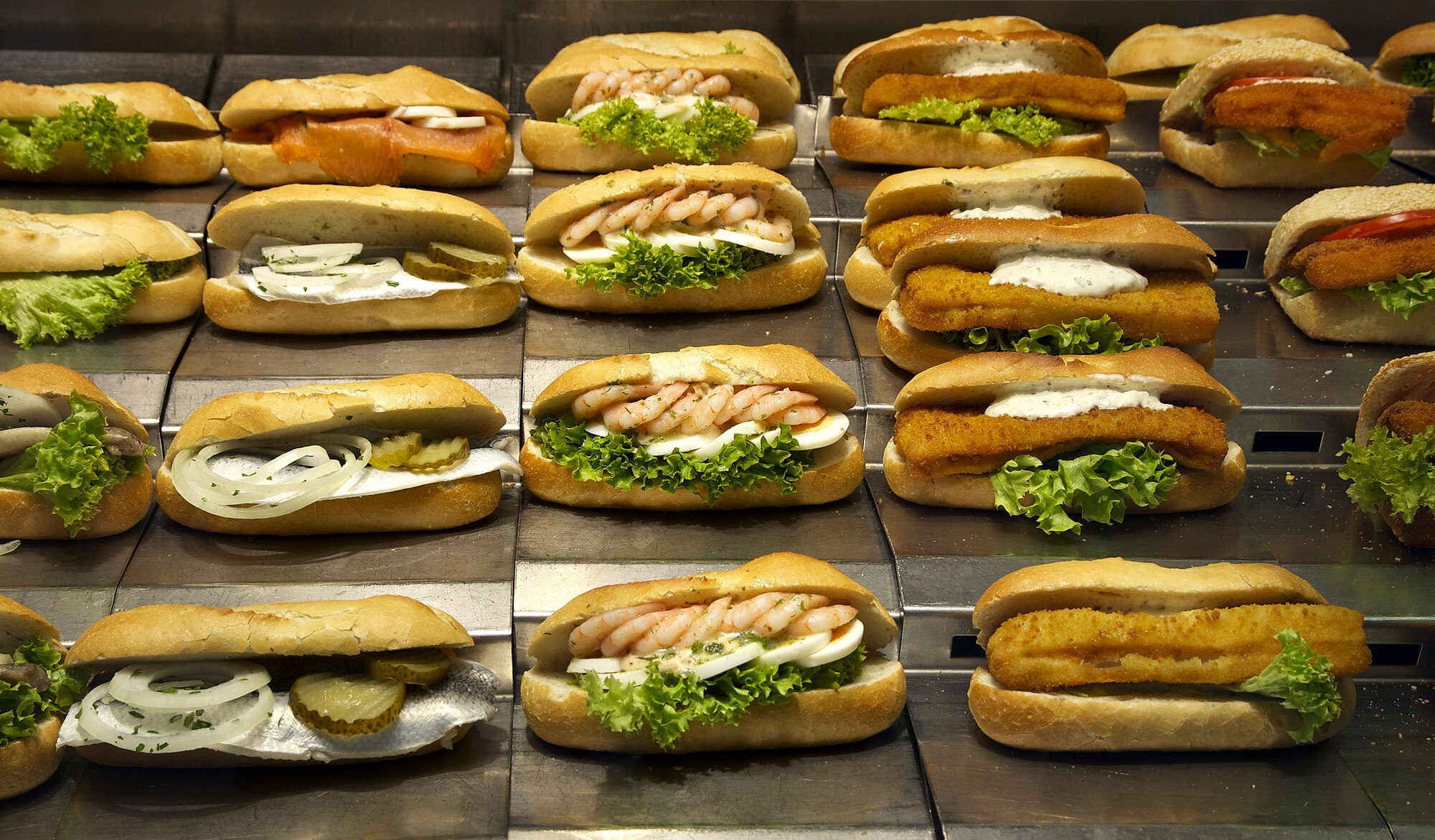
It’s like making sandwiches…
If everyone has peanut butter, you don’t have sandwiches, you have an impending plumbing problem once everyone has eaten it. That’s like everyone having the same set of skills or preferences — it’s just not going to work out well under stress.
If someone has peanut butter, someone else has white bread, another has whole wheat bread, another has slices of chicken, somebody shows up with pickles and mayo, another has lettuce and tuna, and an absolute star shows up with jelly and gluten-free options, then everyone gets a delicious sandwich.
Pooling resources is fun! And that’s how you get through hard times. Use your strengths and work with those who can do what you can’t. *
Scared of the zombies? One skill-set an amazing number of people around you have relates to tactics, strategy, combat, and martial arts. The US has been actively involved, as a major force, in wars around the world at least since the late 1980s, with only brief breaks before then. We’ve got lots of veterans, and they can build things, wire things, program things, bandage things, and cook, too. You’d be surprised.
Wait… How did we get here? I meant to write about how finding little beauties, stopping to soak up little joys, noticing and remembering what you like so you can go back to it — these all trigger “brain juice” in the form of neurotransmitters that help us regulate our minds and get closer to peace, poise, and sanity.
All of which is super handy when you’re picking teams to survive the zombie apocalypse. 🤣✨️
* Hot tip:
Disabled people tend to be overlooked. That’s absurd. Nobody is better at thinking around problems than disabled people, and we tend to have incredibly useful skills… because “disabled” is a misnomer. Most of us are highly able — we just have specific barriers, which we know all about. We can seek complementary skills and specify our necessary adaptations.
Come get us. You’ll be glad you did. A tiny bit of upfront effort, and then your whole project grows wings.
When I was working in the software industry, the term “fully-qualified” entered my world in a marvelously exact way.
The specific programmatic terminology here is from the Java programming language. Don’t let it bother you – some things are just details.
Java uses an organizing category called “classes” for unique bundles of code that define all the features, characteristics, and actions that this bundle of code needs in order to do what its name says it will do. (Other programming languages may have other terms.)
Each class has to have all the parts it needs to know when it’s wanted, what it needs to look for, what it has to do, when it has to stop, and what (if anything) should happen next.
If a class is completely and properly defined in all these parameters (and sometimes more), then it’s called a “fully-qualified” class. It can be trusted and can be used across multiple regions.
Not all classes are fully-qualified. They’re okay for quick tasks and have a place in the Java ecosystem, but their usefulness is limited. Those classes, those hunks of code, usually have to be filled out to be fully-qualified or else deleted when the time comes to prepare a program for market.
Any robust program needs an awful lot of classes of many different types. It’s inefficient to have too many similar classes — you’ve got to have different classes to do different tasks. All that they have to have in common (besides logical coherence) is that they must be properly constructed so they can do their task — whatever their particular task is.
This diversity of classes is essential to good programming.
You’re starting to see the metaphor here, aren’t you…
Some people view all others as fully-qualified human beings.
Some people do not. Only a few meet their idea of fully-qualified — that is, complete and correct and fully able to function as they should. This, naturally, means that they have specific and limited ideas of what humans need to do.
When people beat on those who diverge from their idea of truly human (those targets are usually women or gender-bending or people with disabilities or people of color or poor people) they’re acting on the fact that they don’t see these other people as fully-qualified human beings.
The people doing the beating-on are hung up on the feeling that these people are not properly “written”, that they’re missing huge hunks of “code” that limits their function — and makes them fair game for being taken out, sidelined or deleted.
We aren’t all the same, and nor should we be. It’d be a terrible program if we were, and would quickly choke on its own redundancy, crashing itself and possibly blue-screening the whole show.
Maybe we should go back to the old CRT colors and make it orange-screening.
I’ve been chewing over something for awhile and recently realized that it might be time to apply that much mercy to myself. It’s a more coherent, whole way of thinking about what I discussed in some panic in my previous post.
Complex chronic spoonies tend to drive ourselves hard because we really have no option (the exhausting, but relevant, internal chorus of “adapt or die, figure it out or eff off, push through or give up, fight or fall” is inescapable) but does it need to be so ubiquitous?
A lot of these posts have been oriented on finding light through the cracks, on putting life itself into center stage somehow. I think I’m cooking up a new way of doing that.
The most basic of basics
Many years ago, when I was working as an emergency nurse, I realized that (despite the hype & excitement) our job was fundamentally simple: give people another chance to get “it” right.
Whether “it” was keeping up with their meds, staying off of whatever was poisoning them, choosing better company, finding the healing path that worked for them – whatever. There are fewer “its” than their are people working on them, which is why we are never the only one with our struggles.
That made more sense inside my head. Sorry.
People wind up in the ER because something bad happened, and usually human ignorance, stupidity, or violence was involved.
That’s not about blame. People don’t always get to choose their company or can’t always bear to be alive without some kind of buffer between them and their situations. Even if they did do something colossally daft (like the rich kids who decided to cut out the middlemen and drive 350 miles to buy their drugs from the distributor; 4 came down, 1 eventually went back), it’s not right to require mistakes to be terminal if they don’t have to be.
Of course people with heart disease should take their meds even when they feel fine, and get periodic blood tests to show that it’s working. Of course people with diabetes should keep an eye on their blood sugar and stay on their meds. Of course primary care when you first get symptoms is better than going to the ER when you start to fall to pieces… but it’s awfully hard to find a primary doctor these days.
Life is complicated and increasingly expensive. ER work really shows that.
Anyway, I saw our job not as holding back the sea with a broom (as some do), but as giving individual people a chance to figure out how to do things better. Lift properly. Drive sensibly. Stay off the hard stuff. Find an appropriate doctor who’ll listen – and then talk with them.
Nobody likes to be told, so reciting these mantras to them doesn’t often make sense. Oddly enough, it can be a lot more meaningful when you’re meeting their worried gaze as you administer the medication or fit their c-collar or go over the x-rays with them. Or tape and dress the wounds in their wrists.
There is so much we don’t control… sometimes we just have to remember what we could control, and how to put that in reach. It’s not easy, but it’s often very simple. When the universe is dropping its big hammer, where do I need to be when it lands? Under it? Or can I get off to one side? What will I have to let go of in order to get out of the way? Is it worth it?
The answers to this aren’t always obvious, and “worth it” to some is not the same “worth it” as for others.
What that looked like in practice
We had a lot of repeat customers. Some of them I wound up zipping into body bags, because what it took to get out from under the universe’s hammer was either too far out of reach or not ultimately worth the effort of letting go of what they were clinging to. They mostly didn’t want to die, but it wound up being too hard to do what it took to live.
I’ve got to respect that. It’s not for me to judge.
Some of them I saw come back just for ordinary bump-and-owie stuff, showing me the healing scars (inward or outward) of their old struggles. There are no words for the sense of sunrise I felt on seeing them. It made the rest worth doing.
It was all their work… but it was up to us to give them another chance to get it right.
My chance
I absolutely love to work. Being useful and productive is the bomb! If it weren’t so important to me… well, I probably would not have come down with CRPS, which stemmed from relentless overuse injuries in my case. I could not take a break to save my life. Whatever it was, I had to jump in with both feet, arms flailing and shouting “incomiiiiing!”
I imagine I could be pretty tiresome that way. Belated apologies to my friends and colleagues along the way!
I’ve been wrestling – for years (how embarrassing) – with recognizing that having fun… recreating… seeking diversion instead of merely a change of work… I’m not even sure how to put it… but that loose, apparently useless, seemingly non-productive use of my time, is really good for me.
It lowers my stress levels. It reduces my pain. It raises my spirits. I don’t know if it gives me back any of my lost abilities, because I find it incredibly hard to do and have never been able to hang onto the easy-going vibe long enough to find out.
What with one thing and another (I’m an American living stateside in January of 2025; IYKYK) I have a powerful inward pull to go somewhere glorious – and affordable, thank you very much – and simply muck about enjoying the diversions. Play tourist for once in my life. Soak up pretty colors and different sounds. Be warm every single day.
And, if I get bored or don’t like it well enough, simply go somewhere else.
At this point, a lot of places are more affordable than the U.S. (more on that later) and, for all the challenges of travel in this body, I do plan on doing nothing but recover and enjoy myself for a good while afterward.
…It’s a weird idea, honestly.
Good thing I’m used to maintaining and cultivating relationships via the internet, after a quarter century of having to do so. It makes love more portable.
It’s still a weird idea. Wherever I go, I still bring myself along, and I know I’ll have to leave my compulsiveness behind with my snowboots. That’s unnatural, but I’ll learn.
Learning to let go of that deep attachment to being productive and useful is not the same as not being productive and useful – but it could give me time and space to heal my much-clobbered systems.
That might be the point.
Rest and play is widely regarded as essential. I think that’s the “it” that I need to work on getting right. Get out from under the falling hammer of overdriving a broken system.
Without descending into the morass of modern U. S. history and politics, let’s just say that I’d like the first months – up to half a year – of the new regime to happen with me being somewhere bearable, where good produce is a lot cheaper and the medical care both stable and affordable.
None of this is likely here, where my food prices rose about 30% during the harvest season and there is much loose talk and planned chaos around Medicare and the dole (which I depend on to stay alive) – not to mention the cost of everything rising by 15-60%.
The pundits and those who follow them tell me not to worry, because there are rules and procedures “they” have to follow.
Given the Mump track records regarding rules and procedures, all I can do is smile sweetly so as not to worry my loved ones, and let my mental gears turn more quietly.
Hot tip #1: a tariff is a tax. These get passed on to the consumers, not sucked up by the companies from countries exporting to us.
Hot tip #2: as we’ve seen so clearly over the past 5 years, industries don’t just raise costs in line with their own expenses, but jack them up to see just how much the market will bear. Given a captive market, this has gotten really ugly. Remember eggs last year? The sub-prime lending fiasco leading to the 2008-9 crash? Yeah, it’s an established pattern.
So anyway… here I am: if I stay in one place, I’ll be wrestling hard with un-meetable expenses (my dietary needs are simple, but not cheap) and a constantly-cycling urge to run away. That’s neither stable, healthy, nor fun. Been there, did that, threw away the t-shirt.
I didn’t grow up in one place, or even one country. I’m not mentally stuck here, and I don’t believe I have to put up with the scrambling anxiety or insufferable expenses to come as the Mump Regime and its trail of chaos gets itself through the initial reality-checks.
I’ve been toying with the idea that it’s healthful and good to be warm, stable, and happy. That takes adjusting to, because so much of what makes me feel anchored to the world is about work. I love to be productive. It makes me feel superbly grounded to be useful/helpful to others. This is very compelling… but as far as my daily choices go, doesn’t have a lot to do with being warm, stable, and happy.
It does have to do with abusing my eyes and attention with falling down back-lit rabbit-holes and trying to turn the swarms of information floating around in my brain into streams of relevant words, pertinent to the question I’ve just read.
But I’ve got serious limits and, as it turns out, I am much more useful and productive after I’ve been taking really good care of myself and playing and recreating and being happy outdoors – a lot.
This doesn’t sound like computer-gazing, which is how most of my work happens.
This focus on making myself happy is a weird concept, and I’m still working out a lot of the details. I mean, not even details – I haven’t settled on where to start; even my departure date is unfixed. Getting the right people in to keep my place clean & warm while I’m gone is kind of a big deal too. I’m not prepared to move and won’t sacrifice my sweet little home – not until I’ve got a much better offer in hand, anyway!
Anything could happen. I’m trying to keep breathing properly as I say that.
American Thanksgiving is the 4th Thursday in November. I had a gift that day – a difficult one, but I’ve been unwrapping it and wondering ever since.
My phone (which has my i.d. and my bank cards in it, and it provides my only internet access) disappeared on Wednesday evening.
While this is momentous for anyone these days, I have a disease-specific reason for being harrowed by it:
I listen to audiobooks to drown out my brain’s ongoing response to the ongoing pain, wonky signaling, and that disconcerting imbalance between what I need and what I have or can get to keep my environment safer for my body. To me, it sounds like screaming; I’ve heard others describe it other ways, as crunchiness or a kind of rattling wobble or other experiences entirely. My sensory processing apparatus decided that it’s a constant, ongoing scream from someone too upset to be the least bit self-conscious. Audiobooks and internet rabbit-holes are fantastic ways to manage this, partly by drowning out the internally-generated sound by the external one that I want to hear, and partly with the power of distraction.
Pain, reasonable & irreconcilable anxiety about how I’m going to get through anything from this day to the next chapter in my life, and the occasional neurological crumping (when my cognition shuts down and my coordination goes to hell, so I can’t make ideas or hold things) … all of these are best addressed by comfort and distraction. For me, books and memes and contact with absent friends are all good for that.
For Thanksgiving – when everything is shut aaaaaaaall day – I had none of that.
I just need a moment to process this.
It was a sad day. I couldn’t make or receive any of the usual holiday calls with people I love. I couldn’t go out to eat, and the previous evening I’d had to put back all the holiday food I had in my cart and get only what I could pay for in the cash I had on hand.
I had the sweetest visit from 2 friends (I explained why I had nothing to feed them with) who made it their mission to check on me twice daily until I was en-phoned again, and that helped me get through several hours much better.
Apart from that, I had little to do but hear the screaming, and wonder what I would do next year in a country that has voted for unprecedented chaos that, on the showing so far, is liable to shatter a large part of what makes it possible for me to live. The litany starts off like this: “The level of daily chaos to come is unbearable to think about. Every time I read up on the latest plans or appointments, it gets worse.” Not good for dysautonomia, among other things.
At the end of the day, I began to apply a bit of cognition to this experience (as you do) and realized something important…
The screaming was a whole lot quieter than it used to be; than it was, say, a year ago.
Last year, it was a lot quieter than when I first moved in here, right before the Pandemic. That was a tough time and the screaming was so loud I had to play the audiobooks and dvds at a fairly ridiculous volume to get the benefit. (The neighbor knocked on my wall a couple of times.) That volume might be partly why I now have ongoing tinnitus, a ringing in my ears that’s always at a different pitch and volume from the inward screaming. Clearly, my brain decided not to confuse the two.
Also, I noticed that my mind had actually recovered some ebb and flow!
There were times of day where it was natural to fix things, other times for doing something creative, times to sit and be quiet and times to move around and chat with the cats…
Natural texture and dimension in my mental activity, which the constant audiobooks had smoothed out and neutralized since they came back until that day of enforced quiet.
To the able-bodied and -minded, this is perfectly natural. It didn’t used to be for me. I had 10 or 12 alarms set throughout each day to tell me exactly when to do each kind of activity, because that mental texture had been quite, quite lost.
I got through 2 nights and a day without any alarms. I survived, and I also realized that alarms are jarring.
Who knew??
It turns out that my slowly-healing autonomic system has finally agreed with me that a stable diurnal schedule is a good thing to do, so I wake up within the same half-hour every day, without needing to be kicked awake by a series of 3-4 alarms.
The phone climbed out of its hiding place the next day. (Of course, I had already thoroughly checked there.) I canceled almost all of the alarms, except the one for feeding the cat.
I can make a short list for each day and get through it by riding those mental waves – and being kind if I can’t get them done at the very time that I wish to. It seems that being kind to myself knocks down a number of stress-related barriers.
I’m still digesting this new experience of the world. It’ll probably continue evolving over some time to come.
It’s not exactly normal to have such a significant level of recovery when you’re close to pushing 60 and sitting on 25 years of pain-related neurological disruption, including 20 years of dysautonomia.
So yeah, it was a sad day and not an easy one, but what a gift it turned out to contain!
I needed such a gift. My life is about to change drastically, and it’s up to me to work out which path to take through it. None of them are easy, but some could be more rewarding than others.
Can’t wait to see, not only how I’ll screw up, but what I’ll learn from it!
I’m going to try something new, as I navigate this tricky shift in life: asking for input and advice from people outside my head and its rabbit-warrens of associated ideas.
I know, wild idea… and for that reason alone, probably worth trying.
This is the third panel of the triptych. It took awhile to write. You’ll see why soon.
First panel: my pre-CRPS decision mechanism broke, but look! There’s a hack for that! Using remaining fragments, bubble gum & baling-wire, and lots of patience, I can still stagger through even fairly complex decisions.
Second panel: Speaking of complex decisions, I’m looking for a home that meets my physical needs and my financial limitations. Turns out, there is no such thing… Yet. Crossing every available digit and getting really creative.
Now: I’ve been mulling the origin of the act of deciding. When does that happen? It goes by so fast sometimes, I find myself dancing on a spinning log of results before being aware of stepping onto it.
It’s my nature to leap to a decision and be told I’m going off half-cocked, but what I’m doing is processing huge amounts of information very quickly at a largely subconscious or pre-conscious level. I can haul out all the arguments pro and con on no notice, if anyone wants to hear them.
At least, I used to. It’s CRPS’s nature to pour a whole lot of crude-oil over everything between my ears, so things just don’t happen that fast in there any more, and the gears are more likely to slip and chatter. So, I go through a more iterative process and take much more time. If I could adjust my expectations of myself accordingly, I’d be all set…
At the moment, I’m viewing the action of choice with great intensity. I’m convinced that decisions are especially difficult, especially fraught, and especially crucial, for people with CRPS. (Not that this is a competition. If what you read fits, just circle it and write, “me too.”)
Layers of decision-ing: Conscious vs. Unconscious
So much happens at the unconscious level before we even are aware of having a choice, that it’s impossible to discuss a mental action like choosing without acknowledging some of the most important barriers to thinking clearly in the first place. These are factors that many spoonies (and all CRPSers) have to live with and figure out how to handle, or decide not to handle and just be driven by them instead. (The enormous initiative required to deal with them is overwhelming, so I gently suggest being tolerant of those who don’t, or feel that they can’t, circumvent the circus acts desribed below.)
PAIN: Acts on the most primitive brain, and the primitive brain can’t think past the moment. Not its job.
Takes a good set of pain-management tips and tools to nudge the primitive brain to the back of the car, so reason can drive.
FEAR: Fear hijacks the amygdala and activates the fight-or-flight syndrome. Hijacked amygdalas distort the brain’s function even further, and the fight-or-flight response further destabilizes the already-wobbly central nervous system.
This is a one-two punch for CRPSers. It takes a lot of training and practice to work around that, but it usually can be done.
The MONSTER: know thy (current) self. Those of us with horrifying illnesses sometimes feel and seem like we’re taken over by some horrible, biting, unpleasant person who looks and sounds a lot like us, but doesn’t act like we normally intend to. This is tough all around. I find myself being emotionally hijacked — say, by a food allergy response, or a surprise pain flare — and, as I’m sitting there with tears of rage and fear pouring down my face and snarling, inside I’m going, “What the hell is going on? Why can’t I stop this??” It’s The Monster, and it’s off the leash.
Because I self-monitor so much, I can usually catch The Monster before things go too far, and I sequester myself (that is, I hide) and do distraction/self-care/Epsom baths/whatever until I’m back in charge as (& of) myself.
Bases for decisions: Information — & Certainty
When is the info in hand enough — both in quantity and quality — to base a decision on? (This is where I really miss those old rapid-processing days.) More fundamentally, how can I tell? Because determining and sorting the value of info is yet another, even higher-order level of processing than collecting it!
Having to make choices based on inadequate, unreliable, or unknown-quality info is a far more common task post-CRPS than pre-CRPS. Stumbling around in the dark and guessing, hoping for the best or maybe for the kindness of strangers, is not yet a default, but it sure is more common.
At some level — probably that mile-high view that my “wise self” hangs onto, whether or not it’s talking to me at the moment — it’s funny to see a super-clever type A whizz kid with delusions of promotion, like I used to be, stumbling around in the dark here. There’s a poetic justice to that, um, adjustment that even I can see. My darker side, perhaps, which I usually inflict only on myself.
“There’s always an afterwards”: Sequelae & Consequences
Reality doesn’t care what drives my decisions; the “afterwards” I face is going to be what it’s going to be, and derive largely from the choices I make — not the ones I wanted to make, or was unable to make, or wished I could have made. They stem directly from the choice I did make, consciously or not, emotionally or not, rationally or not, wisely or not. It takes, again, a lot of practice and some basic training to keep in mind that there will be an afterwards, and force myself to make the decision that results in a better afterwards — even if it’s less satisfying at the time.
The increasing intransigence of reality is really annoying! Can’t it work with me a little more? Sigh.
The older, poorer, and sicker I get, the less flexible the world around me gets. Being young and perky was all kinds of help — I had no idea!
everyone over 50
I distinguish sequelae (|suh-quell’-eye|) from consequences like this:
Sequelae are natural results of something. They may or may not be a problem, may or may not need managing, but they’re just what happens as a result of factors we don’t necessarily control.
Consequences are results that must be dealt with somehow. Assessing consequences is part of rational decision-making. Who could be hurt? What might it cost? What kind of damage, or benefit, could happen? They’re predictable, if we stop and think things through properly. So, there’s a level of responsibility involved.
We RISK possible sequelae. We FACE possible consequences.
Too much decision-ing: What About Control Issues?
In the category of bottomless dopamine sinks…
Trying to control too much of my environment is a total waste of effort. It soaks up decision-making chemistry, burns through my attention like a bonfire, and creates a lot more anxiety for absolutely zero net benefit.
People who knew (or dated) me in my 20’s quirk up one corner of the mouth a lot these days. I’m happy to let anyone decide anything for me — as long as it doesn’t do any further harm. My emotional investment in things like where to meet or what to eat, interior decor, stylistic choices, what others should do — pretty much nil.
My emotional investment in being in control is tightly centered on protecting my immune and nervous systems. That’s about it. Anything that meets those (admittedly, enormous & far-reaching) criteria and then looks for something more from me gets a big, airy, sky-bright “whatever!”
I realized that control issues were really a type of anxiety. I have my past traumas, like most, and loads of current problems which are terrifying to contemplate, so it’s reasonable to be anxious. Not helpful, though. Anxiety stalls my brain out completely.
This ratfink disease forces me to choose consciously — and learn to enforce skillfully — what to let myself worry about. It’s one of the great lessons of learning to live with this disease. Speaking as someone who started out being mildly thrilled by emergencies and wound up, at my nadir, being unable to get out of my home and onto a bus because of long-legged terror looming and lunging at me, I’m the first to say that managing anxiety is a journey, a process, any of those things that won’t be completed in my life because it now is part of my life.
This is why I now meditate twice a day. I was mulling, about a month ago, how much harder it was to keep my temper or keep my brain ticking over at a functional rate. The Dalai Lama’s dictum came to mind: “Meditate for half an hour every day. Oh, you don’t have time to meditate for half an hour every day? Meditate for an HOUR every day!”
I’d gotten to the point where an hour before bedtime was not cutting it any more. Figuring the Dalai Lama has never steered me wrong so far, I added another hour (or so) of meditation, after my morning pills go down.
I retest that now and then, but sure enough, if I don’t have time to meditate for the morning hour, everything takes longer and everything gets worse. If I do take that extra hour, I’m a lot clearer and my rate of being able to get things done — and to know, moment by moment, what I’m most able to do as my “glasses” change — surges up to a new normal. I’d like to get used to that — but never take it for granted!
Counter-intuitive, to say the least, but I care more about what works than about what I understand or believe.
Now, back to wrestling with reality to create possibilities that don’t currently exist… No hurry, though — doing the impossible usually takes more effort; might as well do it right the first time.
Admittedly, this might be one of those posts that I think is wonderfully uplifting and informative and positive and yadda yadda, and normal people have to call a therapist after reading. If it weren’t for my fellow painiacs, and the otherwise-normal people who love me and want to know how things are going, I’d probably have abandoned this years ago.
I started out blogging for myself, because I was driven to; I’ve mostly written it as a “non-scientist’s guide to living constructively with this” for the benefit of painiacs who don’t have my medical and communication background; and I’ve wound up writing purely for others, because I’m (very sweetly) obliged to. My high school English teacher quoted that freedom is choosing your chains, and the obligations of love, mutual care, and friendship are wonderful chains — if that’s not too much of an oxymoron. (Personally, I find the image a bit eye-watering, but different strokes for different folks. I’ll try to remember to think before I choose a metaphor.)
However, that’s not what I sat down to write.
Not long ago[LINK], I was in a tailspin about how to manage winter in this body, which is inevitably a bit tiresome (oh look! A flash of humor!), and looked like being more so than ever this year.
I found an old, simple, eliptical trainer by the side of the road that had a stride as short as mine now is. Huzzah! Got it home, and have been using it to work my way gently out of this exercise intolerance. I’ve gone up from 3 minutes 38 seconds, to 4 minutes 40 seconds! And that only took a month. (Look, another funny :))
I have to stop just at the point where my blood gets going and it just starts to feel warm and wonderful. That’s right, I have to stop before it gets really good. If I don’t, I wind up in a slow-motion collapse onto the sofa or bed, and have to really work at it to keep the usual disciplines of getting a shower and food and toilet trips. Since that means that appointments and groceries may not happen, it’s kind of a big deal.
I assure you, many people live like this.
For me, it’s the cardiovascular activity I have to be careful of. The annoying peripatetic noodling-around of errands and driving don’t wear on those mechanisms (though driving wears hard on my attention and I can do, at most, 3 stops for errands before my brain and spinal relays pack it in for the day.)
As I was flailing through the fog of the past month or so, my entire pelvic girdle (hips, low back, tailbone, all the joints involved) decided to lose their cool. Quite literally. I’d be putting my magic goop on the icy skin over my hips, which most women have, and my hand would go over two wide ribbons of fire over my sacroiliac joints, with zapping spicules at each disk, and great squanching bolsters of “eff you, kid, you are NOT sitting on us” right on my sit-down bones. Not cool at all. (See what I did there?)
Much physical therapy and massage therapy happened. It took awhile, but finally, some stability began to re-emerge. I asked my PT how to keep from getting off-kilter again, and she said, “It could be anything: stepping too hard off a curb, carrying heavy things off-balance. That new car of yours could be a problem.”
Ah, the car. There is a story about the car. And what a story it is! So much of a story, in fact, that it’s going to have to wait for its own blog post. It might be right up there with “Intestinal Fortitude”[LINK] for sheer WTH??? But, luckily, I wound up with a good solid vehicle that mitigates everything about driving that a vehicle could possibly mitigate. Unfortunately, it’s easily 4 inches higher off the groudn than the last one.
Talk about stepping off a curb too hard.
I also thought about the eliptical trainer, which I hadn’t been using very mindfully. I lurched from one foot to the other, and I know my hips were taking a wrenching, but I was too daffy to notice. I just, strangely, couldn’t improve my time. I wonder why!
I remember a PT 11 years ago, in my first Multi-Disciplinary Functional Restoration Program, who worked with all of us to “control your descent,” meaning, don’t just plonk your foot dodwn and crsh the rest of your weight onto it; lay your foot down, roll on in a controlled fashion, and whoa, suddenly life gets a lot better — until you forget. Real built-in motivation, there.
As sometimes happens, I stood there for a moment, staring past my current PT’s left shoulder, feeling the idea burst upon me and wash through all my current struggles: loss of partner, loss of help, added responsibilities in the house and for a cat, aging in winter with a rotten set of diseases, new injuries, etc, etc, etc,
Control my descent.
Don’t lurch onto the next step and come crashing down on it.
Stay mindful of each more; it pays off immediately.
Well, that has helped enormously!
It’s elegant and genteel, two words I never cherished but now find strangely redeeming, to pause and collect both legs before exiting a vehicle, and stepping down gently.
Believe it or not, I don’t have to do everything NONOWNOWNOWNOW. That was a tough nut to crack, but I did it with the hammer of “control my descent.”
I’ve gotten cushions I recommended to a friend with a tailbone injury [LINK?] for myself, and everything I sit in is loads better; I can rest.
As for plopping into chairs, that has gone the way of hopping out of my car; still happens once in awhile, but instantly regretted. I control my descent.
The ice and snow are doing interesting things in the driveway, and it will get dealt with, but since my amazing vehicle doesn’t mind, I have the time to prioritize and deal with it when I can do so properly. (I might get a plow attached… that could pay for itself in a couple of years, given my usual fortune/skill at shopping for bargains and finding friendly neighbors who’ll do things cheaply.) I can control the descent of that resolution.
It’s nice not to be crashing from fire drill to inferno. I’m coming back to myself — the practical, quirky-clever, loving little dingbat that still lives on under all the messes I’ve staggered through over the years.
I like the dry, mechanical nature of the image of “controlling my descent.” It gets quite emotional enough in here, I don’t need to rock the boat any more by trying too hard to push the perkiness; it’s healthier for me to just calm the upheaval. I can’t stop life throwing me up in the air sometimes. However, I can usually do something to control my descent.
Time check: must go, in a controlled and pleasantly mindful ashion, to my next appointment. I will try to remember to insert those links and maybe add some pictures afterwards. Feel free to nudge me… because I know I’m forgetful, and I can ask my friends for help 🙂
I’m working on a novelette about the meningitis madness of last month. Until I get it done, let me entertain you with another tale of traveling with pain.
About five years ago, I fled an intolerable situation in California and, being pretty sure I was in my last few months of life, went back to the Northeast to visit with my nearest and dearest and stay until I mended or died, whichever it turned out to be. In short, I was not at my precarious best. I’d thinned my belongings down to what would fit in a suitcase small enough for me to handle, plus a spare set of “smallclothes” and meds in my laptop bag.
I flew into JFK airport and made my way (eventually) to a New York suburb down the street — and downmarket — from Scarsdale. I thought flying across country was hard work. Leave it to New York City (and environs) to adjust that perception. Anything worth doing is worth doing BIG!
It started with getting my luggage — the carousel changed 3 times. It had my supplements and laptop power cord in it, so there was no leaving it behind, as there was no knowing where it would wind up if I abandoned it and tried to get it tomorrow — it could land in Athens stuffed with either explosives or maple candy, or in the garbage scow on the Hudson stuffed with random bits of unsuccessful mobster; the contents would be more oddly distributed still. I’ve been flying into and out of JFK since the early 1970s, and I never leave my luggage uncollected there.
Each time a new carousel number was posted next to our flight number, herds of wilde travelbeests lumbered across the linoleum plains, flowing around eyots of irrelevant carousels and travelers from other flights, who huddled against treelike pillars and carousel islands in order not to be trampled underhoof.
I limped gamely after, unwilling to leave my luggage to the mercies of the feral crowd. We ultimately wound up back at the first one, which somehow didn’t surprise me.
I managed to get my bag unhooked from the carousel lip, but no further. It was just about to throw us both into the guy next to me, when he kindly popped it out and dropped it neatly next to me, with a brisk nod. Then went back to field the hefty steamer trunk of the twitchy Givenchy skeleton behind him.
I debated taking the bus to Penn Station ($3.50) vs train-shuttle (unstated) to the shuttle-bus($1.50); figured train-shuttle would be free, as my training in UI & signage, and casual acquaintance with the law regarding same, made it absolutely clear that prices must be stated up front. No price stated, ride is free. Sweet!
Of course, every other international airport I’d been to in the past 20 years provided free transport within the airport complex. This was New York, where you’re charged even for the gum on your shoe, so I was a little wary, but I was also exhausted and poor.
Got off at the end of the train-shuttle, pulled my wheeled suitcase to the exit door, and there found a sign stating it cost $5 to exit the train-shuttle station.
Stared at sign for 2 solid minutes, flies drifting in and out of my open mouth. SO. BLEEPING. WRONG.
Briefly considered going back, but too tired. I gave up my prospect of a little “real” food in the city to get out of the shuttle track area (why did I think $5 would buy anything in NYC?), and got to the shuttle bus.
The leaderboard read, “Penn Station.”
I asked the driver when the bus came that would take me to Grand Central. He said, “This bus goes to Penn Station.”
I asked again when the bus came for Grand Central Station, and the bus driver again said, “This bus goes to Penn Station.”
I said, “I understand that. I’m wondering when the bus is that goes to Grand Central.”
“This bus goes to Penn Station, lady.”
It finally dawned on me, as he was about to close the door in my face, to ask if there WAS a bus to Grand Central from the airport.
“Nope. This is the only shuttle into the city.”
“You’re kidding.”
“Nope. You have to get from Penn to Grand Central yourself.[I interjected, in shocked squawk, “STILL?” He nodded.] You can take a bus or the subway, but with your luggage, you’ll want to take a cab.”
I hitched up my jaw and hauled self and luggage in. He almost waited until I was seated to take off.
A teenager tripped over my suitcase on the wide, spacious, brightly-lit shuttle-bus. My suitcase came up to mid-thigh and was HOT PINK. Somehow, he walked right into it and went down with it — wrenching my wrist and elbow of course. After looking around blearily, initially wanting to blame someone other than his own clumsy butt, he very sweetly picked up all 38 pounds that encompassed every object I owned other than the clothes I had on, which was more than I could do, and put the handle back in my hand. I re-wrapped it with the scarf I used to cut the vibration and, with an added loop around my forearm, provide some stability against my weak grip. But, in case of other spaced-out passengers, the loop didn’t go back on until I was off the bus… at Penn Station.
Because it’s NYC, where a good conflict should never be resolved but should be handed down for posterity, they have NEVER IN THE PAST CENTURY figured out how to link up the northbound train station with the southbound train station, despite the fact that the trains are the lifeblood of the city and, on top of that, millions of customers travel from south of NYC (Baltimore, Washington DC, and points south) to north of NYC (from White Plains to Buffalo, all of New England, and Canada) every. freaking. year.
The JFK shuttle comes into the southbound train station, Penn. I needed to leave from the northbound train station, Grand Central. It was up to me, as it has been up to every single individual traveler in the past 100 years, to figure out how to get from provincial-sounding Penn to the arrogantly misnamed Grand Central. Let’s review my choices:
A cab was out of reach, especially as I’d just blown $5 on a ride that should have been free.
The subway meant more confusion, bumping, and stairs (the elevators and escalators are always out of order or being fought or pee’d on, sometimes both at once) than I could even think about without screaming.
The bus required finding secret, unmarked bus stops where they WILL ignore you if you’re off by a few feet and, I’m not kidding, either one or two transfers for one of the most essential routes in the city. There was no direct bus between the two major terminals of this train-dependent conurbation.
I can’t make this stuff up!
I decided to haul myself and my hot-pink suitcase the X blocks of crappy city sidewalks to Grand Central. “It’s not that far” — famous last words. “I’ve done it before” — 20-odd years ago, pre-injury.
I checked the map, got a sighting on the sun, went one block to read the street sign and check my direction, turned left, and marched off — for about 5 steps.
There were many adjustments to work out: soft tethering scarf, arm used (eventually, both), length of stride, and what to focus on — the directions, the pedestrians who mostly swerved nicely, the truly awful surfaces I had to traverse. The surfaces won in the end, out of sheer necessity. The occasional bozos, who thought I could steer better than their unladen selves, bounced off of either me or my sharp-edged case, spitting vile things without drawing breath. I kept on, pushing through the yawing wobbles the collisions caused as I pitched and heaved steadily onward.
Dear heavens, it was arduous.
Halfway there, dripping soot-laden sweat and hauling my grimy, now ashy-rose suitcase which had accumulated about 15 pounds of pollution by then, I found myself heading towards a cluster of burly cops standing between a parked cruiser half in the road with its butt half blocking the driveway, and the loading dock behind.
They gave me that dry, supercilious stare that city cops learn in the Academy. It says, “For our comfort and convenience, we’re deciding whether or not to kill you right now. Don’t try to make our day.”
I thought about that for a moment, trudging along with my case baulking at the bad paving, yanking my swollen wrists around like a fighting tarpon. I glanced at the path around the cruiser, involving 2 curbs, bad patching, and a pothole; quite apart from the random, fast, and dangerous traffic in the street. Definitely worse than the sidewalk.
I realized what I looked like: a grubby, chubby, oversocialized, White middle-aged female, evidently too poor for a cab. Very low on the food chain.
I realized I didn’t care.
I flashed back to the Jaguar my friends used to call me.
It was a youthfully arrogant and vigorous period of my life, when an off-duty cop in a bar in Manhattan wanted me to tie him up and beat him black and blue, because he’d really enjoy that. (I refused ever so courteously — which went curiously with the well-worn motorcycle jacket and wash-and-wear lack-of-hairstyle — and walked away, eyebrows twisting at the sheer novelty of the experience.)
I refused to walk around into the street. It was insane and vile to expect it, when I could clearly hardly put one foot in front of the other and was towing my life with battered arms.
No. Not playing that game.
One tactic of successful women:
If the game is rigged against you, change the rules.
This clot of cops got the twin-engined, diamond-drill stare from under my beetling brows, the burning power of pure womanly disgust and exasperation doing the work of 5 bodyguards and a million dollars.
Great shot by Bernard Dupont of France, via Wikimedia.
New York’s Finest peeled back from my path like an amateur drill team, stumbling slightly and eyes wide.
Yeah. That was more like it.
Same photographer, same cat, relaxing after she made her point.
I heard their startled and admiring voices behind me. I almost smiled. I wondered what they’d say if I turned around and demanded a lift. It was almost worth the effort, but turning back was unbearable, even for that entertainment — so I kept on.
The good old days.
Stumbled into Grand Central, at last.
Just what it’s like. Image by diego_cue
After dropping my sweat-sodden self onto a bench until my breathing evened out, I got up on pure willpower (my legs certainly didn’t have much to do with it) and wobbled up to the ticket window (One of those funny alcoves on the right.)
Despite the unmitigated chaos and relentless interference of my cross-City odyssey until now, I had the pleasure of getting good instructions, delivered clearly; the right ticket to my destination; explicit directions to exactly the right track and the right train; and which cars to avoid — “The drunks use that one, and it’s never clean.”
I fell into the seat nearest the door, then slid to another when someone dumped a heavy bag which fell over onto me, edge first of course. I let the bag lie and he eventually picked it up.
A lovely young woman, the quintessence of perfectly-formed and perfectly-presented modern American beauty, got on in one of the suburbs, sat down across from me, and gave my weary, grubby, chubby, middle-aged self the sweetest and most open smile. I did my best to repay such sweetness from out of the blue with the best smile I could dredge up in return, and a nice word.
I got off at the Scarsdale stop and there was a slight pause in my progress as I resisted the boisterous flow of commuters scenting their stables. Clutching the rail that had kept me from being swept under, I saw a car door open. In a few steps, I fell off of the train station and into the arms of my old friend.
I asked her later why such a beautiful, clean, discreetly made-up, perfectly turned out young woman would greet such a gargoyle’s appearance with such sweetness. My friend replied, “I’m not sure how to tell you this, but it’s envy. You can afford to let yourself go [finger-quotes.] She can’t. She wishes she could be like you.”
It finally penetrated what a trap the relentless and expensive looks-slavery of upscale New York is for women. My lifelong sarcastic envy of “Barbie dolls”, not to mention “Givenchy skeletons”, died on the spot and I was glad I’d added the nice word. Anyone who could envy me at that point was in really bad shape.
The cross-country flight was originally going to be the funny story I told to amuse my hostess — delay, changed gate, dashing around in a wheelchair, turbulence, sick babies, nervous lady with long arms and huge rings taking up the aisle and risking the eyesight of those nearby — but it really paled next to the story of the last few miles. She laughed and applauded and then, once I was fed and pilled and washed, tucked me into a soft bed with endless pillows. I slept better than I had in months, safe and still and comfortable at last.
I haven’t tried to cross New York City since, except when I can afford a cab all the way from the airport to Grand Central. Life is too short for that much work and physical battery… and the NYC cops have changed since they got so much money from Wall Street during Occupy.
I’m used to it. I grew up in places where electric outages were common. We’d just get on with our homework or reading or tending rescued kittens’ eyes or arranging little army men or what-have-you.
If it was after dark, a parent would call out calmly, “Everyone ok?” and we’d bring our projects to the living room, saving candles by having one well-illuminated space instead of five poorly-lit ones. It was cozy. Quieter than usual. Arguments rarely started when the electricity was out. It was too pleasant to spoil.
My housemates have different experiences entirely.
I live with two adults with wicked ADD. They NEED the TV. The tech-savvy one NEEDS internet. Sleep is out of reach if they can’t numb out their brains first.
I was soaking up the peace, purring inwardly with the candle glow and the outstanding peace.
Creative Commons Attribution License
No hums, no clicks, no TV, no wifi, no human-made radiation bouncing off my spinal cord and twizzling my brain with little egg-whisks.
I loved it.
Meanwhile, my two darling family members were going quietly insane.
They tried going to sleep to take refuge in unconsciousness until their lives became bearable again.
I could hear the ends of their nerves curling and uncurling, even through the closed doors.
Image by neurollero on flickr, CC share-alike attribution license.
They’d bounce up again in ten or fifteen minutes, one upstairs and one downstairs, and I’d hear them dashing quietly around in their unnaturally quiet spaces.
I sat in the squishiest chair in the living room, curled up like a clean kitten, soaking up the peace.
Creative Commons Attribution License
I’m usually more empathetic. If I could have thought of something to help, I’d have been glad to do it. Perhaps we’ll think of something next time.
At the heartless core of my practical brain, though, I found the thought that they get the evenings that make them comfortable almost all the time — only two evenings out of the past five months haven’t been fully electrified.
I only had one evening so far this winter that was great for me. I was going to make the most of it.
I stretched out in my super comfy spot and purred.
Creative Commons Attribution License plus loads of snuggles
I heard from a lovely friend of my youth, who wanted to know what I’ve been doing since Egypt. I tried to tell her. I realized that, embedded in my nutshell autobiography, were a lot of clues about why I blog and why I approach CRPS and its ghastly little friends with this sort of incisive determination seasoned with a laugh, a sort of functional contempt — an attitude of, “not going to let such a nasty little mindless rat-fink take any more of my life than required.” It goes way back. So here’s a little background…
I was born in Ankara, Turkey, though I nearly wasn’t born at all. My mother started bleeding well into her pregnancy. The protocol at the time was to get care from the Army base near Ankara. The Army doctor told her, “The baby’s dead. Come back on Monday and we’ll have it out.” Which, if it were true, would have killed my mother… but she didn’t think the baby was dead.
She asked around and found a Turkish doctor (her Turkish was pretty good) and he said, “The baby’s not dead, but you’re going to bed and will stay there until it’s born.” (She spent her time reading, smoking, and knitting, so I have something to blame for the asthma. I think it was all that knitting. The sweater made its way all the way down three children intact, so it was some very good knitting, but still… )
A few months later, the wonderful Turkish doctor strolled into my mother’s hospital room, threw open the blinds, and said in Turkish, “A new day, a new baby!”
As we left Turkey 3 years later, me toddling along with my little stuffie in one hand and my mother’s hand in the other, my older brother charging ahead of my Dad who was carrying the bags, and my younger brother a babe in arms, my mom was stopped on our way to the gate. It was the nurse from the Army hospital. She said, ever so kindly, “Oh Mrs. Aweigh, I remembered that you’d lost a baby. I’ve thought of you often, and I just wanted to know that you’re all right, now.”
My mother was very touched, but she had a plane to catch. She looked at me, looked at the nurse, looked at me, looked at the nurse, and said, as nicely as she could manage, “I’m fine, thank you,” then caught up with the rest of her family.
We survived 7 years Stateside, and left for Egypt in January of 1976. I consider that to be my humanization, as I never felt at home in New Jersey. That could come off as a cheap shot, but it’s the simple truth. I was all wrong there.
Cairo was a dream come true, only I never could have imagined being somewhere so rich — rich in history, rich in culture, rich in the textures of language, rich in feeling. I had finally come home.
I also discovered healing, taking in whatever sick or injured animals came my way and figuring out how to help them — kittens, pups, birds both wild and tame… I’d have gotten a donkey, if the neighbors would have let me.
This little colt is nearly as cute as the one I had my heart set on.
I was a dependent, however, and we weren’t allowed to stay in one place for more than two “tours”, totaling four and a half years. My folks went to Bangladesh, and my older brother and I went to high school in Massachusetts.
I was in rural Western Massachusetts, a slice of heaven on earth, especially if you grew up in a desert.
I wound up starting at a Seven Sisters college there. Left the ivory tower when school was interfering with my education (thus neatly acquiring the black sheepskin from my disreputable older brother, who had meanwhile cleaned up his act and gone to law school.)
I became a registered nurse after surviving a sailing trip from Cape Cod to the US Virgin Islands, taking the deep-water route outside Bermuda. The captain was a drug-addicted control freak and sexually inappropriate — none of which became apparent until we were signed on and nearly underweigh. (Now, I’d run anyway, and let her lawyers try and find me. I was younger then.)
She had been an ivory tower classmate of mine, an older student who had been locked up for most of her youth for being gay. She probably was perfectly sane to start with, but after being thrown off by parents and socialized in a nut house, nobody stands a chance. However, she was in her 30’s and living as an adult, so it was not ok.
Side note: queer people are somehow expected to be better than straight people, but that’s just unfair. People are people. Some straight people are really decent. Some queer people are really awful. And vice versa! Just let everyone be human, okay? Rant over.
Due to the intolerable hostility and tension aboard the boat, the nicest member of the crew developed a stomach ulcer, which hemmorhaged… so I started my first IV on the high seas and we had a day-long wait for the helicopter to air lift her. Why? Because the drug-addicted captain had plotted us as being about 80 miles landward of our actual position.
That bleeding ulcer saved us all!
We got safely to anchor in Tortola a few days later.
After a screaming row with the captain at 1 am over something irrelevant and stupid (not danger, not losing the dinghy, not being hit on, not being verbally abused day in and day out, but something totally stupid and irrelevant), I was kicked off the boat in a foreign country, with $5 and a tube of toothpaste in my pocket — which exploded as I lay sleeping on a picnic table at Pusser’s Landing, halving my resources and adding a mess.
My dad was posted to Jamaica at the time. I was allowed back on the boat to get my things and call him and arrange for my extrication. Nothing happened on weekends on the Islands in the late 1980’s, so I wound up being the house-guest of a truly kind and decent Island couple, who took in penniless waifs and strays simply in order to make the world a better place. I’m everlastingly grateful to Marina and Samuel. May all good things come to them.
After that, nursing school was a stroll.
I supported myself by tutoring in the school and splitting and hauling cordwood in the forest. However, between the time I started and the time I graduated, the economy in Massachusetts crashed, so I headed to Washington DC, where my State Department-associated family members and friends roosted.
My first nursing job was on an HIV unit, until it closed when visitors realized that most people there had, my goodness, HIV. (Sigh…) My second job was at DC General Emergency Dept, the only public hospital in one of the roughest cities in the country at the time. I learned a LOT.
I found my way back to rural Massachusetts, once I had the resume to get a good job in a lean market. I had first learned about herbs and energy healing there, and treated my illnesses and injuries with no health insurance from the time I left college through nearly all of my nursing career. (How ironic is it that it was so hard to get health insurance when I was a nurse?) I also took care of a couple of “incurable” things that patients of mine had, and cured them. I became a good empiricist. Home care nurses HAVE to get results, because there’s no backup.
Scientific-method science is very sound when it’s properly applied, but money and access distorts it too easily. Empirical-method science is the only kind that can actually tell you what works in the case of the individual.
While I prefer to understand how things work, I really only care WHETHER they work in a given case. I’m also well aware that, in medicine, at every point in history, we always think we know a lot — but, 10 or 20 or 100 years later, we look like idiots.
My favorite Star Trek clip of all time sums it up well:
A few years later, as the economy softened again and all but the worst jobs dried up, I allowed myself to be drawn to California by a nice face — which ditched me once we arrived. Not so nice.
I worked as a nurse and made my home in Central California until my immune system gave out, for no discernible reason. Shortly after the immune system pooped, my dad died, preventably (CPR would have clearly saved him, but he was in Egypt and swimming alone) and that was the final straw. Well, the penultimate straw…. Afterwards, my lungs shut down and my doctor was out of ideas. I’m pretty sure that acupuncture saved my life, because nothing else worked.
Once I was well enough to do some career research and put together a portfolio, I was hired to document programming software, starting with an internship on the basis of the raw talent my supervisor saw in my work. I was quickly hired out of the internship. They had an onsite gym, and one of the loveliest running trails through the redwoods was right on my way to work, so I got into outstanding shape …
…And then the repetitive stress injuries hit.
A couple of surgeries later, with odd complications, I developed a horrific central AND peripheral nervous system disorder called Complex Regional Pain Syndrome, or CRPS. It took from 2001 to 2005 to get diagnosed, then fighting until 2012 to get disability dole (SSDI) and get worker’s compensation insurance off my back. (Call it another 3 near-death experiences. They so badly wanted me to just die, it was stunning to see what they’d do to try to effect that, short of hiring a hit man.) This gave me a lot of insight into the approaching-3rd-world status of US health care and its social administration.
The U.S. spends twice as much on care as other “civilized” countries, and turns out the worst outcomes of all. Tell me how an insurance-driven, corporate-owned system is efficient and economical, again? Because that’s not what the data show. This link takes you to the full story.
The nursing background and the information-architecture and explanatory experience have formed my current career, the (currently unpaid, but highly useful) job of explicating CRPS, its mechanisms and management, and how I adapt my world to function, in spite one of the most invisibly crippling diseases known to science.
I’ve been trying to think how to turn the plot arc of this life into a nice, suitable-for-polite-company little anecdote, but I broke my foot in my one non-affected limb last Friday (I am laughing with heartfelt irony as I write this) and am hugely motivated to simplify. For me, simplicity is most congruent with honesty and straightforwardness — less to remember. So I just spat it out.
This might explain a few things, among them my fascination with health and medical science, my very wide view of healing (belief is irrelevant; what matters is if it works for you), and why I have zero to negative patience for the arrogantly overeducated — they’ve nearly killed me a few too many times. Right from the start!