2013 retrospective

I’m writing a retrospective, looking over the past year. It’s one good way to get my head out of the muddled present.
boat-mancallingastern
It’s gratifying to see how I’ve matured as a writer. Most of my posts this year have been solid, practical, and reasonably well-put. I don’t say that as a matter of ego (much), but as a matter of professionalism: if I’m going to be doing this, I should be doing a good job! I’m constantly trying to improve. There is always room for improvement, a fact which I find intriguing more than frustrating.
George_Goodwin_Kilburne_Writing_a_letter_home_1875
The arc of 2013 was interesting: started off very rough, so rough I had to completely revamp my pain rating scale to ignore the question of pain, and go straight to the question of function. And even that was pretty iffy. In retrospect, it was actually pathetic.

I got reacquainted with my body and, of course, my mind, with considerable help from a capable team at the University of Southern California. I felt like I missed a lot of the “coursework”, so to speak, because my cognitive function was so horribly screwy. (In fact, I had recurring nightmares about finding myself in school partway through the term, with no idea what my schedule was and not even knowing what classes I was taking, certain only that I was doomed to failure.)
poison_skull
Identifying my screwy cognitive function (or rather, dysfunction) as, basically, “acquired ADD” and treating it accordingly allowed me to play some catch-up after the fact.

I moved out of the LA area and in with my beloved – at last! – and rediscovered fresh air and sunshine, which is a great help with the body and mind, I find.
girl on a flat beach kicking a ball high
I worked on what I had learned at USC, (here’s one and here’s another example of using those mental tricks) and, in parallel, I worked with my lawyer on closing and settling my work injury case. (I wasn’t able to discuss that at the time, as it was an open legal issue. Now, it’s not. That’s what we call foreshadowing 🙂 )

To my consummate relief and delight, we succeeded in crafting an offer that was acceptable to all parties, and we finally closed the legal aspect of this case – after almost exactly 14 years since my first injury, 12/1999.

Big grinning woman in spectacular Hawaiian ceremonial dress dancing with her arms
Photo: Joanna Poe in Honolulu

Last week, for the first time, I was able to get my medication without needing anyone’s approval. That was a great day.

We have another move coming up in a couple of months, and the idea is to go where I can get all the massage, acupuncture, and chiropracty I need. It’s a much shorter commute to LA, which, I hope, will mean shorter recovery times from those trips.

Moreover, now that I don’t have to argue about my care, I plan to go back to “class” and try to recapture some of what I missed in 2013.

Stone angel with hands clasped in prayer, standing on a pillar, sun like a glorious halo
Halleluiah!

2013 was a lot of hard work, but a lot less brutal than many of its predecessors.

From where I stand, 2014 looks like it’s going to be a lot of work too, but I sincerely hope – I almost expect – to be considerably stronger at the end of it. We shall see.

Happy and painless 2014, with hopes for full remission and possibly total healing for us all! Hey, I dream big 🙂
me-fingers-peace
Postscript:
My partner is becoming better acquainted with what this disease does to me. He wants backup.

I know of two of my compatriots who’ve died of CRPS this week, people I was acquainted with online. The world is poorer without them.
Earth seen from the moon. Earth is gibbous.
So, what with one thing and another, and despite the absurd snafus involved so far, it’s time to finish up my will and legally establish a durable power of attorney for healthcare. Unless I achieve complete remission, I expect my death (hopefully long since) to be attributed to this disease. My executrix knows, and I trust her to see to it. CRPS is deadly, and it doesn’t get nearly enough credit for that.

If you haven’t already done so, I encourage you to take care of these things, too. It’s very freeing, and the conversations you have around it can be useful beyond themselves.

Being better prepared for these brutal and terminal issues frees up a lot of energy for living and enjoying it. Really 🙂
Detail from the Crab Nebula,

Documentation – a picture’s worth a thousand words

Doctors believe what they see.The training they get and the laws they must follow all reinforce that. If they see it themselves, then it’s real; if they only hear about it, it’s hearsay, which is much less believable.

This is why it’s hard for us, as chronic pain patients with all sorts of hidden issues, not to come off as shrill and demanding: we expect them to believe what we say, and they find that outstandingly hard. It goes against everything they really know.

Therefore, show them. Put it in pictures, put it in print, and watch their expressions change before your very eyes.

sketch of excessively happy doctor running with a hypodermic needle
They should always move with such alacrity and glee 🙂

This is the first in a series of posts about the documentation that I’ve used over the years. I’m starting with the time I got tired of pointing to my arm and saying, “Well, it was like this (gestures) last week and it’s like this (different gestures) most of the time this week. It’s only blue because of the cold.” And then he couldn’t remember what I said it looked like a week ago.

No help at all.

So I went home, put my hand and forearm on a piece of paper, and drew an outline around it. I came up with a set of symbols to show what I needed to track, and marked up the outline accordingly.

As my situation changed from week to week and month to month, I grabbed paper, put my arm on it, drew another outline (I really should have made blank copies), and filled it in with the current state of my arm.

Lo and behold, I hardly had to say a thing. One doctor looked over my stack of images and said, “Wow. They really tell the whole story, don’t they? I hardly need to look at the medical record.” He did anyway, but was pretty quick.

My office visits were a lot more productive after I started keeping those pictures. I called them “snapshots” and collected quite a few of them before the case became too complex and moved into different territory. (More on that later.)

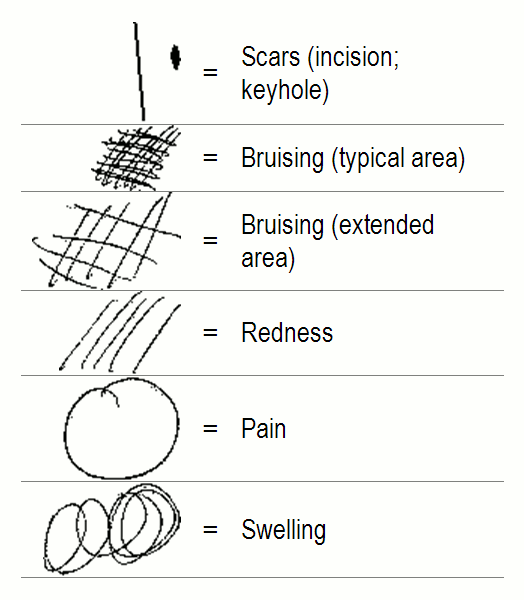
Here’s the key I came up with to explain the symbols I used for the symptoms I had at the time:

6 different scribbles to show 6 different signs and symptoms
key to snapshot scribbles

As you can see, I just scribbled patterns which I found easy to remember. Nothing fancy.

Each sign is distinct from the others, except for the two strengths of “bruising” (I now know that that was CRPS discoloration), which are the same symbol at different densities. Makes sense, right?

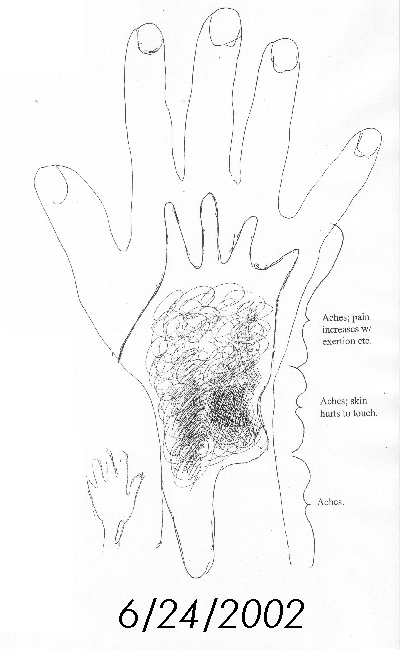
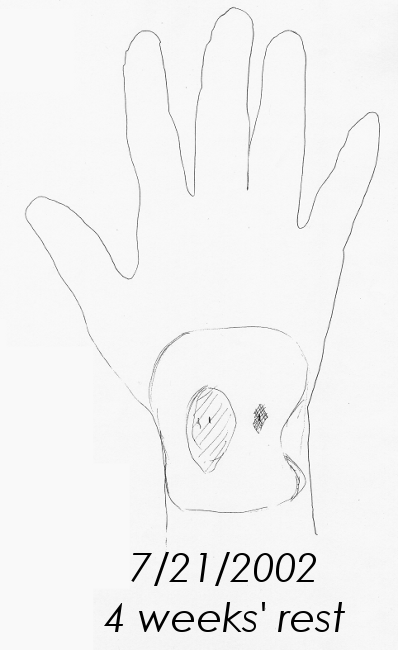
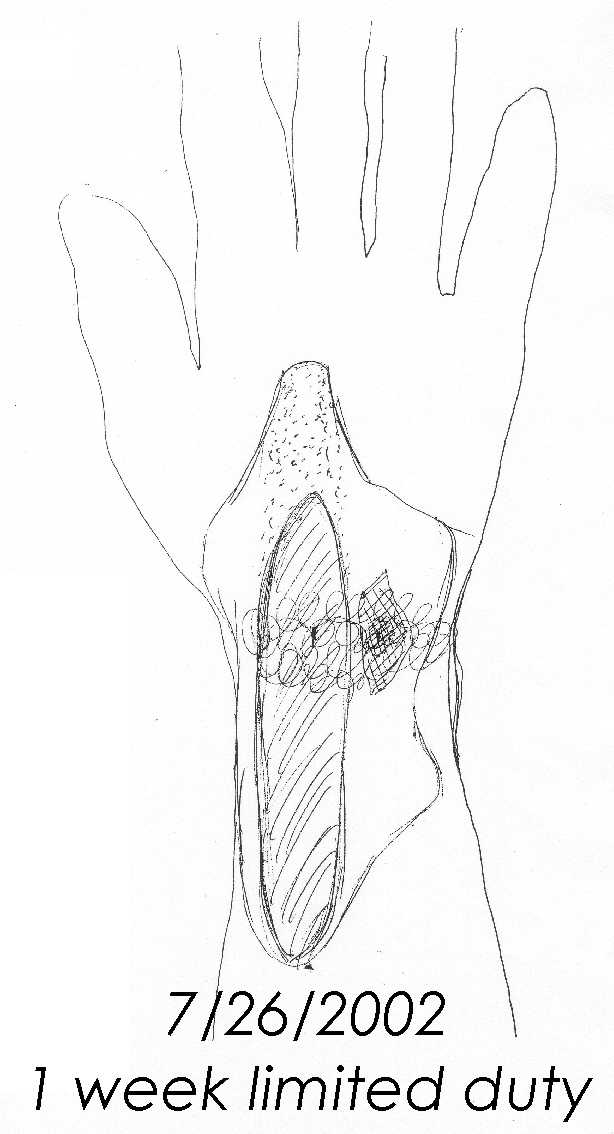
Here are the first 3 images, and what made the difference between them:

Baseline, after working as best I could with the injuries:

sketch of hand that shows extensive pain and bruising.
My first stab at this. What can I say? I was a writer and musician, so I took my hands very seriously.

After about 4 weeks off duty, resting and recuperating:

sketch of hand showing very little pain or discoloration.
It took 2 weeks just to relax, but I succeeded.

After 1 single week back at work on restricted duty:

sketch of hand showing pain and discoloration going further up the forearm than ever before
Yeah. Sucks, huh?

That doctor was right. They really do tell the whole story.

See how easy that was? 🙂 All it took was a pen, paper, and a few notes.

Here are some tips:

  • Put the date and your name on every single one, always.
  • Be consistent about how you label things. They don’t need to learn different labeling systems, they need to learn your case’s course over time.
  • This is a good place to note your pain ratings.I annotated my snapshots with current pain range (at rest and on exertion), bullet points and narrative notes, but it took awhile to learn to keep those annotations very short and to the point.

I scanned all the snapshots into my hard drive, so I can recreate these at any time. I find it very useful when breaking in a new team, because the story told by my first few years of pictures really does tell the key parts of those first few years. They “hardly have to look at the medical record” to understand — and remember! — what happened.

Plus, you clearly don’t have to be an artist to make these pictures accurate and useful 🙂 If tracing around your own limb is too painful or awkward, there’s no reason not to ask someone else to do theirs. Alternatively, you could take a photograph and use image-editing software (available with your camera, or for free or cheap online) to mark the image with your signs and symptoms.

There are lots of ways to get these images going, with any set of tools. And boy, are they ever worth it.

As a point of interest, the freeware I use for editing images is called Gimp. Perfect tool-name for someone like me, eh?

On sleeping despite all this

This is a brain-dump from a recent social-media post. Since the same question was asked 3 times in one day on my groups, I figured I might as well put it all right here and link …

Stylized image of woman asleep with enormous red and black dress billowing around and supporting her. White snow falls from a deep blue sky

I used to be a night shift nurse and a home care nurse. Boy, do I have advice about helping your body sleep. Pick and choose what to start with and try as many of these ideas as you want, until it starts coming together and working well for you:

* Positioning. (Old nurses and physical therapists can be really good at this — we don’t get to write prescriptions, so we have to go with what really works and has no side effects. Oops, did I say that out loud?) Invest in enough pillows that you can, as needed, elevate appropriate limbs; support your neck; cradle your head; support your back and hips; pad your knees; get your upper body at a good enough angle so your blood doesn’t pool too much in your head; if you’re a tummy-sleeper, this can be really interesting because you need to slant your whole body from the knees up. Positioning, and the pillows/towels/blankets that requires, is generally the first thing to address.

* Have a regular bedtime routine. This gives your body and brain a consistent, reliable set of cues that it’s getting towards That Time. Our too-plastic brains need to be constantly retrained. Mine starts about an hour and a half before bedtime; I would do well to move it up to 2 hours,, as my descent into sleep is iffy.

* Turn off electronics (TV, phone, interwebby stuff) 1.5-3 hours before bed. There are several reasons for this: multisensory stimulation, EM activation, input from the outside world beyond your control, input you need to react to or decide not to react to (all of which suck up neurotransmitters.) All of this cranks up the primitive brain. Mine goes off around 8-8:30 pm.

* Listen to soothing, calming music for an hour or two before bed. I love classical chamber music, especially Mozart, Bach, Schubert, Rachmaninov, Pachelbel – elegant but not too emotional. Soft jazz or soft rock are also good for those who don’t care for classical. The brain patterns readily to music, so this is like free help.

* Speaking as a night shift nurse, I have to say that chamomile tea is the best, bar none, the BEST way to get the squirrels off the wheel. It doesn’t make you feel as “different” as sleeping pills do, so many people under-rate it dramatically. I noticed that most of my patients couldn’t even get halfway down the mug before they passed out completely, so I know it works objectively, even if it isn’t dramatic subjectively.

* Tulsi, or holy basil (Latin name occinum sanctum), is an herb from India that actually lowers cortisol. (It was used to teach novice monks what a calm mind feels like, so they could get it together with their meditation.) If you get that pop-awake in the wee hours, that’s probably cortisol, and tulsi at bedtime can do a lot of good.

* Ashwaganda has similar abilities, but I haven’t used it much so I haven’t studied it. See what you think. Some teas have both.

* All major herbal traditions have herbs that help. Tulsi and chamomile work best for me, but valerian works for others. I find hops stimulating, and wouldn’t go near poppy or belladonna because of my CNS sensitivities. Those with migraines, central nervous system and some vascular issues need to check twice before using some hypnotic herbs… This is well worth discussing with an herbalist, because they can make all the difference if you get the right recipe.

* Melatonin can help, too. There are two ways to use it: at a “metabolic dose”, which means one tablet can last 8 doses, and that’s just to remind your body to do its calming down; or at a pharmaceutic dose, in which case you can experiment with the different dosings available (usually from 1 to 4 mg, I believe.) See which works for you.

* You can also use 5-HTP before bedtime, which is a good serotonin precursor. If you’re on antidepressants, start at low dose and be mindful of its effects; it can potentiate your antidepressants, making them more effective at a lower dose. Being overdosed on serotonin can be counterproductive, as it makes it very hard to wake up completely!

* If nightmares are making it hard to nod off (often the case for me; I can tell I’ve been having nightmares if I can’t make myself calm down for sleep) then lavender oil dabbed onto either side of your pillow can be a real help. Or a lavender pillow, but remember to refresh it as needed. It’s very good for keeping nightmares at bay.

* Get what activity you can, pretty much every day, and stop exercising either before 5 or before 3, depending on your system. Activity helps regulate the autonomic nervous system, especially if you respect the body’s natural diurnal cycle and take enough time to let the neurochemistry slow down at the end of the day.

* Be mindful of your caffeine intake. Caffeine in the morning can be a huge help to keeping the diurnal cycle regulated, but it’s important to lay off it in the later afternoon and evening, because the disruptive effect always lasts longer than the real waking-up effect.

* Be gentle with yourself. Take the time to learn what works best for you. Be considerate of your household regarding lights and noise, so there’s less fallout in the morning. When you’re stuck awake, remember that rest is still restful, even when it isn’t sleep, and do your best with what you can get. If all else fails, make the most of the time, and try again tomorrow night.

Prolly enough to go on with for now… any other thoughts, folks? 🙂

On a lighter note…

toon_dlewis_bedtimeroutine

Getting the important things settled

It took roughly three weeks to recover from the move. For much of that time, everything was bathed in a whitish sheen, and getting more than one coherent sentence out at a time was a crap shoot. I’m learning to relax through these times, knowing they’ll pass, especially since I had someone to keep the place cleanish and make sure food landed on the table once in awhile. You’d be amazed how much energy it frees up, having help with the demands of daily living.

It took about three and a half weeks to get internet going at all, and even then, it’s slow. My original workstation was so astoundingly awkward I had to sit sideways on the settee in order to type while hooked up to the modem. Short surf sessions, needless to say, with frequent breaks. Awful.

Yesterday, I pulled apart all of the — wow — truly excessively complicated hookups laid in by the prior owner. I reran wires, relocated cord-keepers, moved the faceplate from its hidden location in the cupboard to the wall where it can conceal horribly ratty holes including the one that the cable goes through, moved the huge coil of excess cable (15 feet, at a guess, of which 3 were being used) off the TV and strung it along the wall… to where I can now sit up comfortably in my bed, power and modem hooked up to my laptop, and noodle away in perfect peace. I put the remaining cabling — 2 pieces of extra CAT5 cable, triple-wire connector cable, ethernet cable, and a random small piece of 2-wire connector cable — zipped up in a plastic bag and shoved out of sight.

I’d take a picture, but there’s nothing to see. Just a cupboard, with a splitter at one end and a single white cable secured to the underside of the shelf, until it plunges out of sight to head off to its final destination.

There’s a bit of extra cable looped and secured neatly against the back wall. In electronics and electrics alike, if the wire is just the right length, then it’s too short. Give it a foot (not twelve feet) of slack, neatly stowed.

The key to routing wiring of any kind is: it should be as simple as it can be, and no simpler. I kept chanting that in my mind as I pulled things apart.

With that thought, I didn’t have to keep the whole puzzle in my head. There was an intake end and two output ends, and the shape of everything in the middle would be derived from necessary functions and the available space. Not, for crying out loud, from the needlessly complicated cat’s cradle I’d inherited.

When I got started, J stood by quizzically as I pulled out the hefty coil of cable, pointed out the rat’s nest around the splitter, and displayed other bits of insulated-wire macrame, each time snorting in gleeful derision and saying, “Amateurs!”

Finally, after he dodged the shrapnel from my 3rd dive into the tool drawer, he got that look that says, “time to get out of the danger zone,” and took off to run errands.

I’m not as fast as I used to be, so it took from noon until sunset to get it all done and neatly stowed. J wandered back as I was finishing up, and was more flatteringly impressed than I’d dared to hope — really wowed. He wasn’t sure why I’d gone to all that trouble to clear cupboard space (which was one nice side-effect, in this limited space), but when he saw the cable over by my new workstation, which is about the most comfortable place there is to sit, it made more sense.

He should be able to watch TV at the same time that I’m working online. To us, this is sybaritic paradise. Bring it on.

Tech note: My internet has to be hardwired, because the radiation from being near wifi consistently makes me sick. The nausea, weakness and racing heartbeat are unmistakeable.

I keep the wires off my arms with pillows, so that, even though the wires originate behind me, they don’t come within a foot of me until they’re almost at the laptop. This is about as good as it can be here. After sitting here for most of an hour, I’m fine. Just fine.

There’s always an afterwards

When I was a nurse, I could see when death was creeping up on someone. I saw gray fluttering around the person’s edges, especially around the head and upper body. As they recovered, the fluttering grew narrower and disappeared; as they lost ground, it grew wider, sometimes growing too wide to see.

Rear view of sturdy stone angel inside a lovel stone church

When that happened, I made sure I could find the code cart, because we were going to need it.

I worked and fought like hell to shrink that fluttering, to get each person closer to life.

Not every life can be saved. There’s a dislocating moment when, after working with several others to try to revive someone, it sinks in upon all of you – neaerly simultaneously – that it’s a lost cause, and then the doctor calls the code.

Everyone steps back for a moment, same expression on their faces: eyebrows up, eyes on the erstwhile patient, mouth slightly open, every brain running through the scenario and looking for something left undone (never has been, on my teams)… pausing in the shock of rebooting.

When I was coding someone, that person was the most important thing in my world, and all of my training and experience and physical capacity was tightly woven into my determination to get them back. When I had to stop coding them, all of that intense focus, activity, and energy had to come to a screeching halt, be re-assimilated back into my reserve, and clear the way for the next set of tasks. Not a trivial job.

Multiply  that by the number of professionals in the room, and you see why there’s always a breathless pause, even in the most practiced ER.

Then we get back to work, but it’s the work of cleaning up, restocking supplies and meds, prepping the body for the morgue/organ harvesting, and clearing the way for the next incident — a gunshot wound, a bloody nose, a beaten child, a drama queen or king; could be anything.

This explains a lot about ER staff: whatever happens, however we feel about it, we have to clear it away, clean up, restock, and be ready for the most trivial or the most harrowing issues to come in that door next — with little or no warning. Then deal with that, sometimes by brutal means (which you’d understand if you ever saw a chest tube placed or helped set bones for someone who’s been beaten.) Then go home, get food down and go to sleep, and be ready to  come in the next day and do it all over again. Day after day after week after year.

Imagine what that takes.

No wonder they often seem a bit detached, a bit harsh, a bit clueless about the human impact of what they do. They have to come back to that every working day, and try to stay above the madness.

Bosch_painting_of_Hell_(582x800)

The very day I realized I’d forgotten the human impact, was the day I knew I had to change careers. No wonder my immune system was failing. The effort to protect myself was killing me.

My dad’s death was unexpected, and happened overseas. It happened shortly after I knew I’d have to change careers, and shortly before I gave notice and surrendered my RN licensure.

I don’t think I’ll talk about it much, except to pass on the best advice I ever got about survival:

Take every opportunity to be happy, because it makes you stronger for the other times.

Less than a year later, one of my dearest friends died suddenly, back East… After that, I lost someone I loved every month or two, for just over a year… and somewhere in the middle of that, my relationship fell apart.

Hellish, tragic and harrowing as that period of time was, it turned out to be training wheels for being disabled with CRPS and all that comes with that.

It’s no wonder I have some of the symptoms of someone in an abusive relationship. I am; it’s called Life.

me-fingers-2up
And that’s what I say about it.

I’ve seen the grey fluttering around myself more often than I’d care to say. I’ve wrestled with the desperate temptation to end this brutal, chaotic nonsense for myself.

Angels_lossy_notsonice

My own intransigence saves me; no stupid disease gets to win. The very thought is intolerable. Not gonna let it happen.

US Navy: Marines of the embarked 15th Marine Expeditionary Unit practice hand-to-hand combat
I identify with both. They’re working their butts off and there’s no telling who’ll win… but neither one will cry uncle.

I’ve had to tell myself, sometimes every few seconds, “Keep breathing. This will pass. There is an afterwards. Just stay alive long enough to see it. There is an afterwards. Let’s find out what it’ll be like. Keep breathing. This will pass.”

Verbatim.

And, eventually, times like this morning come, which thaw those unspeakable memories on the warm stove of peace…

Gentle air from a misty morning caresses my mouth. Happy morning voices trickle in from the neighbors. My tea tastes just right. The birds are screaming their fool heads off in the greenery. My feline ray  of sunshine can’t stop moving for the sheer glee of being alive.

Ari-squirming

It’s simple, but it’s perfect.

I find myself glancing back at the shadows behind me, giving them a nod.

I was right. There is always an afterwards.

It’s a different world in here

TRIGGER WARNING: Body image. With a twist.

I feel like I’ve been inflated. If I get any larger, I may collapse in on myself and form a neutron star — possibly even a black hole.

"Portrait of the Quasar as a Young Black Hole" from NASA's Hubble telescope
Charming, eh? And round.

My pain psychologist isn’t worried. She thinks there’s nothing wrong with “a little comfort weight”, especially as I’ve been making such progress in her area.  Of course, she has a slender elfin figure herself.

This isn’t the usual rant about weight and health, or the girly American whining about fat. This is about living from the inside out, and what happens when my physical vehicle takes up a whole lane.

Nursing has a diagnosis called, “Body Image Disturbance.” Take a look at that phrase for a minute. It’s very telling.

Body
Our physical interface with the world; the medium we use to communicate with others; the first sensory impression we get of our surroundings; the complex organism that gets us from one place to another; the thing that gives others their first sense of who or what we are.

Image
Our mental framework, or paradigm; the belief or understanding we have about our presence or effect in the world; the way others tend to think of us; the way we think they think of us.

Disturbance
Something awry — probably disturbingly so. Not good.

Do we need to address the usual social issues? Yes, skinny people get treated better, all across the board; fat people are far more likely to get abused and overlooked, and not just for sex — for everything. Lots of people have made lots of money writing lots of books about that, so read them if you’re confused.

Let’s move on.

I’m in a different sensory and physical world from what I’m used to, and it’s a really strange one. The experience of physical life from this different shape is, yes, disturbing.

My feet are pressing so hard against the ground that my shoes fit differently.  When I carry something, it pushes my weight over the tolerable limit and threatens to bring the CRPS in my feet back to life — and I had just about gotten rid of the pain symptoms there. The circulatory symptoms are another matter — zombie-foot is a regular event.

My cat floats above me by quite a few inches, when he should be lying more or less on my abdominal muscles plus a blanket of padding.  It’s weird to have to reach so far up from my spine to pet him — my shoulder rotates much further in my cuff than I’d expect. I’m getting better at feeling my joints, and this is not exactly a positive feedback loop.

My upper arms keep catching against my sides. This is rather disorienting, since I’m improving my sense of my body in space and usually, when my arm catches on something, it means I need to increase the space between me and foreign object. There’s no foreign object. It’s just more of me. Weird.

I had a sway in my lower  back which I managed to straighten out awhile ago. Better spinal posture means less pain overall. So now I have a substantial, unstable weight hanging in front of my spine, which means I have to work my abdominal muscles really hard to pull it closer to my center of gravity so I can just stay in balance.

My abs are killing me. If I don’t use them, my lower back hurts me worse, so those abs are constantly on duty.

I give them a break and relax them when I sit down — and it’s like being on top of a balloon that inflates, as my stomach takes over the lower horizon.

balloons-innflating

I poke it curiously, wondering how far down I have to go to find the original outline. I give up at the second knuckle. Too discouraging.

When I sit in my car, my right hip brushes against the driver’s armrest.  First thought: I’m over too far to the right; my hip shouldn’t be near that. Wrong. I’m dead center. It’s my hip that has travelled far.

But there is an up-side. When I fold my hands together, I have a perfect armrest. Soooo comfortable. It’s like it was made for me!

And the stares I used to get — or rather, that my endocrine-disrupted DDD cups used to get? Gone. No wolf-whistles or dribble on the sidewalk from creepy slimebuckets who seem to think I should be delighted at their lack of self-command. Nobody’s goosed me or grabbed a feel in ages!

It’s very peaceful. Makes it a lot easier to feel at home in my own skin, not to be bracing for the next random invasion of privacy.

I’m no longer constantly holding a sharp elbow at the ready, to fend off some suddenly-clumsy dude who goggles briefly, with a word-balloon appearing above his head that says “are those real?”, then says “oops” and bumps into my pneumatic (and sensitive) form as if by mistake. I got so freakin’ tired of that!

Perhaps a leather vest with spikes all around…

myvest_front_med

This, incidentally, is why so many women feel  comforted wearing a burka. It makes the wearer more sexually invisible and insulates her from much of this random predatory crap.

My fleshly burka. Take that, right-wing-nuts — of any religion. You don’t even WANT to control this.

And, in a huge relief to my CRPS-riddled body, nobody wants to slam into it now, either. Yesssss!

I’ve got to get that vest. I can’t, and don’t want to, keep the fleshly burka, but I have to find a way to manage the body-slams. Never again.

As for food… Here’s what I’ve learned for the current incarnation of CRPS endocrine/digestive ballyhoo:

– No grains of any kind. No lentils or beans.
– No dairy, except small amounts of hard cheese — the protein sufficiently altered that I can handle it in small doses.
– No sugar at all, but more unrefined stevia.
– I’ll have to get kefir “grains” and make my own water-kefir. I have some ideas for that.

I still have most of the world of nontoxic produce, nuts, and meat from healthy animals to sit down to. There are worse things… It isn’t cheap, but I’m learning where to shop. And it sure tastes good.

P.S. You want what?? Measurements, weight, photographs? They miss the point. I’m not looking at me, I’m looking from me.

I’m not comparing myself to anyone or anything. This is simply the view from inside. Hope it’s worth a laugh or two 🙂

Recipe: Even Brain Food Shakes evolve

As my digestion has gotten more frail, I’ve had more and more trouble with my Brain Food shake.
 
I went to a powder, because organic kale was hard to find and unwieldy,  and the nonorganic kind smells like a chemist’s armpit. And was still unwieldy.
 
But those shakes still hit my stomach like a cannonball.
 
J listened to me complain for the second day in a row and said, “Don’t eat fruits and vegetables together. Of course it’s impossible to digest.”
 
I stared at him a moment. “I used to know that,” I said with chagrin.
 
That was over a month ago and I think I’ve finally figured out how to make the greens taste like something other than pond.
 
So here are the current incarnations of my Brain Food Shakes, the simplest way to get maximum nutrition with minimal effort:
 
Morning Shake:
 
– 1/4 pound Trader Joe’s frozen Wild Boreal Blueberries (high anthocyanins, low toxins)
– heaping soupspoon almond butter (good oil, protein, minerals) (TJ’s is cheapest)
– Cal-mag supplement (for nerve transmission, teeth and bones; 1 tablespn Lifetime brand, blueberry flavor)
– 1/8 tsp clove powder (massive antioxidants, calms nerve pain, and I love clove)
– ~3 oz apple juice concentrate (malic acid helps clear cellular detritus)
– stevia (stabilizes blood sugar, cuts any lingering bitterness)
 
Whizz it until the flakes of blueberry skin are more or less uniform and quite small.
 
I’ve recently added:
 
– fat pinch of schizandra berries (massive antioxidants, seems to stabilize neurotransmitter behavior; whole berries take extra time in the blender)
– lecithin (improves digestibility and oil uptake)
 
Once everything’s whizzed down smooth, I add at the last minute:
 
– 1/2-3/4 cup blueberry kefir (I really like Lifeway brand, blueberry or plain)
 
The point of blenderizing is to chop open those cells so the nutrition is easy to get to, but with kefir or yogurt, the cells only work if they’re intact. So I whizz in kefir just until blended, maybe 2 seconds.
 
I mix in blackberries and fresh local berries when I can. On the road, I use dried currants, which are an overlooked “antioxidant powerhouse”, in modern marketing lingo. They can make the sweetness overwhelming, though.
 
This afternoon (fruit is more appropriate in the morning, veg in the afternoon) I tried something like this:
 
Afternoon Shake:
 
– Vegetable juice (TJ’s Garden Patch, but I’m open to suggestions)
– Scoop of green powder (I get distinct results from Garden of Life brand Perfect Food Raw; brain really perks up)
– 1/4-1/2 an avocado (cleans up blood vessels, great oil)
– 2 handfuls chopped kale (most nutritious veg per calorie; thanks to TJ’s for taking the work out of prepping organic kale)
– 1 handful sliced cabbage (sulfur for brain, glutathione precursor; also, does something magical to the kale so it tastes smooth and mild)
– salt (reduces ANS/POTS symptoms of dizziness and wonky bp)
– lecithin
– 1-2 individual grains of Epsom salt, a.k.a. magnesium sulfate (sulfur for the brain, magnesium for nerve transmission and electrolyte balance)
– water enough to make it go
 
Has a wonderfully fresh, pleasingly grownup flavor. A bit of cilantro, onion and lemon, and you could call it gazpacho.
 
I’m considering a pinch of curry powder, for the antiinflammatory circumin and that wonderful taste. It doesn’t need it, but it could add a bit of variety. 
 
I’ve often said that it HAS to taste good, or I won’t be able to keep doing it. And, since I test regularly (that is, try to do without), I know I have to keep doing it.
 
And as long as it tastes this good, I’m happy to do so.

Changing the glass, resetting limits

I have to resurrect a set of rules I thought I’d gotten past:
 
– No internet before noon.
– No more than 2 hours daily for all internet activity: email, FaceBook, Twitter, research, posting and illustrating blogs.
– This includes surfing on the phone.
 
I will be moving upstairs to a brighter apartment that’s arranged better for two. J still plans to move in come September, so I’m grabbing the opportunity while it’s there.
 
For the past several months I’ve been learning to notice and deal constructively with signals from body and brain. Part of the reality of this is, there’s a ton of backlog to sort out.
 
This is significant, partly due to CRPS and partly to the nature of last year, which was an ongoing festival of upheaval:
 
– Got SSDI.
– Had to save life of same friend twice in three months.
– Sold my boat/home.
– Moved 3 times.
– Travelled for 6 months at a stretch.
– Started an important romantic relationship.
– Had 2 serious threats hanging over my own life.
 
It’s not good for the ANS, all this excitement.  I’m not personally opposed to eventfulness, it’s just really hard on my regulatory systems. Given similar situations, I’d probably have to do similar things, but it’s time to chill the h#11 out now.
 
I’m moving and it makes my lizard brain howl — if lizards can howl.
 
I’m moving upstairs,  not far at all. And it’ll be safer — you can’t even find it from the road. It’ll be brighter and quieter. The paint scheme is far more cheery and pleasant.
 
But I’m moving, and at some level, that’s an absolute… That is, an absolute brain-fogging mess of suppressed fight-or-flight response and irrational despair. It’s seriously altering how well and how long I can think… changing the water level in my current glass, so to speak.
 
Packing my few things is not a physically imposing task,  but moving at all is a brain-crippling one, apparently.
 
I still have to maintain my care schedule, keep appointments and stay caught up (-ish) on laundry and groceries, none of which is optional.
 
When my adrenals are under stress, my brain gets quickly exhausted, especially in the morning. According to my old acupuncturist, that’s a classic diagnostic indicator. Cognition is linked to adrenal function, he says.
 
The thing to do is go with it, and not make decisions or try to parse communications until the whole system has had a chance to wake up and get moving. Thoroughly.
 
So, out of respect for my brain’s needs, I’ll be spending my mornings playing with the kitten and catching up on my bookshelves, instead of being online.
 
Oh gee, isn’t that tough 🙂
 
And when I’ve moved in and gotten the new place under control, with no intention of moving again until I’ve got a “forever home” to go to, I’ll find out just how resilient this brain really is and see what parameters make sense then.
 
Until then, the online world will go on with, at most, 2 hours a day of attention from me — for research, social networking, web page managing,  and posting & illustrating blogs.
 
We’ll manage just fine.

Half-glassed — a metaphor for flexibility

We all know the old trope: half full, or half empty?

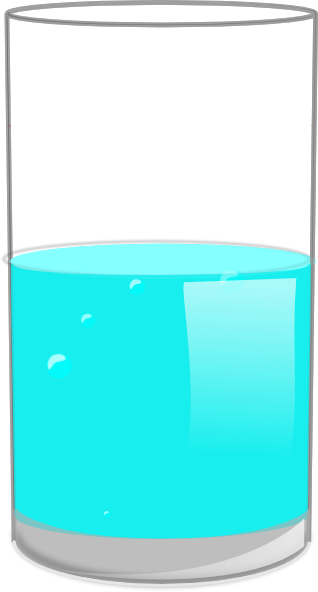
I worked at Borland, which means, I worked with highly capable engineers who were accustomed to doing things right. I once got a very friendly, but very earnest, lecture about the half-glass phenomenon: the point is not whether the glass is half-full or half-empty.

The problem is, the glass was not designed for that amount of water. You either have to fill the glass,

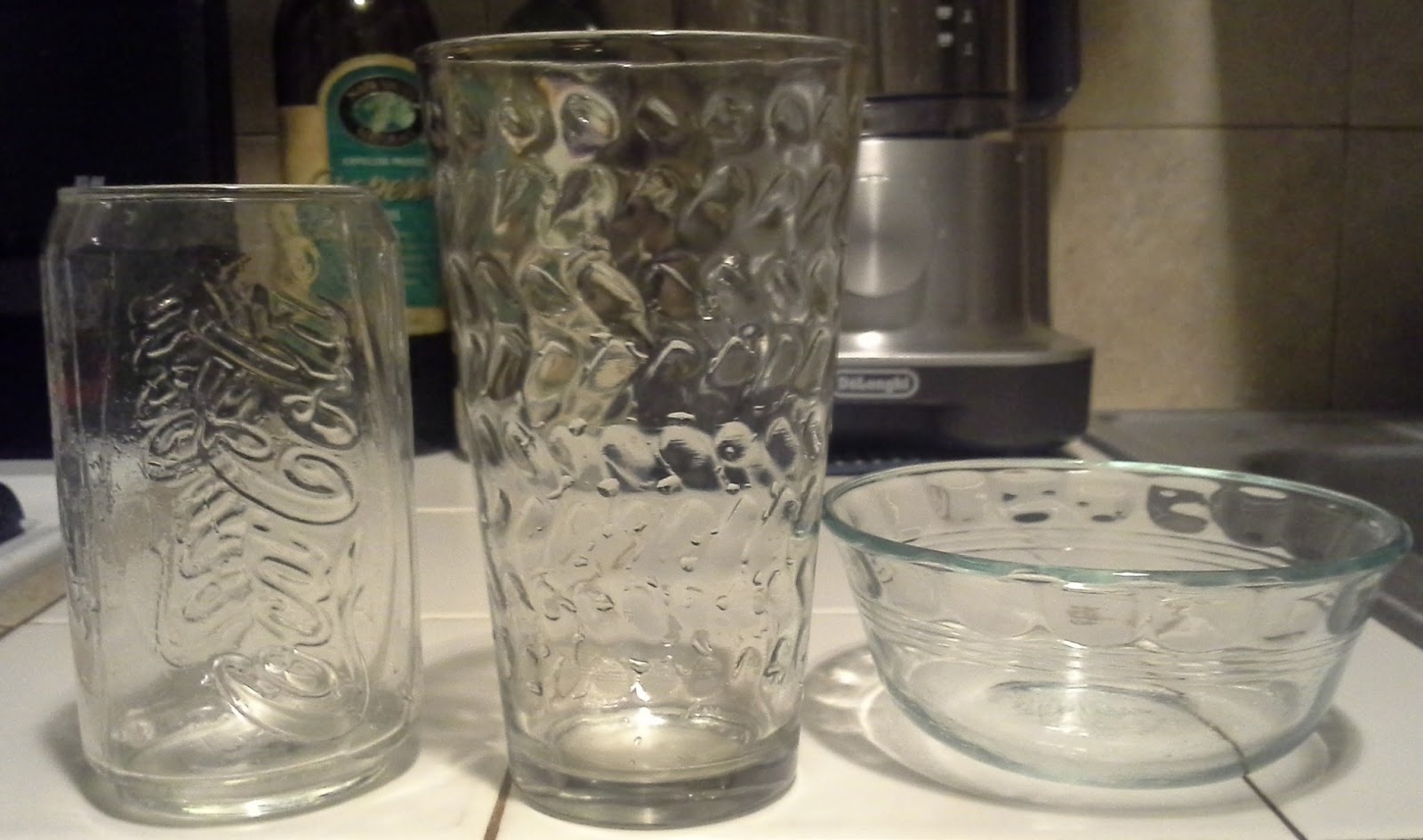
… or use a vessel that’s designed to hold that quantity.

The whole half-glass thing drives them crazy. It’s not a matter of attitude, it’s just bad design!

I love engineers. There’s something adorable about the way they storm the gates of Accuracy, convinced it’s the same as Truth.

At first glance, that attitude looks silly at times. On deeper thought, they’re usually right.

I was thinking about the engineering approach to the half-glass issue, while my subconscious was still bathed in reflections on Rosalie.

I realized that the engineering approach is exactly what those of us with crippling disease have to do: our glasses, our outward lives, were designed to hold a lot more than we’ve got right now.

We either have to build up what we have to put into it, or we need to use a smaller glass. A significant disparity between what our lives can hold, and what they do hold, is depressing. They need to match up better.

Rosalie alternated, and I think all of us with chronic disease (and determination) do that as well. Sometimes we can build ourselves up, and expand what we can put into that glass; sometimes we adjust our expectations and commitments, making the glass smaller so that the contents fit.

I like this image, because it reminds me that I can do either thing. When pushing against my limits doesn’t work, when I really can’t get another drop of water into that glass, I can pull back my expectations and switch to a smaller glass.

By now, I have mental cupboards full of wildly mismatched drinkware – a glass for every occasion, for every level of function so far.

The one on the right is for when my hands don’t work.

“My cup runneth over” takes on a new meaning now, doesn’t it? When it does, I’ll reach for a bigger glass.

Moving is hard anyway

Intermittently, this page is getting redirected (the Back button usually takes you back to this blog) and Google is becoming more and more problematic. It’s like their old adage of “Don’t be evil” is fading into the mists of time, along with Borland C++ and proper punctuation.

I’ll be switching my active blogs to new URLs, but don’t worry, I intend to redirect this link myself (take that, hackers!) to the new link.

It’ll be good.

In the meantime, I’m in geek hell. If I could remember more from my software-career days, I’d be in much better shape, but I have to relearn a bunch of basic stuff with a CRPS-riddled brain.

Yeah. It’s a ball.

So there’s some blood, sweat, tears, and probably no further posts until this is sorted out, but then (I hope) things will be even better and easier and cleaner than before. 

Those of you much-cherished people who’ve subscribed via email, I’d love to be able to port your subscriptions myself, but we might have to do that the old-fashioned way. There will definitely be a way to sign up again on the new page.

Wish me luck, patience, insight, and adequate brains…