What’s your forward path?

I’ve seen more than the usual amount of material about having hope, lately.

I see why, of course. Many people view hope as an incentive to carry on when things are going badly and they can’t change that.

So, hope serves as a forward path or guiding light, a way to keep going when you’re not sure you’re going to wind up anywhere good.

Speaking as a long-term survivor of a pretty rotten condition, I certainly understand the value of that!

The point, I’d say, is the forward path itself, the guiding light that gives us the idea of having something positive to go for, when the usual ideas and activities don’t work or make things worse.

Hope is one way, but not the only way. Sometimes hope is counterproductive, and if you’re convinced that hope is the only way to keep going, that can be a real downer.

To me, hope is like a pretty lie: I’d like to believe it, but there’s no logical support for the hopeful ideas that, for instance, I could attain full remission and be able to work to support myself again, that the Atlantic circulation will strengthen again and stave off total disaster, or that my country could look forward to a survivably rational government in the new year.

And yet, some people cherish those hopes in themselves, and who am I to persuade them otherwise? Their futures are for them to envision. I’ve got to deal with my own, and that’s plenty!

My own sense of a forward path is something I have a hard time articulating…

It depends partly on the deep sense of history I grew up with, 10,000 years of the ebb and flow of human vanity, decency, terror, greed, and stunning insights.

I’ve read notes and letters from people burying their entire families in the Black Plague… between king and lord of warring states… Spanish merchants discussing trading alliances along the Great Lakes in North America in the mid-1300s, very hush-hush… Gilgamesh and his passionate grief for Enkidu… love songs from every age and between every gender… desperate missives from ancient Romans fleeing the fall of their government to families who never answered them, or told them there simply wasn’t enough to go around and still keep everyone else in their accustomed style and comfort.

Whatever we suffer, we are not alone in it. We are one more part of a very long course of events, and every problem has been faced before. It’s up to us to find the best solution for this particular version at this moment in time – and we have this great depth of information about how it has been faced before.

We are never alone in our terror, betrayal, or pain. Somehow, that helps me.

Another part is that – another lesson from history – there is a future worth having, if you can stay alive long enough and do what it takes to increase your odds.

This alone has gotten me through some things that should have been terminal: I had to see what the future worth getting to would be. So far, it’s been a fantastic outcome, relatively speaking. Well worth getting to!

The last thing, which is the hardest to explain although it’s the easiest to notice, is my stubborn idea that it’s my job to hew my best and truest path through this life – do my best while being honest about my capacity, be guided by my humane ethos, keep the long view, and don’t let the misery of my circumstances decide how I’m going to face them. That job belongs to my will. It has had a lot of practice.

Sounds really noble or something. It sure doesn’t feel noble! It feels messy and rebellious and defiant, most of the time. It requires me to disrupt expectations about how women, who are middle-aged women, who are white middle-aged women, who are white middle-aged women who originated from upper-middle social strata and good education… should behave. In short, people who are supposed to have options and protections and resources that I haven’t even been able to dream of for a very long time.

That’s what I felt I should have been. It’s a useless “should”, but a gluey one.

For all that I’m pretty cheerful (especially with the morning sun on my face, like now), I don’t have much truck with “hope”, because it feels like placing too much weight in an imaginary basket. I can bank on my diligence, curiosity, and determination, though. They aren’t imaginary at all; this blog reminds me of that.

I think that every one of us has to find the forward path or guiding thought that works for us individually in our own ways.

We’ve each got to play to our own strengths, and do our best to keep the deep-dyed “should” phrases in their place.

Sometimes hope is just another “should”, and it’s okay to set it aside for other motivators. You’re still whole without it.

Maybe it helps to know that the Darwinian statement, “survival of the fittest,” does not mean those who have the strongest minds or the healthiest bodies – despite the narrow libertarian/right-wingy assumptions and the hunter-gatherer-based ideas of cost/benefit.

It means “those most able to adapt to fit the new environment” and that, dear reader, means us: the disabled and neurodivergent are the OG adapters to strange environments, the fittest to figure out how to handle the increasingly worrying future.

One way or another, this era in history – with its uncertainties, intensity, and rising waves of change – is ours. Like it or not.

Collectively, we can do this. Individually, as ever, it’s an open question – but let’s find out.

I’m curious how this will go…


Defining my terms: burny brain

Current science states that there are no nerves that convey temperature or pain in the brain.

Well, not a normal brain.

Well… not as far as we know.

Since I’m terribly clear about the fact that my sensory experience of life has been extensively revised over the past quarter century of constant and increasingly centralized (that is, brain- and spine-driven) neurogenic pain, I’m going to sail sweetly right over that assumption and get on with today’s topic.

We live in the messy and extensive reality of the world outside of labs, scientific studies, and academic debates. Don’t worry about them – they’ll catch up eventually, usually in about 10-30 years.

Brain inflammation

Brain inflammation is one of those topics which patients and wholistic or ancillary professionals have been working with & evolving strategies for for years, but many clinical practitioners have trouble working out how it applies in real life, let alone how to work with it given current techniques.

Practical point:

This is not a dis of those practitioners, it reflects their environment of practice. Their training – and liability insurance coverage – focuses on what has been proven through multiple double-blind placebo-controlled studies, preferably on thousands of patients. Those take time, funding, lots of patients (which rare diseases don’t provide anyway), and a crucial position away from interfering with vested interests.

This is why clinical practice lags 10-30 years behind practical patient experience.

Where were we? Oh – brain inflammation.

One of my dear friends has been working specifically on chronic longstanding brain Inflammation, and it’s been validating as heck to see someone so smart, disciplined, and articulate work through that. Burny brain is, in my case, a sign of acute flare-ups, and talking the concepts over has helped me articulate my own situation.

And then there was Election Day and this lifelong historian & longtime spoonie saw my future get thrown on the flames.

NB: I don’t believe ideology or labeling, I believe that past performance is a good indicator of future behavior and, more importantly, that a written plan is a big fat clue about what to expect – and it’s not good for someone in my position.

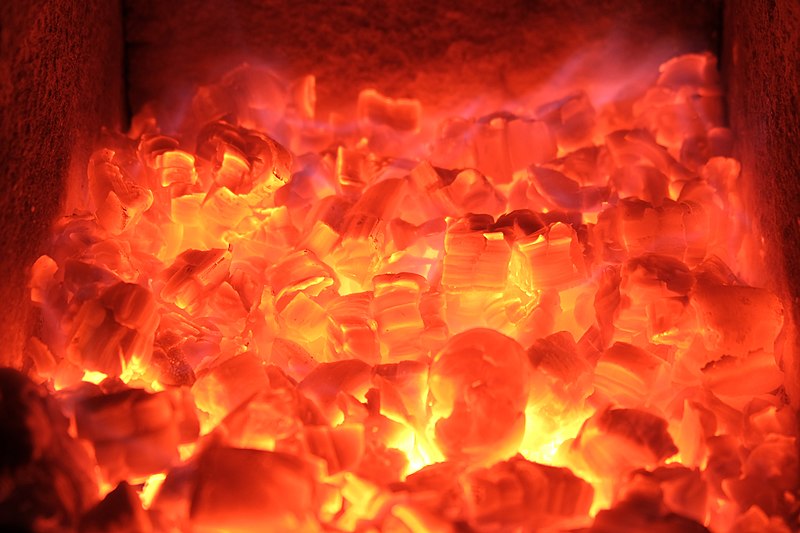
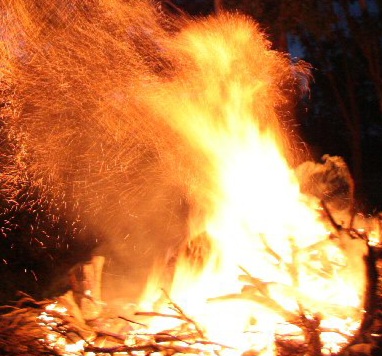
After days of feeling staggered, my brain caught fire.

Inflamed brain, level 1

When a series of events, or one overwhelming and life-altering event, land in my life and awareness, my brain takes a few days to go into full bonfire mode. But it does:

Managing that

I depend on my well-established habits around self care and communication to mask my real state and continue to function, but it’s not reliable.

I crank up my vitamins, especially B complex, and do what it takes to get enough protein in. This is tricky, because eating is hard work and few things taste ok.

Keeping a stable schedule is important, to avoid feeding into the general autonomic instability.

Stabilize, stabilize, stabilize.

Since I lose track of time constantly in this state, I have to double-check whether I’ve taken my meds on time, and they’re one of the most important ways of stabilizing that there are.

If I had a bathtub, I’d take baths with vitamin C (20 min very warm; lie down on the C-powder as the bath fills) and then Epsom salt (20 min not so warm) then take naps – a fantastic 1-2-3 recovery technique that I really miss having access to. I recommend it highly.

Level 2

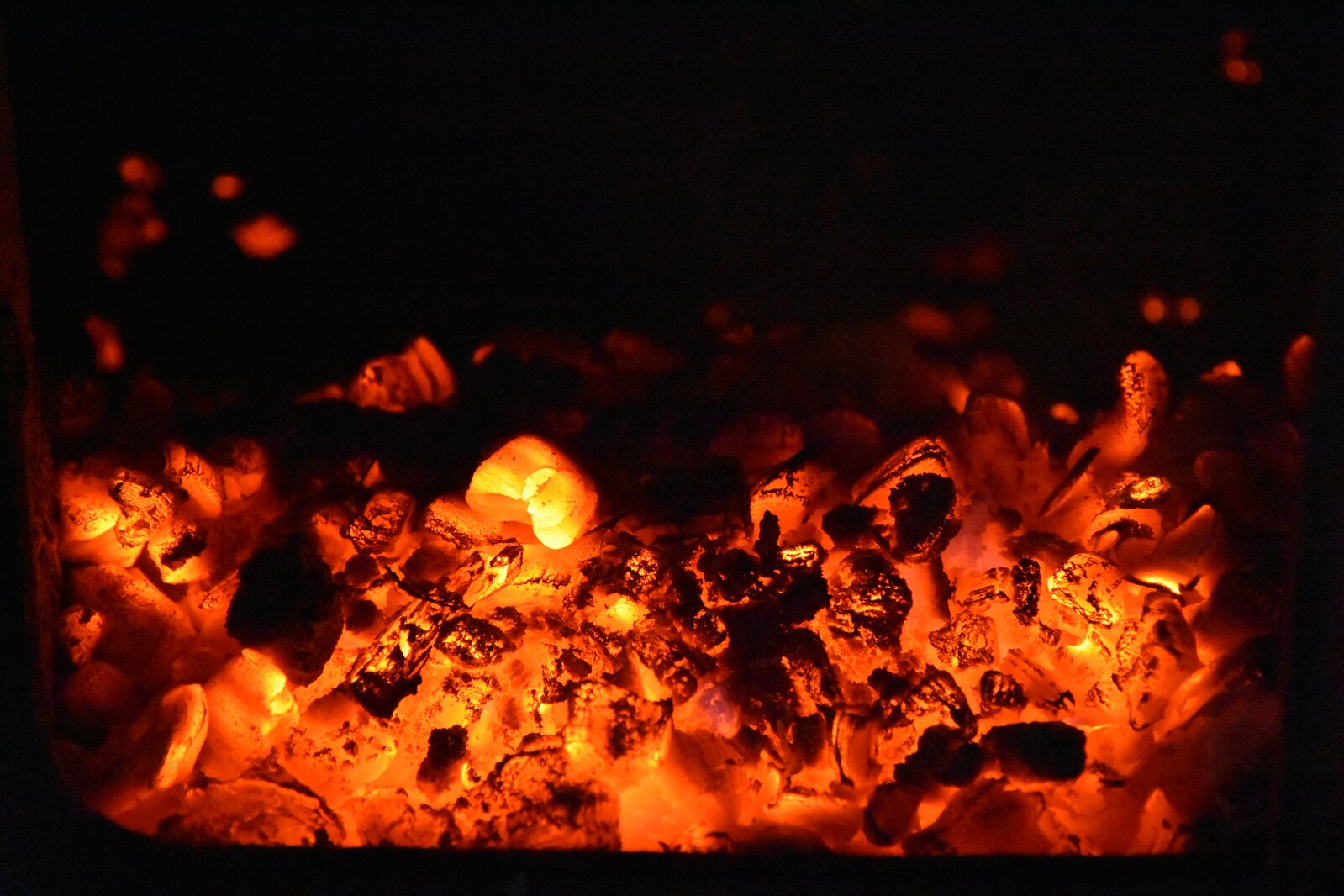
Once the flames get lower and my brain feels more like heavy coals, I know I’m making progress, although it doesn’t feel great:

This feeling of roaring combustion comes with big, fragile feelings. I limit contact and focus hard on noticing when & how I’m functioning, and grab tasks off the to-do list that relate to that.

So, laundry was a significant part of my weekend: no brain required, little physical effort, quick reward, and a huge improvement in my life. Now I’m  dressing off the clean laundry pile rather than my drawers & closet, because I can’t focus on folding & putting away, but that’s okay.

More veg today, partly because I was finally hungry for them, and also because protein was too difficult.

All the olive oil all the time.

Level 3

This is how my brain feels today, more or less:

Honestly, this still sucks beyond belief, but it is improvement and improvement is good. I could eat in portions larger than half-cups and palmfuls, finally.

Today, I wanted to make some calls about getting something fixed, but that wasn’t possible – I kept going blank and stumbling into furniture when I tried (burny brain comes with worse coordination).

Instead, I went and got a ball of yarn to finish a project, which felt good and freed up more focus; with that, I dropped in at the law library and learned how best to approach an issue and then did some online research with that in mind. Now, when I do make those calls that i couldnt make today, I’m actually going to be much better prepared. Still not possible, but it will be at some point.

I wanted to make progress on another administrative task (paperwork, urgh) but my friend has taught us that, even though the clock keeps ticking, when the inflamed brain says “no”, it’s useless to argue. Let it go and rest that brain.

So I put on a movie. Then a dear old friend called out of the blue and we enjoyed reconnecting. Very good for the brain!

Level 4

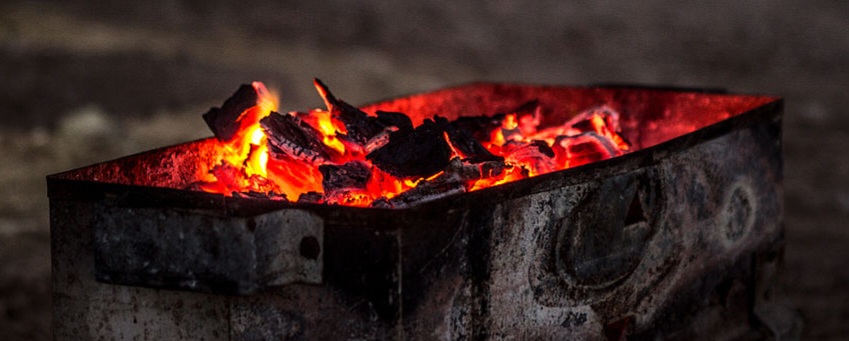
With any luck, tomorrow my brain will feel more like this, still raw and hot, but somewhat contained, and with more cool spots:

Unless something else happens to shake my foundations. You never know. But still, I hope for continued improvement!

If you’re having trouble understanding brain inflammation as a physiological thing, write a query in the comments and I’ll explain…

Later <grin>


Olive oil all the time

I’m likely to post more often, about littler things, and to mask less about the impacts of my illness and circumstances. I’m hunkering, and inviting you to join me.

Today’s topic is about a beautiful thing.

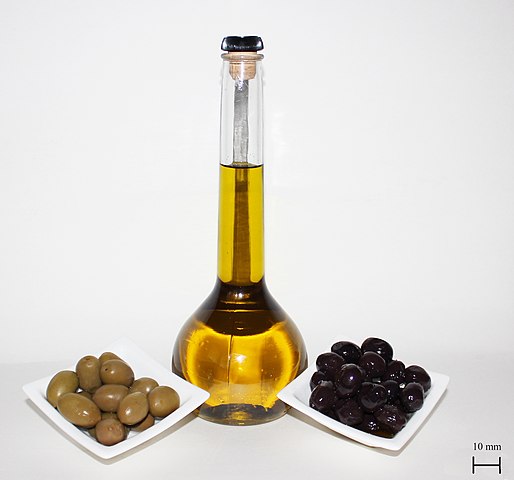
Olive oil is proof that the Earth loves us and wants us to be comfortable.

Sadly – and, I’m sorry to say, despite marvelous advertising and gorgeous labels – most of the olive oil you can buy is mixed with other oils, whether or not that’s legal or whether the labelling indicates this. This dilution is so integrated in key parts of the industry that there’s not much hope of stopping it, but honest people keep trying (https://www.foodnavigator.com/Article/2024/08/08/olive-oil-fraud-increases-in-europe).

However, it’s a big world and artisanal food is becoming more accepted and appreciated. This creates light between the cracks, so it’s still possible to get 100% olive oil that’s not diluted with something unfortunate, as long as you have a sufficiently sensitive laboratory on hand to check it with.

I do. My analytical laboratory looks remarkably like a reactive, chemically over-sensitive, mast-cell-activated human system which I’ve been working with and paying attention to almost since I was born. It’s expensive to maintain but easy to move. It goes everywhere with me, so I can always check what I eat, drink, and breathe – whether I like it or not!

It’s not always clear about the details of what it reacts to, but if there’s something at all whacky with whatever I’m taking in, my system will generally let me know in anything from moments to hours.

My body can’t stand any rancidness and it screams its head off at oils that should, theoretically, be fine – as long as they’re highly processed. Canola and deodorized oils are pure hell for me, triggering pain like ice-picks swinging into my arms and stomach.

Certain kinds of refining techniques make otherwise innocent oils do likewise, although they might fool other, more ordinary labs into reporting that there’s simply nothing amiss. Technically, there isn’t, and an ordinarily healthy body would agree with that. Lucky things.

My body has its own criteria and levels of accuracy, levels which remind me that some physiological events are triggered by molecule-sized exposures (as are hormones and immunity, even in healthy systems) rather than by mouthfuls or serving sizes.

Experience has taught me that it’s cheaper and easier to pay attention to my built-in laboratory and its reports, rather than try to convince myself it’s imaginary and the marketing, labels, and purported 3rd-party tests must be more correct than my own body. Nah… my body is a better guide about what to do for my body.

Where to start

The easiest test of olive oil’s purity is whether the oil smells olive-y. (If you don’t want olive-smelling oil, might as well use something else anyway.) I always start there.

From much experimentation over the years, I’ve found that olive oil that’s 100% Californian is pretty reliable. Almost anything can be grown in that region, but the market for adulterants (like deodorized hazelnut oil, commonly used in the Mediterranean) is hotter in their more natural state in California. I can’t really imagine California nut farmers – a proud group, not to mention bright & as profitable as possible in a drought-torn land – processing their oils into bleah and selling it for pennies on the dollar. Nope, they’ll take top dollar for their good nut oils, thankyew!

Olives are probably better-suited to California’s arid weather than thirsty nut trees. So, apparently, it still makes financial sense to deliver all-olive olive oil.

Naming names

I’ve found 2 brands of olive oil that currently work for me. There used to be 3, but one got hugely popular and ramped up their supply to meet demand and draw down prices, and (for whatever reason – I’m not making any accusations) their oil started hurting like heck.

Oil #1

Paesanol is a family-grown Italian oil. It has a slightly buttery mouth-feel with an olive-rich scent and a glorious flavor. The organic version is as good as a pain pill, actually knocking back the pain and confusion for about 4 hours, or even breaking the cycle. The price varies considerably through the seasons and right now it’s at peak price. (I stop paying attention when it gets over $30/bottle). The price should come down again when the new season is bottled and shipped, probably pretty soon.

It doesn’t have all the usual tags and certifications that a foodie might look for. I live in a great growing region and I know that good farming doesn’t always mean being willing or able to handle the extra paperwork that certificates require. Whatever its status, it works like a charm for me and I love it.

Oil #2

My go-to (now that Paesanol is out of reach price-wise) is Cobram Estate, a 100% Californian olive oil from an area I used to live in. It’s very good, though it doesn’t have quite the lush personality of Paesanol. Slightly peppery, which I like (because I can’t have real pepper any more). It marries well with other flavors, making it a wonderful base for simmering with garlic and herbs and making flavored oils with, topping soup with, mixing with veggie mash for those of us on low-residue diets, or splashing on eggs or salad or bread or anything else. Excellent all-arounder.

It helps a little with the pain, but, most reliably & importantly, it never makes it worse. That’s the key, really.

Afterthought

As food prices rise (amidst record profits for agri-biz and food suppliers, hmm), I expect to have to revisit this and try some more beautiful bountiful olive oils. I hope I can find a few that settle well and don’t hurt. It’s good to have options. 2 is not a lot of options.

Most people want a reasonable life: reasonable effort should result in a reasonable income, so they can keep a roof over their heads, feed and clothe their kids reliably, and be able to get out once in awhile.

This is increasingly difficult. That’s not reasonable.

As for me, I want to be, not only safely housed and fed, but also in not-too-much pain so I can get a few things done that help, cheer up, and inform & amuse those I care about.

Good olive oil helps. … It’s the little things.