Update: using adaptation tools

Yesterday, it came naturally to be warmly present for V during a big event where I stood in for her, even at a distance of 3,000 miles or so. Gotta love technology for that!

Today, I think of D and the anticipatory grief is like a warm finger of current, pulling at me without tearing at my core or dragging my mind away. He’s here now, and everyone who cares about him is working on a graceful last chapter to his intense, vivid, improbably well-groomed life. (Yes, he’s quite a character!)

This recovery is not all perfect: after yesterday’s 8-hour social endurance event (a physical and physiological experience piled on top of a very neurologically demanding week) I woke up this morning with a pure dys-autonomic experience I haven’t had in a very long time.

On the very cusp of waking, as I first became physically aware of the real world, my body’s temperature-regulation mechanism dropped off the rails.

I suddenly got intensely cold, that bone-deep cold that makes the smallest touch of air feel like knives. Imagine full-body Reynaud’s, with added concertina wire. It’s amazing how cold my skin suddenly gets to the touch when this happens, after feeling just right at the moment I started to wake.

So, I did what I learned to do 10 years ago, when the dysautonomia really kicked in with this: I pulled my down duvet completely over me and tucked in every gap, wrapping it right around my head, and constructed a little tunnel just big enough to breathe fresh air through. (Fresh air seems to speed up the recovery period.)

Nothing I can do after that but wait for it to pass, as my regulatory thingies come to terms with being awake instead of asleep (one autonomic function) and being able to be at the right temperature (another autonomic function.) I know that it will pass, while my system creeps toward wakefulness.

Big shrug. The Nasty Cold Snap hasn’t been part of my day in a very long time, which is good!

This just goes to show that the physical/physiological impact of these flows of stress and anguish isn’t negated. Expecting that would be unrealistic.

They are manageable. That’s the point.

Doing those “brain first aid” things makes handling the weighty, current reality bearable. That means I’m still capable of several important tasks:

  • I can bring my tips and tricks to bear against the physical effects of this illness.
  • I can think my way through ordinary (to me) problems.
  • I can remember that things pass: the Nasty Cold Snap will pass, as the mental shock passed, as even terror passes when it’s allowed to.
  • I return fairly quickly to my normal frame of mind — which beats trauma-brain all hollow!

There’s still a bit more physical recovery involved, mostly giving my systems a chance to finish returning to their normal function and easing up on the extra weakness, reactivity, and pain.

But, basically, I’m OK. I’m able to show up for myself and my friends. That’s what it’s all about.

My point (and I do have one) is…

The skills I learned in psychotherapy really work when I use them, and I’m so relieved.

I want to make the point that psychotherapy is not “just like talking to a friend”, because our friends don’t need a graduate degree to be our friends. Psychotherapy is a professional-level, highly customized form of care, even if it feels relaxed (creating an environment where you can relax is one of the skills of a good shrink.)

Nor is it a passive process; the skills and concepts only work if you work them. It’s good to be heard; that said, it’s also good to remember that real healing involves relevant changes. The fun (??) part is, in medicine, we may influence the changes but there’s a significant random element involved in them; in psychotherapy, the client steers the whole process. While being an active, involved patient can improve outcomes in medicine, being an active, involved client does improve outcomes in psychotherapy.

So, there’s the core message behind this 2-part series, part of the ongoing “what works” toolkit. Psychotherapy works, when done properly and used diligently. Just like any other kind of care. It’s not magic. It’s skills.

Adaptation tools in use

As some of you know, CRPS & dysautonomia involve constant re-traumatizing of the brain & nervous system. Our brains have flows that can resemble that of people living with domestic violence, because the CRPS itself keeps waling on us physiologically, in the same way people who get abused are waled on physically and emotionally.
Old amber-screen lettering showing *TILT* like on old pinball machines
This is why psychotherapy is part of the gold standard of treatment for intense chronic pain generally, and CRPS particularly: it takes good, highly specialized training — and ongoing coaching — to keep re-claiming and re-training the brain, so it can climb out of the being-beat-up mode and stay in the this-is-what’s-going-on-right-now mode.

Since I take the view that “whatever it takes, I’ll do it” is the way to work with such an intransigent, mean-spirited illness… I’ve naturally been persistent about holding to the gold standard of treatment, and working hard to implement everything that works for me. (Let it be clear that, just because that’s such a nice pat sentence, it is a hard road and a lot of work. Sisyphus thought pushing the same rock up the same hill was a lot of work? He should try claiming & holding ground against pain-brain.)

I’ve had tremendously capable psychotherapeutic teachers & coaches, and my present providers are over the moon for me. I tell them, “Gee, it’s like this stuff works!”

***

It’s graduation season in this college-rich area, and there are a lot of transitions taking place. I had a glorious week of family visiting and more social time than I’ve had all year. It was lovely and absolutely wonderful… yet, for a dys-y system, it’s still a lot of work. Big emotions, even good ones, trigger big neurotransmitter flows and that takes managing.

Yesterday, I got set straight by a friend I’ll call V, which was terrifying (really don’t want to lose that one) but the relationship will be better for it.

Big emotions kick out dysautonomic systems, so I started up the brain-stabilizing routines. Cool.

Then, I found out that a friend I’ll call D had nearly bled out last week and was currently in the hospital with massively metastatic cancer. He was diagnosed with limited cancer right before the first Covid-19 lock down. You know what happened with hospitals after that.

So, because he couldn’t get any treatment when it was treatable, he’s now faced with pretty horrific options and chose to go for comfort care for a very short life rather than horrendous chemo with a poor outlook anyway. He was an extreme athlete and had a rough life as a wee wiry guy in the city, so pain is no stranger, but at his age, it starts looking stupid to chase more discomfort.

Because of wacky human stuff, we hadn’t spoken in quite awhile. I’m glad we couldn’t see each other during the call because I know I was crying from the first sentence he spoke, and I suspect he was too. He’s a live wire & a cheery sprite by nature, and he made me laugh before I made him laugh, so I’m happy to say he won that round. We sorted out some heavy material and he said very nice things that were good to hear.

After that conversation, my usual brain-care toolkit was useless.

The first thing I do is, “don’t rehearse, replay, or dwell on it.” This is because that’s how trauma-tracks get laid in.

The more it replays in the mind, the deeper the distress gets planted. So, whatever it takes to prevent another topic of PTSD from getting laid in, is what I do.

I do come back and evaluate the experience for lessons a little later, but first… got to let the flaring, blaring intensity wash off before it stains, so to speak!

When the anguish of 2 perilous-feeling conversations, atop a beleaguered and recently worn brain, keeps roaring back, my usual low-key books/ shows/ audio/ doodling distractions aren’t enough.

I sat back and reached for a thought I’d had recently. There’s nothing more stabilizing for those who can do it than… what was it again?

Activity. Bilateral activity.

In my case, taking a walk.
Walking cat,distorted with closeness while coming at the viewer
So, with my phone reading me an audio book at the same time (clever, right?), I pulled on appropriate garments and got my wobbling butt out the door, one foot after another.

Blaring replays started up often, but I’ve had practice with this technique, and I reminded myself that *now* I walk, breathe, and follow along with a silly story; processing events comes later, *not now.*

The blaring replays got quieter by the end of the walk, and by the time I was 2 blocks from home, I could just about bear to be in my skin again.

The combination of bilateral activity (walking, wheeling, and most forms of warming activity qualify) and the distraction of a plot to follow combined to get me through the first stage of harrowing. Yay!

I followed up on a task I’d committed to for V and meditated briefly on how to follow through on family notification for D, a task that couldn’t go further last night.

The first task wasn’t executed perfectly, but I saw the error almost immediately and rectified it.

The second task, the one for D, has yet to be tried: there’s no good way to tell someone their estranged, love-hate sibling is dying, but of course it must be done and it’s not my job to try to be perfect in an impossible situation, it’s my job to be an honest, kind, and diligent friend to both of them.

So, today, once my pills are down (i.e. in a couple of hours) I’m going to the Y for non-weight-bearing exercise (because there’s only so much walking my hips and legs will tolerate) and then do something involving lots of colors (either drawing or crochet) afterwards, while listening to another story… and waiting for D’s sibling to call, so I can relay the dreadful info.

Update:
D’s sibling called, took the news with love and tears, and we conferenced in D for an agonizingly beautiful conversation. Older Sibling being lovingly overbearing and Younger Sibling trying to keep one foot in what’s really do-able, with me occasionally calling time or translating across the gaps, felt very normal to me, even though it’s not my family.

Some things are just human.

So I’ll keep breathing. And drinking lots of water. And taking extra vitamins, because this kind of stuff sucks them right outta me. (Truth to tell, you’ve only heard half of it. It’s been quite a heckin’ week.)

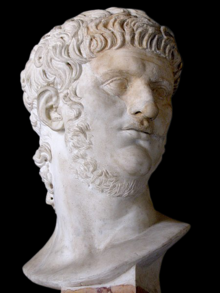
I can see the point of fiddling as your own city burns. Wait, I mean, Nero was a hot mess and a dreadful person to have in charge, if the legends are true.

The point I’m striving (awkwardly) to make is that arty activity calms and settles the mind, so that even devastation is less all-consuming.

I think today is a colored pencils day, or possibly even crayons. Crochet takes more thought, and I don’t want to hold myself responsible for that yet. Besides, my arm tendons are acting up, so crochet isn’t wise.

Update, Part 2:
I think I’ll take some crayons to the gym. Is that allowed? XD

Feelings pass. It’s what they do.

New normals emerge, and we learn to live with what was once unthinkable.

Adaptation is a big job sometimes, but, well, here we go again.